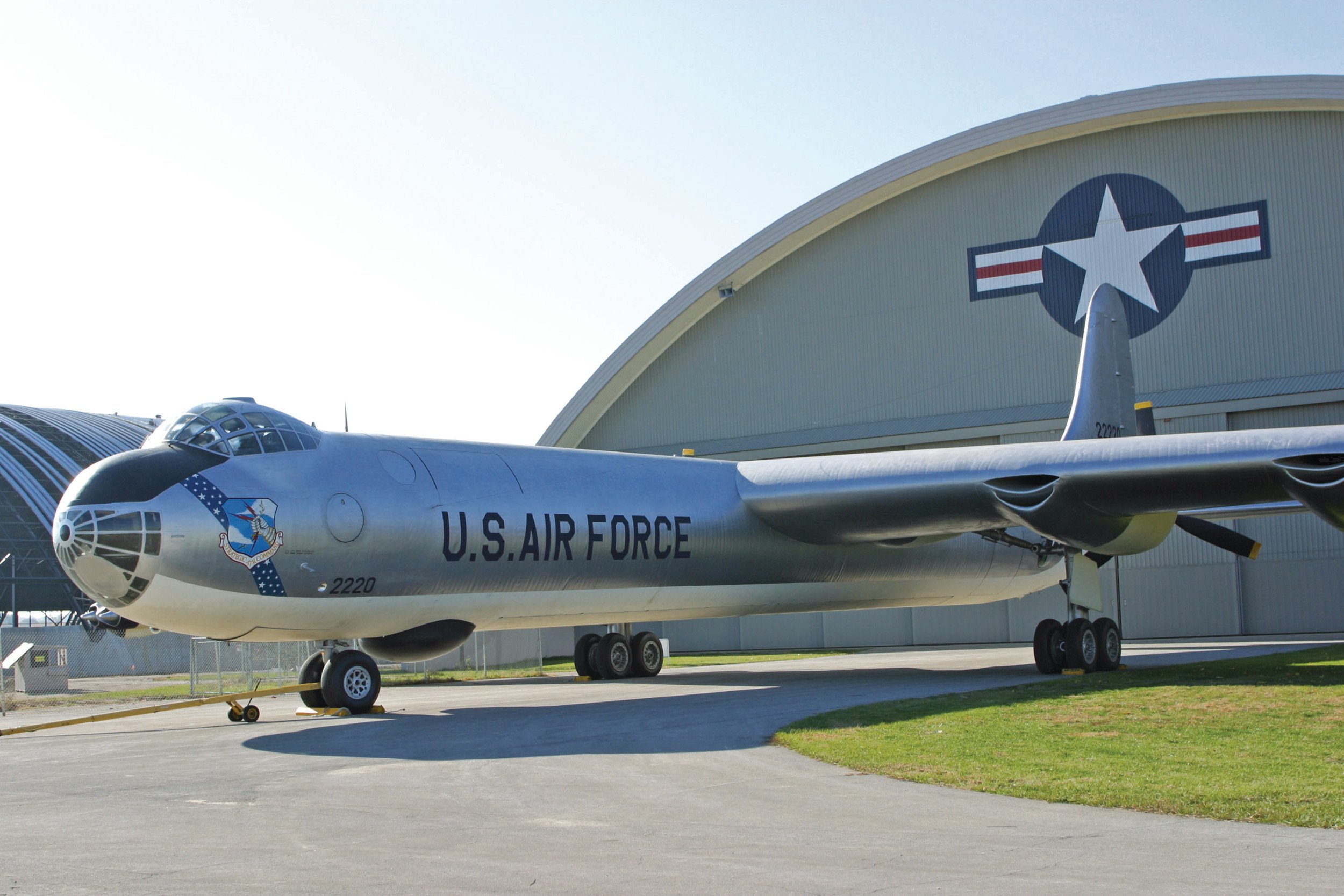



Ironically, the Convair B-36 Peacemaker was never intended to carry atomic bombs, it was conceived in response to a US Army Air Force (USAAF) demand for an aircraft capable of flying non-stop from the United States to Europe to deliver conventional ordnance. In 1941 it had become apparent to the United States that there was a real possibility that Hitler’s Germany could overrun Europe, including the United Kingdom. In this eventuality, the only means of striking at Nazi infrastructure and Germany’s military machine would be from bases in America.
The USAAF announced a competition for a bomber with a range of 10,000 miles (16,000km) and capable of carrying a 10,000lb (4,540kg) payload. A contract for two prototype aircraft was awarded to the Consolidated Aircraft Corporation based at San Diego, California, against its XB-36 design. It was intended that the first XB-36 should be delivered in the early months of 1944. of text, available before paywall
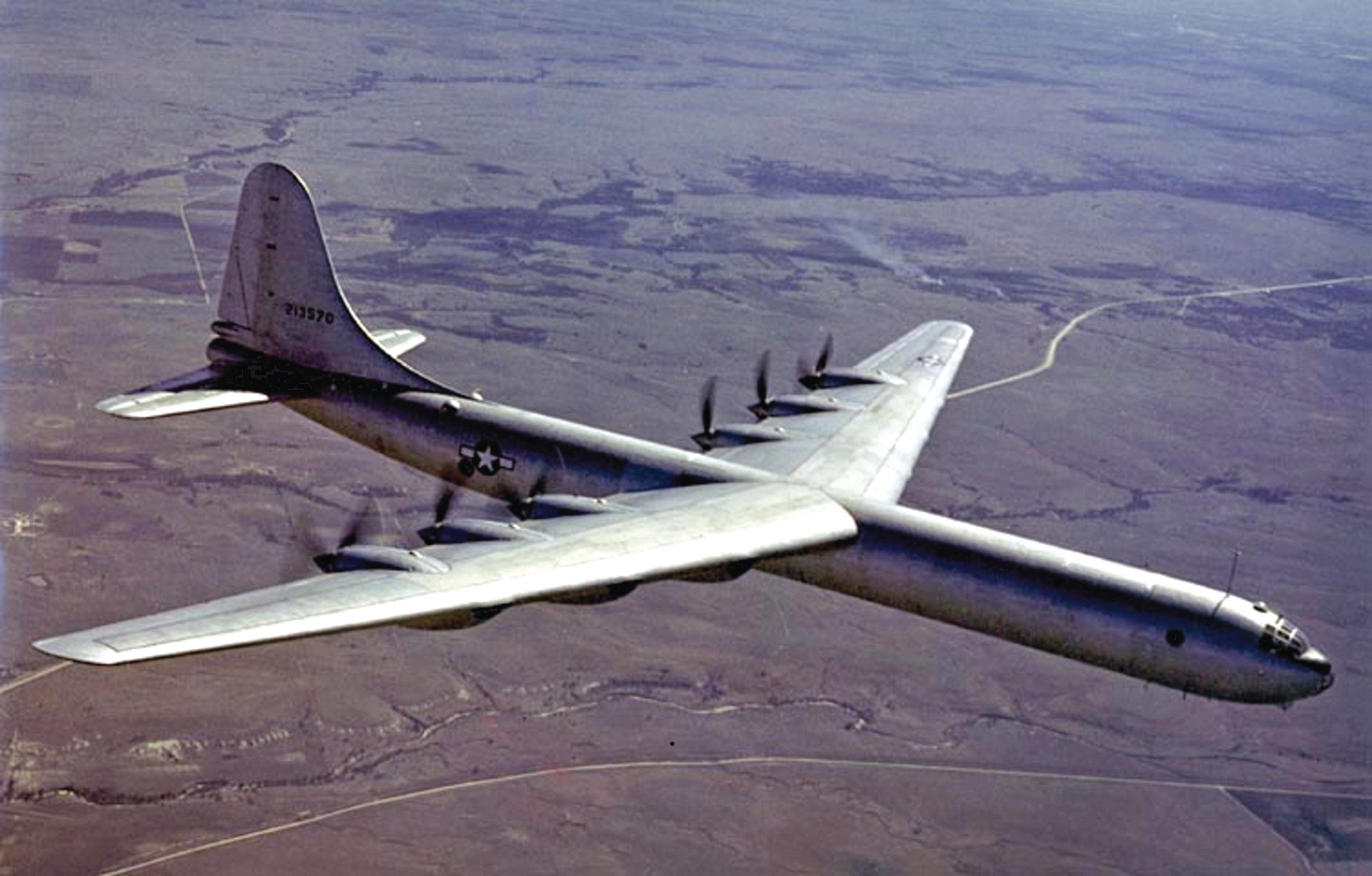
In the event, the war in the Pacific and the escalating US involvement in Europe shifted production priorities and funding away from the XB-36 to the Consolidated B-24 Liberator, and the Boeing B-17 Flying Fortress and B-29 Superfortress. Work continued on the XB-36 prototypes but it was not until the end of the war in the Pacific and the advent of the atom bomb that the project once more became a high priority.
First flight
In 1943 Consolidated merged with the Vultee Aircraft Corporation to form Consolidated-Vultee, soon abbreviated to Convair. The first XB-36 flight took place on August 8, 1946, when 42-13570 lifted off from Convair’s Fort Worth, Texas facility. Ground testing had already turned up innumerable problems, however, including turbulence caused by the huge propellers, which damaged the wing flaps.
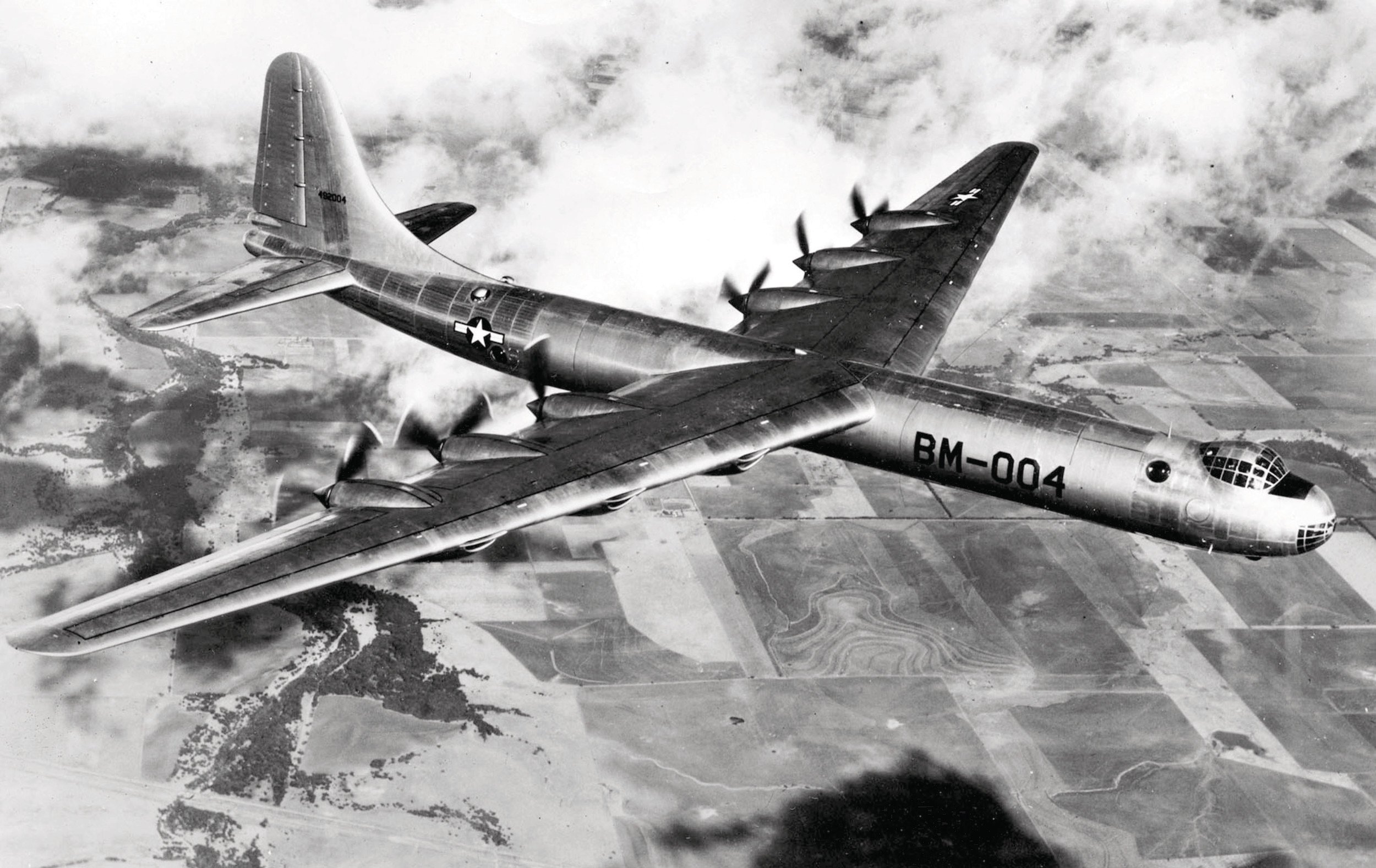
To study and test the structural integrity of the B-36 airframe, B-36A-1 44-92004 took to the air before the second prototype. It flew from Fort Worth to Wright Field, Ohio, where it was subjected to multiple tests as a static airframe.
The second prototype, 42-13571, now designated YB-36, first flew on December 4, 1947. Among the modifications made to its basic configuration was a new canopy that covered a redesigned cockpit layout for the pilot, co-pilot and flight engineer. The new cockpit and canopy improved crew visibility and efficiency greatly and allowed space for a gun turret in the nose.
General Electric BH-2 superchargers were also installed on the YB-36’s engines and became standard on the production B-36A. Powered by six 3,000hp Pratt & Whitney R-4360-25 Wasp Major air-cooled radial engines, the B-36A was largely a training aircraft and, although fitted with the AN/APQ-23 bombing navigation radar and AN/APG-3 gun-laying radar, it carried no offensive armament.
Peacemaker Evolution
The B-36B was a considerable improvement on the B-36A in avionics and performance. Its 3,500hp R-4360-41 Wasp Major engines featured water injection, effectively cooling the cylinders and allowing for increased power during take-off from shorter runways, as well as enhanced performance at medium and high cruise levels. An upgraded AN/APQ-24 bombing navigation system was installed, along with six remotely-operated retractable gun turrets, each armed with a pair of M24A-1 20mm cannon, plus two more M24A-1s in each of the nose and tail turrets.
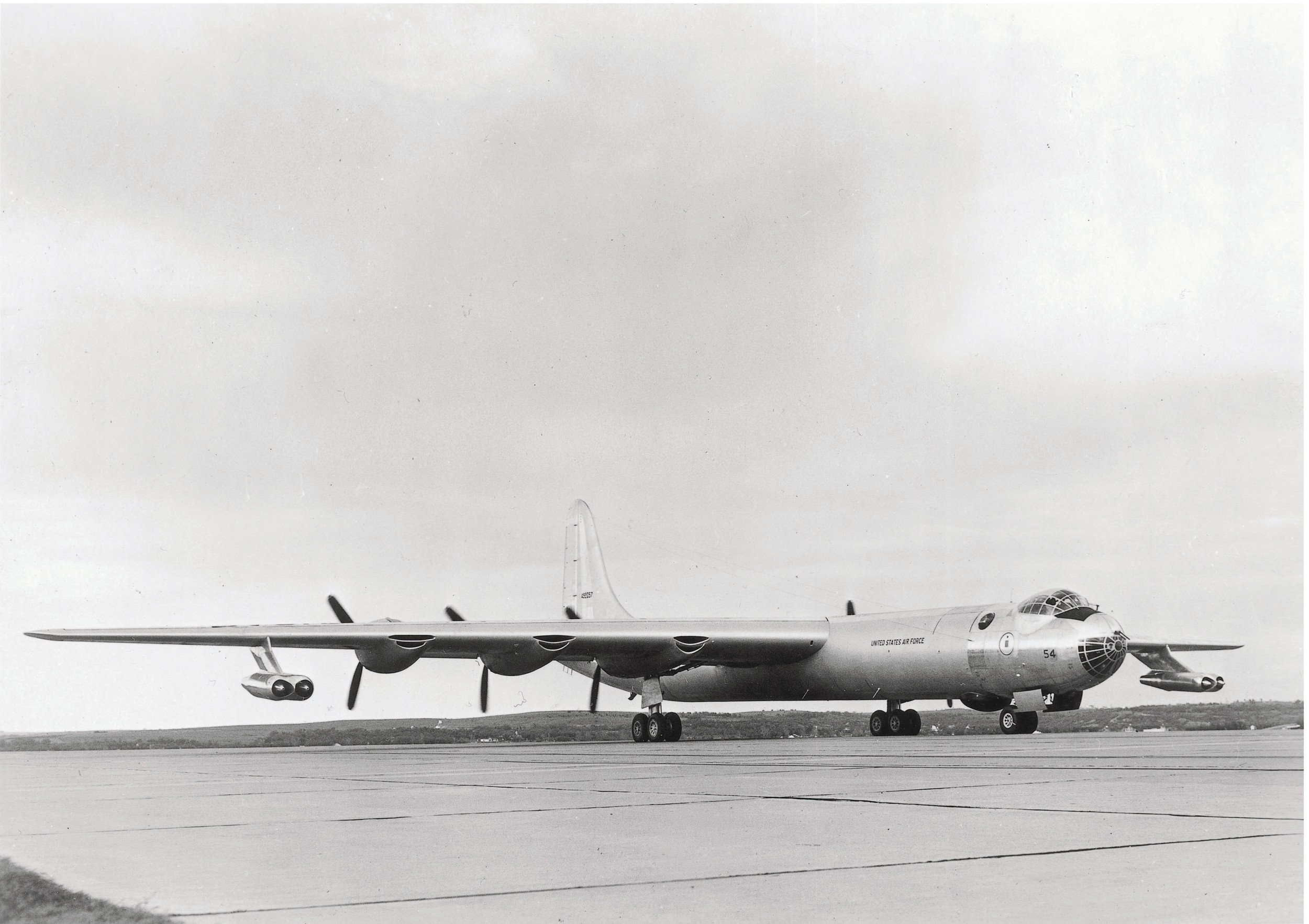
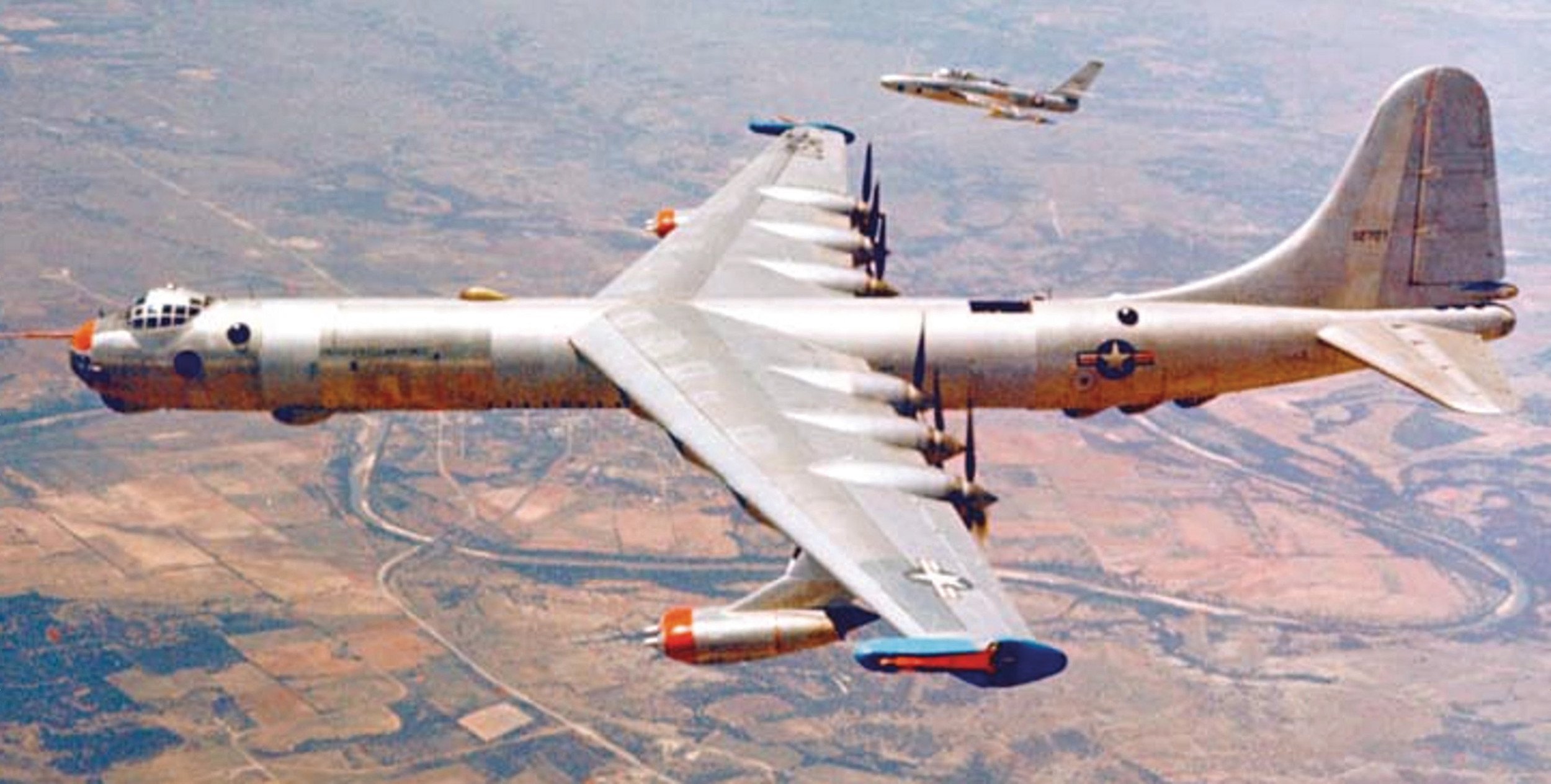
However, in spite of the upgrades and achievements of the aircrews in demonstrating mission capability, the aircraft still could not attain the altitude or speed required to ensure survival from fighter attack. In October 1948 Convair had proposed hanging a pair of turbojet engines under the aircraft’s wings to complement its piston engines and enhance its performance. In March 1949 B-36B 44-92057, fitted with four Allison J35 jet engines in twin pods took off from Fort Worth for its first flight. Additional tanks in the outer wings each held 4,200 US gal (15,944 litres) of jet fuel.
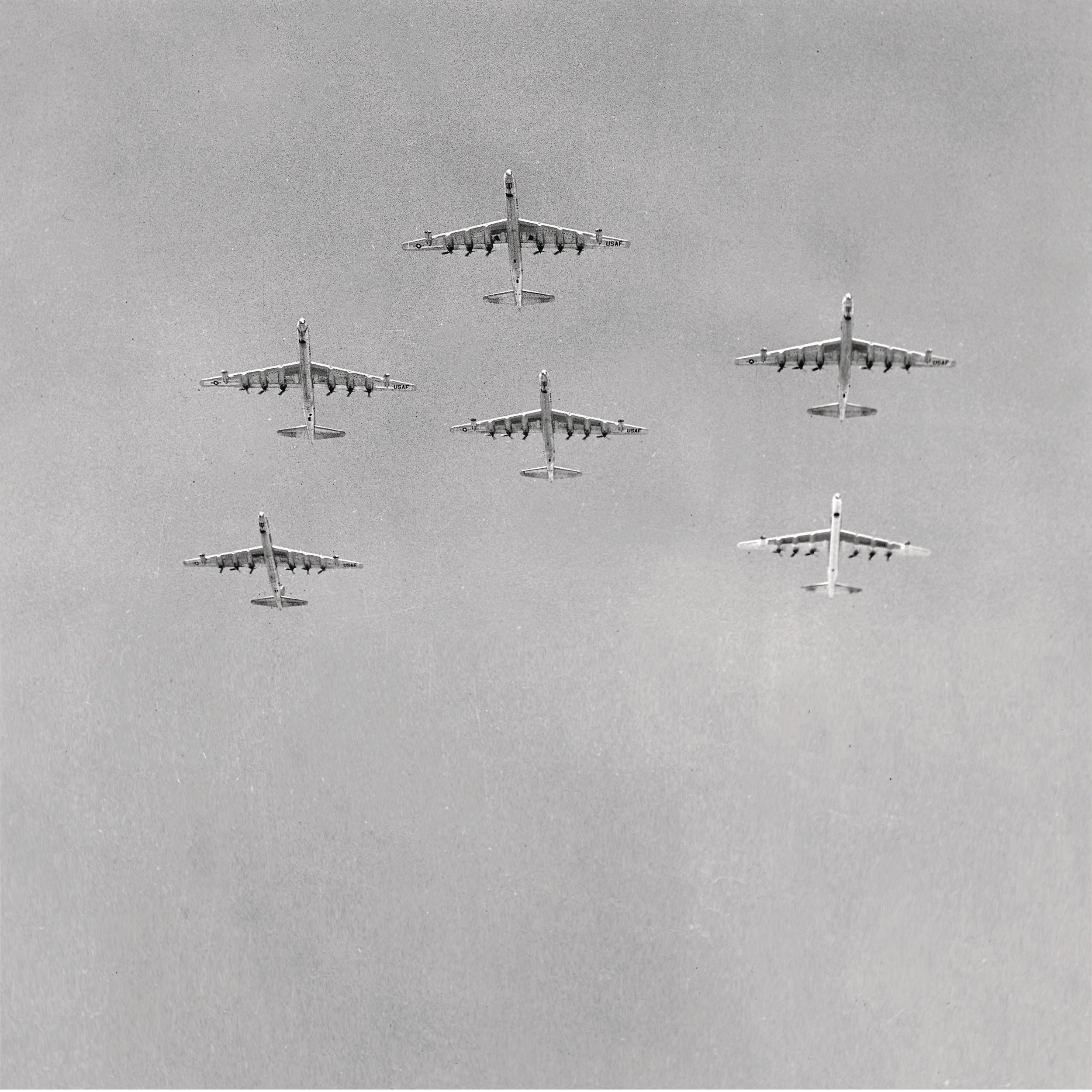
The improvement in performance was considerable. Almost immediately the aircraft was refitted with General Electric J47 engines as planned for the Boeing B-47 Stratojet, however, and on July 11, 1949 took to the air again. Not only did the J47s further increase maximum speed from 381mph (613km/h) to 435mph (700km/h) and altitude to 45,000ft (13,716m), but they also reduced the take-off run by 2,000ft (610m).
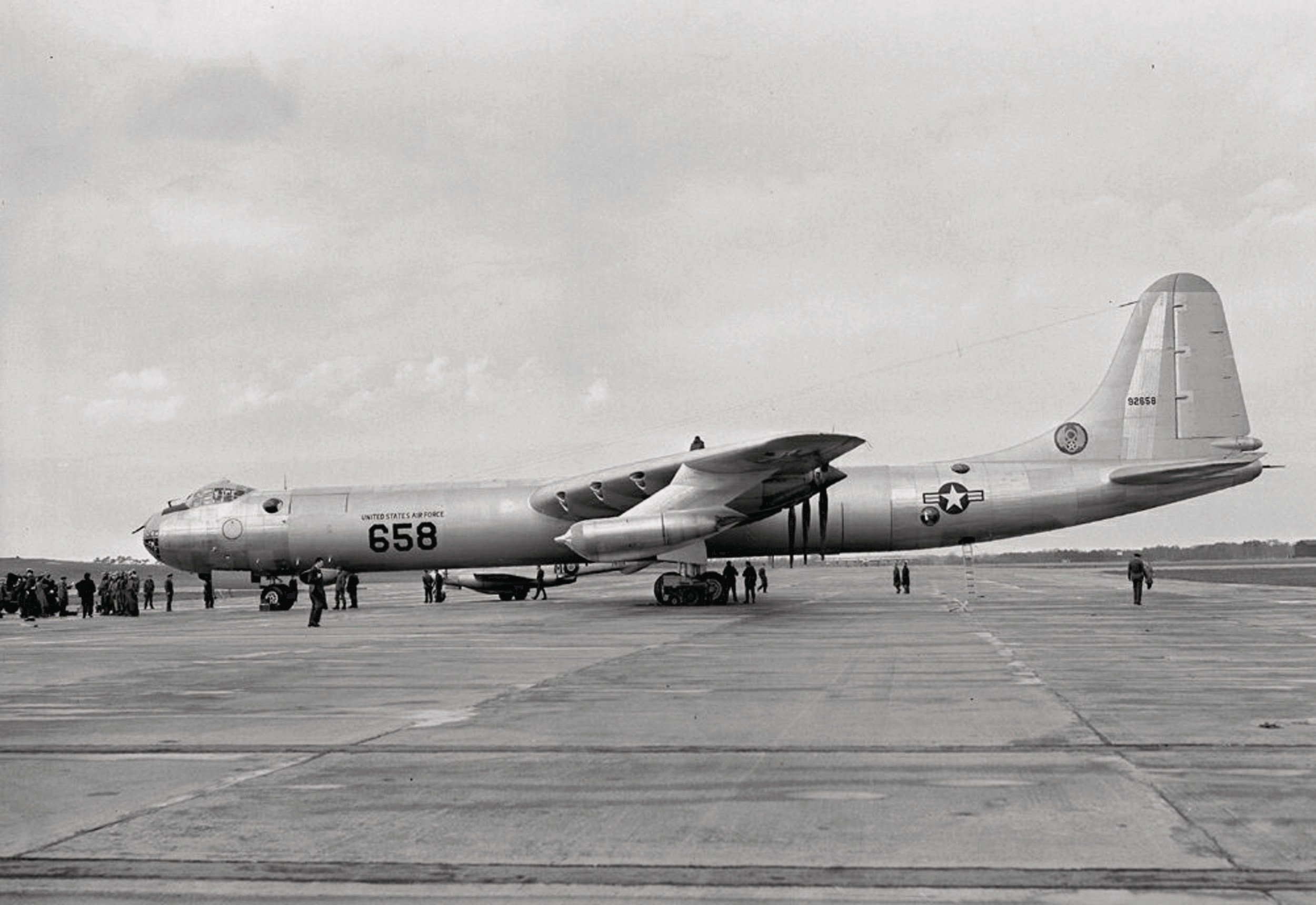
The first production Peacemaker variant fitted with jets was designated B-36D, the tractor-propeller B-36C having remained on the drawing board. A reconnaissance variant, the RB-36D was developed and entered squadron service in 1950 alongside the B-36D bomber, while 21 B-36As were converted for reconnaissance and fitted with jet engines under the designation RB-36E.
The RB-36D and RB-36E were configured for 14 cameras in their forward bomb bay, which was pressurised and had provision for a dark room for film developing. The second, central, bomb bay carried a maximum of 80 T-86 flash bombs. Additional fuel could be carried in the third bomb bay in a jettisonable 3,000USgal (11,356-litre) fuel tank, increasing the aircraft’s endurance to 50 hours. The fourth bomb bay carried electronic countermeasures (ECM) equipment.
The first B-36F, 49-2669, made its maiden flight in November 1950 and entered service in August the following year. The principle upgrade on the B-36F was its 3,800hp Pratt & Whitney R-4360-53 engines, while the K-3A radar system was fitted as standard, as was the AN/APG-32 gun-laying radar. A chaff dispenser was installed as part of the countermeasures suite.
The pure-jet B-36G flew for the first time in April 1952, as the YB-60 rival to the Boeing B-52, while that same month the first B-36H took to the air. It turned out to be the major Peacemaker production variant and a reconnaissance version, the RB-36H, was also produced. The major improvements incorporated in the B-36H were in its radar systems. The AN/APG-41 was considerably more effective than the APG-32 installed in the B-36F and was responsible for laying the bomber’s six remotely-operated, retractable fuselage gun turrets; a second radar (another AN/APG-41) was now installed in the tail for aiming the tail turret guns.
The B-36J was the final B-36 production variant, with two additional fuel tanks in the wings and strengthened undercarriage.
Featherweight Programme
To further improve the Peacemaker’s speed and combat ceiling, the USAF introduced the Featherweight programme in 1954. This awarded Convair a contract to reduce the weight of all the B-36s in the inventory. It entailed removal of all but the two tail guns, with the follow-on effect of reducing the number of crew by six, from 9 in the B-36 and 16 in the RB-36. Featherweight B-36 designations carried the suffix (111), for example B-36J(111).

Into Service
The first four B-36As were delivered to the USAF in June 1948 and the first Strategic Air Command (SAC) unit to receive the type, the 7th Bomb Wing at Carswell AFB, Texas, took aircraft from this initial batch. By the end of 1948, the 7th had taken delivery of 35 B-36As and several significant long-range flights were completed. In April 1948, 44-92013 made a non-stop shuttle trip between Fort Worth and San Diego, California, totalling 33 hrs 10 mins for a flight of 6,922 miles (11,140km); in May the same aircraft made a return flight from Fort Worth to Hawaii.
| B-36 Units | ||
|---|---|---|
| Unit | Base | Variants |
| 5th BW | Travis AFB, California | RB-36D, RB-36E, RB-36H |
| 6th BW | Walker AFB, New Mexico | B-36F, B-36H, B-36J(111) |
| 7th BW | Carswell AFB, Texas | B-36A to B-36J |
| 11th BW | Carswell AFB, Texas | B-36A to B-36J |
| 28th SRW (later BW) | Ellsworth AFB, South Dakota | B-36B, RB-36D, RB-36E, RB-36H |
| 42nd BW | Loring AFB, Maine | B-36D, B-36H |
| 72nd SRW (later BW) | Ramey AFB, Puerto-Rico | RB-36E, RB-36H |
| 92nd BW | Fairchild AFB, Washington | B-36D, B-36J |
| 95th BW | Biggs AFB, Texas | B-36H, B-36F, B-36J |
| 99th SRW (later BW) | Fairchild AFB, Washington | RB-36D, RB-36F, GRB-36D* |
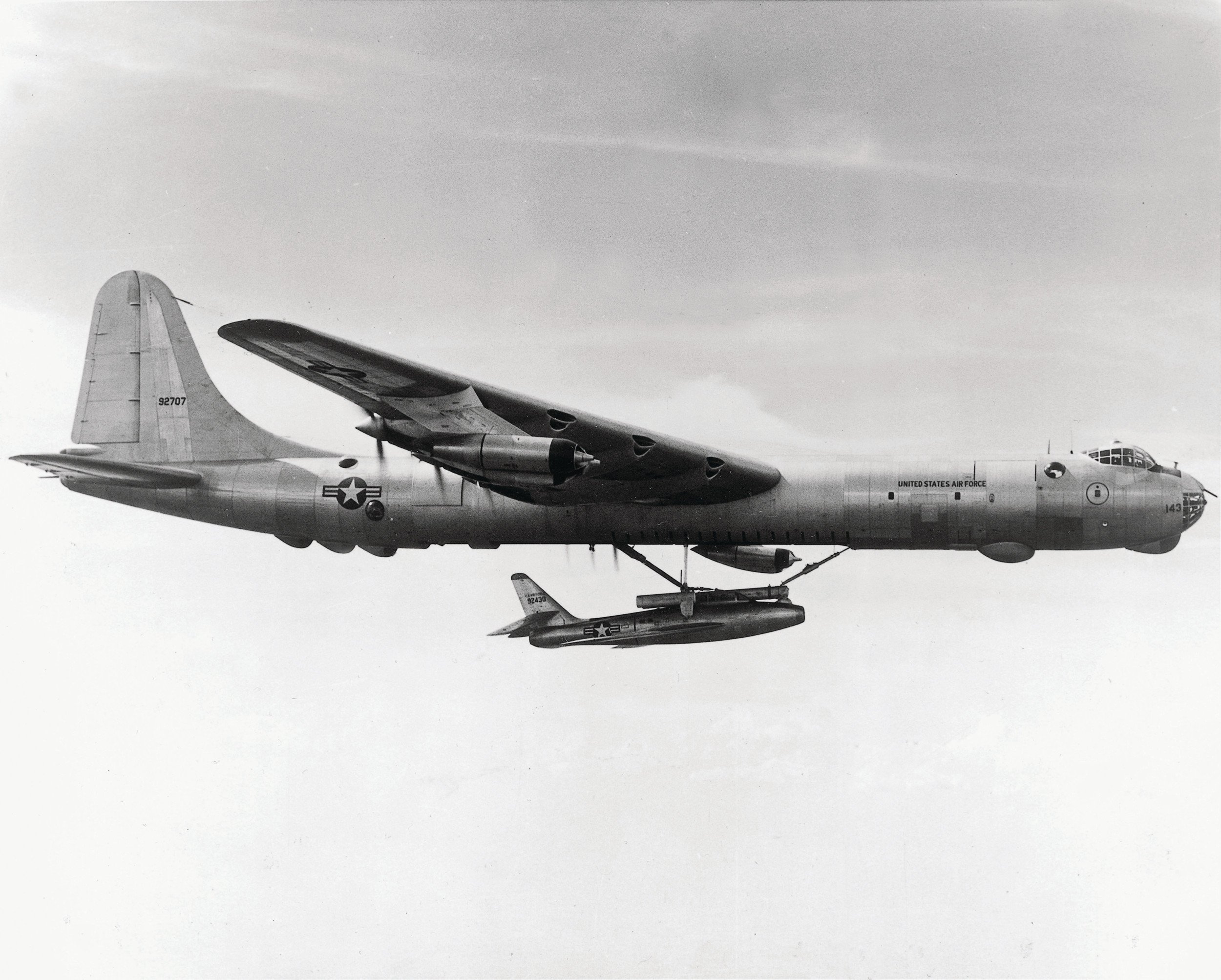
| *Eight specially modified RB-36Ds were briefly assigned to the 99th SRW as part of the FICON (Fighter Conveyor) project. Each was designed to carry a Republic RF-84K tactical reconnaissance fighter on an under-fuselage trapeze for release into a combat zone. | ||
The first B-36B entered service alongside the 7th BW’s B-36As at Carswell. It was a more capable aircraft than the B-36A and through 1948 and 1949 the 7th BW did much to develop the B-36B’s role, laying particular emphasis on refinement of the long-range mission and delivery of heavy ordnance. Through December 7 and 8, 1948, a B-36B flew a simulated bombing mission from Carswell to Hawaii. It carried a 10,000lb (4,540kg) bomb load, which was dropped in the Pacific a short distance from the islands. The B-36 was in the air for 35 hrs 30 mins and covered a distance just in excess of 8,000 miles (12,875km).
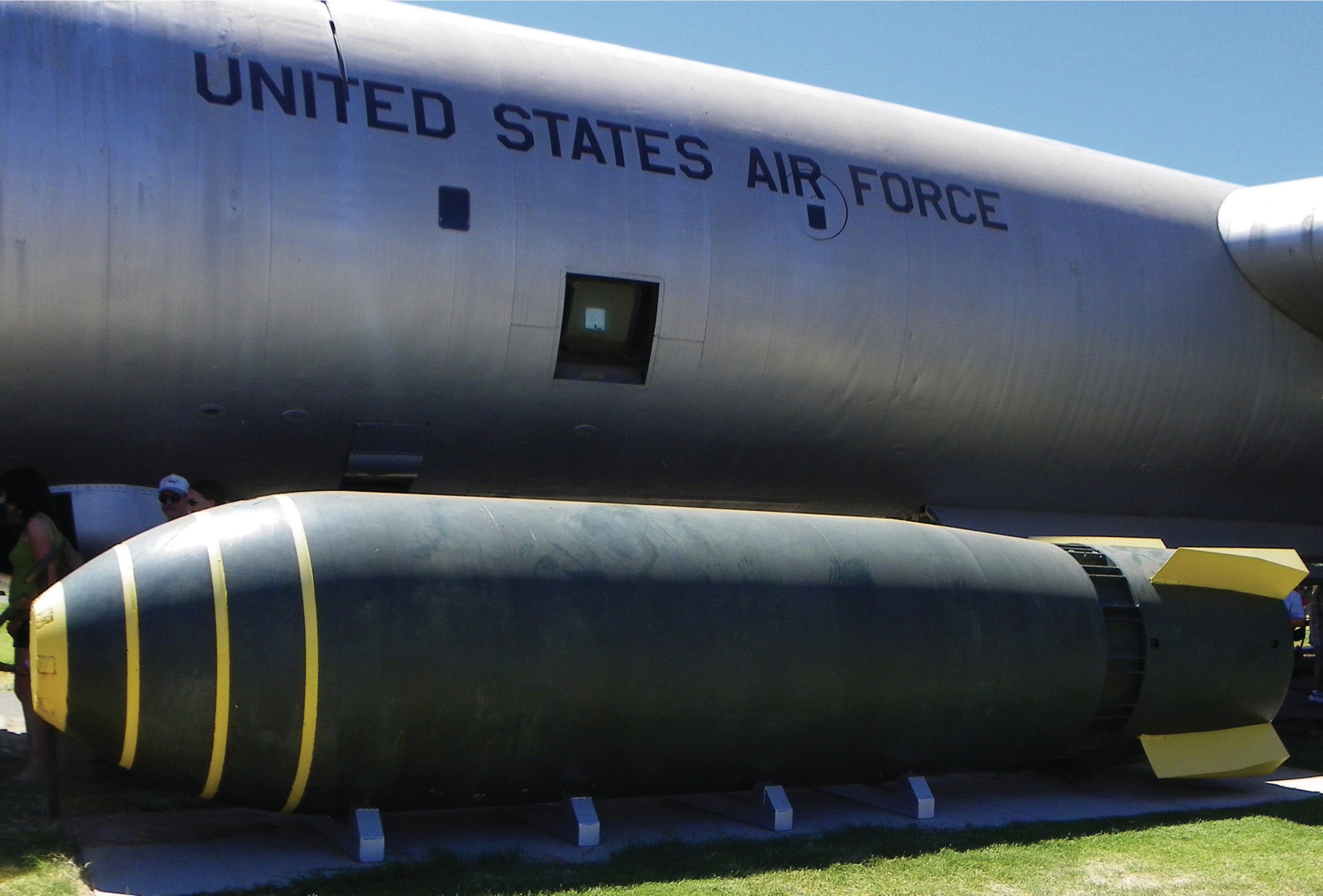
On January 29, 1949, Major Stephen Dillon, flying a B-36B from Muroc AFB, California, carried a pair of dummy 43,000lb (19,504kg) T-12 Cloudmaker bombs to a height of 35,000ft (10,670m). The first bomb was dropped at this altitude and the Peacemaker then climbed a further 5,000ft (1,524m) before dropping the second bomb.
Flying the B-36
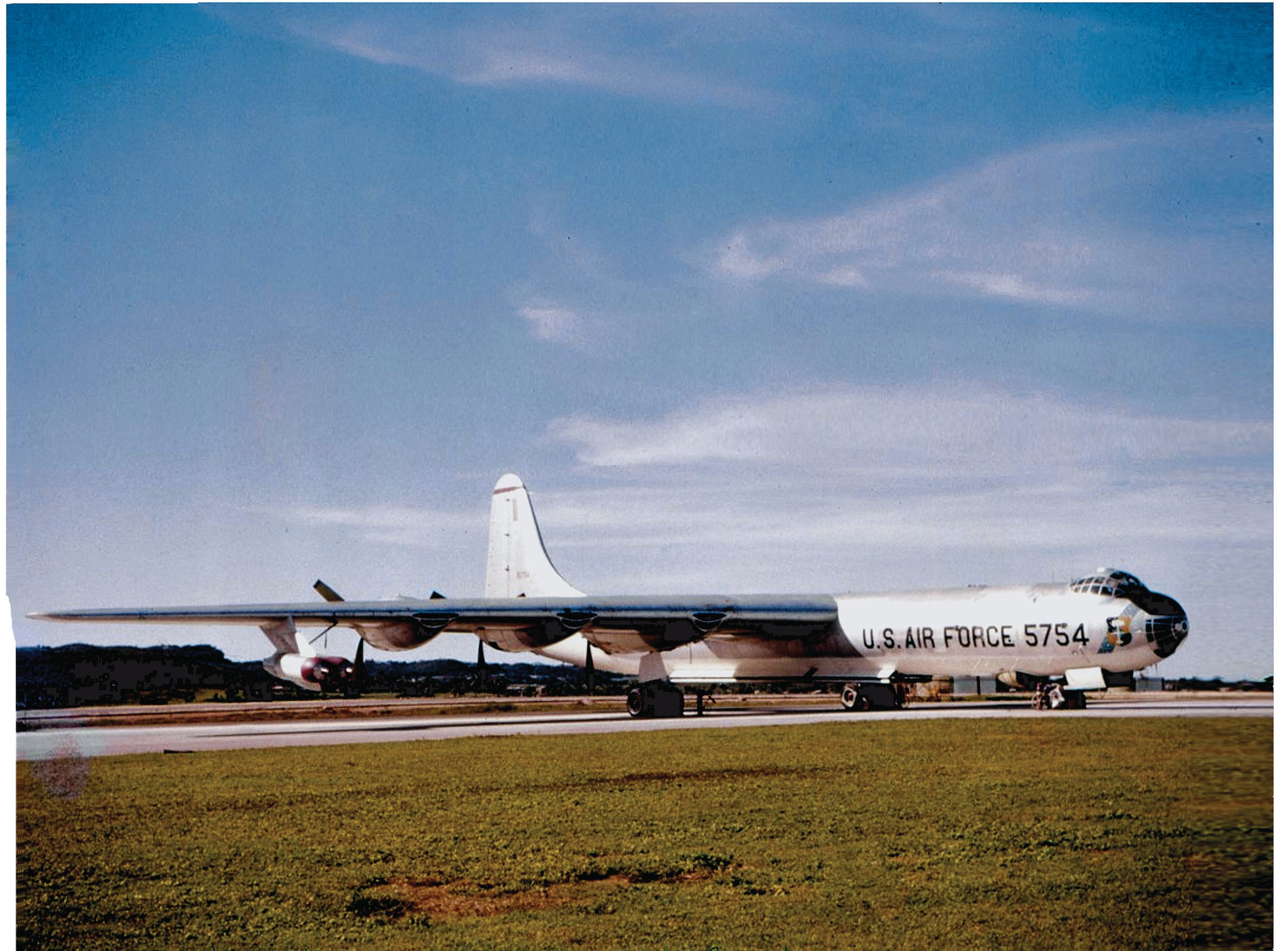
Colonel James V Edmundson was commander of the 92nd BW at Fairchild, Washington, in 1953 and described flying the aircraft: “The B-36 really wasn’t much fun to fly. It was a gigantic thing. They used to say it was like sitting on your front porch and flying your house around. It was big on the outside and small on the inside, very cramped for the crews, and the missions were long.”
First Lieutenant Ted Morris was a B-36J(111) Aircraft Performance Engineer, joining Strategic Air Command in 1955. He flew with the 40th Bombardment Squadron, 6th Bomb Wing out of Walker AFB, Roswell, New Mexico. He describes the difficulties in preflighting such a large and multi-engined aircraft: “The engineers’ preflight always involved ‘crawling the wing’. While each engineer nominally had a wing to preflight, in practice the first engineer did the paperwork while the second engineer crawled both wings. This required climbing up the left main landing gear into the wing crawl area ahead of the inboard and centre engines, then crawling out to the inboard side of the outboard engine.
“Along the way, he checked fuel and oil lines and numerous fuse and circuit breaker panels. Reversing direction, he returned through the left wing into the forward bomb bay area and into the right wing, conducting another inner wing inspection. He exited the wing through an access panel and down to the ground by way of a maintenance stand provided by the ground crew. Sometimes a stand was not available, so then it was back through the wing and down the right main landing gear. This routine was guaranteed to thoroughly soak the second engineer in sweat!

“Of course, working in the hot and cramped area in the wings sometimes led to mistakes. For example, I once failed to detect three 10-amp fuses in the left wing flap system in place of the 20-amp fuses required. When the flaps were retracted on climb-out, the 10-amp fuses blew out, leaving us with asymmetrical flaps. The aircraft commander depressurised the aircraft and held below 10,000ft (3,048m) while I crawled out through the two forward bomb bays into the wing.
“I had to squeeze past the retracted landing gear (the tyres were very hot and smelled horrible), over the air ducts of engine numbers three and two, and out to the fuse panel. After replacing the blown 10-amp fuses with the proper 20-amp fuses, I made the long crawl back through the bomb bays to the forward pressurised compartment. There I got a chewing out from my first engineer, and some first aid for a nasty burn on my leg from a very hot oil line on number two engine.”
The Atomic Mission
The B-36 was developed for two primary missions. The first of these was long-range atomic bomb delivery and the second was strategic reconnaissance. The former entailed long-distance flights and bombing exercises, rarely with atomic bombs aboard. However, Emergency War Order (EWO) operations were practised. An EWO would normally be issued in the event of an imminent attack on the US or its allies, but was also issued at times of tension, such as during the Suez Crisis and the Hungarian Revolution in 1956, but SAC often flew EWO test missions with fully armed B-36s.
The Peacemaker could carry any of the nuclear bombs in the USAF arsenal, but its principal weapon was the 43,000lb (19,504kg) Mk 17 hydrogen bomb. It would be carried in the merged aft bomb bays, originally designed as two separate bays, along with a smaller devices, such as the Mk 6 or 7, in each of the forward bomb bays.
In 1953 the 92nd BW, based at Fairchild AFB, Washington and equipped with B-36Ds, undertook Operation Big Stick, as Colonel Edmundson explains: “Big Stick was one of the most unusual missions we flew in the 92nd. In August 1953, negotiations were under way for the ending of the Korean War and nobody trusted the North Koreans. It was decided to send 20 B-36s to the Far East with atomic weapons on board. The aircraft sat alert on Okinawa, ensuring that the North Koreans would continue talking.
“Big Stick was an appropriate name for the operation. I took off with 17 airplanes for Eielson AFB in Alaska. We were not loaded with complete atomic weapons, just the outside shell, or ‘shape’. Nuclear inserts could be added later. We sat alert on Okinawa for about ten days in all our atomic splendour. The peace treaty got signed successfully up in Korea, Big Stick was declared concluded and we took off for Fairchild like a flight of ten-engined geese. The 92nd was later given an Outstanding Unit Award for Big Stick. It was a one-of-a-kind operation.”
Colonel Edmundson also recalled another Peacemaker mission that was typical of many flown during the 1950s. It involved a simulated attack on the United States. “In March 1957, during the operational exercise White Horse, the 6th Bomb Wing flew a Unit Simulated Combat Mission (USCM) from Walker AFB, New Mexico to Hickam AFB, Hawaii; then on to the forward strike base at Anderson AFB, Guam. The exercise mission was then launched against simulated targets at Zamboanga on Mindanao Island, Philippines; T’ainan, Formosa; and Tokyo, Japan. After successfully ‘bombing’ these targets during a single non-stop sortie, we landed for post-strike debriefing at Kadena AB, Okinawa.
“But training missions were child’s play. Our real life revolved around the mission assigned to us under the SAC War Plan. Being located in the northwestern corner of the United States, our targets were in Asiatic Russia. Our routes took us north across Alaska and Canada, passing fairly close to the North Pole and approaching Siberia from across the ice cap. Crews hitting targets in the maritime provinces could recover, post-strike, back at Fairchild. Those hitting targets in central Siberia were scheduled to recover at Okinawa, pick up a load of fuel and head for home.”
The North Pole route was not always the most effective way of approaching the Soviet Union, and strategically located forward bases were established that would enable the bombers to approach their targets more directly. Forward operating bases were Guam in the Pacific, Sidi Slimane in Morocco, Thule in Greenland and at locations in Alaska and the United Kingdom.
Ted Morris recalls a deployment to Thule: “We loaded all our flying gear, 30,600 gallons of AVGAS, and flew a 15-hour mission to Thule at 25,000 and 35,000ft altitudes. The performance engineer was responsible for refuelling the aircraft to complete the practice target attack and during the 30 hours on the ground, the 26th Aviation Depot Squadron brought out a live war-reserve Mk 17 bomb, loaded it into the aircraft, then downloaded it and returned it to one of the underground munitions storage igloos. After the bomb uploading/downloading practice, the complete aircrew assembled at the aircraft to begin the ‘meaty’ portion of the USCM, a 15-hour mission, much of it at a bombing altitude of 43,500ft.
“We flew east towards Spitzbergen Island, then reversed direction and flew towards our simulated target of Point Barrow, Alaska, then turned back to Thule. Our course was tracked by Soviet radar and fighter aircraft, which this type of mission was designed to do. We sort of walked softly while simulating carrying a big stick, showing the flag, to rattle their cages. At our Thule ‘post strike’, maintenance personnel once again put the aircraft back into condition for the return to Walker AFB. The 26th ADS also got to practise another upload/download operation. Everything completed, we boarded the aircraft to make a 20-hour flight back to Walker AFB, ending a seven-day USCM.”
Over Here
From 1950, Peacemakers were regular visitors to the United Kingdom. In January 1951, aircraft of the 7th and 11th BWs flew to RAF Lakenheath, Suffolk. Eleven B-36Ds took off from Carswell AFB on January 14, bound for Limestone AFB, Maine. Three aircraft returned to Carswell and two more aborted with engine problems, but six made the Atlantic crossing to night bomb a target on Heligoland off the coast of Northern Germany. They then continued over London and conducted a simulated bomb run on the Heston Bomb Plot (via the 12th Radar Bombing Scoring Squadron’s radar facility at Heston), landing at Lakenheath on January 16. The aircraft returned to Carswell on the 20th.
In June 1951, the 7th BW flew a detachment of three RB-36Ds to RAF Lakenheath, one aircraft from each of its three units, the 9th, 436th and 492 Strategic Reconnaissance Squadrons (SRS). The aircraft flew to the Paris Air Show on the July 1, returning the same day. The 7th BW returned to the UK in December 1951 to take part in the first RAF Bombing Competition as observers and non-competitive participants. For the purposes of the competition the Peacemakers operated out of RAF Sculthorpe. On January 26, 1952 a detachment of four B-36Ds of the 7th BW returned to RAF Sculthorpe. Apart from the Paris Air Show, the only other landing on mainland Europe was by a B-36H of the 7th BW at the Geneva Air Show in 1955.
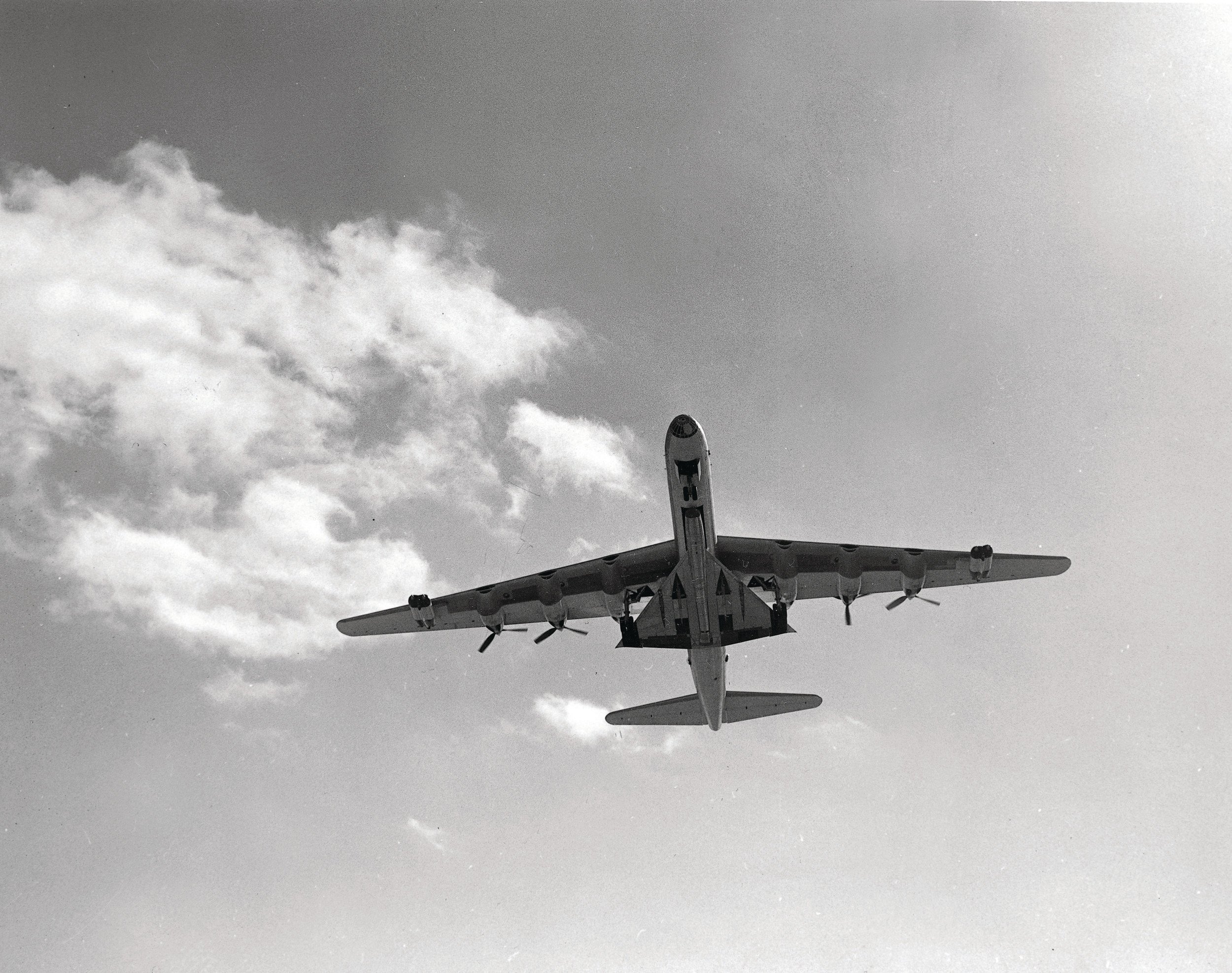
The B-36 was involved in a number of atomic tests. One of these was Operation Teapot from February to May 1955. Fifteen atomic tests were carried out over the Nevada desert under the auspices of Teapot, the majority of them tower detonations but there were three airdrops. Two of these, codenamed Wasp and Wasp Prime, were low-altitude B-36 drops from 737ft (225m). The third detonation, codenamed HA, was a high-altitude airdrop from a B-36H at 36,620ft (11,162m). The aircraft’s 3.2-kiloton device was parachute retarded to allow the B-36 to egress the area; there is no record that the low-altitude drops employed retarded weapons.
Intelligence Gathering
Strategic Reconnaissance was envisaged as a B-36 role early on in the type’s career. Starting in June 1950, RB-36Ds were delivered to the 28th Strategic reconnaissance Wing (SRW) at Rapid City AFB, South Dakota and the 5th SRW at Fairfield-Suisun AFB, later Travis AFB, California. Rapid City was renamed Ellsworth AFB in June 1953. Both units also received RB-36Es. The RB-36D and RB-36E were fitted with Fairchild K-17, K-22, K-38 and K-40 cameras in a variety of configurations.
Later Peacemaker reconnaissance versions were the RB-36F and RB-36H. A considerable amount of the strategic reconnaissance wings’ photographic work consisted of routine mapping and surveillance operations over the US mainland and other areas of the globe. They were undoubtedly also engaged in clandestine missions against the Soviet Union and China. The 5th SRW, which had converted to the RB-36 from the RB-29 Superfortress, had been heavily involved in such flights since the end of World War Two.
Although evidence of 5th SRW RB-36 overflights is inconclusive, there is no doubt that they conducted Peacetime Airborne Reconnaissance Program (PARPRO) flights that did not involve violating the territorial integrity of the ‘enemy’. Intelligence was gathered by flying along the borders of an opposing nation and collecting data by electronic or photographic means. The USAF had conducted such flights from as early as 1946.
Some of these flights were purportedly flown from the United Kingdom. It has been reported that 72nd SRS, 5th SRW RB-36Ds detached to RAF Sculthorpe as early as November 1950 for PARPRO flights over the Arctic, in the vicinity of the Soviet atomic testing site at Novaya Zemlya.
Missions over the Soviet Far East and China were regularly flown, notably by the 5th SRW out of Travis. A typical mission would take the B-36 to Fairbanks AFB, Alaska and from there a route down the eastern coast of the Soviet Union and China was flown, recovering at Guam or Hawaii before returning to Travis.
| B-36s on display | |||
|---|---|---|---|
| B-36J | 52-2827 | Pima Air Museum | Tucson, Arizona |
| RB-36H | 51-13730 | Castle Air Museum | Atwater, California |
| B-36J | 52-2217 | Strategic Air and Space Museum | Ashland, Nebraska |
| B-36J | 52-2220 | US Air Force Museum | Dayton, Ohio |
Phase Out
The last SAC Peacemaker, B-36J(111) 52-2827 left the 95th BW on February 12, 1959. The Boeing B-52 Stratofortress began to replace the B-36 as early as 1956 when the 42nd BW relinquished its examples for the B-52C. The B-36 Peacemaker never dropped a bomb in anger. Its role as a deterrent in the 1950s, when the Cold War was at its peak, is its greatest legacy. While it may not have been a ‘peace maker’ it was certainly a ‘peace keeper’.