



Petroglyphs are rock carvings created by removing the surface layer of rocks using stone tools or other hard instruments.
These ancient marks not only showcase the artistic expressions of their creators but also provide important insights into the lives, beliefs, and practices of prehistoric societies.
The Bronze Age in Scandinavia, spanning a period from approximately 1700 BC to 500 BC, left behind many wonderful petroglyphs to help us understand this era of human development.
This was a remarkable phase in the development of Nordic societies — as metalworking skills progressed, communities evolved in terms of social organisation, trade, and artistic expression.
Their petroglyphs today shed light on various facets of society during this time, from rituals and beliefs to day-to-day activities and interactions with nature.
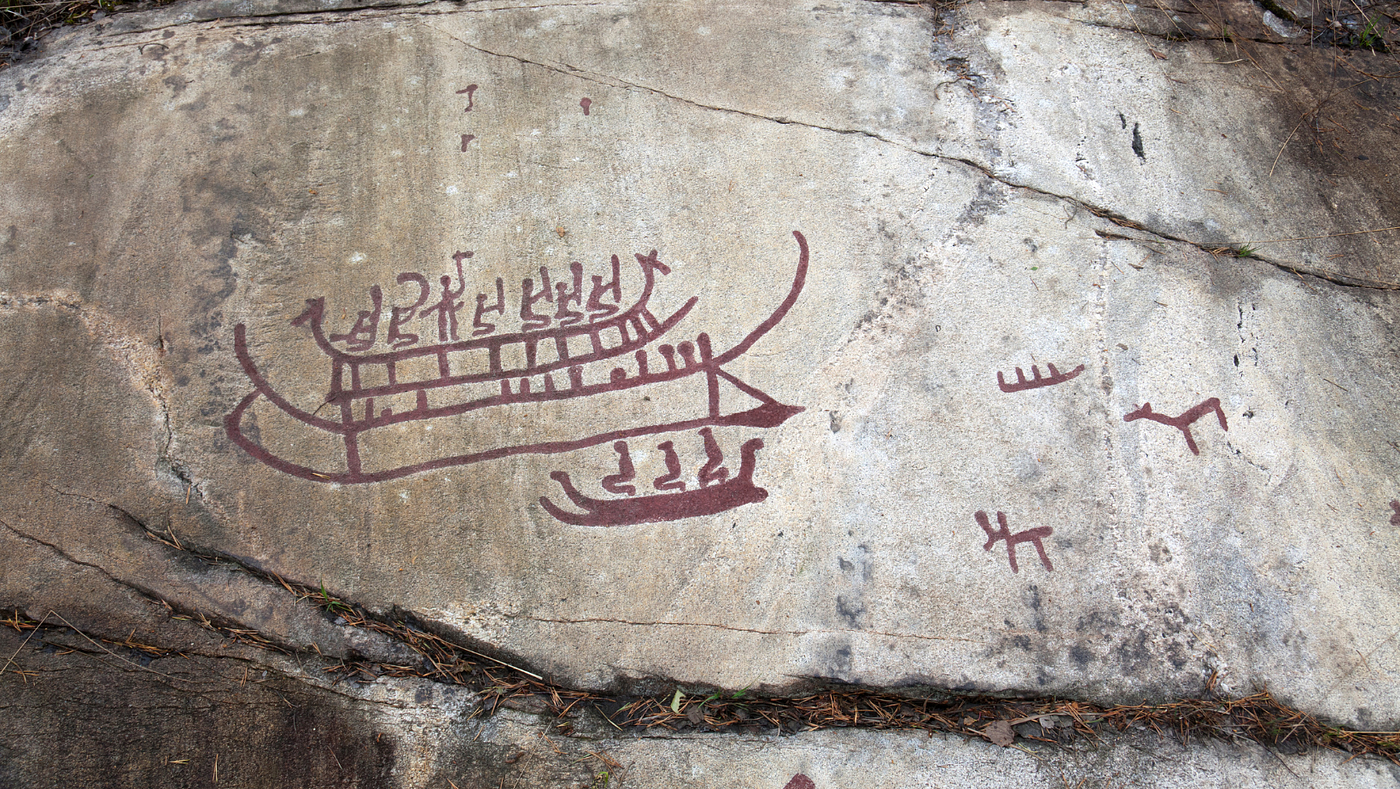
Sweden’s Petroglphys
Sweden, cradled by ancient mountains and serene lakes, houses some of the most detailed and prolific rock art in the region.
In places like Tanumshede, rock art, like those shown above, portray a myriad of scenes and symbols, illustrating the varied facets of life and the complexities of Bronze Age thought there.
Tanumshede lies in the western coastal region of Bohuslän, with sites that are among the most densely decorated in Europe.
Often featuring a distinctive style, and showcasing meticulous attention to detail, the motifs of wagons, ploughs, and other tools suggest an agricultural society that was well acquainted with the techniques of the age.
Alongside these, depictions of people and animals hint at societal hierarchies, relationships, and possibly even mythologies.
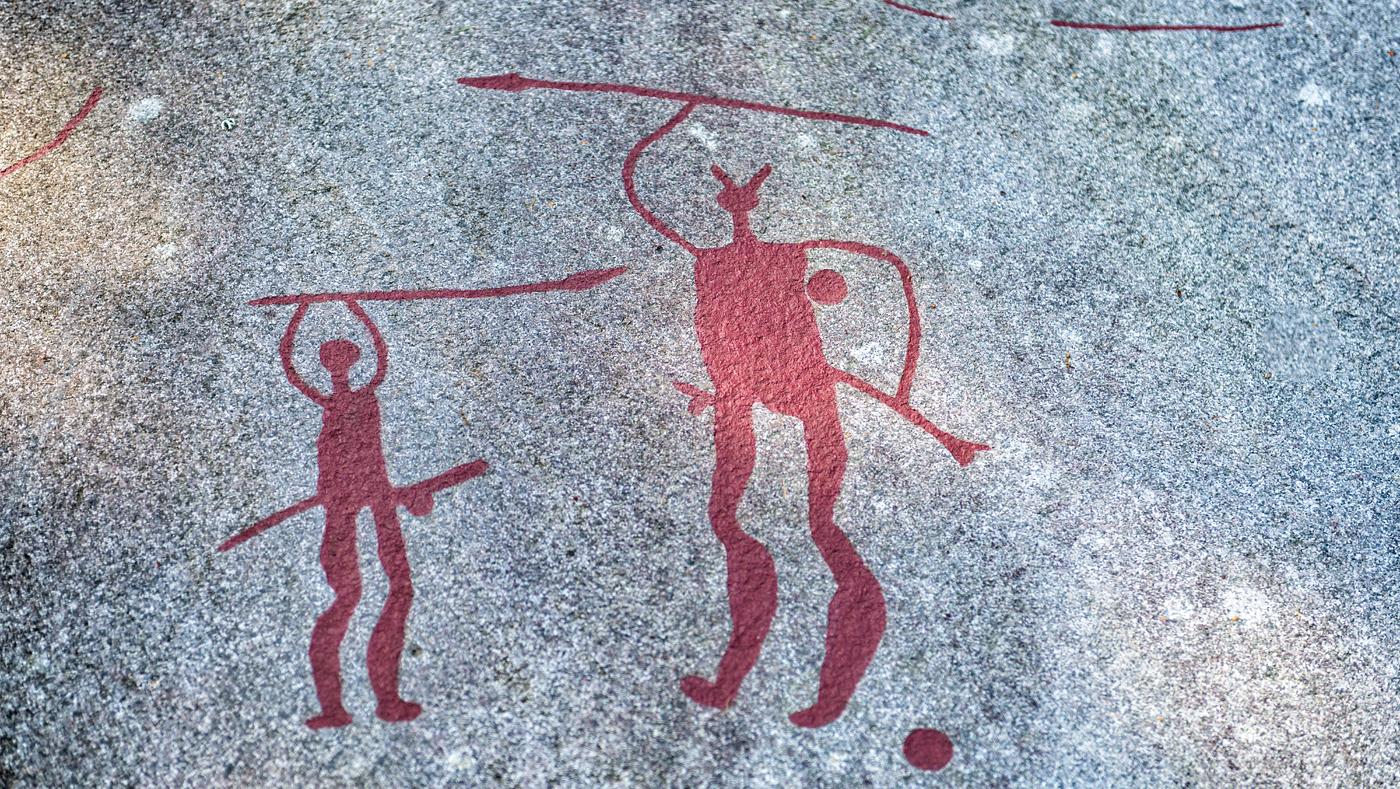
Venturing further south, Halland emerges as another significant hub of Swedish petroglyphs. The carvings in this region bear a strong resemblance to those in Bohuslän but have their own unique nuances too.
Scenes in Halland are replete with warriors holding shields and weapons, possibly alluding to the territorial disputes or inter-tribal conflicts of the era.
Uppland, in the eastern part of the country, the petroglyphs frequently depict boats, which might indicate not only the importance of waterways but also the spiritual or ceremonial significance attached to them.
The occurrence of solar and lunar symbols there also suggests a deep-rooted reverence for celestial bodies and their role in the agricultural calendar.
Across all these regions, there are certain recurrent themes though. Scenes of hunting and gathering are ubiquitous, reflecting a society that heavily depended on its natural surroundings.
Human figures in various poses possibly indicate rituals, celebrations, or even early forms of governance.
Norway’s Petroglyphs
Norway, with its striking fjords and mountainous landscapes, has been a silent witness to millennia of human activity.
The town of Alta, situated in Norway’s northernmost county of Finnmark, is perhaps the most renowned when it comes to petroglyphs. This area alone boasts thousands of carvings, making it a focal point for researchers and enthusiasts alike.
The carvings in Alta, estimated to be between 7,000 to 2,000 years old, display a wide variety of motifs.
They vividly depict scenes from everyday life, including hunting escapades involving deer and reindeer, as well as fishing activities, showcasing the strong bond between the region’s inhabitants and their natural environment.
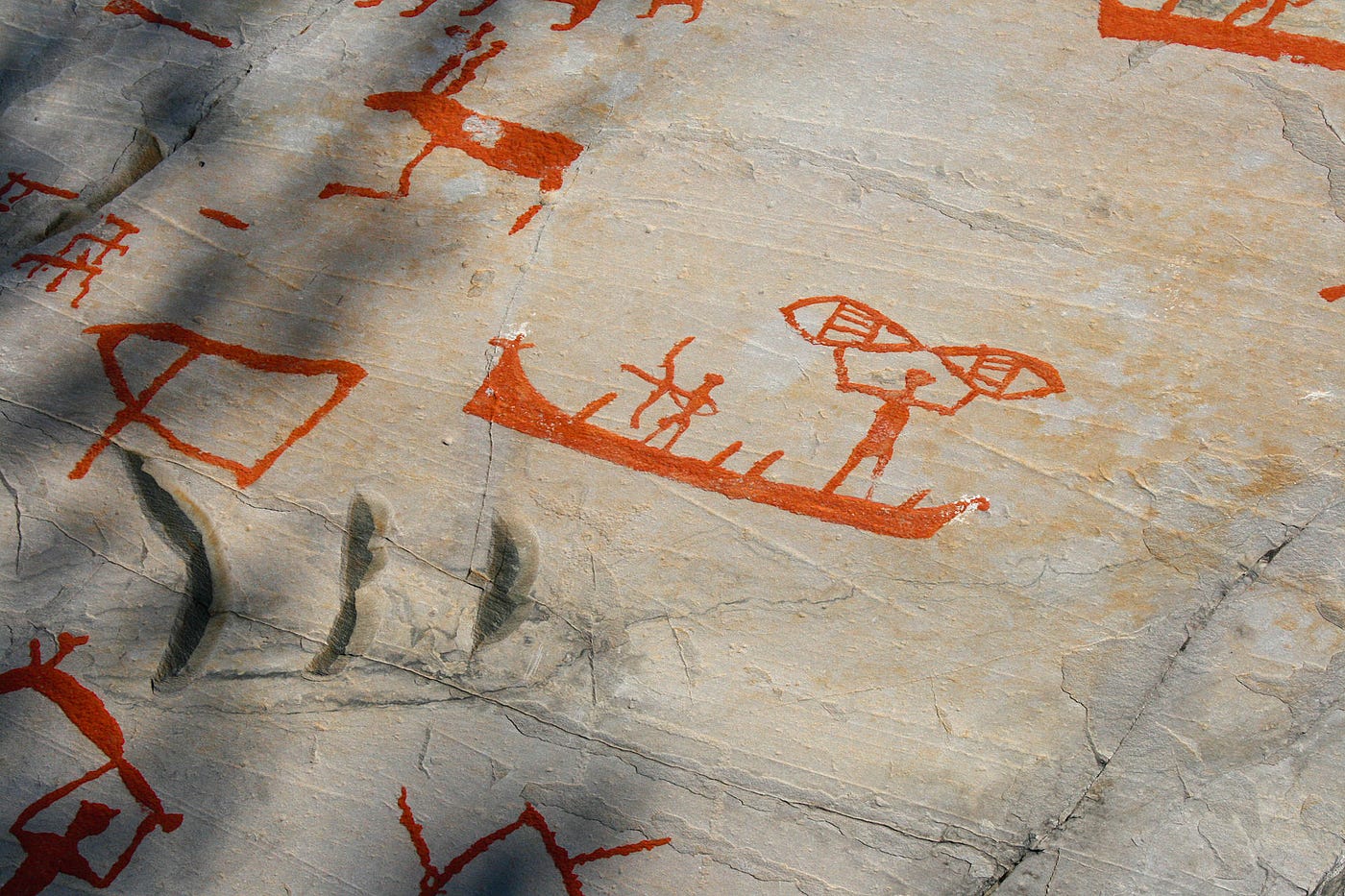
The sharp outlines and detailed internal markings, especially in the portrayals of animals, give a sense of movement and life to these static engravings.
They shed light on religious practices, social structures, and the overarching worldview of these ancient communities.
It’s fascinating to discern the shifts in themes too, from purely survival-focused illustrations to more complex societal and spiritual expressions as time progressed.
Finland Petroglyphs
Located predominantly in the southern and eastern parts of Finland, one particularly notable site is the Astuvansalmi rock paintings in Ristiina.
These engravings, believed to be among the largest in Scandinavia, present a pantheon of motifs, from human figures to various animals, each laden with significance.
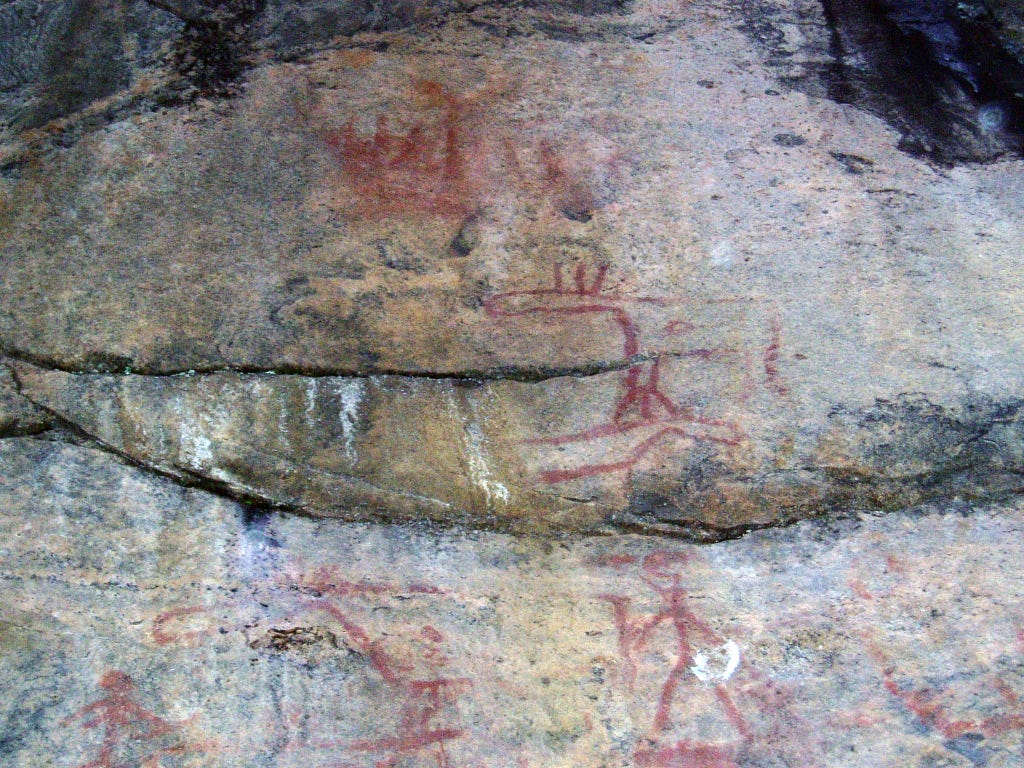
The recurring images of elks, for instance, suggest the prominence of this creature in Bronze Age Finnish society. Whether as a primary source of sustenance or a symbol of strength and adaptability, the elk emerges as a central figure in the petroglyph narrative.
Similarly, scenes depicting warfare and hunters underscore the importance of conflict and survival, reflecting a society that was as much about collaboration as it was about competition.
Intriguingly, many of Finland’s petroglyphs also depict scenes with possible shamanistic connotations. Figures that seem to be in trance-like states, surrounded by animals or bearing distinct markings on their bodies, hint at the spiritual rituals and beliefs of the time.
This emphasis on shamanism sheds light on the intricate belief systems and the pivotal role spiritual leaders might have played in guiding and shaping societal norms and practices.
However, it’s not just the motifs that captivate researchers and enthusiasts; the locations of these petroglyphs in Finland also tell a story.
Often found near water sources like lakes or rivers, these sites may have been chosen for their accessibility or perhaps their significance in rituals and daily life.
Water, after all, was a critical resource, and its proximity might have had both practical and symbolic meanings.
Denmark’s Petroglyphs
Denmark’s petroglyphs are predominantly found in the Jutland peninsula.
One recurring motif here is the representation of wheeled vehicles — a clear indication of the significance of transportation and possibly trade during this time.
These depictions hint at advancements in technology and perhaps even a burgeoning network of overland trade routes that connected various communities.
Agriculture, with ploughs and fields make regular appearances too, reflecting the agricultural progression of the region, where farming wasn’t just a subsistence activity but played a foundational role in the society’s economy and way of life.

Denmark’s petroglyphs also show a pronounced fascination with celestial phenomena. Images of the sun, in particular, stand out, suggesting its importance in religious or spiritual contexts.
Such depictions likely symbolised the cycles of life, time, and perhaps even seasons, emphasising the likely deep connection the Bronze Age Danes felt with the natural world and its rhythms.
In some areas, the carvings seem to revolve around rites of passage or significant life events.
Scenes of birth, death, and ceremonies provide a window into the personal and communal milestones that were important enough to be immortalised in stone.
Techniques and Tools Used in Petroglyph Creation
The primary tools for petroglyph creation during the Bronze Age were hard stone chisels and hammers. These stone tools, often fashioned from flint or quartzite, provided the necessary durability and sharpness to chip away at rock surfaces.
Flint, in particular, with its ability to be shaped into finely edged implements, was invaluable in rendering detailed designs.
The process itself required patience and a keen understanding of the rock’s structure. An artisan would first select a suitable surface, often choosing a rock with a relatively smooth facade and minimal fractures.
Once the desired canvas was chosen, the carver would then meticulously begin their work, chiseling away in a consistent manner to ensure uniform depth.
This ensured that the design was both prominent and resilient against natural elements.
Some petroglyphs also showcased a technique called pecking, where the rock was methodically struck with a pointed tool to produce dots and lines.
Over time, these tiny indentations would form larger patterns and designs, resulting in complex images made up of countless individual marks.