



The Avro Vulcan is a legendary delta-winged bomber, a pinnacle of Cold War-era aviation engineering. Introduced in the 1950s, this iconic aircraft was developed by the British aircraft manufacturer A.V. Roe and Company (Avro) to serve as part of the United Kingdom’s strategic nuclear deterrent. Revered for its distinctive design and capabilities, the Avro Vulcan has undoubtedly left an indelible mark on aviation history but what makes it even more iconic is the sound it emits when flying.
The god of fire and metalworking
The Vulcan’s aerodynamic marvel lies in its delta wing, a design choice that contributed not only to its striking appearance but also to its exceptional high-speed, high-altitude performance.
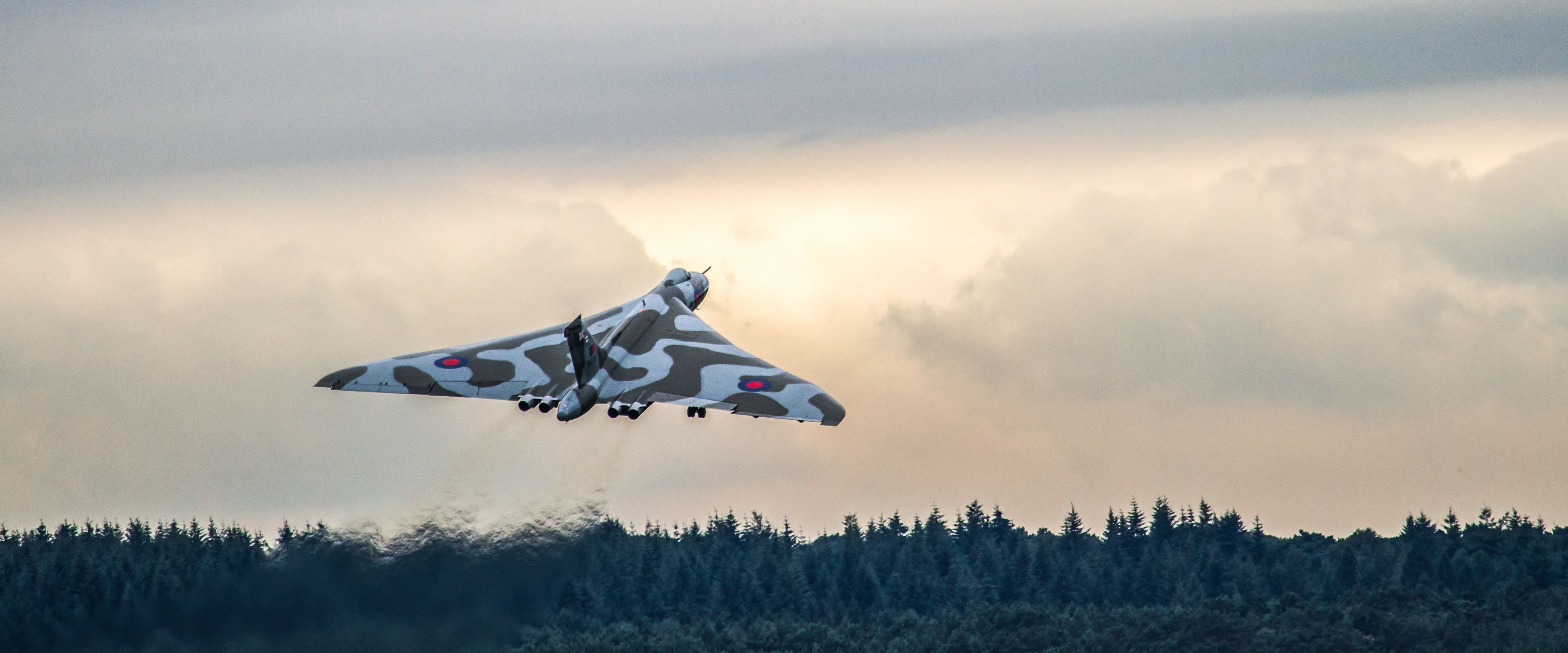
Photo: thatmacroguy I Shutterstock
This wing configuration, with a sharply swept-back wing, provided inherent stability and allowed the aircraft to soar through the skies with both power and grace. The delta wing, coupled with the aircraft’s size and shape, contributed to its iconic silhouette that continues to captivate aviation enthusiasts.
The Avro Vulcan boasts an impressive (at the time) top speed of 646 mph (1,039 km/h), and exhibits a remarkable climb capability, reaching altitudes of up to 55,000 feet (17,000 meters), per the Royal Air Force Museum. This exceptional performance rendered it virtually impossible to intercept.
With an initial range of 2,607 miles (4,195 km), its operational capabilities were further extended by the incorporation of in-flight refueling capabilities, enabling it to execute missions deep within the expanse of the Soviet Union.
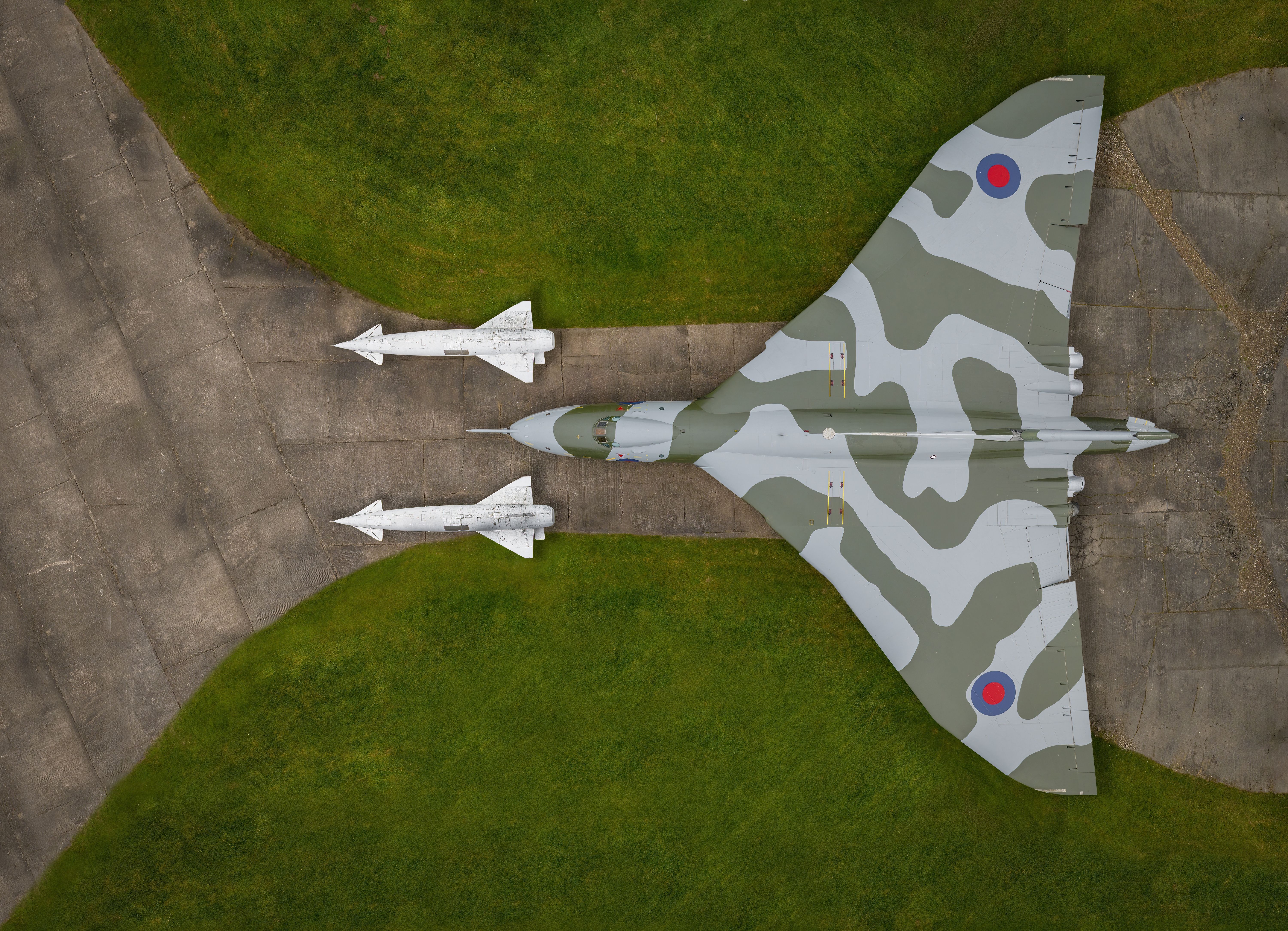
Photo: Christopher Chambers | Shutterstock
At the peak of its operational history, the Vulcan was a formidable symbol of power – and that is why it is aptly named after Vulcan, the ancient Roman god of fire and metalworking. Notably, it gained public attention during Operation Black Buck in the Falklands War, where a Vulcan conducted a long-range bombing mission, showcasing its versatility.
“Howl” does it make that sound?
At the heart of the Avro Vulcan’s might is its four Bristol Olympus engines, each housed in distinct nacelles paired on either side of the fuselage. These powerhouses, known for their reliability and thrust, catapulted the Vulcan to speeds that were revolutionary for its time.
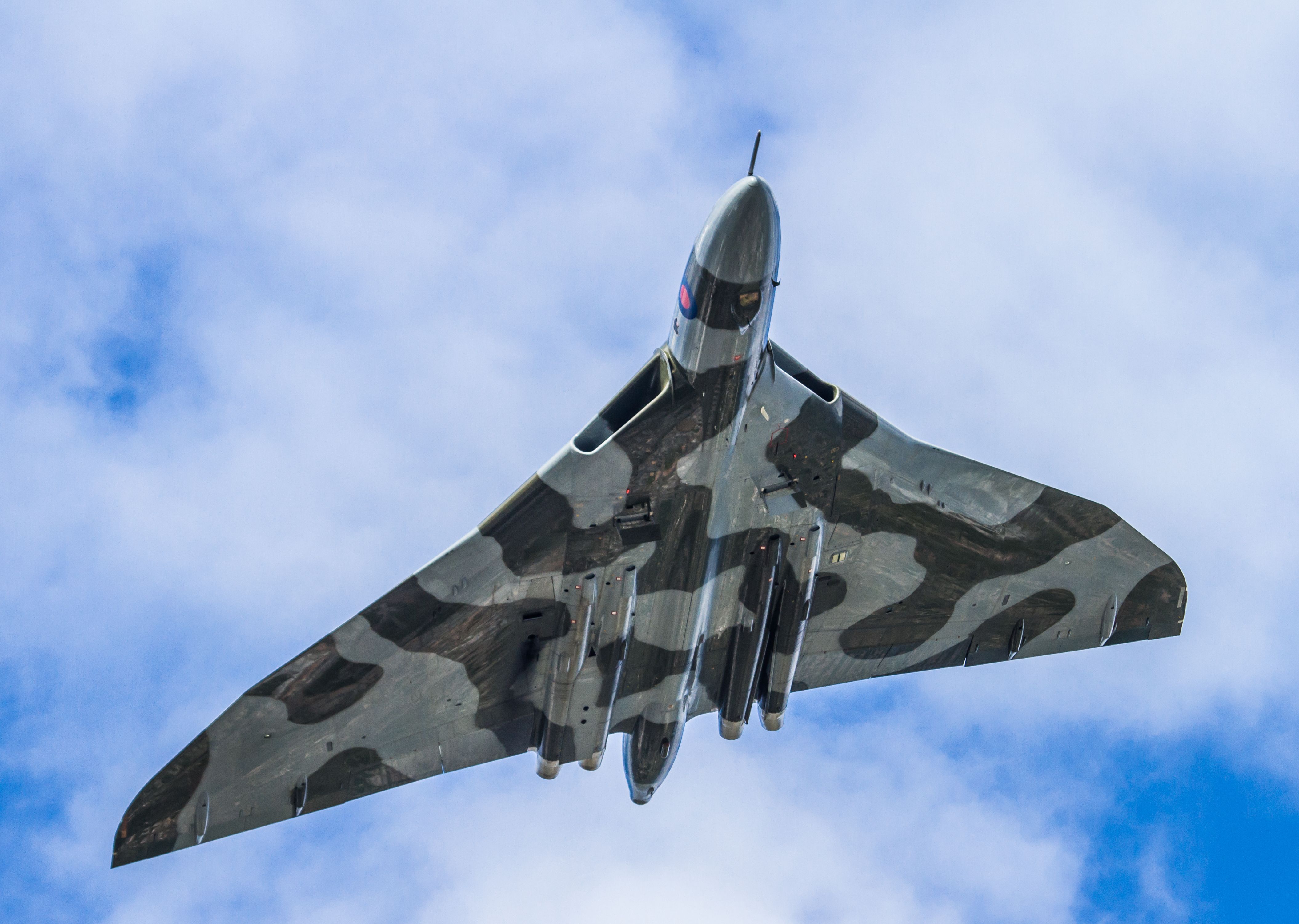
Photo: thatmacroguy I Shutterstock
If you’ve ever witnessed a Vulcan at a flypast or airshow, you would have heard the unique sound it emits. The distinctive howl, often described as haunting, arises from the intricate interplay of the aircraft’s powerful engines and its air intake arrangement.
According to Vulcan to the Sky, the howl is unique to the 200 series airframes, flying at 87% to 95% power. It is caused by about 220 lbs (100 kilograms) of air per second being sucked through its air intakes: a square opening that leads to a smaller oval hole, and then a smaller round hole.