



1. Unusual in that its frame was constructed mostly of wood, the de Havilland Mosquito was nicknamed the “Wooden Wonder”, or “Mossie”
2. In 1941, it was one of the fastest operational aircraft in the world. The Mks II, III ands IV could fly at 380 mph – 19 mph faster than the Battle of Britain Spitfire and 50 mph faster than the Hawker Hurricane

3. The Mosquito’s use evolved during the war into many roles, including: low-to-medium-altitude daytime tactical bomber, high-altitude night bomber, fighter-bomber, day or night fighter, intruder, photo-reconnaissance aircraft, pathfinder, and maritime strike
4. Initially, the concept was for the crew to be enclosed in the fuselage behind a transparent nose (similar to the Bristol Blenheim or Heinkel He 111H), but the concept was quickly altered to a more solid nose with a conventional canopy
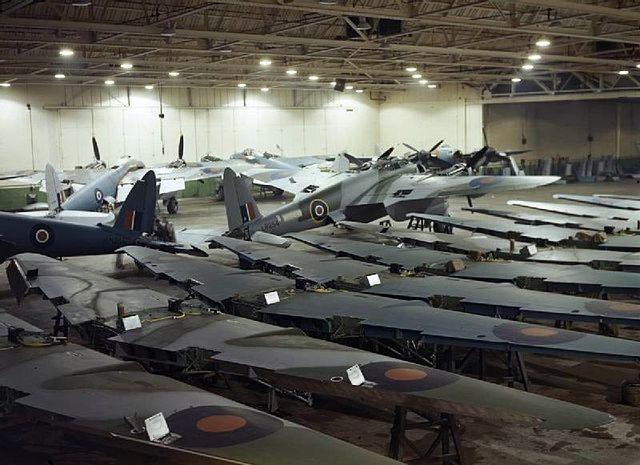
5. Work on the Mosquito was cancelled a number of times. Once after the Battle of Dunkirk, when Lord Beaverbrook, as Minister of Aircraft Production, decided no production capacity remained for aircraft like the DH.98, which was not expected to be in service until early 1942. Another time in June 1940, Lord Beaverbrook and the Air Staff ordered that production should concentrate on five existing types, namely the Supermarine Spitfire, Hawker Hurricane fighter, Vickers Wellington, Armstrong-Whitworth Whitley, and Bristol Blenheim bombers. Work on the DH.98 prototype stopped. It is said that the project shut down when the design team were denied materials for the prototype
6. After work on the de Havilland Mosquito was cancelled, it was only reinstated again as a priority in July 1940 after de Havilland’s general manager, L.C.L. Murray, promised Lord Beaverbrook 50 Mosquitos by December 1941 – something which many thought was a gamble

7. Of the 50 Mosquitos promised by L.C.L. Murray, only 20 were delivered on time in 1941. The other 30 were delivered by mid-March 1942
8. The prototype aircraft was painted in “prototype yellow”

9. The Mosquito had a high stalling speed of 120 mph (190 km/h) with undercarriage and flaps raised. When both were lowered, the stalling speed decreased from 120 to 100 mph (190 to 160 km/h)
10. The fuel systems gave the Mosquito good range and endurance, using up to nine fuel tanks
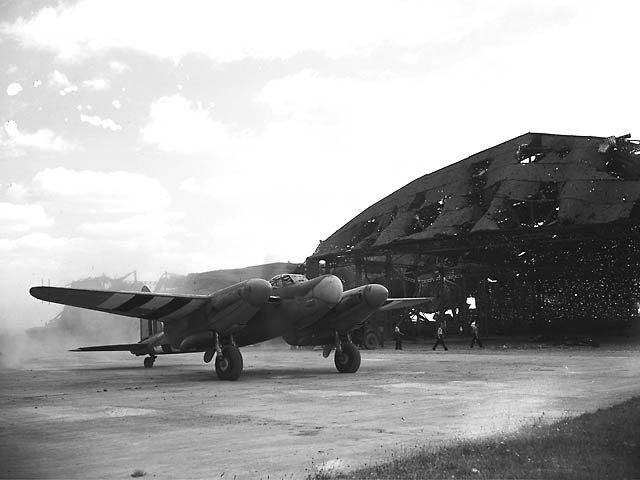
11. De Havilland designed the aircraft so strong and so fast that they felt it did not need armor or defensive systems. Still, there were doubts among military leaders that the aircraft could survive and fulfil any serious combat role, however it demonstrated that it was, indeed, too fast to be intercepted
12. The “wooden wonder” served effectively as a fighter-bomber, anti-shipping attack bomber, and a night-fighter. The aircraft had a record of fewer than one aircraft lost per 200 sorties; the best record in all of Bomber Command
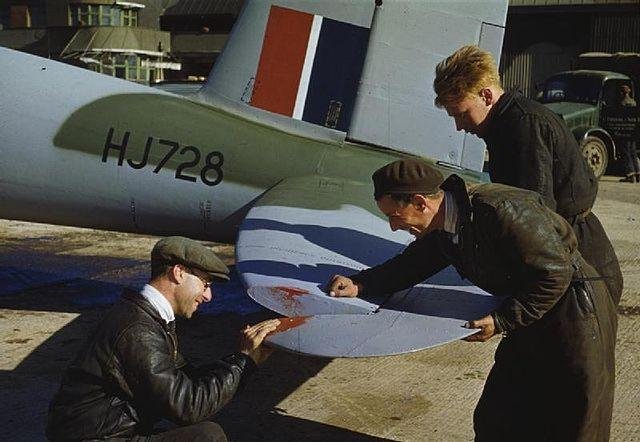
13. The Mosquito is credited with destroying more than 600 V-1 German “buzz bombs” while defending Great Britain
14. It was one of the first bombers to employ ‘Bouncing Bombs’. 34 Mosquitoes were modified by Vickers-Armstrong to carry the bouncing bombs to be used against surface ships
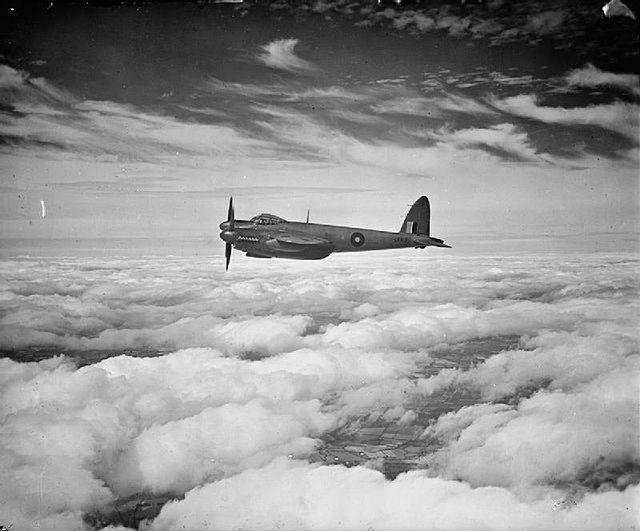
15. It was the only tactical combat aircraft to remain in front-line service throughout the duration of the war