



Greek Mythology has left us an invaluable heritage of tales with envious gods, courageous heroes, epic adventures and stories of vengeance and love. The corpus of Greek Mythology is immerse and we would need several volumes of books to cover most of the stories. However, as it is natural, some of those stories are more beloved than others. Here is an abridgment of 30 of the most famous tales from Greek Mythology.
1. Theogony: Clash of the Titans
According to Hesiod’s Theogony, in the beginning, there was only Chaos. Dense darkness covered everything until the Earth was born out of Chaos and the mountains, the sea, and then the sky (Uranus) with the sun, the moon and the stars. Then Uranus and Earth came together and gave birth to the Titans. But, Uranus was afraid that one of his children would take his throne. That is why he enclosed every one of them in the depths of the Earth. But his son, Cronus, the strongest of the Titans, defeated him and became world leader. He married Rhea, who gave birth to two gods and three goddesses: Hades, Poseidon, Hera, Hestia and Demeter.
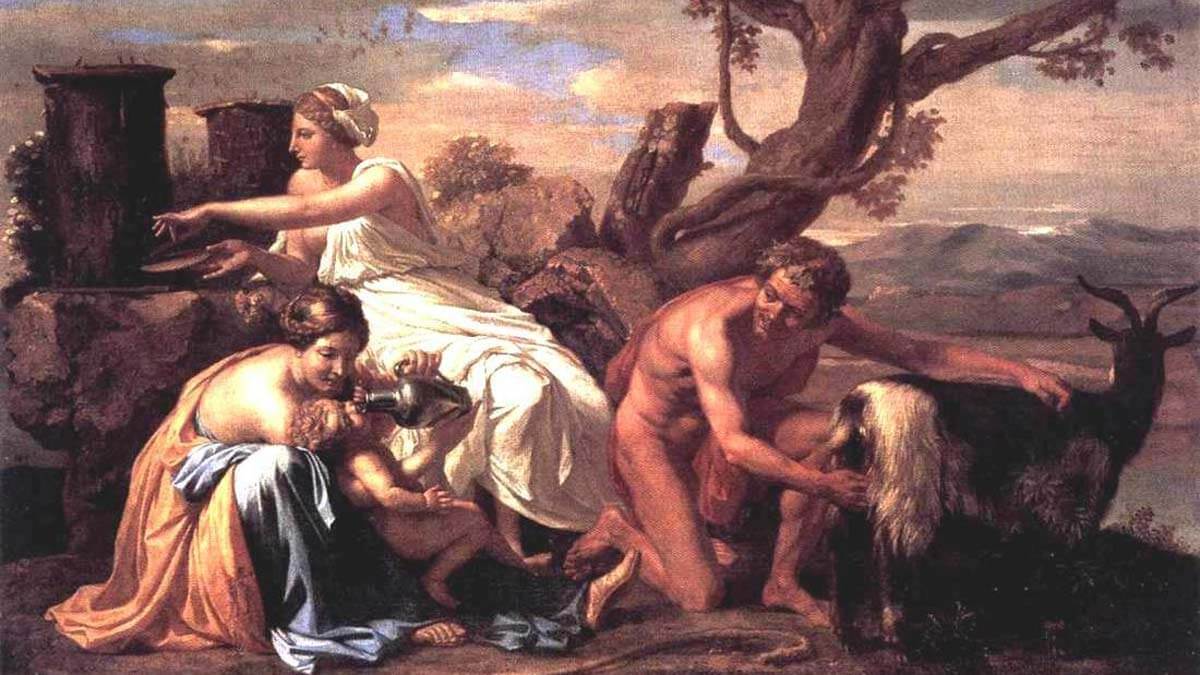
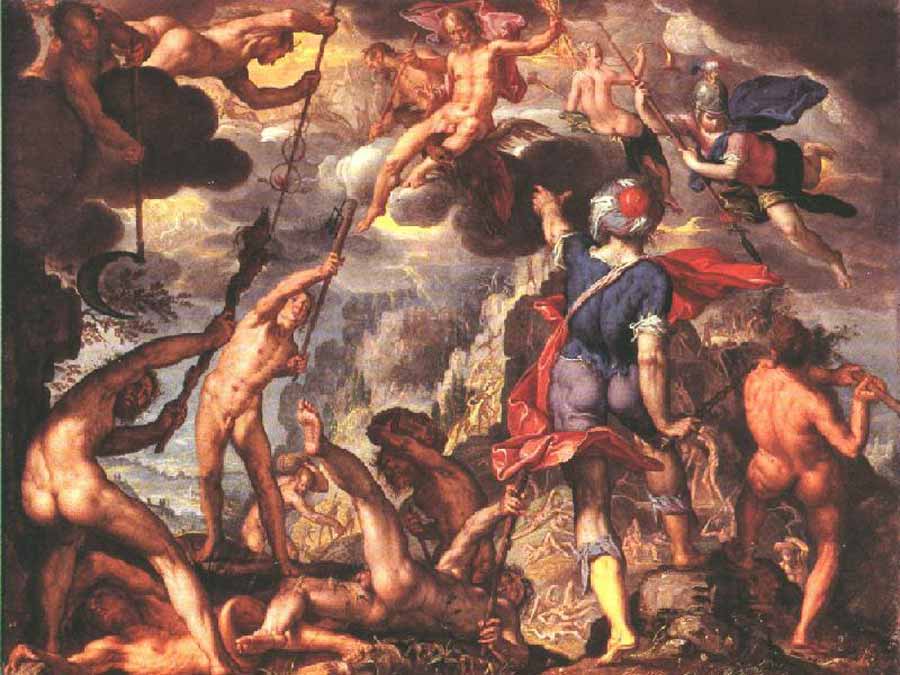
But Cronus inherited the fear of his father and believed that one of his offspring would later take his throne. So, when they were born, he swallowed them. However, Rhea was expecting a sixth child and fearing it would share the same fate with her other children, she secretly gave birth on a mountain in Crete and hid the newborn there. She named the child Zeus. She also tricked Cronus into thinking he swallowed this child too, by giving him a stone wrapped in swaddling clothes, which Cronus swallowed thinking it was his newborn. The Nymphs took care of Zeus and fed the baby with the milk of a goat. When he grew up, Zeus found his father and tricked him into drinking a mixture of wine and mustard, which caused him to disgorge the contents of his stomach. Zeus’ older brothers and sisters came out of Cronus fully grown! This is how the great Titanomachy began, the war between the Titans and the Gods, with Zeus as their leader. This titanic battle lasted for ten years. The gods defeated the Titans and threw them into Tartarus, a dark and gloomy place as far from the earth as earth is from the sky. Then the gods fought with the Giants for the dominance of the world. The Gigantomachy lasted a long time as well. But the gods were again victorious. Thus, Zeus became the ruler of the whole world and he and the other gods settled in Olympus.
2. Τhe Three Sisters of Fate
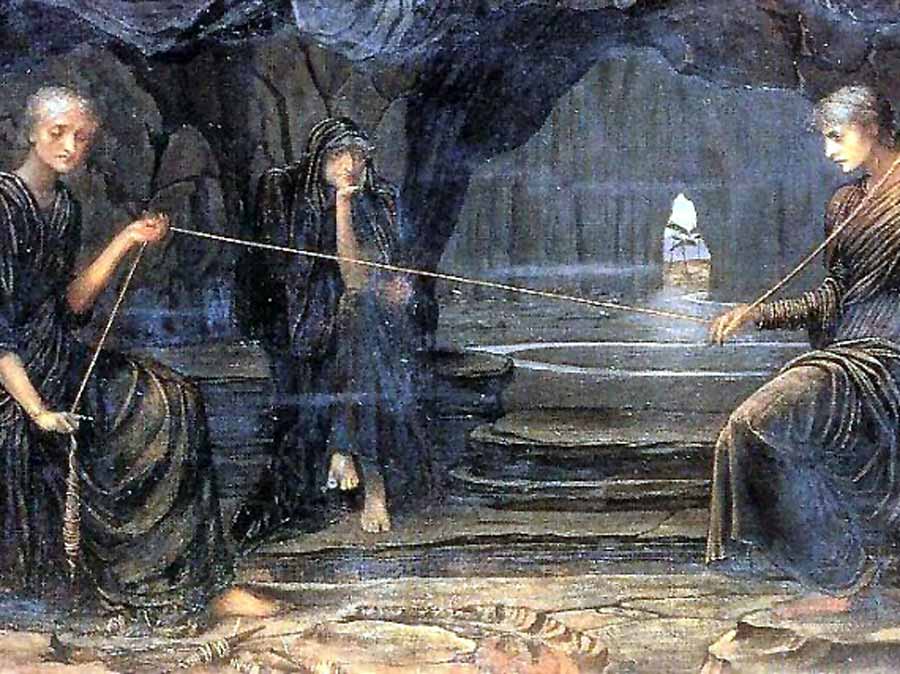
In Greek mythology, the Moirae are the three goddesses of fate. Clotho, Lachesis and Atropos. The three sisters weave the fate of humans and gods alike. Neither human nor God has the power to influence or question their judgment and actions! Clotho, the youngest one, spins the thread of life; she is the very origin, the creation of life itself and her thread is spun upon the birth of a person!
Lachesis, the second sister, is the one that allocates the fate of people during life. The name comes from the Greek word ‘λαγχάνω’ which means to obtain from lots. In that sense, one can understand that their destiny is chosen out of a myriad of possibilities. It is said that Lachesis measures the thread of life with her rod, determining its length and nature. The last sister of fate is Atropos, the unturning. Atropos is the cutter of the thread of life and with her shears she determines how someone will die.
3. Prometheus and the Theft of Fire
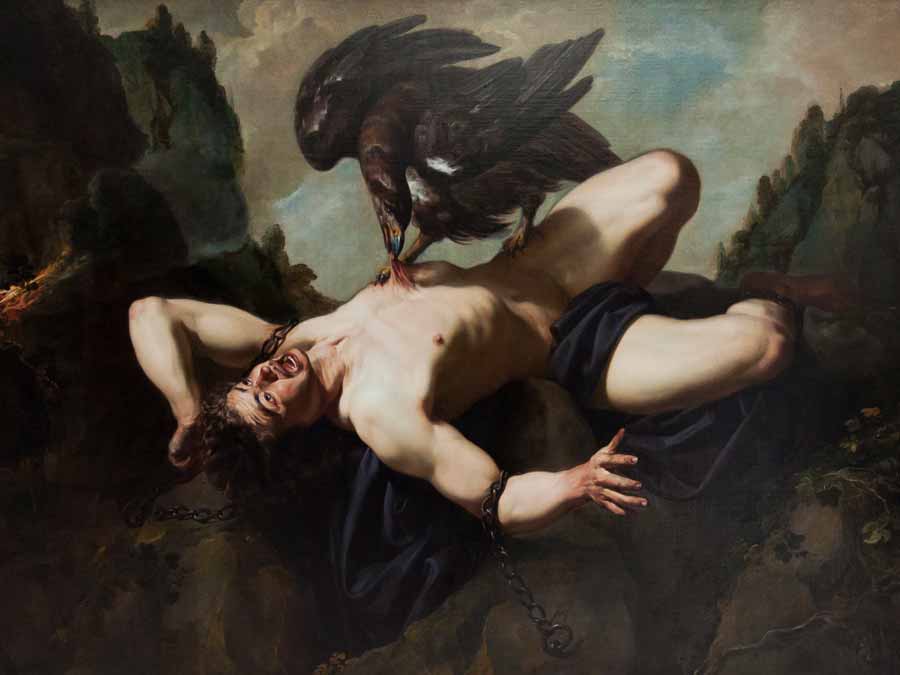
One day, Zeus distributed gifts to all the gods, but he didn’t care much for humans. The Titan Prometheus, however, because he loved and felt sorry for humans, climbed up on Olympus and stole the fire from Hephaestus’ workshop, put it in a hollow reed and gifted it to the humans. This way, humans could create fire, warm up and make tools. Zeus became very angry when he heard about this. He took Prometheus to a high mountain, the Caucasus, and chained him on a rock with thick chains made by the smith god, Hephaestus. And every day, Zeus would send an eagle that ate Prometheus’ liver. For thirty years Prometheus remained bound in the Caucasus, until the great hero Hercules, Zeus’ demigod son, released him finally from his torment.
4. Pandora’s Box
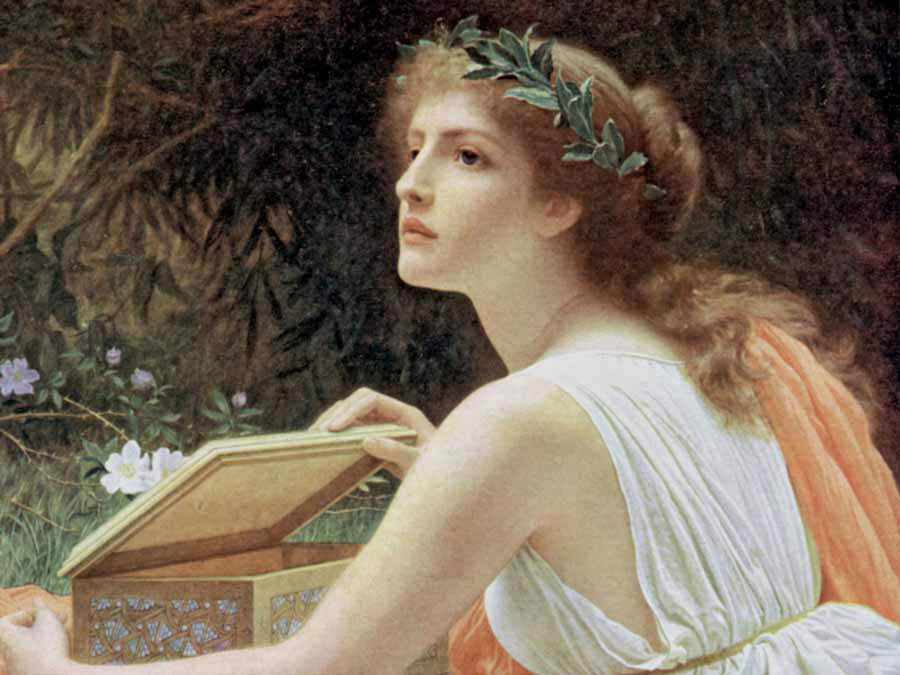
After Prometheus gave the fire to humans, Zeus decided to take vengeance. He ordered Hephaestus to create the first human woman out of soil and water. Each god gave the woman a gift: Athena gave her wisdom, Aphrodite beauty, Hermes cunning and so on. The name of the woman was Pandora (meaning “all gifts” in Greek). Zeus gave Pandora a jar, warning her not to open it under any circumstances and sent her to Prometheus’ brother, Epimetheus. Prometheus had warned his brother not to accept any gifts from Zeus. However, Epimetheus accepted Pandora who, although tried hard to resist the temptation, opened the jar and released all evils upon the world. Hatred, war, death, hunger, sickness and all the disasters were immediately released.
5. The Abduction of Persephone by Hades
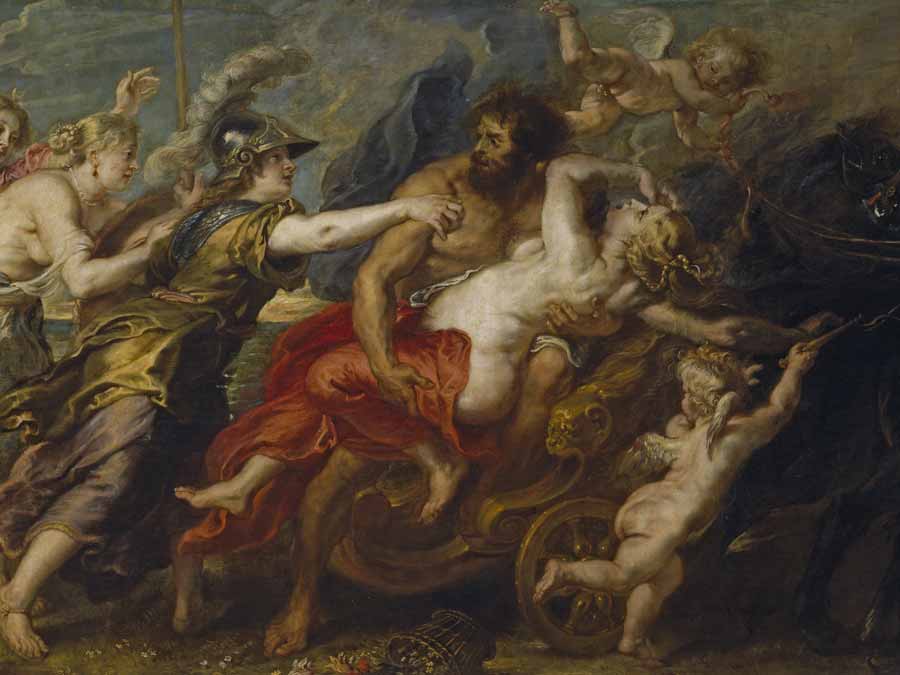
Persephone was the daughter of Demeter and Zeus. As Persephone grew, so did her beauty. When Hades, the god of the Underworld, saw her, he immediately fell in love with her and decided to abduct her. According to the Homeric Hymn to Demeter, one sunny day the young Persephone was gathering flowers in a field, accompanied by her close friends, the Ocean Nymphs. The carefree Persephone moved away from her companions in search of the most beautiful flower. When she reached out to pluck a wondrous narcissus, Earth yawned open and Hades appeared in his golden chariot and snatched her away to the Underworld while she was in tears. Demeter was looking in vain for her daughter day and night. The land and crops of the earth began to wither. After a while, the Sun, looking at everything from the sky, felt sorry for the goddess and told her what happened. Demeter went to Zeus and demanded that Persephone be returned, or else she would not let the earth blossom again.
Zeus sent the Messenger God, Hermes, to Hades with the command to release Persephone. Before returning her to Hermes, Hades forced Persephone to eat six pomegranate seeds. Hades knew that if someone ate food in the Underworld, they could never really escape the world of the dead. Persephone was shortly after reunited with her mother. However, Demeter was furious when she heard about the pomegranate seeds. Zeus then proposed a compromise: for every seed Persephone had eaten, she would spend a month with Hades. Demeter accepted Zeus’ proposal. Thus, Persephone would travel to the Underworld every six months during which time Demeter would mourn and the earth with her. But after six months, Persephone would return to her and Demeter would be happy again and the earth would blossom once again!
Hint! this story is part of the mythological explanation of how the Eleusinian Mysteries were founded, the most sacred and secret religious rites of Ancient Greece.
6. The Name Giving of Athens
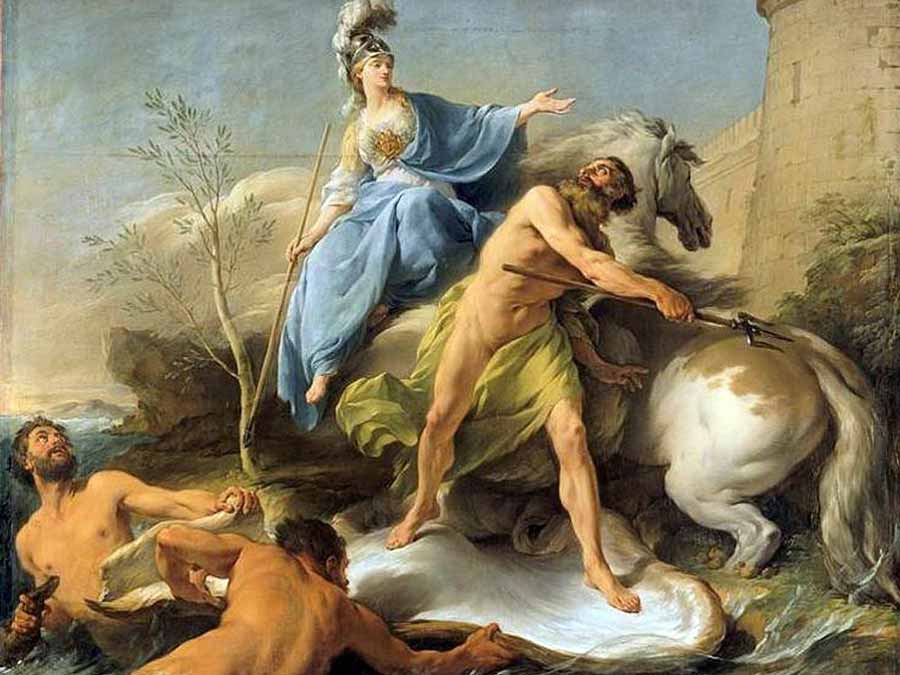
Cecrops, the first king of Attica, had named his city after him, Cecropia. However, the gods of Olympus saw this lovely piece of land and wanted to name it after them and become its patron. The most persistent rivals were Poseidon, the god of the sea, and Athena, the goddess of wisdom. To solve their dispute, Zeus decided that each of them would present a gift to the city and the people of Cecropia would decide which gift was the best, and therefore which god would be the patron of the city. One sunny day, Cecrops and the residents of the city went up to a high hill to watch the gods presenting their gifts. Poseidon was the first to present his gift. He struck a rock with his trident and caused a spring of water to gush forth from the ground. This signified that he was assuring the citizens with water and therefore they wouldn’t face any time of drought.
However, the people were not exactly enchanted with his gift because the water from the spring tasted salty, just like the waters of the sea over which Poseidon ruled. Next, it was the turn of goddess Athena. She struck her spear on the ground and a lovely olive tree jumped out of the earth. The citizens liked this gift better because it would give them food, oil and firewood. This is how Athena became the patroness of the beautiful city and this is how Athens got its name according to Greek Mythology.
Hint! The hill where the gods presented their gifts was the Acropolis Hill. There is still an olive tree there and some say it is the same tree Athena gifted to the Ancient Athenians. You can discover more exciting stories about Acropolis, in an Acropolis Mythology tour.
7. Theseus and the Minotaur
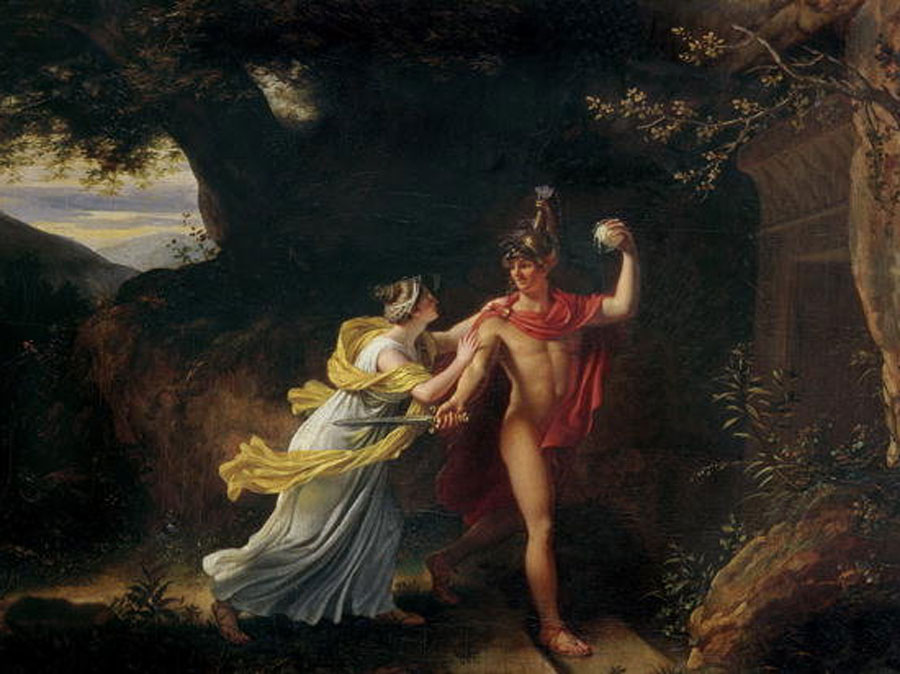
In Greek Mythology, Minos’ son, Androgeos, has been “treacherously killed” while he was in Athens. Minos immediately sought revenge from the Athenians and as retribution he had them send to Crete several youths every seven or nine years to be devoured by Minotaur, a terrifying monster, half man half bull. The young Athenians were thrown into a dark maze, full of arcades and dead ends, wandering aimlessly, until the Minotaur would find them. Theseus, the son of the king of Athens Aegeus, did not endure this humiliation and demanded to be among the seven young men that were to be sent for the third time to the labyrinth. So, he arrived in Crete and met Minos’ daughter, Ariadne, with whom he fell in love.
Ariadne then gave Theseus a lame spinner (known as Ariadne’s thread) and advised him to tie his end to the entrance of the labyrinth and unwrap it so that he could find the exit after killing Minotaur. Theseus entered the dark arcades holding the mite and managed to kill the Minotaur by cutting off his head, thus ending Minos’ blood rage. Then he managed to return to the exit, following Ariadne’s thread. Theseus took Ariadne with him on his boat and began the journey to Athens. However, they made a stop on the island of Naxos, where they celebrated their love. While on the island, the god Dionysus appeared in Theseus’ dream and told him that he had to leave the island without Ariadne since she was meant to stay there and become Dionysus’ wife. Ariadne stayed in Naxos and married Dionysus, while Theseus returned to Athens. The two lovers never met again…
8. Daedalus and Icarus
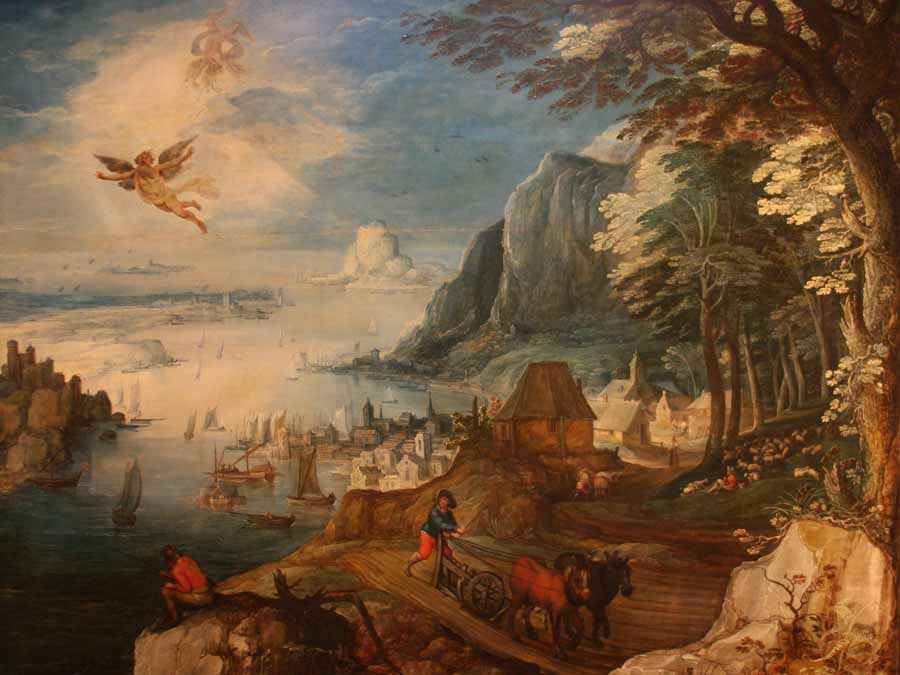
The labyrinth in King Mino’s palace was designed by a famous inventor and engineer, Daedalus. It is said that Athena herself taught Daedalus. King Minos commissioned to Daedalus and his son Icarus the construction of the labyrinth that would held the monster Minotaur. After finishing their work, King Minos imprisoned father and son inside the labyrinth, in an effort to prevent knowledge of his labyrinth from spreading to the public. Father and son were thinking hard on how to escape until Daedalus came up with an idea. They gathered a lot of feathers from birds and glued them together with wax thus, making four large wings. They tied the wings to each shoulder and fled from the island of Crete. Daedalus had warned Icarus not to fly close to the sun because the wax would melt. After passing the island of Delos, the boy, forgetting himself, flew high towards the sun. The hot sun softened the wax that held the feathers together and Icarus fell in the sea and drowned. Daedalus named the place where his son fell Icaria, in his memory.
9. The Myth of King Aegeus
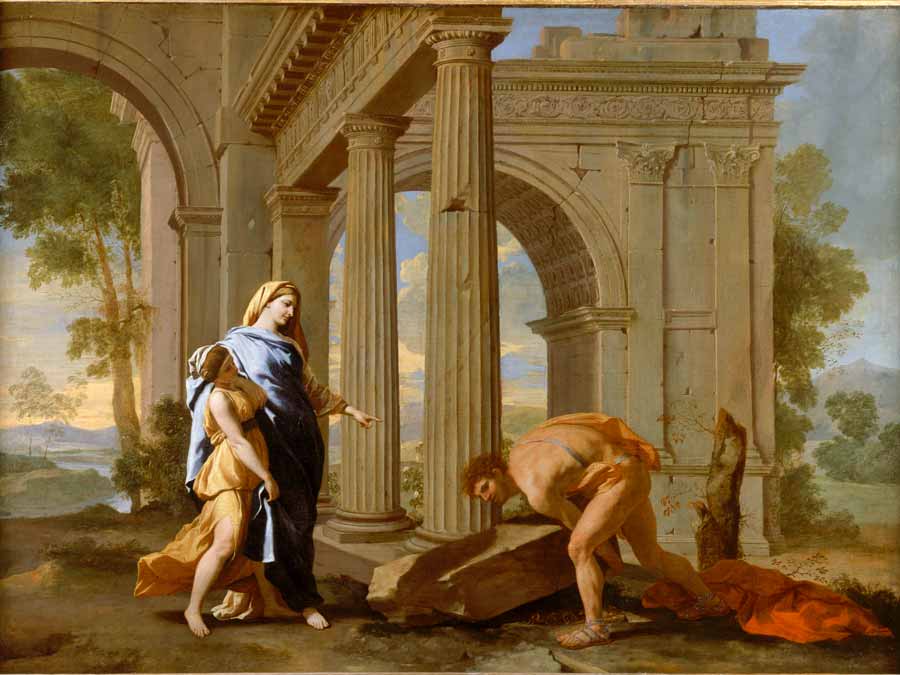
The legend has it that before Theseus left for the palace of King Minos in Crete to kill the Minotaur, Aegeus, his father and King of Athens, asked him to change the sails of his ship from black to white on his return home so that he knew that he survived. Aegeus waited patiently in Sounio to see his son’s ship return and the color of its sails. Theseus, although he killed the Minotaur and got out of the labyrinth safely, he forgot to change his sails to white. Seeing the ship with the black sails, Aegeus thought that his beloved son was killed. Sadness and grief filled his heart and mind, and without waiting to get the news from the men on the boats, fell from the rocks of Sounio into the sea below… Since then, the sea is called Aegean in his memory. And his son, Theseus, became the King of Athens.
10. Perseus and the Gorgon Medusa
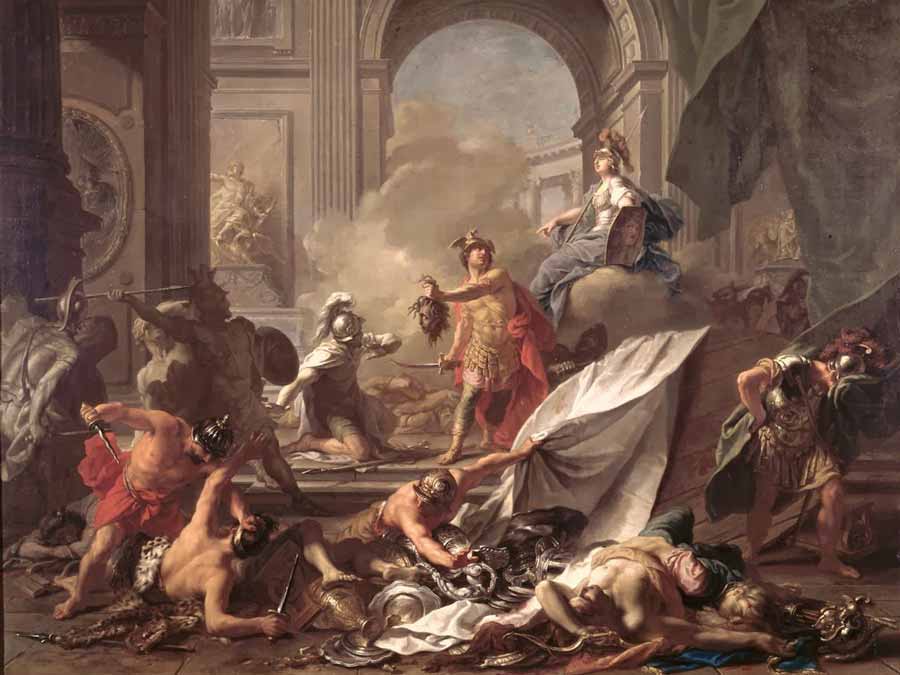
Another famous tale from Greek Mythology is the killing of the terrifying Gorgon Medusa from the great hero Perseus. Perseus was a demigod, son of the Olympian god Zeus and the mortal woman Danae. Perseus sought to kill Medusa, the only mortal of the three monstrous sisters. Instead of hair, Medusa had living venomous snakes on her head and anyone that would look at her eyes would immediately turn into stone. With the help and the wisdom of goddess Athena, Perseus approached the monster by looking through the reflection of a shield and cut off her head.
Tip! For the “Percy Jackson” fans, Perseus was the inspiration of Rick Riordan (the author of the series) for Percy’s name. If you are visiting Greece, do not miss the opportunity to participate in a Hero’s Quest Inspired by Percy Jackson or customize your very own Percy Jackson-inspired tour, and follow in the footsteps of your beloved heroes.
11. The Love Story of Eros and Psyche
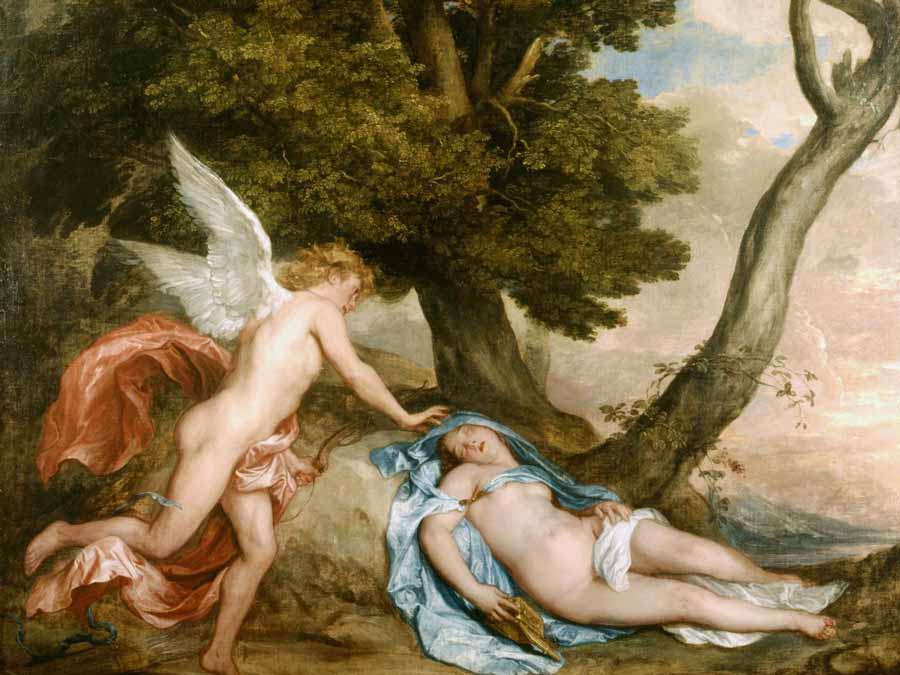
In Greek Mythology, love has the highest praise. Psyche (meaning “soul” in Greek), was an impressive mortal girl, surpassing in beauty even the goddess of love, Aphrodite. Her beauty was so well-known that men from all over the land would visit her to admire her beauty. This made Aphrodite extremely jealous and decided to punish the girl. She ordered his son, Eros, who could make someone fall in love by hitting them with his arrows, to make Psyche fall in love with the vilest and despicable creature who walked on Earth. However, when Eros gazed upon Psyche he fell in love with her himself. He could not carry out his mother’s order and instead, he remained silent. The years went by and, despite her beauty, Psyche could not marry. All men admired her godly beauty but then would go on and marry another. Her parents decided to go to Delphi and ask for guidance from Apollo. The Oracle said that Psyche had to dress in black, climb a high mountain alone and stay there. Then, a winged serpent would come for her and take her as his wife. Psyche and her parents had no choice but to follow the god’s words. As she was waiting alone on the mountain, shaking and crying, the fresh wind of Zephyrus raised her and traveled her through the sky to the gates of a magnificent castle. There, a sweet voice greeted her and made her feel like home.
“Love cannot live without trust”
Every night, Eros would come in the dark and lie beside her. Without seeing him, Psyche could feel that he was not a monster but the loving husband she had always been wishing for. The following days passed in full joy and Psyche was happy. However, she missed her family and felt sorry for them. He asked Eros to let her see them and he granted her wish, after warning her not to be influenced by them, otherwise, their relationship will be destroyed and she will suffer a lot. The next day, her two sisters, carried by the wind, arrived to the palace. They felt jealous of her sister living like a goddess and told her that her husband did not allow her to see him because he was the horrible creature the Oracle had mentioned. This idea overwhelmed the mind of Psyche, who could not understand why her husband would not show his face. So, she devised a plan.
She decided that when Eros falls asleep next to her, she will light a candle to see him. If he is a monster she will kill it with her knife, otherwise, she will happily fall back to sleep. And so she did. But, after seeing his face, a drop of hot oil fell from the candle and woke Eros up. He immediately left her, saying with a heartbroken voice: “Love cannot live without trust.” Psyche was really sorry and sad, and she could not find Eros anywhere. Desperate, she appeared to his mother, goddess Aphrodite, and asked for her help. Aphrodite told her that in order to reunite with her loved one she would have to carry out three impossible tasks. With the help of nature and others, she managed to complete all the tasks and return to Aphrodite. Despite her success, Aphrodite got angry with her and yelled the poor girl that she would never let her go. Witnessing all this, the other gods of Olympus sent Hermes to tell Eros everything that has happened. Eros was touched by Psyche’s love and returned to her. From that day on, the couple lived happily together. As a wedding gift, Zeus allowed Psyche to taste the drink of the Gods, Ambrosia, making her immortal. Aphrodite was also happy because now that Psyche was immortal, the men would forget about her and worship once again the true goddess of beauty.
12. The Fateful Love of Orpheus and Eurydice
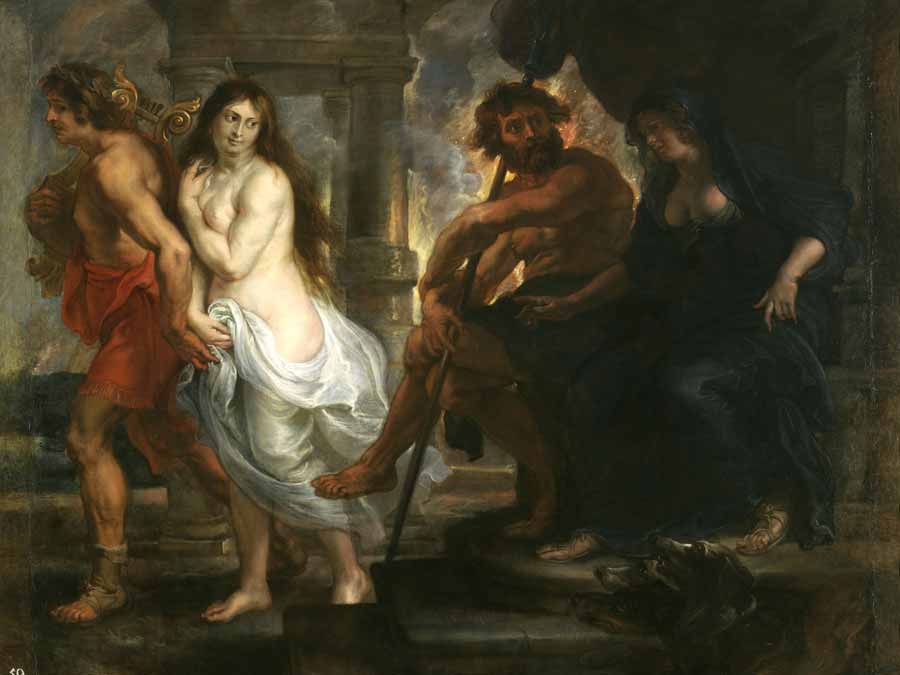
In Greek Mythology, Orpheus was the greatest lyre player in the world. He could charm rocks and rivers with his music. When Orpheus fell in love with Eurydice, he wooed her with his song. Their marriage was brief, however, as Eurydice was bitten by a viper and died shortly after. Devastated, Orpheus journeyed to the Underworld to convince Hades and Persephone to return his bride to him. Orpheus managed to pass through Cerberus, the three-headed dog who was the guardian of the gates, by making him fall asleep with his music. When he played his lyre, the king and queen of the Underworld were moved by his song, and they agreed to let Eurydice live again on one condition: she would follow him while walking out to the light from the darkness of the Underworld, but he should not turn to look at her before she was out to the light. As they started ascending towards the living world, Orpheus began to think it might all be a trick, that the gods were just making fun of him and Eurydice was not really behind him. Unable to hear Eurydice’s footsteps, Orpheus finally lost his faith and turned to look back, only a few meters away from the exit. Eurydice was in fact behind him, as a shade that would become flesh again when she was back into the light. After Orpheus looked at her, Euridice’s shade fell back into the darkness of the Underworld, now trapped in Hades forever.
13. The Tragic Hero Oedipus
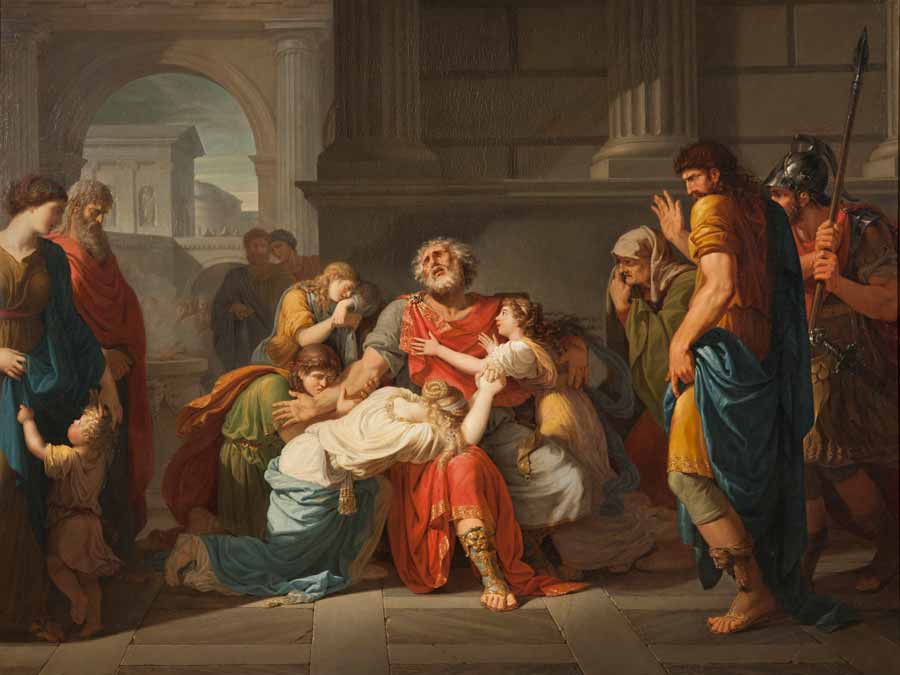
Laius was the King of Thebes and married to Jocasta. Laius had received an oracle from Delphi saying that his son would kill him and marry his wife. When Jocasta gave birth, Laius tied the baby’s ankles and ordered a shepherd-servant to take it to the mountain and abandon it there to die. However, the shepherd took pity on the baby and passed it to another shepherd who gave it to the King of Corinth and his wife, who did not have any children and raised it as their own. They called the child Oedipus, meaning “swollen feet” in Greek. When Oedipus grew up, he traveled to Delphi where the Oracle gave him the prophecy that he would kill his own father and marry his mother. Shocked by the words of Apollo, he did not return to Corinth so as to avoid his father and mother. As he was traveling near Thebes, Oedipus met Laius at a crossroads and killed him in a fight, without knowing he was his real father, thus fulfilling the first part of the prophecy.
When he reached Thebes, he learned of Sphinx, a terrible monster that devoured anyone that did not solve its riddle. It was proclaimed that whoever managed to solve the riddle and kill the Sphinx, he would take the throne of Thebes, by marrying Laius’ widow, Jocasta. Oedipus was successful in solving the riddle and killing the Sphinx. He married Jocasta and together had four children. Little did he know that his children were also his siblings. While Oedipus was at the peak of his happiness, there was an epidemic in Thebes. Oedipus sought the advice of the Oracle of Delphi. The Oracle’s answer was that in order to stop the epidemic, Laius’ killer must be found and punished. The investigation that followed led Oedipus to the truth. Upon realizing the truth, Jocasta, his mother and wife, hanged herself. Oedipus then seized two pins from her dress and blinded himself with them. A Greek tragedy indeed…
14. The 12 Labors of Hercules
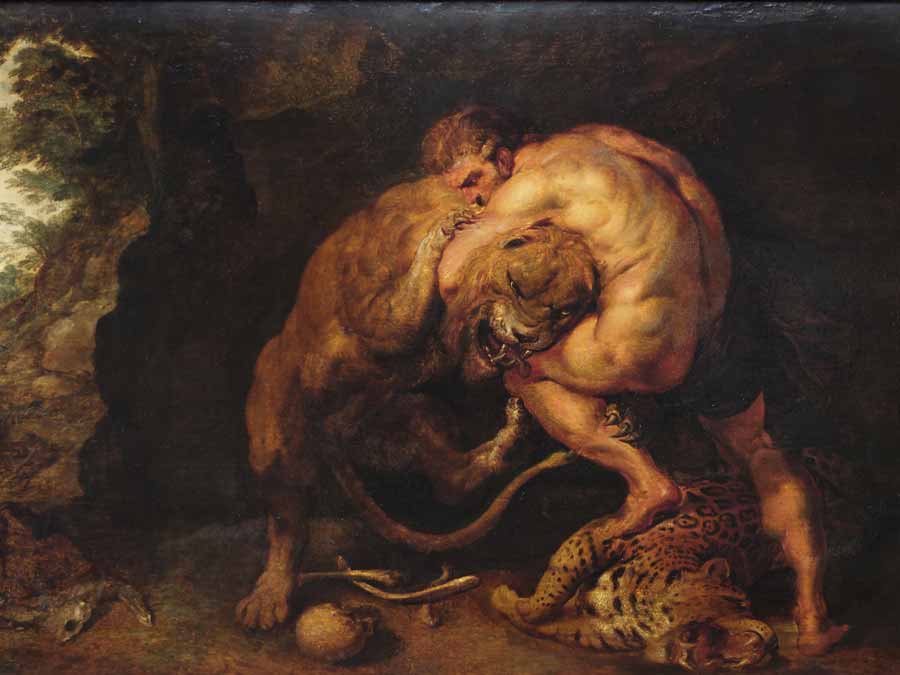
Hercules is the most famous hero of Greek Mythology and well-known for his twelve labors. He was a demigod, son of Zeus and Alcmene. Hera, the wife of Zeus, hated Hercules and wanted to kill him. Driven mad by the goddess, Hercules killed his own sons by his wife Megara. After realizing what he did, he traveled to Delphi and asked Apollo how he could atone for his actions. Pythia, the Oracle of Apollo, told him to go to Tiryns and serve his cousin, King Eurystheus, for twelve years. Eurystheus, loathing his cousin, set him to complete twelve impossible labors. He ordered him to: 1) slay the Nemean Lion, 2) slay the nine-headed Lernaean Hydra, 3) capture the Golden Hind of Artemis, 4) capture the Erymanthian Boar, 5) clean the Augean stables in a single day, 6) slay the Stymphalian Birds, 7) capture the Cretan Bull, 8) steal the Mares of Diomedes, 9) obtain the girdle of Hippolyta, Queen of the Amazons, 10) obtain the cattle of the monster Geryon, 11) steal the golden apples of the Hesperides, and 12) capture and bring back Cerberus, the three-headed dog of Hades. Hercules managed to complete all twelve labors and free himself from the service of Eurystheus, having atoned for the killing of his sons. Many more adventures followed until he found a tragic death from his wife, Megara.
15. The Myth of Apollo and Daphne
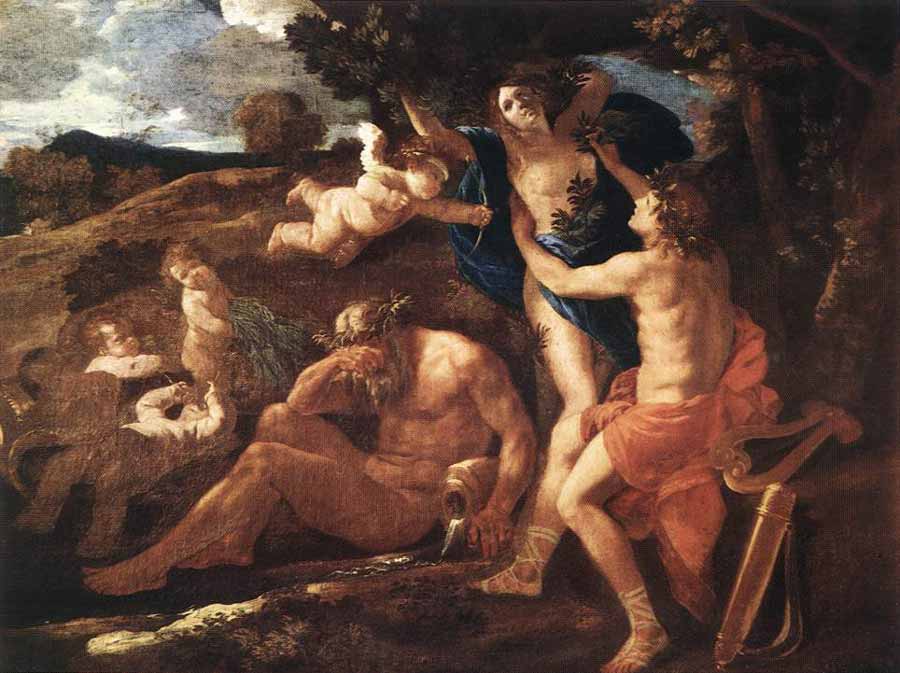
Daphne was a Naiad Nymph in Greek Mythology, the daughter of a river god. She was famous for being incredibly beautiful and for catching the eye of god Apollo. However, Daphne was determined to remain unmarried and untouched by a man for the rest of her life. According to Greek Mythology, Apollo had been mocking the God of Love, Eros. In retaliation, Eros fired two arrows: a golden arrow that struck Apollo and made him madly in love with Daphne, and a lead arrow that made Daphne hate Apollo.
Under the spell of the arrow, Apollo continued to chase Daphne, but she continued to reject him. Apollo told Daphne that he would love her forever. Daphne turned to the river god, Peneus, and pleaded to him to free her from Apollo. In response, Peneus used metamorphosis to turn Daphne into a laurel tree. Apollo used his powers of eternal youth and immortality to make Daphne’s laurel leaves evergreen. It is believed that Daphne had to sacrifice her body and turn into a tree, as this was the only way she could avoid Apollo’s sexual advances. After Daphne had been transformed into a laurel, Apollo made the plant sacred and vowed to always wear it as clothing. Thus, in a way, Daphne stayed with Apollo forever…
16. The One-sided Love Story of Pan and Syrinx
Pan was the god of fertility and the patron of shepherds and huntsmen in Greek Mythology; he presided over all rural occupations, he was chief of the Satyrs and head of all rural divinities. According to the common belief, he was the son of Hermes and a wood nymph, and came into the world with horns sprouting from his forehead, a goat’s beard and a crooked nose, pointed ears, and the tail and feet of a goat. He had such a repulsive appearance that, at the sight of him, his mother fled in dismay. Hermes, however, took up his curious little offspring, wrapped him in a hare skin, and carried him in his arms to Olympus. The grotesque form and the merry antics of the little Pan made him a great favorite with all the immortals, especially Dionysus; and they bestowed upon him the name of Pan (meaning “all” in Greek) because he had delighted them all. Pan’s life was defined by his relationships with the Nymphs. He loved them deeply, he was dancing and playing music with them, and some of them loved him too; others hated him and were running away from him… very complicated relationships indeed… And his mother issues appeared soon enough.
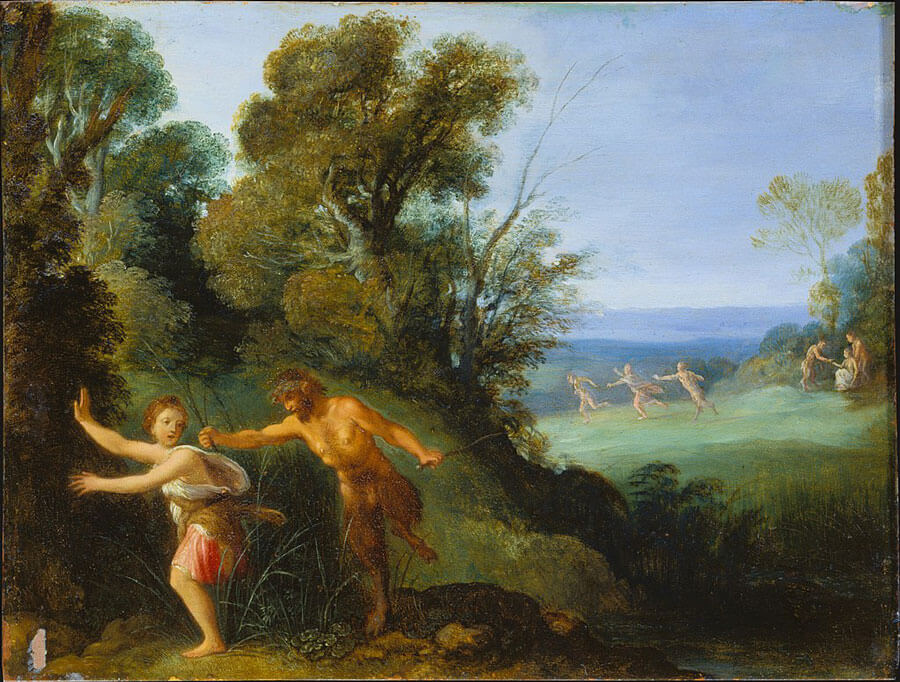
The spirit of the reed tree comes from a nymph. Her name was Syrinx. Pan was the one to cause her doom. He was in love with her and wanted her at any cost! He was chasing after her trying to make her his! So, in order to escape him, she transformed herself into a reed tree. She hid by the river among the other reeds but Pan would not stop there. He went down to the river and started ripping off every reed until he finally found her. He ripped her off the ground and started blowing into the pipes to get her spirit out. While he was blowing, he realized that beautiful sounds were coming out of the reed pipes. He decided to bind them together into a big flute and started making music out of them. Oh, and what beautiful music he made! From then on, he would never leave his flute and he would always play for the other nymphs to dance…
17. Goddess Athena and Arachne
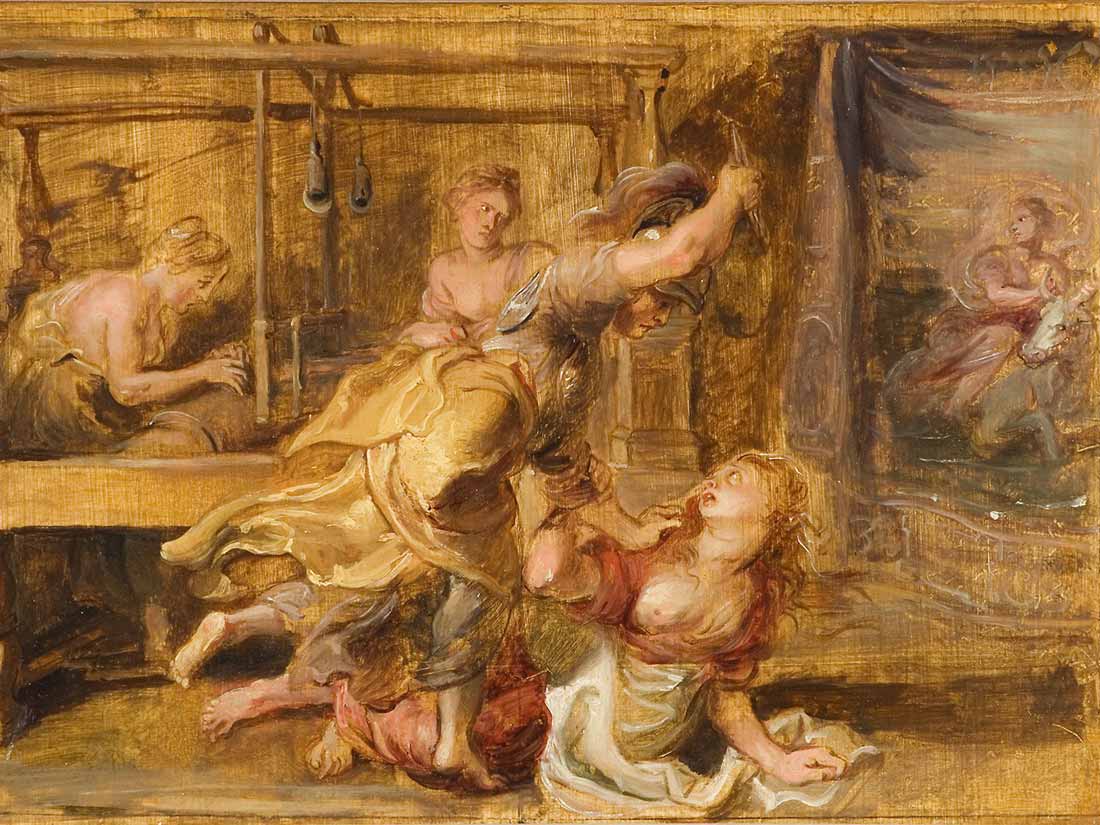
In Greek Mythology Gods were powerful and humans should be obedient. But was that always the case? In ancient times there was a beautiful lady called Arachne (meaning “spider” in Greek). She knew the art of loom very well and she weaved beautifully. She boasted that she could weave better than Athena, who was the patroness of the weaving art. She even dared to ask the goddess to a contest. Athena accepted and they began to weave. Athena weaved a representation of her fight with Poseidon over the naming of Athena. Arachne, on the other hand, weaved the naughty adventures of Zeus and the other gods of Olympus. Athena, angered by the hubris Arachne dared to show, transformed her into a spider and cursed her to be hanging from her web for the remainder of her life.
18. The Myth of Narcissus and Echo
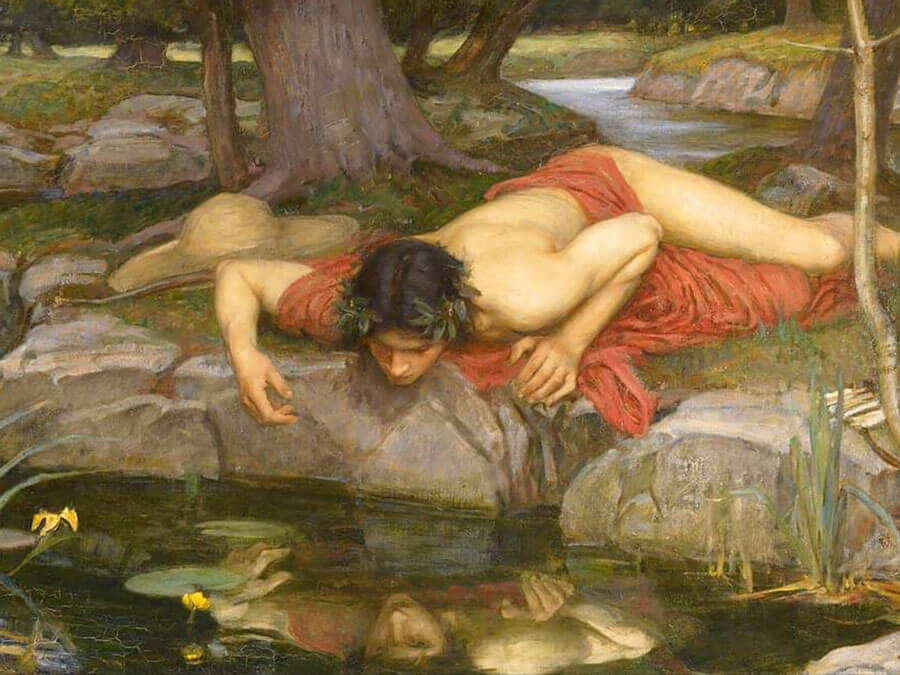
Echo was a wood Nymph, cursed by Hera to not be able to speak properly, but rather repeat the last words addressed to her. One day, she was wandering around the mountains, until she saw a handsome young man that no one could resist his charm, Narcissus. The Nymph fell in love with the youth, but could not speak to him because of Hera’s curse. So, she was following him from the shadows, silently and in love, waiting patiently for the proper moment. At some point, Narcissus felt her presence and asked “Is anybody here?”, to which Echo replied “here”. A confusing and repetitive conversation followed until Narcissus called her to come out and make love with him. But, as soon as Echo stepped out, Narcissus told her that he’d rather die than give himself to a wood nymph.
Echo, heartbroken, took refuge in a cave and lost her appetite for food or water. After a while, poor Echo started growing skinny from starvation until her body disappeared, living only dust and her voice. Nemesis, the goddess of revenge against those who show hubris, decided to punish Narcissus for the treatment of poor Echo. The goddess made Narcissus fall in love with his own reflection that he saw in a pond near Echo’s cave. Narcissus could not leave his own reflection out of love and starved to death, like Echo. But, before he dies, Narcissus cried out to his reflection “Farewell, dear boy. Beloved in vain.” Echo’s voice repeated his last words from the cave as Narcissus drew his last breath. To this day, Echo still repeats the last words or phrases in caves or labyrinths.
19. The Myth of Hermaphroditus
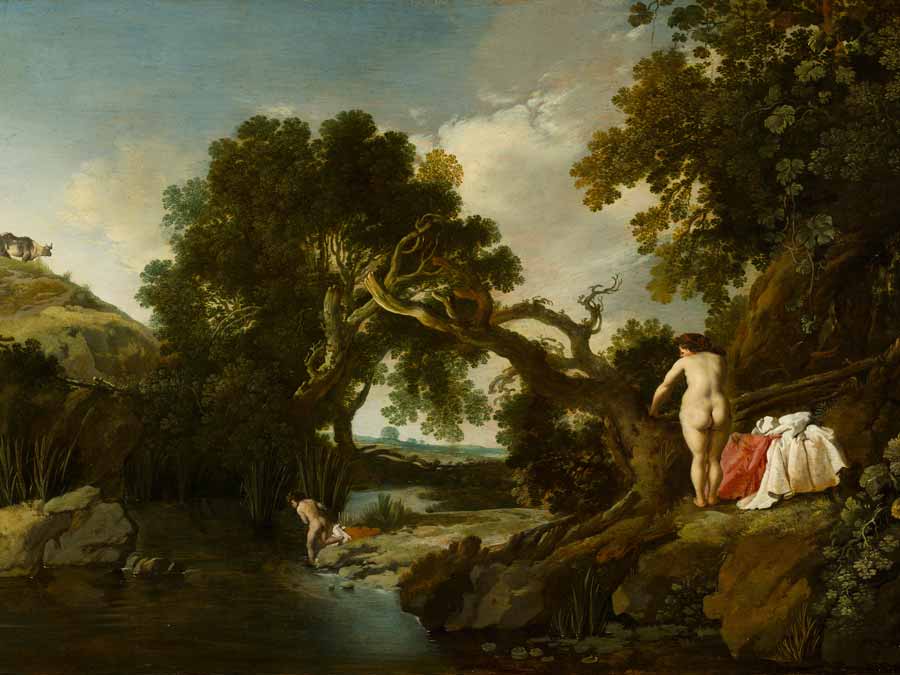
Hermaphroditus was the son of Hermes and Aphrodite, and he was raised by nymphs in the caves of Mount Phrygia. On his face, one could see the grace and beauty of both of his parents, from whom he took his name. When he was fifteen years old, he left the mountain where he grew up to wander into Asia Minor and meet new people. In the woods of Caria, he stopped to rest and drink water from a spring called Salmacis. The homonymous nymph, Salmacis, was captivated by the beauty of the young man and tried to seduce him, but was rejected. When Hermaphroditus felt he was alone, he jumped into the water naked to swim. Salmacis appeared behind a tree and jumped in as well, wrapping her body around that of the young man, forcibly kissing and touching him. While Hermaphroditus was trying to break free from her, the nymph called out to the gods to let them be united forever. The gods decided to grant her wish and blended their two bodies into one, creating a creature of both sexes. Hermaphroditus prayed to his parents, Hermes and Aphrodite, that anyone else who bathed in that spring would share his fate. And the gods granted his wish.
20. Bellerophon and Pegasus
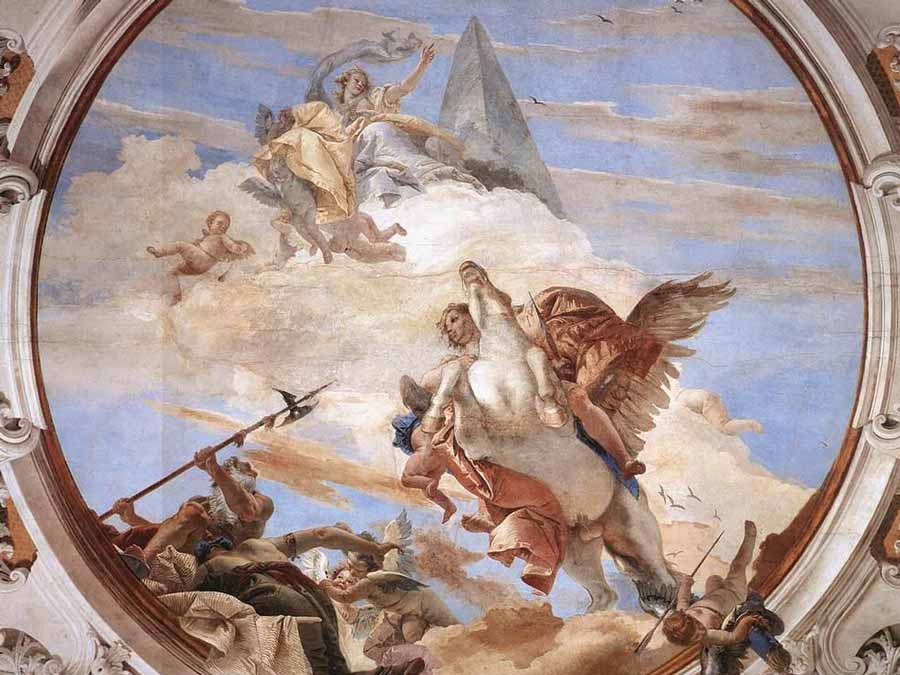
Bellerophon was a great hero of Greek Mythology. He was a slayer of monsters and as famous as Perseus. His most famous feat was the killing of Chimera, a horrible monster with a goat’s body, a serpent’s tail and a lion’s head that could breathe fire. The great hero was the son of the mortal woman Eurynome by either her husband and King of Corinth Glaucus or the god Poseidon. Bellerophon was accompanied in his adventures by the winged horse, Pegasus. The Myth has it that Pegasus was born from the blood of her beheaded mother Medusa, the gorgon who was tricked and killed by the hero Perseus. A more detailed version of the myth said that he was born when Medusa’s blood was mixed with the foam of the sea. The myth says that Pegasus was born as a winged horse because his father, Poseidon, had the shape of a horse when he seduced Medusa. When Pegasus was born, a huge thunder with lightning pierced the sky, and that’s how his connection to the forces of the skies was established.
So, one day Bellerophon saw the wonderful animal drinking water and decided to tame it. This would not have been possible if Athena had not helped him, by giving him a golden bridle. After slaying Chimera, Bellerophon’s fame grew and so did his arrogance. He believed that because of his great feat, he deserved to fly to the mountain of the gods, Olympus, and set course with Pegasus. Zeus was angered by his hubris and sent a gadfly to sting Pegasus, causing Bellerophon to fall off the flying horse. Pegasus continued to Olympus and became the loyal horse of Zeus. It is said that Athena spared the life of Bellerophon by softening the ground for his fall. However, the once-great hero spent his remaining life crippled and lonely, always searching for his beloved winged horse.
21. Leda and the Swan
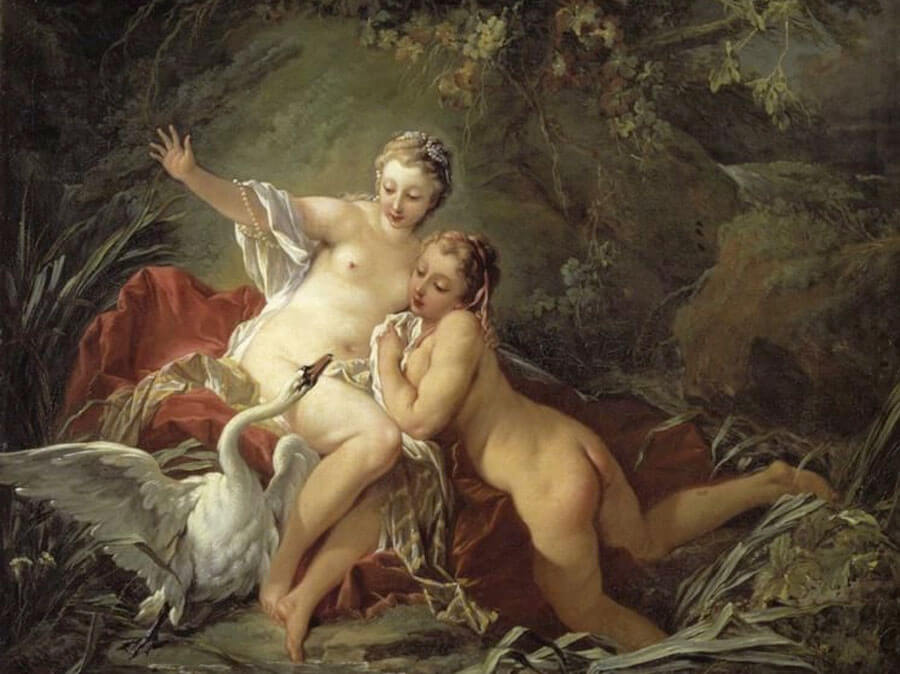
Another tale from Greek mythology about Zeus is the one with Leda. When the Olympian god saw Leda on the banks of the river Eurotas, felt an overwhelming desire for her. So, he went to Aphrodite and asked for her advice. Aphrodite transformed Zeus into a brilliant swan and herself into an eagle, and she began pursuing the swan in the river valley. The pursuing Zeus swan sought refuge in the arms of Leda, who received him tenderly and warmed him within her. However, nine months after this incident, she gave birth to two eggs. Not one swan came out of each, but two pairs of twins. On one hand Polydefkis and the beautiful Helen and on the other Castor and Klytemnestra! Her kids became very famous and lead characters to many great ancient tragedies!
22. The Myth of Andromeda and Perseus
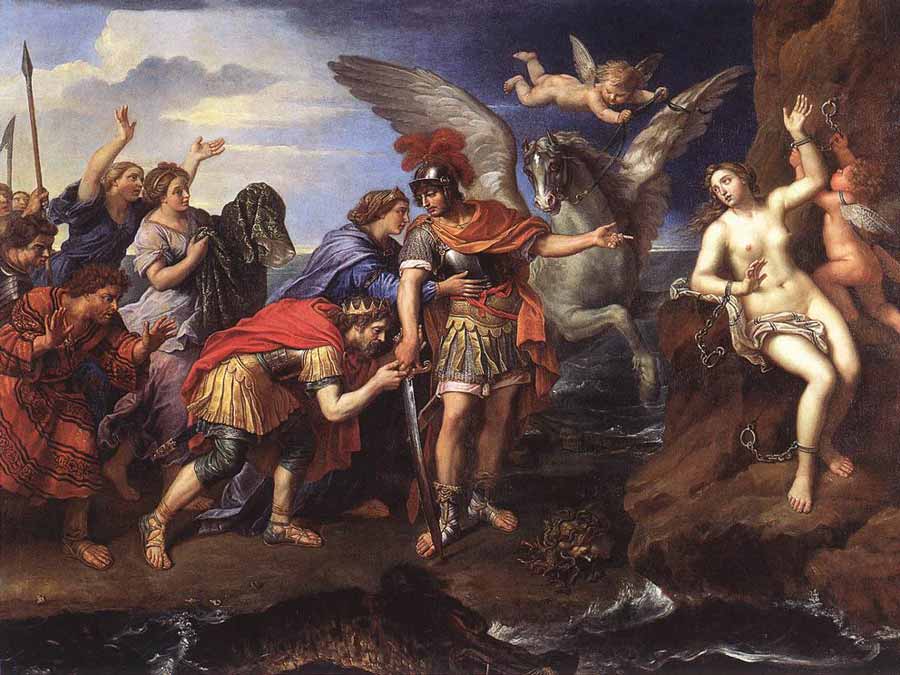
Long ago, the African Kingdom of Ethiopia was ruled by a king named Cepheus and his queen Cassiopeia. The royal couple had a daughter, Andromeda. One day, the queen boasted about her beauty before the mythical inhabitants of the sea – the Nereids. Nereids became very angry because they believed themselves the most beautiful creatures in the world. They complained to their father, the god of the seas, Poseidon, that he should punish her. The mighty lord of the seas sent a huge sea monster to ravage the coast of Ethiopia, including the vain queen. The desperate King asked for the guidance of Apollo in Delphi. The Oracle advised that no respite would be found until the king and the queen sacrificed their daughter to the monster. To appease Poseidon, Cepheus and Cassiopeia offered, reluctantly, their beloved daughter to be eaten by the monster. The beautiful Andromeda was chained on a seaside rock and awaited her fate.
Meanwhile, the great hero Perseus was returning from having slain Medusa, riding the winged horse, Pegasus, high in the sky. Passing over Ethiopia, he saw Andromeda chained on the rock and immediately fell in love with her. As the monster was approaching to devour Andromeda, the brave Perseus started fighting it; their fight lasted for a long time. Finally, Perseus used the deadly look of Medusa’s severed head, petrifying the huge monster which fell in the sea and became an island. Perseus freed Andromeda from her chains and took her back to the palace of Cepheus where they got married. They lived together happily, having seven sons and two daughters. After Andromeda’s death, goddess Athena placed her among the constellations in the northern sky, near Perseus and Cassiopeia.
23. The Myth of Sisyphus and his Eternal Punishment
Once upon a time, Corinth was a very strong Greek city-state, the remains of which can be found to this day. Some sources refer to the great city of Efyra as the city founded by Sisyphus, which was later named Corinth. Others say that the witch Medea gave Corinth to Sisyphus, who became its king. One day, Asopos’ daughter, Aegina, had been abducted by Zeus and when Asopos asked if Sisyphus had seen anything, Sisyphus mentioned that he saw Zeus fly over with Aegina. When Zeus heard that, he got really angry that he was betrayed by a mortal. So, the king of the gods sent Death to take Sisyphus’ life. However, when Death came to chain Sisyphus, the latter asked Death a demonstration of how the chains work and then deceived Death and chained him instead.
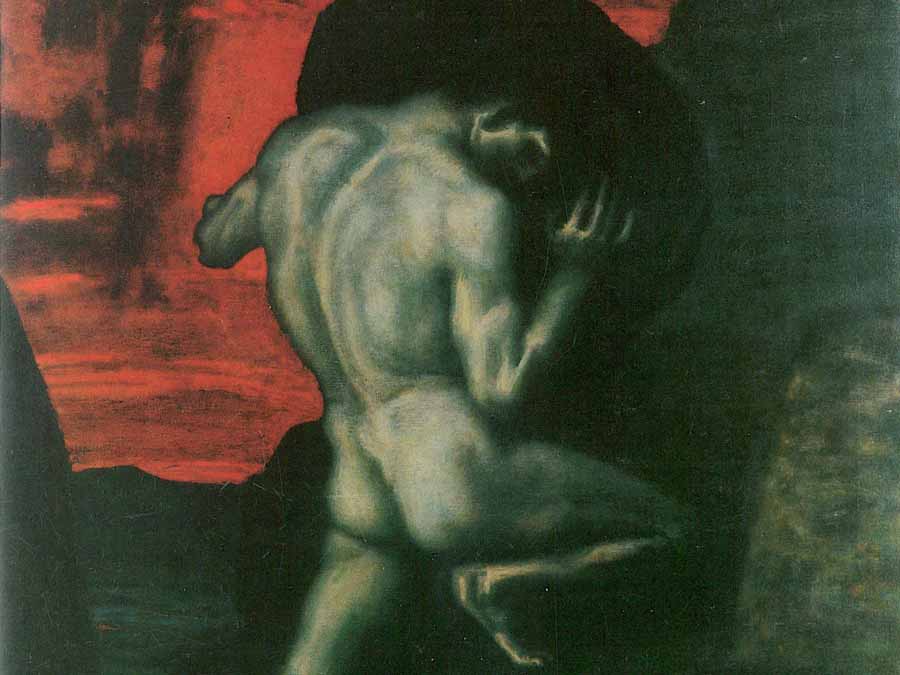
The imprisonment of Death meant that he could not come for any human and people stopped dying. The gods in response sent Ares, the god of war, to free Death. This time Death took Sisyphus in his chains and led him to the world of the dead, the Underworld, kingdom of Hades. However, before he died, Sisyphus asked his wife, Merope, not to bury him properly by neglecting to put a coin in his mouth. This way he could not pay Charon, the ferryman, to cross the river Styx. The lack of a proper burial disturbed Hades so much, that he sent Sisyphus back to the living. Thus, Sisyphus managed to escape Death once more. When the gods finally managed to catch Sisyphus again, they decided that his punishment should last forever. They made him push a rock up a mountain; every time the rock would reach the top, it would roll down again and Sisyphus would have to start all over again.
24. King Midas and his Golden Touch
In Greek Mythology, Midas was the king of Phrygia and ruled from his castle and its beautiful garden in which “roses grow of themselves, each bearing sixty blossoms and of surpassing fragrance”, according to Herodotus. One day, some of Midas’ people found a drunken old man near the garden and brought him before the king. Midas recognized the old man, who was god Dionysus’ closest reveler, the satyr Silenus. Instead of punishing him, Midas hosted the satyr for ten days, offering him food, drinks and entertaining him. When he returned him safely to Dionysus, the god felt gratitude and offered Midas to grant him any wish he had. Midas, motivated by his greed, asked that he should be able to turn into gold everything he touched. At first, Midas gained great wealth and power from his unique ability. But he later realized that it was more of a curse than a gift. Even the water and the food that he touched was turning into gold. He could not enjoy even the simplest joys in life anymore. Midas went back to Dionysus and begged him to take back his power.
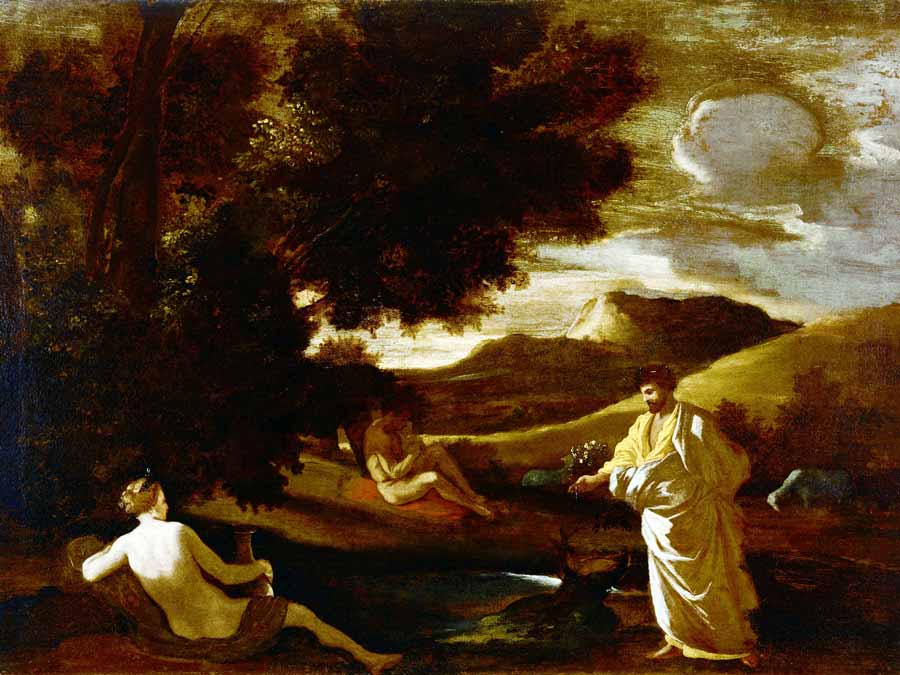
25. The Apple of Discord
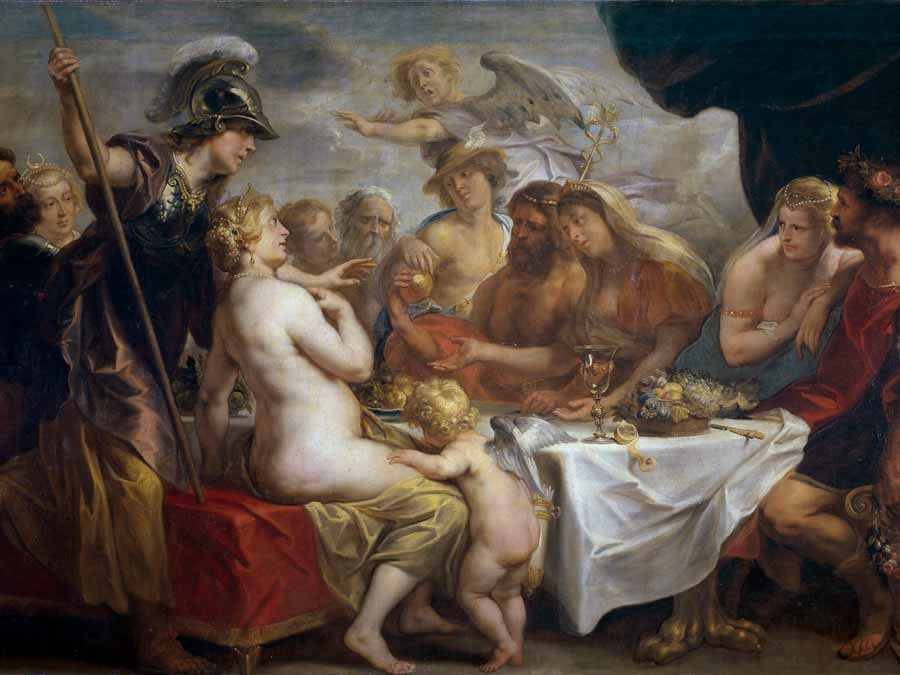
The great Trojan War started with a few envious Gods and an apple… During the wedding of Thetis and Peleus, the goddess of discord, Eris, was not invited for apparent reasons. Eris felt offended and, arriving at the wedding, tossed in the middle of the feast of the gods a golden apple, saying “to the fairest”. The apple was claimed by Hera, Athena and Aphrodite, sparking a vanity-fueled dispute among the three. The goddesses asked Zeus who the apple belonged to (in other words, who is the fairest of them all) and Zeus said that Paris, a mortal man and the rightful Prince of Troy, should choose.
Paris at the time was living as a shepherd on Mount Ida and was not aware of his royal descent. He had been abandoned as a baby, because of an oracle that said he would cause the destruction of his city. The three goddesses appeared before the shepherd Paris and asked him to choose who is the fairest of them all. Because Paris at first was unable to choose one, each of the goddesses offered him a gift: Hera offered him wealth and kingly power, Athena wisdom and glory among men, and Aphrodite offered him the love of the most beautiful woman in the world. Without hesitation, Paris gave the golden apple to Aphrodite. From that day on, Aphrodite was offering council to Paris. She was the one that informed him of his royal blood and led him back to Troy. The rest is history…
26. The Great Trojan War
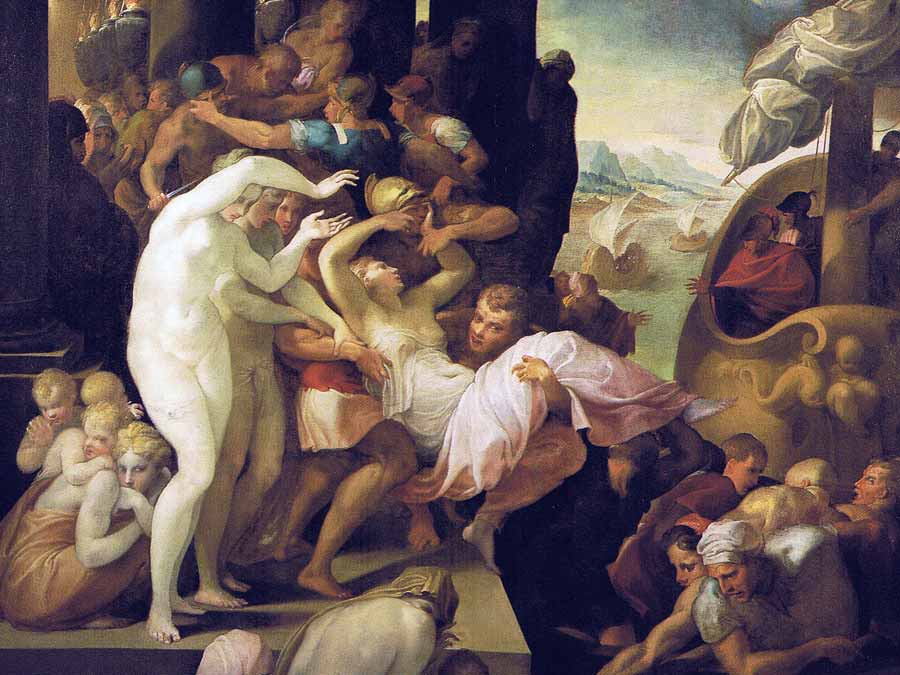
The events that occurred in the myth of the Apple of Discord would lead to the greatest war of Greek Mythology. The Trojan War is an epic poem, written by Homer. Having been promised by Aphrodite the love of the most beautiful woman, Paris abducted Helen, wife of Menelaus of Sparta. Refusing to return Helen, Menelaus’ brother, Agamemnon, gathered a great army of Greeks to sail to Troy. At Aulis, the army was gathered, with the greatest Greek heroes among them – Achilles, Patroclus, Odysseus, Nestor to name a few. However, there was no wind for the ships to sail and the warriors started to complain. The reason for this was the killing of Artemis’ sacred deer by Agamemnon. The Greek King was forced to sacrifice his daughter, Iphigenia, to appease Artemis and the winds came.
For nine years the Greek army was trying to enter the walls of Troy without any luck. Finally, Odysseus had an idea to build a gigantic hollow wooden horse, in which a small group of warriors would conceal. The other Greeks appeared to sail for home, leaving behind the horse as a gift to the Trojans. Despite the warnings of Cassandra and others, the Trojans took the horse inside the walls and celebrated with a lot of wine and music. When everyone was asleep, the Greek warriors crept out of the horse and opened the gates. The Greek army entered without resistance and Troy fell. Achilles died during the battle, having been hit in the heel by an arrow. The gods also took part in the war. Hera, Poseidon and Athena aided the Greeks, while Ares and Aphrodite the Trojans.
27. The Legendary Myth of Odysseus
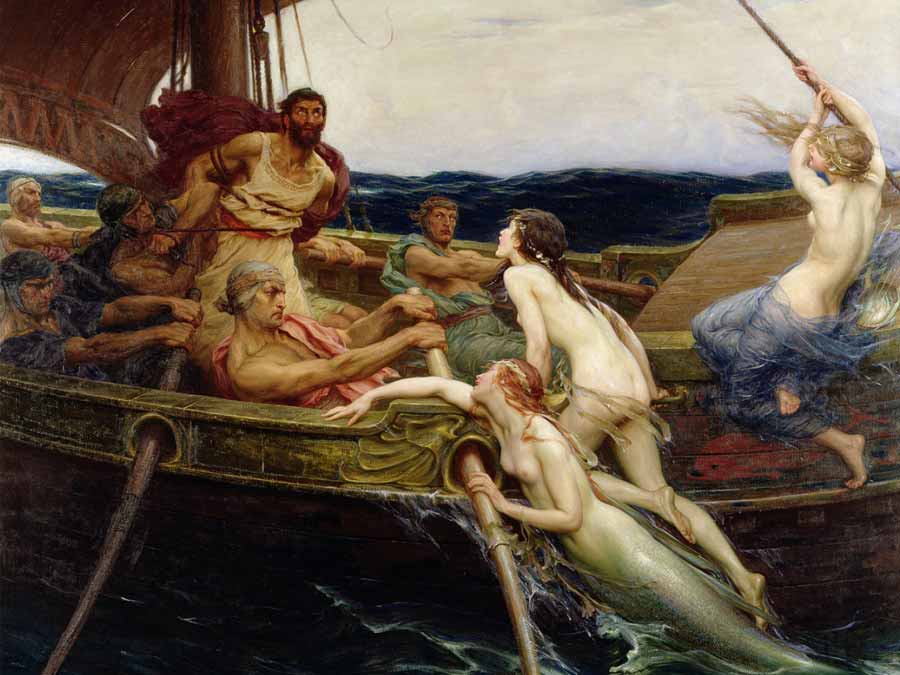
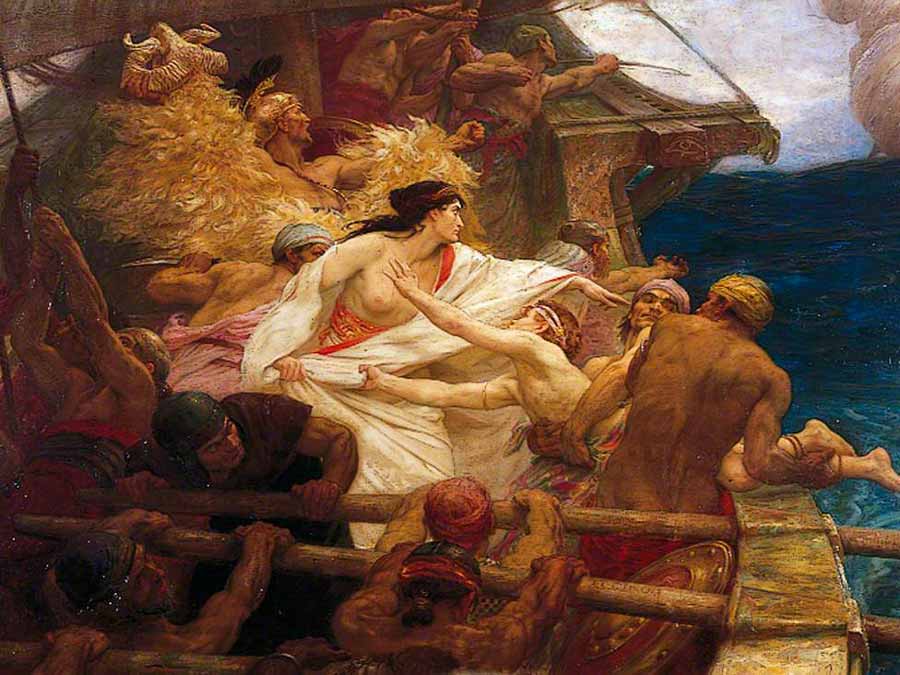
Odysseus (also known with his Latin name ‘Ulysses’) was a great hero of Homer’s epic poems Iliad and Odyssey. The Odyssey recounts his adventures since he left Troy, in his effort to return home. His wandering lasted for no less than ten years! His adventures were many: he fought against the Cicones, broke free from the Lotus-Eaters, escaped with cunning the Cyclop Polyphemus and son of Poseidon by blinding him, making the sea god his enemy. He then visited the island of Aelous, the Wind God, receiving a sack as a gift, which contained all the winds inside, to help him arrive home. As they were arriving in Ithaca, two of his men opened the sack out of curiosity while Odysseus was sleeping and their ship was once again away from Ithaca because of the storm that followed. He then survived the Laestrygonians, a tribe of man-eating giants and landed on the island of the sorceress Circe. With the help of Hermes, Odysseus left the island and journeyed to the Underworld, to get help from the blind prophet Tiresias who had died. He then passed through the Sirens and their seductive song by blocking the ears of his men with wax and ordering them to tie him up to the mast, so that he could not jump and join the Sirens. His next challenge was to cross the strait between Scylla, a six-headed monster, and Charybdis, a violent whirlpool, which he managed to do by sacrificing six of his men.
He lost the remaining of his men and his ship at the island of Thrinacia, after Zeus threw a thunderbolt to appease the sun god Helios. Odysseus found himself next to the island of Ogygia, where he spent seven years with the goddess Calypso who had fallen in love with him. With the help of Hermes, he left the island with a raft he made. A storm washed him this time at the island of the Phaeacians. This time he was lucky since the island was protected by King Alcinous and his Queen Arete, who helped him return to Ithaca. When he finally arrived, twenty years after setting sail for Troy, he found that his palace was inhabited by young people from noble families in the surrounding islands and Ithaca. Each of them wanted to marry Penelope, his wife, because they believed Odysseus did not survive. Penelope patiently waited all these years for the return of her husband, devising a trick to delay her suitors. Odysseus killed them all with his bow, with the help of his son Telemachus and his faithful dog. But as soon as he killed the suitors, their fathers got angry and demanded revenge. Finally, goddess Athena, his everlasting protector, brought peace to the island and Odysseus and his wife Penelope were reunited and happy at last.
28. The Adventures of Jason and the Argonauts
One of the most famous stories of Greek Mythology is that of Jason and the Argonauts, and their quest for the Golden Fleece. Jason was the son of Aeson, rightful heir to the throne of Iolcus. Pelias, the half-brother of Aeson, took the throne of Iolcus, bypassing Aeson and locking him in the dungeons. Pelias received an oracle from Delphi that a descendant of Aeson would seek revenge. Pelias believed that Jason was the one that the Oracle meant, so he sent him to undertake an impossible mission, hoping that he will be slain in the process. The mission was to retrieve the Golden Fleece from the land of Colchis. The Golden Fleece was the skin of a winged holy ram of god Zeus and it was guarded by a huge dragon. For the great adventure, Jason assembled the best heroes of Greece, including Hercules and Orpheus, and had a special boat built, named Argos. So, Jason and the Argonauts began their journey. After a challenging voyage, they arrived at Colchis and asked the Golden Fleece from King Aeetes. The King deceived Jason and put him into great danger, only for Medea, Aeetes’ daughter, to save him. Medea was a sorceress and fell in love with Jason.
She told him that she would help him retrieve the Fleece if he would then take her back with him and marry her. Jason agreed and Medea put a spell on the dragon, allowing Jason to retrieve the Fleece. Jason and the argonauts, together with Medea, returned to Argos and set sail away from Colchis. However, before they leave, Medea killed her brother, spreading his pieces across the ocean, so that her father would not follow them before he gathers all the pieces. Zeus was angry with the killing of Medea’s brother and sent many trials to the Argonauts. They had to pass through the Sirens, the Skylla and Charybdis, Talos and many more. By overcoming all these obstacles, the Argonauts redeemed themselves and managed to return back home and give the Golden Fleece to King Pelias. Jason kept his promise to Medea and married her. With her help, they killed Pelias and had two children together. Tragedy, of course, could not be absent from this story either. Jason fell in love with Glaucus and, full of revenge and madness, Medea killed their two children, fleeing to Athens. Jason fell into despair. He returned to his, rotten now, ship, Argos and sat on the sand under it. One piece from the rotten ship peeled off and killed him.
29. The Myth of Leto
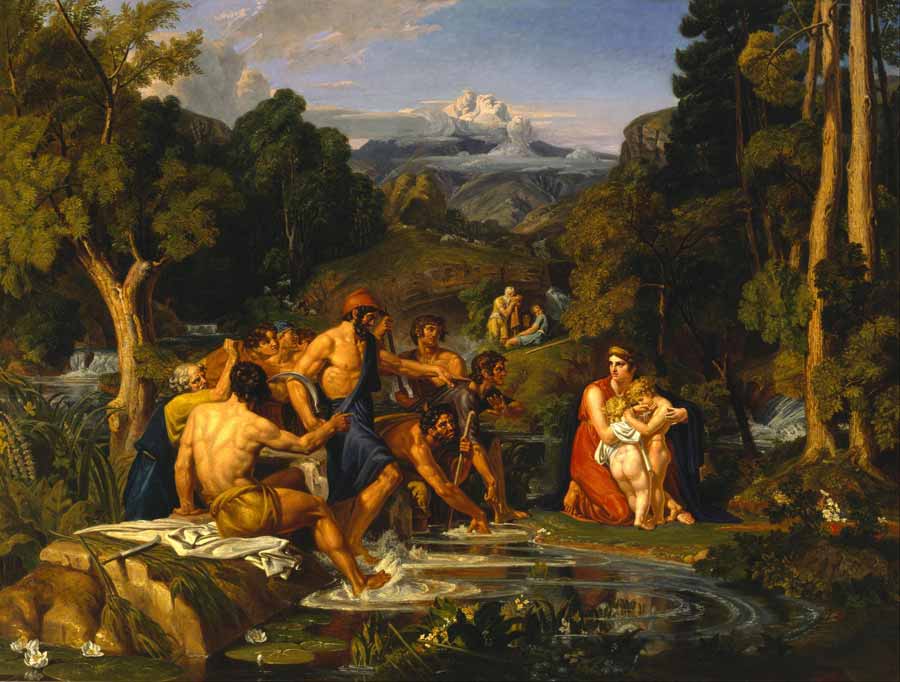
Leto was a female Titan and a favorite lover of Zeus in his early days. While she was pregnant with Zeus’ children, Zeus married goddess Hera. As expected, Hera was furious and very jealous of Leto for bearing her husband’s children. She did everything in her power to make the life of Leto difficult and tried her best not to allow her to give birth to Zeus’ children. She pushed Leto out of Olympus. While Leto was wandering on Earth, no man would open his house for her, fearing the wrath of Hera. On top of that, Hera had the huge serpent Python to chase her. Zeus saved Leto by sending the North Wind, Boreas, to carry her out to the sea. Finally, a desolate, rocky island named Delos accepted her, having nothing to lose. Leto gave birth first to Artemis and nine days later to Apollo. The children would later grow up to become powerful gods and members of the Greek Pantheon. Trained by their mother, they became very skilled archers. However, Hera’s vengeance did not end there. She continued tormenting Leto, having Python chase her everywhere. Finally, only four years old, Apollo killed Python in Delphi.
30. The Myth of Niobe
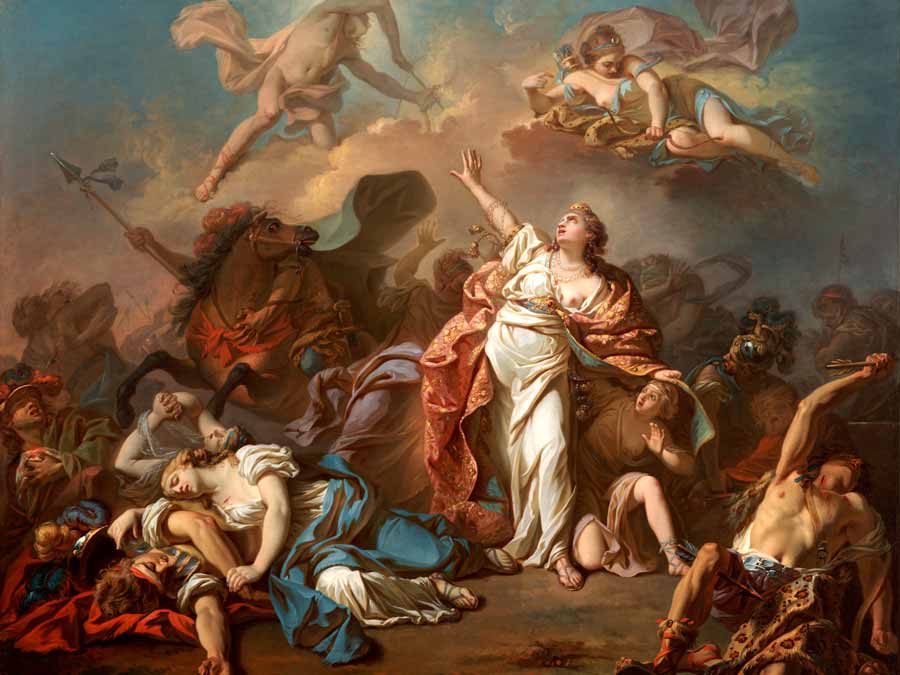
This story is connected to the myth of Leto. Niobe in Greek Mythology was the daughter of Tantalus and Dione or Euryanassa. She was married to Amphion and had fourteen children in total, seven boys and seven girls. She boasted about the fact that she was blessed with so many children and made fun of Leto that she only had two, Apollo and Artemis. For her hubris, Leto punished Niobe by sending Apollo to kill with his arrows all of Niobe’s boys and Artemis to kill all of her girls. Upon seeing her dead children, Niobe, in despair, fled to Mount Sipylus where she turned into a rock. The rock became known as the ‘Weeping Rock’.
Hint! the Weeping Rock resembles truly a woman figure and can still be visited in today’s Turkey.
Discover more tales from Greek Mythology while walking at the places where the events took place. Join one of our Mythology tours, or send us a tailor-made request to create a tour based on the mythological story you love the most. If you are a fan of Percy Jackson series, make sure to take a mythology trip to Greece in the footsteps of Percy Jackson. Our team of local experts and storytellers will make sure you will live your own myth in Greece!