



The Consolidated Aircraft B-24 was conceived in 1938. Its prototype first took to the skies in December 1939. Two years later, its first produced unit was delivered. Although the aircraft was phased out before the end of the Second World War, it holds the distinction of having been bestowed the epithet of “Liberator.”
Despite tens of thousands of B-24s being produced, only 13 of them survive today – 2 of them are still in an airworthy condition. The aircraft holds several distinctions, such as participating in the first attack on German soil and being produced in greater quantities than any other military aircraft in the USA, among others. Let’s take a look at a few other interesting facts about it.
1.B-24 had B-17 as its progenitor
Public perception has it that the B-24 was not a major improvement on the B-17
It was in 1938 that the United States Army Air Corps (USAAC) requested Consolidated Aircraft (later to become Convair) to build the B-17 under license. The Boeing-produced B-17 first flew in 1935 and was popular with USAAC.
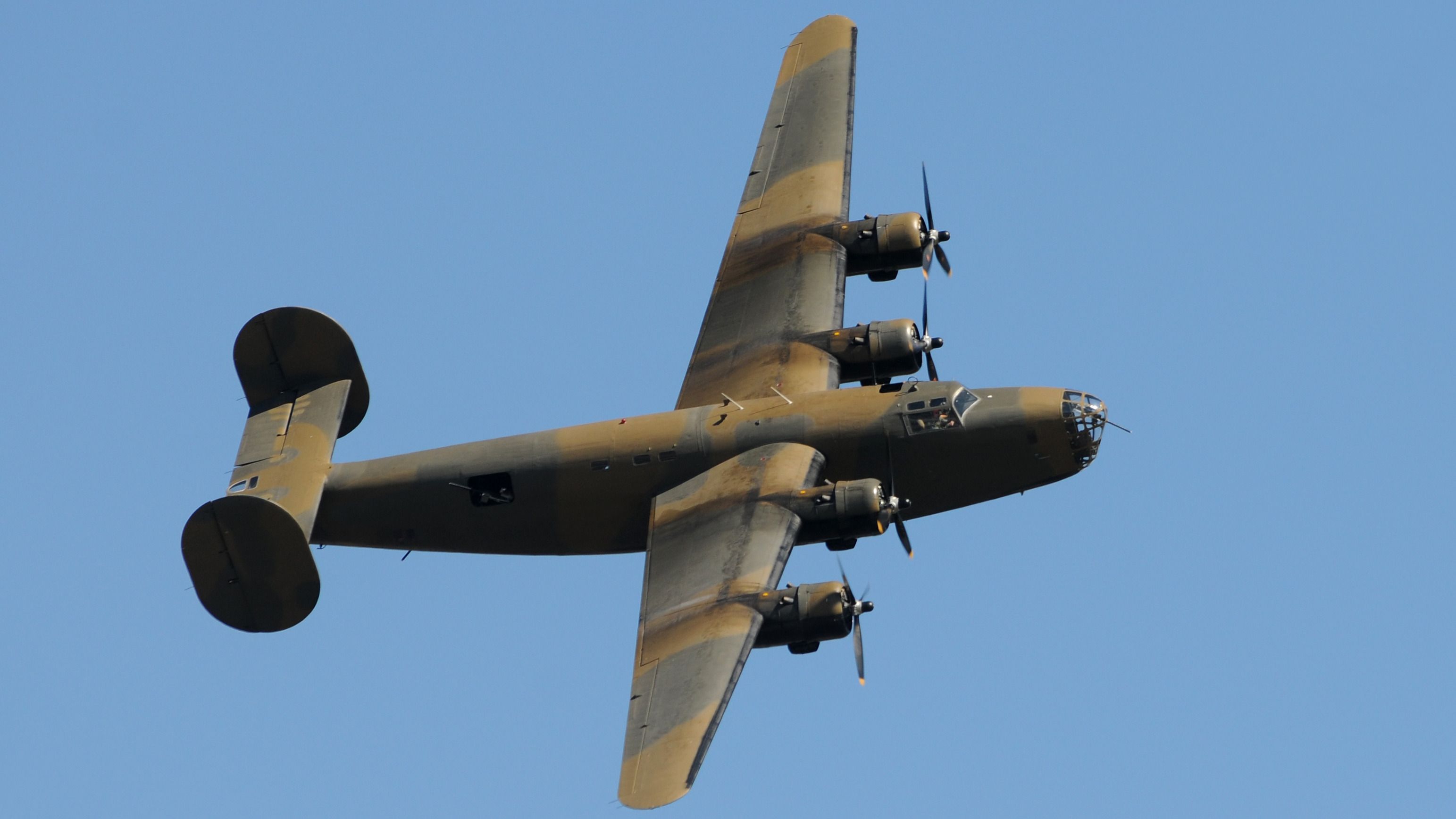
However, the senior executives of Consolidated decided that they would better the B-17 and come up with an aircraft with a longer range, heavier bomb load, tricycle landing gear, higher top speed, and state-of-the-art wing design and performance. And along came the Consolidated B-24.
| Features | Consolidated B-24 Liberator | Boeing B-17 Flying Fortress |
| Wingspan | 110 ft (34 m) | 103 ft 9 in (31.62 m) |
| Maximum Take of Weight | 65,000 lb (29,484 kg) plus | 65,500 lb (29,700 kg) |
| Maximum Speed | 297 mph (478 km/h) | 287 mph (462 km/h) |
| Cruise Speed | 215 mph (346 km/h) | 182 mph (293 km/h) |
| Engines | four Pratt & Whitney R-1830 | four Wright R-1820-7
|
All in all, Boeing produced 13,000 B-17s – 9,000 of which were the B-17G variant, while more than 18,000 units of the B-24 were manufactured. But despite the B-24 trouncing the B-17 in terms of production numbers, the B-24 was often referred to as a “Flying Coffin” while the b-17 was called a “Flying Fortress.”
2.B-24 was a “Flying Coffin”?
Other aircraft, such as the Mig-21, also acquired this strange moniker due to reliability and design issues.
B-24s were referred to as “Flying Coffins” by the crew who operated them. The aircraft had a solitary entry point near its rear, while in the case of an emergency, it was near-impossible to get to the exit as it was so far away from where the majority of the crew were. These and other design flaws persisted in the B-24 because it was hastily designed, as a result of which it wasn’t as durable as its progenitor – the B-17.
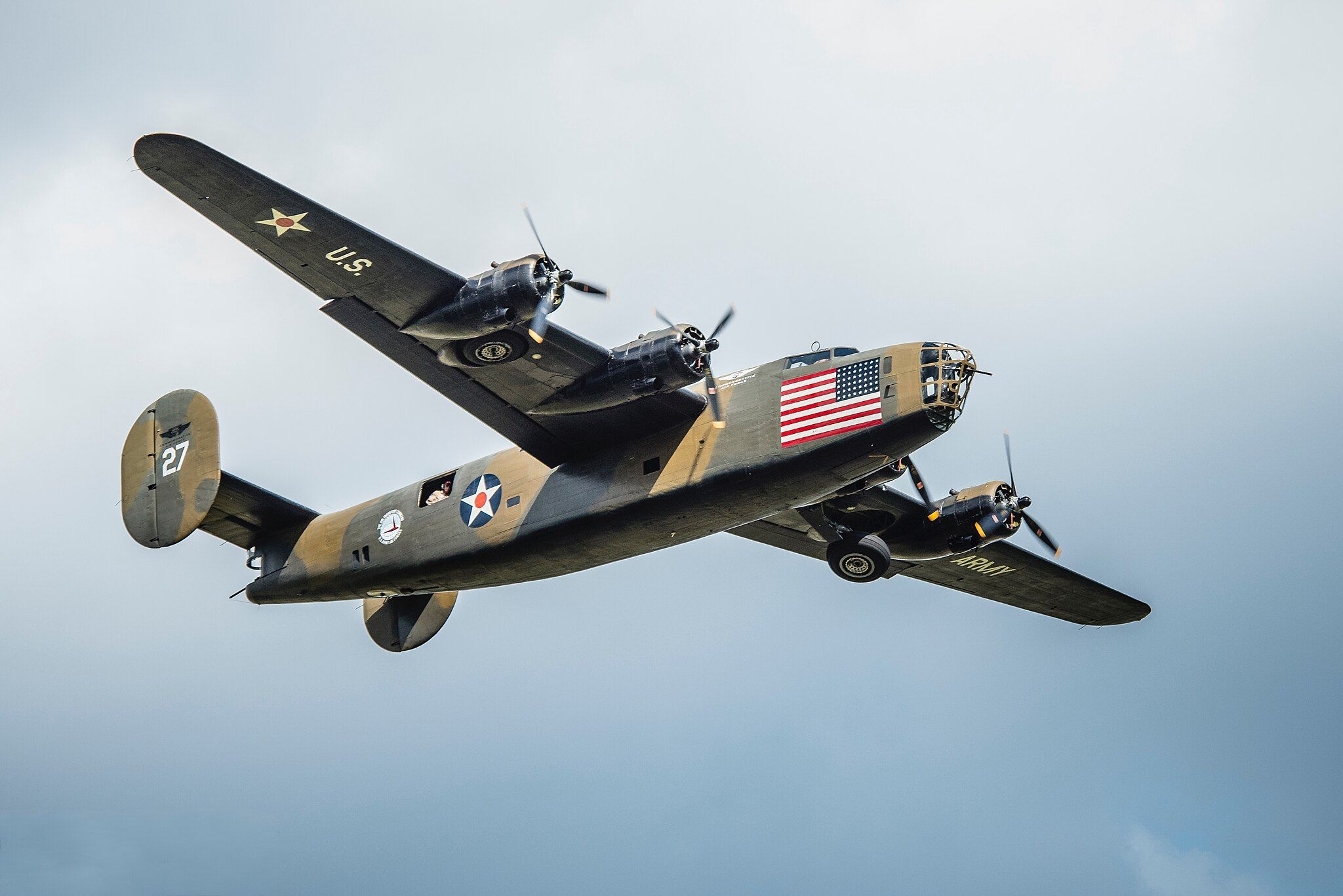
One of the other reasons that the B-24 earned this nickname was because its service ceiling was 7,000 feet (2,100 meters) below that of the B-17, which made it susceptible to being downed. Encyclopedia Brittanica quoted this disadvantage as:
“As a result, the B-24 was more exposed to German antiaircraft artillery; this and the B-24’s greater vulnerability to battle damage (the leaky fuel system was a particular problem) made the B-17 the preferred strategic bomber in the European theatre.”
Despite such shortcomings, the B-24’s superior range was seminal for the US Air Force, particularly in the Pacific, where they excelled in bombing Japanese-occupied territories.
A few other flaws of the B-24s:
- The newly designed Davis wings were not resistant enough to damage.
- It didn’t compare well with its contemporaries in low-speed performance.
- The fuel system was leaky.
3.The B-24 was built in greater numbers than any other US military aircraft
Though Germany, Britain, and the USSR out-produced the Liberator
Despite the claims that the aircraft was dubbed to be “a death trap in the European theatre,” more than 18,400 examples of the B-24 were built. Some sources, such as Commemorative Air Force, claim that the true figure (including all its variants) is 19,267. This makes it the most-produced American wartime aircraft.

| Most-produced military aircraft in World War II | Country | Number |
| B-24 liberator | USA | 18,400 |
| Focke-Wulf Fw 190 | Germany | 20,000 |
| Supermarine Spitfires | Britain | 20,351 |
| Messerschmitt Bf-109 | Germany | 33,984 |
| Ilyushin Il-2 | USSR | 36,183 |
B-24s were abandoned by the Royal Air Force (RAF) at the end of the war. The rise in the popularity of the Boeing B-29 Superfortress, which cost $3 billion in design and production and was the most expensive project of World War II, paved the way for incendiary bombers.
The retired B-24s found their way to the Indian Air Force (IAF) after being refurbished by Hindustan Aircraft. Thirty-six of these were restored by the IAF – the latest operator to fly the B-24.
4.The curious case of Getaway Gertie
The B-24 that crashed into Lake Ontario in 1944 has yet to have been located
On February 18th, 1944, a B-24 with eight crew members took off from Syracuse Army Air Base (now known as Syracuse Hancock International Airport/ Hancock Field Air National Guard Base) only to crash into Lake Ontario. This is a case that is known as ‘Getaway Gertie.’ The Commemorative Air Force (CAF) even held a commemoration ceremony in June of 2023 for this fallen B-24′.
Mayor Billy Barlow of Oswego countryside commented about the commemoration:
“I’m excited to partner with Oswego County to host this event which gives appropriate honor to the ‘Getaway Gertie’ crew. It’s always been important to embrace our rich history as we promote our community, and this commemoration gives us the opportunity to shine a light on a story that hasn’t previously been well highlighted.”
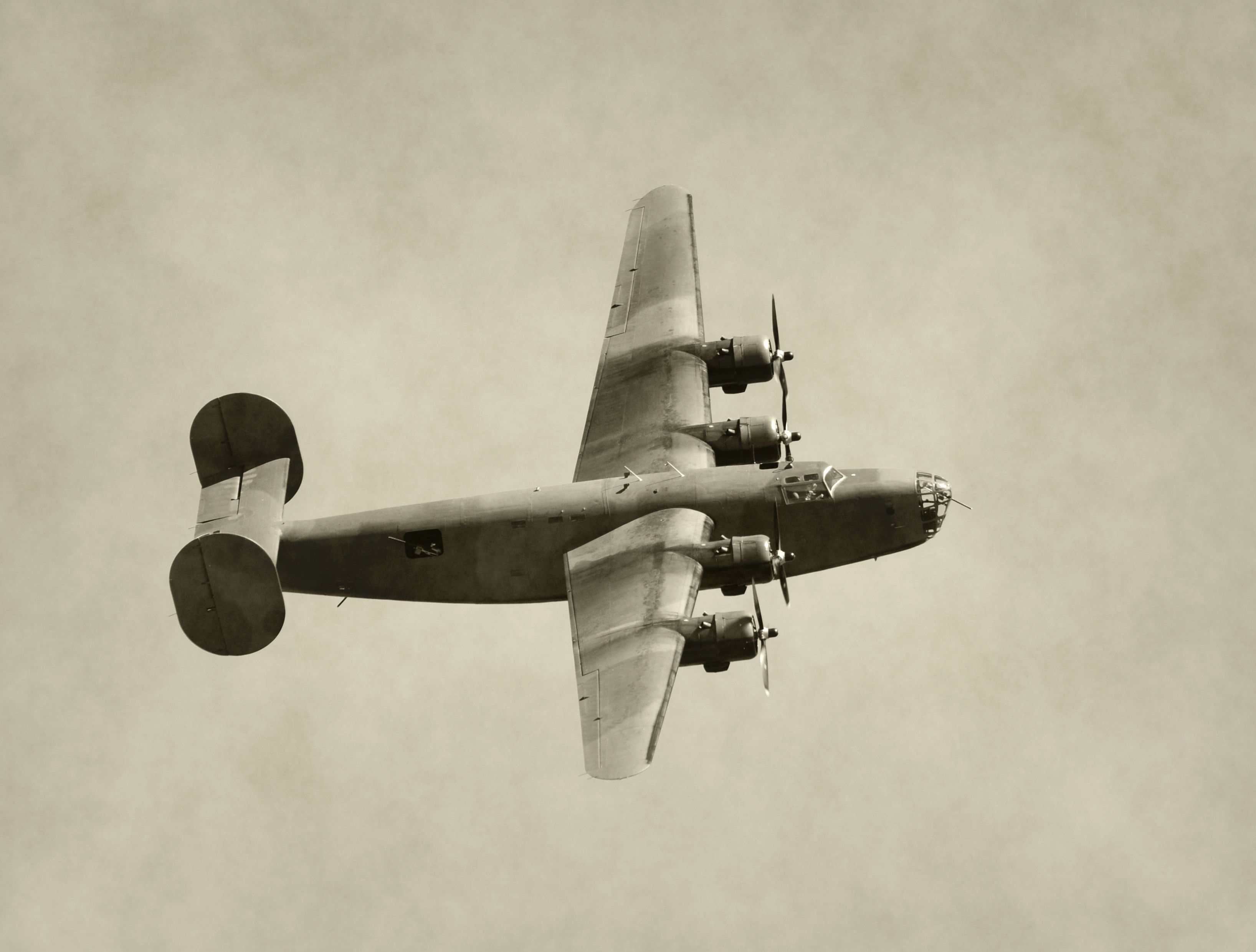
Here are a couple of things we do know about Getaway Gertie:
- The crew had contacted the Westover Air Reserve Base before going down
- They had reported that they were unable to land at SYR due to bad weather.
- Books such as “Vanishing Point” have been written about the incident, but establishing closure has been difficult.
Much of the incident is shrouded in mystery. A local newspaper claimed that the aircraft had gone down between Nine Mile Point, east of Port City, and Port Ontario, with a local recalling that the B-24 had “crashed into the lake during a blinding snowstorm.”
Despite several attempts to locate the B-24 that drowned in Lake Ontario, nothing conclusive about what happened to it is known.
5.Pivotal in various notable operations during World War II
Operation Carpetbagger and the D-Day invasion are the most notable operations where the B-24 was used
The B-24 Liberator was used for a variety of purposes during World War II – for bombings, reconnaissance flights, as a long-range transport vehicle, and as a provider of supplies. And it wasn’t simply the RAF that made use of the Liberator. Even Germany, which had captured crashed B-24 Liberators, used the landing gear of B-24s for testing on the newer aircraft they were working on.
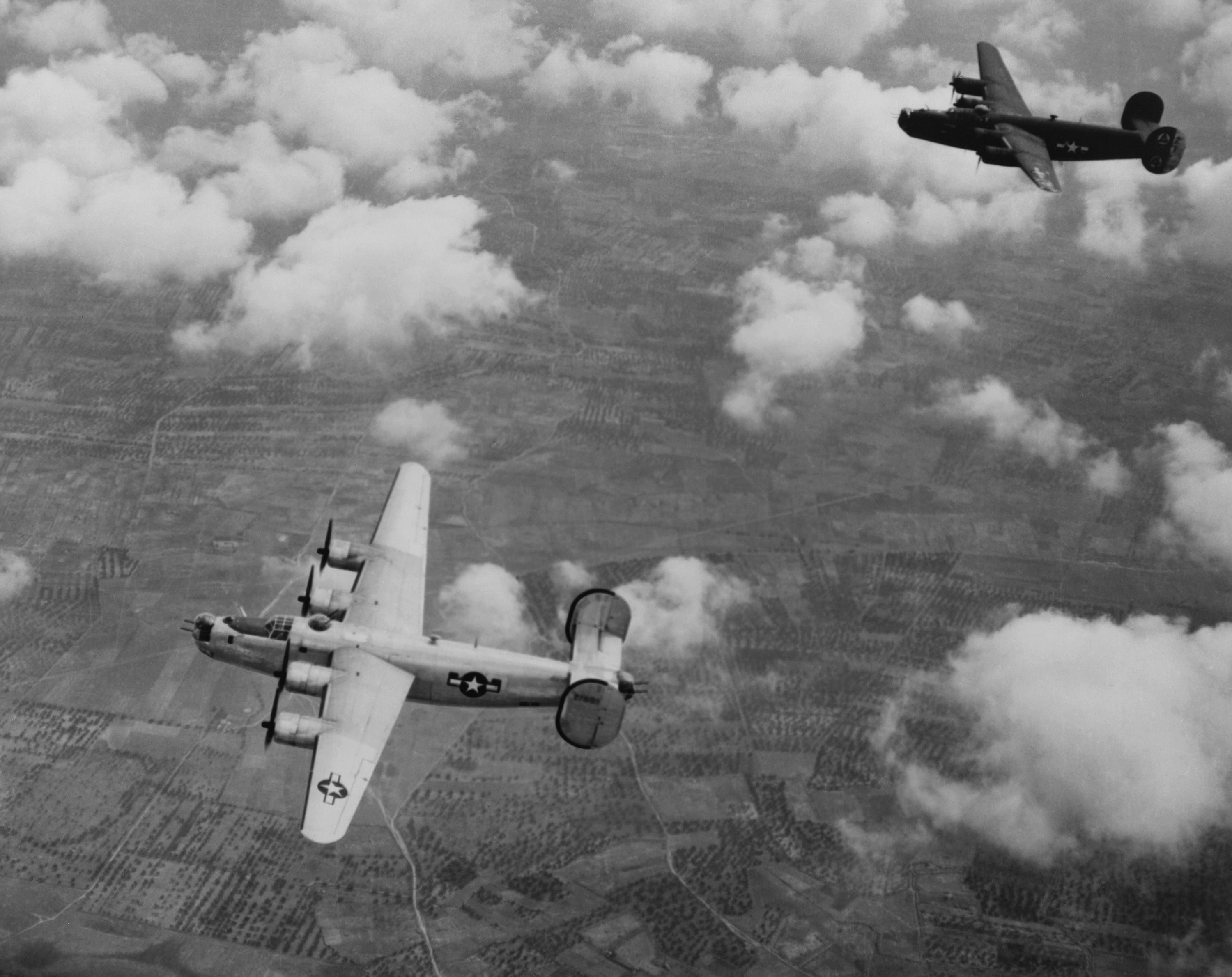
Here are some notable operations where the B-24 liberators were used:
- In 1943, some B-24s were painted black and deployed during the night to bring Operation Carpetbagger to fruition. The operation was dedicated to providing supplies and weapons for French Resistance fighters.
- B-24 Liberators played a pivotal role in the D-Day invasion as they helped soften Nazi positions that paved the way for the ground forces to push back the Nazis.
- The B-24 Liberator was at the heart of the Allies’ Mediterranean campaign, as its use in bombings of German oil refineries, destroying Nazi U-boats, patrolling the coastal areas, and attacking critical targets.