



Taking to the skies in 1935 and eventually entering service with the United States Air Force in 1938, the Boeing B-17 Flying Fortress stands as one of the most important and influential heavy bombers ever built. The aircraft’s longevity was so impressive that some Air Forces kept the plane in service far after the Second World War ended.
The four-engined heavy bomber did not finally leave the skies until 1968 when the plane was finally retired by the Brazilian Air Force. Even today, a few models remain airworthy and awe spectators from across the globe.
Throughout its service history, the B-17 flew thousands of daring missions, and the plane was extremely vital to Allied bombing campaigns in both the European and Pacific theaters. In this article, we would like to dig deeper into the aircraft’s complex operational history and identify key features that made the iconic bomber so effective at its job and so essential for the United States Air Force.
1.Impressive power
Number of engines: 4
| Engine: | Wright R-1820 Cyclone 9 |
| Classification: | Radial Piston Engine |
The Boeing B-17 Flying Fortress was well known for its payload and could carry impressive bomb loads by the era’s standards. While the aircraft didn’t deliver the war’s two nuclear weapons (that honor remains for the B-29 Superfortress), the bomber did deliver an impressive amount of ordinance to targets across Europe and the Pacific.

A key part of the aircraft’s ability to carry such heavy loads is due to the four massive engines that kept the aircraft in the skies. Four massive radial piston engines propelled the aircraft by turning 3-bladed Hamilton Standard Propellers.
Due to the presence of four engines (as opposed to two, which was common with many smaller bombers of the time), the aircraft was extremely durable. The plane, for example, could carry far heavier ordinance than the B-25 Mitchell, a smaller twin-engined bomber, due to the four engines generating such a large amount of lift.
2.A formidable nickname
We can thank The Seattle Times for this.
| Date: | 28 July 1935 |
| Journalist: | Robert Williams |
Part of the legendary mystique that surrounds the Boeing B-17 Flying Fortress is the aircraft’s formidable name. Not only did the Flying Fortress become an iconic nickname, but it also inspired confidence in those who flew the jet and in allied communities that associated the aircraft with friendly forces.
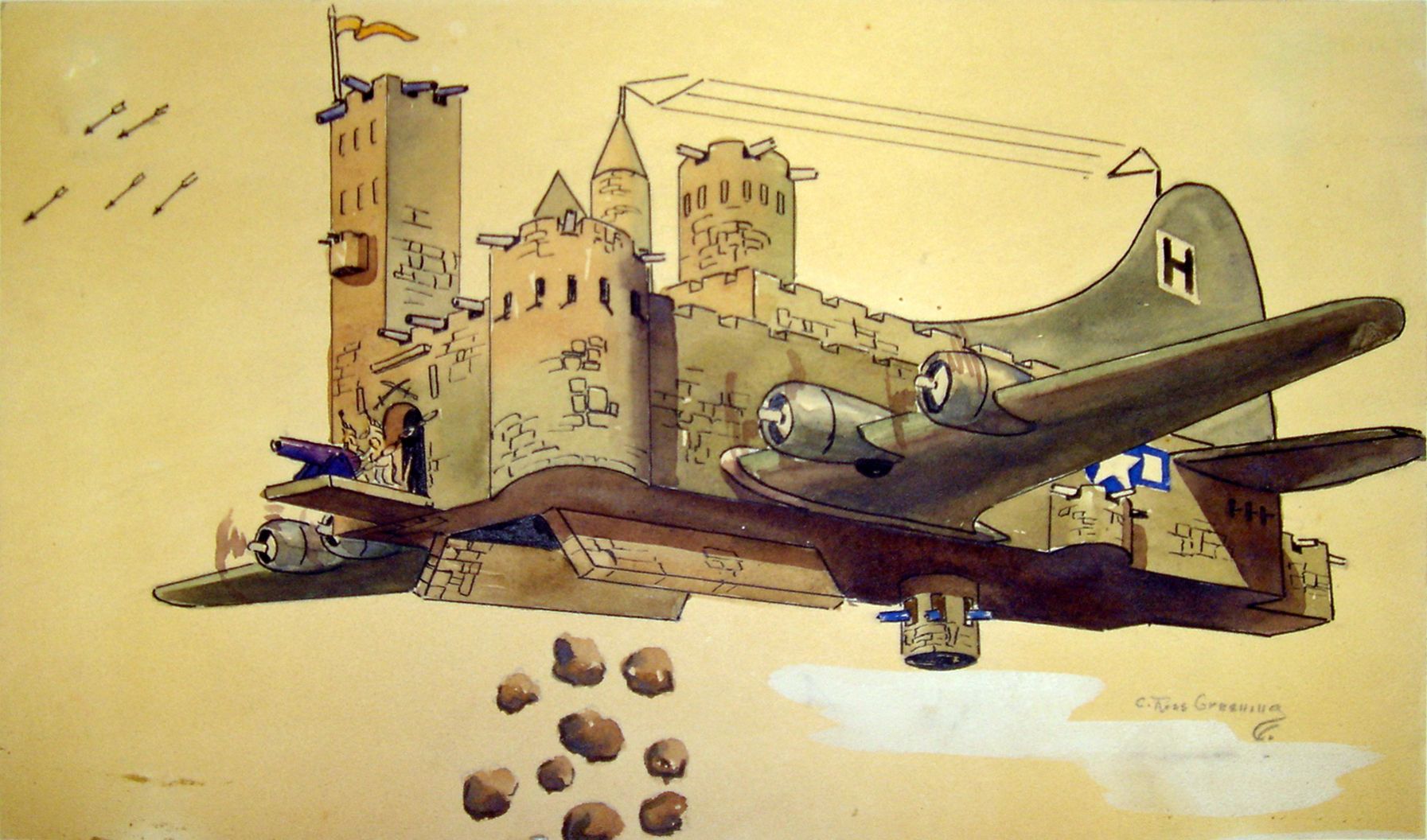
The name originates with Robert Williams, a journalist at The Seattle Times. Upon seeing the aircraft at Boeing’s Washington assembly lines, the journalist coined this now-memorable nickname.
The aircraft’s nickname also had a heavy influence on the naming of future bombers. Both the B-29 Flying Fortress, which flew later in the war, and the B-52 Stratofortress, which remains in service today, share fortress-related nicknames.
3.Impressive range
Range: 2,000 miles (1,738 nautical miles)
| Typical payload for 2,000 mile range: | 6,000 lbs (2,700 kg) |
| Ferry range: | 3,750 nautical miles (3,260 nautical miles) |
One thing that set the B-17 apart from other bombers of the era was the plane’s extensive range. The Flying Fortress could traverse oceans and perform long-range bombing raids with fewer refueling stops than other Allied bombers.
The aircraft’s impressive range did cause some challenges when it came to escorts. Due to the more limited range of fighters, the Flying Fortress didn’t always have escorts by its side to defend the bomber in the event that the plane came under enemy fire. This led the plane to be more heavily fortified, and new cannons were installed to protect the bomber in the event of an attack.
4.Favored for its versatility and endurance
Often chosen over the rival B-24
Three key reasons:
- Increased maneuverability
- More redundant avionics
- More stable in flight
Of the two major four-engined heavy bombers that served throughout the entire war, generals and pilots time and time again cited their preference for the B-17 Flying Fortress over the B-24 Liberator. There were a number of reasons for this, not the least of which include the aircraft’s far superior maneuverability and multiple redundant systems. Pilots noted that the aircraft’s electronics were far less susceptible to damage than the B-24s and that the plane could be flown more easily with an engine missing.

Renowned Lieutenant General Jimmy Doolittle wrote about his preference for the B-17 multiple times. However, the general did note that due to the high altitude both aircraft flew at, the bombers were equally effective at outrunning and outmaneuvering enemy aircraft, as reported by Air & Space Forces Magazine.
5.A truly global fleet
Peak global inventory: 4,574
| Number of operators: | 23 |
| Total built: | 12,731 |
While the aircraft most notably served for units of the US Air Force across the globe throughout the Second World War, the aircraft entered service with 23 different nations. Many nations, such as the Soviet Union, purchased planes from Boeing, the manufacturer. Others were given the aircraft after the war for civil operations.
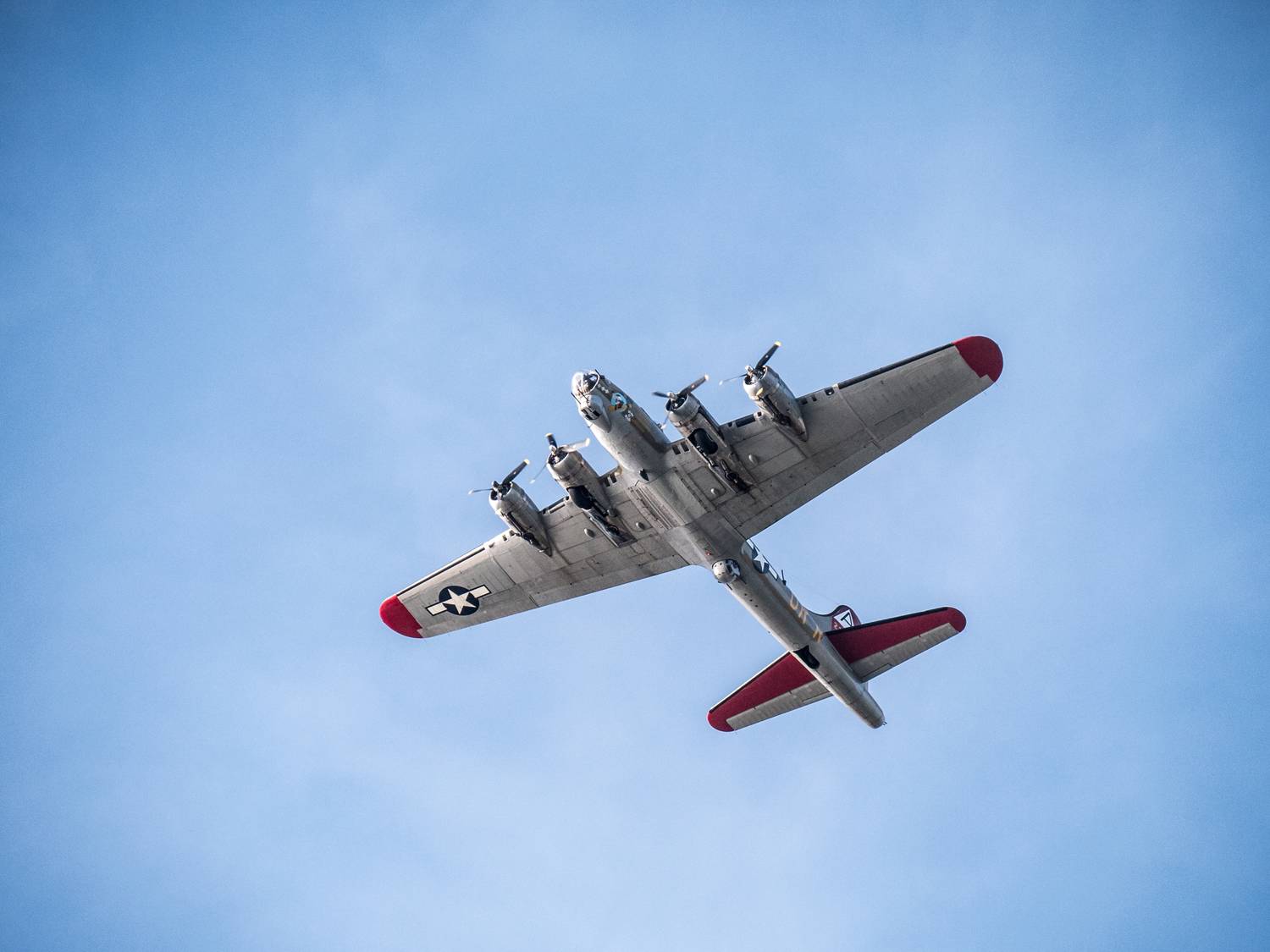
The bomber was also a major piece of the Royal Air Force’s fleet towards the end of the war. The aerial branch of the British Armed Forces took advantage of the aircraft’s higher payload on shorter routes to fly strategic bombing missions in the European Theater.