



The Lockheed Model 12 Electra is a twin-engine transport aircraft capable of seating up to eight people, including crew. Designed as a multipurpose aircraft in the late 1930s, the aircraft primarily served small airlines, companies, and private individuals.
Out of the 130 examples produced, some were specially designed for military and other applications. Simple Flying explores some uses of the Model 12 Electra during World War II.
1. One of the first
Used for various missions during the War
- Low-level surveillance
- Reconnaissance missions
- Ground support
- Training
- Cargo transport
Lockheed Martin provided aircraft support to the Royal Air Force (RAF) of the United Kingdom at the onset of World War II. Lockheed Martin’s Model 10 and 12 Electra were some of the first to fly during the war. From low-level surveillance and reconnaissance to basic cargo transport, the Electras provided the essential support needed in the initial years of the war.

“The first aircraft to be flown during the war was a Lockheed Model 10 Electra belonging to British Airways (later known as BOAC), which was impressed into service by the RAF on 3 September 1939, the day Britain declared war on Germany.”
2. As a transport aircraft
US Military service
| Military agency | Aircraft designation |
|---|---|
| United States Army Air Corps (USAAC) | C-40 |
| United States Navy (USN) | JO or R3O-2 |
At the beginning of the Second World War, the Electras were introduced to the United States military service. The USAAC, with the designation C-40, and the USN, with the designation JO or R3O-2, used the aircraft as transport carriers.
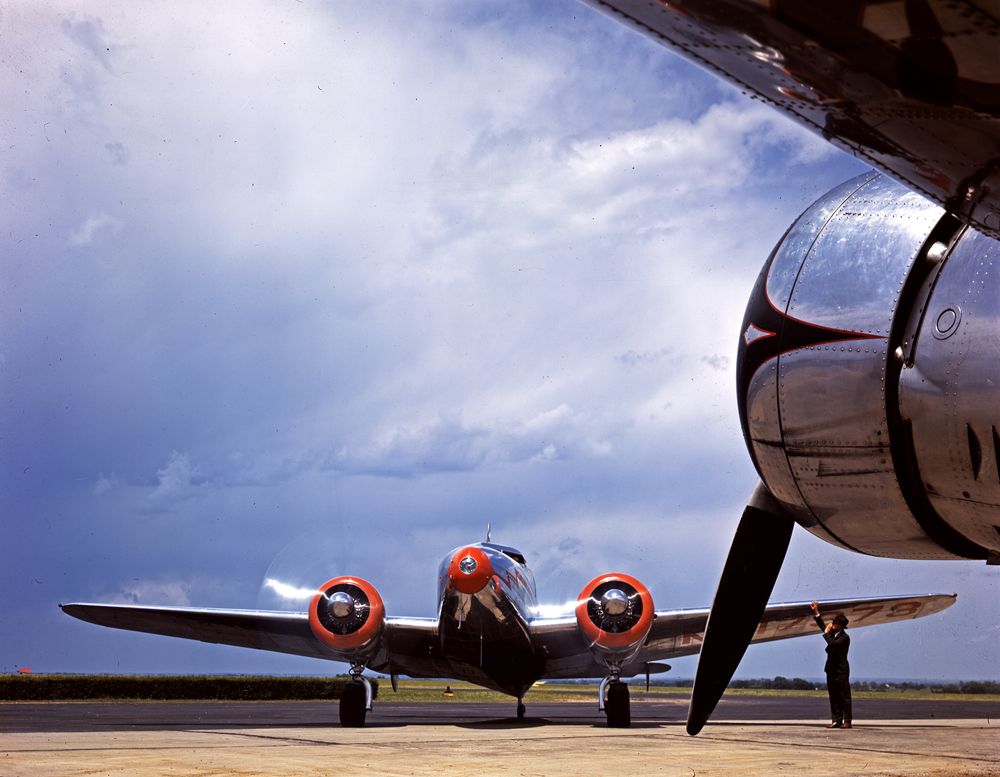
While the aircraft could only accommodate up to eight people, including the crew, its maiden flight and entry into service aligned with the immediate transport needs. Many global air forces, including the Royal Air Force, Royal Canadian Air Force, and Brazilian Air Force, operated the aircraft for military transport needs.
3. As a spy plane
Modified Model 12 Electras flew undercover
- Maximum speed: 225 mph (362 km/h, 196 knots) at 5,000 ft (1,500 m)
- Cruise speed: 213 mph (343 km/h, 185 knots)
- Range: 700 NM (800 miles, 1,300 km)
- Service ceiling: 22,900 ft (7,000 m)
- Rate of climb: 1,400 ft/min (7.1 m/s)
In the months leading up to World War II, some British Airways Lockheed 12 Electras flew as military spy planes over Europe, particularly Germany and Italy. Two commercial planes were intended to be converted for military reconnaissance flights. These aircraft were modified with aerial photography equipment.
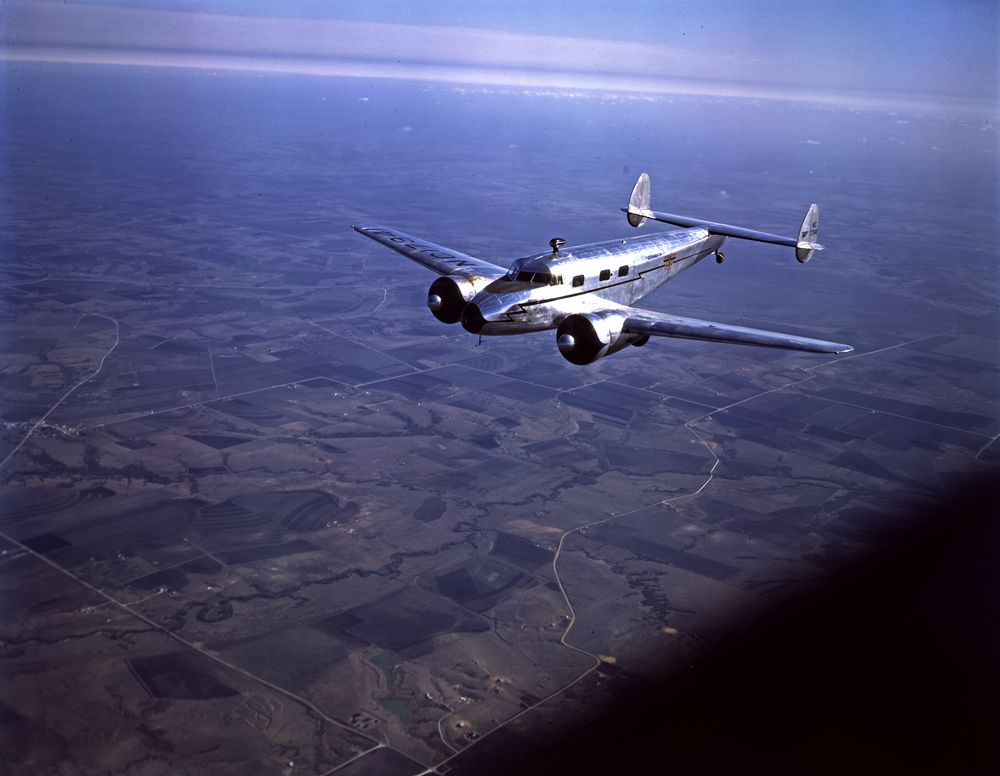
These aircraft flew undercover in the months preceding World War II, taking images of many German and Italian military installations. The aerial photographs were secretly mapped and compiled for strategic missions. In March 2023, one of these aircraft, a G-AFTL, returned to the skies after restoration by Sywell-based air leasing.
4. As a training aircraft for the bomber squad
Royal Netherlands East Indies Army Air Force
| Lockheed Model 12 Electra | |
|---|---|
| Total aircraft bought | 36 |
| Training version (Model 212) | 16 |
| Transport versions | 20 |
The Royal Netherlands East Indies Army Air Force (ML-KNIL) was the major user of the Lockheed Model 12 Electra. The agency bought 36 examples of the popular aircraft, with 16 of the Model 212. Lockheed designed the Model 212 specifically for training bomber crews.

The aircraft featured a 0.303-inch (7.696 mm) caliber machine gun. The unpowered, partially retractable gun turret was installed on top of the fuselage. The aircraft also featured a second machine gun fixed in the nose. An under-wing section could hold up to eight 100-bl (45 kg) bombs. The ML-KNIL primarily operated the Model 12 and 212 Electras between 1936 and 1942.
5. As a VIP transport
Governor of Bengal
- Crew: 2
- Capacity: 6 passengers
- Length: 36 ft 4 in (11.07 m)
- Wingspan: 49 ft 6 in (15.09 m)
- Height: 9 ft 9 in (2.97 m)
- Max takeoff weight: 8,650 lb (3,924 kg)
- Powerplant: 2 × Pratt & Whitney R-985 Wasp Junior SB 9-cylinder air-cooled radial engines, 450 hp (340 kW) each
While many Lockheed Electras were used in the time preceding the war, some were used for special purposes, including surveillance, cargo transport, and airdrops during the war. One such use was personal transport of the Governor of Bengal, for which a single aircraft was transferred to India.

“[…] A further seven or eight Electra’s were used later in the war, with one transferred to India to serve as the personal transport of the Governor of Bengal.”
The aircraft could seat up to six passengers and two crew members. Model 12 Electras were also used to transport war troops.