



The Boeing B-17 Flying Fortress may be the most iconic aircraft of WWII, highly significant in turning the tide toward an Allied victory in the skies over the European theater. Introduced in 1935, the Boeing B-17 was the first military aircraft with a flight deck instead of an open cockpit. More than 12,731 B-17s were produced by Boeing, Lockheed and Douglas from 1935 through 1968. The Boeing B-17G model on display at Hill Aerospace Museum was built in 1945 and replicates the Short Bier styling of the 493rd Bomb Group.
B-17 Armament
Built for strategic daylight bombing, the four-engine, heavy bomber B-17 is equipped with 13 Browning M-2 .50-caliper mounted machine guns, and is capable of carrying up to a 6,000-pound bomb load in a single mission. There were two machine guns in the main cabin, operated by the waist gunner, in addition to several more throughout the aircraft.
Inside the B-17
The first thing you’ll notice when peeking inside a B-17 is that it was built for combat, not comfort. Crews of 10—a pilot and copilot, bombardier, navigator, radio operator and five gunners—occupied the small cabin for six to eight hours per mission. The main cabin was barely tall enough for the crew to stand up straight. Flying at altitudes above 27,000 feet meant it got very cold in the aircraft, often below freezing temperatures. Outlets in the sides of the aircraft allowed the crew to plug in electric suits to stay warm. The crew also required oxygen above 15,000 feet and oxygen tanks were located throughout the aircraft.
The main cabin was unarmored and outfitted with two, twin .50-caliber machine guns for the waist gunner to defend the aircraft against side attacks. Each gun could fire about 700 rounds per minute. Lack of armor plating on the B-17 meant crews were also at risk from ground explosions which could penetrate the aircraft.
B-17 Nose
Two officers occupied the nose of the B-17. The bombardier perched at the extreme front end, protected only by a Plexiglas window. The navigator sat at a mounted table just behind the bombardier, where he laid out charts and maps to navigate the best course. Their defenses were two, twin .50-caliber machine guns out of the nose, one for each officer, plus a remote device for the machine guns on the chin turret. The most vulnerable aspect of the B-17 was a head-on attack, and many bombardiers and navigators were lost in missions.
Inside the B-17 Flight Deck
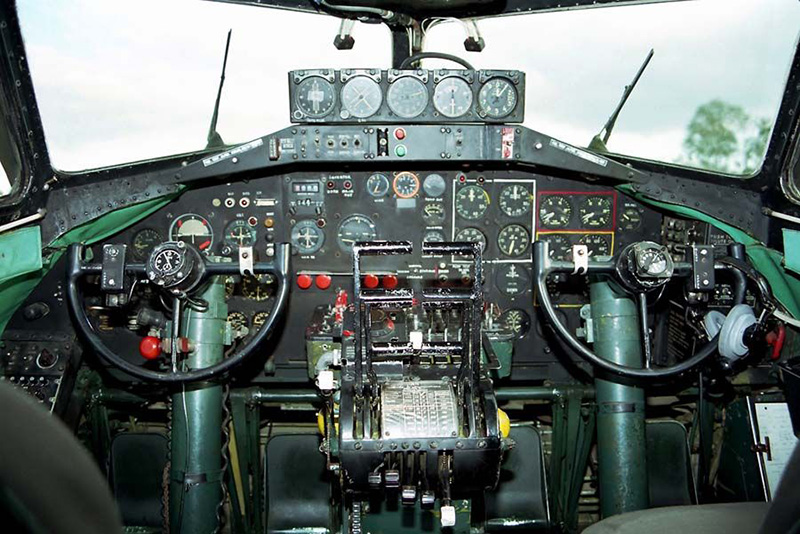
Above and behind the nose of the B-17, two officers occupied the flight deck—the pilot on the left and the copilot on the right. Twin yokes allowed the pilots to operate and control the aircraft. The pilot typically manned the controls while the co-pilot operated landing gears, engines and firing controls. Directly behind the flight deck were two, twin .50-caliber machine guns in the top, or dorsal, turret. A passageway under the cockpit floor allowed crew members to reach the flight deck as needed.