



An Avro Lancaster bomber built in Ontario by Victory Aircraft Ltd. is gaining a new lease on life at the B.C. Aviation Museum.
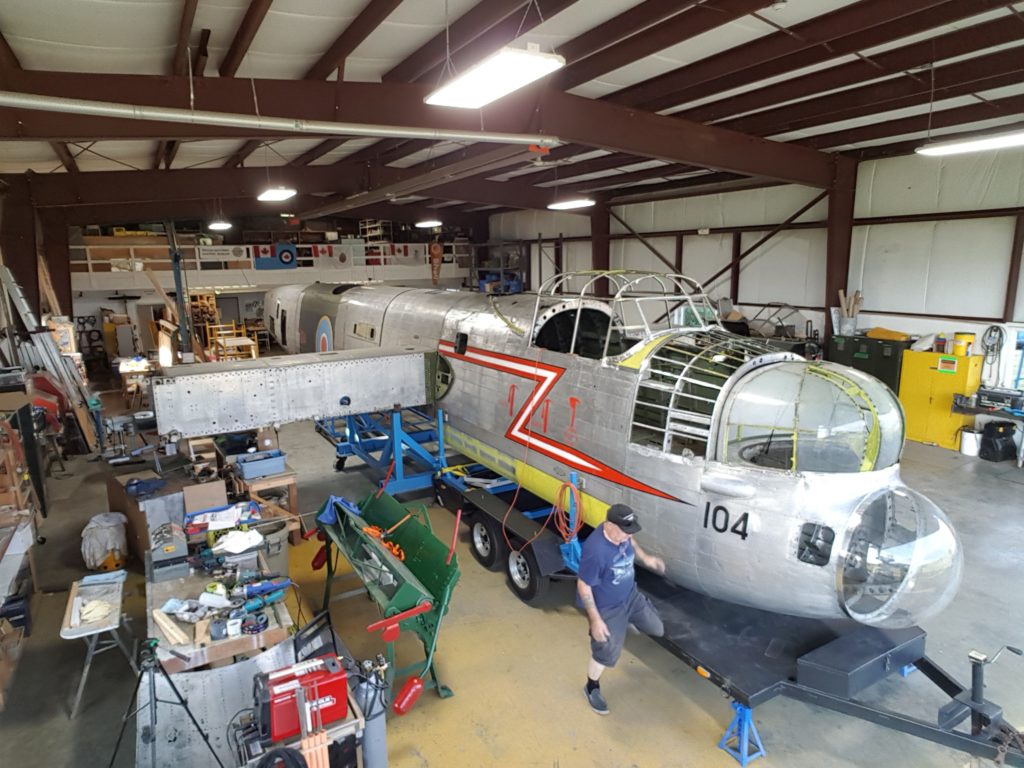
The four-engine Lancaster, serial number FM104, rolled off the line in 1944 at Victory’s Malton plant near what is now Toronto’s Pearson International Airport.
In early 1945, the aircraft was flown to England, though it wasn’t deployed for combat duties. The Second World War in Europe ended on May 8, 1945, and FM104 came back to Canada weeks later.
By the fall of 1945, the plane was stored in Claresholm, Alta., along with dozens of other Lancasters that survived the war.
Emerging from nearly six years of storage in Alberta, FM104 went through modifications and joined the Royal Canadian Air Force’s search and rescue operations in the 1950s and early 1960s, focused on Canada’s East Coast.
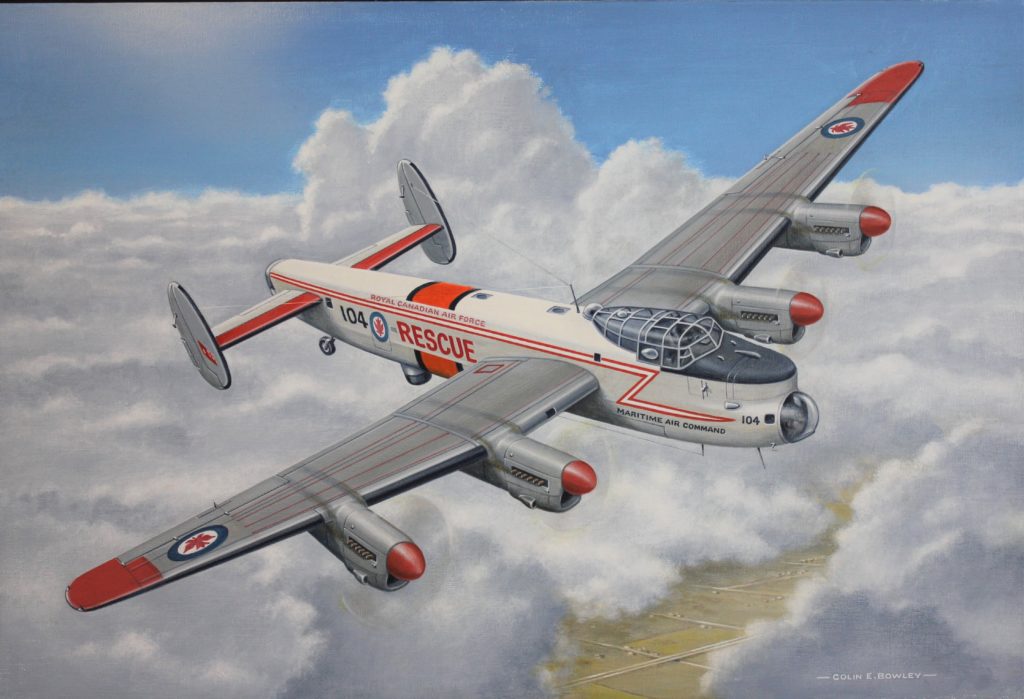
In what will be a 10-year restoration project estimated to cost more than $5 million, plans call for the vintage Lancaster to be eventually airworthy. It will again have the search and rescue livery that it had upon its retirement in 1964.
The not-for-profit B.C. Aviation Museum, located on land leased for a nominal $1 a year from Victoria International Airport, acquired the Lancaster two years ago in a process overseen by the City of Toronto.
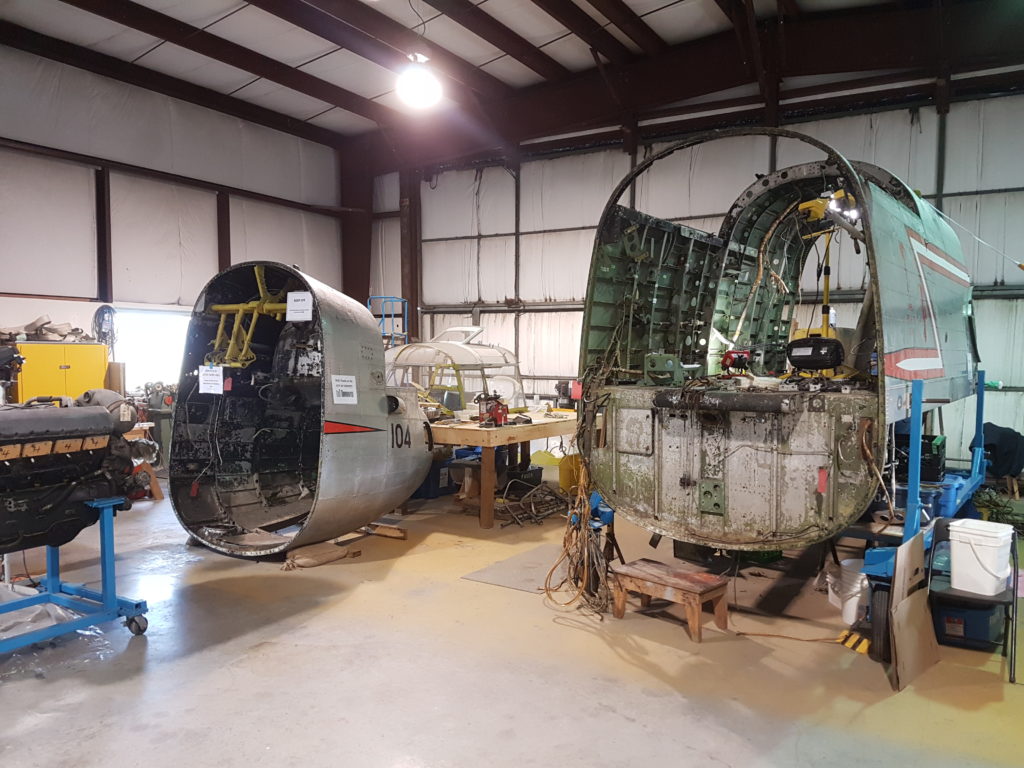
After securing rights to the plane, the museum took delivery of the historic aircraft in the fall of 2018. It arrived in sections inside five transport trucks that made the lengthy trip to Vancouver Island.
The history of FM104 includes damage long after the war, adding to the complexity of the painstaking work being undertaken by dozens of volunteers in the Victoria region.
After the plane’s retirement in 1964, it was mounted on a plinth in 1965 for public display (repainted in its wartime camouflage colours) at Coronation Park, located near the Canadian National Exhibition on Toronto’s waterfront.
“The plinth-mounting technique undermined the aircraft’s structural integrity and caused corrosion. Exposure to lakefront weather, bird infestations and ongoing vandalism also threatened FM104’s long-term survival,” said a report by the City of Toronto in 2018.
FM104 was subjected to Toronto weather from 1965 until 1999. The plane was transferred indoors in 1999 and over the next two decades, efforts to fully restore the aircraft suffered a series of setbacks in Ontario.
Grant Hopkins, co-ordinator of the B.C. museum’s ambitious restoration project, said repairs will be required to fix damage not only from being exposed to the elements outside but also vandalism while on public display.
“It’s a big process of restoration,” he said in an interview. “There’s a lot of corrosion inherent in an aircraft that was sitting out on a post for more than 30 years. Our goal is to do the restoration to an airworthiness standard.”
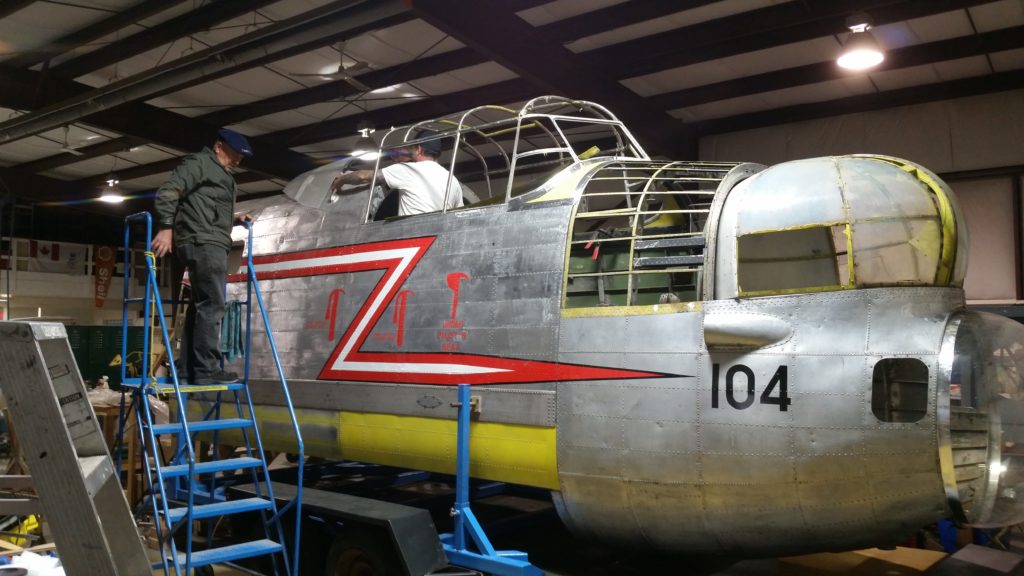
Hopkins noted that the Canadian Warplane Heritage Museum in Hamilton and Royal Air Force Coningsby in England have the only two Lancasters in the world that are still airworthy.
Retired graphic artist Colin Bowley, who is one of the B.C. museum’s volunteers and aviation buffs, painted FM104 on canvas. He depicted it as it would have appeared in the skies in the early 1960s.
“Many years ago, I lived in Toronto and was there when FM104 was mounted on the pedestal,” recalled Bowley in an email message. “I went there to see it a couple of days after it was put on display. At that time, it looked really impressive.”
Of the 7,377 Lancasters produced in the world, 430 were built in Canada, all at Victory’s Malton plant.
Only 17 complete Lancasters remain in the world, including eight in Canada. Ontario has four, Alberta has two, while British Columbia and Nova Scotia each have one.
“First flown in 1941, the British-designed Avro Lancaster was one of the most famous Allied bombers of the Second World War,” said the City of Toronto in its 2018 report.
While it did not see active service during the war, “FM104 is a rare and significant object,” said the city.
B.C. museum president David Jackson said it makes sense to restore the plane to its former glory. “We’re going to have to rebuild a lot of that centre section where it was cut out,” he said in an interview.
The museum, which has more than 30 planes in its collection, has two display hangars, one restoration hangar and other facilities such as a gift shop and library.
“We’ve had to reconfigure our restoration hangar to install new tooling,” said Jackson. “Once restoration is close to completion, we’re going to need a new hangar to stick the plane in because our current hangars are not big enough.”
The museum has been fundraising and also encouraging more people with valuable skills, such as licensed plane mechanics, to step forward to help with the restoration project.
“One of the challenges with any volunteer organization is getting people to come in consistently, and getting people who have the knowledge to do the job properly,” said Jackson.