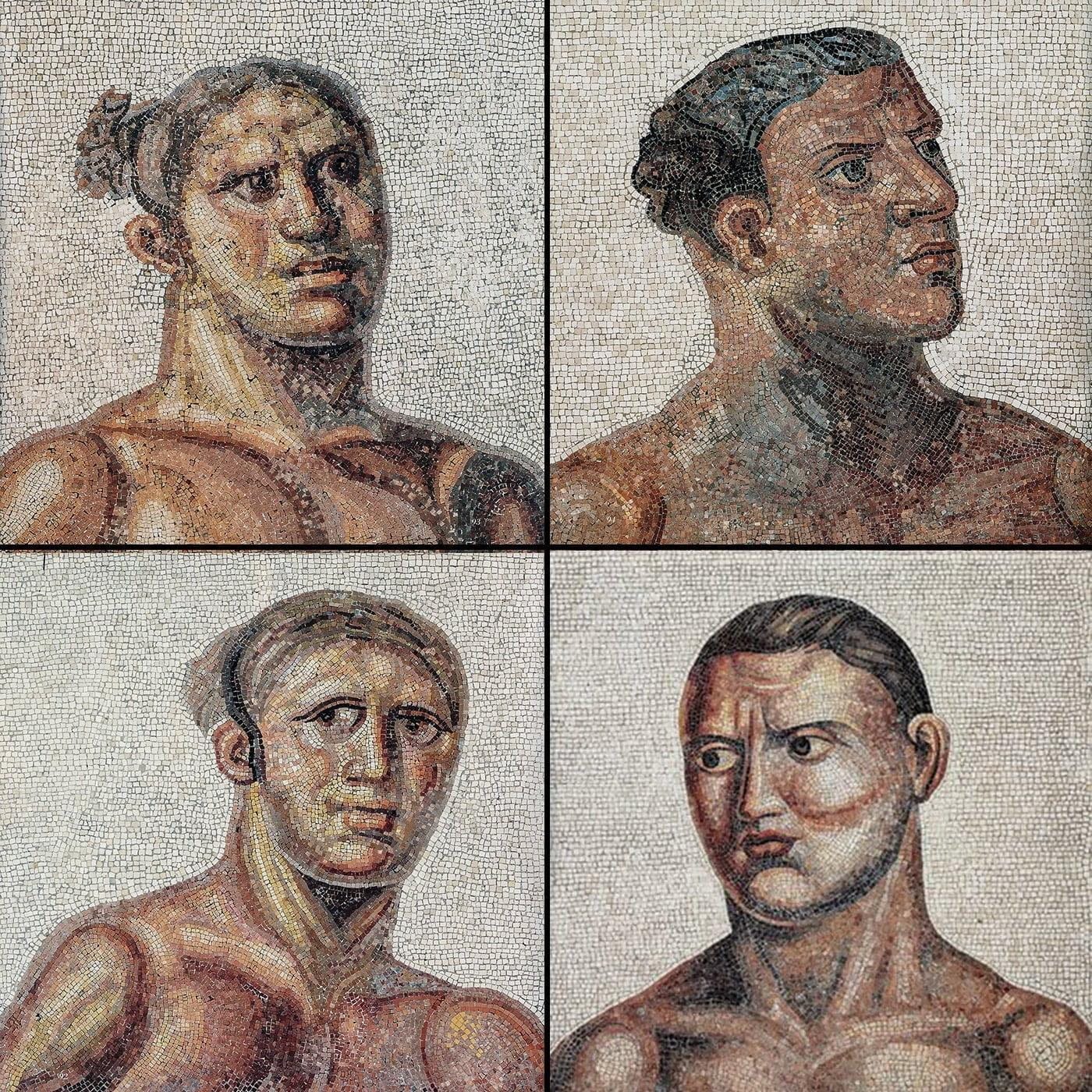



In the halls of the Vatican Museums, amidst the vast collection of art that spans centuries, there lies a remarkable piece of history intricately laid in stone. It’s a mosaic — a medium that has captured the essence of Roman craftsmanship and artistic endeavor. The artwork in question is none other than the stunning mosaic of athletes from the Baths of Caracalla in Rome.
Unearthed in 1824, the mosaic was a part of the opulent décor that adorned the exercise area of the Baths of Caracalla. These baths were more than just a place for Romans to cleanse themselves; they were a social hub, an architectural marvel, and a cultural treasure trove.
Each face in the mosaic is rendered with remarkable realism, which is a testament to the skill of the ancient mosaicists. The play of light and shadow, the contours of the muscles, and the lifelike expressions all contribute to the vitality of the portraits. These figures are not idealized gods or mythical heroes; they are real humans, with individual personalities etched into their features.
The mosaic offers invaluable insights into Roman society. Athletes were celebrated figures, often enjoying a status similar to the celebrities of today. They were the champions of the public games, which were not only athletic competitions but also significant political and social events.
The Legacy of the Baths of Caracalla
Commissioned by Emperor Septimius Severus and inaugurated by his son Caracalla in 216 AD, the Baths were a marvel of engineering and art. They stood as a symbol of imperial power and public generosity, offering a communal space for exercise, education, and relaxation. The presence of such detailed mosaics in the exercise area indicates the importance of art and beauty in even the most mundane aspects of Roman life.
After its discovery, the mosaic made its way to the Vatican Museums, where it has been conserved and displayed for the public. Its journey from the ancient floors of a bustling public bath to the quiet galleries of a museum is a story of survival and preservation, reflecting the changing attitudes towards art and artifacts.
While much has been written about the grandeur of Roman architecture and the might of its emperors, it is in the quiet details of a mosaic that we can truly connect with the humanity of the past. The athletes of the Baths of Caracalla, forever immortalized in stone, continue to speak to us, offering a window into the soul of ancient Rome.