



The British-manufactured English Electric Lightning is a fighter aircraft operated between the 1960s and late 1980s. The aircraft was designed to achieve Mach 2 flight. Manufactured by English Electric, the aircraft was utilized by various air forces, including the Royal Air Force (RAF), Royal Saudi Air Force (RSAF), and Kuwait Air Force (KAF).
Simple Flying explored five salient facts about the Electric English Lightning. While there are numerous unique and interesting points about the aircraft, the list only includes the most significant features related to the design and performance of the aircraft. Let’s take a look.
1.Vertically staggered engines
Enabling a 25% drag reduction
| Power Plant | 2x Rolls-Royce Avon 301R Afterburning Turbojet Engines |
| Thrust per engine (dry) | 12,690 lbf (56.4 kN) |
| Thrust per engine (with afterburner) | 16,360 lbf (72.8 kN) |
| Drag per engine | 0.75x conventional side-by-side configuration |
English Electric’s Lightning features a vertically staggered engine configuration that was installed longitudinally within the fuselage housing. Its unique stacked twin-engine arrangement was designed to minimize the aircraft frontal area, thereby minimizing total drag on the aircraft. During the aircraft’s conceptual design phase, the manufacturer faced conflicting requirements for the fuselage frontal area and resulting performance.
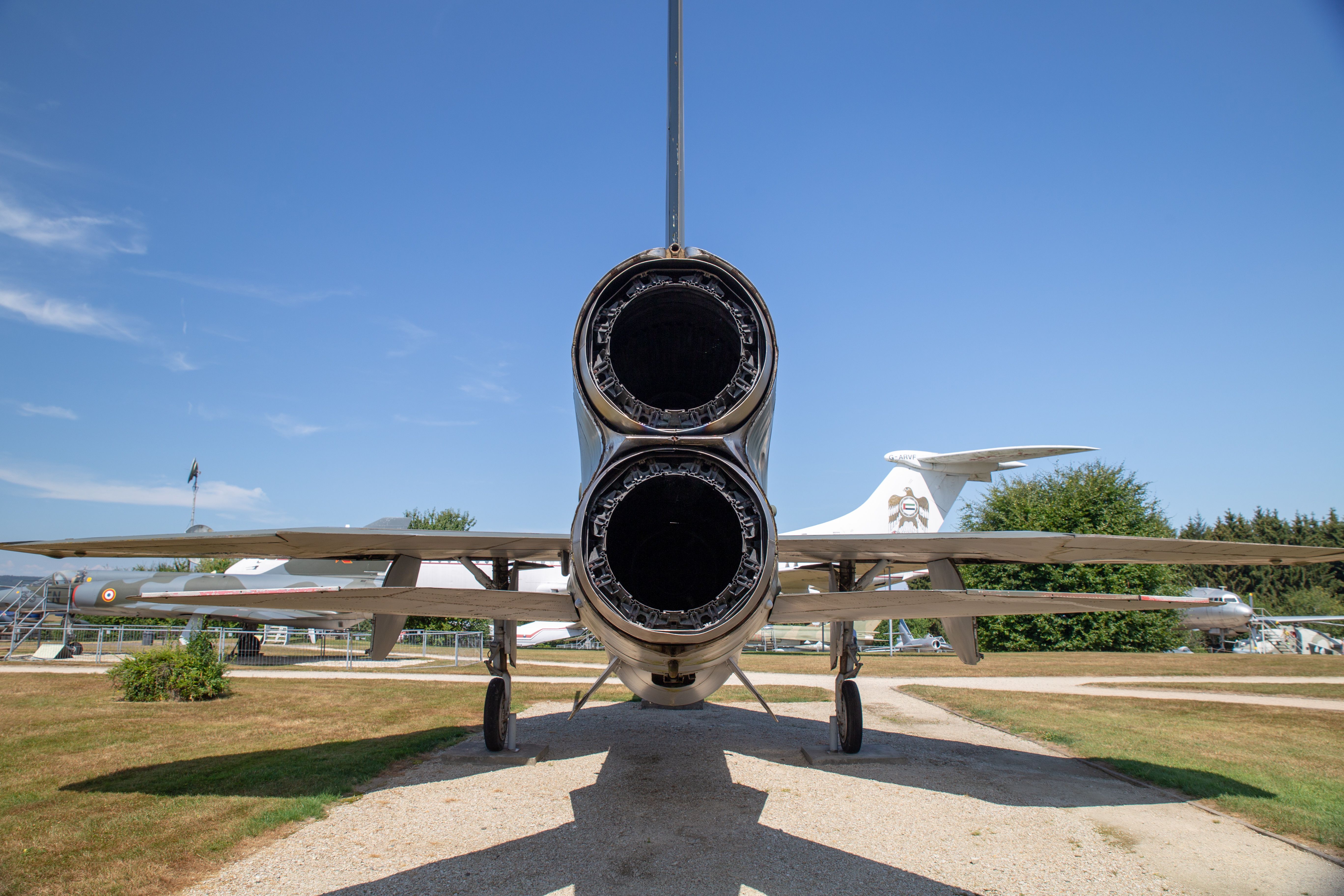
The aircraft’s staggered engine design enabled the expected thrust generation of two engines while only producing the drag of 1.5 engines compared to a conventional side-by-side configuration. Moreover, the single nose inlet provides air for both engines, splitting just aft of the cockpit.
2.Mach 2 flight capability
The first and only British-built fighter to fly at such speeds
| Maximum Speed | Mach 2.27 (1,500 mph) |
| Rate of climb | 20,000 ft/min (100 m/s) to 30,000 ft (9,100 m) |
| Time to altitude | 2.8 minutes to 36,000 ft (11,000 m) |
The primary reason behind the initially designed wing sweep of 40 degrees was to achieve the desired Mach 1.5 flight during the cruise. The aircraft was created to be an interceptor, and fulfilling the necessary speed requirement was essential. When work on the more detailed design began, the targeted speed was broadened to Mach 2. That required an adjustment to the wing sweep up to 60 degrees.
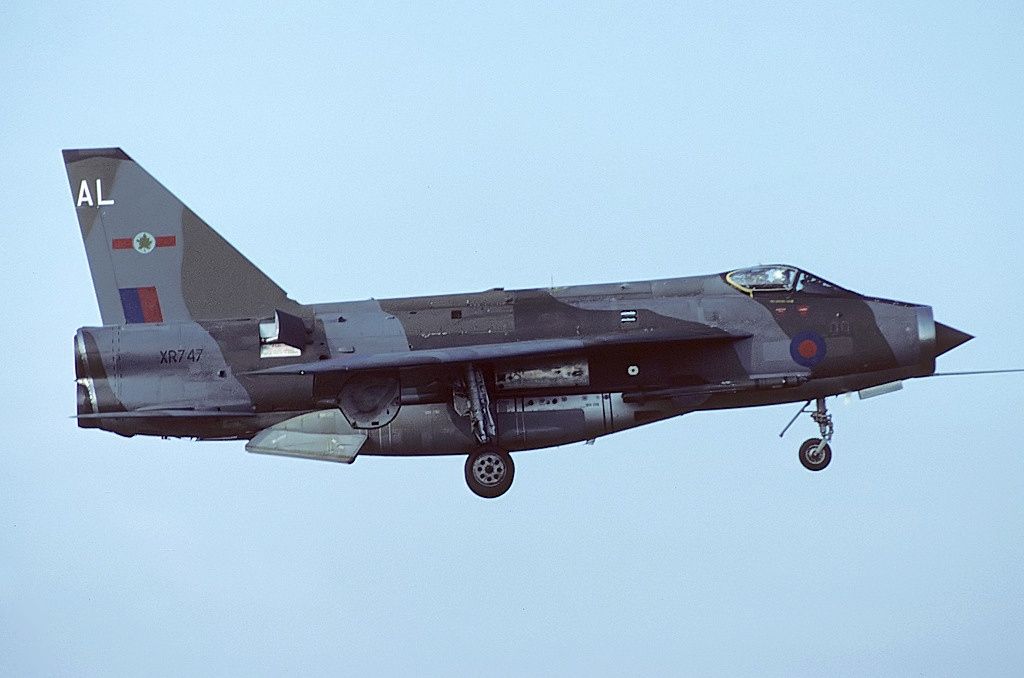
The extent of the sweep necessitated the ailerons to be moved to the wingtips. As a result of this work, the English Electric Lighting achieved a high operational speed of Mach 2.27 (1,500 mph) at 40,000 ft (12,300 m). It became the first and only British-manufactured aircraft to have achieved Mach 2 flight.
3.Notched Delta Wing
Fuel capacity in the wings: 850 US gallons (3,200 liters)
| Wing fuel capacity | |
| Main fuel tank and leading edge tank | 1,420 liters |
| Flap tank | 150 liters |
| Fuel recuperator | 23 liters |
The aircraft features a notched delta wing design, where the flaps are installed in the notch and the ailerons within the wingtips. This unique design was selected to achieve the desired maximum speed and performance at varying speeds. Unlike conventional delta wings, the total volume of the notched delta wing was smaller.
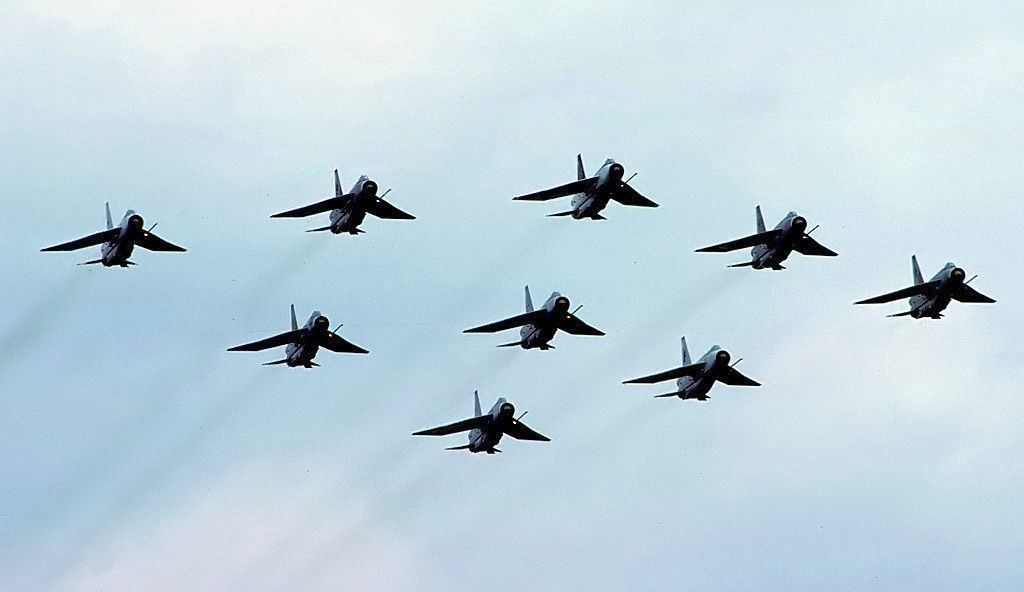
As such, almost the entire wing was used for fuel storage, including the flaps. The three-section fuel tank and the leading edge tank stored 1,420 liters of fuel, with an additional 150 liters in the wing flap tanks. The fuel recuperator kept an extra 23 liters of fuel, giving the total aircraft fuel capacity of just under 3,200 liters.
4.Low tail section
Enhanced handling from lower drag
| English Electric Lightning | |
| Length | 55 ft 3 inches (16.84 m) |
| Height | 19 ft 7 inches (5.97 m) |
| Wingspan | 474.5 square feet (44.08 square meters) |
The aforementioned wing sweep angle of 60 degrees forced several design changes to the aircraft to achieve the desired flight performance. When the sweep angle was tested during low-speed wind tunnel tests, it was found that the wing generated large and powerful vortices, affecting the downwash on the tailplane. This caused significant lift-induced drag while reducing the aerodynamic performance of the aircraft.
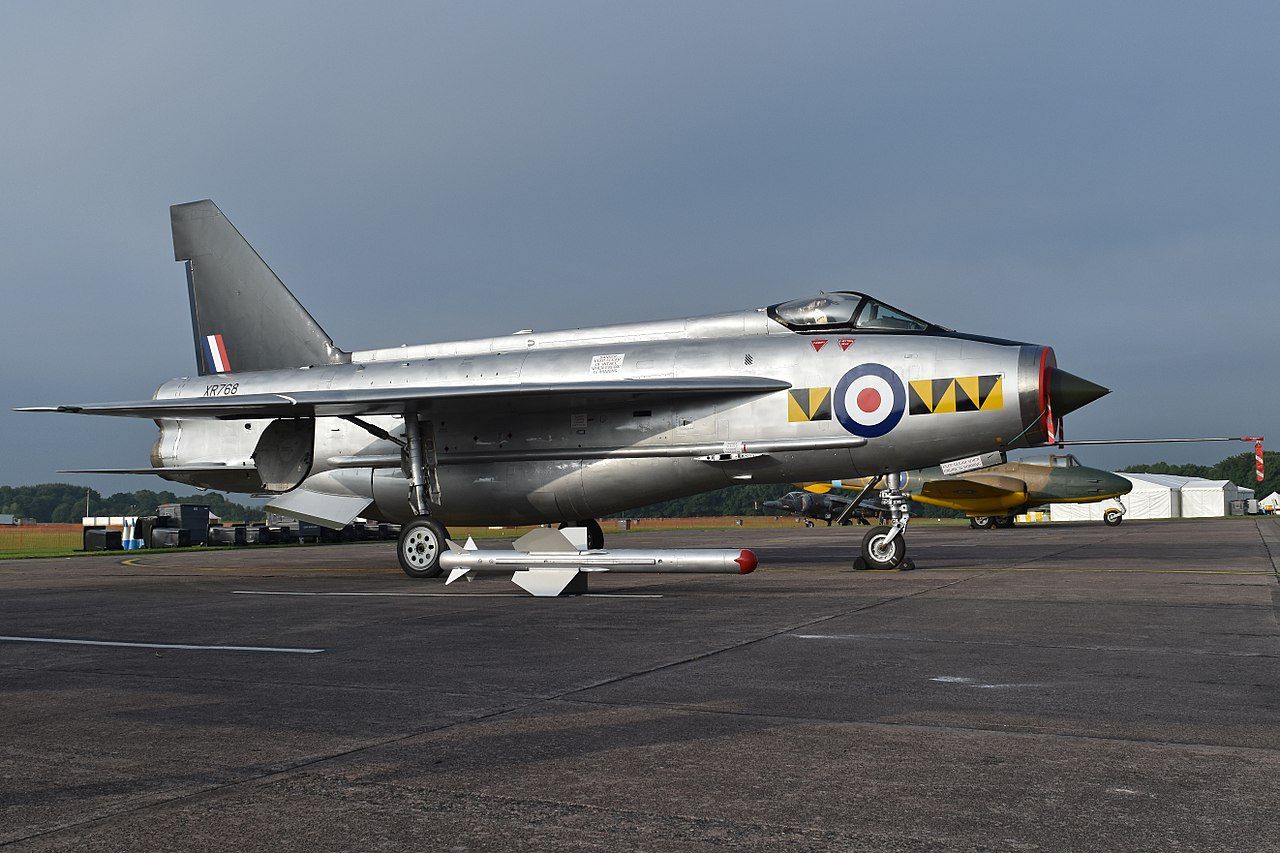
To combat and minimize the effects of the downwash from the wingtips, the aircraft’s tailplane was significantly lowered. The location of the tailplane also provided the aircraft with much-needed maneuverability under high-load conditions. Moreover, the stability and handling of the aircraft improved with the minimization of drag from the downwash.
5.Wing-mounted landing gear
The only place left to store the type’s landing gear
| Wing area | 474.5 square feet (44.08 square meters) |
| Wing loading | 76 lb/square foot (370 kg/square meter) |
| Landing gears | Two (nose gear and main gear) |
| Number of tires | Three (nose gear: 1, main gear: 2) |
English Electric’s Lightning fuselage section was tightly packed with no extra room for fuel tanks or main landing gear stowage. The type’s main landing gear was sandwiched between the main tanks and the leading edge tanks of the wing, and the landing gear’s legs retracted towards the tips of the notched delta wings.
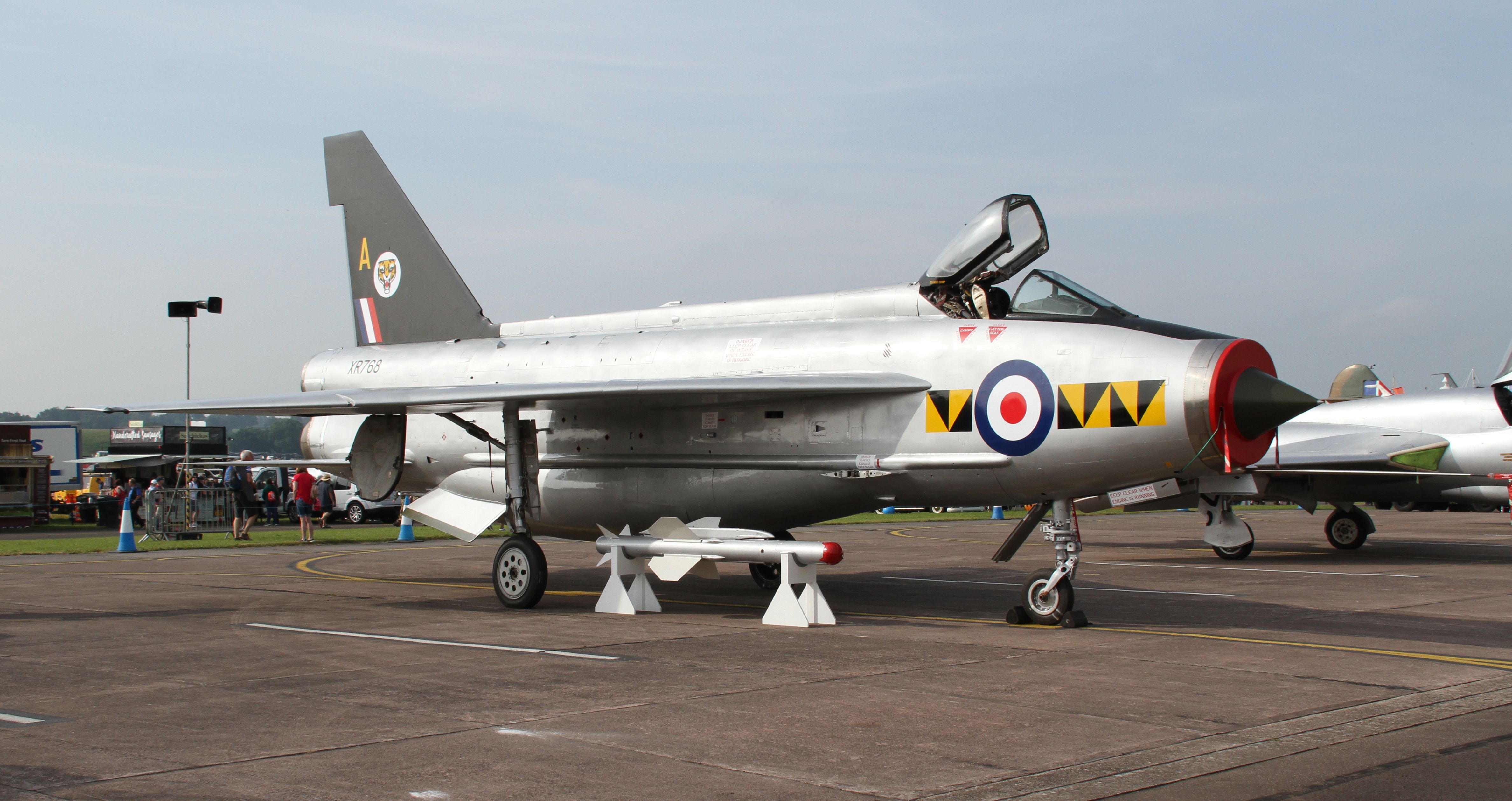
Just aft of the landing gear stowing area are the flap fuel tanks, forcing another layer of design complexity. The location of the gear necessitated an exceptionally thin tire that could fit within the designed gear housing. To perform correctly, the fighter’s tires had to be kept at a very high pressure of 350 psi (2,400 kPa, 24 bar).