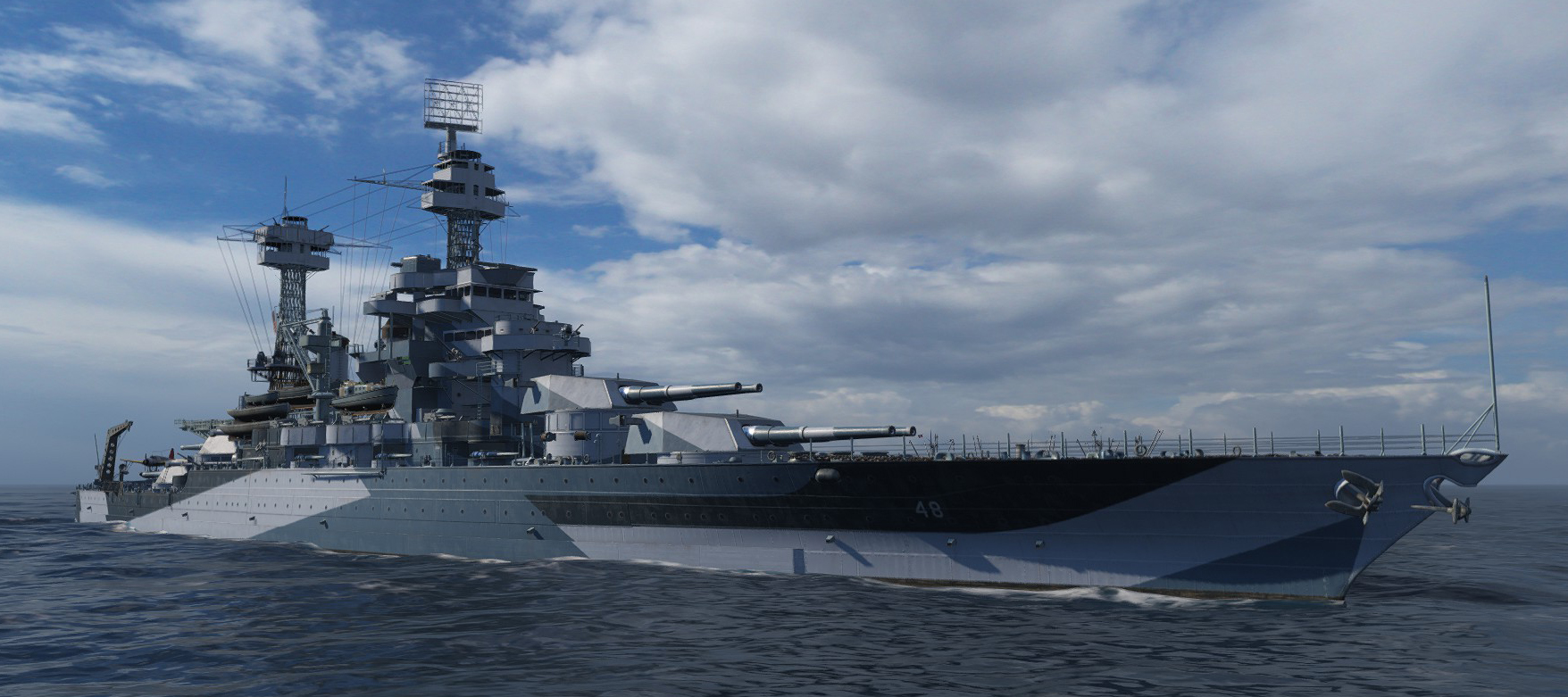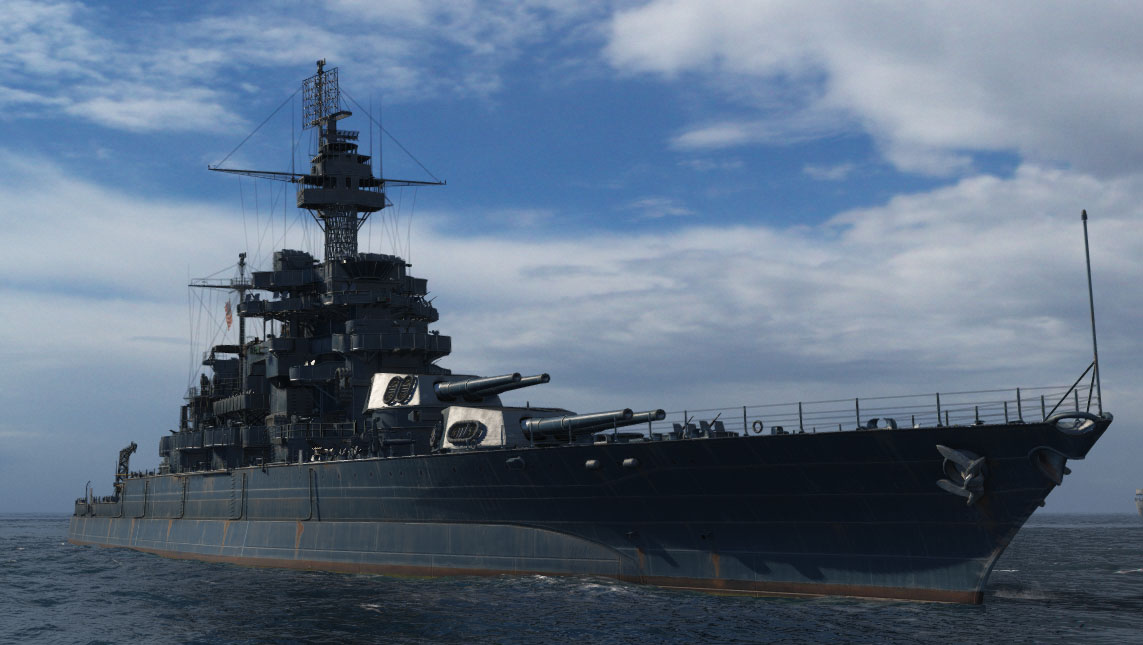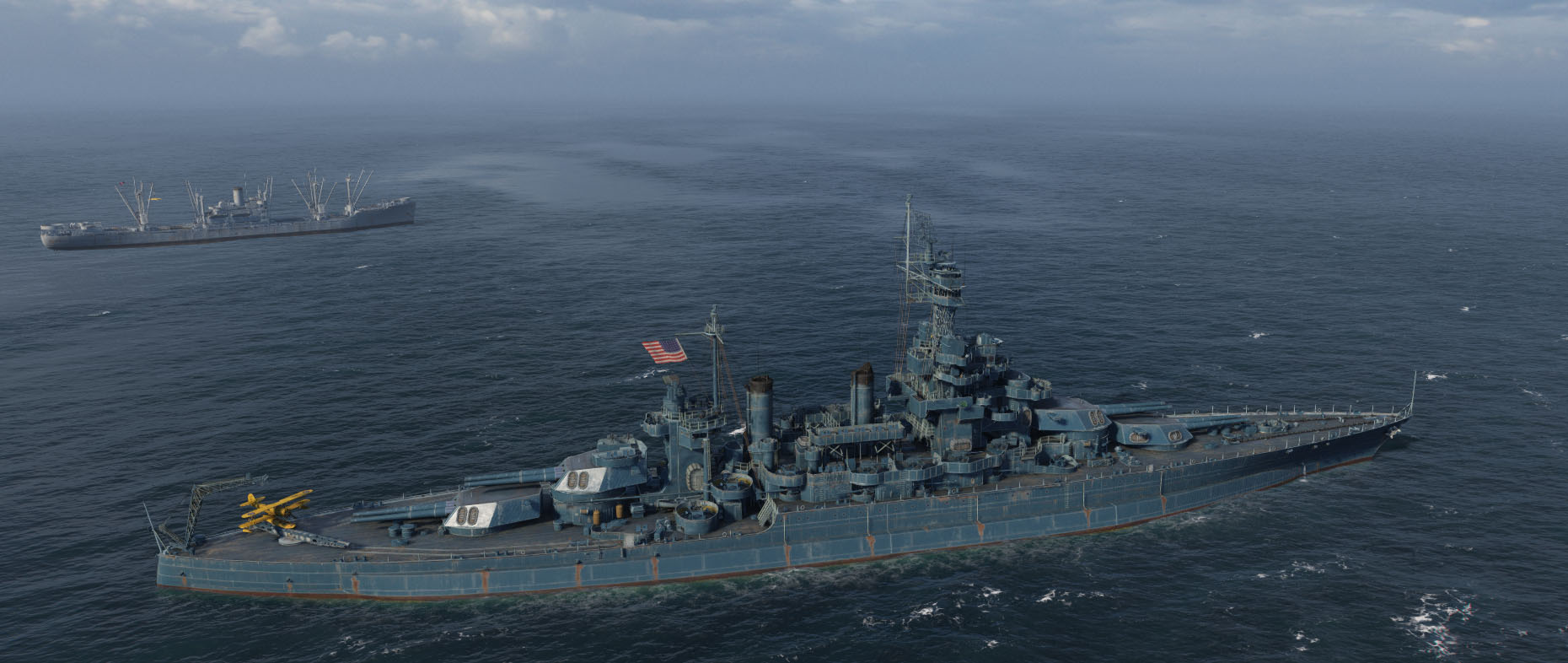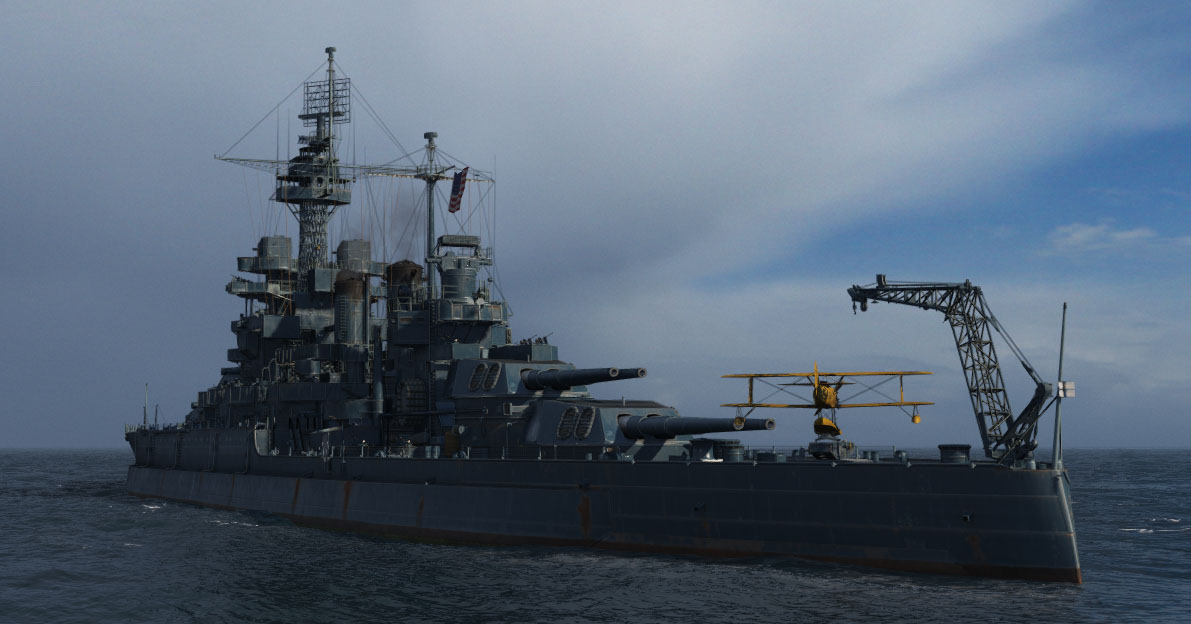



The Colorado class, formed with the near-sister ships Tennesse what was called the “big five”, the last USN super-dreadnoughts, and last of the “Standards”. To gain time and budget, the Colorado were planned in 1916 as virtual copies of the Tennesse, but with 16-inches guns, first to inaugurate this new main caliber and only ones to have them in twin turrets. They were also the last USN capital ships to that point with a gap of nearly twenty years before the North Carolina class.
Colorado class: The “standards” goes 16-inches
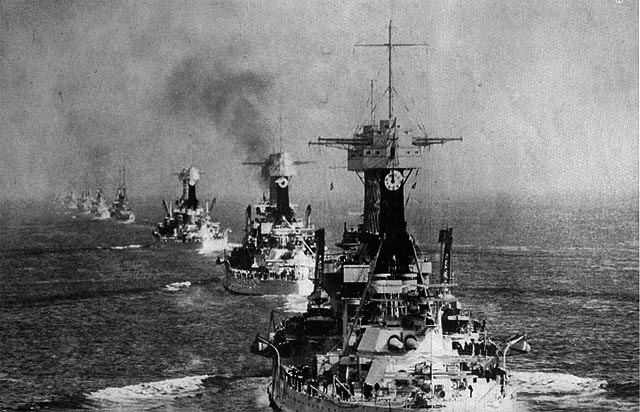
The “Big Five” in exercizes in the mate 1930s
The main point to identify the Colorado class* were the fact they were the first to adopt 16-inches guns, while the “Standards”, from the Nevada class (1914) were all given 14 inches guns, generally in four triple turrets. But the Colorado happened to be also the last of the pre-Treaty battleships. They were designed during World War I, which was ongoing at the end of the conflict. By that time, no treaty was sight, so construction went on until launch, in 1920 in its immediate aftermath. Though all four keels were laid, only three ships were launched: Colorado, Maryland, and West Virginia. Washington was over 75% completed when she was canceled under the terms of the Washington Naval Treaty in 1922. As such, the 16″ gun Colorado-class ships were the last and most powerful battleships built by the U.S. Navy until the North Carolina class entered service on the eve of World War II.
The Colorados were the final group of the Standard-type battleships, designed to have similar speed and handling to simplify maneuvers with the line of battle. The cancelled South Dakota class which was to follow would have in several ways been a departure from this practice. Apart from an upgrade in striking power with their eight 16-inch guns, the Colorados were essentially repeats of the earlier Tennessee class. The Colorados were also the last American capital ships built with four main armament turrets and twin-mounted guns. The change to larger guns was prompted by the Japanese Nagato-class battleships, which also mounted eight 16-inch guns.
All three ships participated in World War II, athough it started badly: USS Maryland and West Virginia were both damaged in Pearl Harbor on 7 December 1941. Maryland was relatively unscathed, but West Virginia was sunk. She was later raised, and not only repaired but fully modenrized. All three battleships brought naval gunfire during the island hoping campaign of 1943-45. USS Maryland and West Virginia was also at the Battle of Surigao Strait (Battle of Leyte Gulf) in October 1944. In all, they won 19 (7+7+5) battle stars combined for their wartime service. None was preserved after the war.
*Note: It is sometimes referred to as “Maryland class”. US is about the launching date, but European conventions name a class after the first unit completed, so Maryland here.
Context before the Colorado class
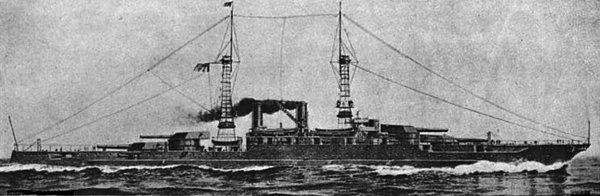
The stip to 16-inch guns was envisioned by the General Board and Bureau of Construction and Repair (C&R) in 1913 already, to keep pace with the British notably, an upgrade that would allow twice the kinetic energy compared to 12-inch and 50% more than the current 14-inch just being introduced. The development of the new gun was postponed however at least until 1916, due to design issues. The General Board initially approved development of 16-inch gun as early as 1911. By that time however, Navy secretary George von Lengerke Meyer feared that such capital ships would make obsolete overnight all the others still on the drawing board. He restricted the Bureau of Ordnance to go beyond the delivery of blueprints, kept “in store” in case of new foreign developments.
He approved eventually the construction of the new gun in October 1912. R&D progressed steadily until a prototype was ready and tested. It fired successfully in August 1914. Meanwhile, the admiralty get wind of unofficial, unconfirmed reports of 15/16-inch guns adopted by the United Kingdom, but Italy, Germany and Japan for their own programmes. The Board even considered cancelling the construction of the Pennsylvania class for an up-gunned version, calculated to increase 8,000 tons the displacement. Debate went on as the war starte and progress while Woodrow Wilson’s Navy Secretary Josephus Daniels, considered the increase in cost and insisted on the Standard Class to be continued. In 1917 as it was clear the US would be likely engaged in the conflict, he temporized and accepted a simple repeat of the previous class but with an armament upgrade. This constrained engineers to make choices right away.
Design development
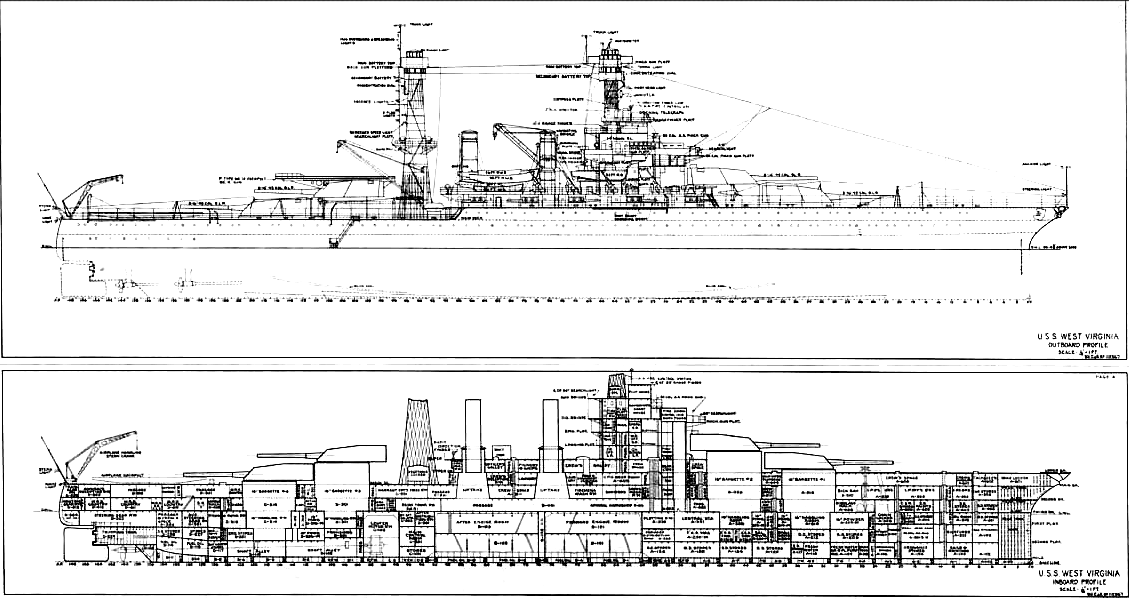
The design of the Colorado class proceeded fast, based on the fact it was a repeat of the Tennessee class, with only the main armament changing. Fitting eight 16 in (406 mm)/45 caliber guns in four twin turrets in place of twelve 14 in (356 mm)/50 guns in triple turrets was a daunting task however, but less costly and complicated than going for a new revised design (which was to be the wartime South dakota class, much larger). Other than this, the two designs were near identical. The Tennessees were basically improved New Mexico, modern and effective capital ships in 1917, the most modern at the time, which also attracted the attention of British constructors. Commonality and mass production became ans essential wartime experience and the U.S. Navy by just keeping these standards almost created battleships “on an assembly line” with maximal standardization and rationalization to keep the costs low. The Naval Act of 1916 indeed planned 16 battleships and six battlecruisers, so streamlining production was the only way to save time and money.
However despite this, engineers were able to bring design improvements at each iteration, incorporating innovation whenever practicable. For the Tennessee however, the underwater protection, projectiles landing underneath the waterline was late to be designed and tested, in fact too late as construction was ongoing. Tests in caissons took time, and the modifications concerned the very bottom of the ship, so cannot be implemented on time without delayiong construction. Tests were allow to continue on the behalf they would be adopted for the next class. These would prove that a series of compartments divided by liquid filling, others left empty in alternance proved to be the most effective protection against torpedoes. C&R then added a contract clause for the next ships sent to shipbuilding corporations that alterations to the design would be asked within three months after their keels were laid down.
General Characteristics
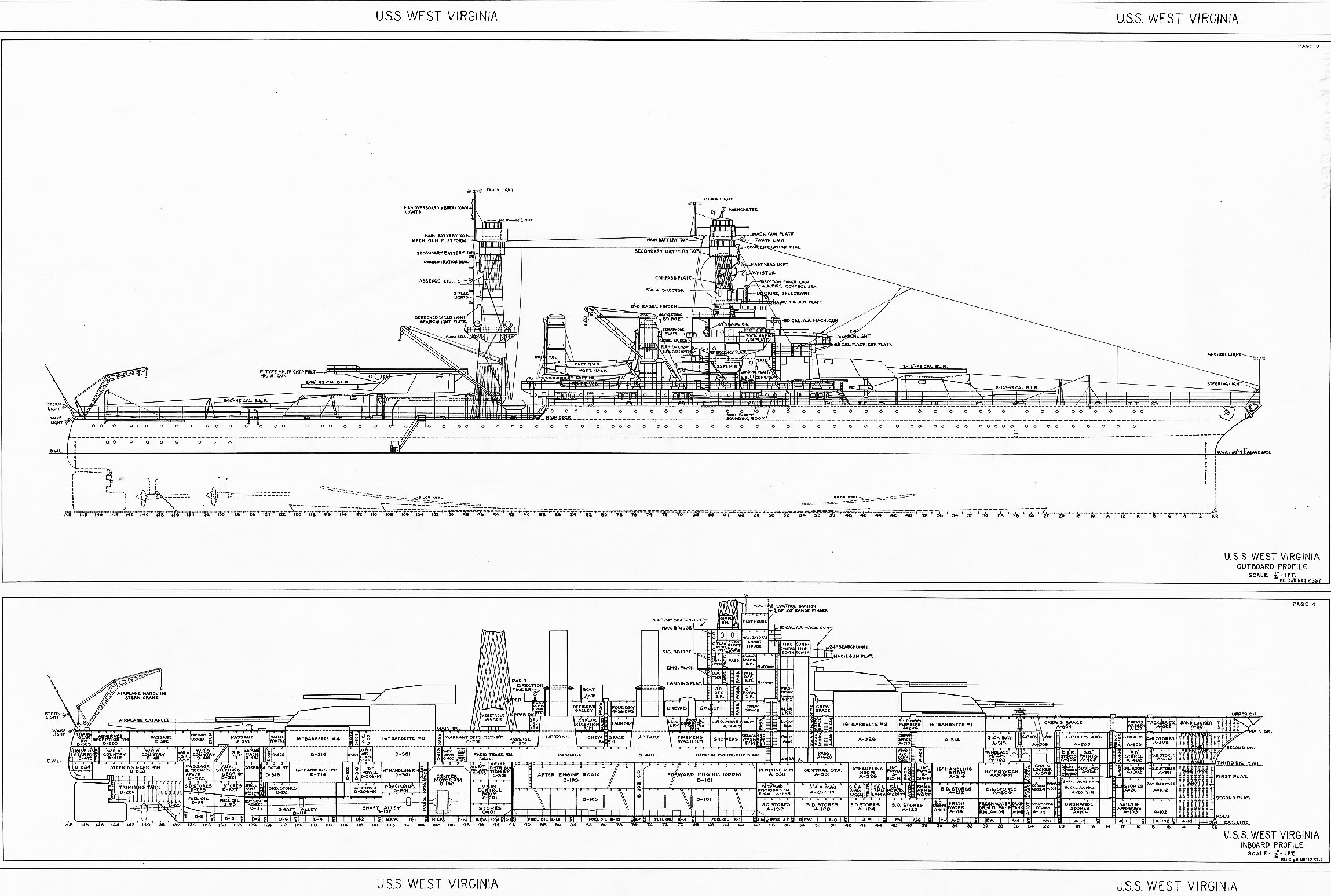
The hull designed was the same in all its details, 624-foot (190 m) long overall, 97 feet (30 m) in beam for a design displaced of 32,600 long tons (33,100 t) -normal load- or 33,590 long tons (34,130 t) deeply loaded, for 30.5 feet (9.3 m) draft. Since the New mex. she was the design incorporated a clipper bow to deal with heavy heavy seas, while the secondary armament was in the superstructure to avoid water spray also in heavy seas.
Powerplant
Like the previous Tennessee, the Colorado class adopted the ame innovative Turbo-electric transmission. Its advantages included for the turbines an optimum speed without regard to propeller speed, and greater fuel efficiency for a better range, as well as a more sustained, easier sub-division to deal with torpedo hits. Each propeller shaft was driven by a 5,424 kilowatt electric motor, in turn fed by two two-phase turbo generators each, from General Electric for Maryland and Westinghouse for Colorado and West Virginia, each rated at 5,000 volts. In turn these generators fed by turbines were connected to eight oil-fired Babcock & Wilcox water-tube boilers with their individual compartments. Toal output was rated for 28,900 electrical horsepower, giving a theoretical top speed of 21 knots (39 km/h; 24 mph). The ships also carried an optimized fuel tank distribution (participating notably in ASW protection as damping fluid), for a total of 4,570 tons: The overall range was a well rounded 10,000 nautical miles (19,000 km; 12,000 mi) by keeping a steady cruise speed.
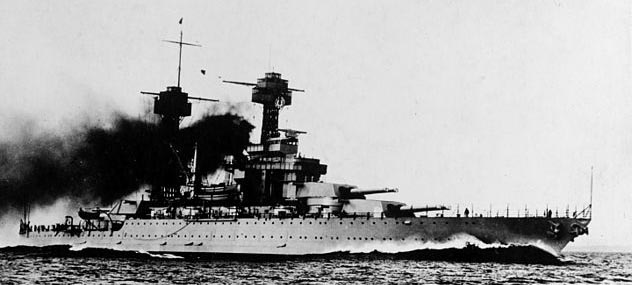
USS Colorado on sea trials
Armour protection
The “all or nothing” armor scheme (inherited from the Nevada-class) was kept, and overall identical to the preceding Tennessee class. There was only one exception though: An increase in belt armor near the machinery, reaching 16 inches (406 mm) in part with the main gun caliber the Colorado carried. Otherwise it stayed at 14 inches. The upper deck armor reached 3.6 inches (91 mm), but it was later increased during constructon to 4.1 inches (104 mm). The lower deck armor was comprised between 2.25 and 1.5 inches and also strengthened later.
The other improvements of the design were also from the Tennessee class, the forward torpedo room moved away from the 16-inch gun magazine, seen as vulnerable. There was also an external rather than internal belt armor to avoid a break in the continuity of the side structure, minimizing drag as well.
Armament
The main challenge for the engineers was to manage to keep as many as the old design (like the basic turret baskets) and even turrets and barbettes while only chanhing the internal of the barbettes, mounts, and loading systems for the new 16-in shells and barrels. This was done to speed up the design phase and launched the construction asap.
Main:
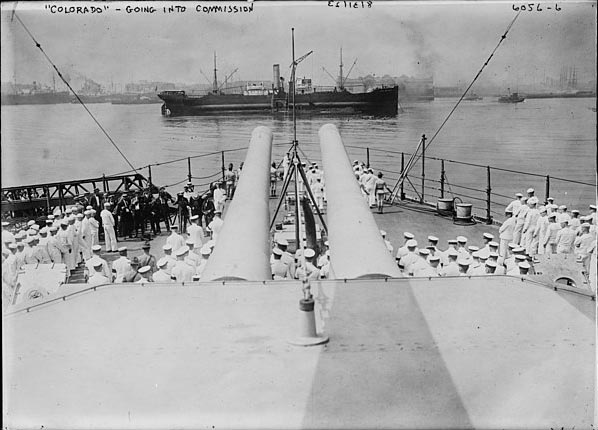 USS Colorado main guns, seen from the bridge, as freshly commissioned in 1922.
As said above, the ain advantage of the Colorado class was their more powerful broadise of eight 16-in guns. They trade four guns for a long range a greater punch and that was considered enough to overcome the fact these ships were a disruption in the “standard” battle line pattern based on the fact similar ships were easier to manage in a battle. Development of the new gun started in August 1913, by simply boring-out, relining a 13-inch (330 mm) Mark 2 gun. It was estimated two times the muzzle energy of a 12-inch (305 mm)/50 caliber Mark 7, and still 50% more than the 14-inch/45. Proof firing in July 1914 was successful, and minor changes were made and work was finalized on the recoil and breech block mechanism so as the 16-inch Mark 1 was eventually ready in May 1916, production approved in January 1917. Four years is a long proces indeed.
Specs of the 16-inch (406 mm)/45 caliber Mark 1:
- 2,110-pound (960 kg) armor-piercing (AP) shell)
- Muzzle velocity 2,600 feet per second (790 m/s)
- Rate of 1.5 rounds per minute
- Max. Range 34,300 yards (31,400 m) at 30 degrees.
Secondary:
Like on the previous ships, the Colorado had Fourteen 5-inch (127 mm)/51 caliber Mark 15 guns installed in the superstructure. This was down to 12 in 1922.
- 50 Ibs (23 kg) shell
- Muzzle velocity 3,150 feet per second (960 m/s)
- Maximum range 15,850 yards (14.5 km)/20°
- Rate of fire seven rounds per minute
These lighter guns compared to the latest British, Japanese and German dreadnoughts were nevertheless very accurate and fast-firing, very deadly beyond the treshold of 3,000 yards (2,700 m). Because of these, they were mounted in unarmored casemates on the main deck.
AA armament:
The aviation threat was enough in 1916 to be taken in high regard and having a more AA focused light artillery: This traduced into four 3-inch (76 mm)/23 caliber guns single-mounted purely for anti-aircraft defense (later 8 in 1922).
- 3-inch (76 mm) shell
- Muzzle velocity 1,650 feet per second (500 m/s)
- Maximum range 8,800 yards (8,000 m)
- Ceiling 18,000 feet (5,500 m)
- Elevation 45.3 degrees
- Rate of fire 8-9 rate per minute.
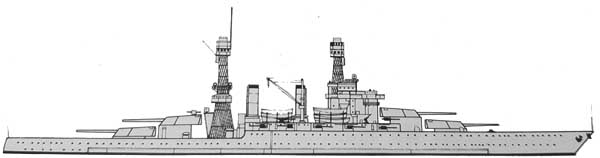
⚙ Specifications 1921 |
|
| Displacement | 32,693 standard 33,590 FL |
| Dimensions | 190 m oa x 29.7m x 9.3m (624 x 97 x 30 feets) |
| Propulsion | 4 shafts GE TED, 8 Babcock & Wilcox boilers, 29,000 shp (21,600 kW) |
| Speed | 21 knots (39 km/h; 24 mph) |
| Range | 8,000 nmi (15,000 km; 9,200 mi) at 10 knots (19 km/h; 12 mph) |
| Armament | 8× 16 in, 16× 5 in, 8× 3 in, 2× 21 in TTs |
| Armor | Belt 8–13.5, barbettes 13, turrets 18, CT 16, decks 3.5 in |
| Crew | 64+1241 |
Interwar Reconstuctions
The modernization of the Tennessee and Colorado classes was not a priority until October 1931. Th Navy indeed thought it was possible to exploit previously spotted loopholes in the Washington Naval Treaty. The treaty indeed allowed both AA defense and ASW protection to be improved at leisure, improve fire control, gun mount elevation, but not for example up-gunning existing ships. Inside the hull everything could be justified as to increase protection, eve, when increasing speed and range, as long as the main armor belt thickness was not modified. It was also envisioned an early “NBC” protection as there was a fear of chemical warfare and the ships being hit by chemical shells with poisonous gas. In that case however, the General Board eventually stated that decontamination was near-impossible and the ship hit wouild have been scuttled.
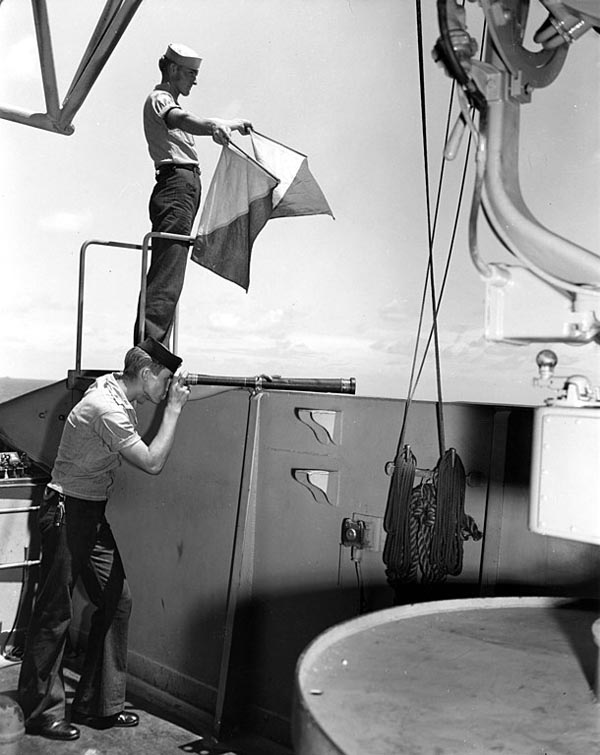
Signalmen anboard USS Colorado
Onboard aviation:
In the 1920s already, all three ships received catapults for their onboard spotter and reconnaissance aviation, one mounted at the stern, with full traverse (and an operating crane for recovery behind) and another fixed, located on the upper aft turret (N°3). Photos ofter shown what observation plane types were used, two stored on the turret’s catapult and one ready on the aft deck catapult. From 1924 Curtiss VE-7 seaplanes were used, and afterwards the Vought UO-1, then the O3U Corsair. Colorado’s aircraft were assigned to Observation Squadron Four (VO-4) also aboard USS Maryland and West Virginia. The three aircraft aboard Colorado took part in the extensive Earhart search, squadron numbers were 4-O. In the late 1930s, the Curtiss SOC seagull (to be confirmed) until 1940. Indeed, all three ships obtained the Kingfisher afterwards: The OS2U-1’s first operational deployment even commenced on USS Colorado in August 1940. In 1945 refits saw new, more precise and long range radars installed, and seaplanes were generally eliminated while the deck catapult was kept. Photos however of USS West Virginia shows two Curtiss SC Seahawk on board, the last generation USN observation seaplane.
Footage of a Vought Kingfisher launched from USS New Mexico, also showing footage of USS Colorado during the invasion of Guam, July 3, 1944.
Planned upgrades:
Deck armor could be reinforced, and received a 80 lb (36 kg) special treatment steel (STS) plate to deal with incoming high trajectory orounds and bombs, but this move cost 1,319 long tons in displacement (hence in speed and range). It was also planned to up-armor the turret tops. Anti-torpedo bulges for extra buoyancy, dealing with torpedo blasts were considered, provided they will not bring the beam beyond 106 feet (32 m) (Panama-compatible). Another wave concerned all fire controls and optics, and the ballistic computer, as technology advanced well in between. For the guns also, elevation was to be reworked, possibly also the reload speed, the new shells having more propellant and better penetrating caps.
Also, there was a new type of AA for short range that was worked on, traduced into the adoption of quadruple 1.1-inch guns (28 mm), the infamous “Chicago Piano”. Due to all this added weight, it became also necessary to upgrade the machinery no to loose speed, and keep a constant battlefleet speed.
In the end, the c&R estimated these upgrade to cost the American taxpayer about $15,000,000 per ship, ao in total $71,723,000 total, in a post 1929 crisis context. Already cost-cutting measures were proposed, like saving $26,625,000 by just reconditioning the powerplant (have everything disassembled and clearned up or replaced when necessary). Chemical shells protection was shelved, as well as the new shells and gun mount/elevation modifications. The Secretary of the Navy was asked to program a budget FY1933 for the two classes, submitted to the Congress, but it was postponed.
In 1934, the Bureau of Construction and Repair proposed that what was called now the “Big Five”, very similar Tennessees and Colorados class would receive a limited upgrade, consisting of anti-torpedo bulges for increased buoyancy, allowing them to carry more fuel. In June 1935, Tennessee loaded to demonstrate the point its maximal theoretical fuel load which added 2,000 long tons above her maximum designed load , her draft augmented by to 5 ft 4 in (1,630 mm). C&R advocated for bulges compensating for these extra 2,000 long tons, also helping raising the ship’s draft by 20 in (510 mm). Six months of dry dock and one year of work was the cost. But this had to wait until 1937, while further discussions took place for a partial modernization:
- -No extra deck armor
- -The ships were to be reboilered to gain internal space.
- -Main and secondary battery fire controls modernized (rangefinders, plotting room, Mark 33 AA FCS)
- -Corbel mainmast eliminated
- -M2 Brownings removed
- -Torpedo bulge added
- -New displacement estimated 39,600 long tons.
The modifications blueprints were complete by October 1938 with costs between $8,094,000 and $38,369,000 per ship, but as these amount were retired from for new the battleship constructions planned, they were rejected by the Secretary of the Navy. Still the Congress unlocked $6,600,000 in 1939 to have at least part of these improvements going on, notably the all-important bulges. The war caught USA therefore in this process of modernizing the Pacific fleet.

USS Maryland firing a broadside, 1920s

USS maryland in July 1922 in New York City, just commissioned
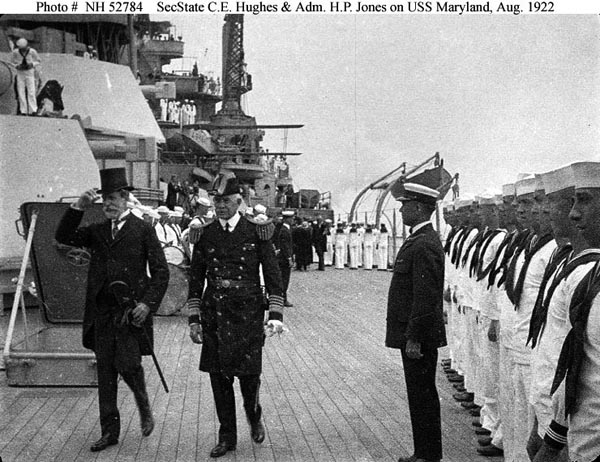
Admiral Hilary Jones presenting USS Maryland to senator C.E. Hugues in August 1922
Armament changes
Main:
The guns were partially rebuilt per standard navy practice (barrels replaced) and redesignated 16-inch/45 (40.6 cm) Mark 5 and Mark 8. Navweaps stats:
Light artillery
In 1922 already from four the AA armament was increased to eight guns. However, they were eliminated and replaced in 1928–1929 by eight 5-inch (127 mm)/25, all specific AA guns:
- 54 Ibs. (24 kg) shell
- Muzzle velocity 2,155 feet per second (657 m/s)
- Rate of fire 15-20 rpm
- Maximum range 14,500 yards (13,300 m) at 45°
- Ceiling 27,400 feet (8,400 m) at 85°
In 1937–1938 were added two quadruple-mount 1.1-inch/75-caliber guns, the infamous “Chicago Piano” for shorter range. Possiby also they carried Browning M2HB heavy machine guns in pairs but it is not known.
Protection changes
Like for the Tennessees, the Colorado class after WWI was schedued to have its protection revamped entirely, notaby due to the latest developments in ballistics and aviation. In the early 1930s, there was a redesign of the underwater protection scheme: Now it featured five compartments separated by armored bulkheads, each 0.75 inches (19 mm). The principle was to have an outer empty compartment, three filled, and another empty, now inner compartment. The eight boilers were placed in separate spaces port and starboard, on either side of the turboelectric powerplant. This ensure the ship could still sail with an entire boilers side underwater. Instead of a single large funnel, the silhouette still comprised two smaller funnels. Eventually, the turret armor was ioincreased as previously planned with 5 inches on the roofs, 8 inches on the sides, back, 18 inches for the turret faces.
Prewar modifications

USS Colorado in 1932
The Navy studied the first war lessons from 1939 from the Royal Navy. The King Board (after USN C-in-C admiral King) in 1940–1941 proposed the secondary armament was boosted to deal with AA attacks, and the removal of all 5 in guns, to be replaced by the new the dual-purpose 5 in/38; This comprised to cut away the superstructure to have clean arcs of fire. In all, sixteen 5 in/38 in twin mounts was asked for (and implemented during 1942 reconstructions) plus sixteen Bofors 40 mm (all quad), plus eight single Oerlikon 20 mm. This added weight remains an interrogation however, plus dry dock immobilieation in uncertain times. As an interim measure, two more quad 1.1-inch were proposed, but this was marred by a slow production, and 3 in (76 mm)/50 were added instead of all battleships (except for Arizona and Nevada). It was all done by June 1941, and swapped by the quad 1.1-inch guns when available in November 1941 with priority given to the Atlantic fleet.
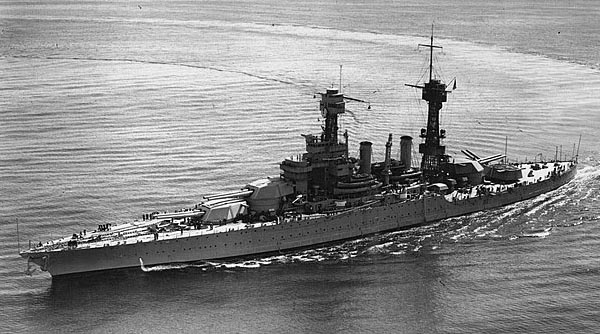 USS Colorado off San Diego, 1924
As planned, these modifications brought additional weight so torpedo bulges were added also to compensate. Total cost of these modification, now justified by war in Europe, was $750,000 and 2-3 month of drydock inactivity.
The King Board also suggested deck armor increase but this was dismissed by the Chief of Naval Operations. Puget Sound Naval Shipyard will saw all “big five” battleships enter its drydock for this: Maryland initiated the move before Pearl Harbor (17 February-20 May 1941), West Virginia (10 May-8 August 1914), Colorado (28 July-28 October 1941). The program went on also after Pearl harbor, USS Tennessee (19 January-21 April 1942), California (16 March-16 June 1942). Eventually only two would receive bulges as planned, Maryland (on 1 August 1941) and Colorado (on 26 February 1942). Pearl Harbor interrupted refit for USS West Virginia and the two Tennessees, Colorado being spared, in Puget Sound at the time, Maryland also being spared in Pearl by the attack. West Virginia was damaged to the point she was to be comprehensively rebuilt for not wasting her drydock time.
WW2 Reconstuctions & modifications

After the Pearl Habor attack reconstruction started for all ships refloated or slightly damaged. By late 1942, the eight single 5 in/38s were kept but 4×4 Bofors 40 mm guns, 32 Oerlikon 20 mm cannons were added. The first procured a first short range bubble of lead at 140-160 rpm at 22,299 feet (6,797 m) or 250/320 rpm at 10,000 feet. In 1942 also, Mark 15 main secondary guns were replaced on USS West Virginia y the planned sixteen 5-inch (127 mm)/38 Mark 12 in twin turrets and the superstructure rebuilt as planned. For Maryland and Colorado, they kept their ten Mark 15s but gained eight 5 in/38 cal Mark 12s in single mounts, but with protective shields. Twin turrets were installed later. Mark 12 5-in (127 mm) fired a 55.18-pound (25.03 kg) shell at 17,392 yards or 37,200 feet (11,300 m) at 45° with a high rate of fire at any angle and used proximity-fused shells from 1943.
A second round for AA defense in 1944-1945 saw both the dismissal of 20 mm and manually-controlled guns and more quad 40 mm Bofors were added instead: Maryland had forty quad 40 mm, eighteen 20 mm; Colorado forty quad but all her 20 mm guns; West Virginia forty quad also but fifty 20 mm guns, having by far the most impressive AA cover of admiral Oldenburg’s battle fleet. All these quad mounts required a crew of 5, so this added to the initial crew already in the ship, with some consequences in living conditions. Al because of the threat posed by Kamikazes.
The Pacific Fleet battleships could not be spared for extra modifications, maintained in a constant readiness state, to sail within 48 hours. Japanese invasion was expected for Hawaii or the West Coast in early 1942. Colorado however received a radar, splinter protection, fourteen Oerlikon 20 mm, four quad 1.1-in guns early on. Maryland received the same but later (but sixteen 20 mm guns, no 1.1-in guns). Tower masts were new on Colorado and Maryland, aft cage masts eliminated at the start of 1942 but time lacked to install the new tower masts, placed into storage until early 1944. it’s only when the situation stabilized enough in the pacific, and the admiralty realized the importance of aircraft carriers, that the “big five” were spared some extra time for these modification.
Colorado and Maryland had to wait for their major refit in 1944, with many modifications in between with each maintenance period. it’s only in 1944 that they lost their remaining aft cage masts and gain new radars in the process. More extensive refits proposed by Admiral Ernest J. King, (more twin 5 in/38 turrets, more advanced fire control systems, second protective deck plating) were contested by the Bureau of Ships over displacement considerations and proposed a reduced upgrade similar to the New Mexico class. When USS Maryland was badly hit and damaged by a kamikaze attack, she was both repaired and modernized, limited to the addition of the planned twin 5 in/38, conning tower removed and lighter STS bridge structure added.
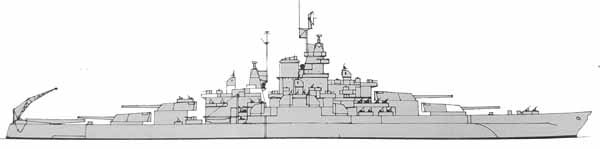
⚙ USS West Virginia Specifications 1944 |
|
| Displacement | 33,000 tons standard, 34,000 FL |
| Dimensions | Same but 114 ft (35 m) beam |
| Armament | 8 × 16 in/45 (406 mm) Mk6, 16 × 5 in/38 (127 mm), 40× Bofors 40 mm, 43× Oerlikon 20 mm AA |
| Armor | See notes |
| Crew | 68+1400 |
The fate of USS Washington
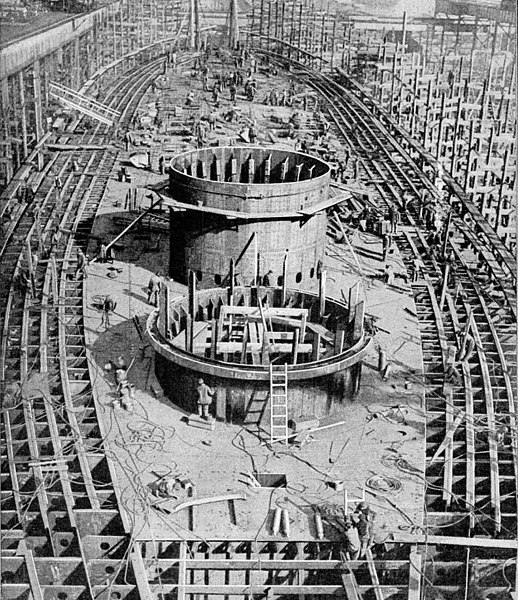
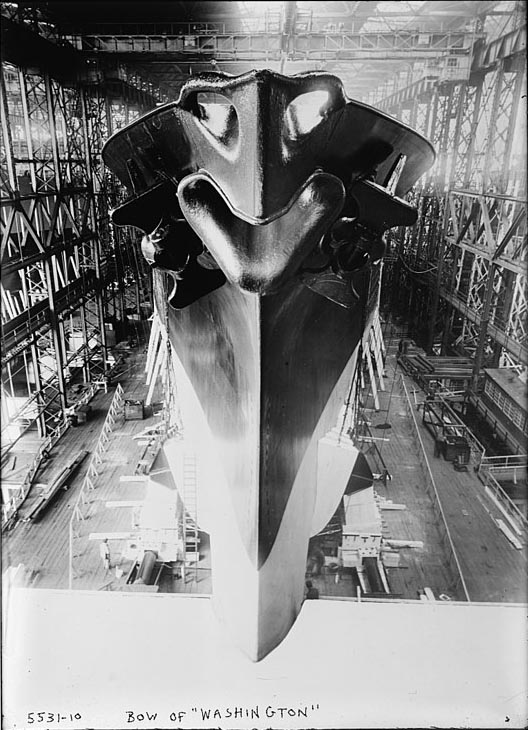 USS Washington in construction
Initially the Colorado class had four, and not three battleships planned. In 1916, design work was complete and USS Washington was provisioned four bronze propellers, four General Electric turbo-electric drives and eight oil-fired Babcock & Wilcox boilers. Her construction went on just after USS Colorado was laid down on 24 April 1917 so she had to wait until 30 June 1919. Eventually she was launched on 1st September 1921. However, the next year saw the cancellation of the South Dakota class and 8 February 1922, two days after the signing of the Washington Naval Treaty, all construction work stopped on USS Washington. At that stage she was 75.9% complete, with her underwater armored protection ready, and basic superstructures already built, her exhaut tubes in place. Now there was no question of completing her, but could she be converted as the Lexington class ? This was brushed aside due to her unsufficient speed, but the decision took years to come. She was mothballed until November 1924, and towed to be used as a gunnery target. At least the Navy would have seen how her newly design protection would stand the test of facts.
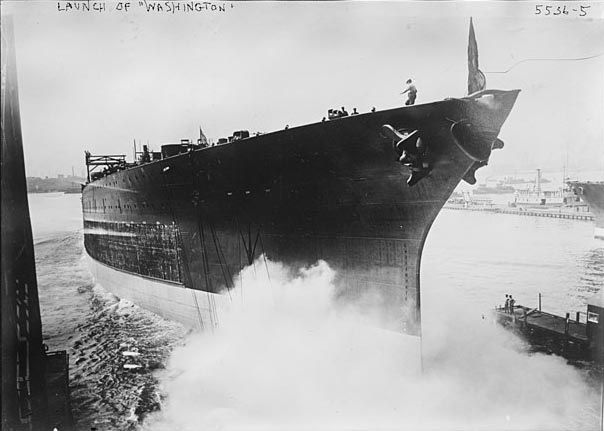
On the first day of testing, she received two 400-pound (180 kg) simultaneous torpedo hits, and survived. Later she was air-attacked and received three 1-metric-ton near-miss bombs hits. These causied minor damage but she accused a 3° list. Later she was tested by being detonated by 400 pounds of TNT on board, and survived again. Two days later, the gunnery tests rsumed and she received 14 hits from a 14-inch (356 mm) guns fired from 4,000 feet away. All but one failed to penetrate her main belt. Eventually, she was finished off by USS Texas and New York, hit 14 more times. The test was precious. It proved the existing deck armor was inadequate, and triple bottoms were now necessary, so to define a triple ASW layer of protection. She sank following the last test on 25 November 1924. Her name was given to the sister-ship of USS North Carolina, the first USN fast-battleship of the post-washington era, which design was in part based on this tests.

Videos
Colorado by navyreviewer
Model Kit corner
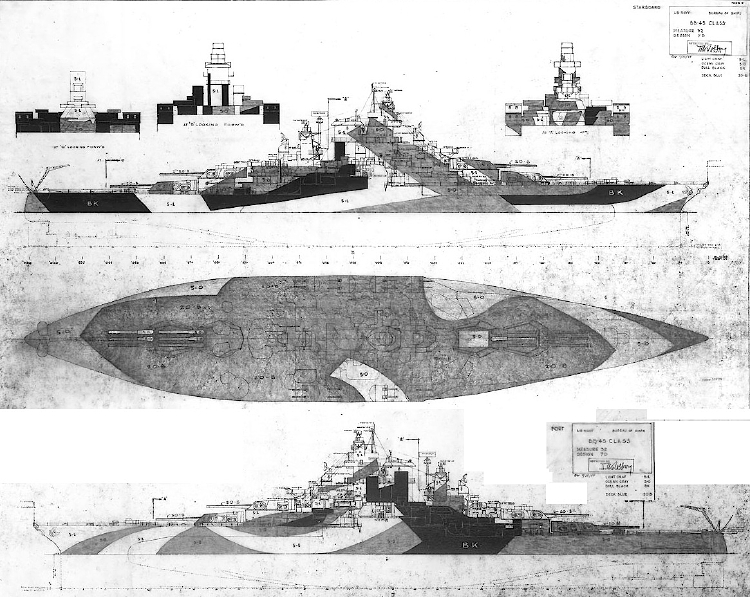
Measure 32 – West Virginia scheme 1944
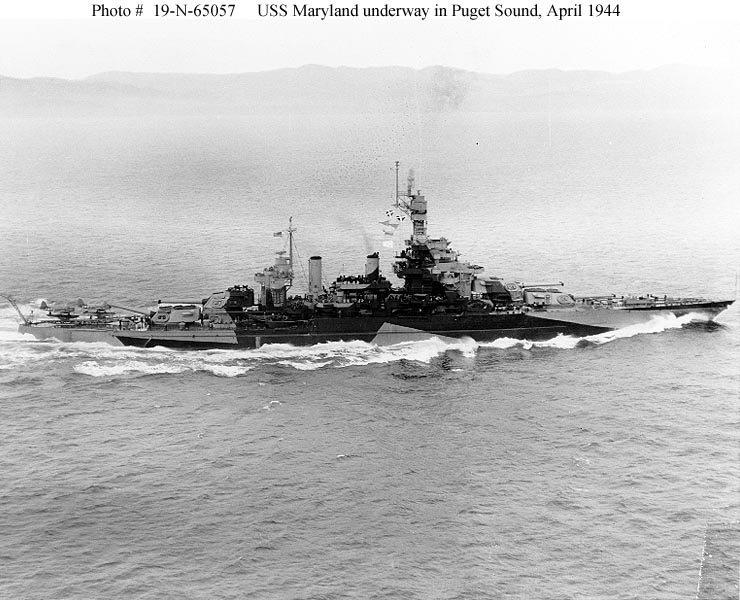
In 3D