



The JAL 123 air crash occurred on August 12, 1985. A total of 520 people were killed. It was the world’s largest air crash involving a single plane with the largest number of casualties. It was also the world’s second worst disaster after the Tenerife crash in which 583 people were killed.
When the misfortune happened, witnesses saw the plane jumping up and down
The Obon Festival in Japan, on the 15th day of the seventh month of the lunar calendar, is also known as the Zhongyuan Festival, the Ghost Festival, or the July and a half, and the Magok Festival. It is the day when the Reben people worship their ancestors.
The day of the JAL 123 crash happened on the eve of Obon in 1985.
The Haneda Airport in Tokyo that day was extremely crowded. People were bustling with large bags, ready to go home to worship their ancestors and spend time with their families.
As in previous years, Japan Airlines Flight 123 from Tokyo to Osaka is full of people who work away and miss home.
This is a short trip, the whole journey only takes 54 minutes. However, whether it was the passengers, crew members, or family members who missed them, they did not expect that this short tens of minutes would have become a way of no return.
There were 524 people on board the plane, including 488 Japanese passengers, 21 foreign passengers, and 15 crew members. Among them, there are three members in the cockpit, responsible for aircraft operations related matters.
Captain Takahama Masa is 49 years old. He has worked for JAL for many years and has rich experience, with a total flight time of more than 12,000 hours. The deputy captain was a captain promotion trainee named Yu Sasaki. In order to conduct training, he sat in the captain’s position to control the aircraft that day, while captain Takahama Masami was in the position of the deputy captain to give guidance. At the same time Responsible for the task of the deputy captain-radio communication.
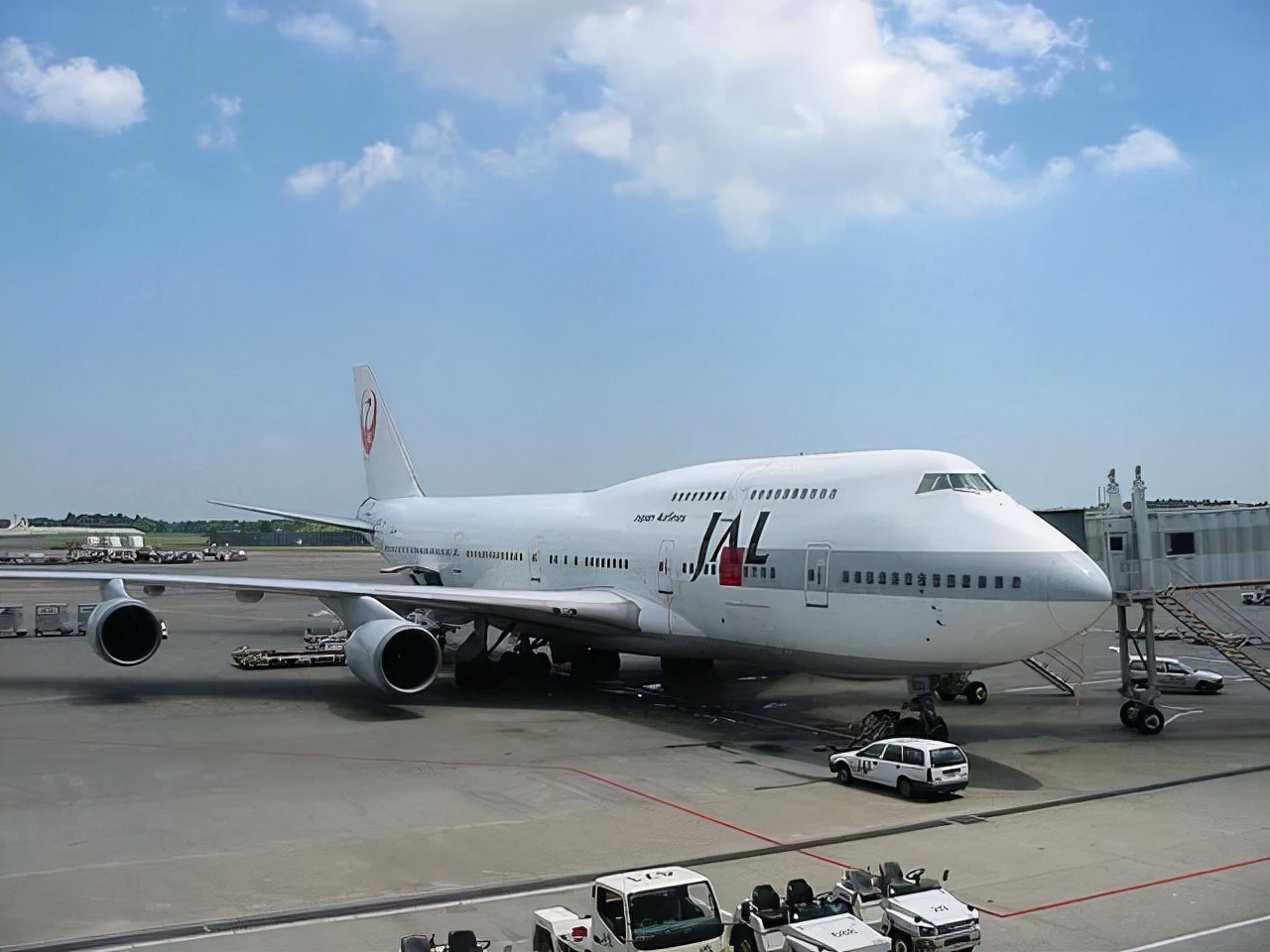
At 18:12, the plane took off from Haneda Airport. The plane slowly climbed from the ground, and about 10 minutes after takeoff, it reached an altitude of about 7,300 meters.
At this time, a passenger asked to go to the bathroom. The moment he stood up, there was a huge explosion from the tail of the plane, the fuselage began to shake, the cabin roared, and the airflow began to flow in.
In the cockpit, the crew also heard the explosion. The captain frowned, disconnected from the autopilot mode, and immediately sent a code to the ground to inform the ground that the JAL 123 aircraft encountered an emergency.
After that, several people met their eyes briefly and began to look for the fault through the command platform: the instrument panel was intact, the engine was okay, and the electrical system was operating normally, but the air pressure inside the aircraft was constantly decreasing. At this time, the flight attendant reported to the cockpit that a big hole had been broken in the rear of the plane.

The Tokyo Air Traffic Control Department in Tokorozawa City received the distress message. After a while, the captain requested to return to Haneda Airport, and the air traffic control agreed. The ground crew paid close attention to the movement of No. 123 and found that the plane did not turn back, but was getting farther and farther.
The air traffic control hurriedly contacted the captain and informed him that the route had deviated, but did not receive a response. JAL flight 123 has lost connection with the ground.
In the cockpit of the plane at this time, the situation became more and more critical. Three minutes after the “explosion”, the hydraulic system in the aircraft had all failed, and JAL Flight 123 was a Boeing 747 passenger plane. The hydraulic system controlled the rudder surface, landing gear, speedbrake, etc. of the passenger plane, where the life door is located.
Although the captain returned to the pilot position for the first time, no amount of experience could contend with the huge machinery, and the aircraft was facing the danger of a complete loss of control.
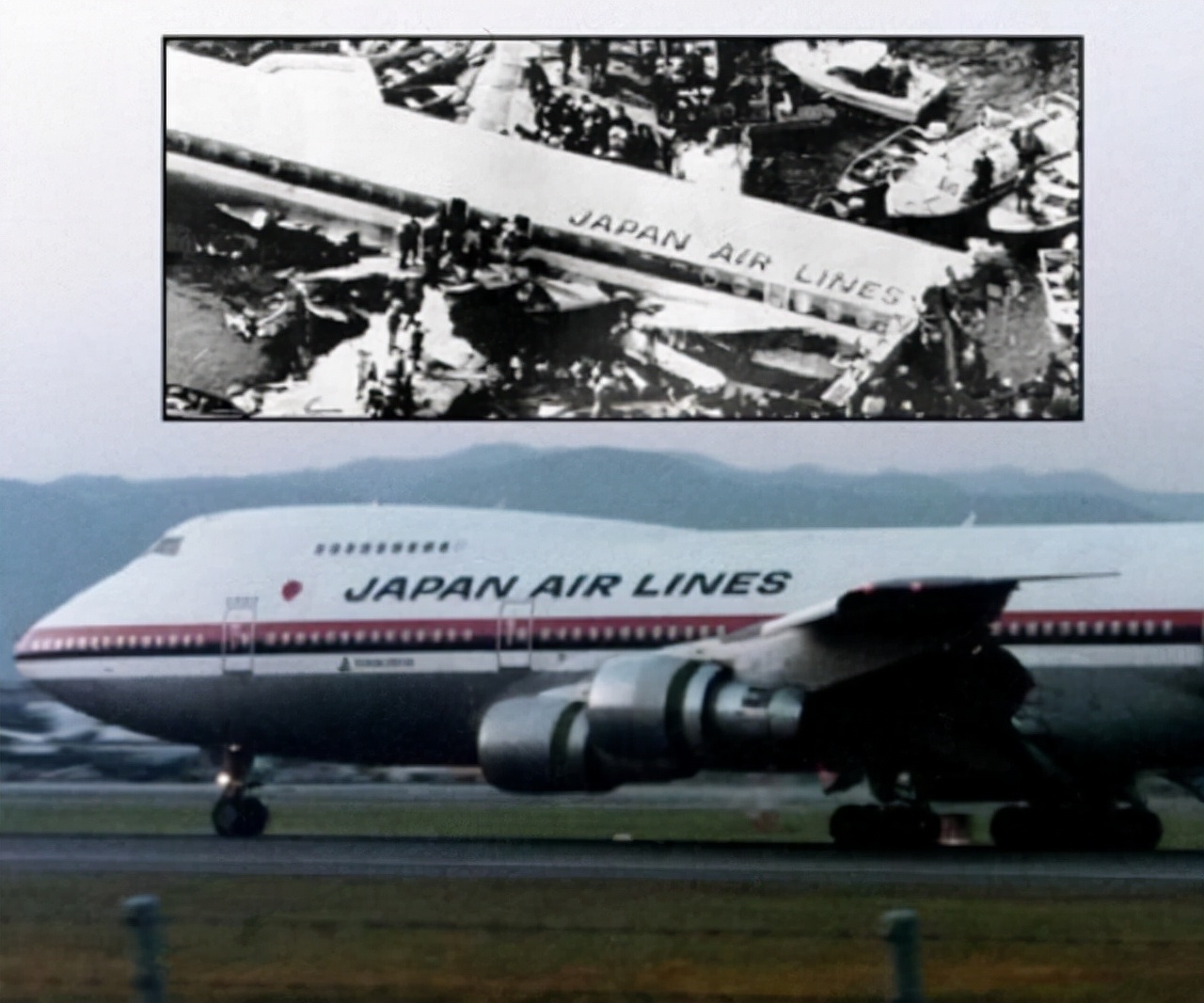
In the cabin, the oxygen mask has fallen off, and the announcement of the aircraft began to broadcast voice prompts in a loop, requiring passengers to wear seat belts and oxygen masks. Within a few minutes, everyone knew what had happened. Although they were very anxious and scared, they sat down according to the broadcast.
In the turbulent air current, passengers with children comforted their children and put on oxygen masks for them; the accompanying couples cuddled with each other and cried out their thoughts before leaving; some took out their mobile phones and edited text messages; some took out papers Pen, began to write a suicide note…
At this time, the crew members in the cabin were working hard to control the aircraft, and they had no time to take care of other things, including radio. The air traffic control is also very anxious, constantly sending information, some notifying the departure of the route, and some suggesting that the crew choose another airport for an emergency landing.
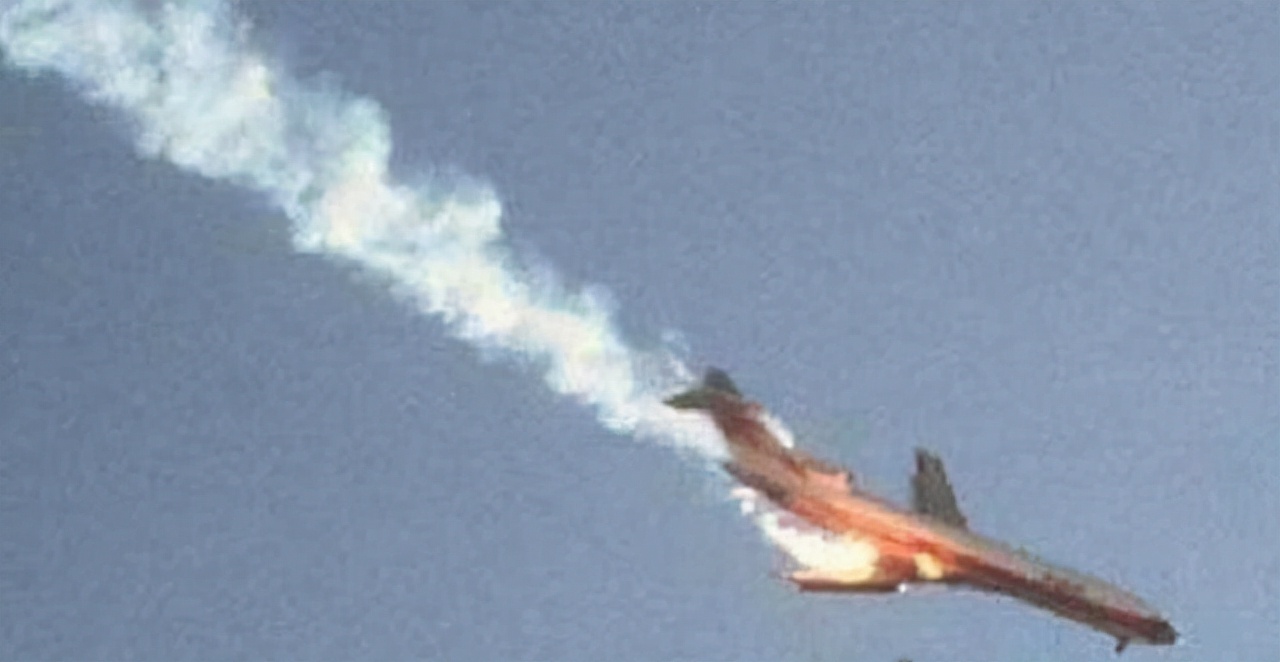
However, the top priority is not the route issue, but the need to regain control of the aircraft as soon as possible. At the same time, the aircraft needs to lower its altitude immediately.
The airflow was turbulent, the air pressure dropped, the air in the cabin was already thin, and the oxygen in the oxygen mask was slowly depleting, and passengers began to feel breathing difficulties. Looking at the high and low scenery outside the window, everyone became more and more disturbed.
At this time, the crew discovered the secret of manipulating the malfunctioning aircraft. After testing, they found that the throttle can be used to control the acceleration and deceleration of the aircraft: when the aircraft is falling, pushing the throttle forward can raise the front part and start accelerating; when you pull the throttle back when it rises, the aircraft starts to dive and decelerate.
This is a set of operating logic that is completely opposite to normal driving, and it takes a few minutes to master the trick. This is what witnesses saw: JAL 123, shaking in the air, jumping up and down.
The difficulty in regaining control of the aircraft allowed the crew to see a silver lining. They planned to turn the nose and return to Haneda Airport for an emergency landing according to the plan.
At this time, the plane has gradually stabilized, and the crew decided through urgent discussion to increase the thrust of the left engine and turn the plane around. At the same time, it is speculated that the aircraft has a tendency to dive all the time, and lowering the landing gear may ease its dive movement and make the fuselage more stable.
However, at this time, an accident happened. The lowering of the landing gear slowed the increase in the thrust of the left engine a lot, and the aircraft lost control again.
22 minutes before the explosion, the plane was already close to Mount Fuji. When it was out of control again, the plane was in a zone surrounded by mountains. It began to fall from a height of about 4,000 meters, at a descent speed twice the normal value, and dived straight down towards a mountain below.
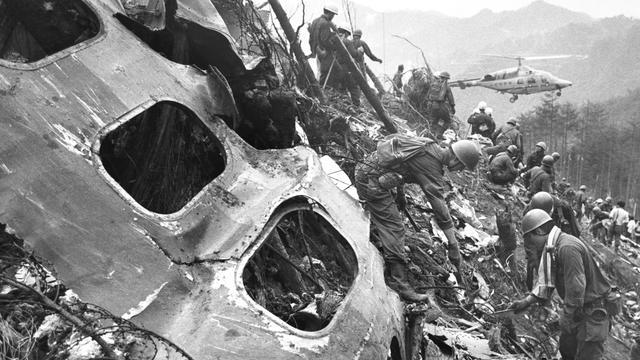
The screams and screams of passengers, the howling of the plane crashing through the air at high speed, finally disappeared among the mountains.
Only four survivors of the JAL 123 crash were caused by delays in rescue
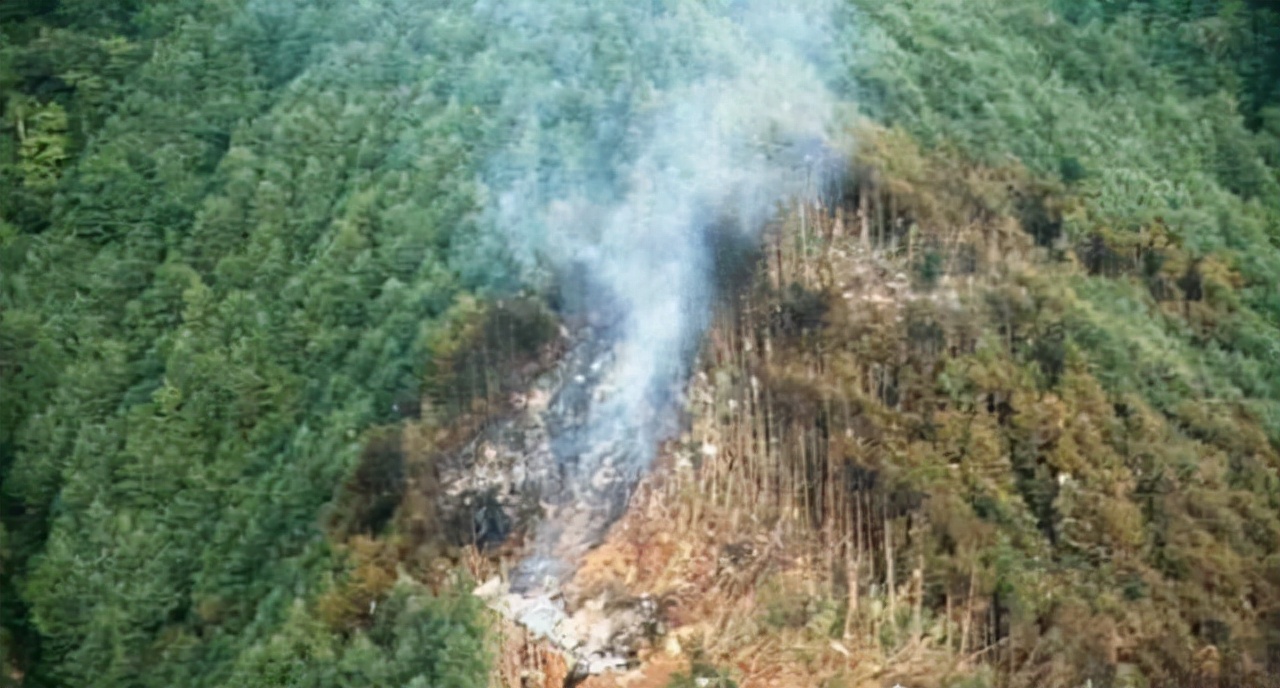
The JAL 123 eventually crashed on Mount Takatenbara near the Takayama area in Misuta, Gunma Prefecture.
It stands to reason that the crashed flight was not silent when it crashed, but it had radio communication with the ground air traffic control. After the loss of connection, rescue work should be carried out immediately. However, the rescue team arrived 15 hours later.
On the day of the accident, Captain Omori Isuzu of the Japanese Self-Defense Forces piloted a helicopter to search for the crash site. That night, he found the approximate location of the crash.
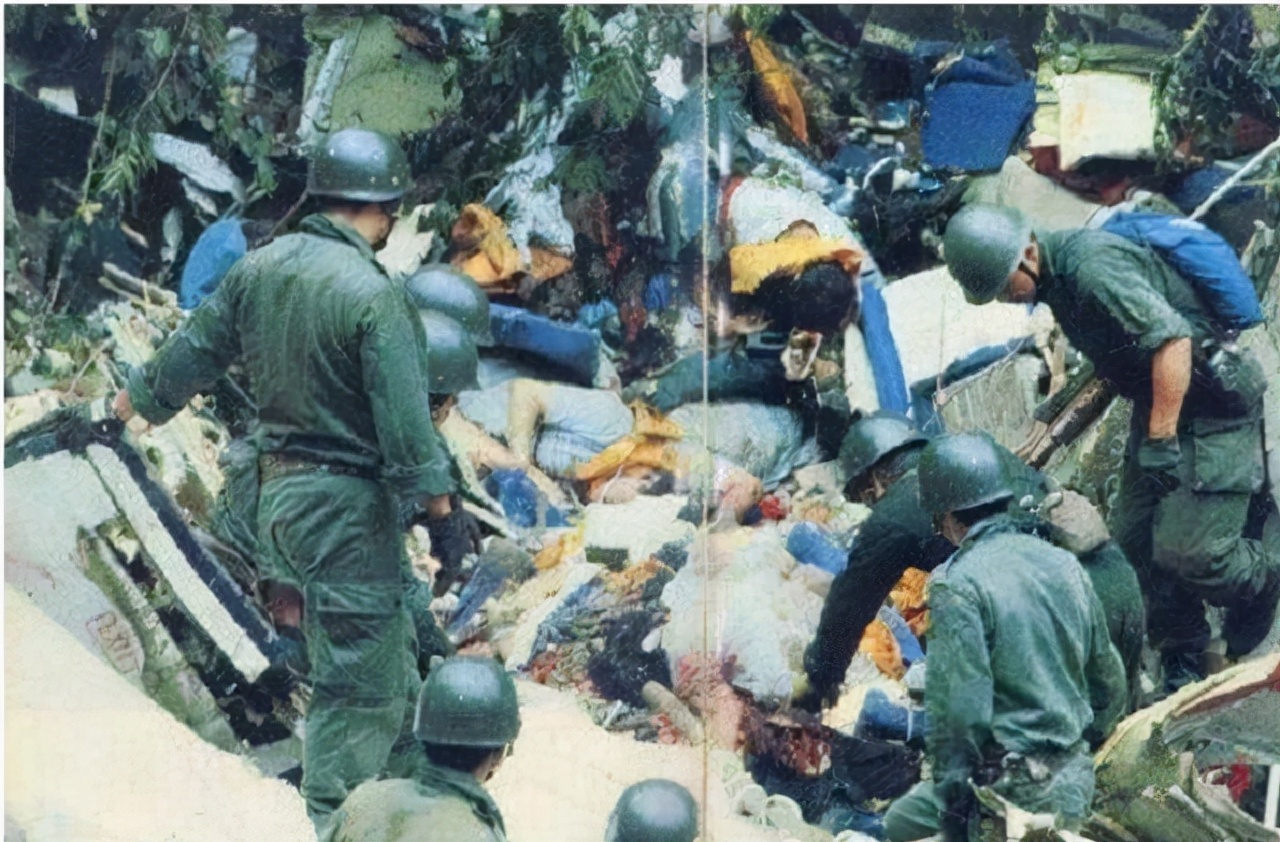
Omori Isuzu followed the fire to find the exact location. However, when he took a closer look, he found that there were at least 10 fire spots within a 300 square meter area. Considering that he was located in the forest and the smoke was so great that the visibility was almost zero, he was unwilling to risk landing at night.
So Captain Omori came to a hasty conclusion: There were no survivors in the crash. After that, he flew the helicopter back home.
At the same time, the ground rescue team is rushing to the scene from the land. They received the news from Captain Omori, and without confirming the true situation, they decided that there was no survivor, so they stopped rushing and spent the night in a village 68 kilometers away from the crash site.
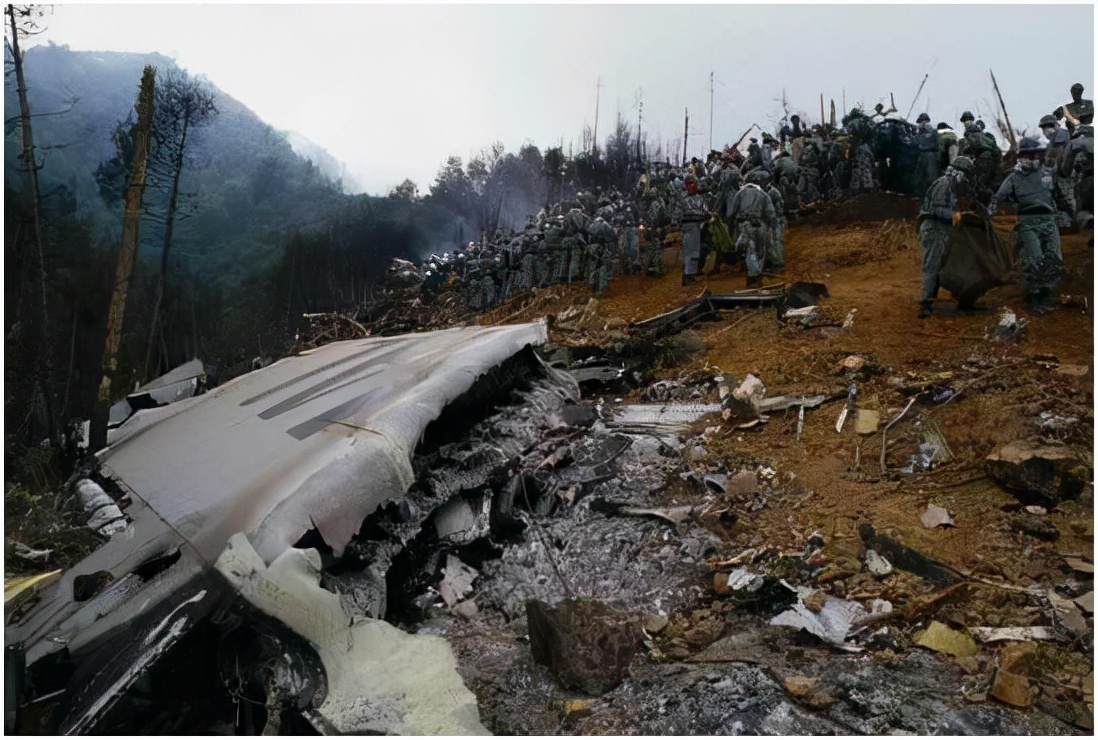
It was 1,500 meters above sea level. The survivors survived the plane crash, survived the fire caused by the crash, but failed to survive the cold night.
The next morning, 15 hours after the plane crashed, the Japanese Self-Defense Force search and rescue team finally arrived at the scene. The wreckage of the plane and the remains of the victims were scattered everywhere. 520 lives, 520 bodies that were already cold, lay just like that in that mountain. The victims who had not yet looked at them, still had despair in their eyes.
When cleaning the scene, the Self-Defense Forces were surprised to find that there was still another survivor, the flight attendant Ochiai Yumi. They were shocked that there might be people alive at the scene!
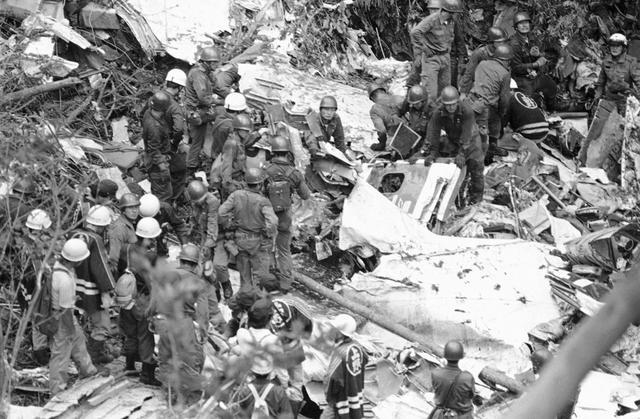
Perhaps with guilt, perhaps with fear, the Self-Defense Force seized the time to search for other survivors. Fortunately, a 12-year-old girl fell on the tree and survived, and there was a young mother holding her daughter in her arms. They were taken to the nearest hospital in Tengzhou City for rescue.
When Ochiai Yumi woke up, he talked about a sad thing: after the plane crashed, some passengers were still alive. She was lying on the ground, waiting for rescue. She could hear the pain and groans from around, and also vaguely heard a little boy yelling at his mother.
The pain was getting worse, Yumi endured it and waited for rescue. At this time, she heard the sound of the helicopter’s propeller turning, and she was overjoyed.
But what is more desperate than gaining hope and losing it again? Her consciousness was also a little lax, and she persisted in a daze until the rescue team arrived.

Another girl who was rescued also accused the rescue team of being too late, because she had spoken a few words with her father and sister before she fell into a coma, but unexpectedly, they died before the rescue team arrived. .
How embarrassing! It is not difficult to imagine how many passengers died due to delays in rescue.
The internal reasons of the Japanese Self-Defense Force caused the delay in the rescue time. However, according to the official report, except for the four survivors, the other passengers died at the time of the accident. The Japanese people are extremely angry, comparing this rescue action to “murder.”
As for the Self-Defense Forces, they were actually extremely shocked at finding a survivor. Later, the investigator concluded that: considering the type of Boeing 747 passenger plane and the seat placement, the front row should have taken most of the impact. The four ladies sitting in the last seven rows were able to escape in this way.
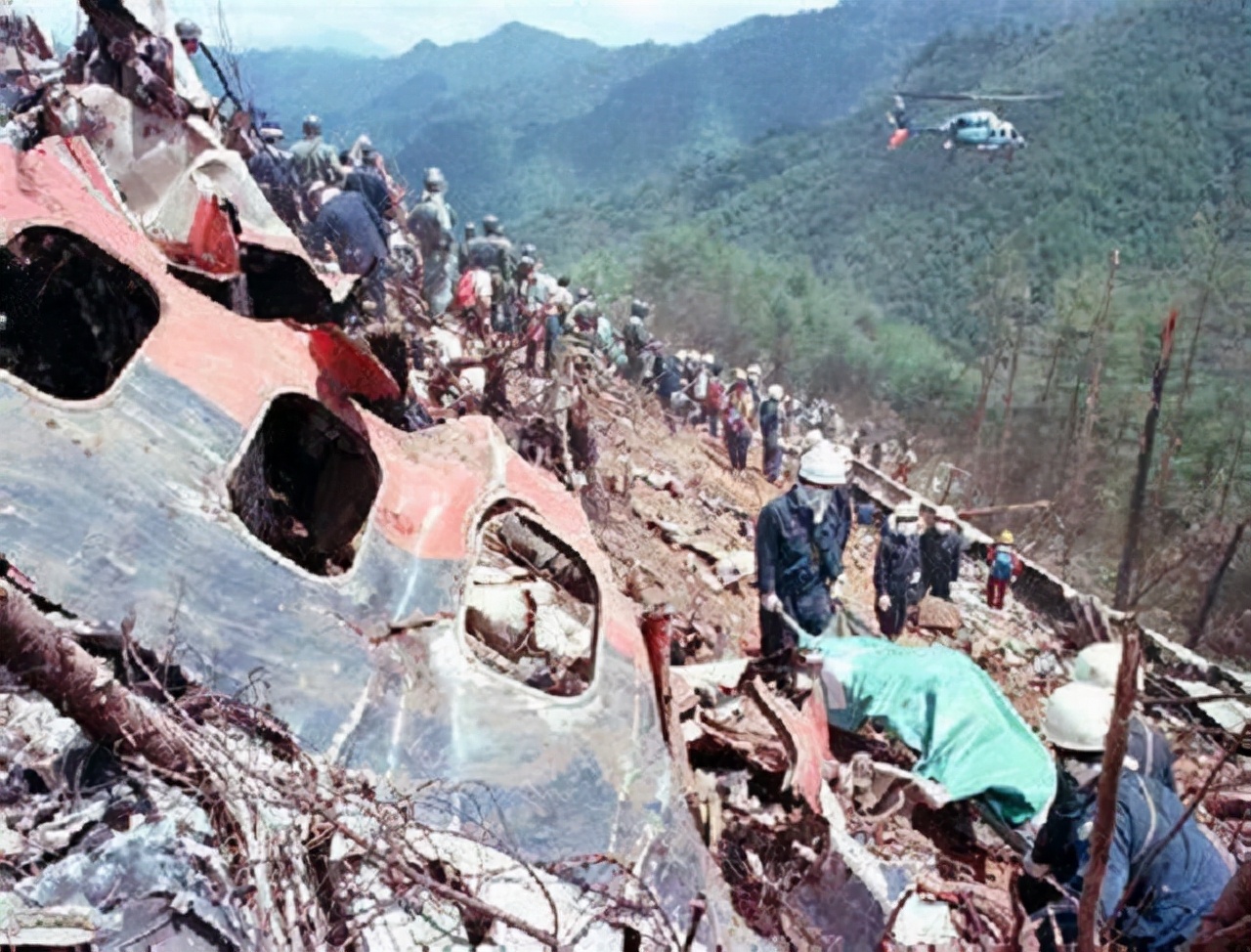
A metal plate in the rear of the plane caused the plane to crash and warned the global aviation industry
After the accident, some people raised doubts about the airworthiness of the Boeing 747, and others attributed the reason to the lack of professionalism of the captain. The National Transportation Safety Board also sent investigators to assist in the investigation.
After investigation, it turned out that there had been two man-made accidents before the accident:
On June 2, 1978, the aircraft’s tail touched the ground due to an excessive angle when landing, causing damage;
On August 19, 1982, the aircraft cut the runway and caused its engine to hit the ground.
The problem was the maintenance work after the first accident.
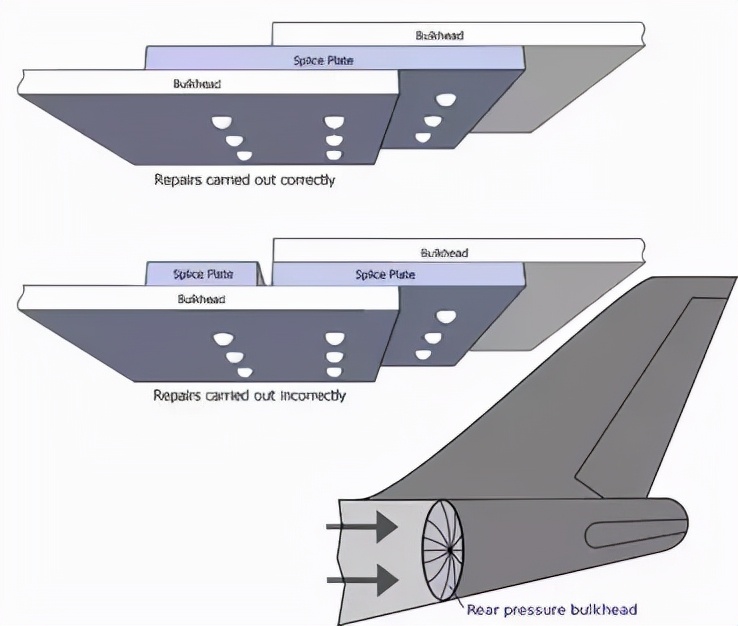
At that time, JAL handed the plane to Boeing for repair. According to the design requirements, a whole joint plate should be used at the rear of the machine to connect the two partitions and fix it with three rows of rivets. However, the maintenance personnel used two splice plates, and one was nailed with one row of rivets, and the other was nailed with two rows.
The damaged part is responsible for preventing the pressure loss of the entire passenger plane. According to the calculations of the investigators, the unqualified maintenance has left the passenger plane with only more than 10,000 flight life. The number of flights in which the air crash occurred is the 12,319 flights after the maintenance. .
Boeing inspectors did not expect a fatal error at this time, and the time bomb was delivered to JAL.
The JAL 123 crash eventually ended with the compensation of condolences by JAL to the families of the victims. After that, the president of JAL resigned, the maintenance manager and the engineer committed suicide, and the engineer responsible for the maintenance of Boeing also ended his life due to tremendous psychological pressure.
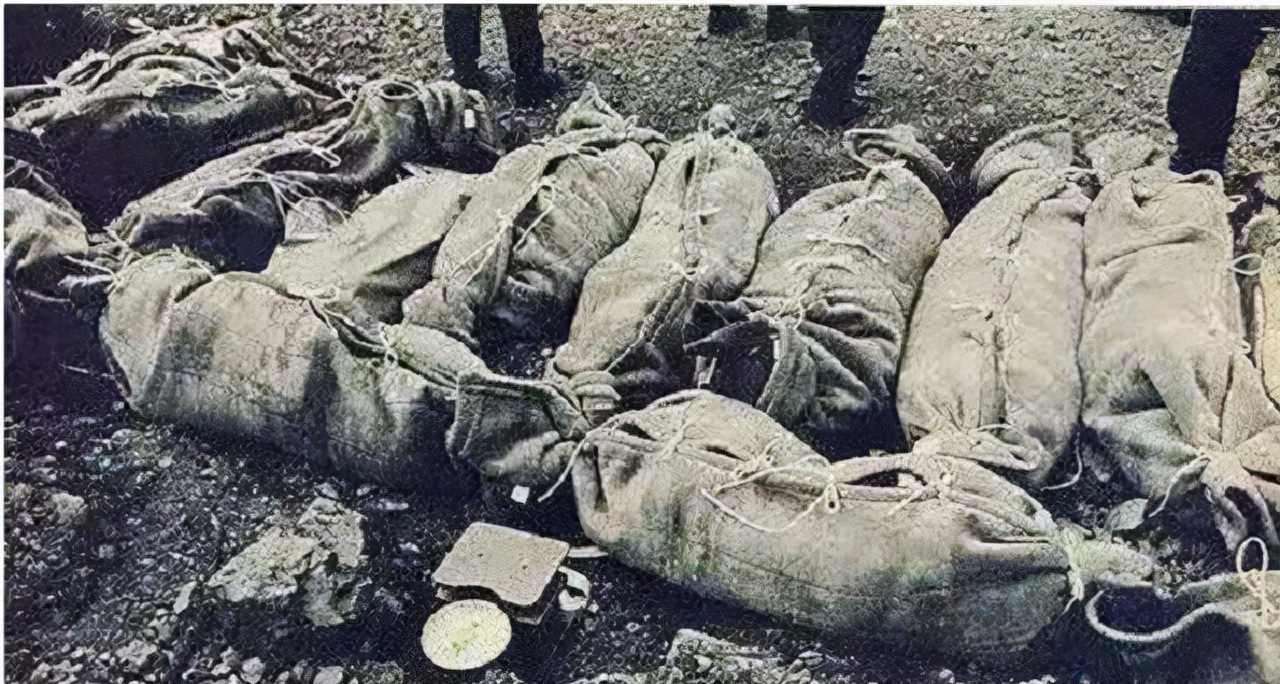
Faced with this accident, practitioners in the global aviation industry should reflect on it.
But at the same time it also warns us that the power of human beings is very powerful. No matter how perfect the rules and technology are, it can’t replace human responsibility, and no matter how terrible disasters, it can’t deny people’s tenacious vitality.