



The Republic F-105 Thunderchief is a Mach 2 fighter-bomber aircraft designed and developed by Republic Aviation. The tactical aircraft served the United States Air Force (USAF) from 1958 to 1984 in various combat missions. The manufacturer built 833 examples across all 13 variants (including prototype and test aircraft).
Simple Flying has compiled a list of fast facts about the F-105 aircraft from the information highlighted by the National Museum of the USAF.
1.Uncomplimentary nicknames
The origins of these nicknames are rather obscure
| Various nicknames |
|---|
| Thud |
| Squat Bomber |
| Lead Sled |
| Hyper Hog |
| Ultra Hog |
The F-105s had a troubled beginning with many in-flight shutdowns, representing problems with engines, hydraulic systems, and avionics. The aircraft initially gained several uncomplimentary nicknames, including Thug, Squat Bomber, and Lead Sled. Some say that the nickname “Thud” was inspired by “Chief Thunderthud,” a Howdy Doody television series character. Others claim that “Thud” stood for the sound F-105s made when crashing to the ground.
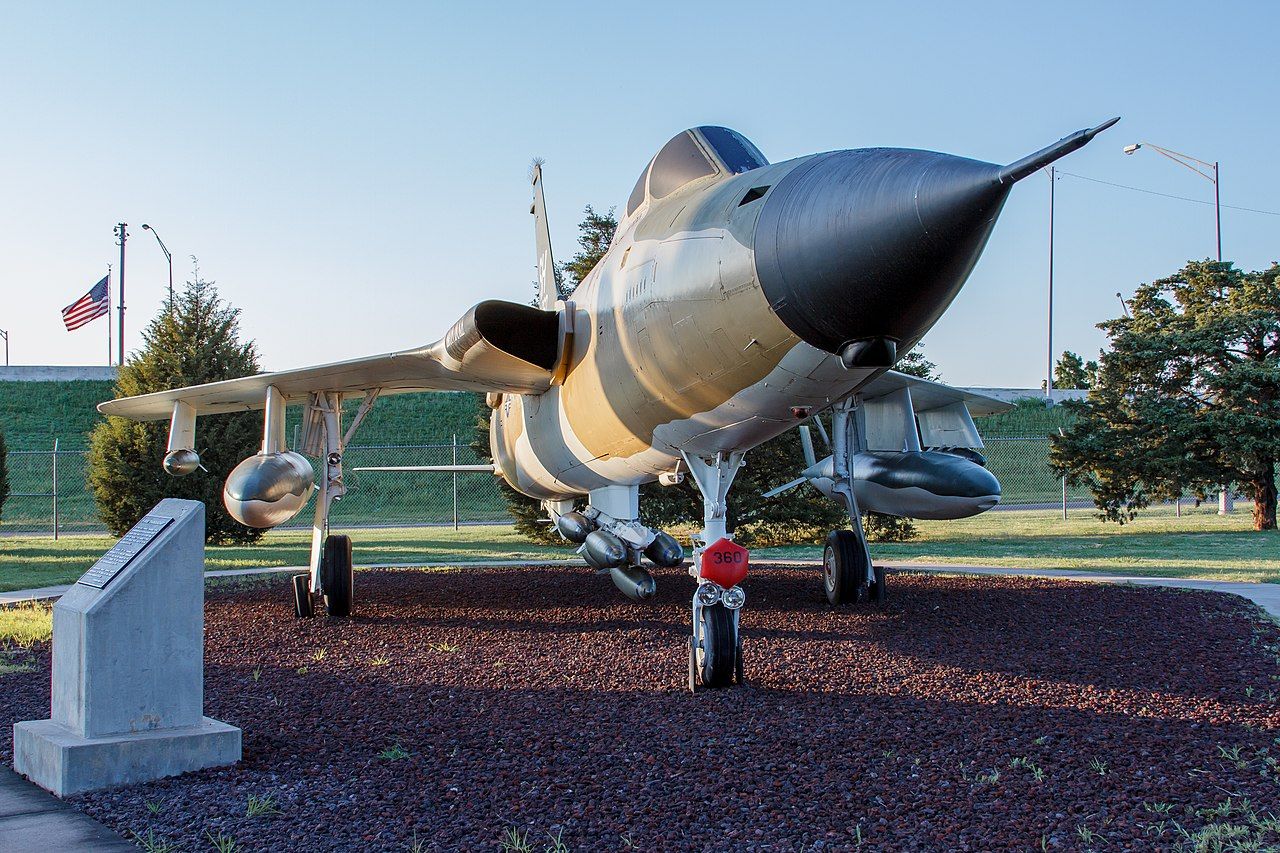
The other two names, “Hyper Hog” and “Ultra Hog,” arose from the predecessor aircraft, the Republic F-84 Thunderjet (named Hog) and F-84F Thunderstreak (named Super Hog). On two different occasions, in December 1961 and June 1962, the entire fleet of F-105Ds was grounded due to ongoing issues.
2.Low-altitude speed
Designed primarily for low-level interdiction
| Performance | Specifications |
|---|---|
| Maximum Speed | Mach 2.1 (1,210 knots, 1,390 mph, 2,240 km/h) |
| Combat range | 676 NM (778 miles, 1,252 km) |
Republic Aviation’s F-105 was designed primarily for low-altitude interdiction with enemy aircraft, such as the MiG-17s and MiG-21s. The aircraft could reach high speeds at low altitudes, providing an edge over enemy aircraft. In 1967, F-105s joined the United States Air Force’s (USAF) 355th Tactical Fighter Wing.

During its three-year combat mission term in Thailand, the Thunderchief became one of the few fighter aircraft to claim three MiG kills. In 1970, the type joined the 388th Wing for Wild Weasel combat missions and was involved in attacking enemy surface-to-air missile sites. Its low-altitude speed, high rate of climb, and high-speed combat performance gained it a special place in tactical missions.
3.Multiple fuel tanks
Total fuel capacity: 2,810 US gallons (10,600 L)
| Fuel tank | Capacity |
|---|---|
| Three flexible fuselage tanks | 770 US gal (2,900 L) total |
| Weapon bay tank | 390 US gal (1,500 L) |
| Centerline drop tank | 650 – 750 US gal (2,500 – 2,800 L) |
| Two underwing drop tanks | 450 US gal (1,700 L) each |
The F-105 was equipped with three flexible fuselage fuel tanks that provided primary storage for fuel. It has a combined capacity of 770 US gal (2,900 L). An additional internal bomb bay, the weapon bay tank, can take up another 390 US gal (1,500 L) of fuel. The weapons bay bank provides nearly 140 cubic feet of fuel.
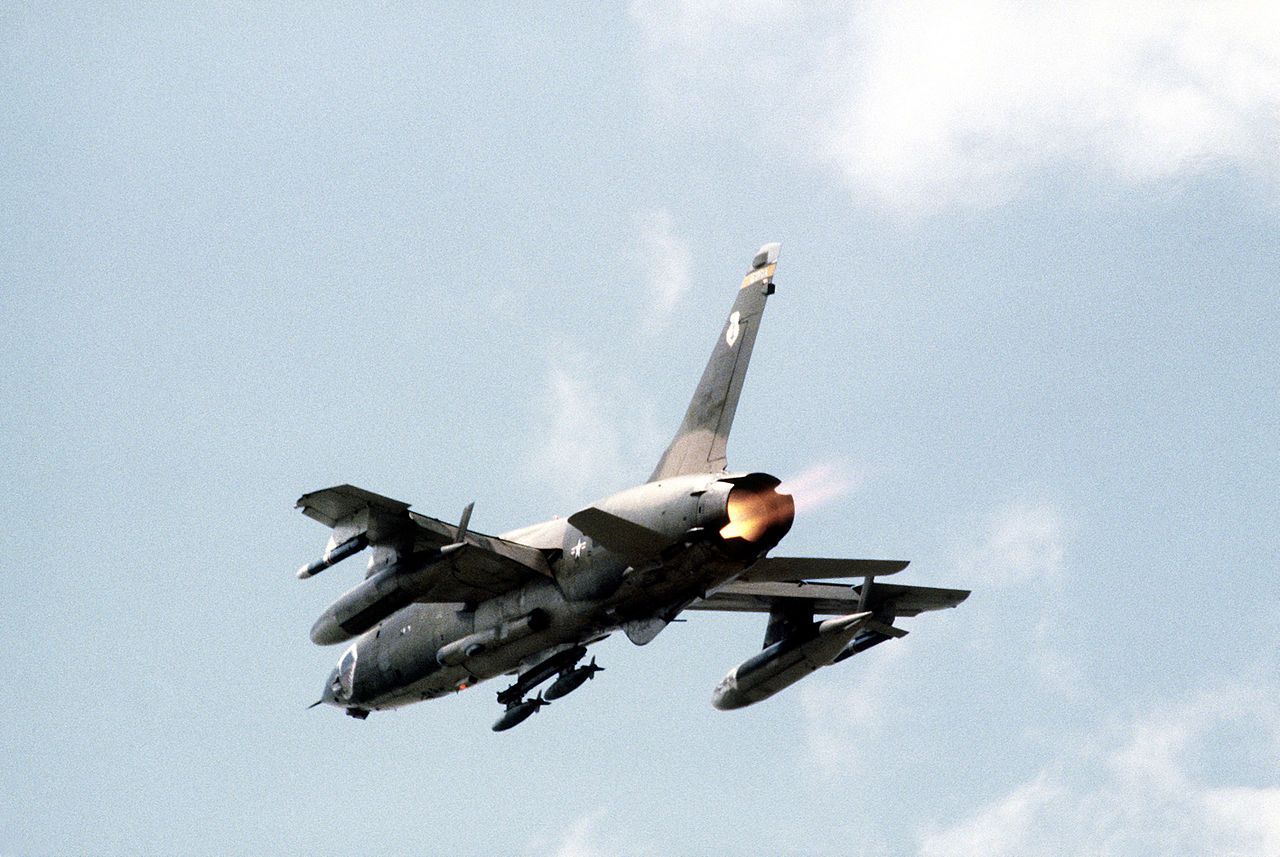
Republic’s F-105 also features a centerline pylon capable of storing 650 to 750 US gal (2,500 – 2,800 L) of fuel. The aircraft also features four underwing pylons, where two inner ones can accept 450 US gal (1,700) drop tanks. Its two outer pylons are wired for bombs or missiles.
4.Superior avionics
The aircraft featured original and upgraded avionics systems
| Avionics | Type |
|---|---|
| Radar | NASARR R-14A |
| Fire control system | AN/ASG-19 Thunderstick |
| Long-range navigation system | AN/ARN-85/92 LORAN |
The Thunderchief featured state-of-the-art avionics, including radars, navigation, and fire control systems. Most systems were introduced with the original design. However, some major avionics were upgraded into special-mission variants. Precise systems assisted the ranged weapons system to its target and track. Accurate control of guns and other armaments was essential for the success of tactical missions.
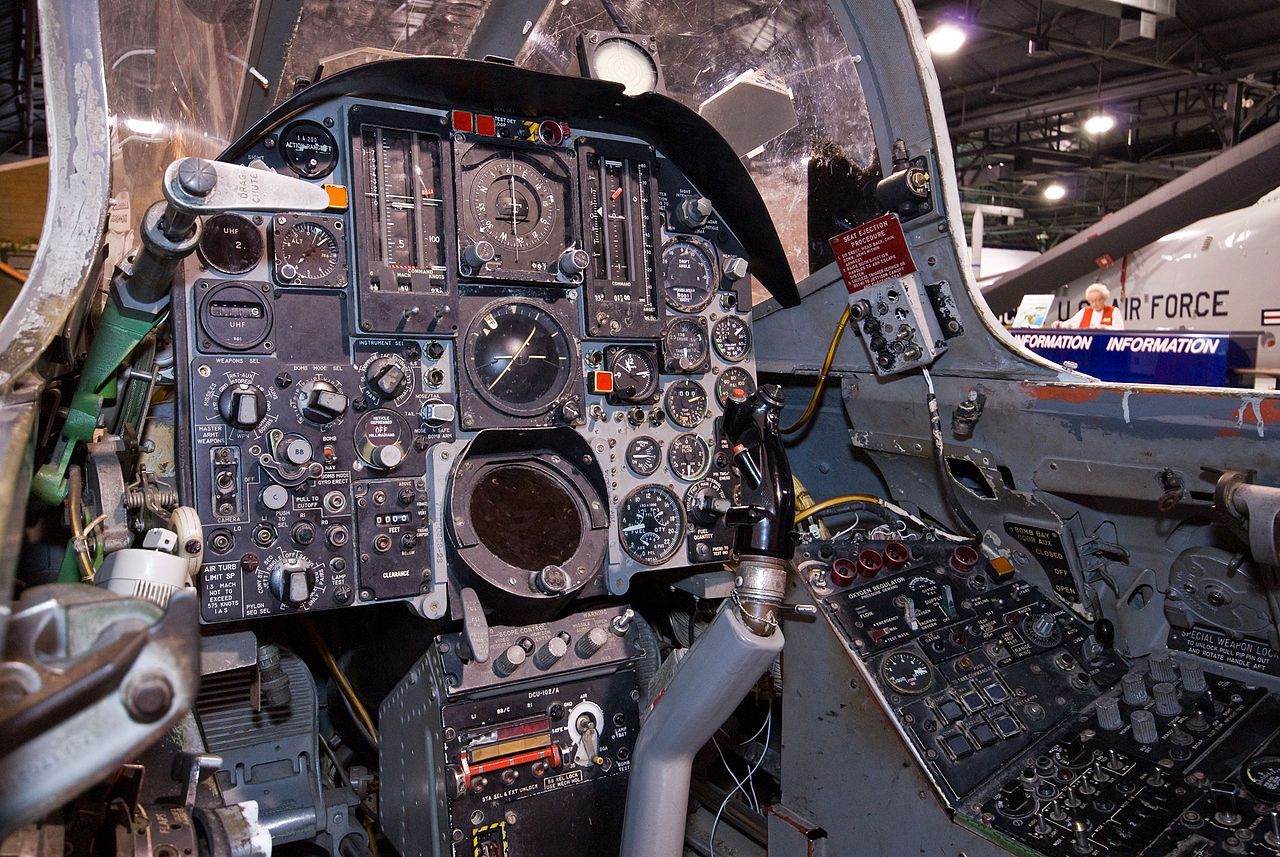
Avionics came with their fair share of problems. The F-105 had a troubled entry into service, from in-flight shutdowns to engine fuel injection and other issues. Special projects were implemented to cater to these problems. Aircraft of the type required 150 maintenance hours for each flying hour during problem-solving programs.
5.Large number of variants
Pre-production and production variants: 13
| Model | Variant | Number built |
|---|---|---|
| YF-105A | Pre-production prototype | 2 |
| YF-105B | Pre-production prototype | 4 |
| F-105B | Initial production model | 71 |
| JF-105B | Test aircraft | 3 |
| RF-105B | Proposed reconnaissance | None |
| F-105C | Proposed dual-control trainer | None |
| F-105D | Production all-weather model | 610 |
| RF-105D | Proposed reconnaissance | None |
| F-105E | Proposed trainer | None |
| F-105F | Two-seat trainer | 143 |
| EF-105F | Wide Weasel/Defense Suppression | 54 (converted from F-105F) |
| F-105G | Two-seat Wide Weasel | 30 |
| F-105H | Proposed two-seat upgraded | None |
The F-105 program featured a slew of variants based on customer requirements. From prototype and test models to production and training models, there were 13 different variants. The all-weather model (F-105D) was the most successful because of its advanced avionics and AN/APN-131 navigational radar. The manufacturer built 610 examples of the F-105D.
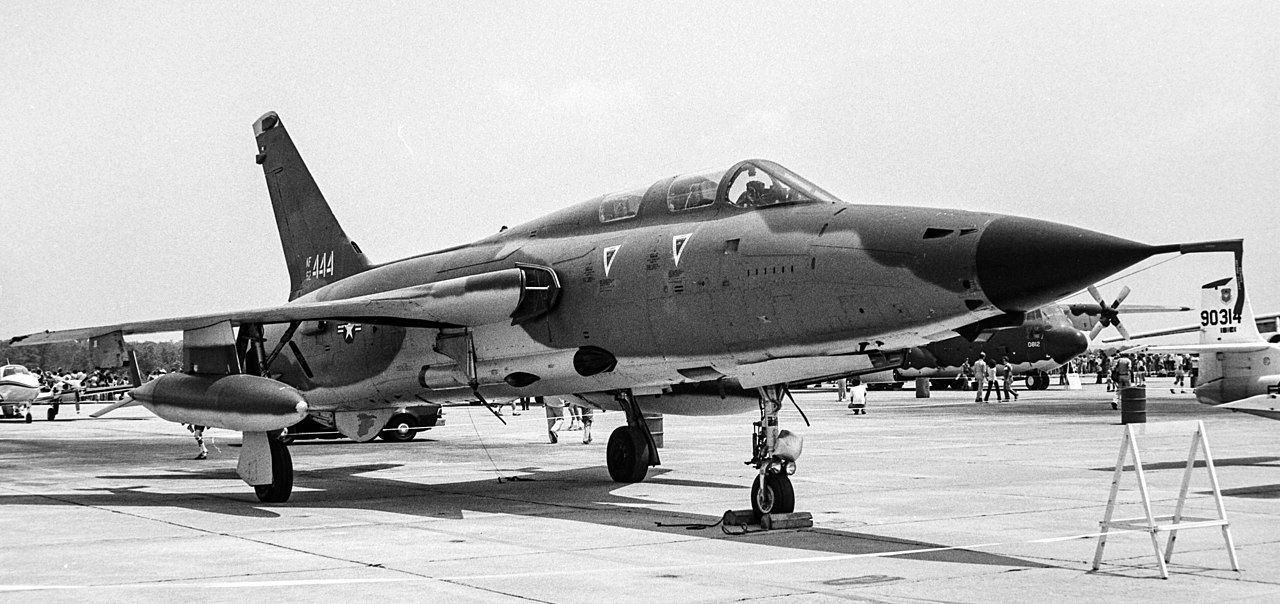
Several customers requested the two-seat trainer model (F-105F) during the program’s later years. It was built from the F-105D and featured a stretched-forward fuselage. With a full combat capability, the aircraft featured dual controls, a taller fin, and a greater maximum takeoff weight. The manufacturer built 143 examples of the F-105F trainer. A total of 833 units across all examples were built in the type’s production run between 1955 and 1964.