



Source: Le Parc de la Préhistoire de Tarascon-sur-Ariège
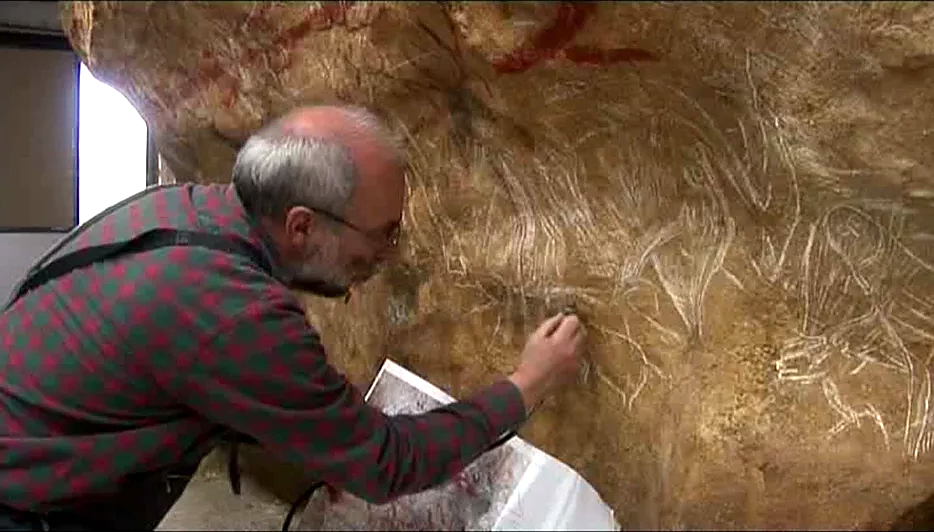
The Great Panel of the Marsoulas cave (Haute Garonne) is very difficult to access, and has been damaged by modern graffiti. 15 000 years ago, it contained beautiful polychrome paintings and dozens of engraved animals. From 2008 to 2009, the facsimile of this ornate wall was replicated. In the studio of Alain Dalis in Montignac (Dordogne), Gilles Tosello did not just reproduce the images in their current state. He proceeded to a real restitution, restoring all the original brilliance to this emblematic tour de force of Magdalenian art. With his companion Carole Fritz, researcher at the CNRS, he studied in detail this composition in the real cave. The completed facsimile was installed at the Prehistory Park of Tarascon-sur-Ariège.
Marsoulas – La Grotte de Marsoulas, near Salies (Haute-Garonne), is formed by layers of limestone raised vertically against other layers which then buttress each other. It is the result of a fault. Around 1885, the Abbé Cau-Durban, archaeologist from Ariege, found the floor consisting of carbonaceous ash, animal bones, and worked flint. Patiently he collected many artefacts, the remains of an ice age site. The type of industry and the absence of barbed harpoons led him to believe its relative great age. The cave has since been explored thoroughly, and has revealed paintings and engravings of bison and horses on the walls, as well as artefacts from the ice age, and a huge Triton bailer shell from the sea 300 km away.
Text above translated and adapted from: Cartailhac (1902)
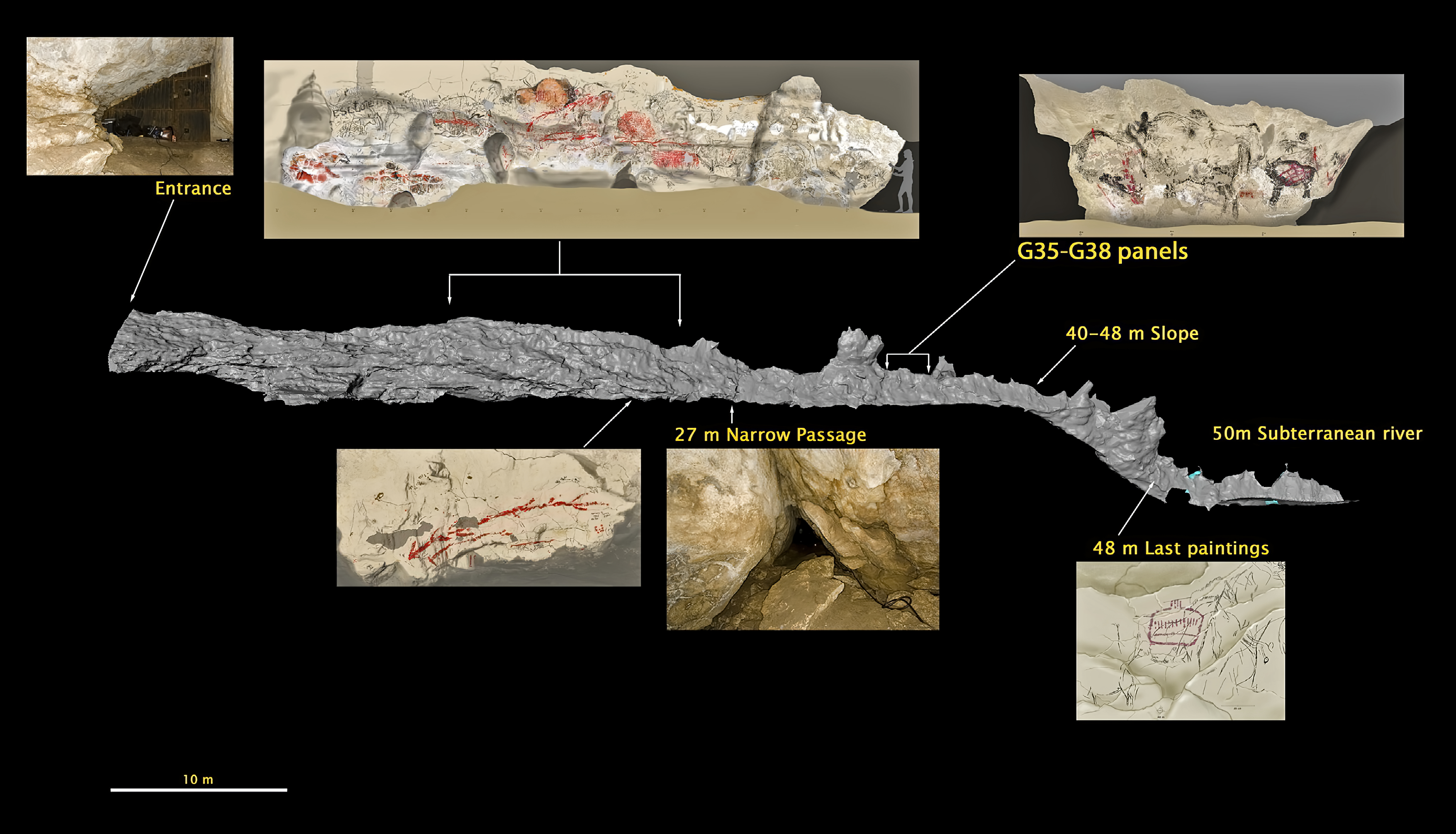
Marsoulas cave. Complete 3D profile of the cave from the entrance to the end. The panels G35–G38 are presented as examples of the methodological protocol.
(doc. G.Tosello/C·Fritz).
Photo and text: Fritz et al. (2016)
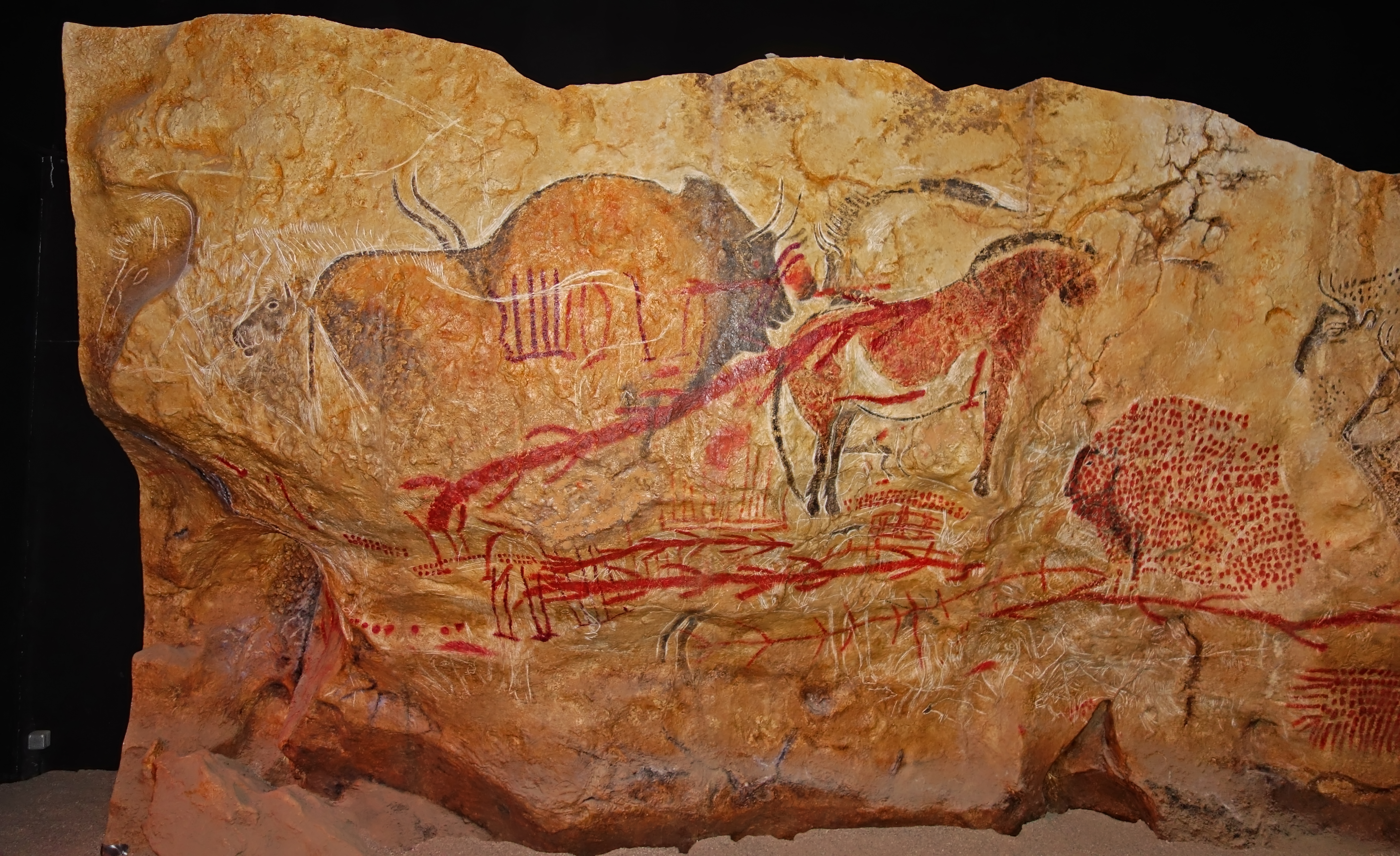
The complex left hand side of the Grand Panel displays a number of important features, including polychrome representations of the bison and horse, a bison made up mostly of red dots, with dark shading to delineate the face and forequarters of the bison, engravings and monochrome representations of horses, isolated lines of large red dots, enigmatic signs, a quasi-rectangular red tectiform, and a series of lines and arrows that might represent vegetable forms, or be meant to represent something quite different.
Photo: Ralph Frenken 2019
Text: Don Hitchcock
Source: Le Parc de la Préhistoire de Tarascon-sur-Ariège

The right hand side of the Grand Panel is dominated by two bison, which have been completed using both painting and etching. The foremost bison is exquisitely detailed, while the bison at the rear has had a great deal of attention given to the head and horns, while the body is indicated by black dots only.
This dot effect was also used for the iconic bison on the left, where red dots were used for most of the figure. An alternately organised vegetable shape dominates the bottom of this part of the panel, with another bison, red dots and lines, and etched animals out of frame in this image.
Photo: Ralph Frenken 2019
Text: Don Hitchcock
Source: Le Parc de la Préhistoire de Tarascon-sur-Ariège
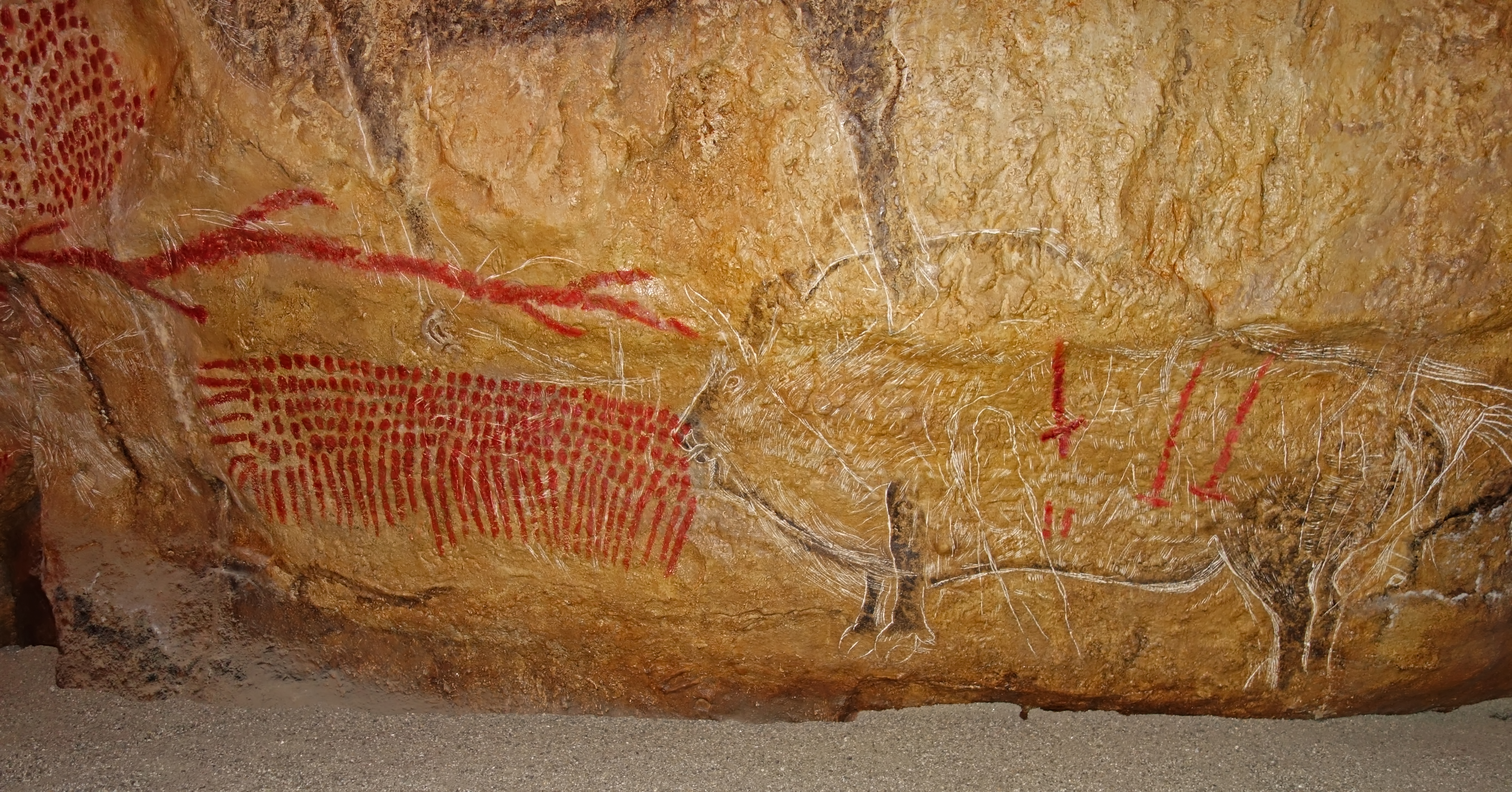
This lower right section displays red dots and lines, a red plant-like figure, with alternate branches, and a well realised portrait of a bison in black, with the piece given extra dimension by scratching through the patina on the rock, by a master artist.
Photo: Ralph Frenken 2019
Text: Don Hitchcock
Source: Le Parc de la Préhistoire de Tarascon-sur-Ariège
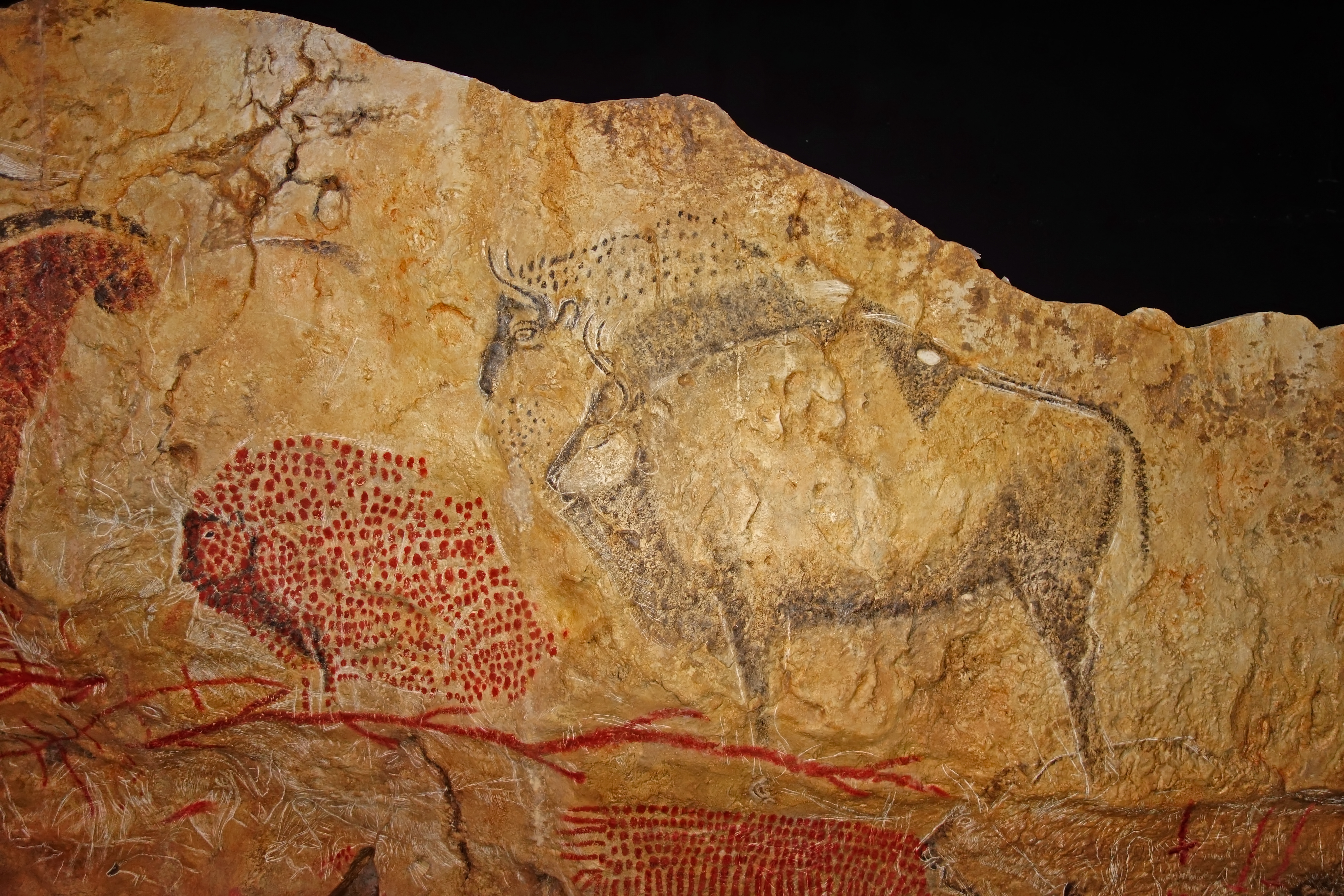
This image is focused on the ‘red dotted’ bison, an iconic image of Marsoulas. It has been given life by the addition of a well constructed eye (which was not an addition by the restorer, since it appears on the original artwork), and engraving into the patina of the rock surface. The hindquarters are only suggested, in marked contrast to the larger, darker bison above it. The ‘red dotted’ bison may well have had some ritualistic importance.
Photo: Ralph Frenken 2019
Text: Don Hitchcock
Source: Le Parc de la Préhistoire de Tarascon-sur-Ariège

This is a very complex part of the panel, and repays careful study of the full size version, obtained as always by clicking on the small thumbnail shown here.
There are many animals, including a large engraved reindeer with the back legs painted in a dark colour, two bison engraved in the surface patina of the rock, what appears to be a small engraved aurochs but without horns, but with the head coloured in, an engraved fox head, as well as a red tectiform, together with painted lines with leaf-like off shoots, one of which is more like a symbol only, since the cross lines are straight, with some at an angle, and some at ninety degrees to the line.
Photo: Ralph Frenken 2019
Text: Don Hitchcock
Source: Le Parc de la Préhistoire de Tarascon-sur-Ariège

Two engraved horse heads can be made out in this section of the panel, with three stiff manes. One of the horse heads has been infilled with a dark colour.
Photo: Ralph Frenken 2019
Text: Don Hitchcock
Source: Le Parc de la Préhistoire de Tarascon-sur-Ariège

The large polychrome bison has its tail and dorsal line outlined in black, with the head and neck completed in brown and black. It is overlain by various linear symbols in red, as well as the ubiquitous thick red meandering line which is so much a feature of this panel, with paired red ‘leaves’ in this instance at regular intervals.
To the left, and behind, is the dorsal line, head, horns, and mane of another bison, completed in black.
On the right in this image is a horse in red, brown and black, and shown with what is apparently meant to be a white abdomen. It is also overlain by red symbols.
Photo: Ralph Frenken 2019
Text: Don Hitchcock
Source: Le Parc de la Préhistoire de Tarascon-sur-Ariège
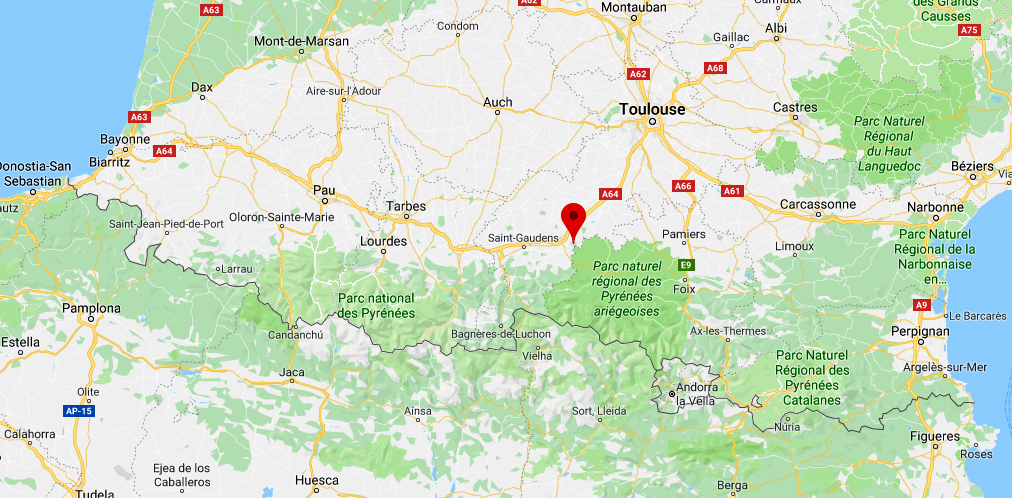
Marsoulas is in the south of France, near the Parc naturel régional des Pyrénées ariégeoises
Photo: Google Maps
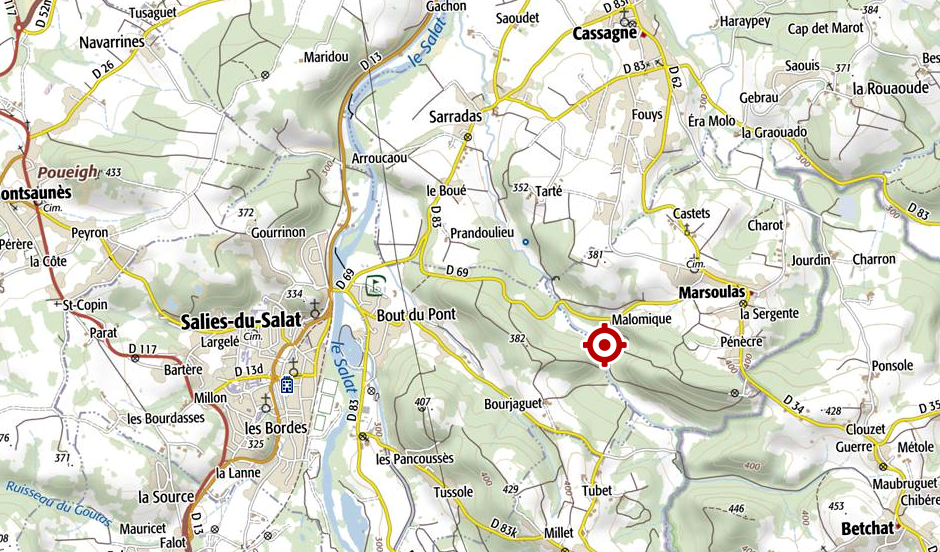
Location of Marsoulas.
Photo: https://www.france-voyage.com/cities-towns/marsoulas-10329/cave-marsoulas-20320.htm
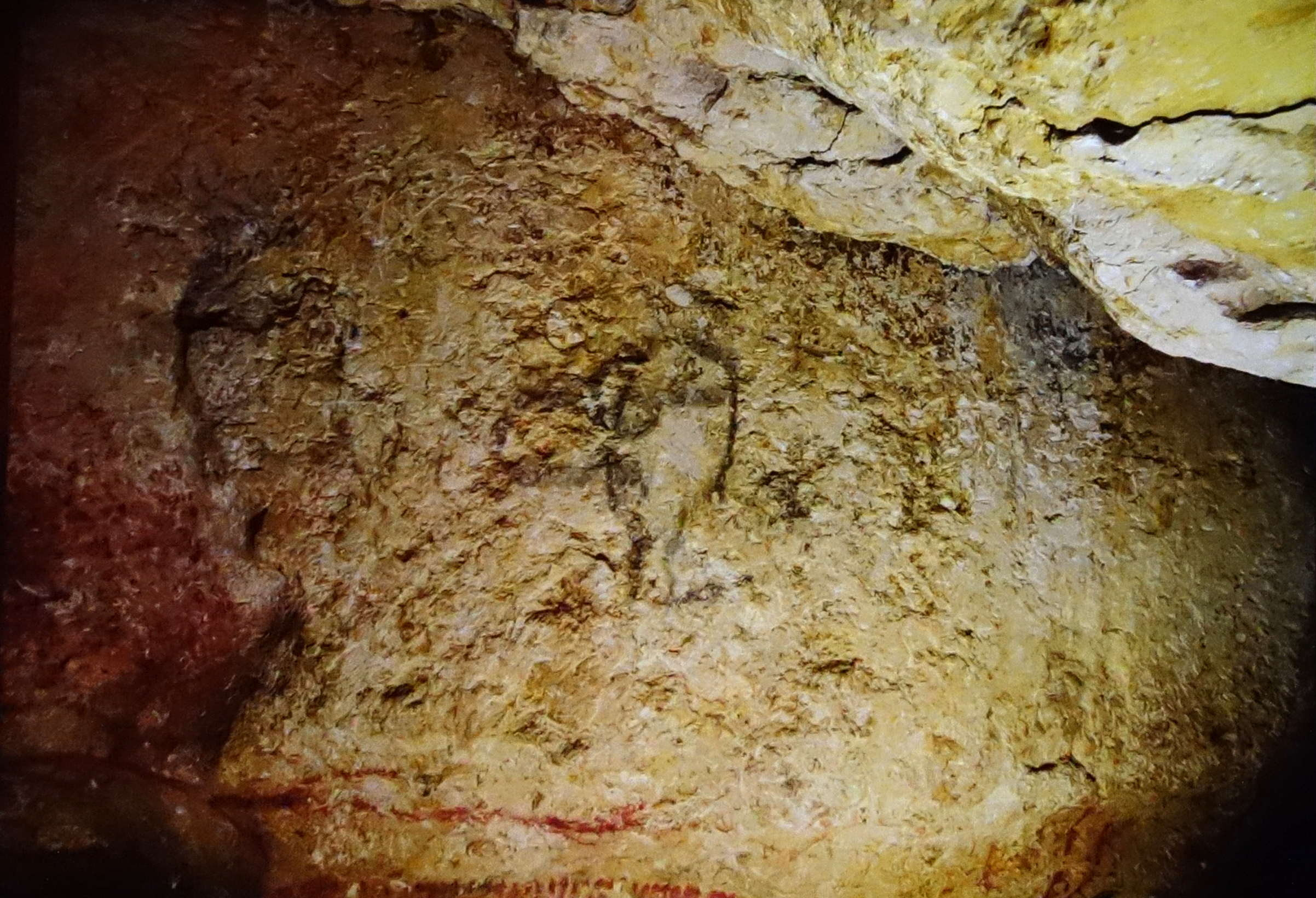
This shows the huge problems faced by those curators and artists who wish to recreate the former glory of the paintings. The painting has been defaced with graffiti and time, and is barely visible as seen in this photograph of the original within the cave itself.
Photo: Le Parc de la Préhistoire de Tarascon-sur-Ariège
Rephotography: Ralph Frenken 2019
Text: Don Hitchcock
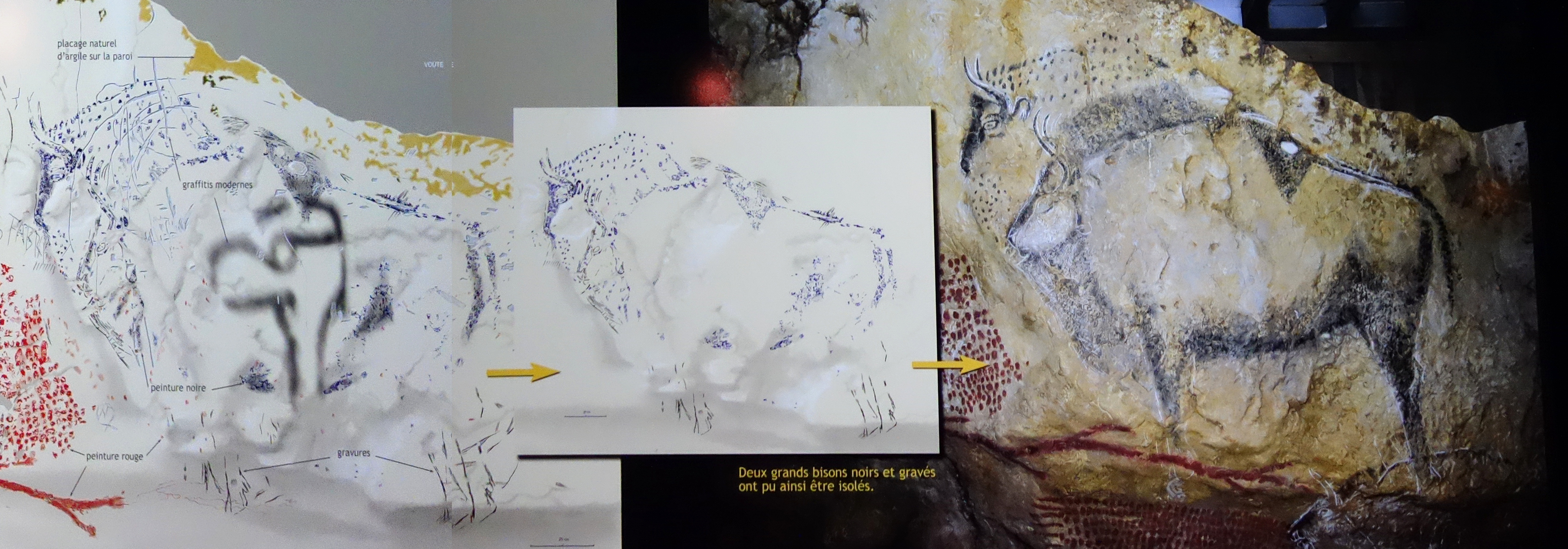
By careful and rigorous examination of the large scale photographs, the restorers are able to first tease out the original form of the paintings, and then with great skill and attention to detail and wonderful technique, the paintings can be restored.
Photo: Le Parc de la Préhistoire de Tarascon-sur-Ariège
Rephotography: Ralph Frenken 2019
Text: Don Hitchcock
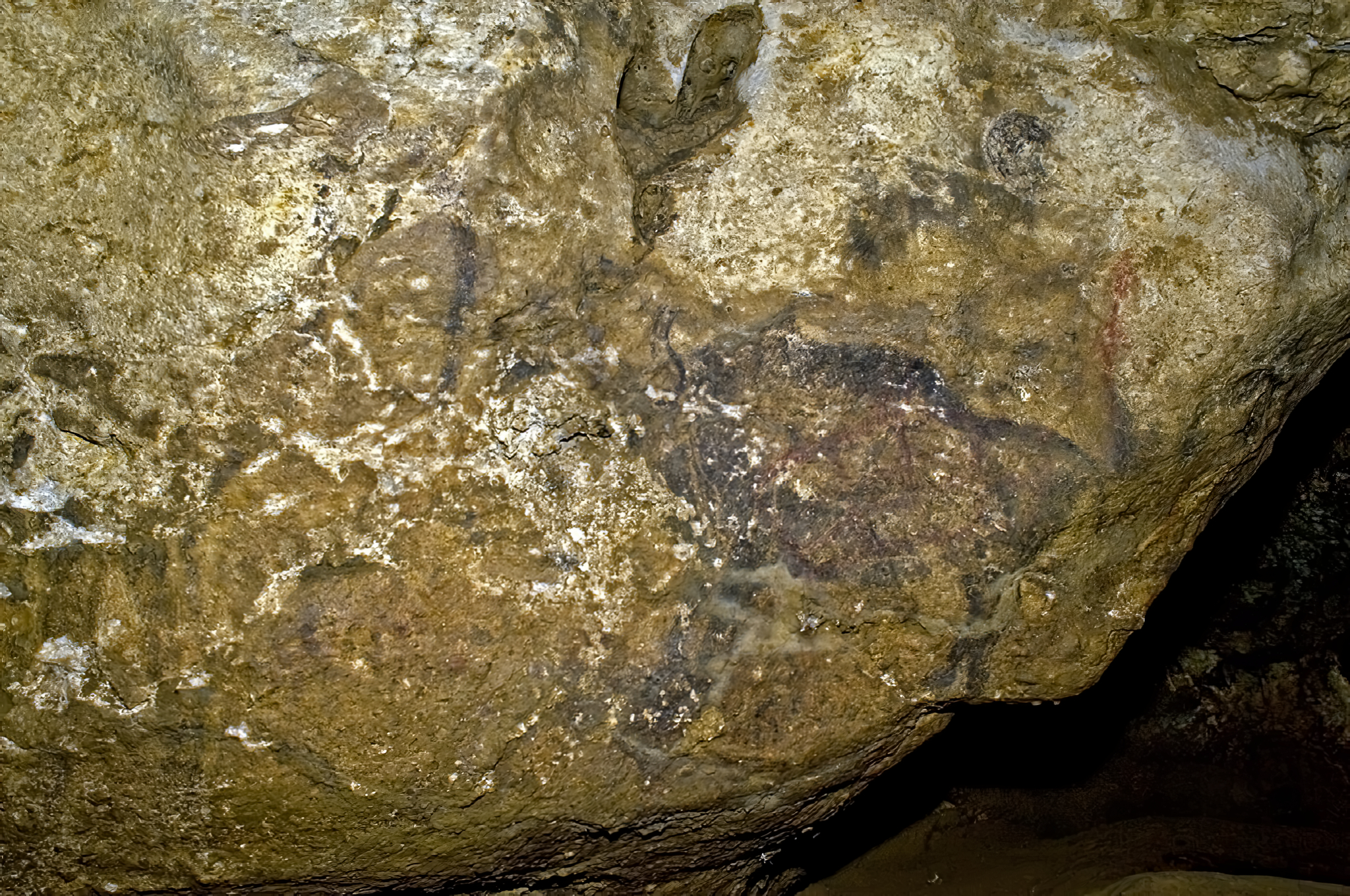
Panel of paintings and engravings on the left wall, between 37 and 38 m from the entrance. In addition to the black bison on the right, once can discern vestiges of red pigment belonging to geometric signs.
Photo and text: image C. Fritz, Fritz et al. (2016)
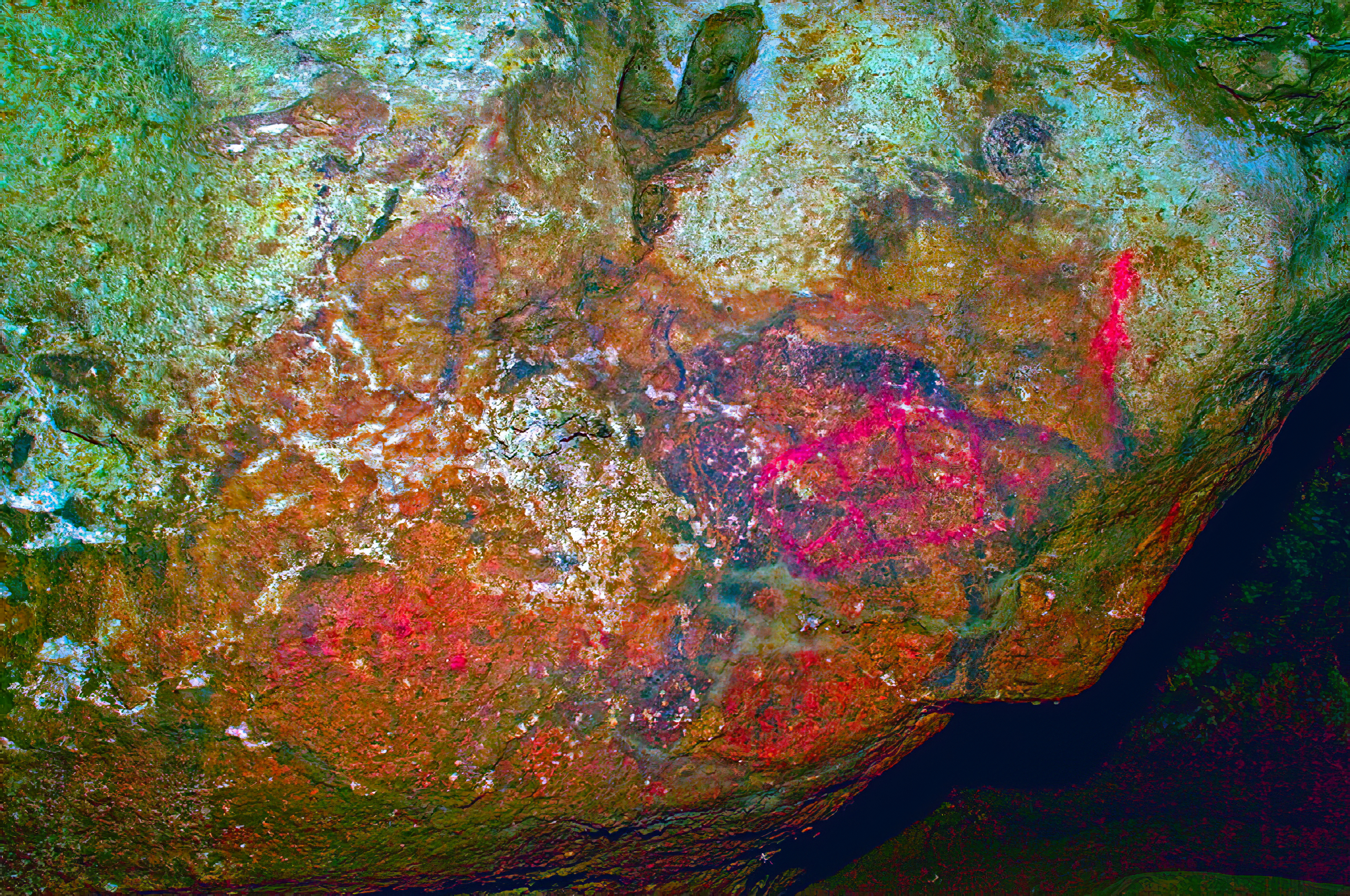
DStretch treatment (a false colour technique) of the preceding photo renders visible an additional red tectiform sign on the body of the black bison. This type of sign is very rare in the region of the Pyrenees.
Photo and text: image C. Fritz, Fritz et al. (2016)
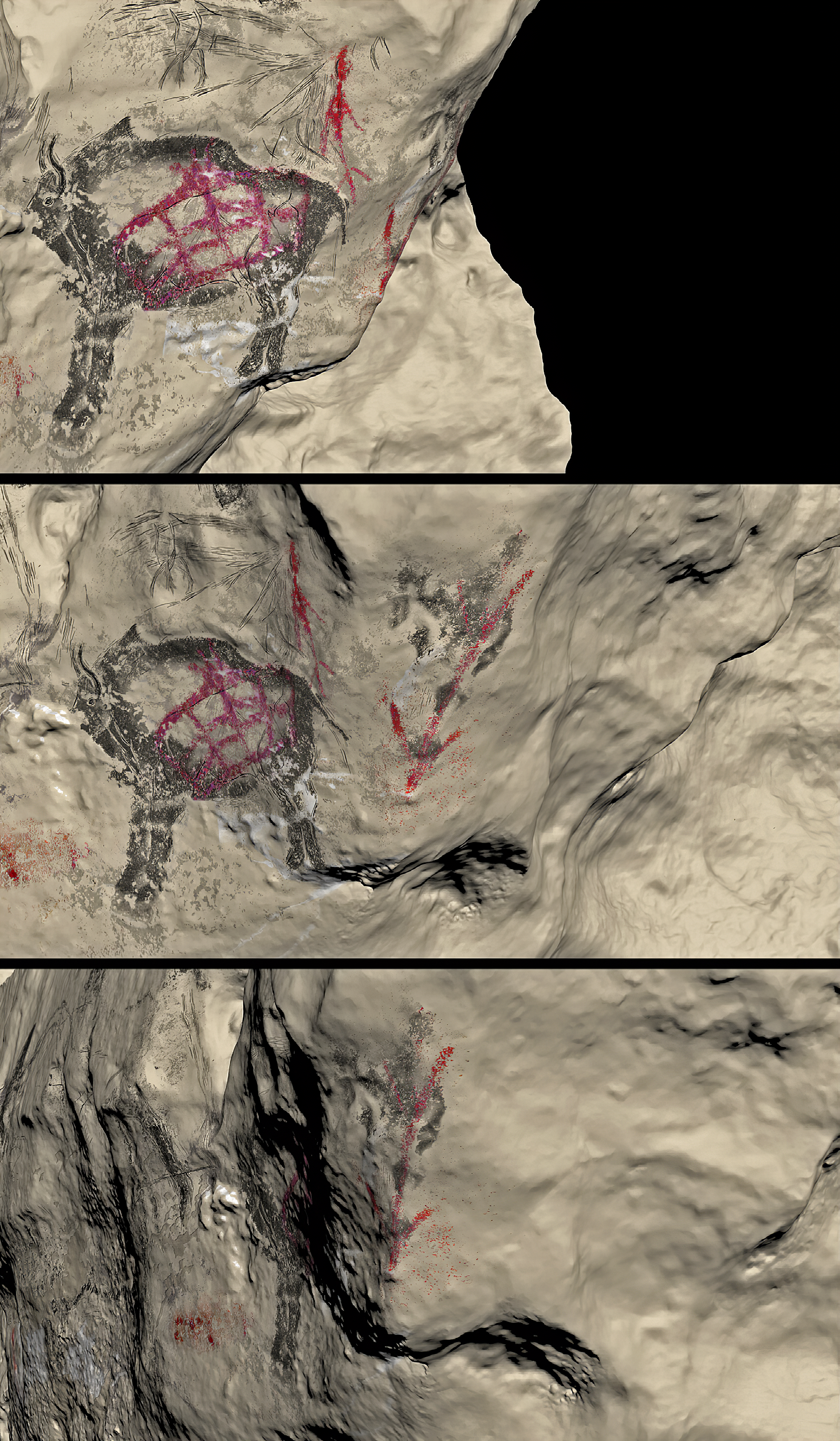
The red tectiform sign on the bison above has been made visible in this drawing, and these renderings show how the edge of a protrusion on the cavewall was used for the profile of an animal face and a red vertical sign.
( note that these rectangular tectiform signs are common in Spanish painted caves – Don )
Photo and text: image Fritz/Willis/Tosello, Fritz et al. (2016)

Three renderings of the same bison from different angles. Note that the natural form of the rock surface that forms the bison’s brow is more visible in the bottom image, due to a specific configuration of the lighting (image Fritz/Willis/Tosello).
Photo and text: image Fritz/Willis/Tosello, Fritz et al. (2016)
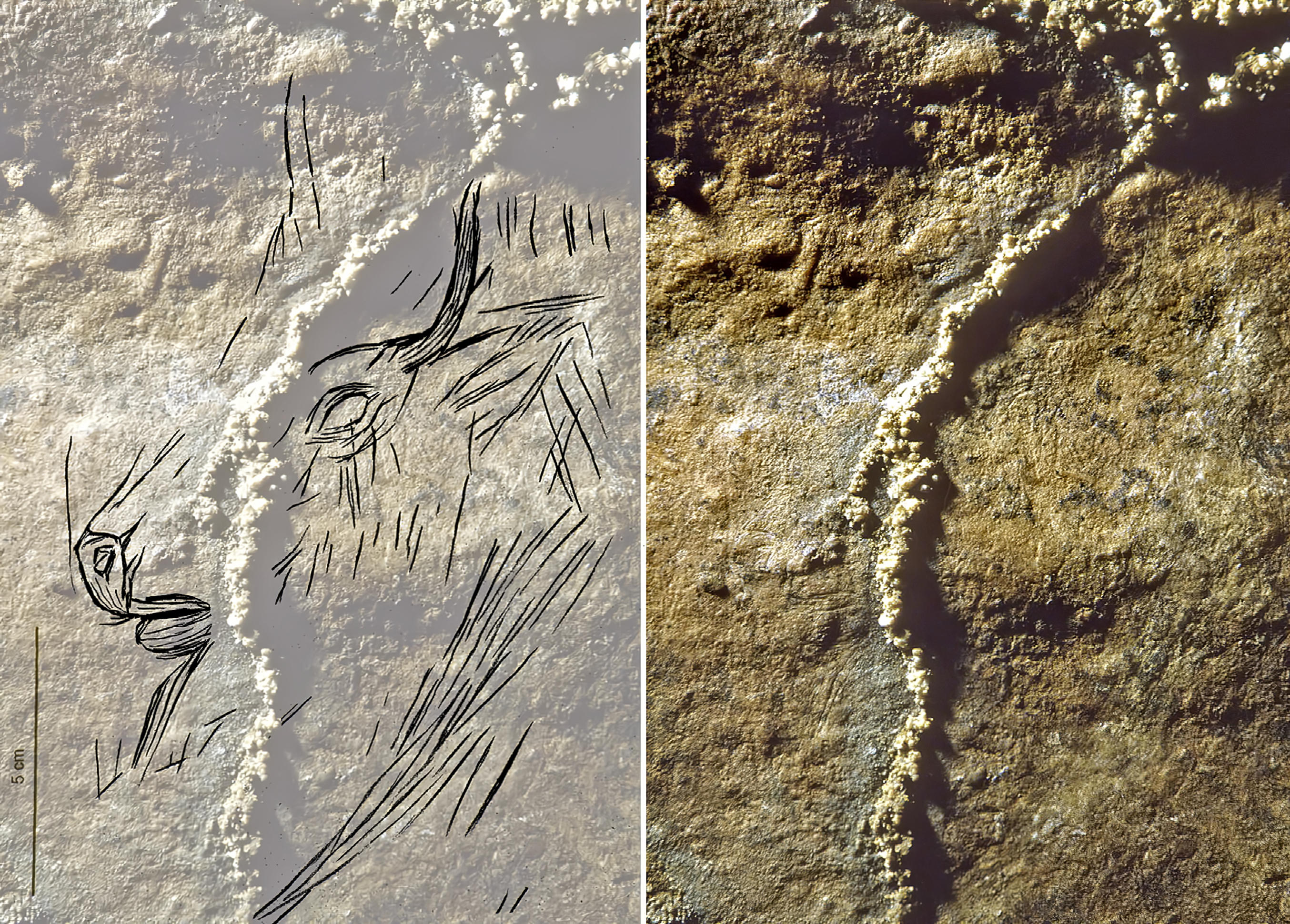
One of the primary difficulties of interpretation stems from the abundance of surfaces covered with fine, overlapping engravings like the miniature bison head shown here.
Photo and text: C. Fritz et G. Tosello, Fritz et al. (2016)
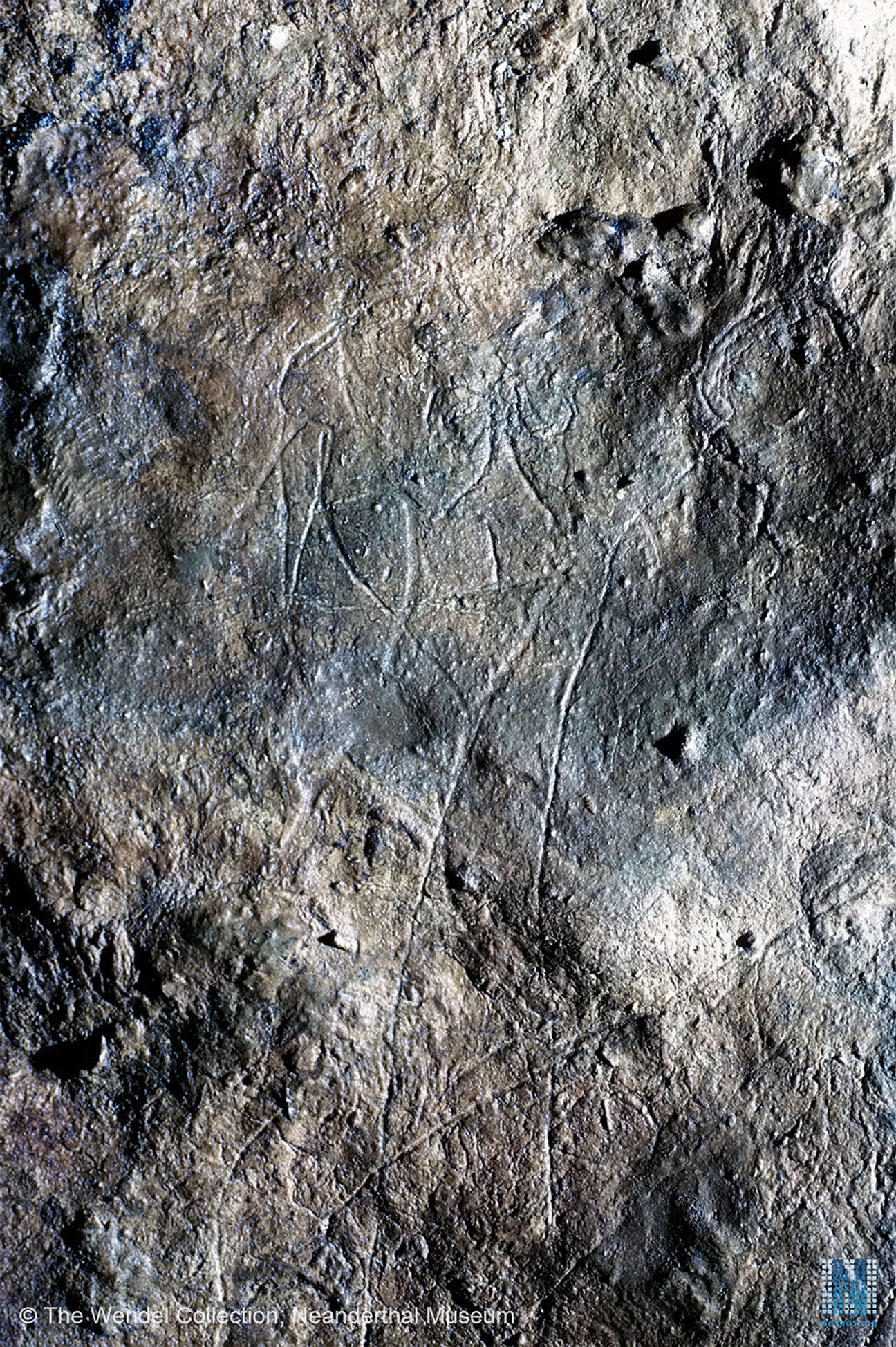
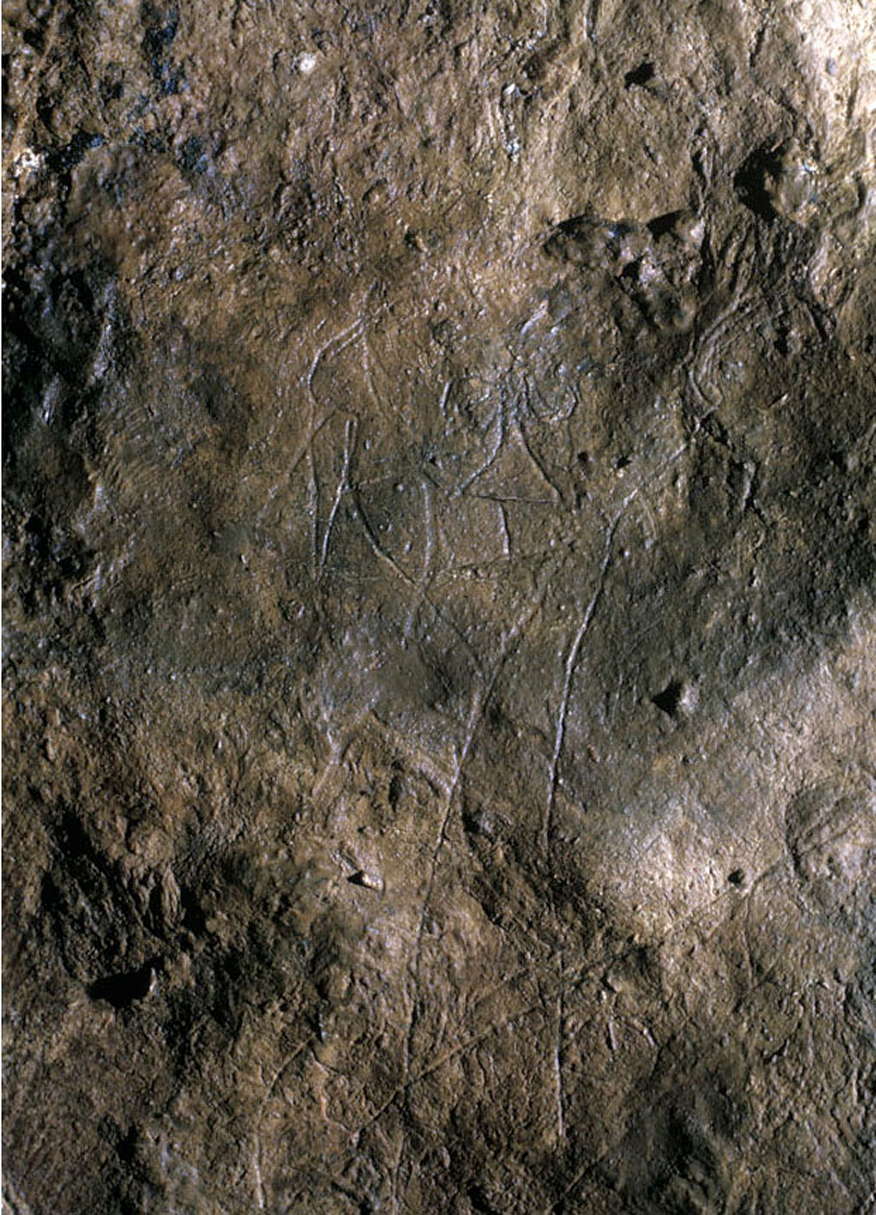
Anthropomorphic engraving at Marsoulas.
Original engraving on the wall.
(left)
Marsoulas Galerie ornée : Photo Heinrich Wendel (© The Wendel Collection, Neanderthal Museum)
Photo: Wendel Collection: Marsoulas
Source: Donation
Copyright Holder(s): © [PublicAdministrativeSpace: Neanderthal Museum]
Website: https://www.nespos.org/pages/viewpage.action?pageId=50168397
(right)
Engraving of the front view of a human head, 40 metres from the entrance. The image is abstract: round eyes, broad nose and triangular, split lip.
Photo: © C. Fritz
Source: http://www.creap.fr/Marsoulas.htm
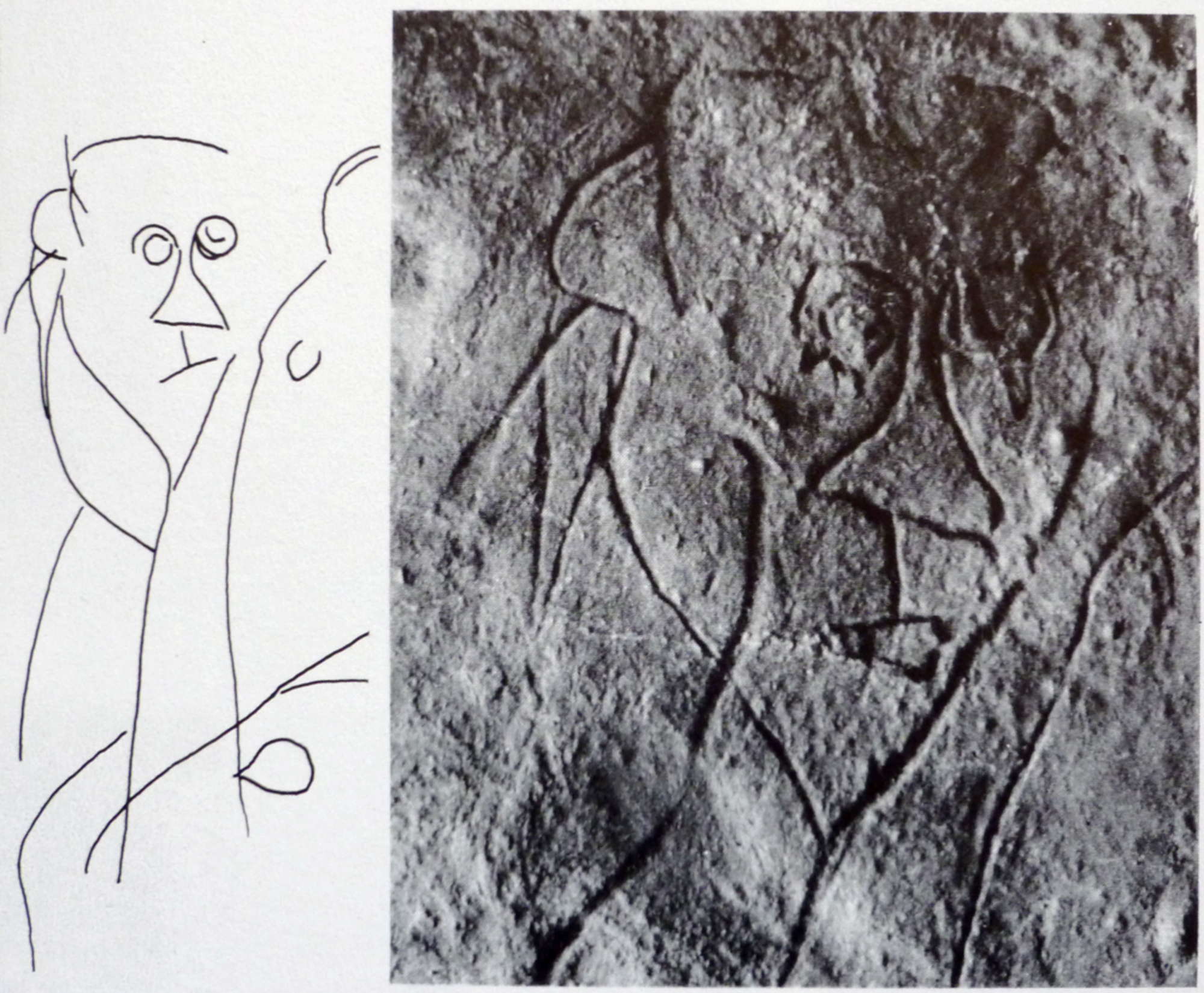
Anthropomorphic engraving, Marsoulas, the same as the one in the images above.
Photo: Leroi-Gourhan (1973)

In this version of the image, we can see what appears to be a long neck, not obvious in the other photos.
Photo: Leroi-Gourhan (1973)
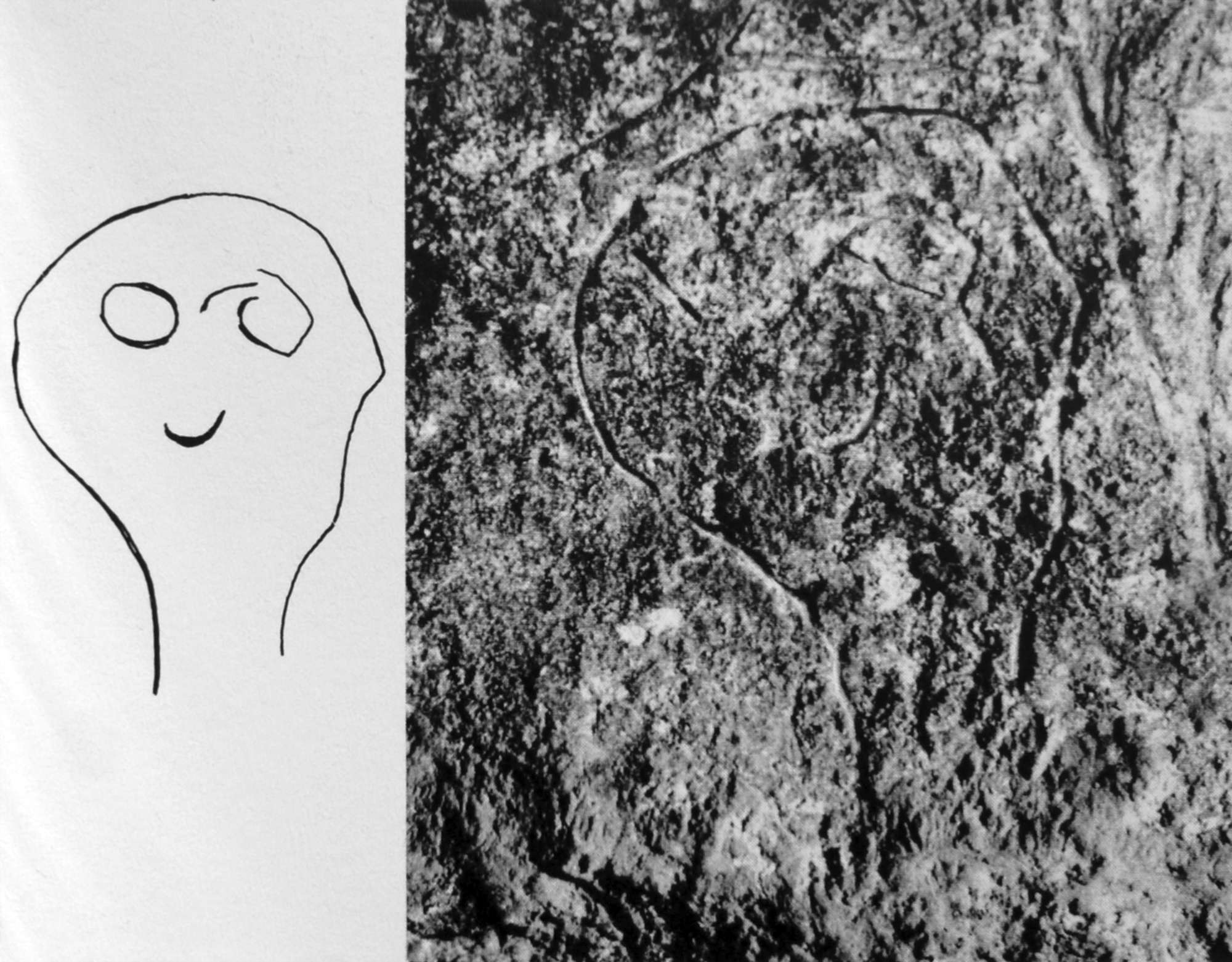
A second anthropomorphic engraving, Marsoulas. Frontal view of a face.
Photo: Leroi-Gourhan (1973)
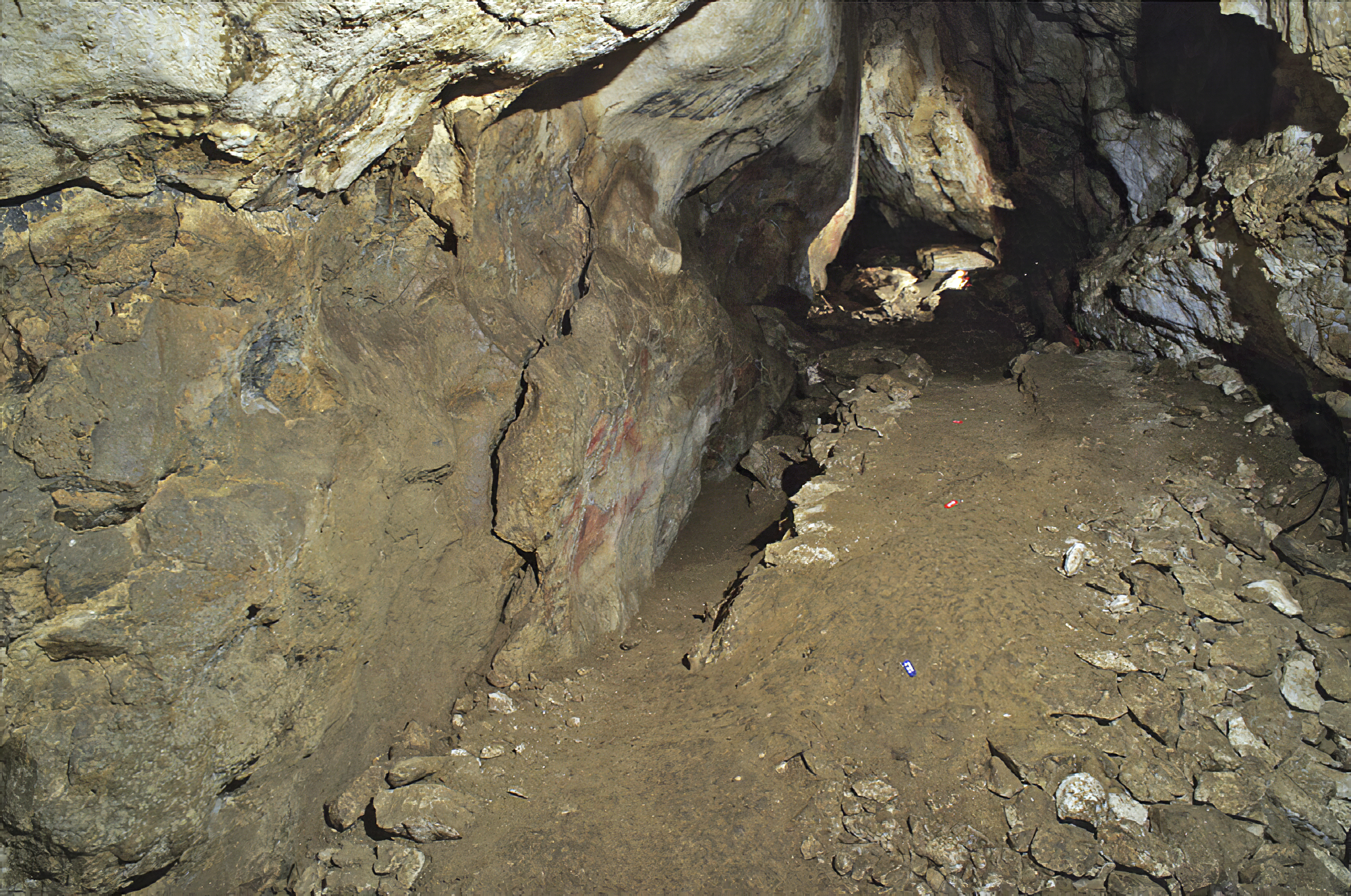
From the entrance to the back of the cave, the gallery is straight in plan and triangular in section. The trench from early excavations is visible at left.
Photo and text: image C. Fritz, Fritz et al. (2016)
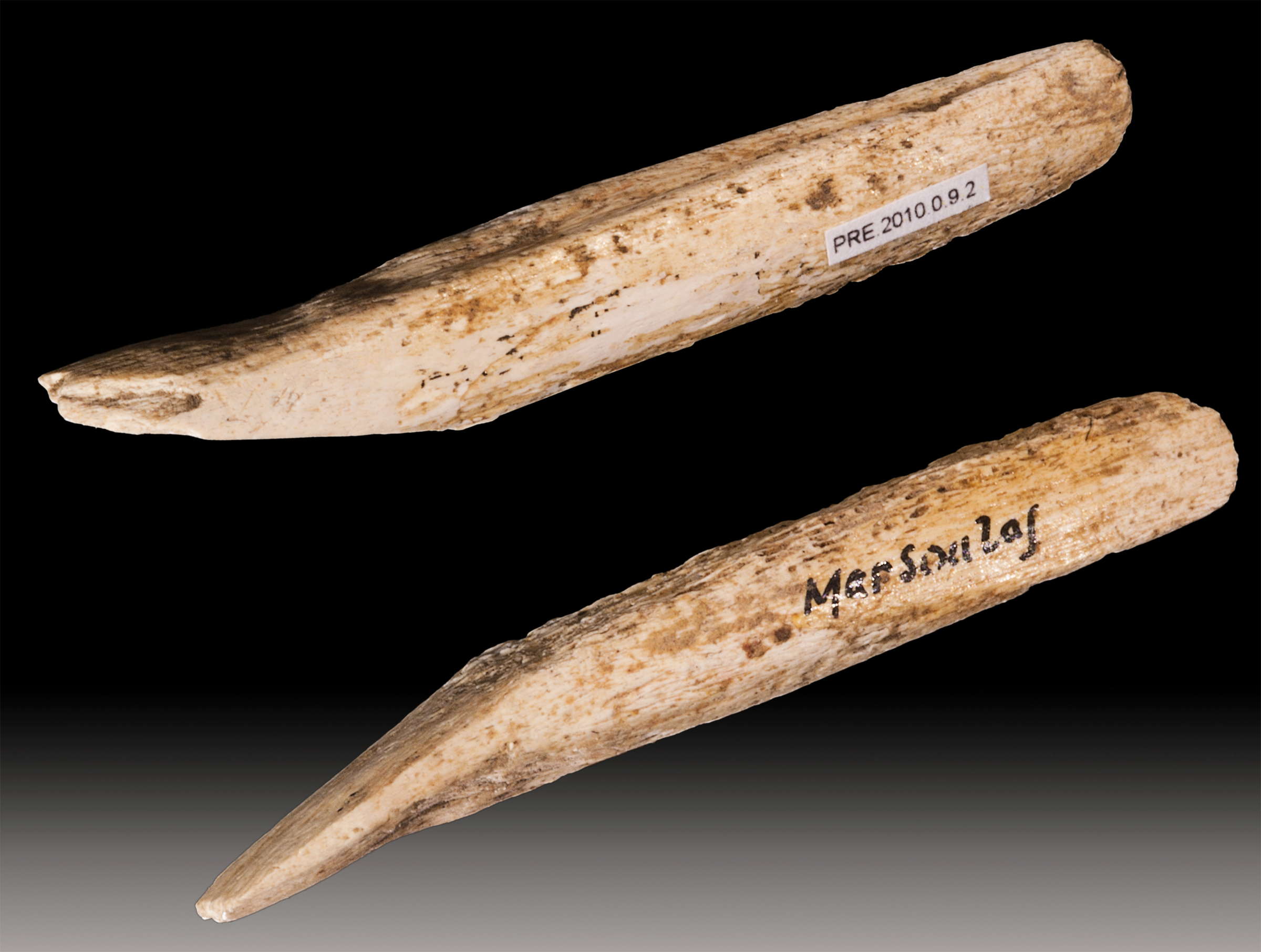
Tip of spear, original, Marsoulas.
The spear point is of the type known as ‘Lussac-Angles’
Date: between 15 000 BP and 12 000 BP, Middle Magdalenian (III and IV)
Dimensions: 52 mm× 11 mm × 7mm – 1.9g
Material: Reindeer antler
Location: Muséum de Toulouse, MHNT.PRE.2010.0.9.2
From the excavations by Félix Régnault.
Photo: Didier Descouens , April 8, 2011
Date: 08.04.2011
Permission: Creative Commons Attribution – Share Alike 3.0
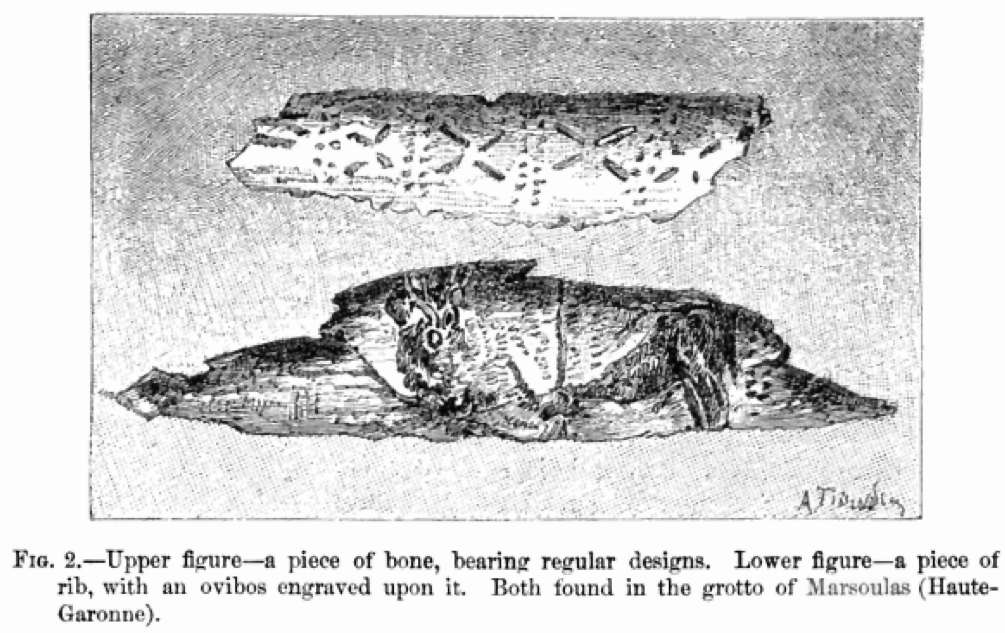
Popular Science May 1892
Vol. 41, No. 1 – 150 pages – Magazine
The cave of Marsoulas, in the Haute-Garonne, France, was inhabited by man several times during the palaeolithic age. The relics of what is designated as the second occupation are interesting on account of the specimens of artistic taste they afford. Besides the usual instruments of silex, arrow-points, and the like, were found some peroxide of manganese, which was probably used in tattooing, and engraved designs ; a piece of bone adorned with a regular ornamentation, engravings very much like those found in the valley of La Vézere ; and a piece of rib having an ovibos (or musk ox) carved upon it, in which, according to the Marquis de Nadaillac, the design is treated with exact knowledge of anatomical forms, the relief is brought out by shadings, and the drawing is vigorous.
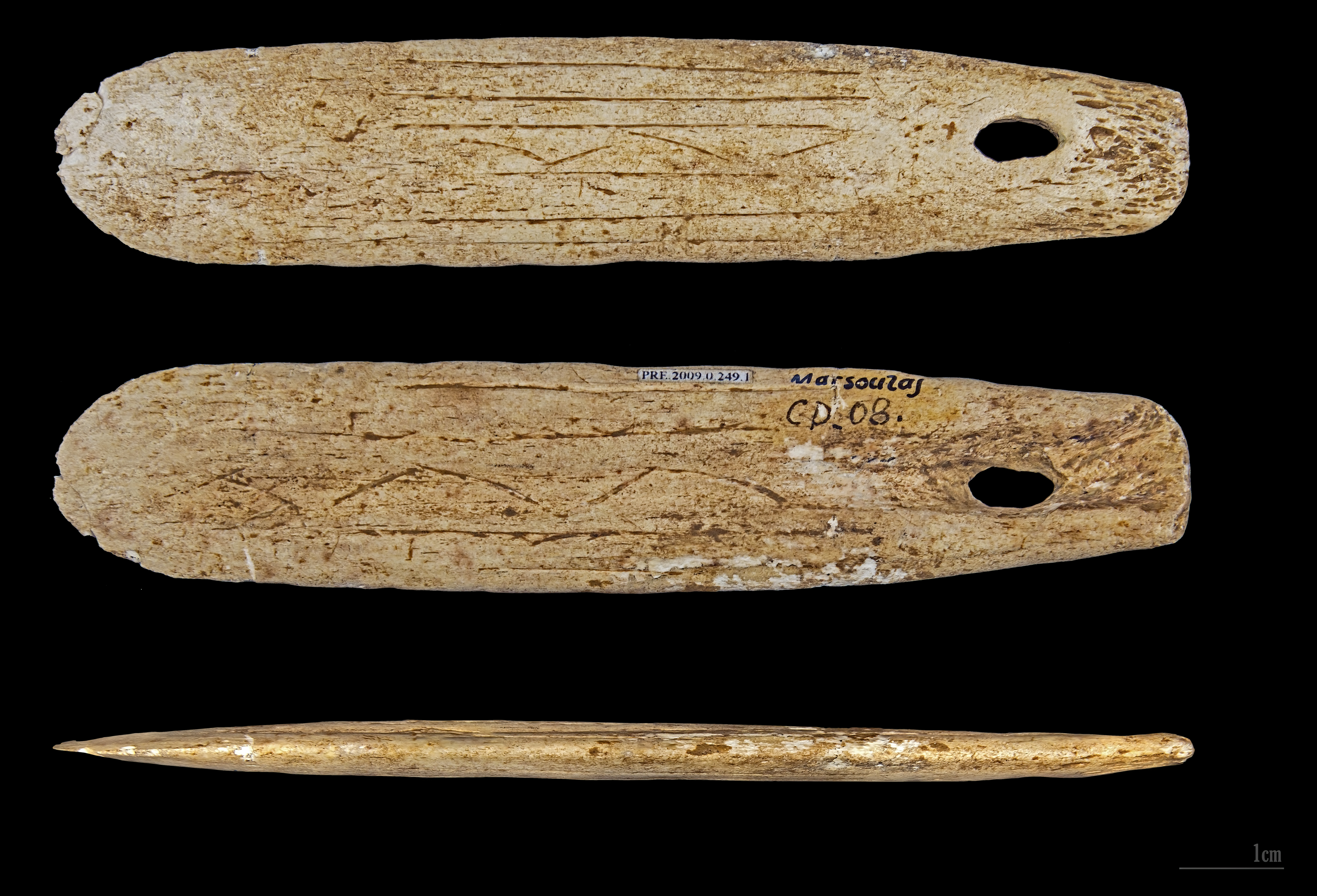
Prehistoric pendant, on a reindeer antler. Excavations from Cau-Durban in 1883.
Age : Magdalenian, 17 000 BP – 10 000 BP
Locality : Marsoulas cave, Marsoulas, Haute-Garonne France.
Catalog: Muséum of Toulouse MHNT.PRE.2009.0.249.1
Photo: Didier Descouens
Permission: Creative Commons Attribution-Share Alike 4.0 International license. It is not permitted to upload this file to Facebook.
Text: Wikipedia
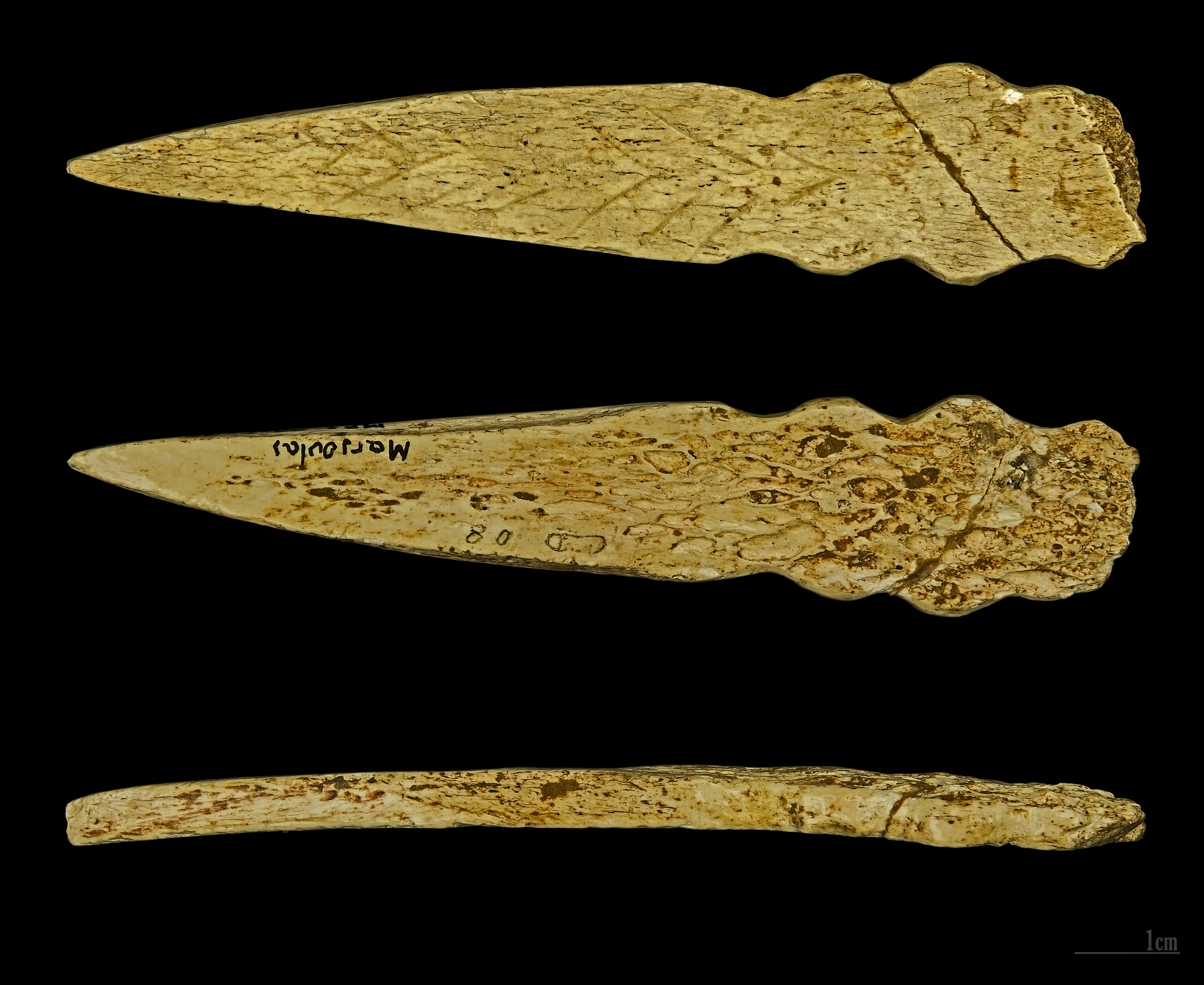
Decorated piece of reindeer bone. Initial excavations Cau-Durban in 1883.
Age : Magdalenian 17 000 BP – 10 000 BP
Locality : Marsoulas cave, Marsoulas, Haute-Garonne France.
Catalog: Muséum of Toulouse MHNT.PRE.2009.0.249.1
Photo: Didier Descouens
Permission: Creative Commons Attribution-Share Alike 3.0 Unported license. It is not permitted to upload this file to Facebook.
Text: Wikipedia
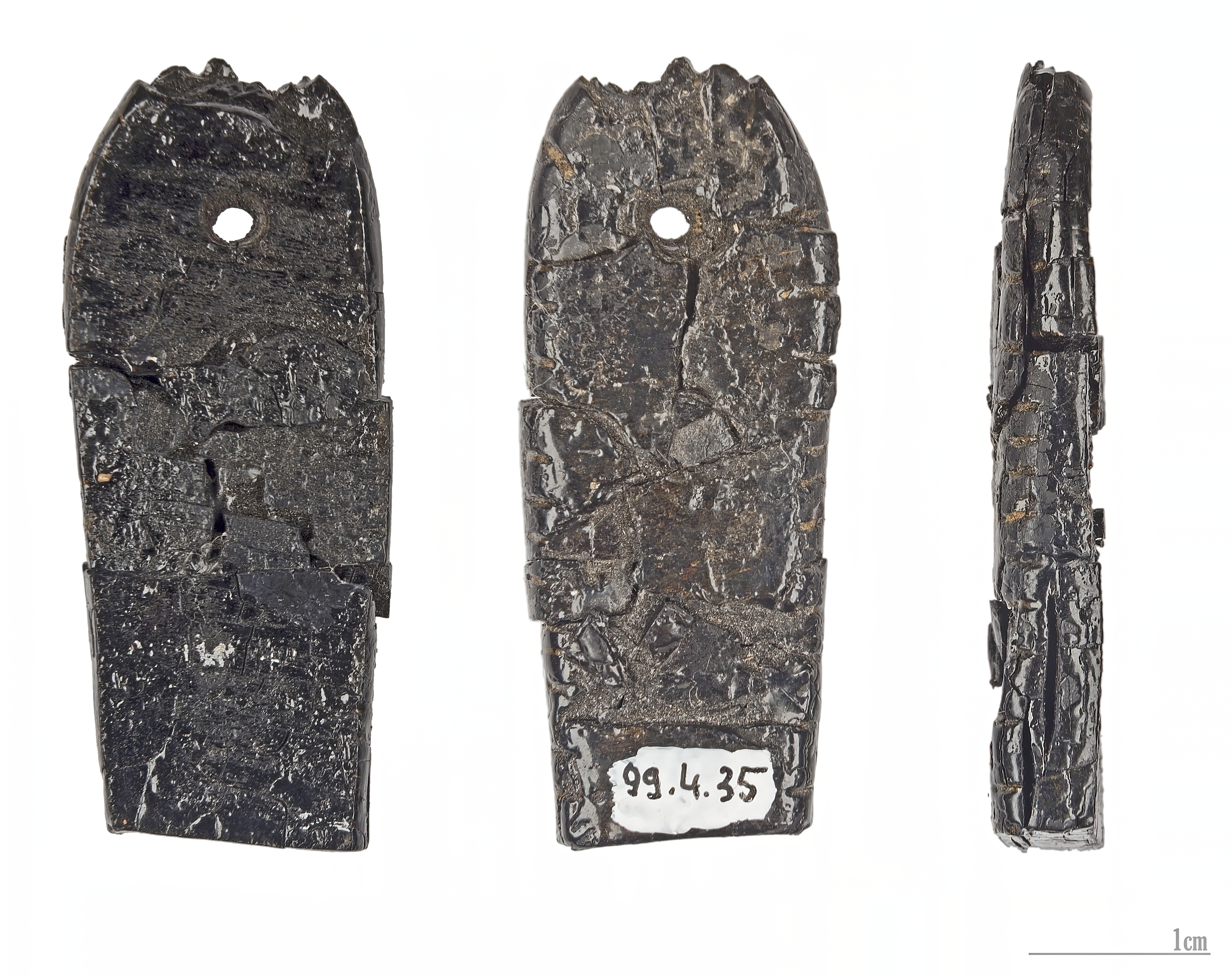
Prehistoric pendant, in lignite. Three views of the same object.
Age : Magdalenian 17 000 BP – 10 000 BP
Locality : Marsoulas cave, Marsoulas, Haute-Garonne France. Catalog: Muséum of Toulouse MHNT.PRE.2012.0.6.95
Photo: Didier Descouens
Permission: Creative Commons Attribution-Share Alike 4.0 International license
Text: Wikipedia
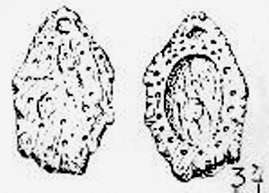
At Marsoulas, there is a carved turtle pendant on a small oval with a carved hole for a string. It is unique because it was the first time that this animal was reported in prehistoric art.
This is one of many objects found during excavations by Abbé Cau-Durban from 1883. However many successive excavations have helped to disperse these objects into various private collections and several museums.
They are usually fragments of animal bones such as rib fragments engraved with a buffalo, pierced teeth, and so on.
Photo, and text adapted and translated from:
http://membres.lycos.fr/jeff31/tortue.jpg
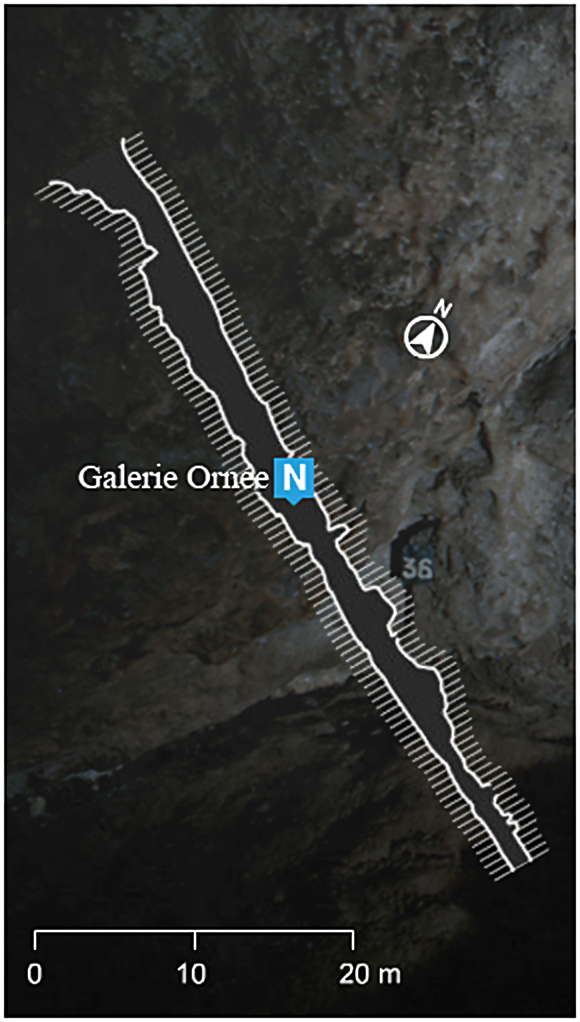
Plan of the decorated part of the Marsoulas cave.
Photo: Wendel Collection: Marsoulas
Source: Donation
Copyright Holder(s): © [PublicAdministrativeSpace: Neanderthal Museum]
Website: https://www.nespos.org/display/PublicNesposSpace/Marsoulas+-+Wendel+collection
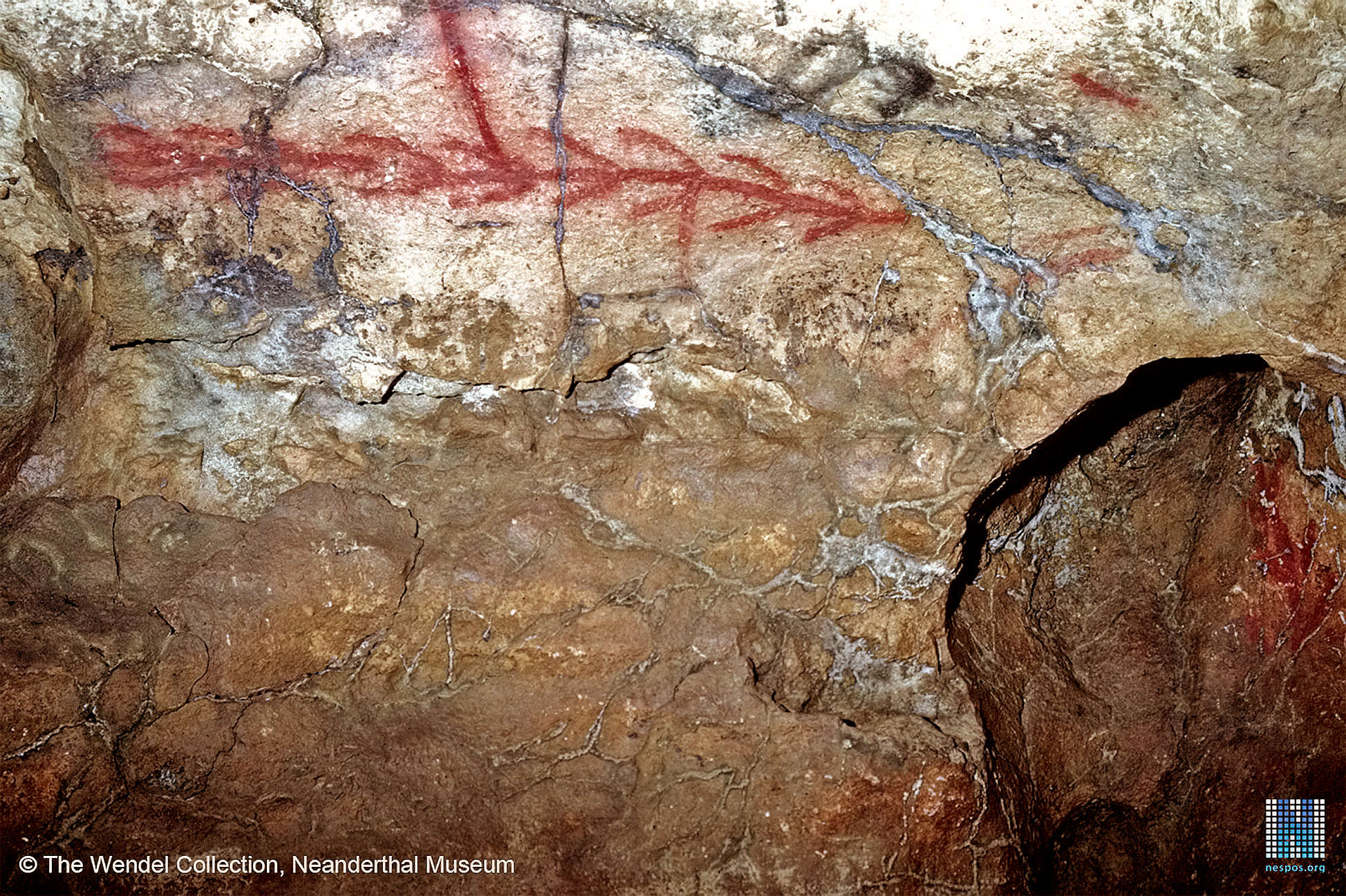
Painting in red of a series of chevrons connected by a line.
Original painting on the wall of Marsoulas.
Marsoulas Galerie ornée : Photo Heinrich Wendel (© The Wendel Collection, Neanderthal Museum)
Photo: Wendel Collection: Marsoulas
Source: Donation
Copyright Holder(s): © [PublicAdministrativeSpace: Neanderthal Museum]
Website: https://www.nespos.org/pages/viewpage.action?pageId=50168397
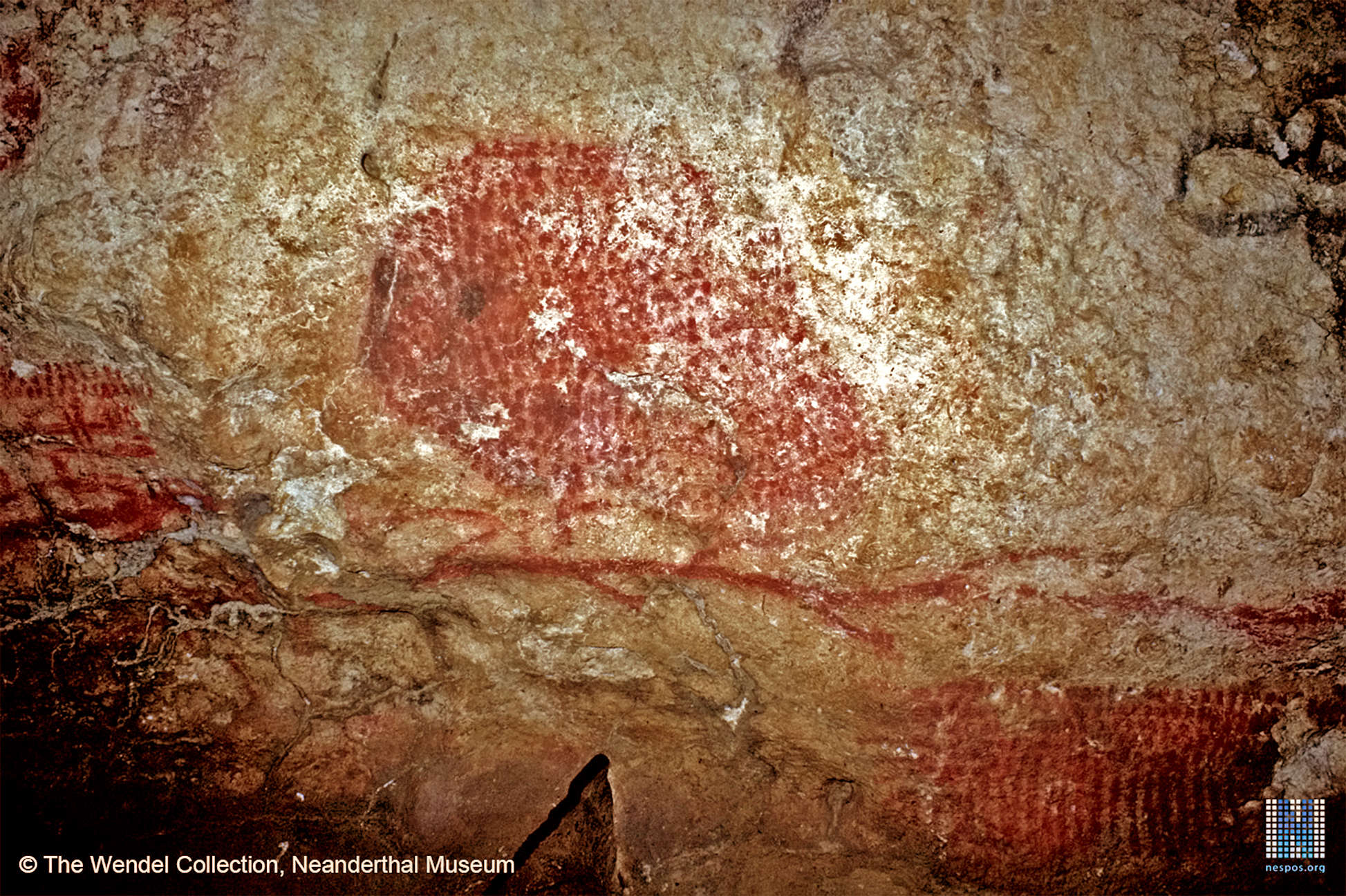

Painting of a bison composed of red ochre dots. Note the red line below it, with branching lines alternately positioned.
Original painting on the wall of Marsoulas.
Marsoulas Galerie ornée : Photo Heinrich Wendel (© The Wendel Collection, Neanderthal Museum)
Photo: Wendel Collection: Marsoulas
Source: Donation
Copyright Holder(s): © [PublicAdministrativeSpace: Neanderthal Museum]
Website: https://www.nespos.org/pages/viewpage.action?pageId=50168397
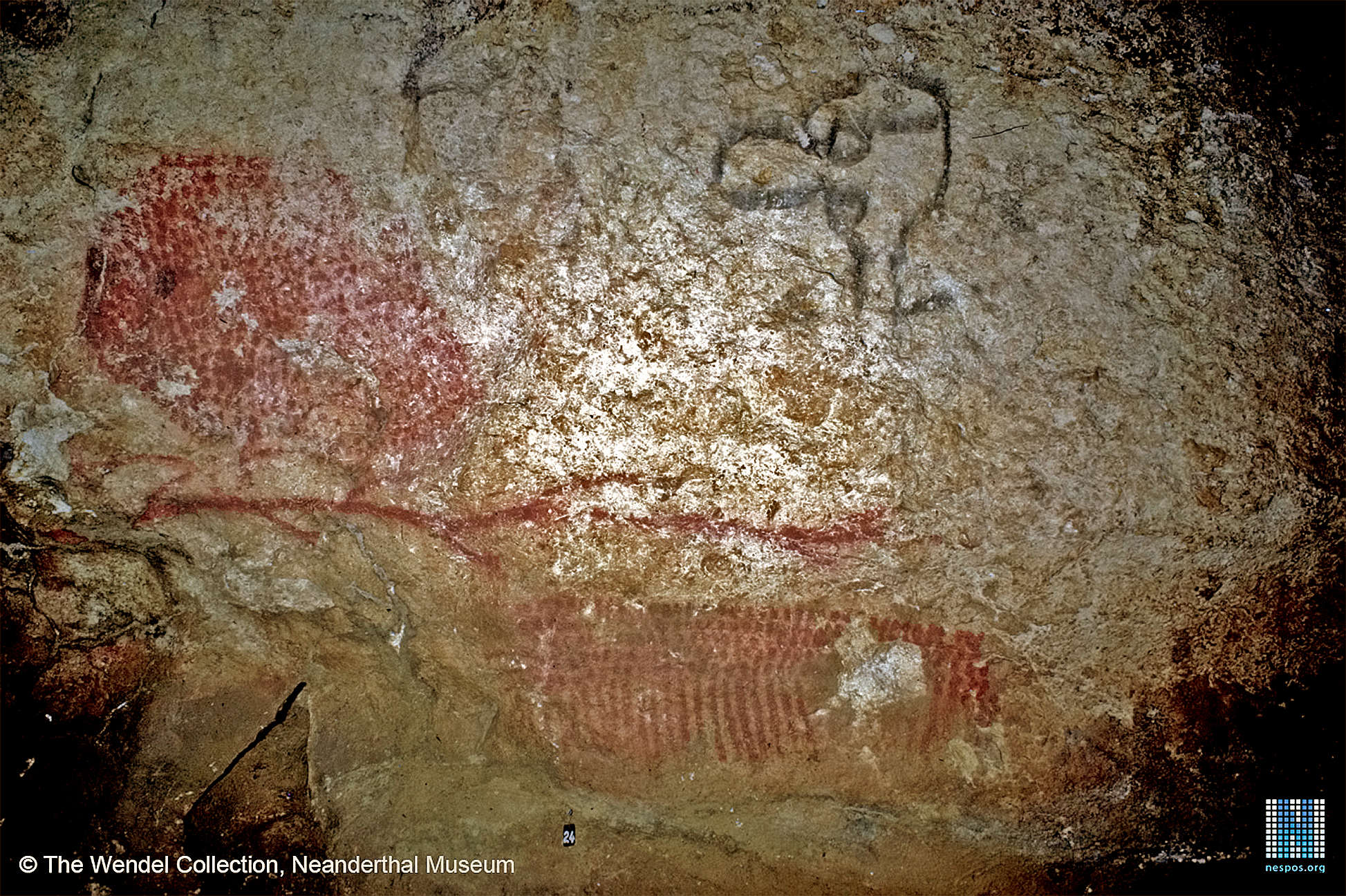
Red bison, line with alternate branches, and an enigmatic sign below of dots and lines.
Modern graffiti in black on the upper right of the image, possibly made using candle soot on the ceiling.
Original painting on the wall of Marsoulas.
Marsoulas Galerie ornée : Photo Heinrich Wendel (© The Wendel Collection, Neanderthal Museum)
Photo: Wendel Collection: Marsoulas
Source: Donation
Copyright Holder(s): © [PublicAdministrativeSpace: Neanderthal Museum]
Website: https://www.nespos.org/pages/viewpage.action?pageId=50168397
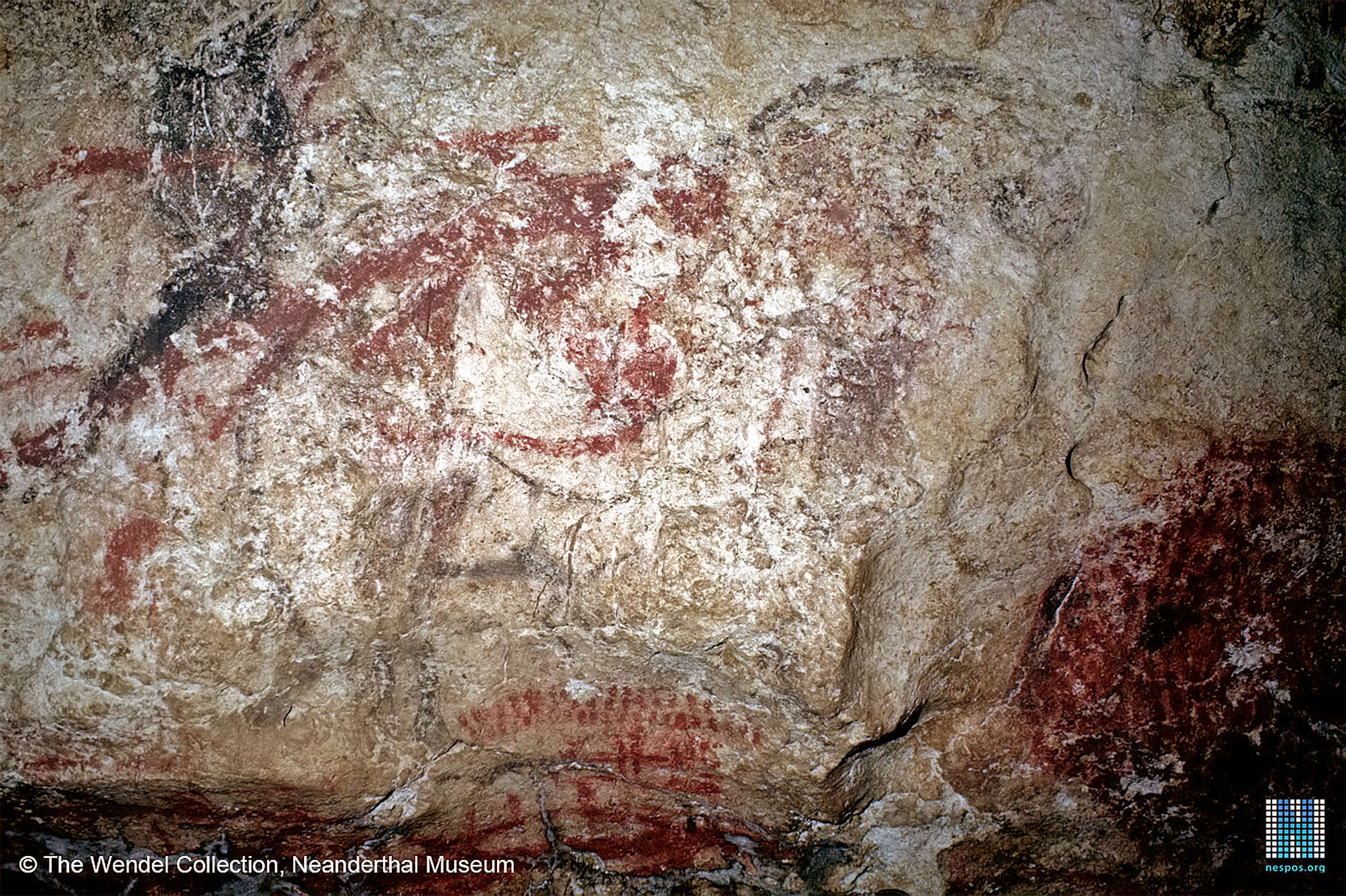
Horse painted in red and black. The mane, head, tail and legs are in black, with most of the body in red.
Original painting on the wall of Marsoulas.
Marsoulas Galerie ornée : Photo Heinrich Wendel (© The Wendel Collection, Neanderthal Museum)
Photo: Wendel Collection: Marsoulas
Source: Donation
Copyright Holder(s): © [PublicAdministrativeSpace: Neanderthal Museum]
Website: https://www.nespos.org/pages/viewpage.action?pageId=50168397
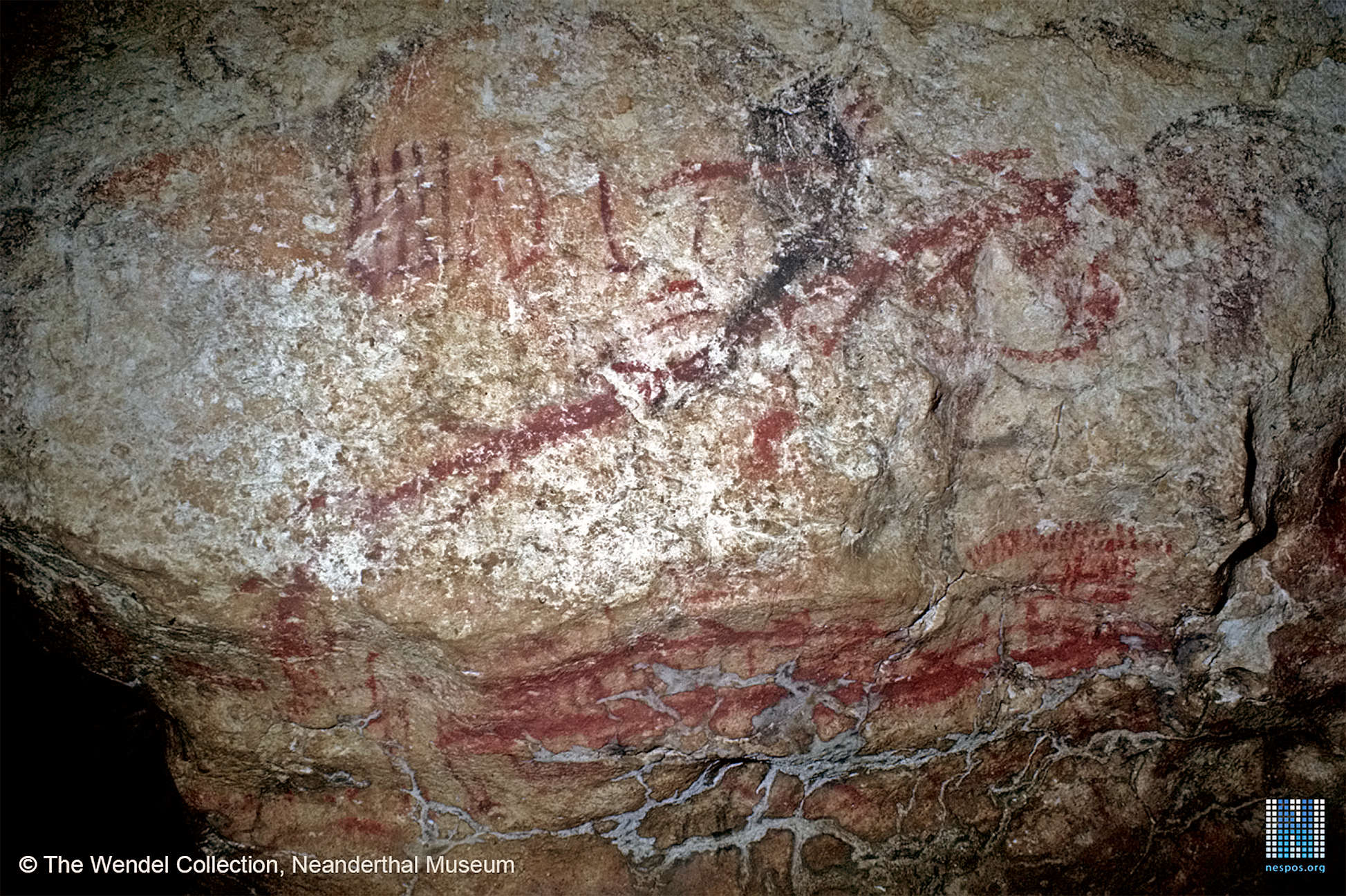
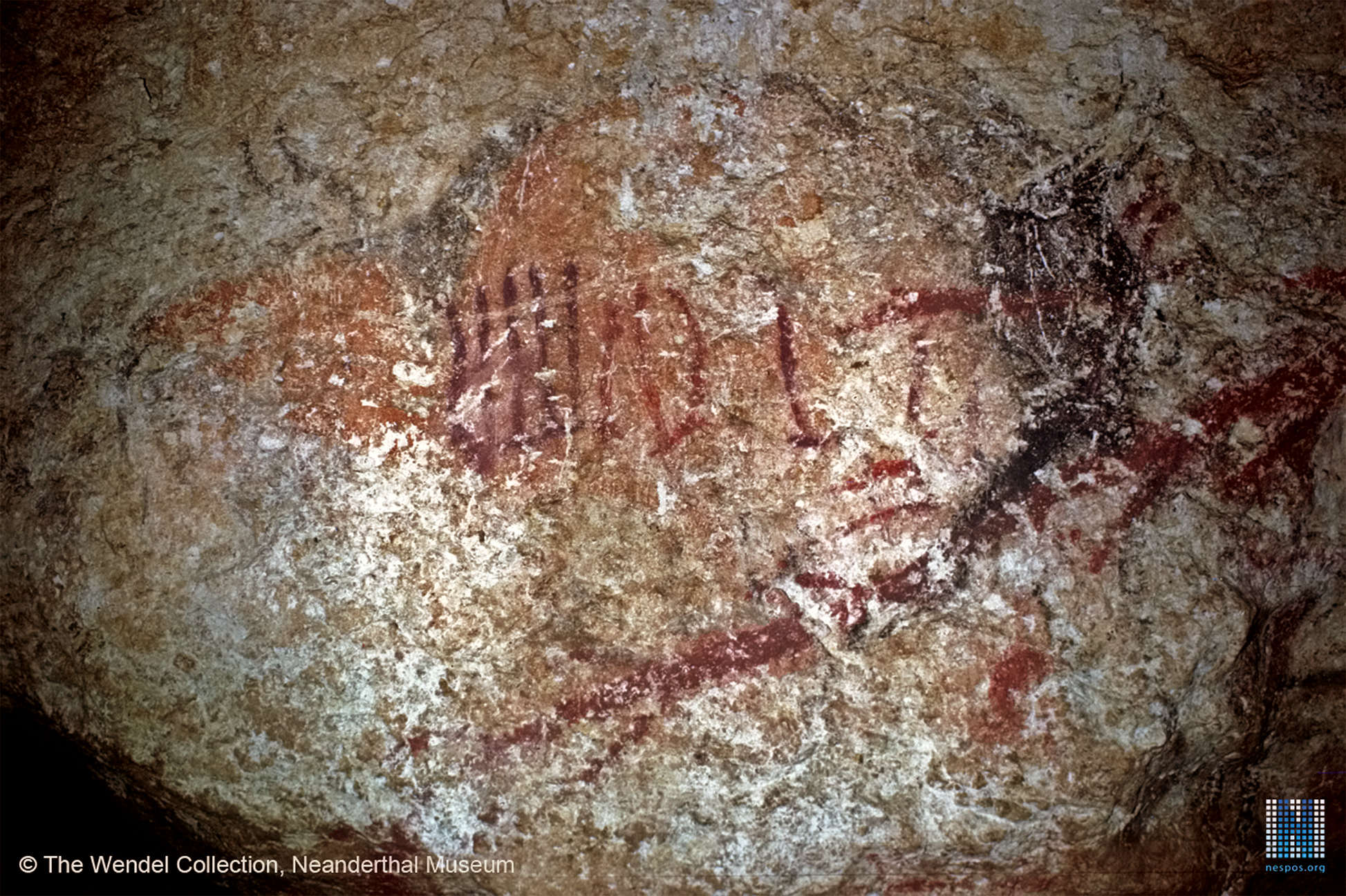
Thick red line in the middle of the image on the left, with two red lines below, and the rear of the horse showing on the right.
Other red lines in a pattern of uncertain meaning may be seen clearly in the right hand image, inside the dull orange image of a bison.
Original painting on the wall of Marsoulas.
Marsoulas Galerie ornée : Photo Heinrich Wendel (© The Wendel Collection, Neanderthal Museum)
Photo: Wendel Collection: Marsoulas
Source: Donation
Copyright Holder(s): © [PublicAdministrativeSpace: Neanderthal Museum]
Website: https://www.nespos.org/pages/viewpage.action?pageId=50168397
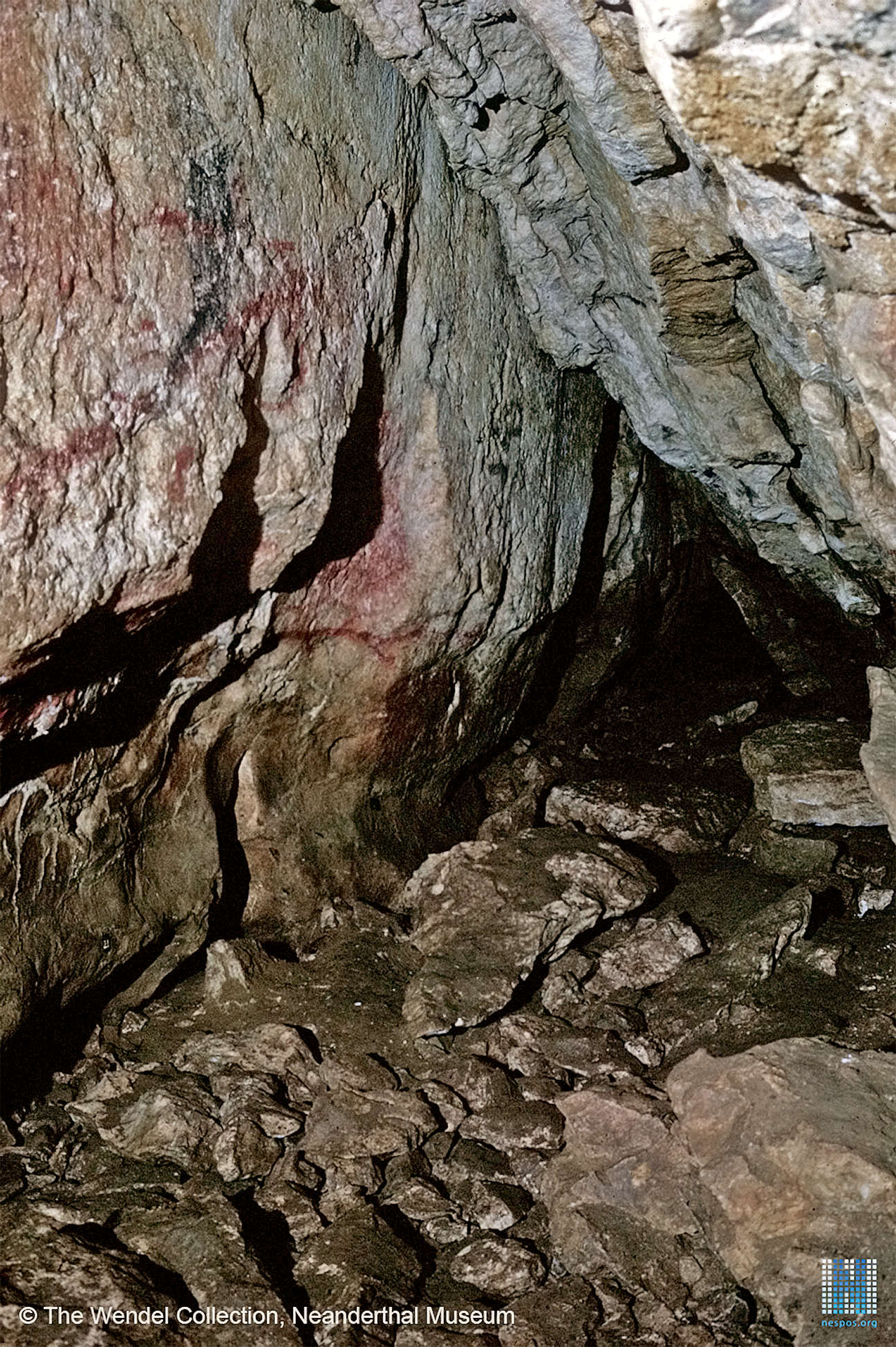
Photo showing the vault of the gallery, with two bedding planes of limestone meeting in a V at the top.
Marsoulas Galerie ornée : Photo Heinrich Wendel (© The Wendel Collection, Neanderthal Museum)
Photo: Wendel Collection: Marsoulas
Source: Donation
Copyright Holder(s): © [PublicAdministrativeSpace: Neanderthal Museum]
Website: https://www.nespos.org/pages/viewpage.action?pageId=50168397
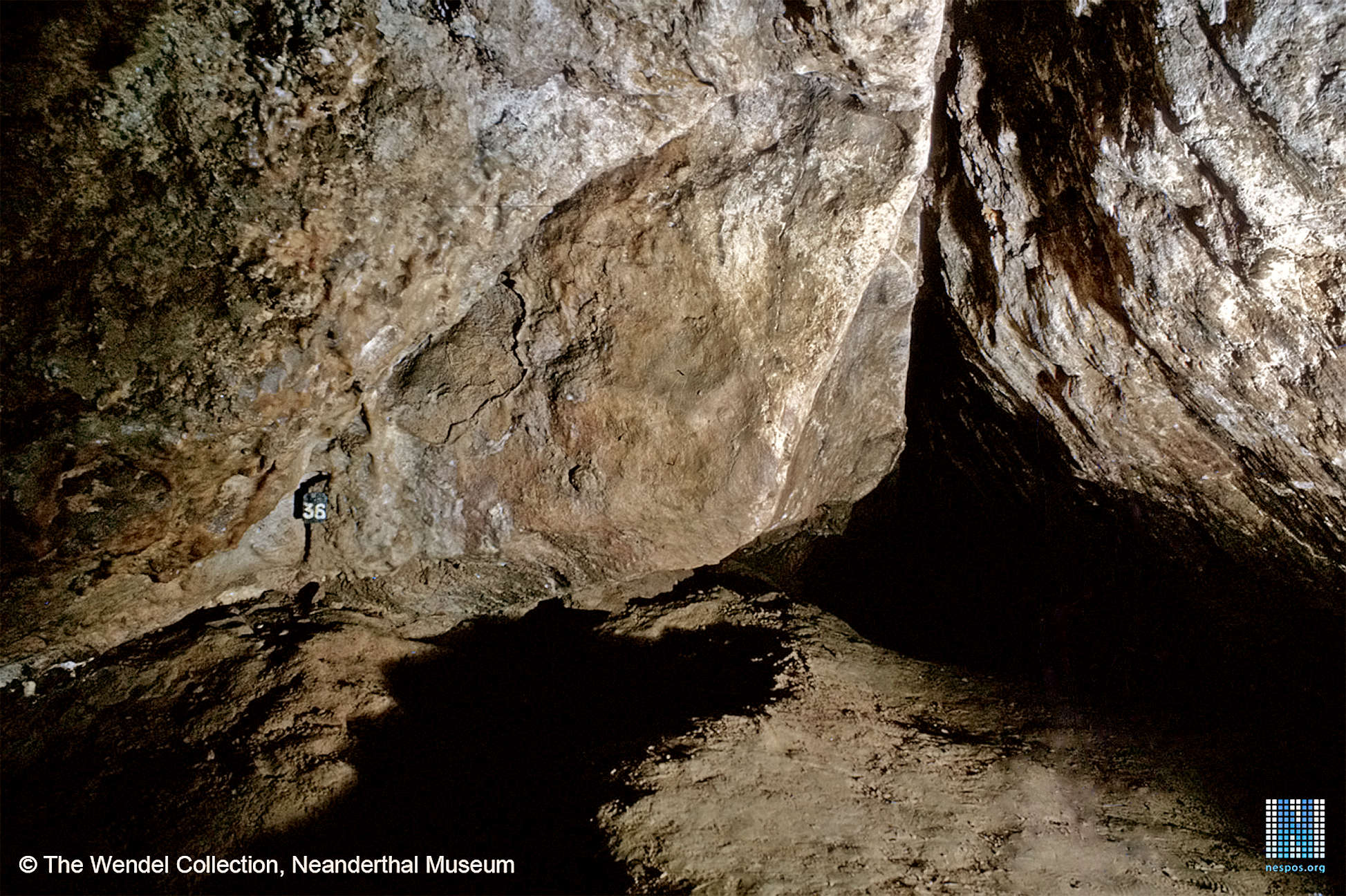
Another photograph of the vault of the gallery.
Marsoulas Galerie ornée : Photo Heinrich Wendel (© The Wendel Collection, Neanderthal Museum)
Photo: Wendel Collection: Marsoulas
Source: Donation
Copyright Holder(s): © [PublicAdministrativeSpace: Neanderthal Museum]
Website: https://www.nespos.org/pages/viewpage.action?pageId=50168397
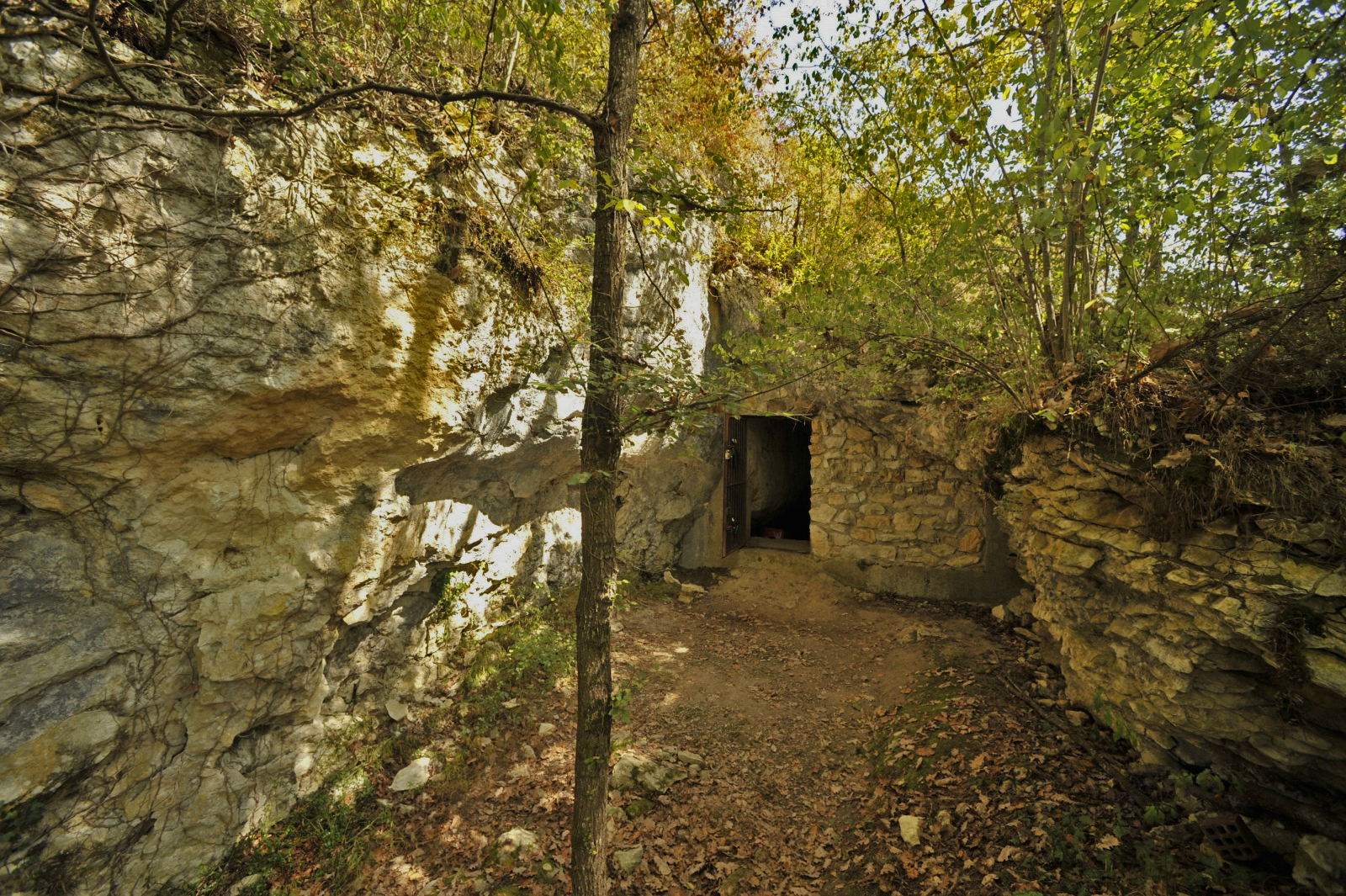
Entry to marsoulas cave.
Photo and text: http://archeologie.culture.fr/lascaux/en/mediatheque/entry-marsoulas-cave-midi-pyrenees
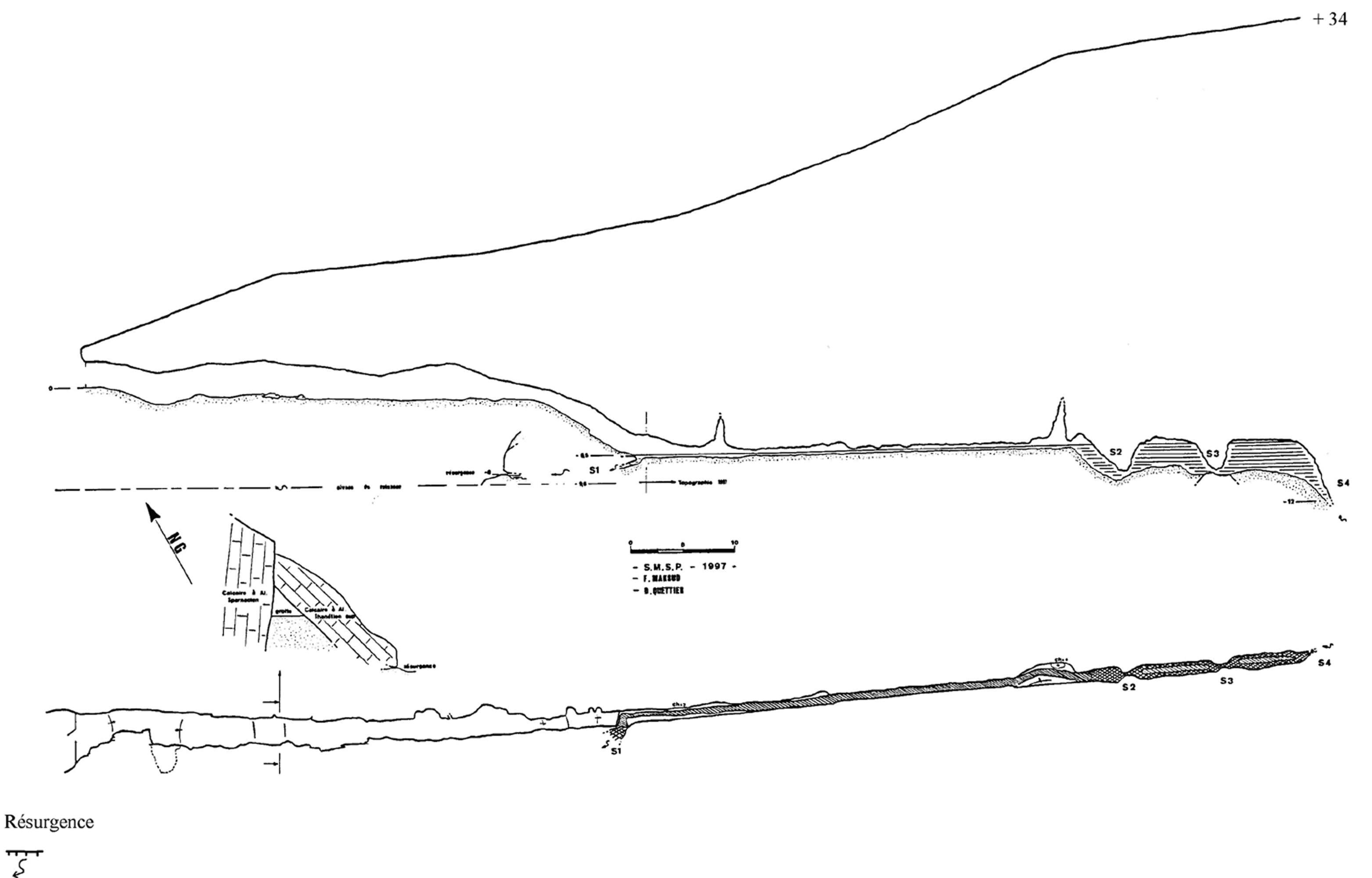
Marsoulas, plan of the cave.
The cave is in an Upper Thanetian limestone.
Explorations :
– Abbé Cau Durban, 1883 – 1884.
– F Regnault, L Jaummes, discovery of engravings, 20.04.1897.
– Rivière, F Regnault, Cau Durban, 06.05.1898.
– F Regnault, L Jaummes, E Castailhac, 04.08.1902.
– E Castailhac, Abbé Breuil, 18.08.1902.
– E Castailhac, Abbé Breuil, 1905.
– R Jeannel, 12.08.1907.
– Comte Bégouën et Rusell, 1931.
– SMSP – F Maksud, D Quettier, F Bréhier, full topography of the cavity and the two successive siphons 25.08.1997.
Closed entrance, preceded by a short canyon formed by the collapse of the vault.
Gallery 4 m wide, 30 m from the constriction at the entrance, level ground.
Sloping ground for ten metres.
Stream in the very narrow gallery, 43 m long.
Siphon 22 m long (2 bells) descending to – 6 m, heavy clay.
The source is located 1 m above the Laouin and 10 m below the cave.
Could drain the valley of Spades Porte, ESE of the cave.
Photo and text: http://cds31.free.fr/Htm/Grottes/marsoulas.htm