



The Focke-Wulf Fw 200 Condor was a German four-engine aircraft designed to be a long-range airliner in the 1930s. The plane followed a proposal by Focke-Wulf Flugzeugbau AG aeronautical engineer Kurt Tank to build a plane capable of transporting passengers across the Atlantic Ocean between Europe and North America.
The idea was unusual at the time because airlines used flying boats for long-distance flights. After all, land-based aircraft lacked sufficient range for the crossing. At the time of its conception, airliners did not have pressurized cabins, so Focke-Wulf designed the plane to cruise at over 9,800 feet, the highest you could go without oxygen or a pressurized cabin.
For a short period, the Condor was the most advanced airliner
Before the Focke-Wulf Fw 200, Condor airliners would fly below 5000 feet, which meant that when the German plane made its maiden flight on July 27, 1937, it was the world’s most advanced airliner. The accolade, however, did not last long and was overtaken by the Boeing 307 Stratoliner in late 1938. Unlike the Focke-Wulf Fw 200 Condor, the
Boeing 307 Stratoliner had a pressurized cabin and could fly at 20,000 feet while maintaining a cabin pressure of 8,000 feet.
Called the “Condor” because of its long 107 feet 9-inch wingspan, the aircraft was initially powered by four American Pratt & Whitney Hornet radial engines. The first prototype aircraft made several record-breaking flights after being fitted with extra fuel tanks, becoming the first to fly non-stop from Berlin to New York City. On 10, 1938, the aircraft took off from Berlin-Staaken Airfield and landed at Floyd Bennett Field along the shore of Jamaica Bay in Brooklyn after a 24-hour and 56-minute flight.

On November 28, 1938, the Focke-Wulf Fw 200 Condor made another record-breaking flight when it flew from Berlin to Tokyo, Japan, with stops in Basra, Karachi, and Hanoi.
The Molotov–Ribbentrop Pact
In the lead-up to World War II, the German Foreign Minister used a specially outfitted Condor to make two trips to Moscow, where he met with his counterpart, Soviet Foreign Minister Vyacheslav Molotov. During the trips, the pair negotiated a secret non-aggression pact between the two countries that effectively partitioned Central and Eastern Europe between Nazi Germany and the Soviet Union.

Following the Treaty of Versailles on June 28, 1919, the majority German city of Danzig (Gdańsk) was given to Poland and made into a nominally independent Free City. Appealing to German nationalism and wanting to take back German land lost in the Treaty of Versailles, Nazi Germany invaded Poland.
The start of World War Two
On August 25, 1939, two days after the signing of the non-aggression pact between Nazi Germany and the Soviet Union using the pretext of a courtesy visit, the German battleship Schleswig-Holstein sailed into Danzig harbor. On the morning of September 1, 1939, Schleswig-Holstein commenced firing on a Polish garrison while German air and land forces launched a Blitzkrieg aimed to conquer Poland within six weeks.
Two days after the invasion, on Sunday, September 3, 1939, the United Kingdom and France declared war on Germany, effectively starting World War Two. With Germany now at war, the Luftwaffe commandeered Deutsche Luft Hansa Focke-Wulf Fw 200 Condors and used them for maritime patrol and reconnaissance aircraft supporting the German Navy.
The Condor’s main task was to fly missions over the Atlantic and relay the position of Allied convoys so that they could be targeted by German submarines. Condors were also retrofitted to carry bombs and anti-ship mines. Between June 1940 to February 1941, Condors were responsible for sinking many ships by flying at extremely low altitudes before releasing three bombs. By dropping three bombs from a low height, they were almost guaranteed at least one hit every time. The Condors were so effective against Allied ships that Winston Churchill called the Fw 200 the “Scourge of the Atlantic.” To keep Condor aircraft intact and avoid contact with British ship-launched Hawker Hurricanes in mid-1941, Condor crews were told to stop attacking Atlantic convoys.
Besides being used as a maritime reconnaissance aircraft and bomber, the Focke-Wulf Fw 200 Condor was also used as a transport aircraft, notably delivering supplies to German troops on the Eastern Front.
Adolf Hitler’s personal FW 200
In the early 1930s, unlike other politicians who traveled by train when campaigning, Hitler hired WWI fighter pilot Hans Baur as his pilot during the 1932 General Election. Wanting to ensure that Baur had enough power and respect to maintain his security in 1933, Hitler had Heinrich Himmler commission Baur as an SS Standartenführer (colonel). First, based at Oberwiesenfeld in Munich, Baur was tasked with looking after Hitler’s personal aircraft fleet. A year later, in 1934, Baur was promoted to SS-Oberführer.
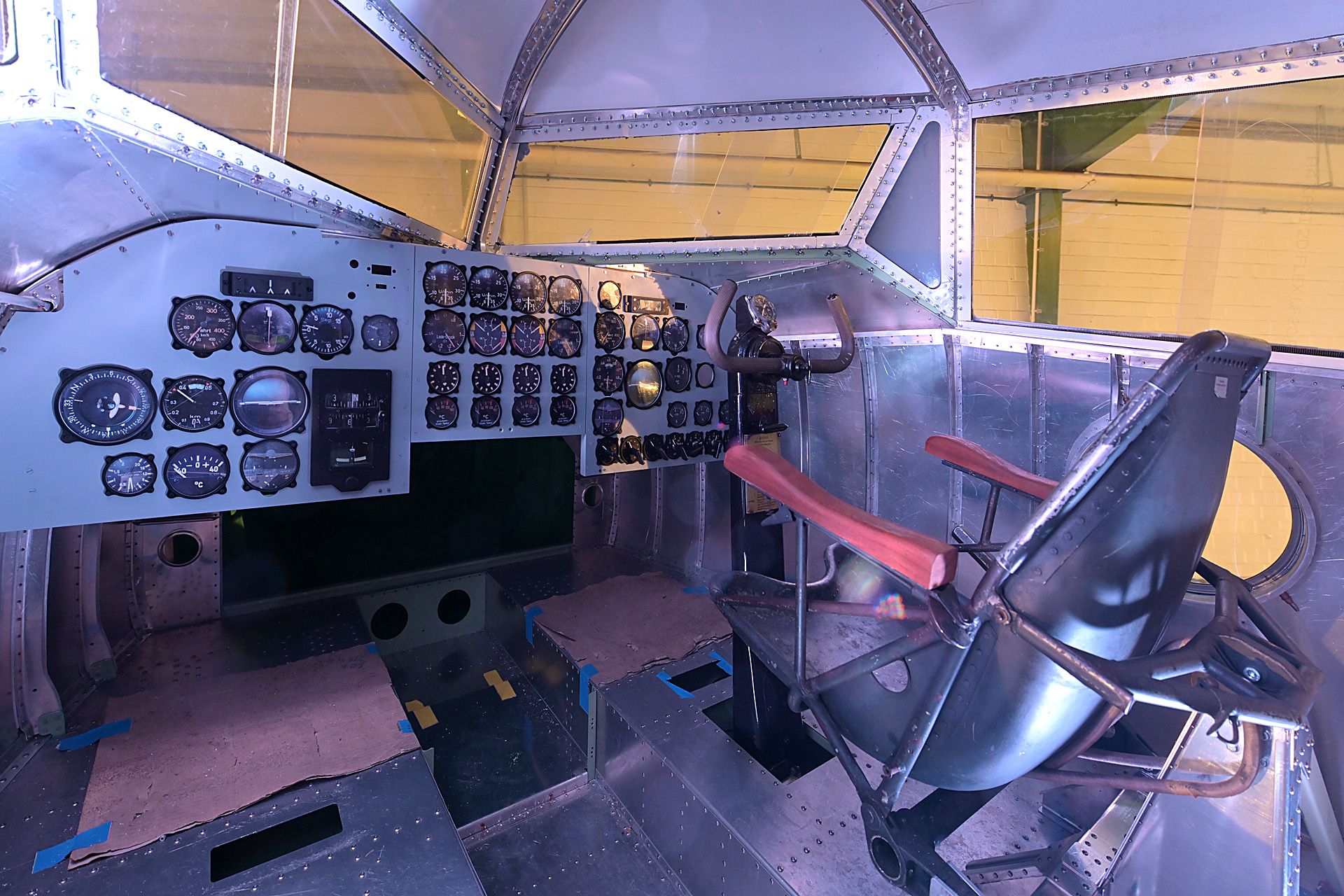
Photo: Airbus
By 1937, Hitler’s fleet of planes comprised three Junkers Ju 52 tri-motors, but at the suggestion of Baur, he added a new Focke-Wulf Fw 200 Condor as his primary transport. Initially configured to carry 26 passengers, the aircraft was reconfigured to have two plush cabins. Hitler had a particular armchair on the plane with an armor-plated back, a seat cushion fitted with a parachute, and an escape hatch on the floor.
To comply with Hitler’s instructions, the aircraft was named the Immelmann III in honor of German WWI flying ace Max Immelmann, the first German aviator to be awarded the Pour le Mérite, also known as the Blue Max.
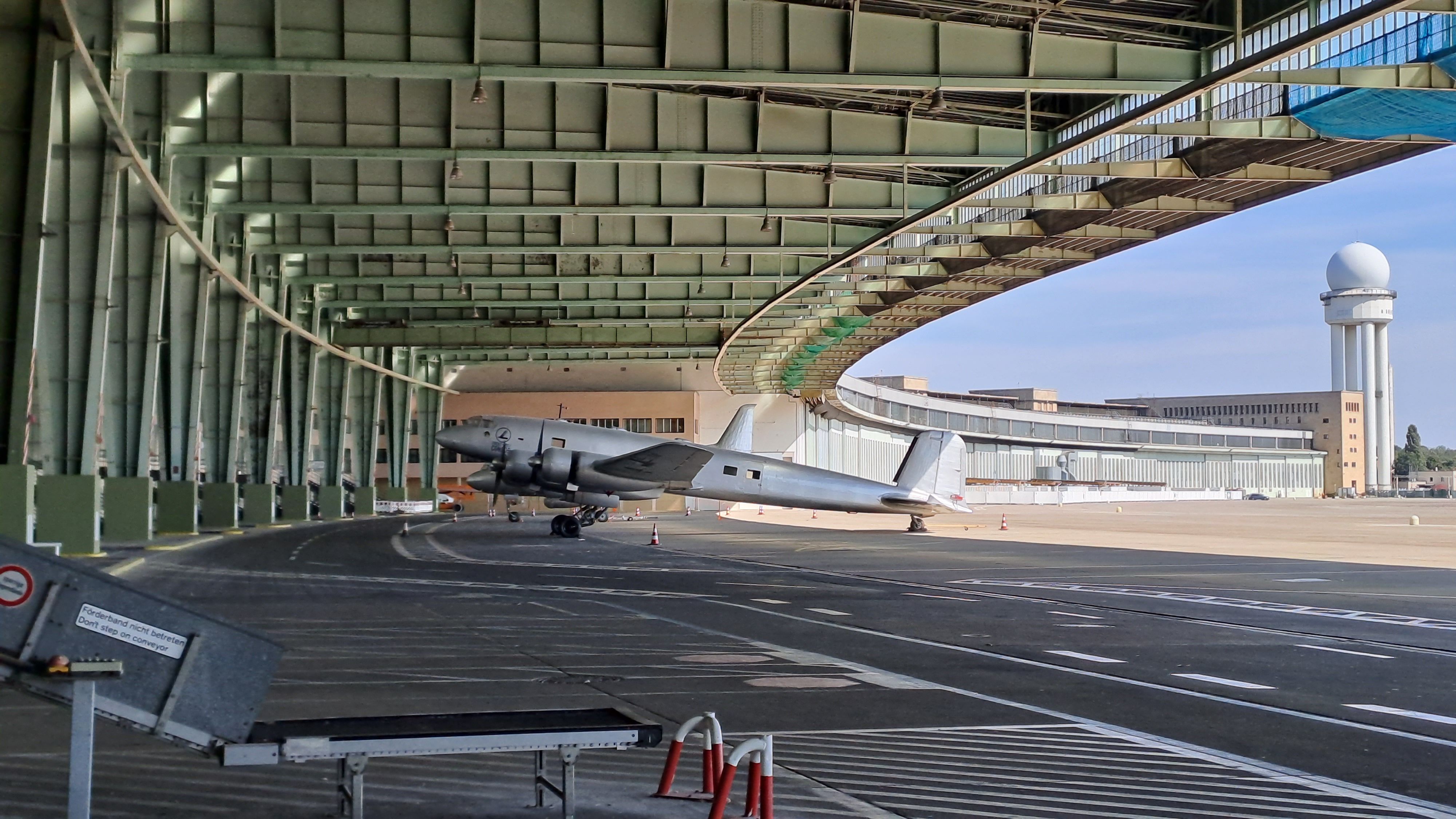
A Fw 200 is on display at Berlin Tempelhof Airport
The aircraft was destroyed at Berlin Tempelhof Airport during an Allied bombing raid on July 18, 1944. The only surviving Focke-Wulf Fw 200 Condor was raised from Trondheim Fjord in Norway on May 26, 1999. The plane was mostly intact after ditching in a narrow sea inlet in February 1942.
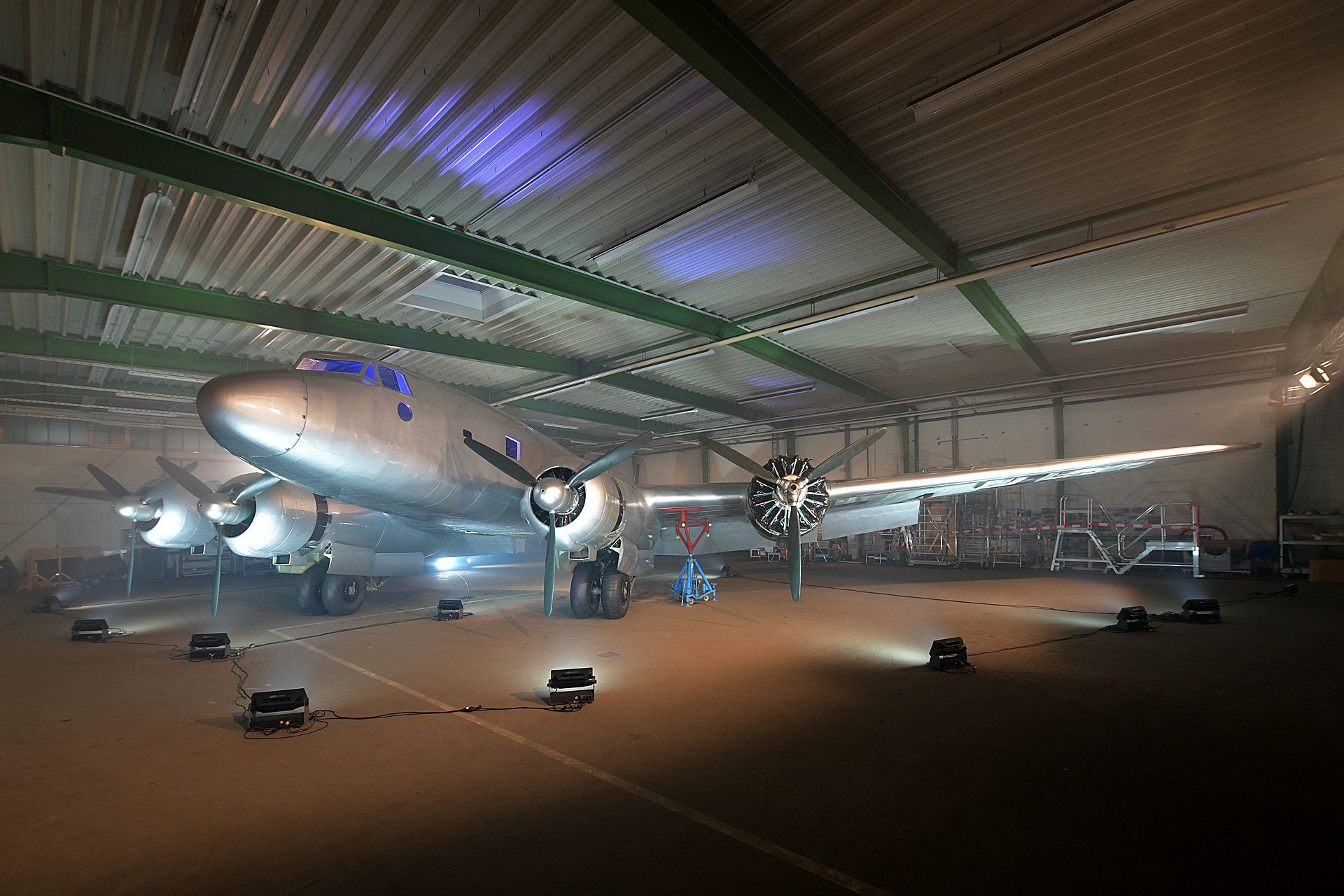
Photo: Airbus
After the aircraft had been recovered, it was sent to the Airbus factory in Bremen, Germany, for restoration. After combining parts from other crashed Condors, the plane is fully restored and displayed at an aviation museum at the now-closed Berlin Tempelhof Airport.