



The Supermarine Seafire is a version of the Supermarine Spitfire adapted for the British Navy so that it could take off and land on aircraft carriers. The name Seafire is a shortened version of Sea Spitfire. In May 1938, during a meeting between the British Navy and Richard Fairey of Fairey Aviation, the idea of an aircraft carrier, Spitfire, was discussed. Fairey said that he could build such a plane, but the Admiralty was not convinced and dropped the idea.
Following the United Kingdom entering World War Two in September 1939, the Fleet Air Arm aircraft were designed on the assumption that the Germans would have no aircraft carriers. The planes the Navy operated were mainly for reconnaissance duties and were no match for German and Italian land-based fighters. This prompted the Navy to adapt Hawker Hurricanes so that they could be flown from carriers. At the same time, the idea of converting the Spitfire also came up.
The Seafire was delayed because the RAF needed more Spitfires
A design was put forward for a Spitfire fitted with an arrester hook that had folding wings. In 1940 the Navy sought the permission of the Air Ministry to sanction the building of 50 folding-wing Spitfires. For unknown reasons, Winston Churchill, First Lord of the Admiralty at that time, canceled the order. Fearing a German invasion, it was of utmost importance to continue manufacturing land-based Spitfires so that the Royal Air Force (RAF) defend the island. To make up for not getting its naval Spitfire, the Fleet Air Arm ordered Grumman Wildcats from America. When they entered service in late 1940, they were given the name Marlet, a mythical bird portrayed in English heraldry.
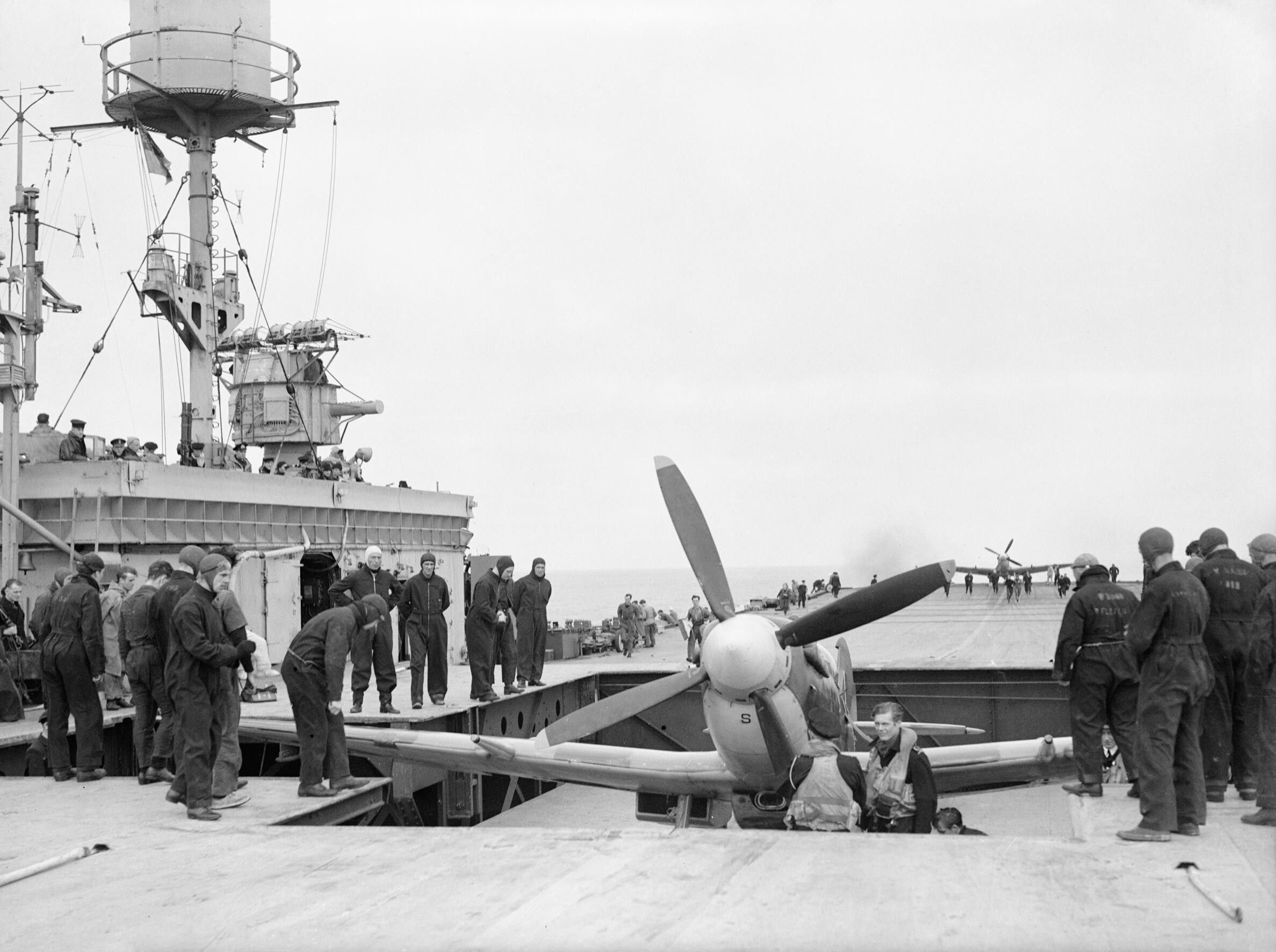
The Navy did not give up on the idea of having Spitfires for carrier operations, and in late 1941 received its first naval versions of the plane for training. Besides the arrester hook and folding wings, the plane’s instruments were calibrated to read kilometers and nautical miles rather than miles per hour and miles. The first carrier, Spitfires, entered service with 807 Squadron in June 1942 and served onboard HMS Furious from 1942 through to September 1944.
A new version of the Seafire had a Griffon engine
A second variant of the Seafire was built, incorporating a Merlin 32 engine specifically manufactured for naval use. The plane also had a cropped supercharger impeller to provide greater power at low altitudes. The first true aircraft carrier version of the Seafire was the Seafire F Mk III which was developed from the Seafire Mk II. The plane had manually folding wings so that more could be housed in the hangar below the flight deck. The next variant of the Seafire was the Seafire F Mk XV, which was fitted with a more powerful Griffon VI – single-stage supercharger engine.
The Seafire’s use during the war
In the summer of 1943, the Seafire was used to provide air cover during the Allied invasion of Sicily and the later invasion of mainland Italy. The following year, Seafire’s took part in the D-Day landings, proving aerial support for troops as they hit the Normandy beaches. During the later stages of WWII, the Seafire joined the British Pacific Fleet, where it performed valiantly against kamikaze attacks being carried out by Japanese pilots.
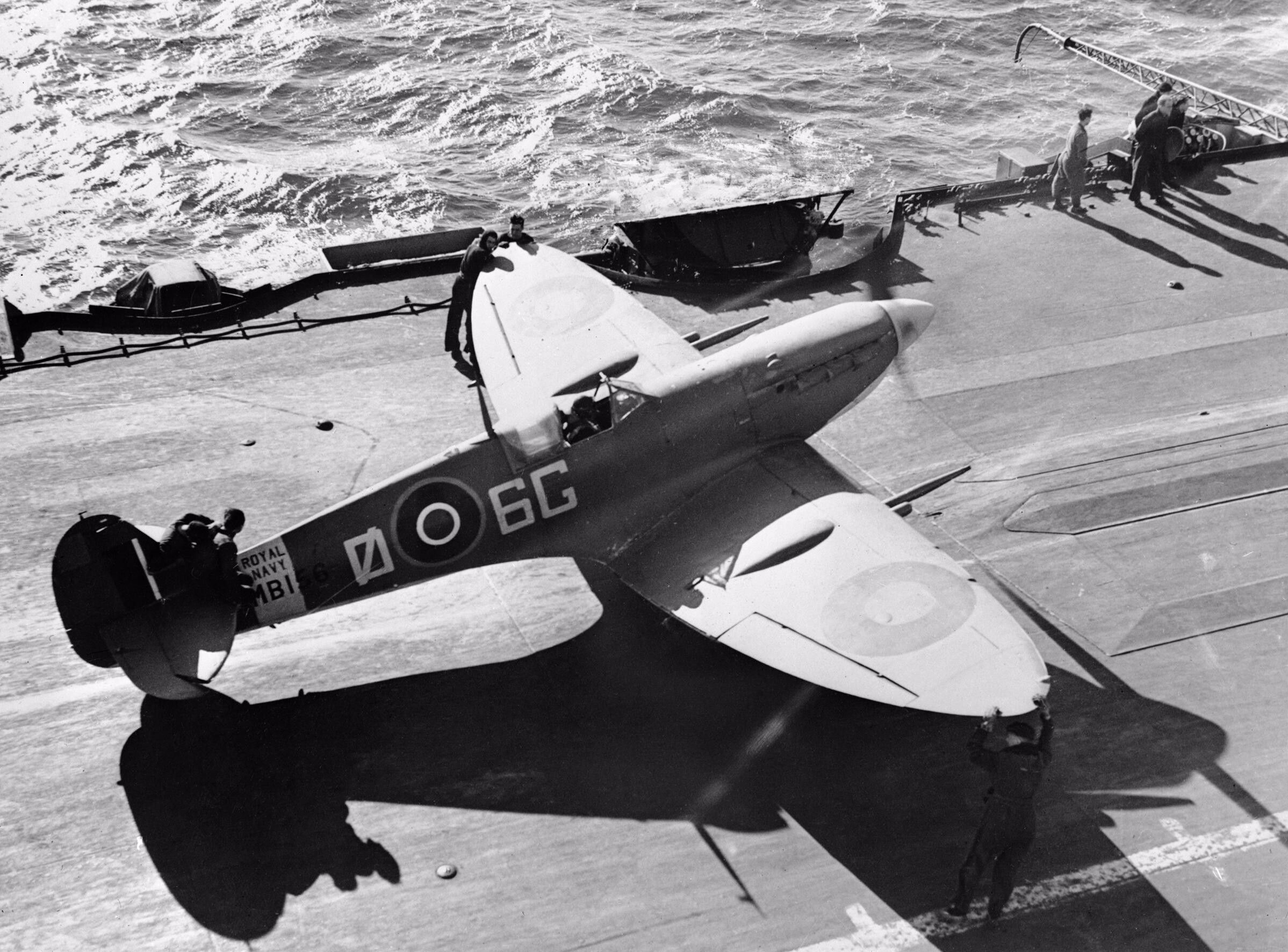
At the end of the war, the Fleet Air Admiralty withdrew all Merlin-powered Seafire from service but kept the Griffon-powered aircraft. The later aircraft then served in the Korean War as an air patrol and ground attack aircraft. Following the Korean War, the Navy replaced its Seafire’s with the newer Hawker Sea Fury, the last piston-powered plane to operate from a British ship. Not long after their introduction, the Sea Furys were replaced by jet-powered de Havilland Vampires and Hawker Sea Hawks.
Despite its successes, the Seafire was never an ideal Navy fighter and suffered more accidents than its American contemporaries. The plane’s narrow undercarriage and long nose made aircraft carrier landings especially dangerous. The Seafire also suffered from not having a long enough range and an inability to stay airborne for long periods of time.