



Museum And Archaeological Dig
The museum has artifacts found at the Fort of Vindolanda. The collection has been noted to be “collectively the single most important historic find in Britain” and “the most important site in Roman Britain”.
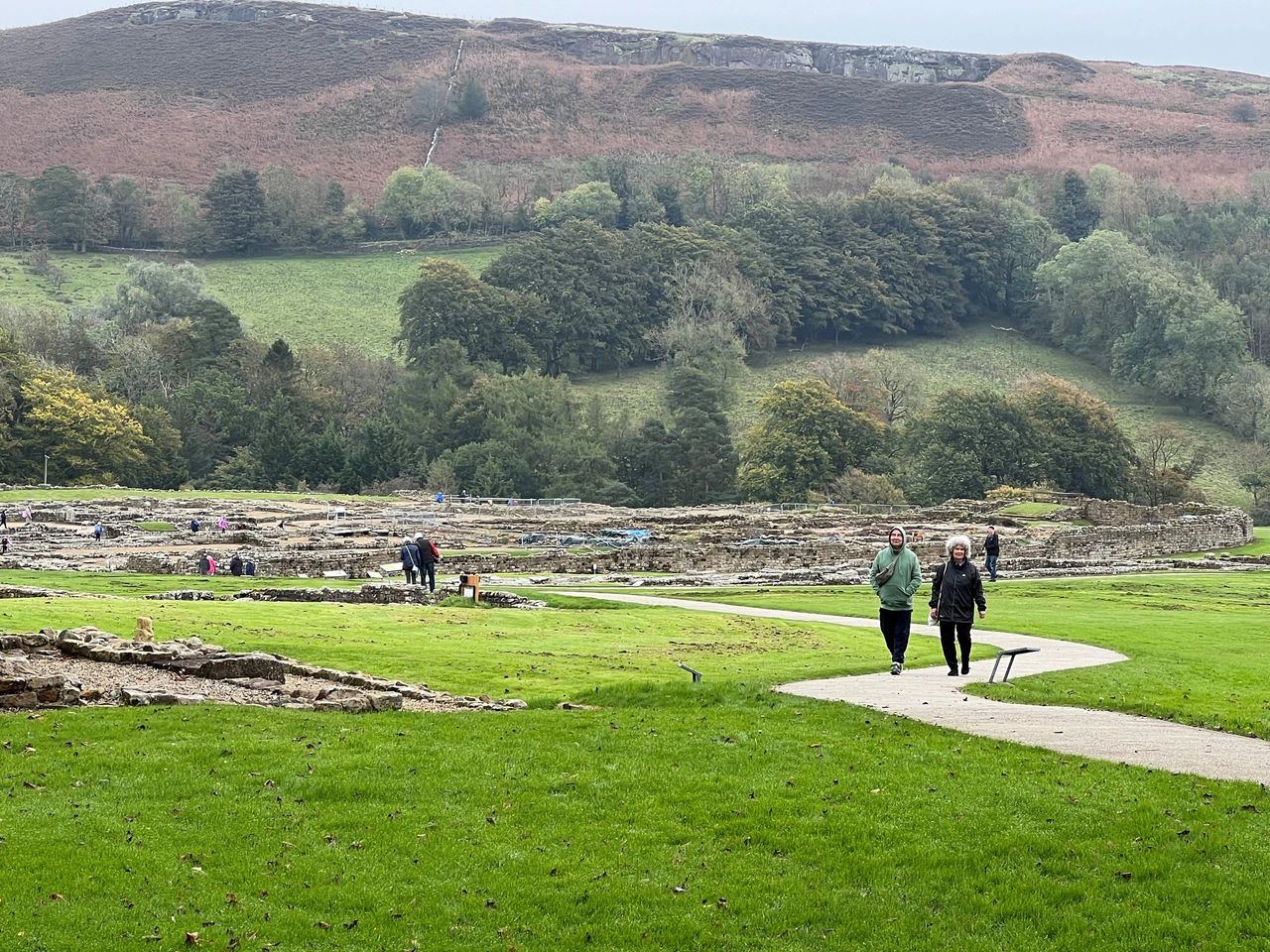
Near the museum is the archaeological dig. Work was not in process the day of our visit.
They usually are working at the site from about April to September. Approximately twenty-seventh percent of the Vindolanda ruins have been excavated. When excavation is completed in a hundred years, it could turn out to be the most important Roman site in the whole world.
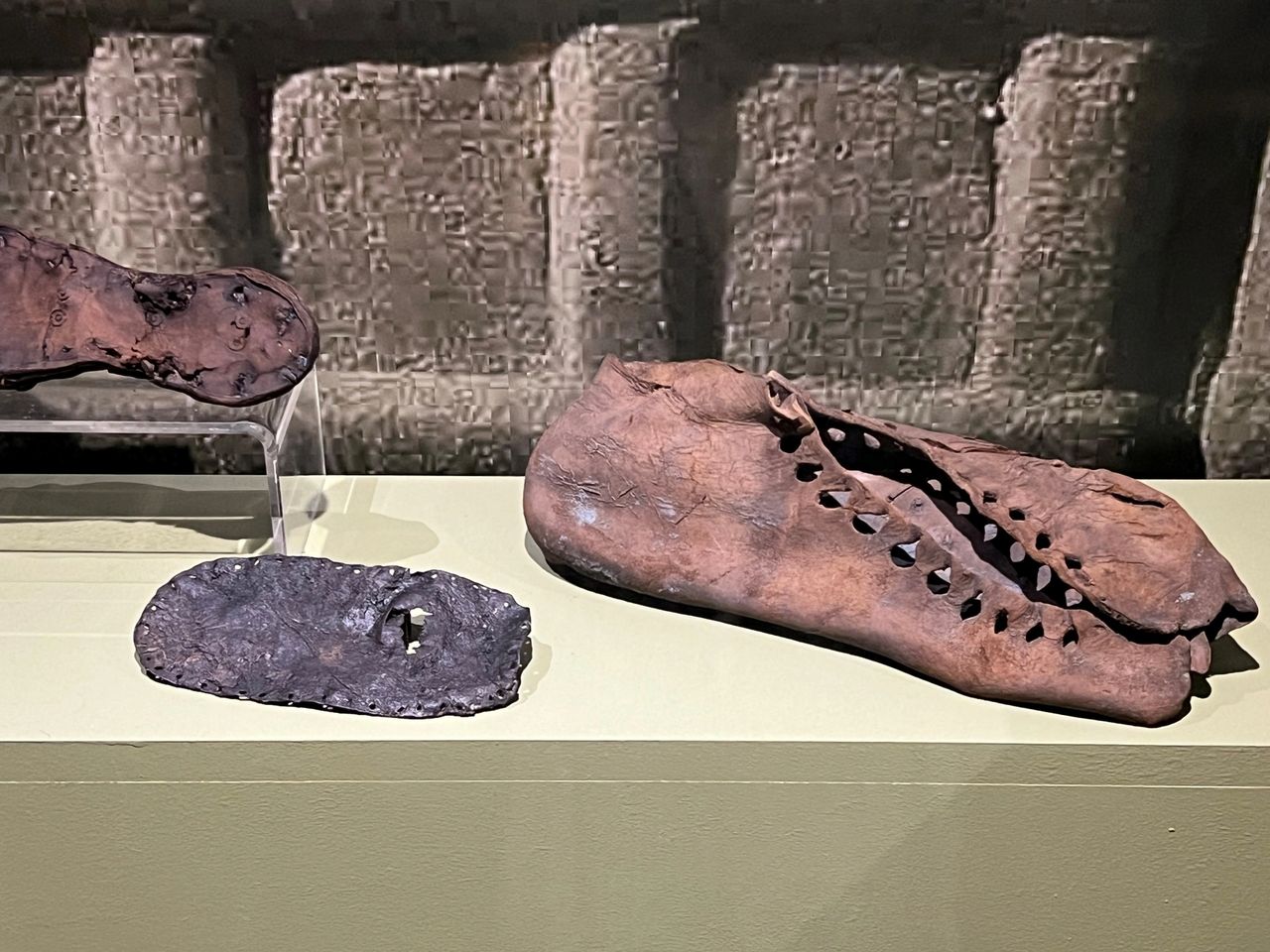
Footwear
Vindolanda has the largest collection of Roman shoes and leather from a single site. 7000 leather items have been discovered. 5000 are shoes.
It was believed that shoes would be from men as they were the main inhabitants of the forts. Wrong. Very small baby shoes, children’s shoes, as well as highly decorated women’s slippers and shoes have all been found.
The collection at Vindolanda dates from the 1st to the 4th Centuries A.D.
I found the description of how shoes were made to be interesting and pragmatic. Thick cowhide layers were stacked together to make the sole. The layers were held together by iron hobnails that became the outer sole of the shoe. The upper part was sewn in between the sole layers.
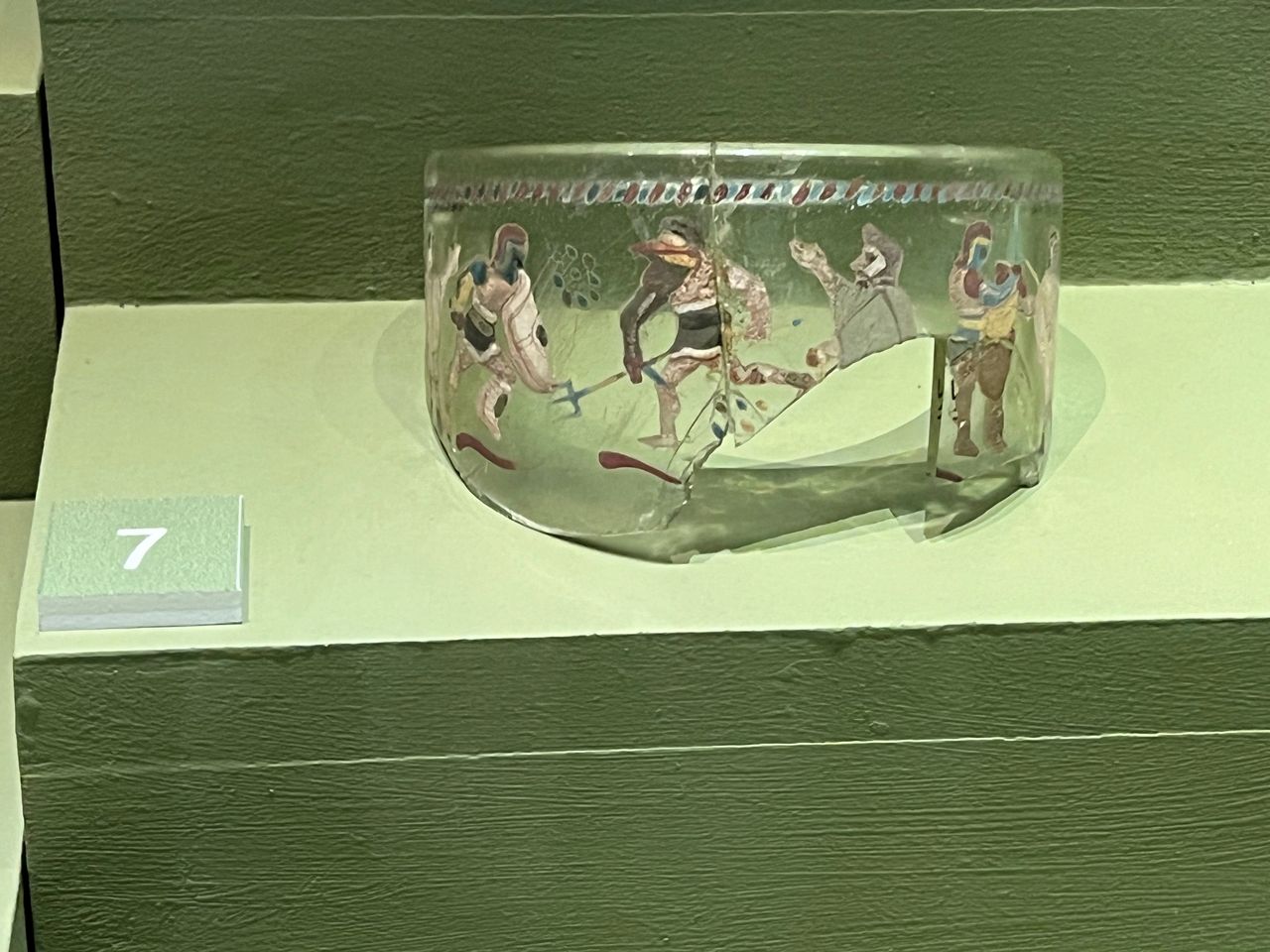
Gladiator Glass
I was stunned to see such a detailed pattern coming from so early a time period. It was expensive and valuable as it was imported from the Rhineland. The Romans spared no expense in keeping their living standards high even in a remote location.
Two fragments were found on the site in two excavations (1992 and 2007) but were more than sixty feet apart.
Ordinary Glass
This was glass with “ordinary” uses. Some were still in recognizable shapes.
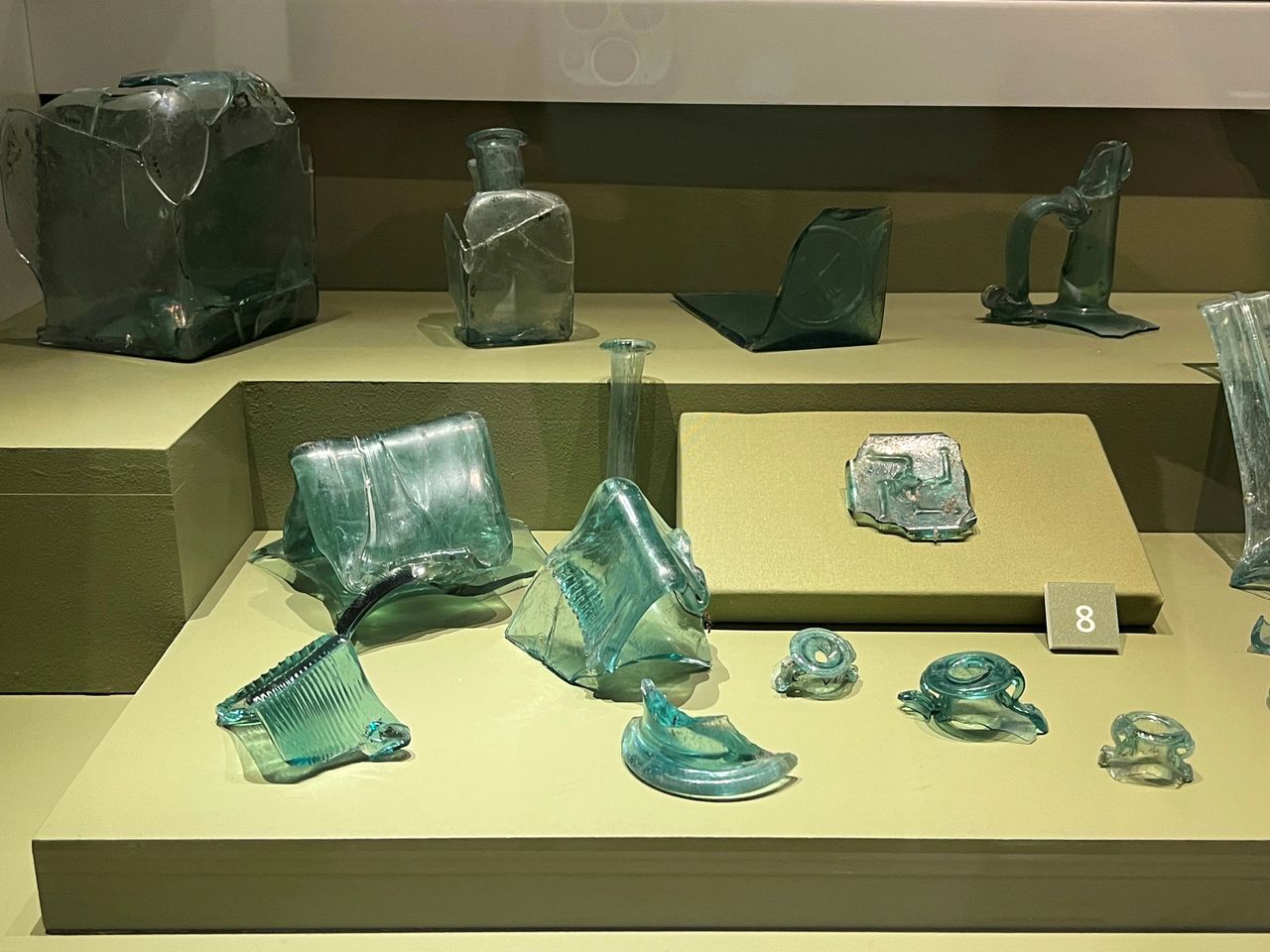
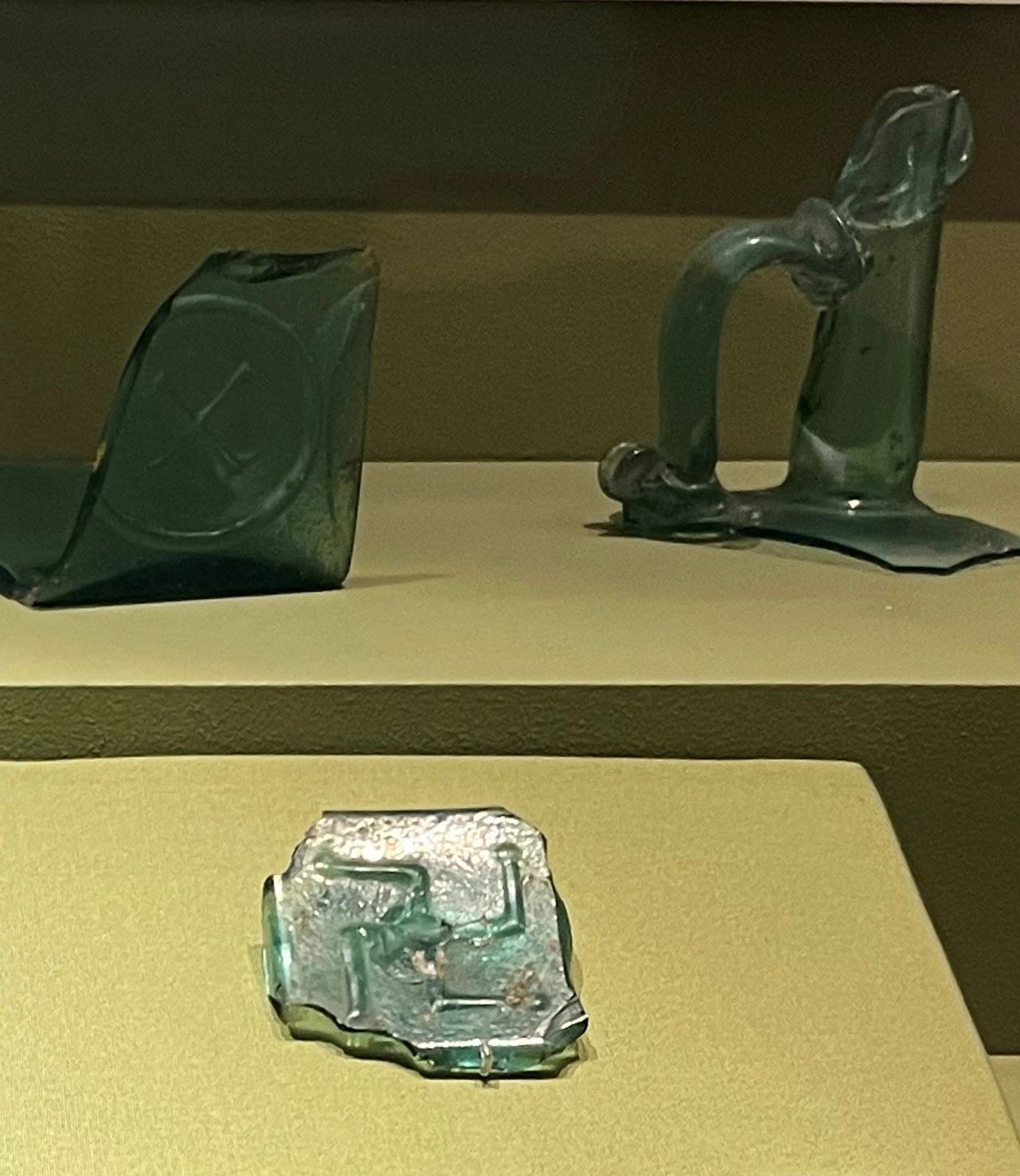
A Swastika-like symbol on bottom of a glass appears in the photo below. These had nothing to do with the Nazis. They were ancient symbols that were used along with symbols of the moon and the stars. Still, it is a bit disconcerting seeing it on the bottle of a piece of glass from that era.
Pre-Hadrian Pottery
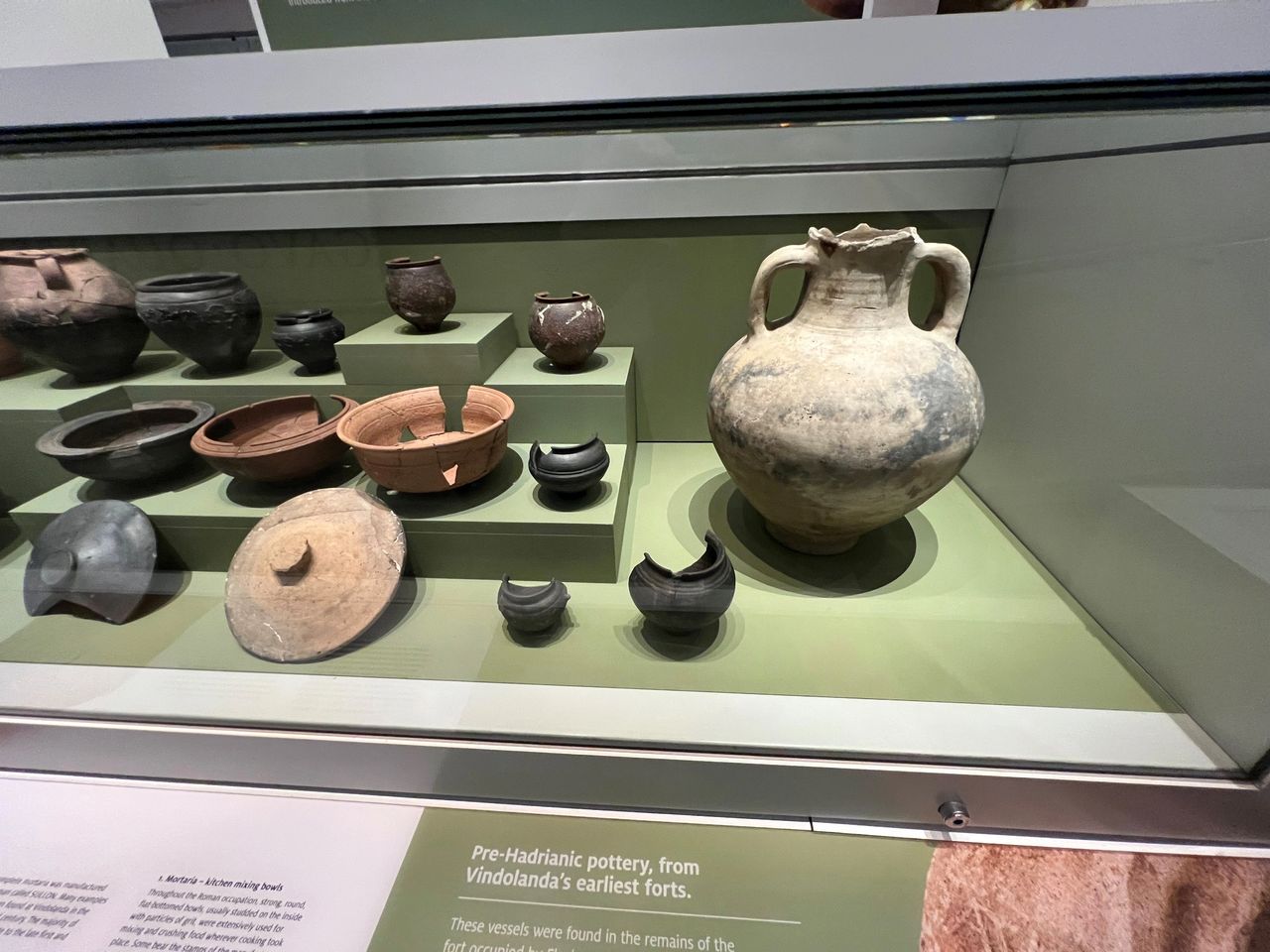
As the name suggests, this pottery was made and used prior to Emperor Hadrian doing his massive building program. These objects came from Vindolanda’s earliest forts. The pottery shown below was found in the remains of a fort occupied by Flavius Cerialis (101-105 A.D.)
These are very rustic and rough. They were made at Brampton, England, fourteen miles west of Vindolanda.
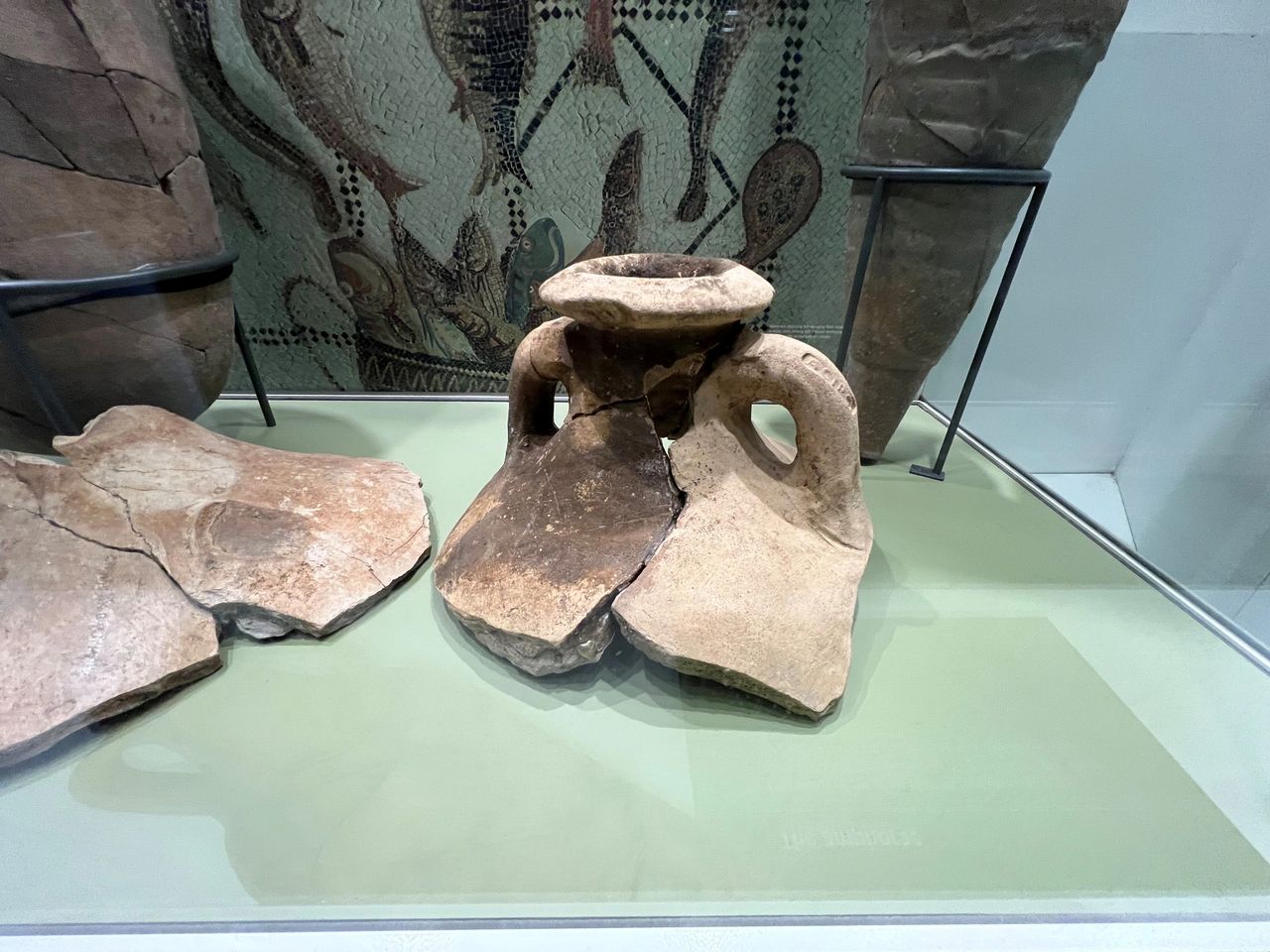
A closeup of a broken vessel is shown below.
Mortaria (Kitchen Mixing Bowls)
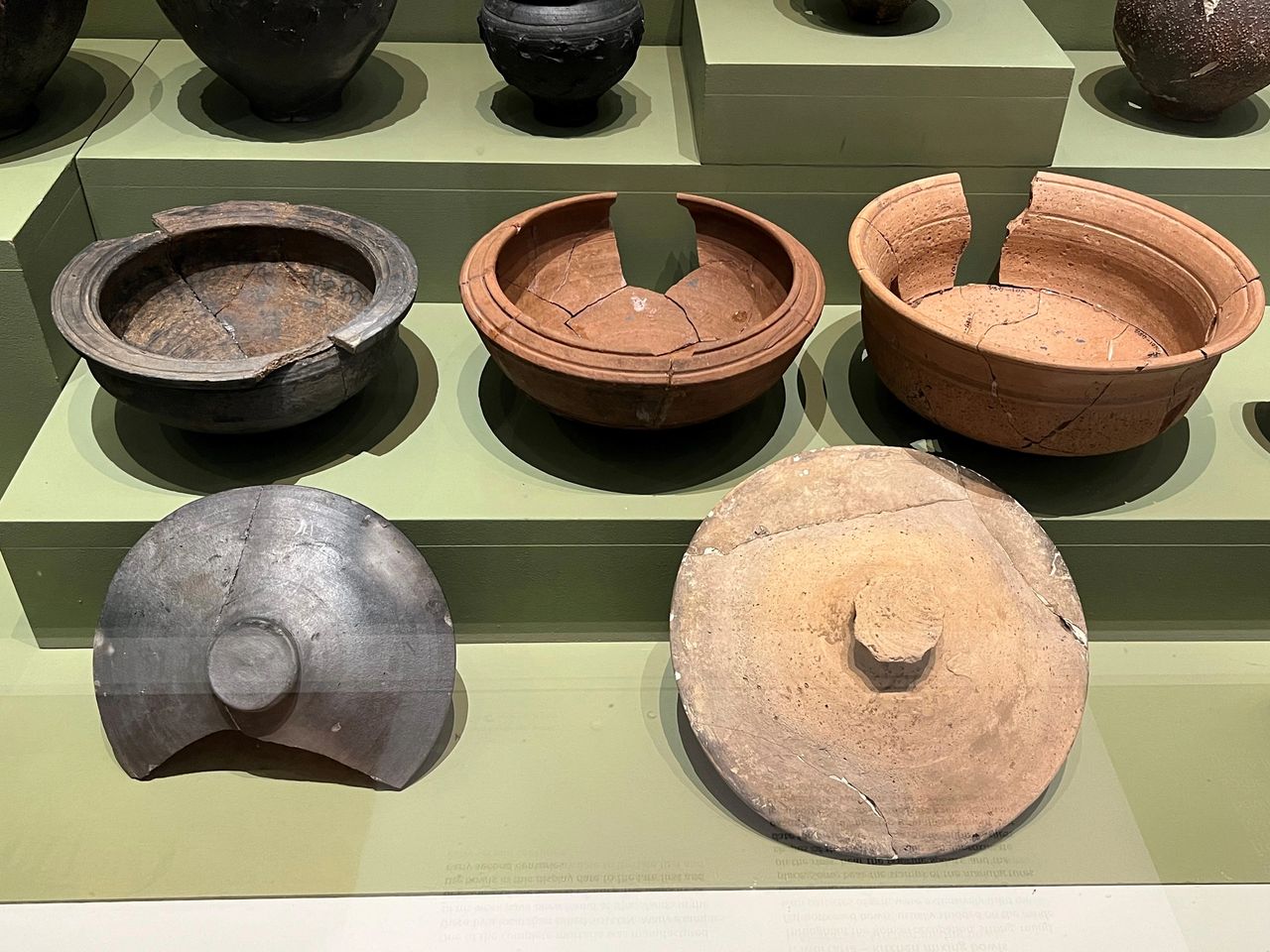
Round and flat bottomed, they were coated inside with particles of grit that helped to mix and crush the food.
These were made at another location nearby (Corbridge).
Red Samian Pottery
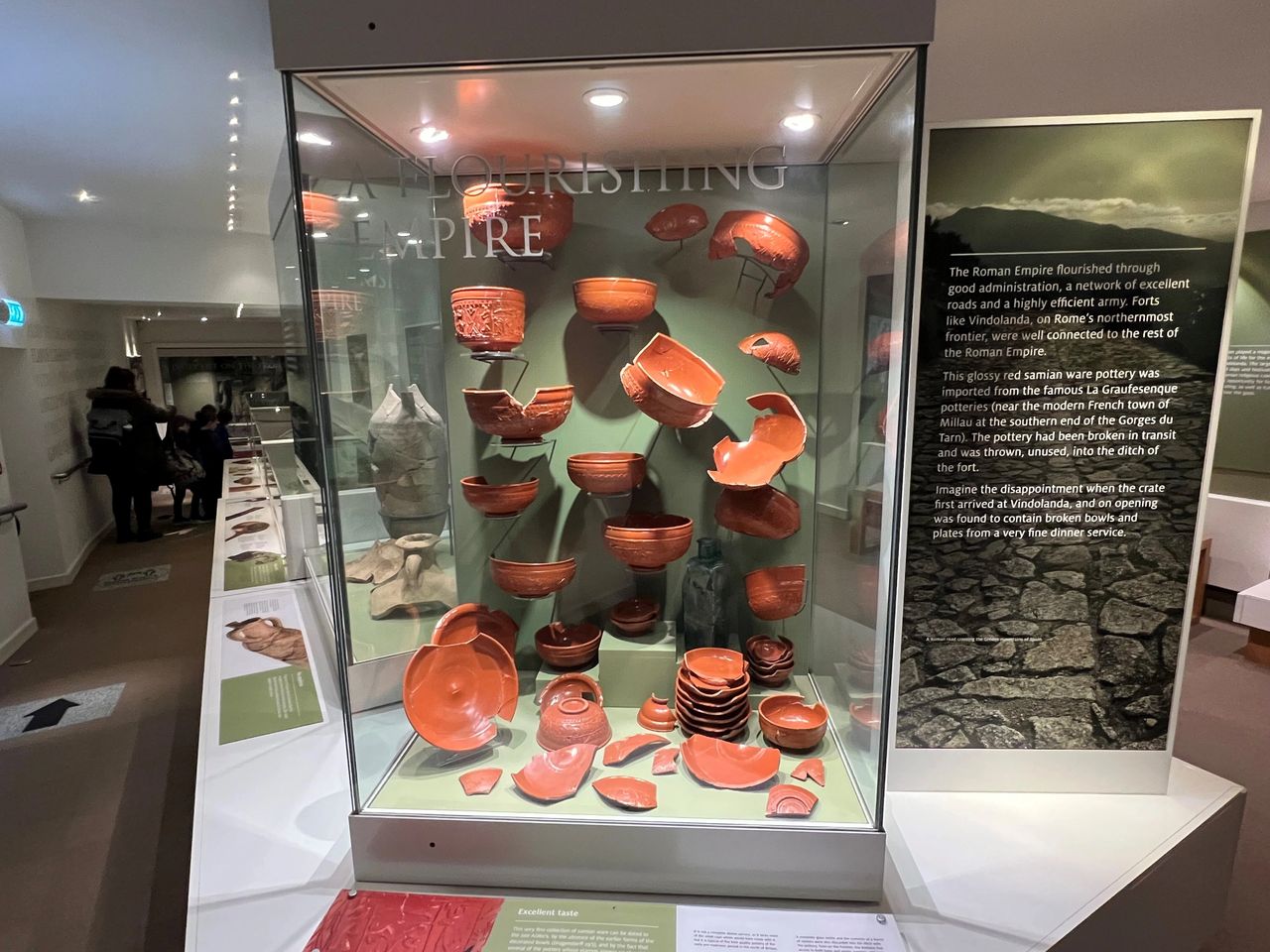
This beautiful glossy, orangish-red pottery was called “red samian”. It was from a famous manufacturer in France (La Graufesenque), It was considered a very fine dining service. Archaeologists have noted that there were no small cups in the set. The excavation revealed that the pottery had been broken prior to arriving in this area. The broken pottery was thrown, unused, into the ditch of the fort.
Jet Gemstone
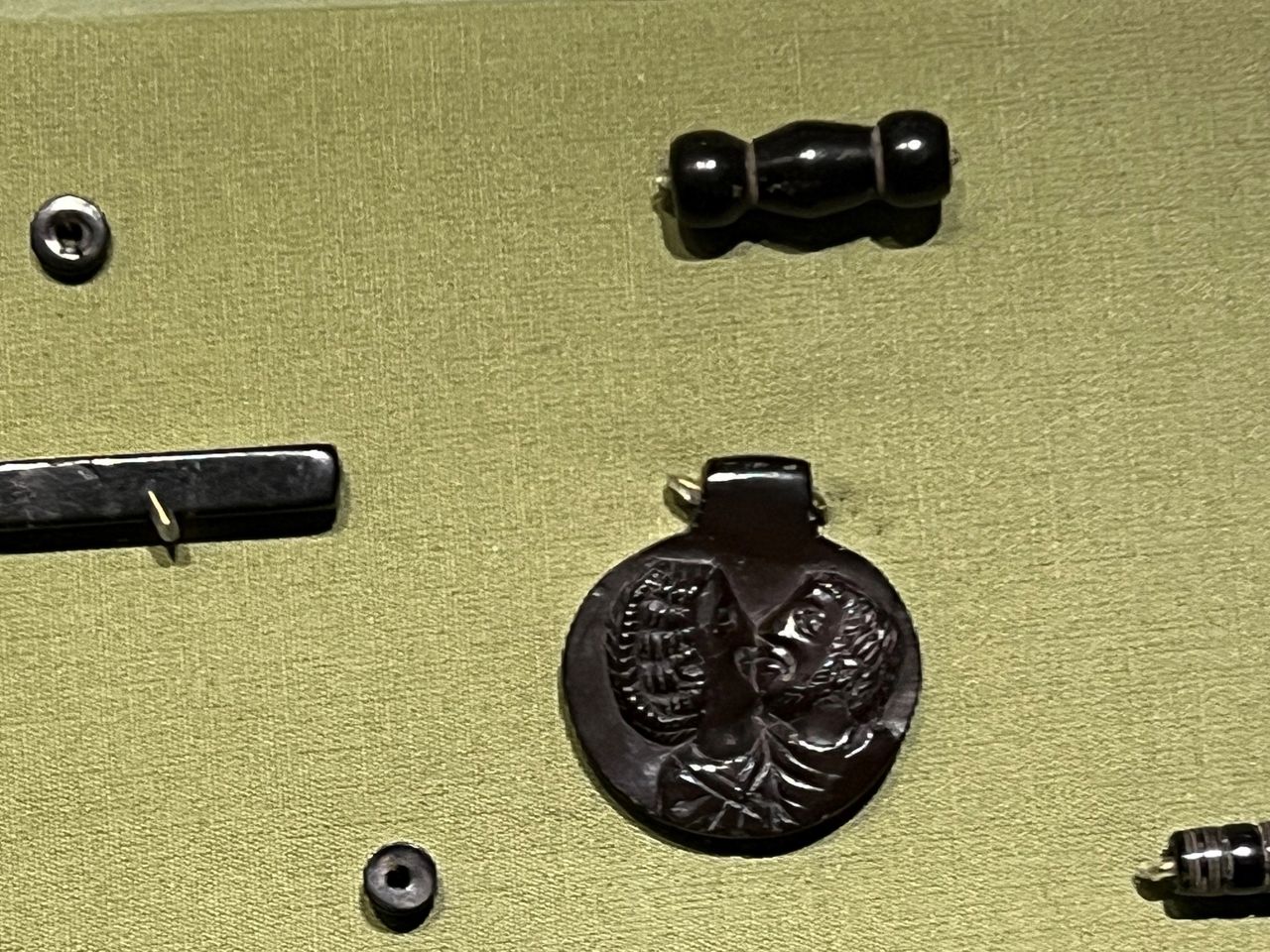
This is a black gemstone that comes from lignite, the lowest rank of coal. It forms from fossilized wood. While it dates back to the Neolithic times in Ancient Britian, it was very much a part of Roman life along Hadrian’s Wall.
This particular piece has a man and a woman kissing on the front and clasped hands on the reverse side. It was given as a betrothal gift. It dates to the late 3rd and 4th Centuries A.D.
Jet jewelry came to popular use in Britain in the nineteenth century as mourning jewelry. Queen Victoria wore her share of it.
Roman Postcards
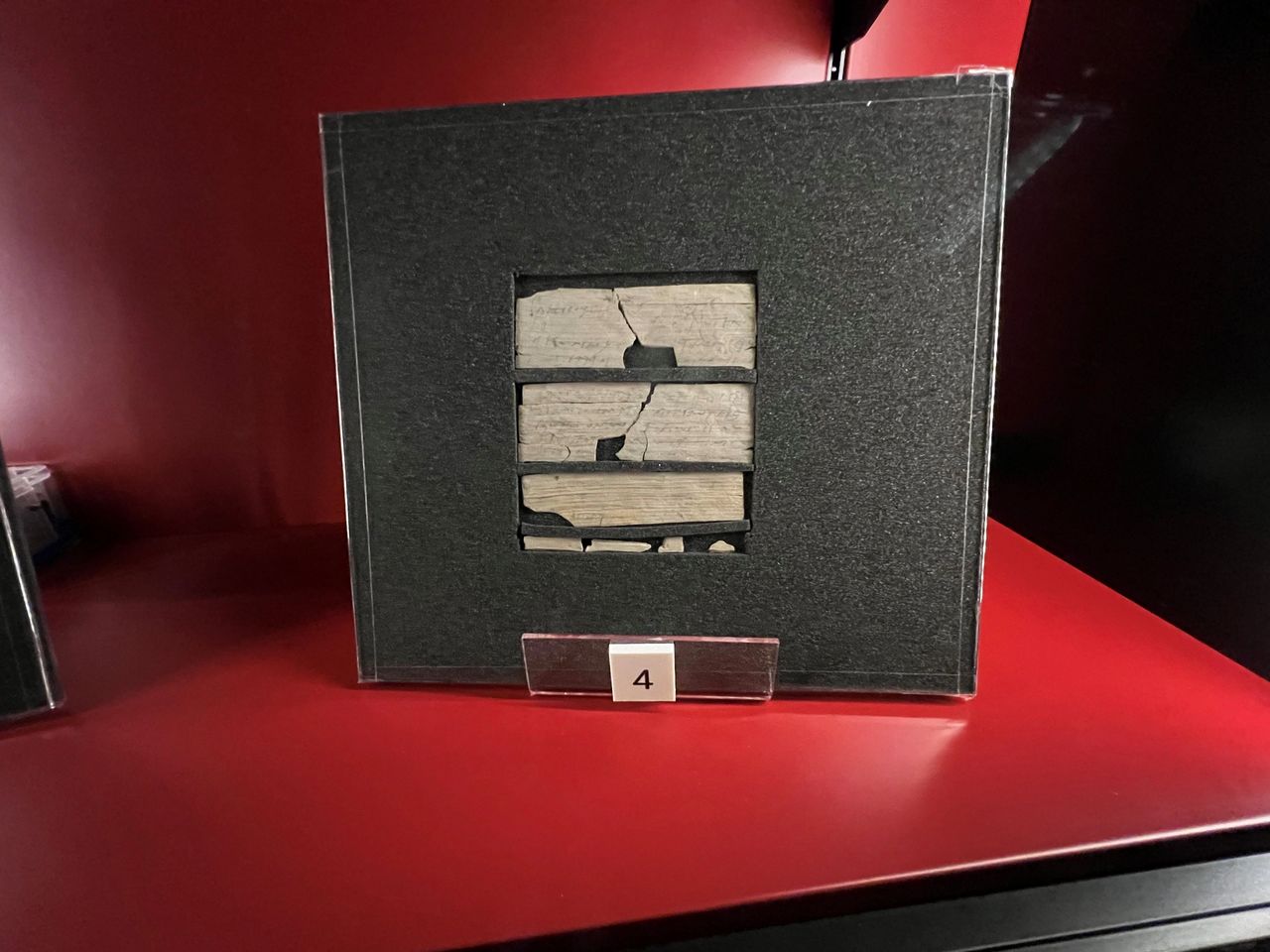
These have been named the “Roman Postcards”. They are quite the rage at Vindolanda! Four writing tablets were found during a 2017 excavation. It is believed that they came from the residence of the 1st Commanding Officer, Julius Verecundus.
The content of these scripts is very mundane. One example is Julius telling his underling, Audax, that Audax put the wrong key in a box.
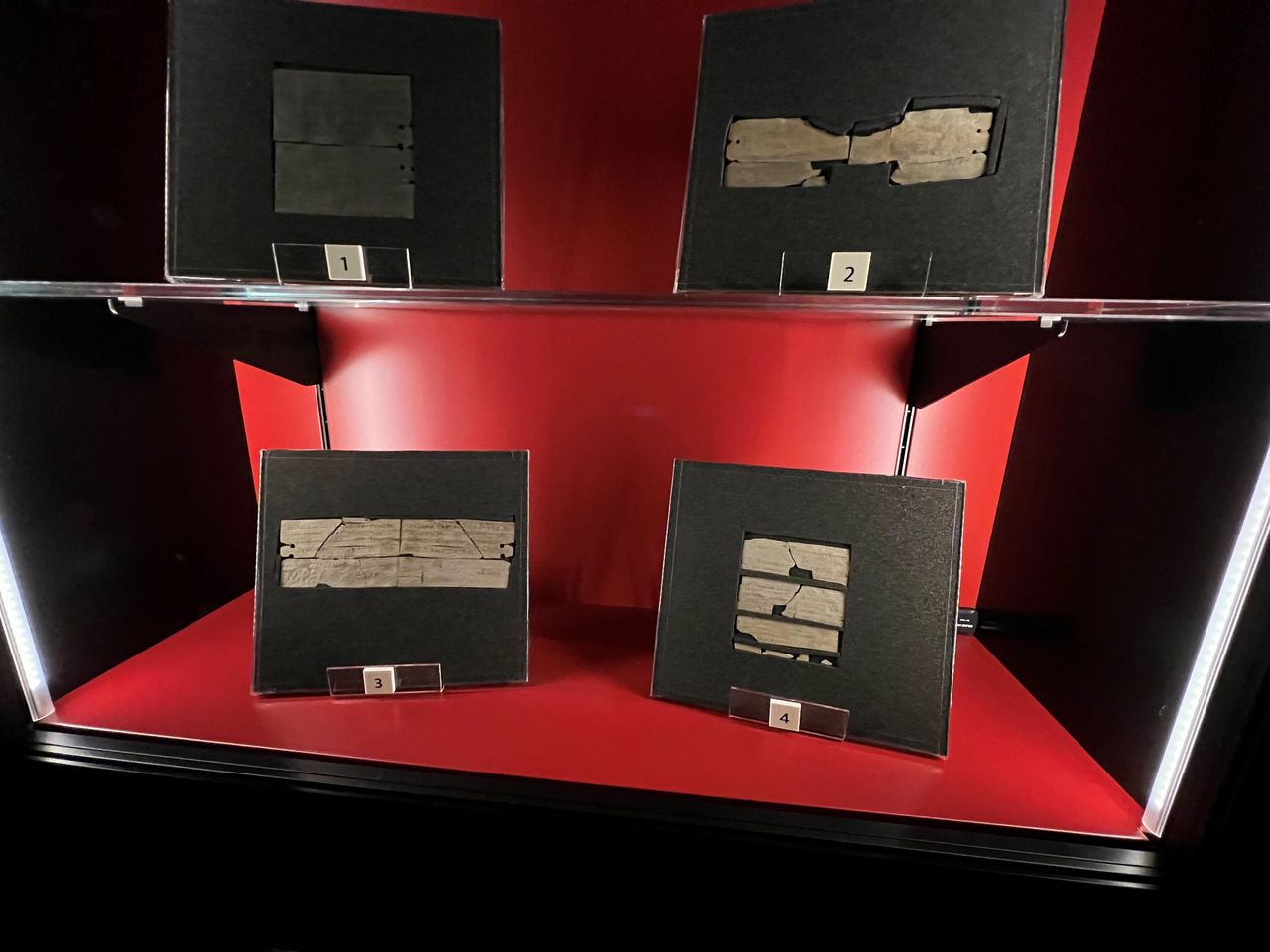
These are delicate, wafer-thin slivers of wood that are covered with ink writing. They are the oldest surviving handwritten documents in Britain.
Tents
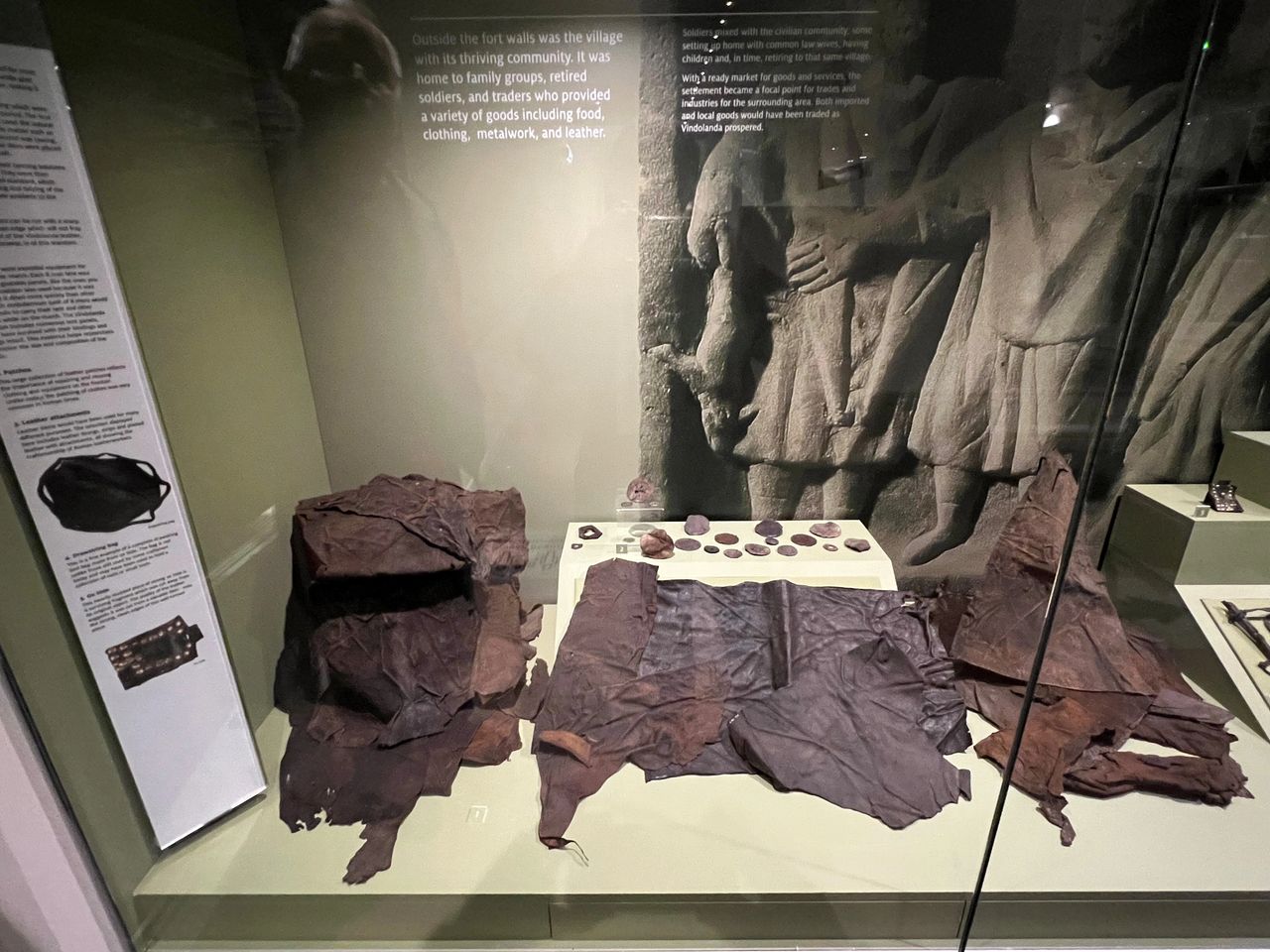
These were essential equipment for Roman soldiers on the march. They housed eight men and were made from fifty goat skin panels. Goat skin was ideal as it was lighter and dried more quickly than the other hides.
A mule would be used to carry the tent and other supplies for a group of eight soldiers.
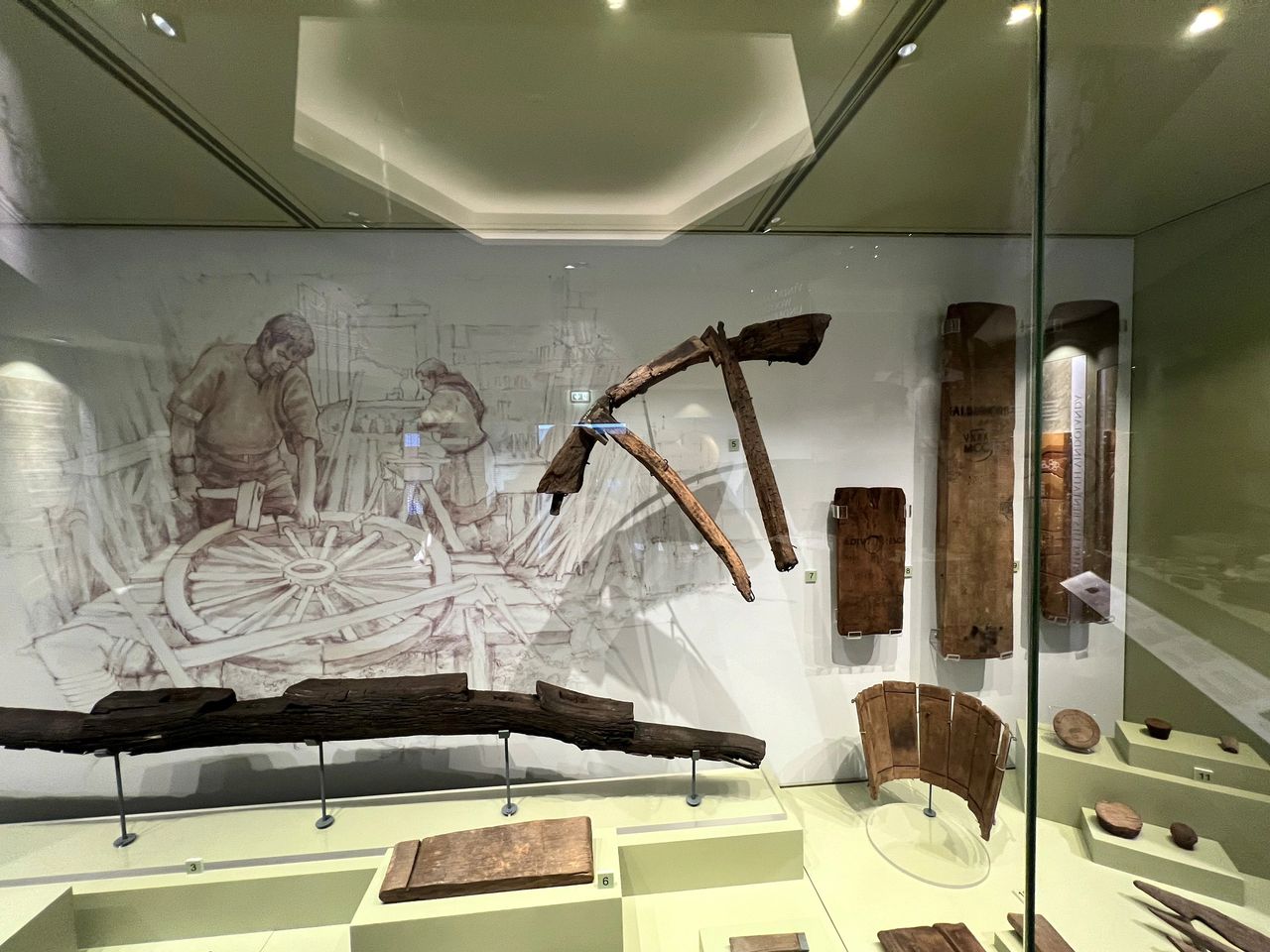
Wooden Objects
The museum has an impressive collection of wooden fragments that come from tools, wagons, and the water system. The murals behind each exhibit really help the viewer to understand how the fragments relate to how the people lived.
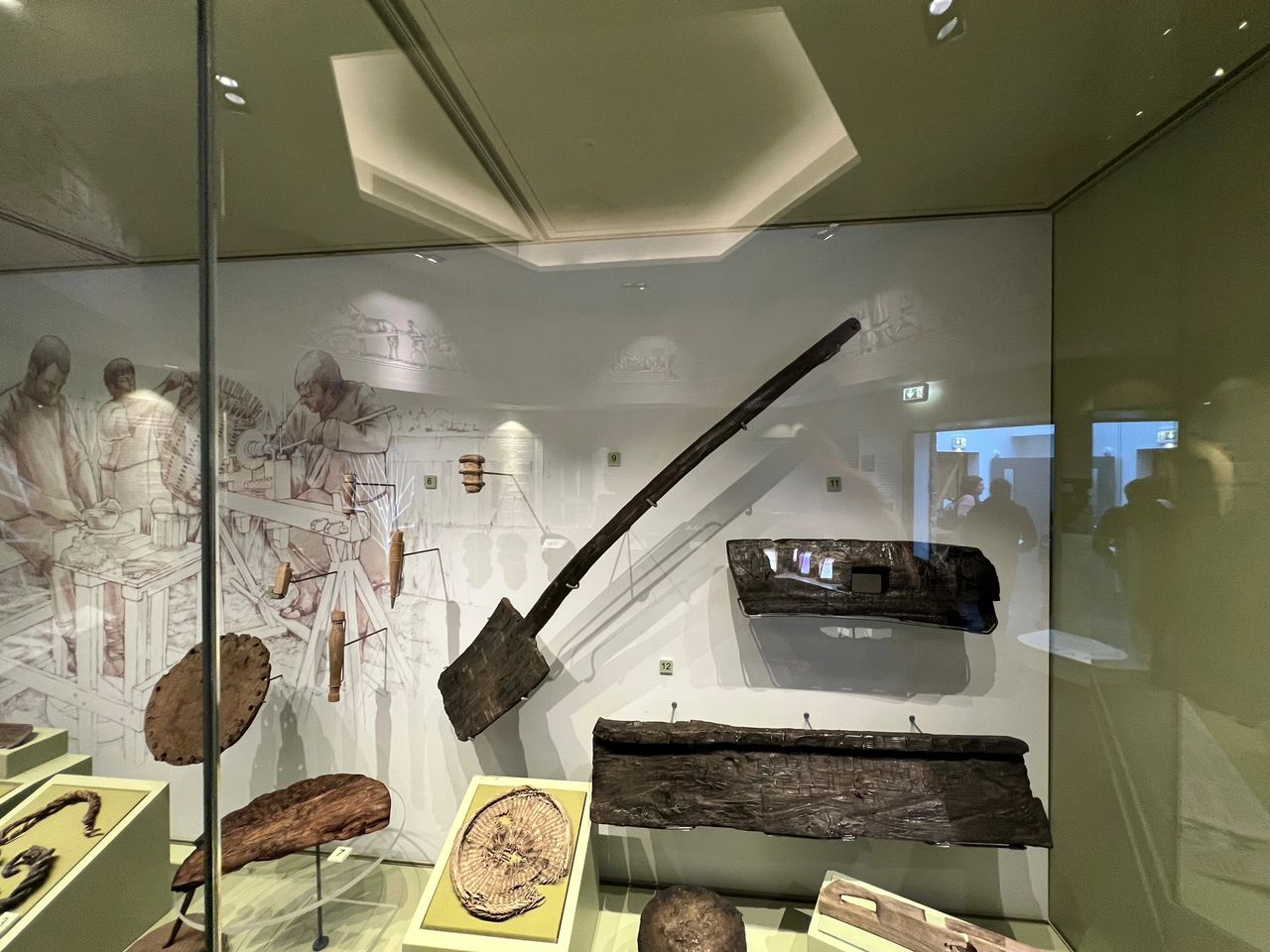
The shovel seen below is one of two rare examples of a complete wooden shovel. The blade would probably have had some type of iron edge to make it useful.
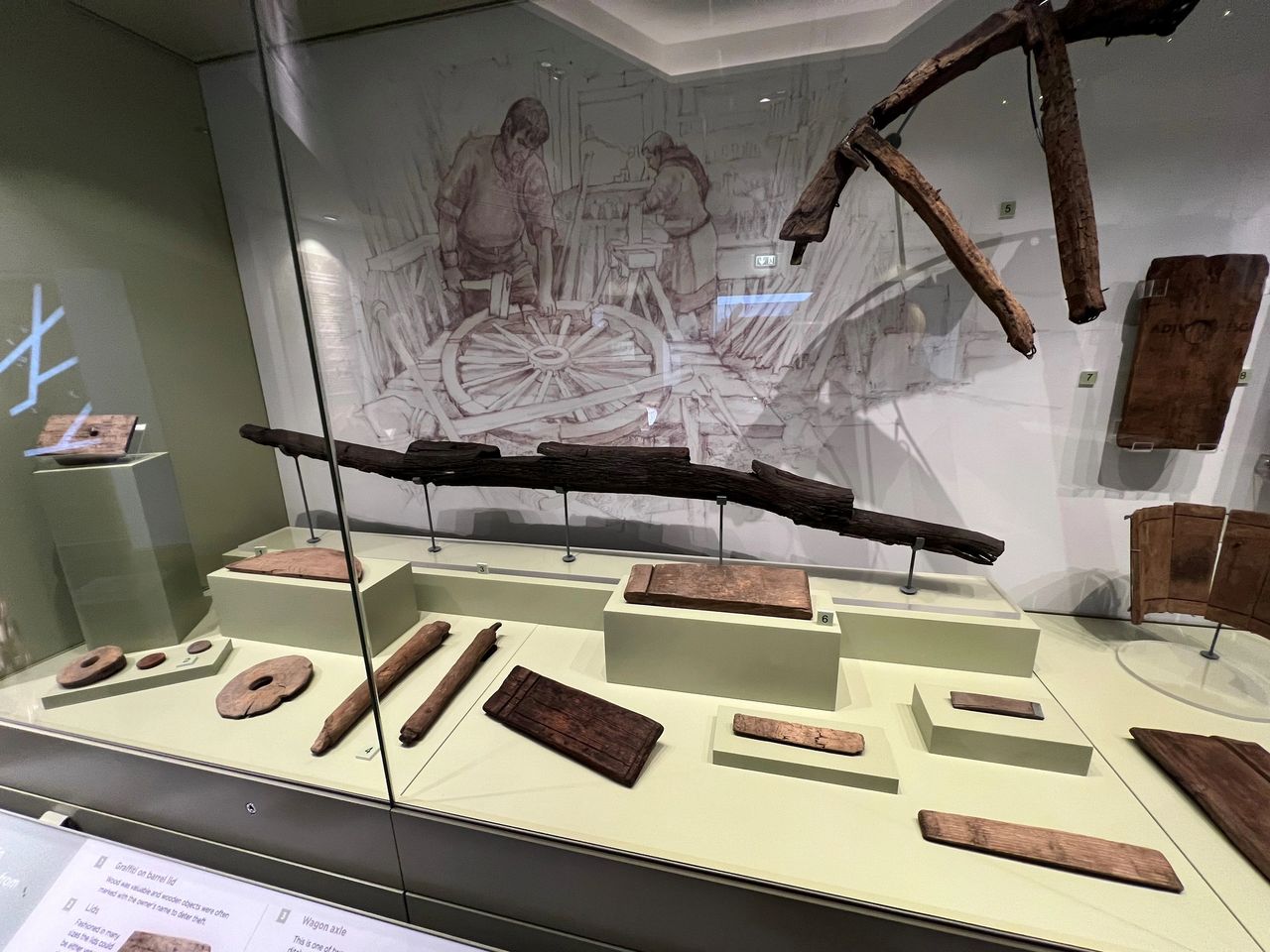
Pieces of wagon ruins are pictured below.
Water Pipes
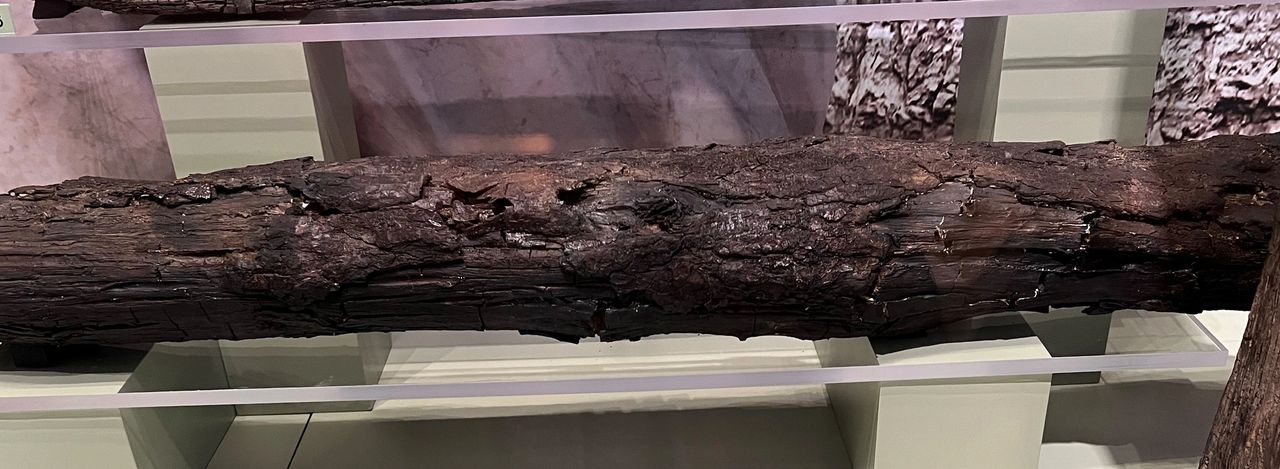
A whole network of water pipes was discovered at Vindolanda. The pipes were made of alder wood. Pipes were connected by being inserted into a junction block.
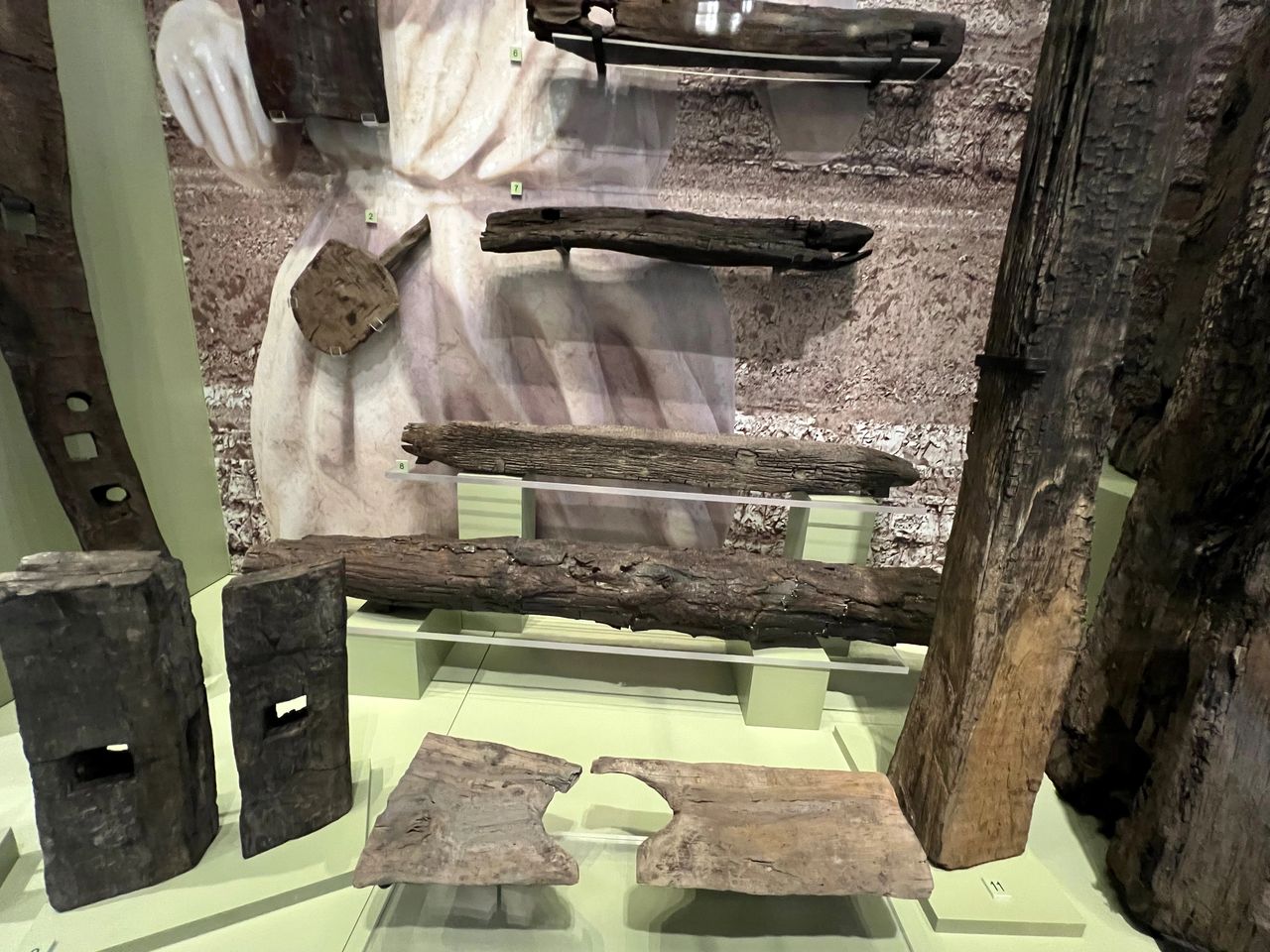
It is difficult to imagine this piece of alder wood as part of the water system.
A Toilet
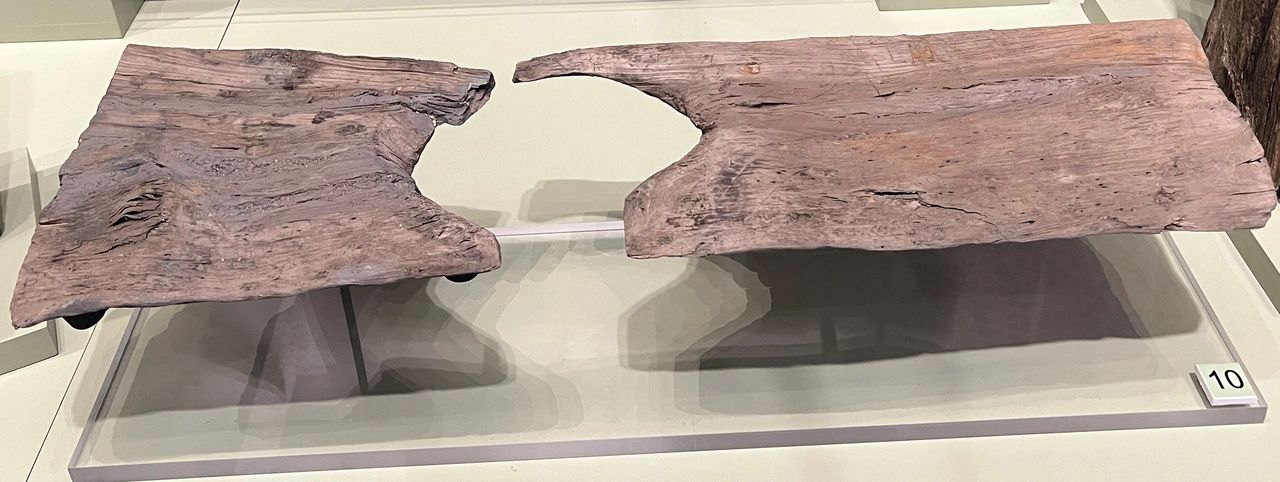
According to the museum, this is a very rare example of a Roman toilet seat. It is made of alder wood. Like many objects from the Roman ruins, the piece shown below had been re-used to cover a bad patch in the floor!
It isn’t difficult to imagine this as a toilet.
Boxing Gloves
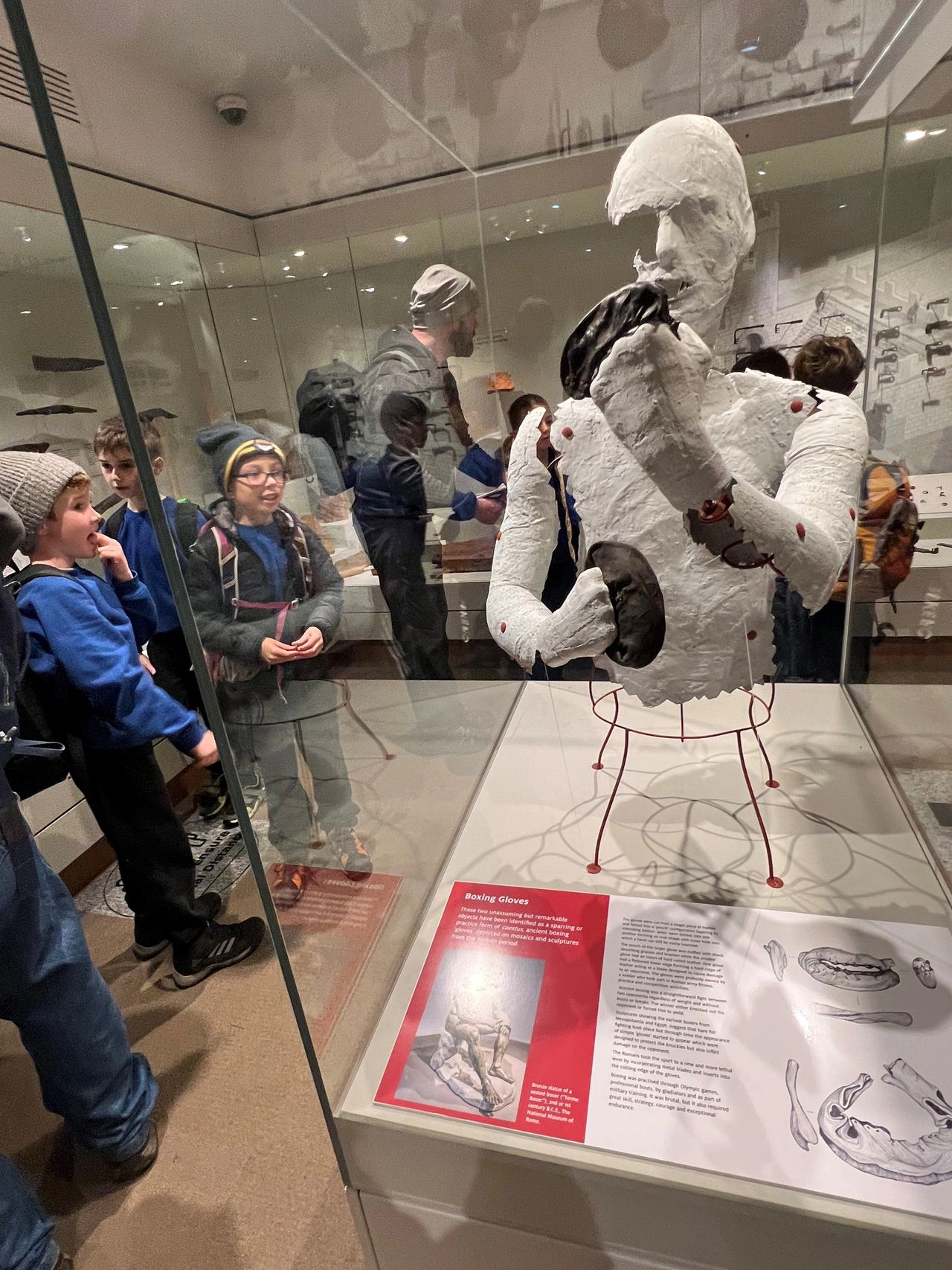
These little guys were impressed with these old boxing gloves! We shared the museum with many school children. The numbers increased in the afternoon. How special to see these treasures at elementary age! It took me until I was seventy-six to get there!
The gloves were used for sport or in closeup combat.
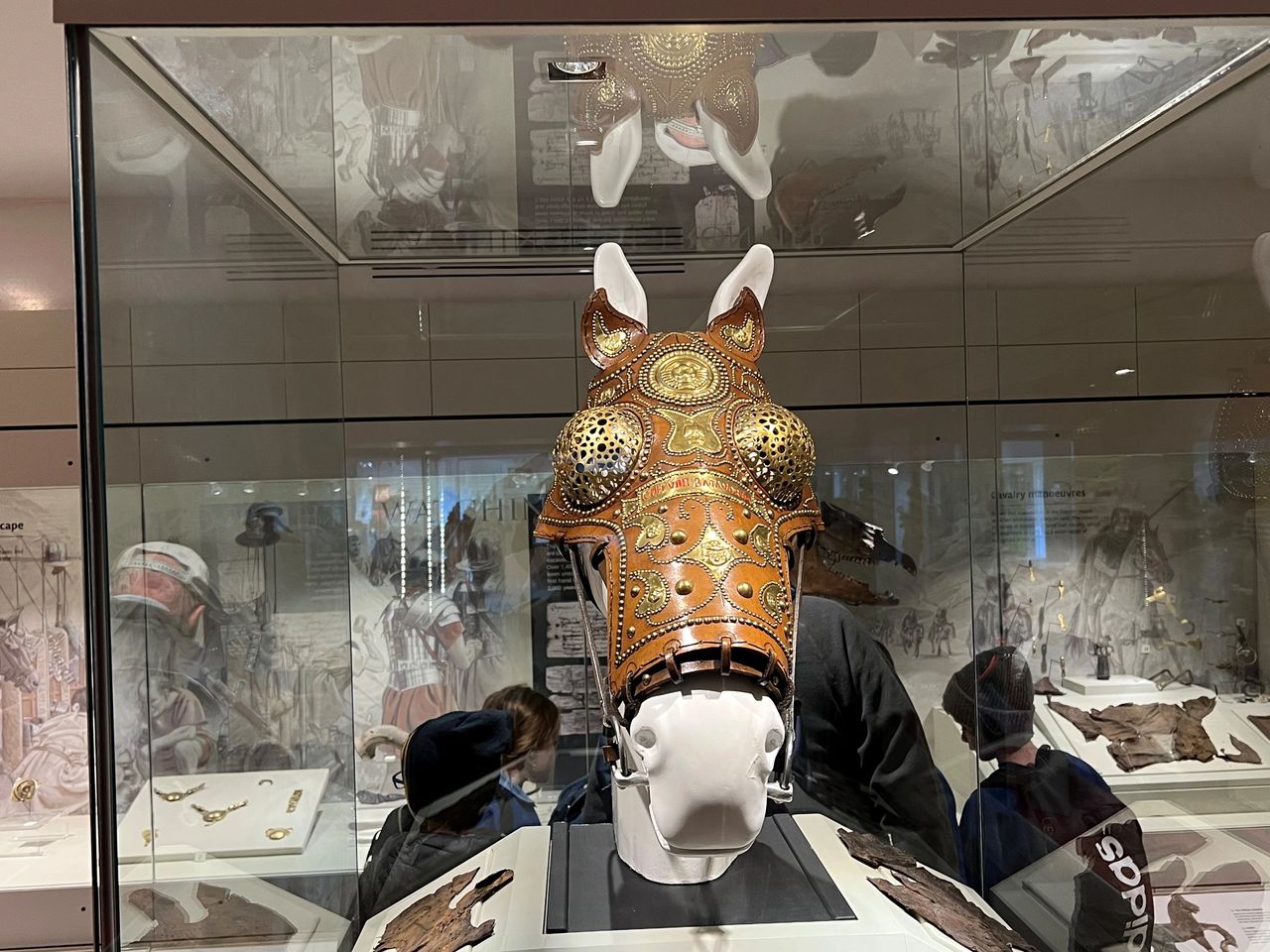
Horse Chamfron (Ceremonial Face Mask)
These were made from tough cowhide and had a soft leather inner lining. Eye pieces protected the horse while having little effect on its vision.
Fragments from four other chamfrons have been discovered at Vindolanda.
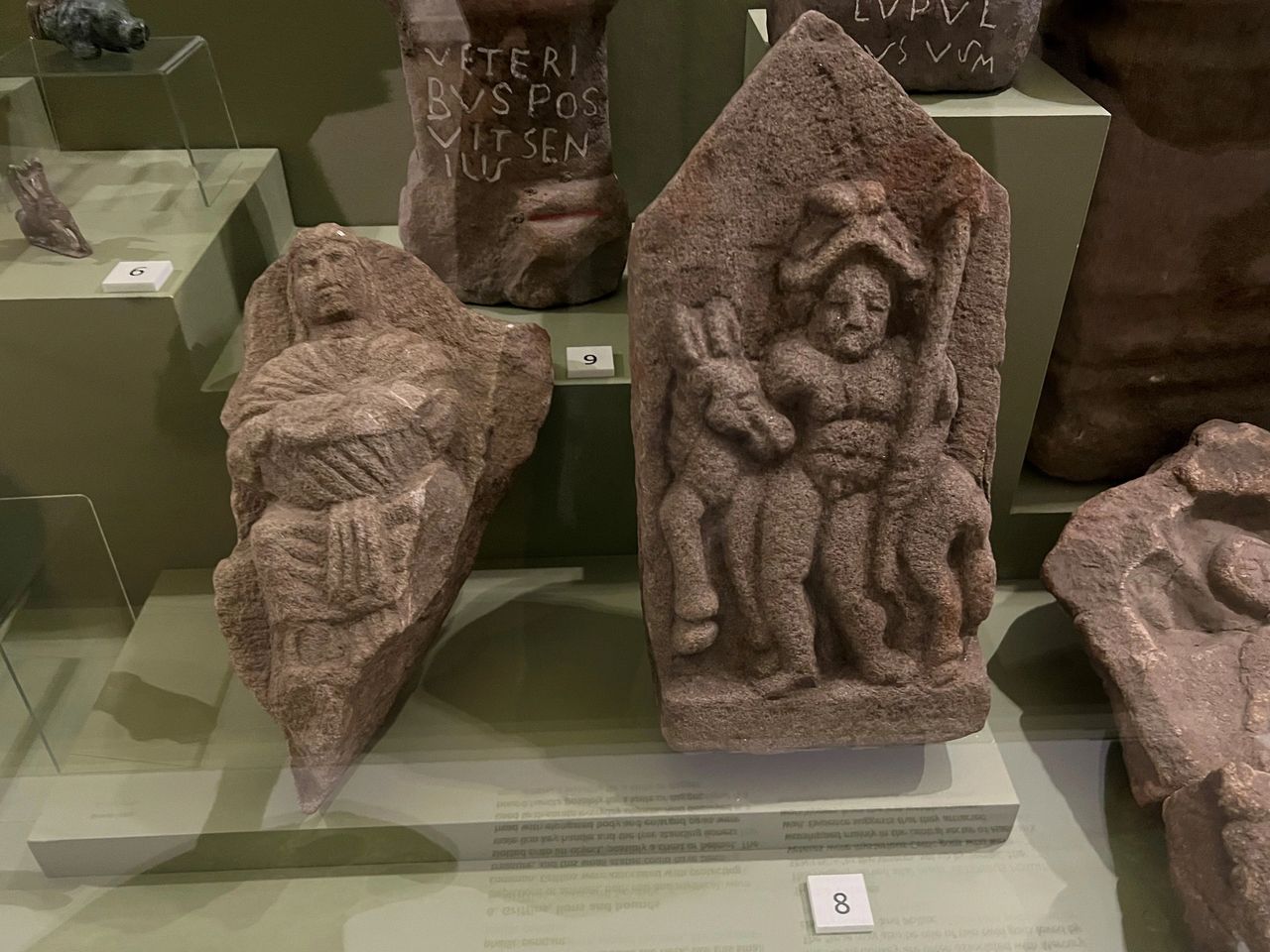
Carved Relief of An Unknown God
Made from sandstone, this carving was uncovered in 2021. It reveals a naked male figure holding a spear in front of a horse or donkey. The spear was commonly associated with Mars. There are wings on the helmet and on the horse/donkey that perhaps are associated with Mercury. The figure could also be one of the twin gods loved by cavalry: Castor and Pollux.
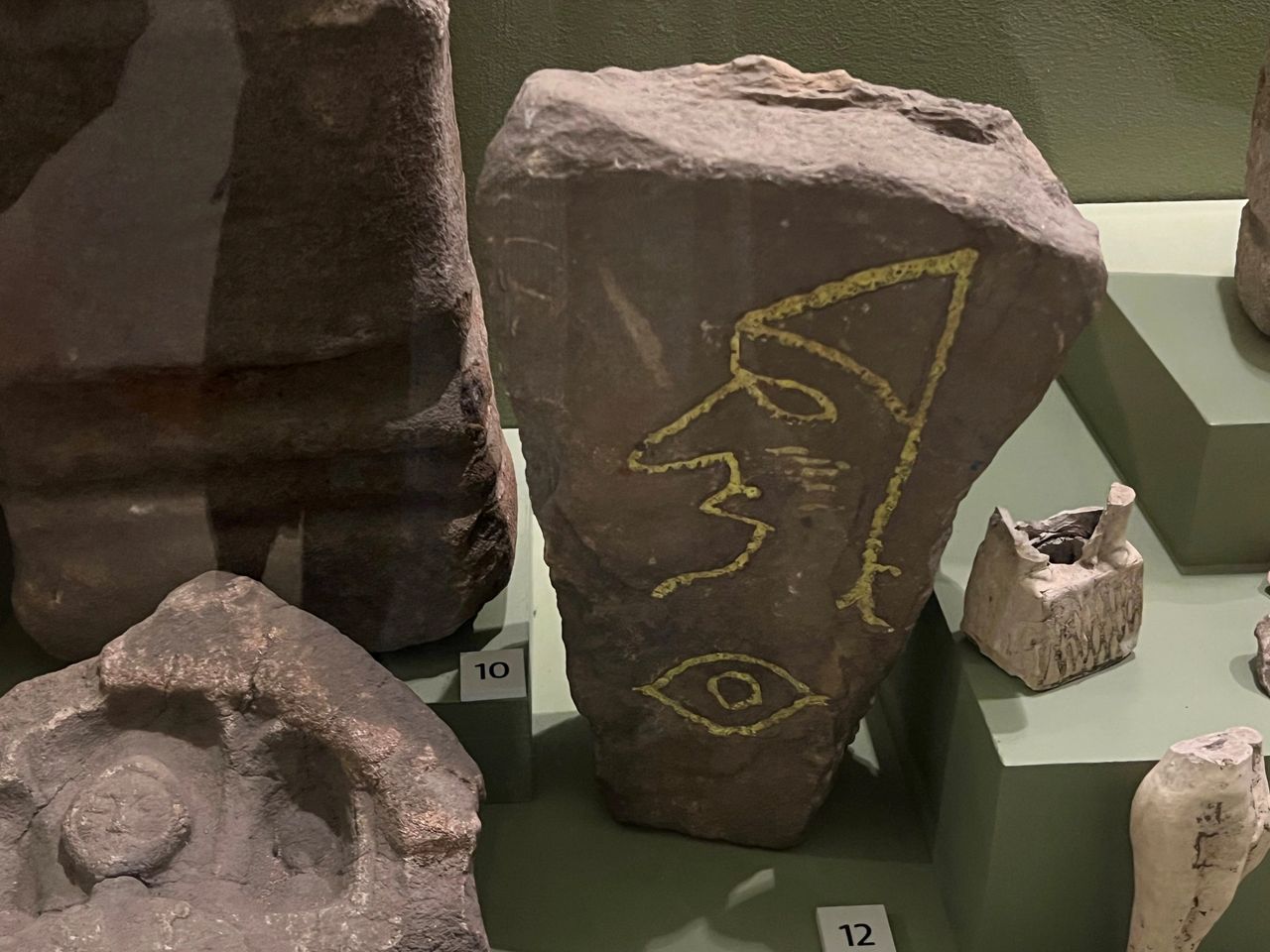
Evil Eye
This is one of two objects that are used to ward off “the evil eye”. Here is a face of a man with a Celtic pointed cap. His eye is carved below. To make the text easier to read, color was added to the inscriptions in the stones.
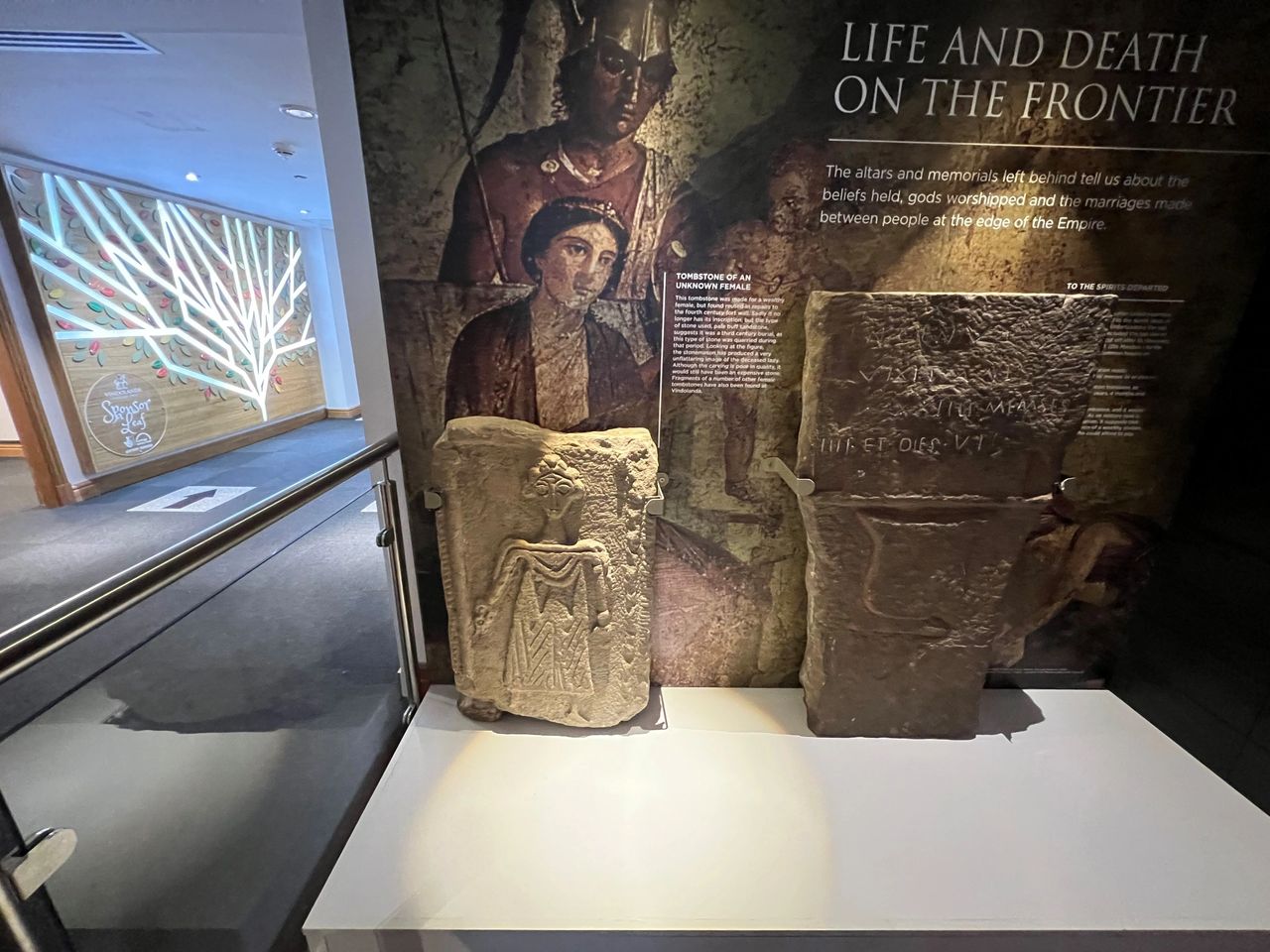
Tombstone Of An Unknown Female
Even a tombstone isn’t to be left alone. It was very rare for a female to have her own stone. However, this one was taken to make repairs in the fourth century for a fort wall. Fragments of other female tombstones have been discovered at Vindolanda.
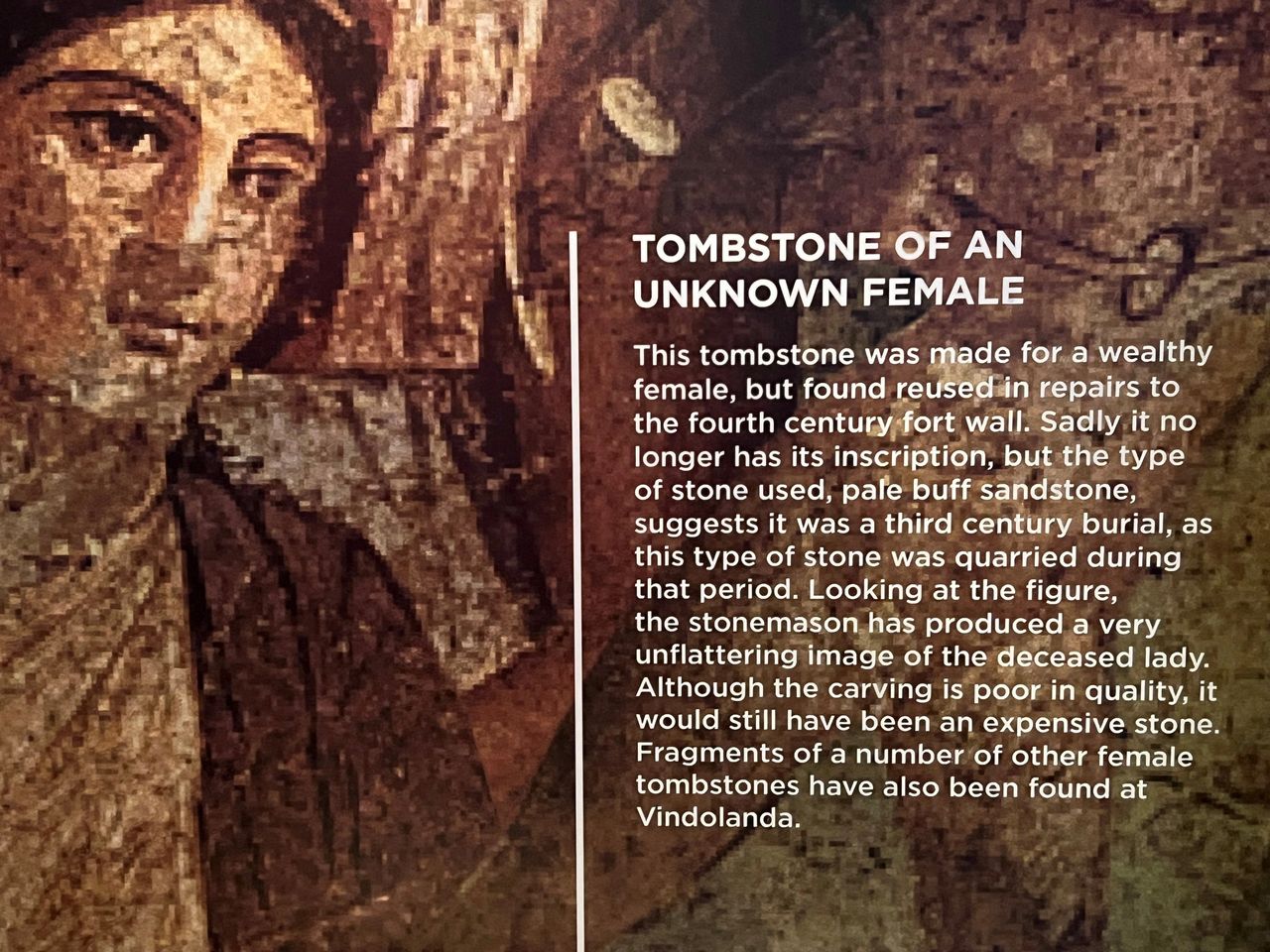
A view of the tombstone is seen below.
As is the case when you are with a tour group, even a couple of hours is not enough to have a quick lunch in the very attractive cafe and see the exhibits. We had the added pleasure of sharing our table with our tour guide, Stephen. It was such fun to hear about his life. He, too, loves to travel and told us about a trip that he and his wife were planning.