


Home to extensive forested landscapes, the Odenwald region in Germany is a treasure trove for nature enthusiasts. Among its many attractions, the Felsenmeer (Sea of Rocks) in Lautertal stands out – a remarkable sea of rocks, enchanting visitors with its unique stone formations. This geological marvel, formed over millions of years, is not just a testament to the relentless forces of nature but also a silent teacher, offering lessons in geology and history.
In the past, people attributed its origin to the following legend: In ancient times, when giants roamed the Odenwald, two of them dwelled in the vicinity. One made its home on the Felsberg, where the Felsenmeer is nestled, while the other occupied the adjacent mountain. A disagreement between them ensued, resulting in a fierce battle of hurling rocks. The giant residing on the Felsberg (Rock Mountain) found himself at a disadvantage due to the scarcity of stones, while its adversary seized the upper hand. Swiftly, the giant from across entombed its opponent beneath a vast collection of colossal boulders. As the tale goes, if one were to stomp heavily upon the ground of the Felsberg today, faint echoes of the buried giant’s lamentation can still be discerned.
Like A river of rocks flowing down the mountain
The Felsenmeer which stretches over a kilometer up the mountain, consists of massive rocks and smaller boulders. Its composition, a dark gray quartz diorite, was formed around 340 million years ago by the collision of two paleocontinents. The distinctive appearance of this literal sea of countless rocks is a result of spheroidal weathering. Over long periods of time, this natural process has fragmented the rock into individual blocks, which were finally exposed by erosion of the surface layers.
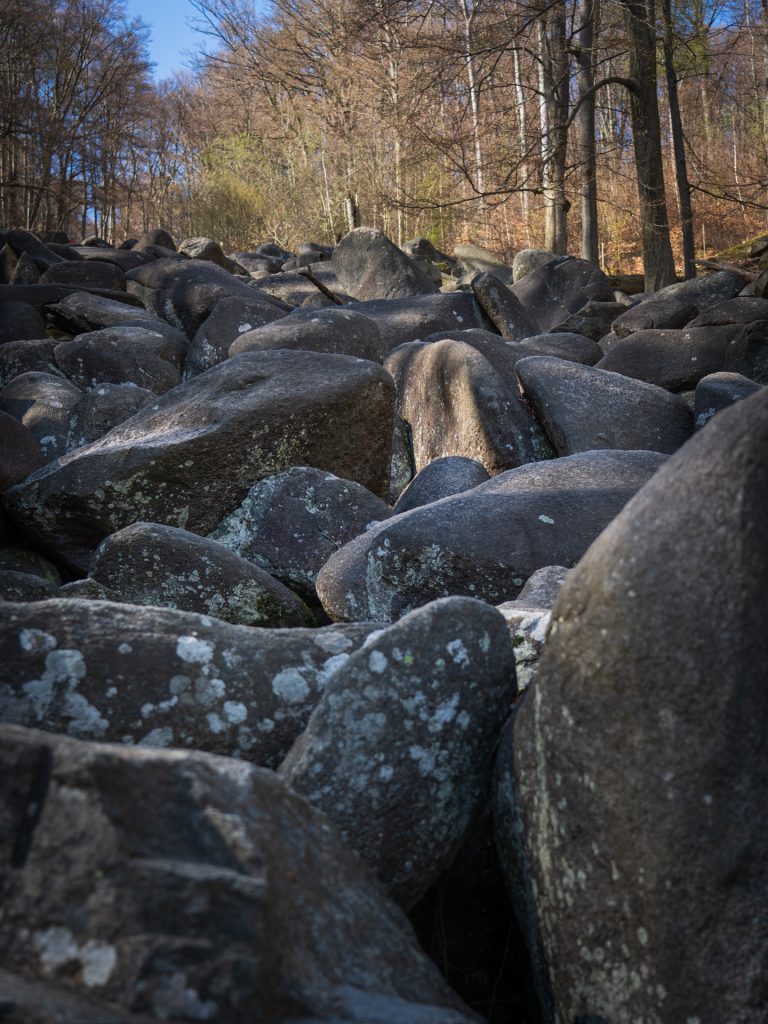
Eroded rocks of all sizes
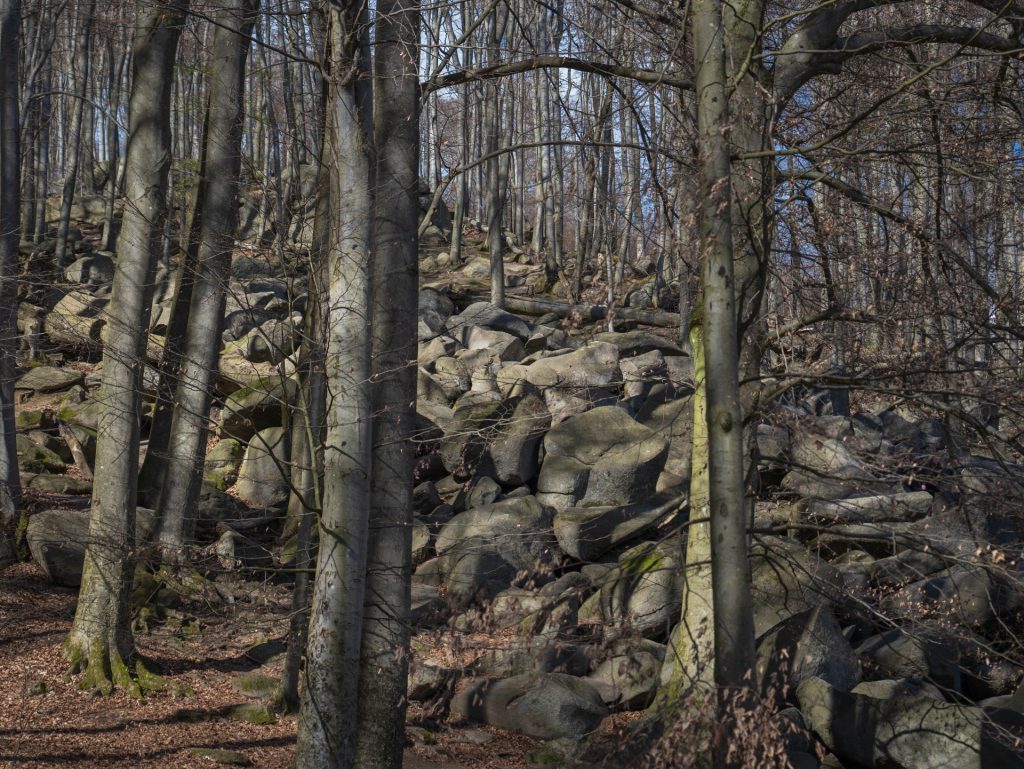
Rocks as far as the eye can see
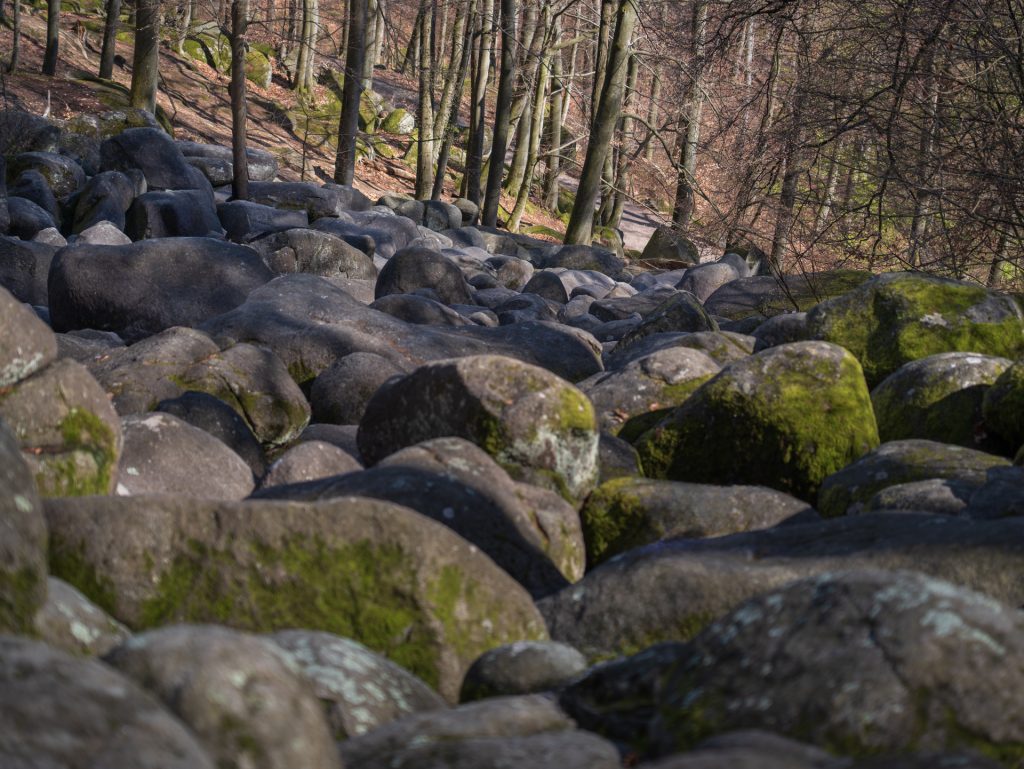
A landscape created by spheroidal weathering
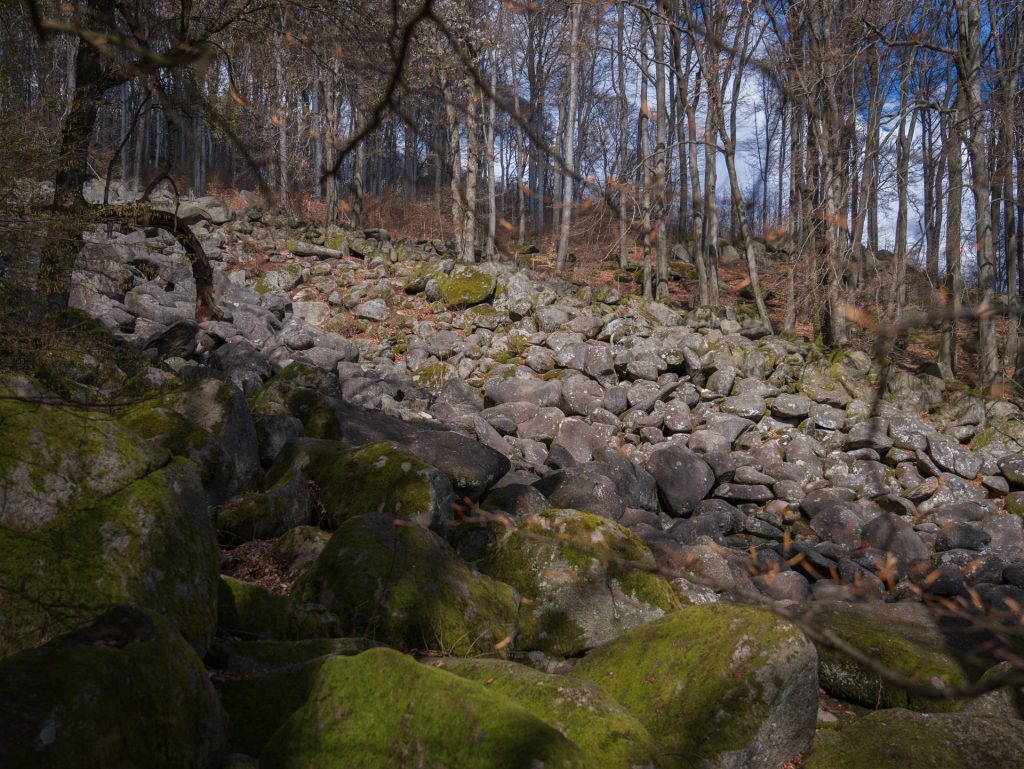
Like a river flowing down the mountain
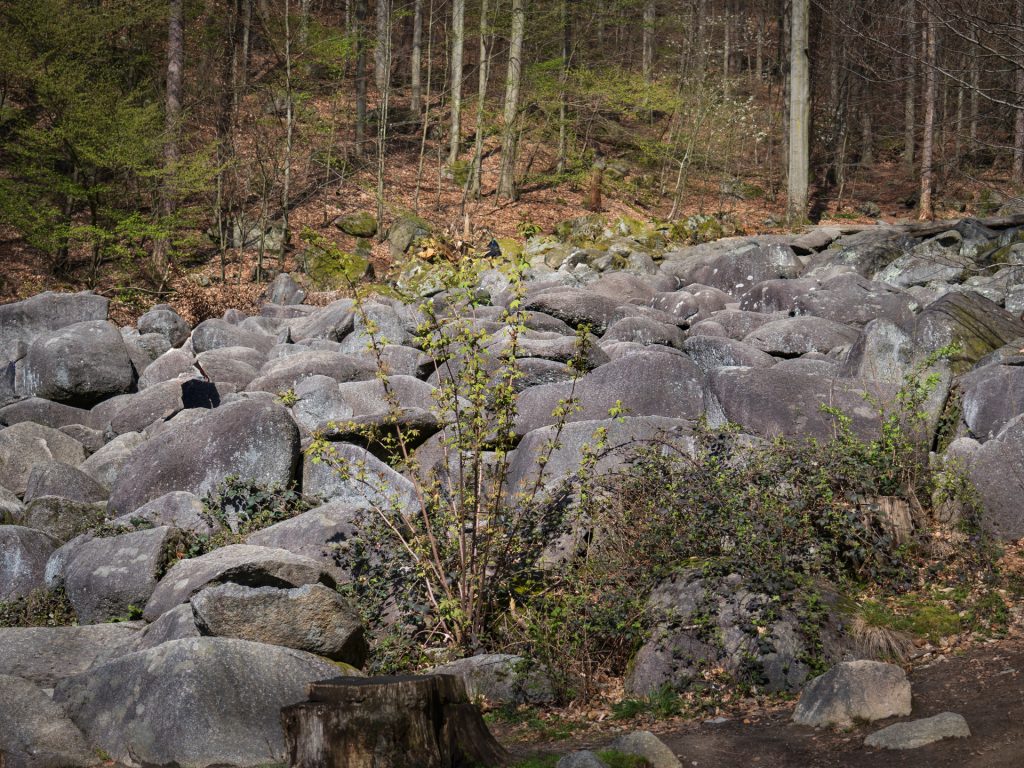
Rounded rocks, eroded and uncovered over very long periods of time
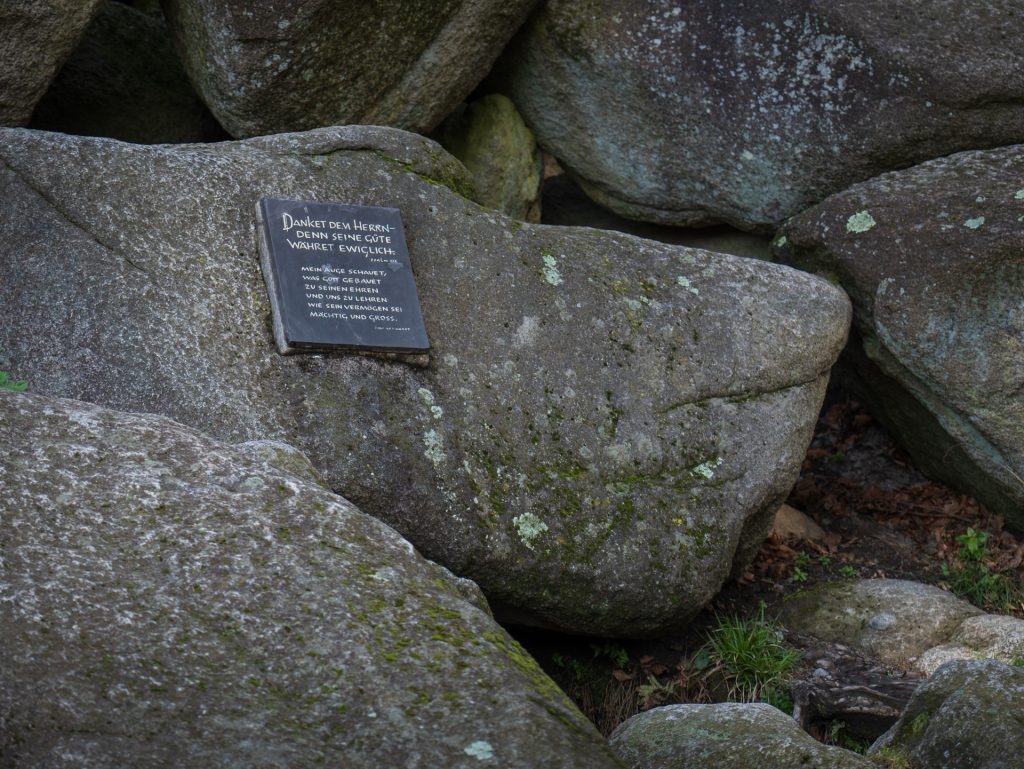
Sign at the Siegfried well. Psalm 118: Give thanks to the Lord – For His mercy endures forever. And below an excerpt from Paul Gerhardt’s “The golden sun full of joy and delight”: My eye sees what God has built, for his honor and to teach us, how his power is mighty and great.
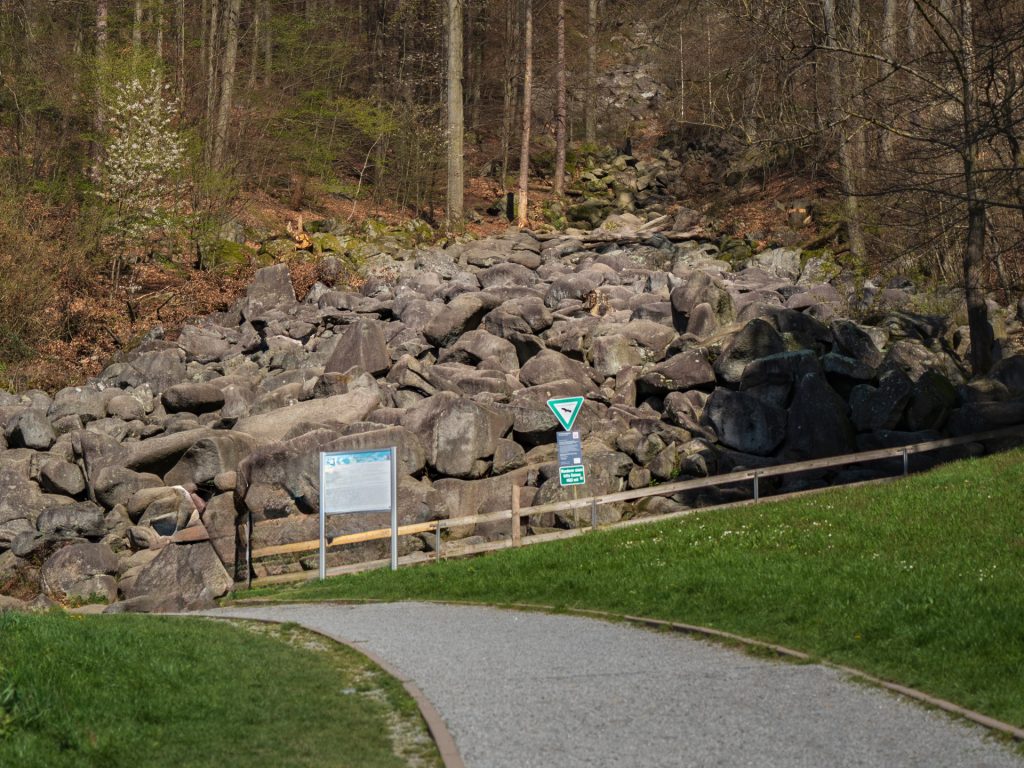
Entrance to the Felsenmeer
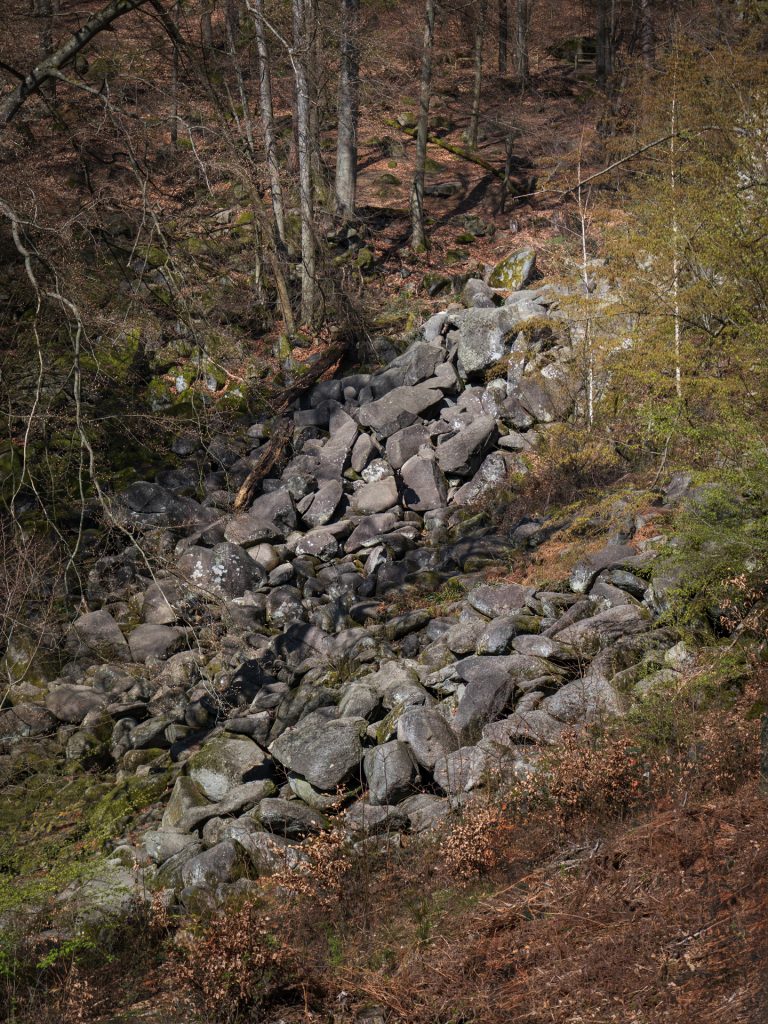
Sea of RocksA river or sea of rocks
An Ancient Roman Quarry
Apart from its geological significance, the sea of rocks holds historical importance too, having served as a quarry in the distant past. This is evidenced by the unfinished or damaged stone workpieces that Roman carvers left behind on the rocky hill, probably more than 1600 years ago.
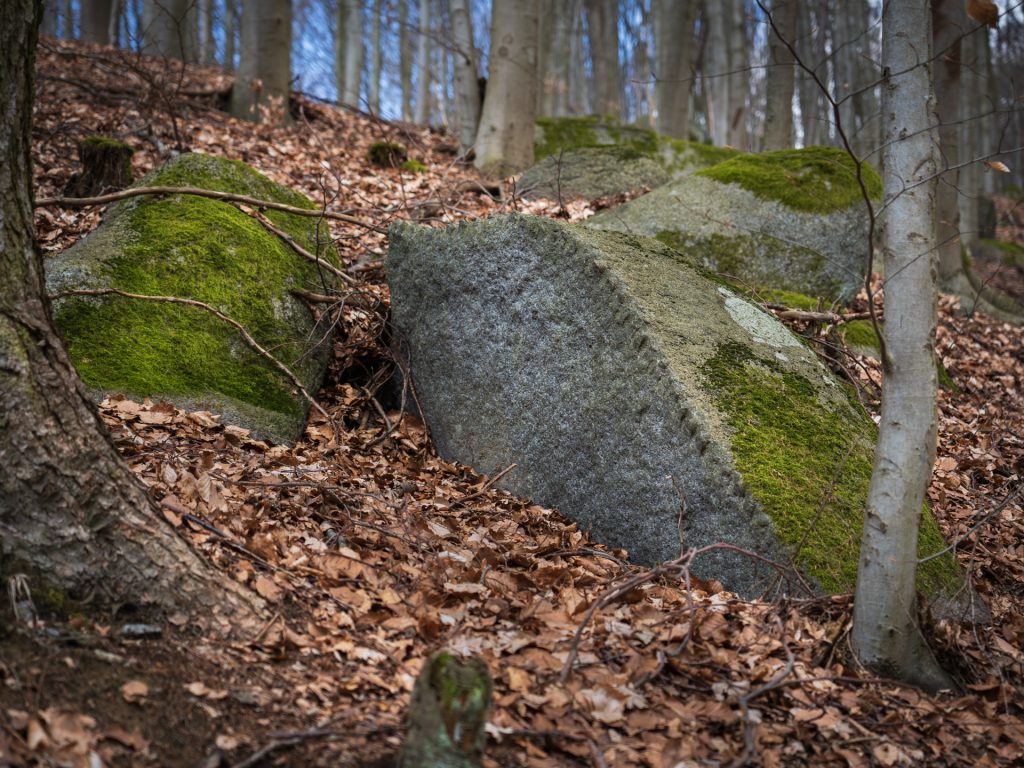
Stone work in the forest
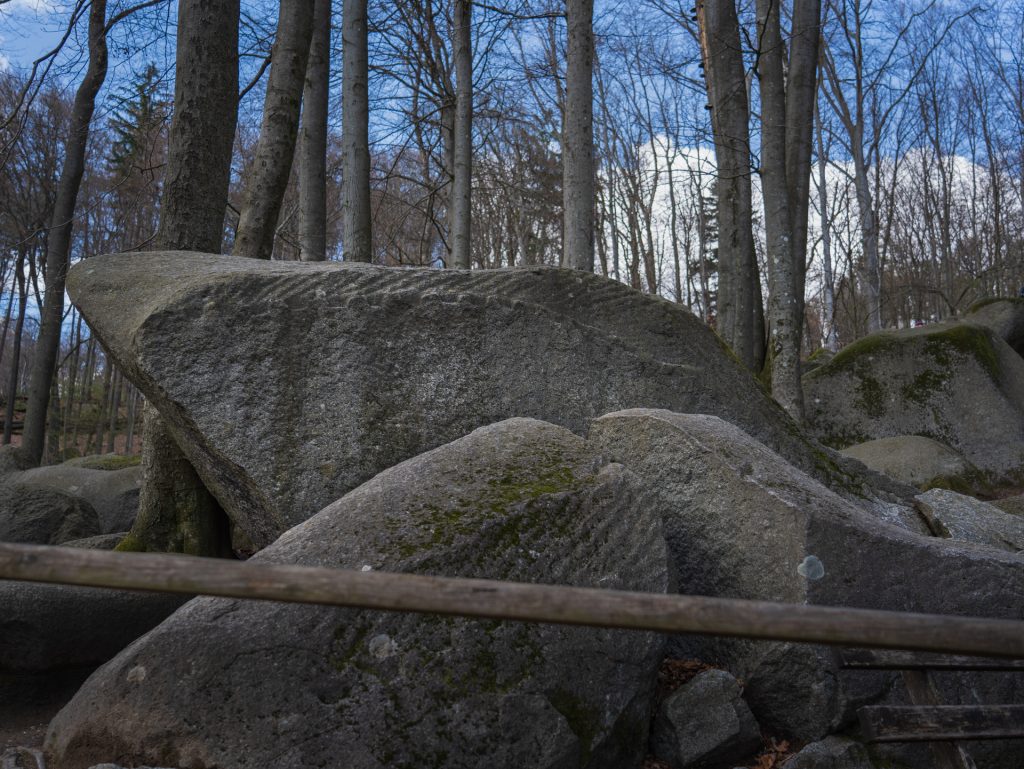
As if slices had been cut cleanly
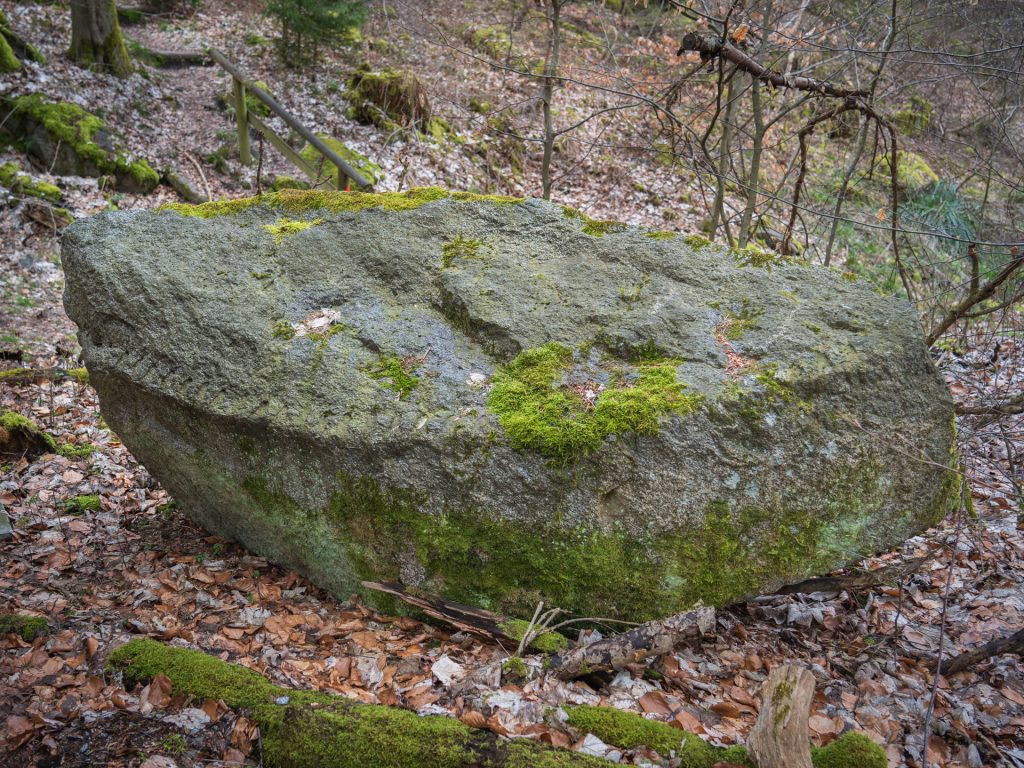
Worked stone in the forest
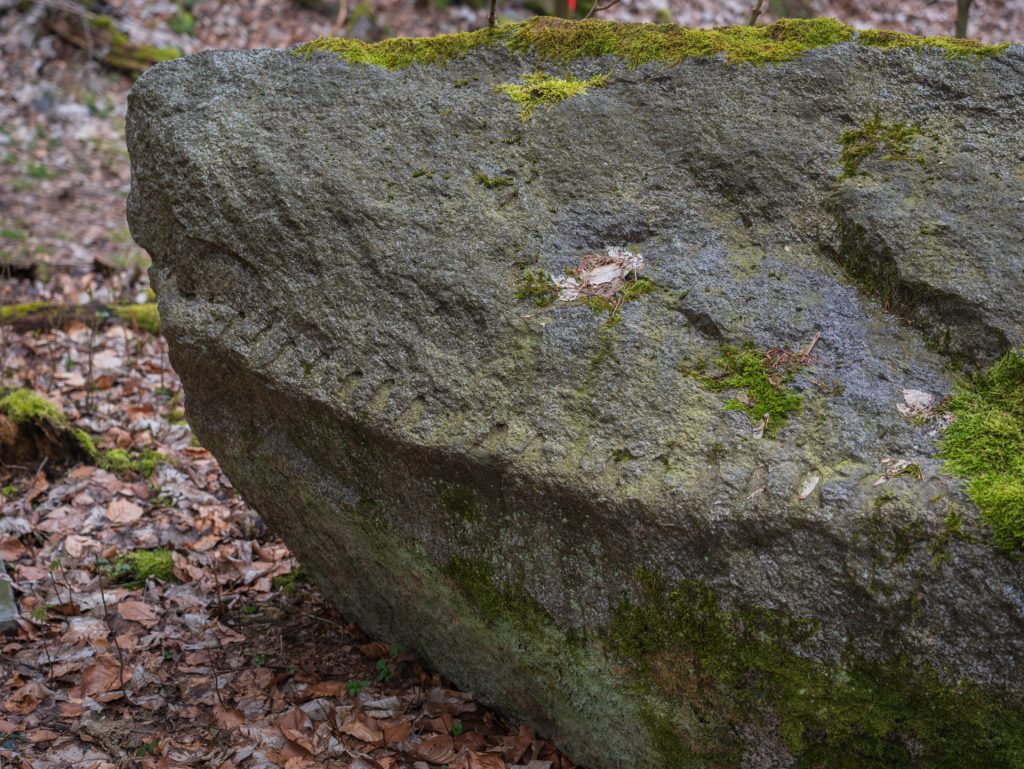
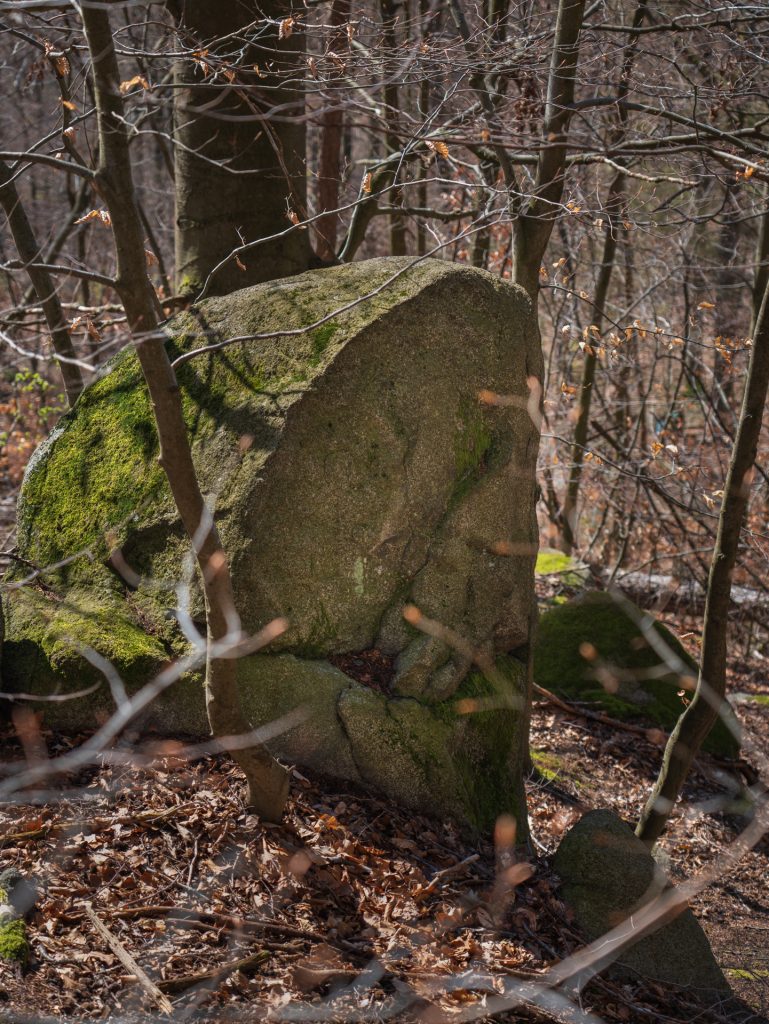
Rock from which one half has been cut off
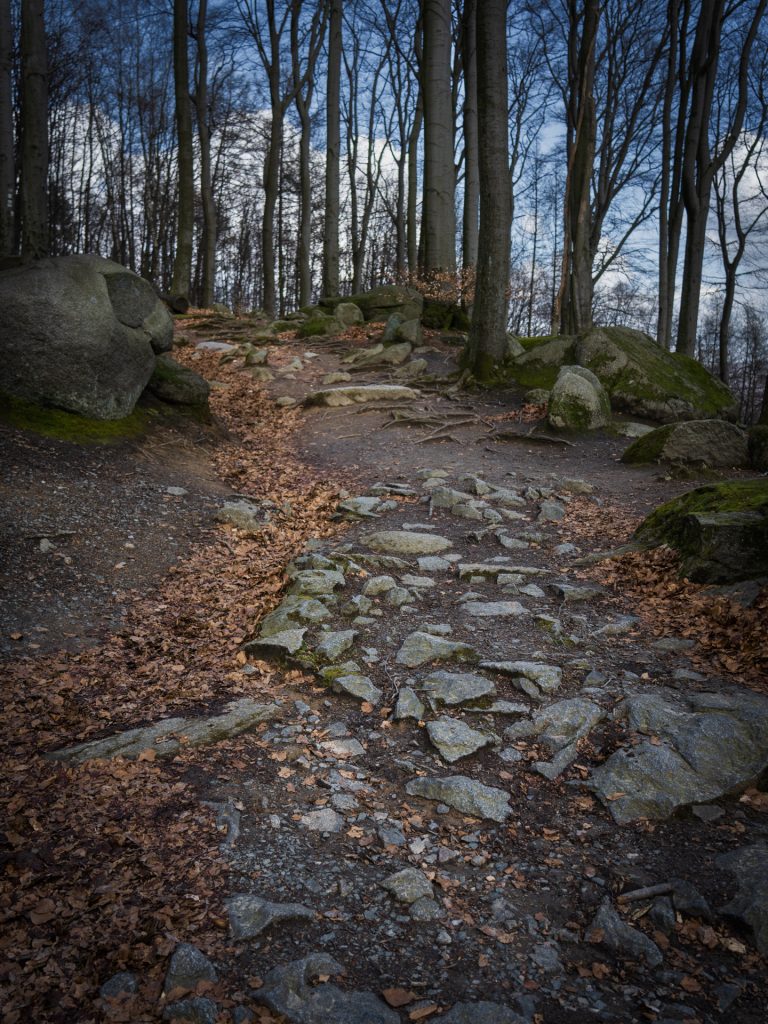
A walkway at the upper end of the sea of rocks
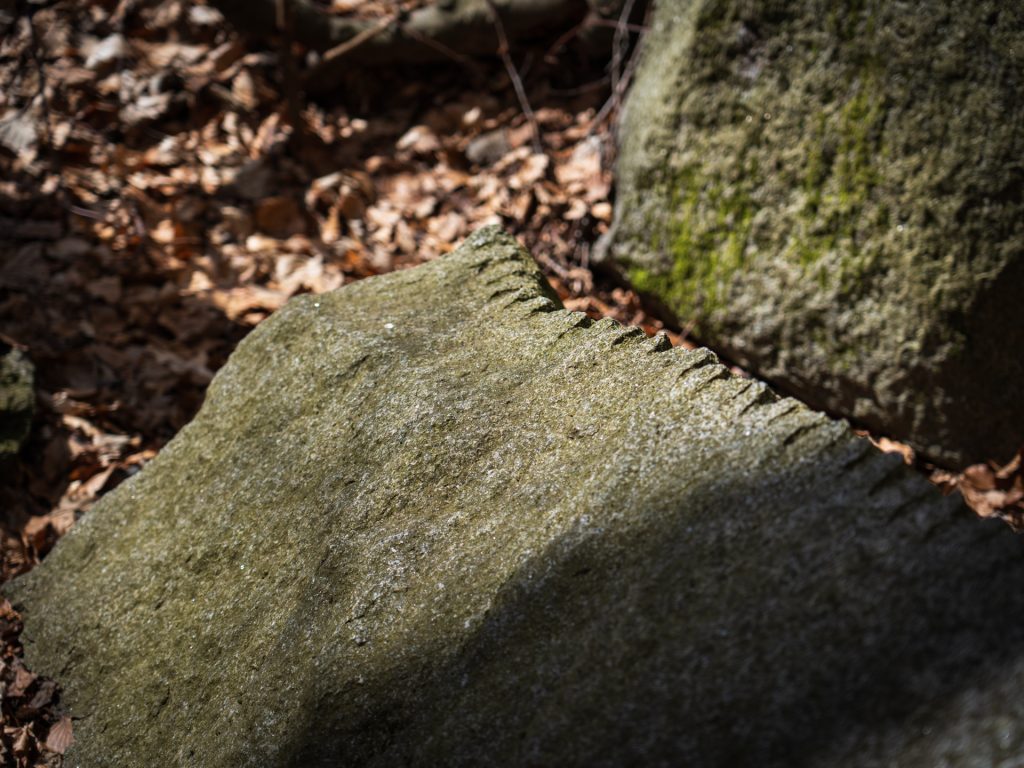
Chisel marksStone workpieces left behind
Over 300 of these remnants are said to be scattered throughout the nearby surroundings, serving as a testament to the exceptional craftsmanship and techniques utilized in ancient stonemasonry. Unfortunately, I can only show you some here in this blog post, but these are probably the most impressive pieces on that mountain.
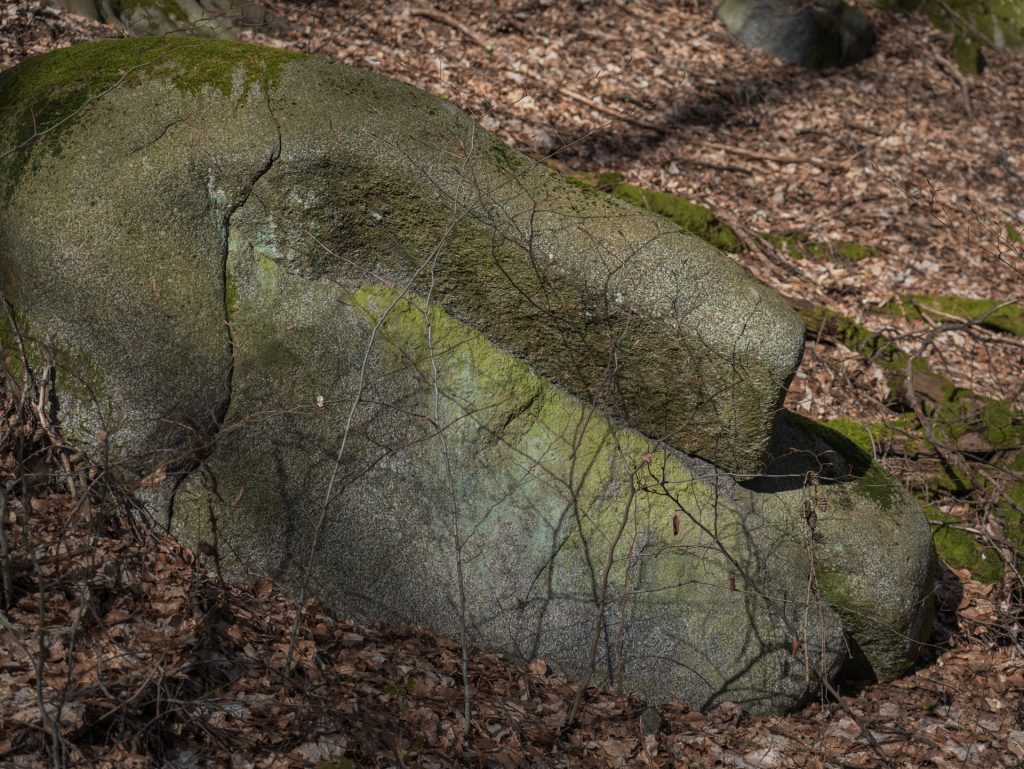
A strange stone shape in the forest
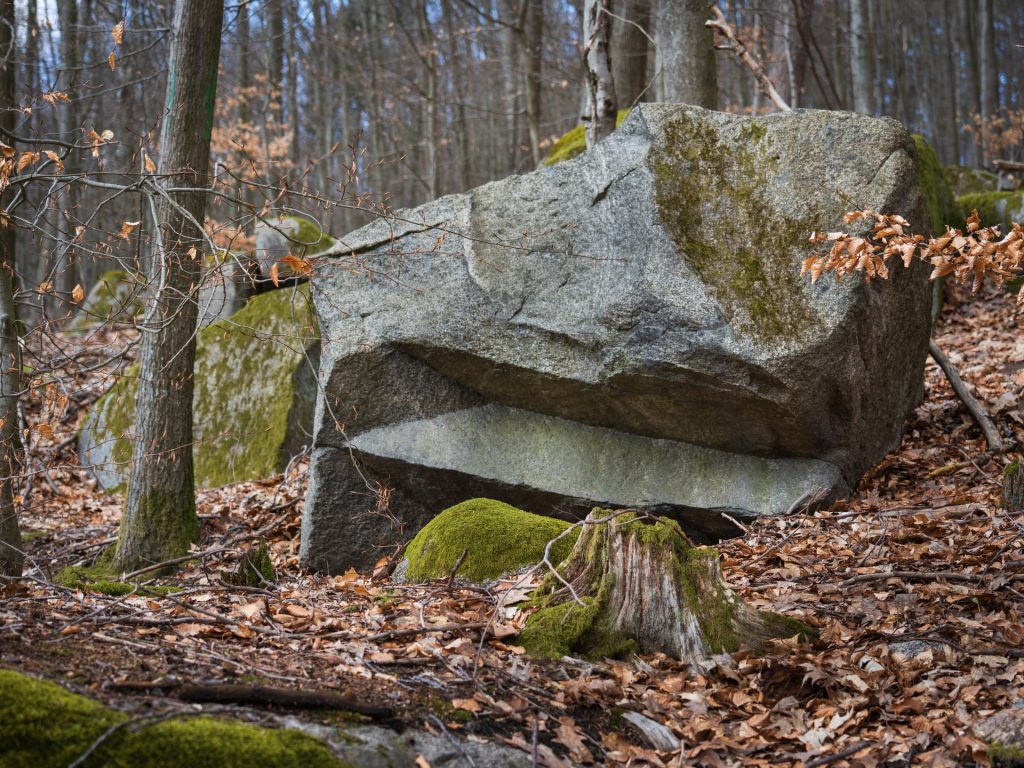
A boulder from which something has been cleanly cut outStrange shapes have been carved out of the rocks
The Half-Cracked Stone
Not far from the Feslenmeer, sits a sizeable boulder adorned with peculiar rectangular indentations on one side. These markings bear witness to an endeavor to cleave the stone, likely dating back to Roman times.
The reasons behind the unfinished work remain uncertain. Judging by its outward appearance, it appears that a successful split-off has already taken place on the front side.
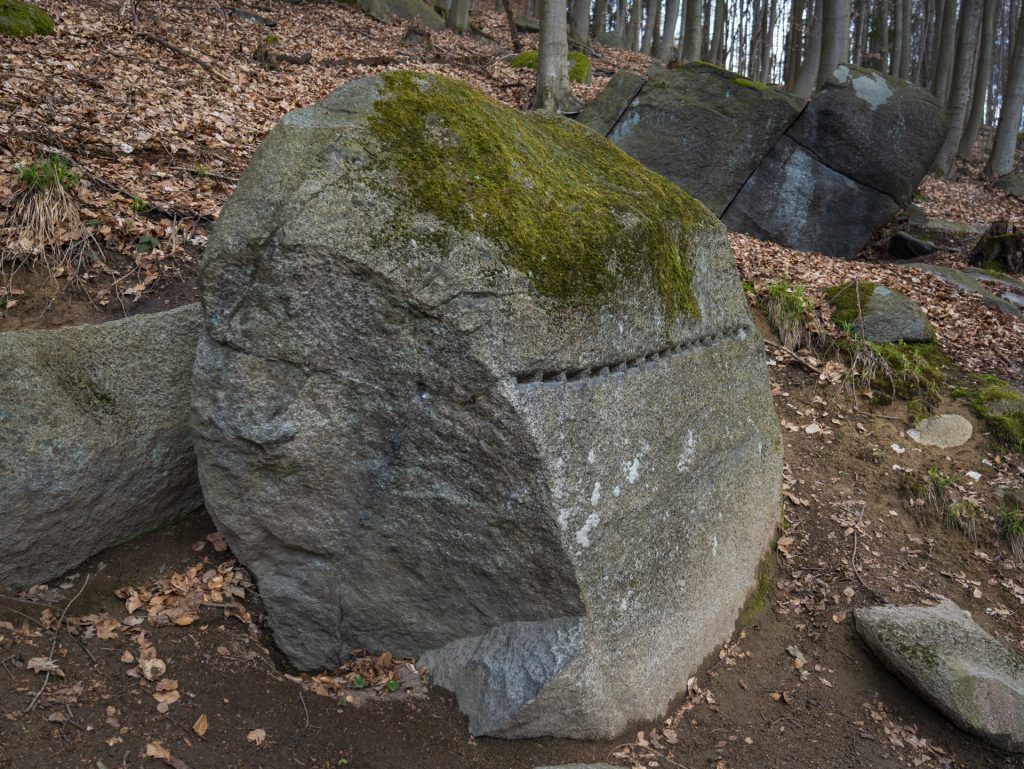
Rock prepared for splitting
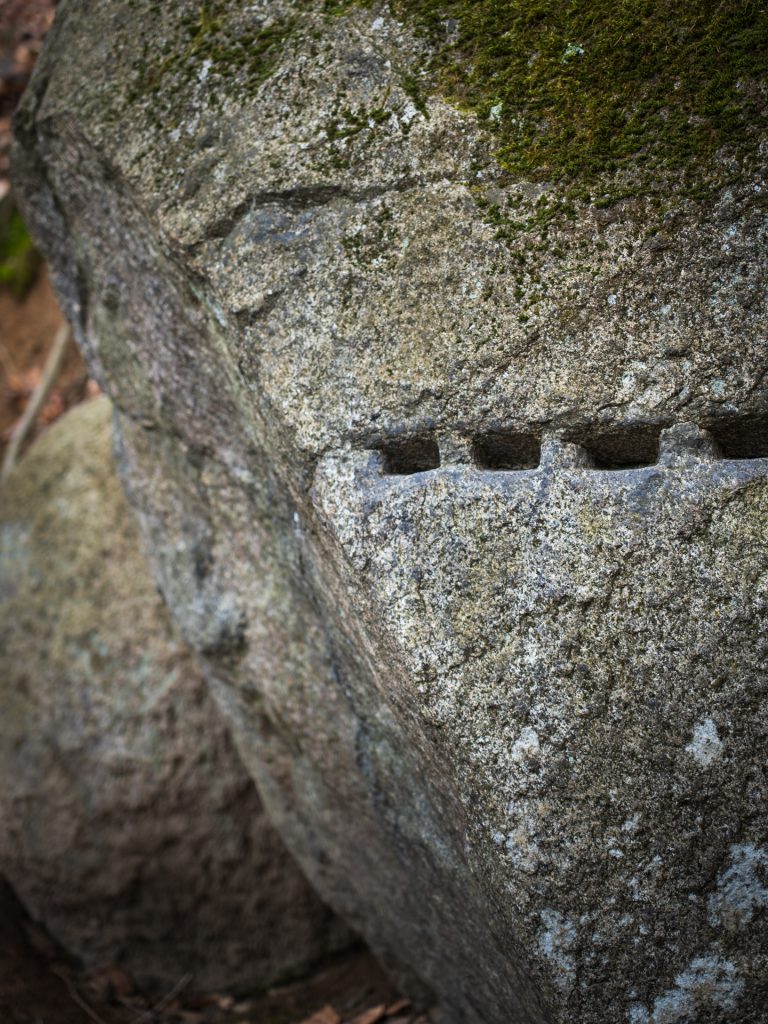
Holes for the splitting wedgesWork had begun on splitting the stone
Column Manufacture
In some places, remnants of stone pillars can still be discovered. Among these relics is the renowned Giant Column, situated at the upper end of the sea of rocks. This colossal structure spans a length of over 9 meters and weighs 27.5 tons. According to official sources, it was built under the Roman Emperor Constantine the Great in the 400th century AD and was intended for his residence city of Trier, around 150 km away.
According to historical research, it is believed that the pillar once stood upright there and functioned as a sanctuary for pagan/Germanic practices. In 16th-century writings, it was referred to as the Boniface Column, named after St. Boniface. This suggests that an ancient shrine was reinterpreted and transformed into a Christian place of worship.
The church then had it knocked down in the 17th century, as the local inhabitants continued to celebrate the spring festivals there on May 1 according to old Germanic custom, despite the fact that this was forbidden.
By the way, Johann Joachim Winckelmann, a German writer, published his thoughts on the column in the 17th century as follows: ” … to see a large, enormous, hard, smooth, circular stone column with the greatest astonishment. …on one side one immediately sees several frames, so that one suspects from all circumstances as if this stone were not natural, but cast, an art in which the ancient peoples were excellently experienced… “
He appears to be alluding to an old method of stone casting, something that is frequently also mentioned in relation to megalithic sites like those found in South America. These places are renowned for their remarkably shaped stone walls.
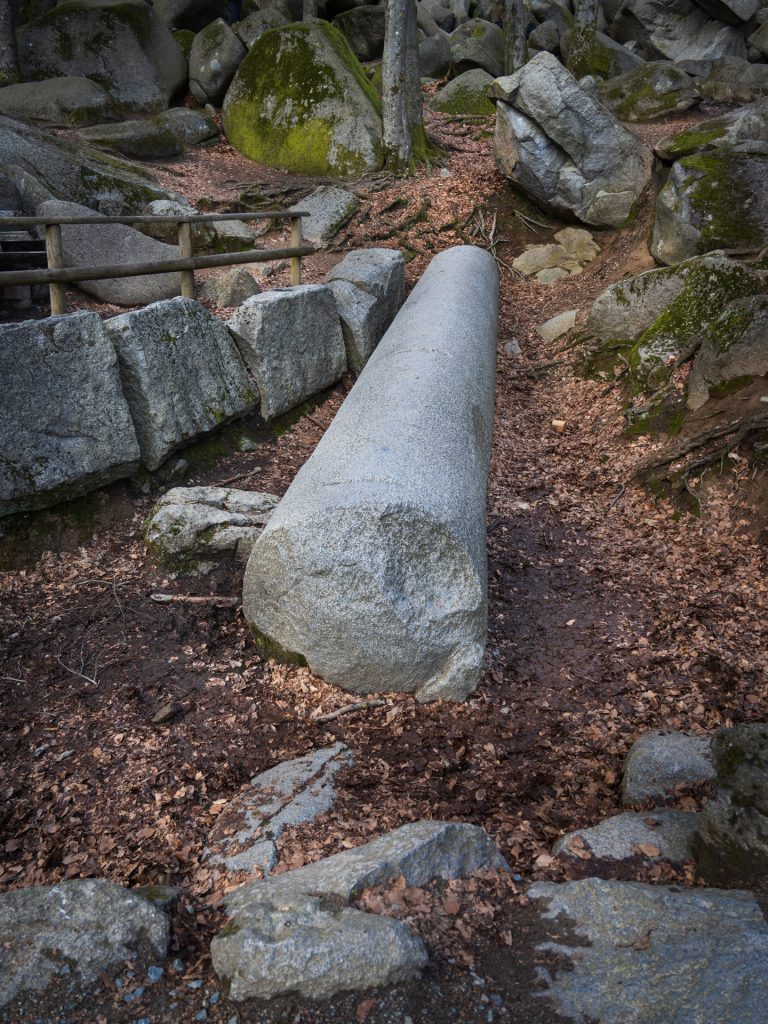
The toppled Giant Column, over 9 meters long and weighing 27.5 tons
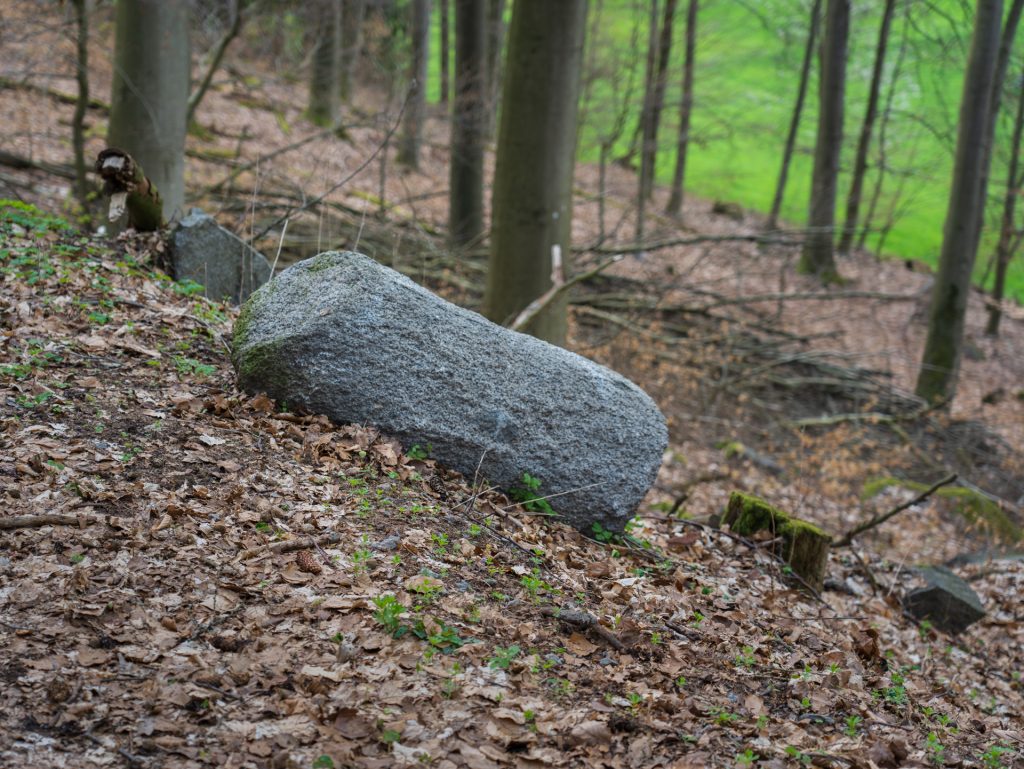
Fragment of a columnStone columns
A Coffin for A Giant
The Giant’s Coffin (German: Riesensarg), is another captivating artifact from ancient times. This stone structure, bearing a striking resemblance to a coffin, is believed to have been carved too by ancient Roman stonemasons.
Its shape suggests that it was likely intended as a sarcophagus. The abandonment of this piece may be attributed to the belated discovery of structural defects in the rock, rendering further work on it futile.
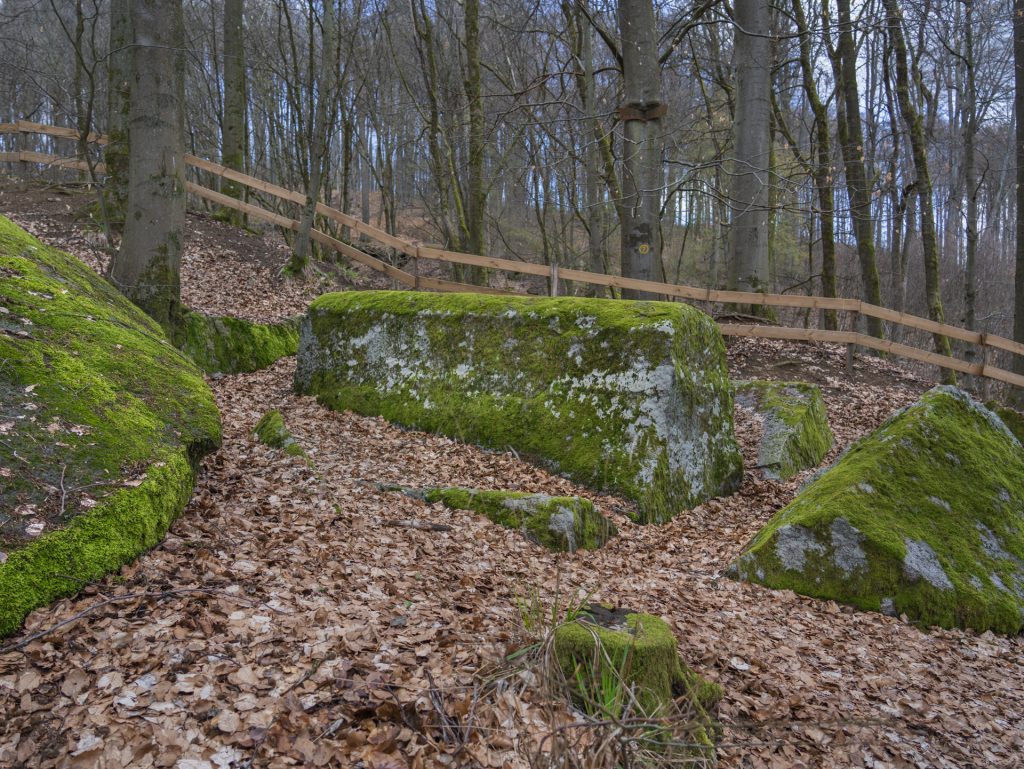
The structure looks like an oversized sarcophagus
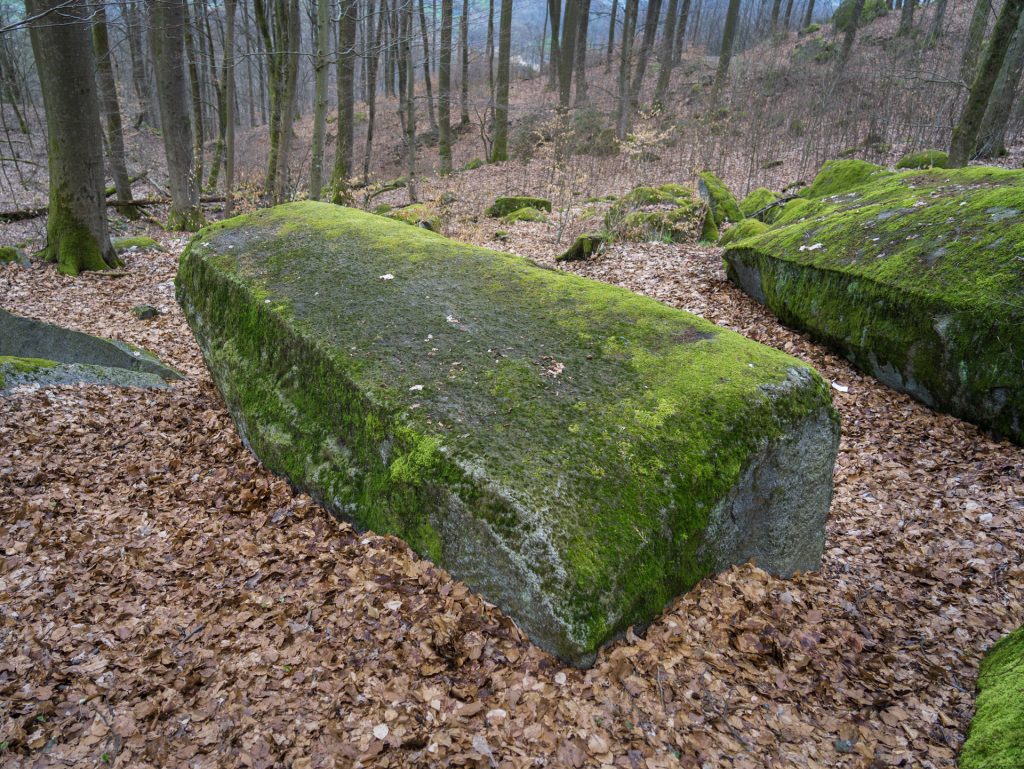
Why it was not completed is uncertain. Structural damage in the rock was probably recognised too late
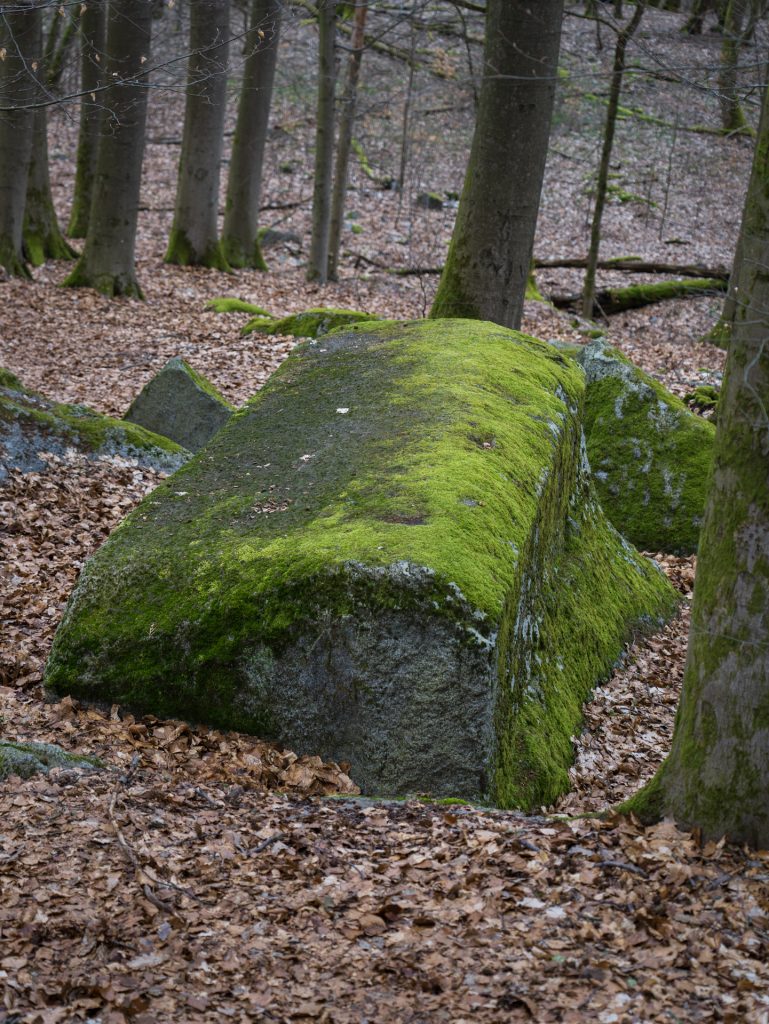
The question is whether this really should have become a stone coffin
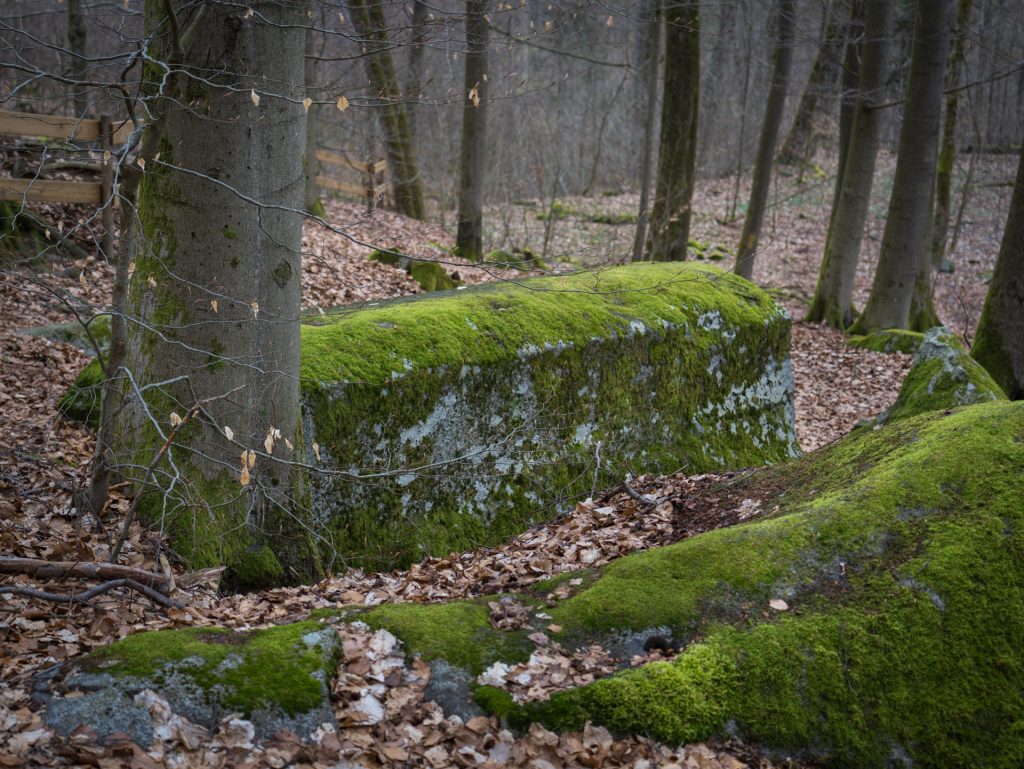
Mystical, such a sarcophagus in the middle of the forestGiant’s Coffin
The Altar Stone
Not far from the Giant Column you can find the so-called Altar Stone. It is also attributed to the Romans, who at some point abandoned it unfinished. Its purpose or that of the broken out parts remains a mystery.
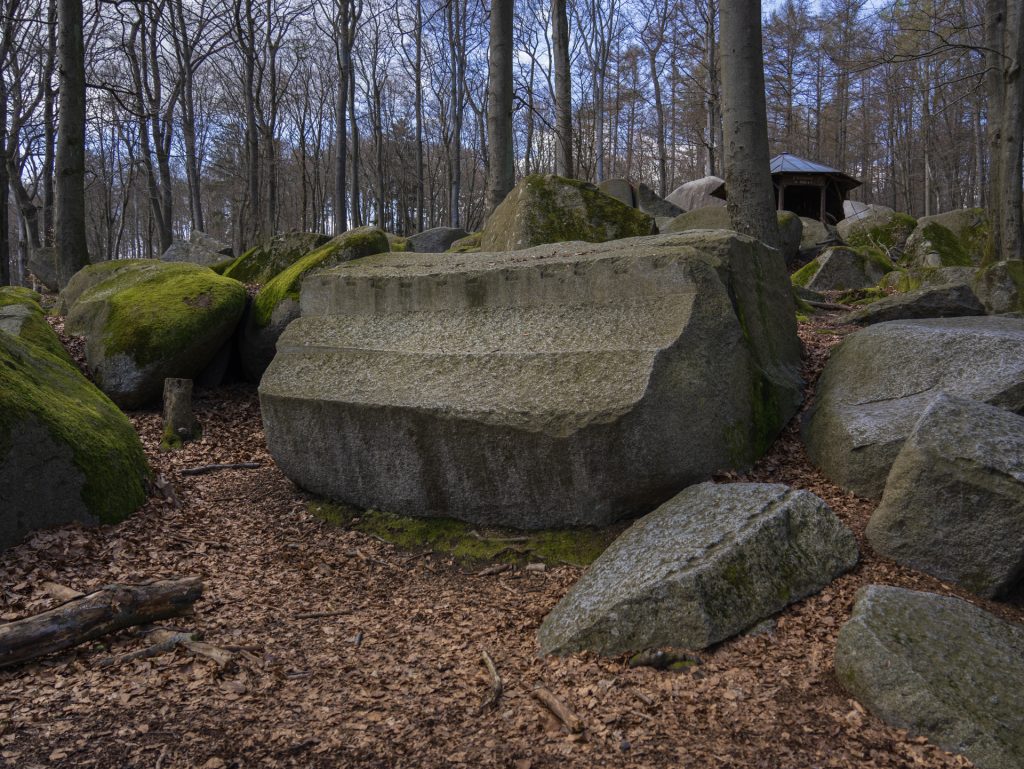
The Altar Stone
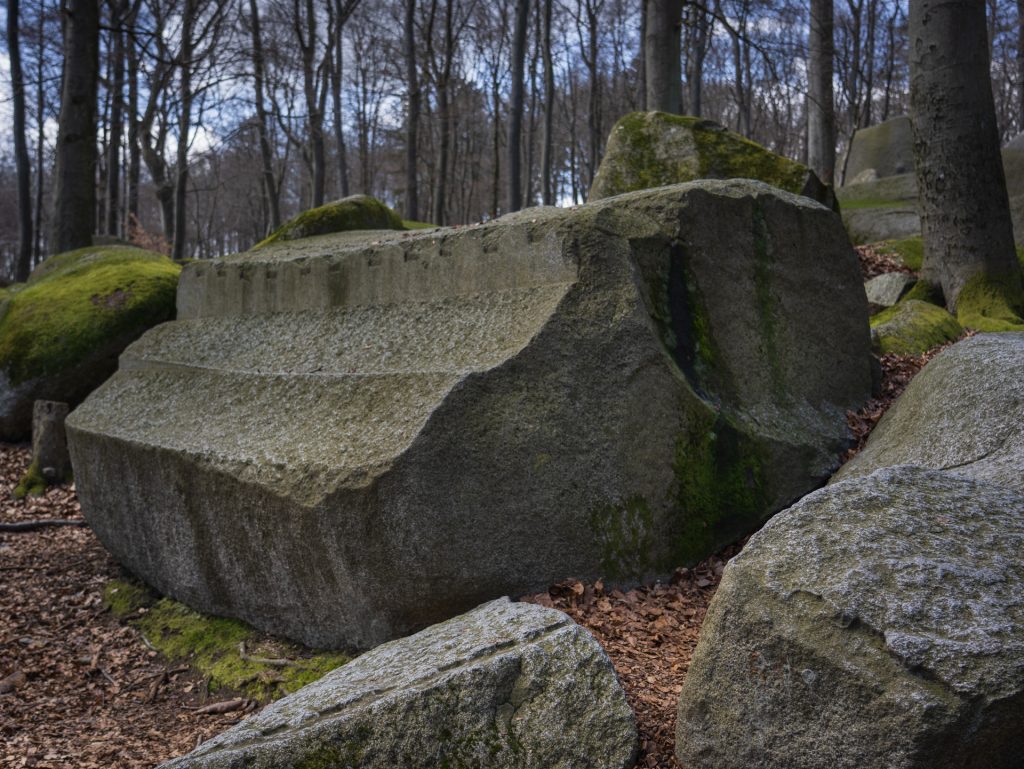
The Altar StoneThe Altar Stone
The Ship
A little distance from the sea of rocks lies another remarkable structure, known as “The Ship” or “Giant Ship” due to its unmistakable resemblance to a ship in shape. The carved rock spans over 12 meters in length, showcasing a surface that appears to have been meticulously adorned.
Here again, the intended purpose of this stone and the reason for its unfinished state remain shrouded in mystery. Some speculate that it is indeed complete, with its origins dating back much earlier than the Roman era. I cannot evaluate this and will maintain both perspectives in their current state.
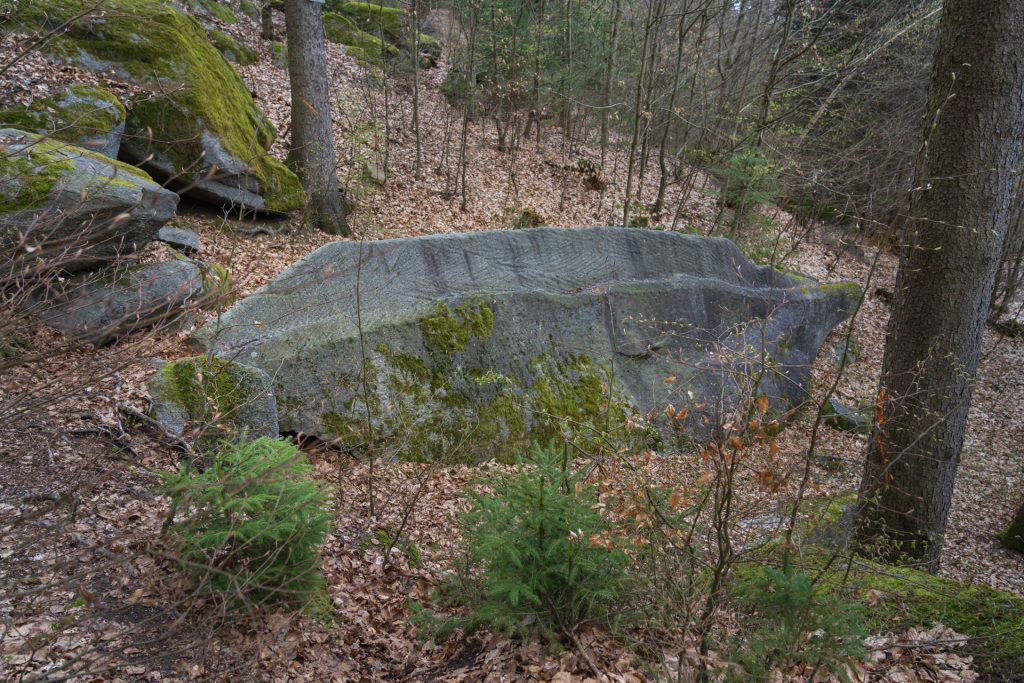
The Ship
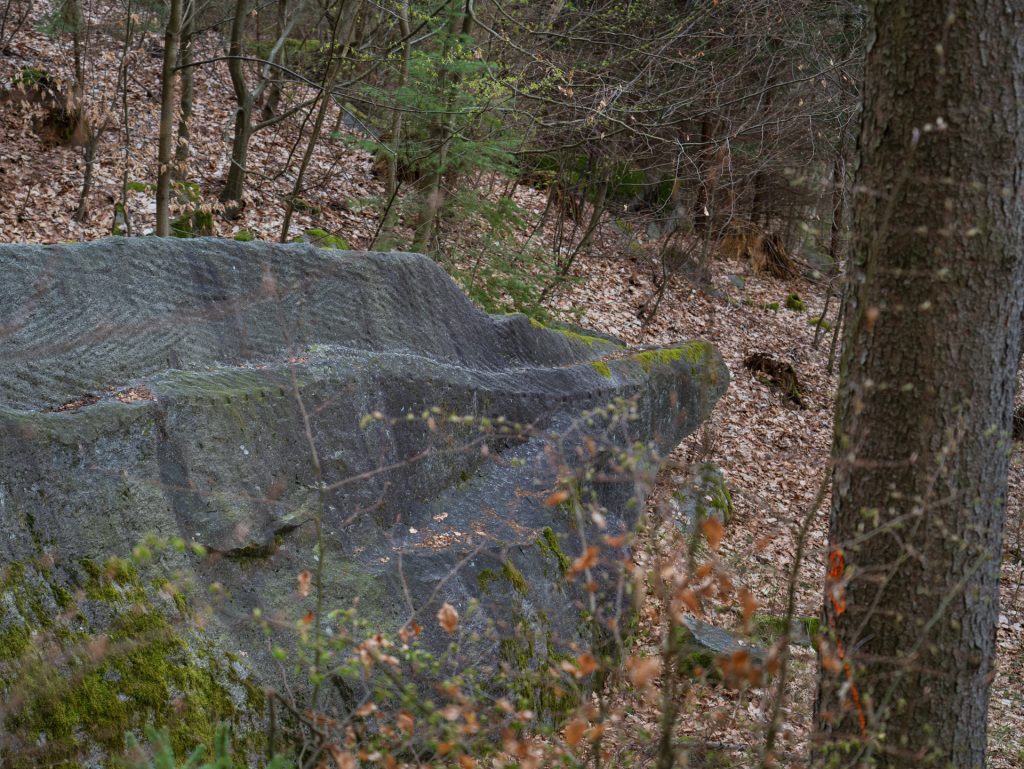
Rear or front of the ship?
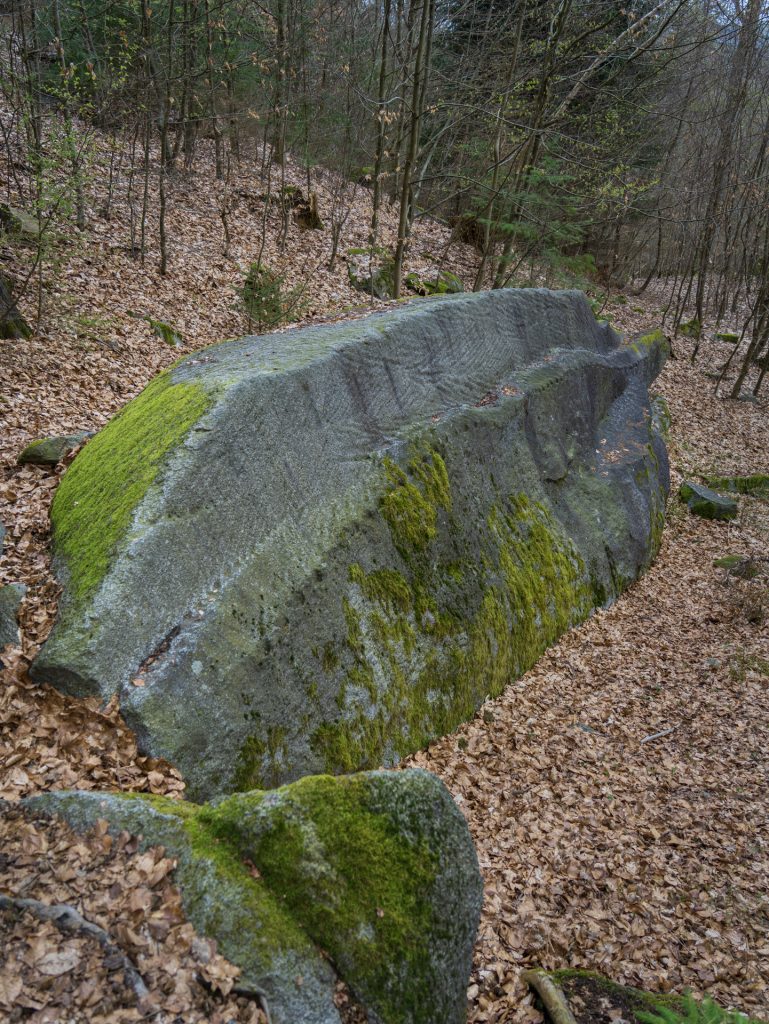
What the purpose of this formation may once have been?
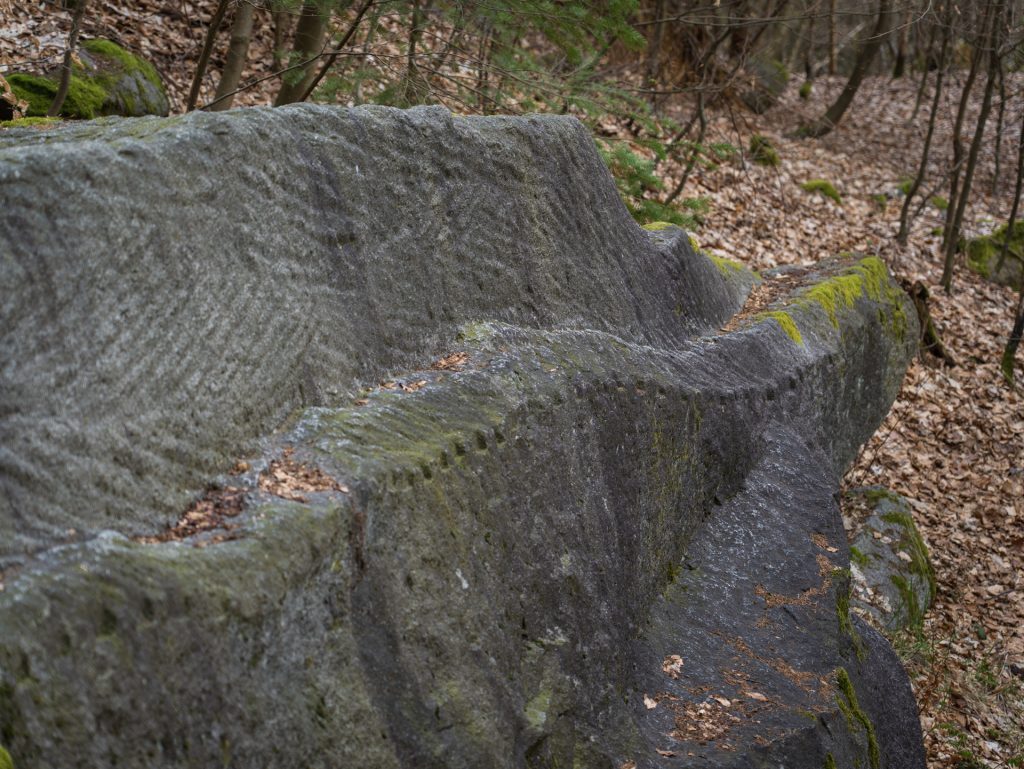
Traces of processing or deliberate decoration?A large worked rock that looks a bit like a ship
The Box and the Stone Chaiselongue
Two other such mysterious carved blocks are the Box and the Stone Chaiselongue, whereby the shape of the latter is indeed somewhat reminiscent of an armchair or sofa.
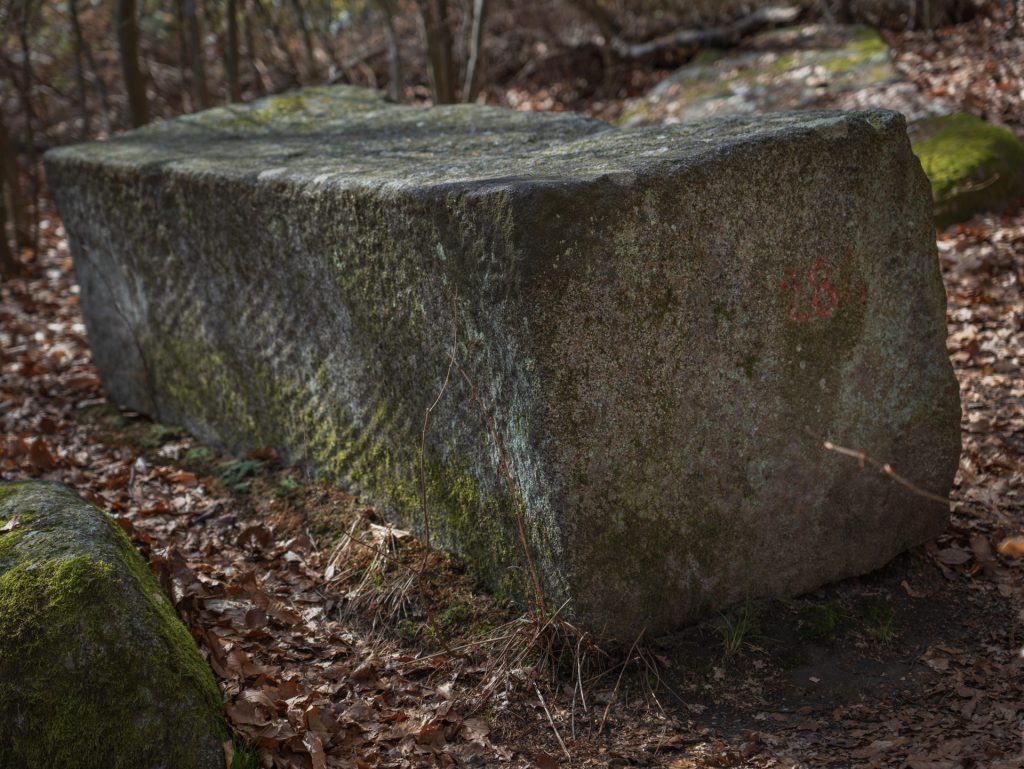
The Box, a carved symmetrical stone block of unknown purpose
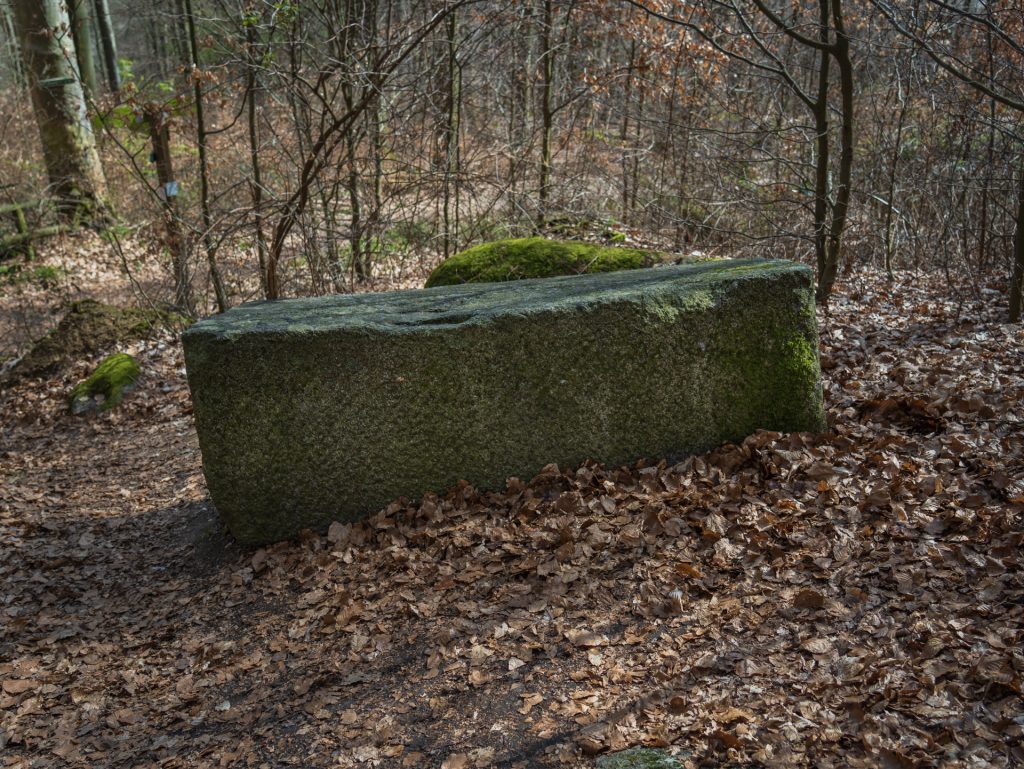
The Box
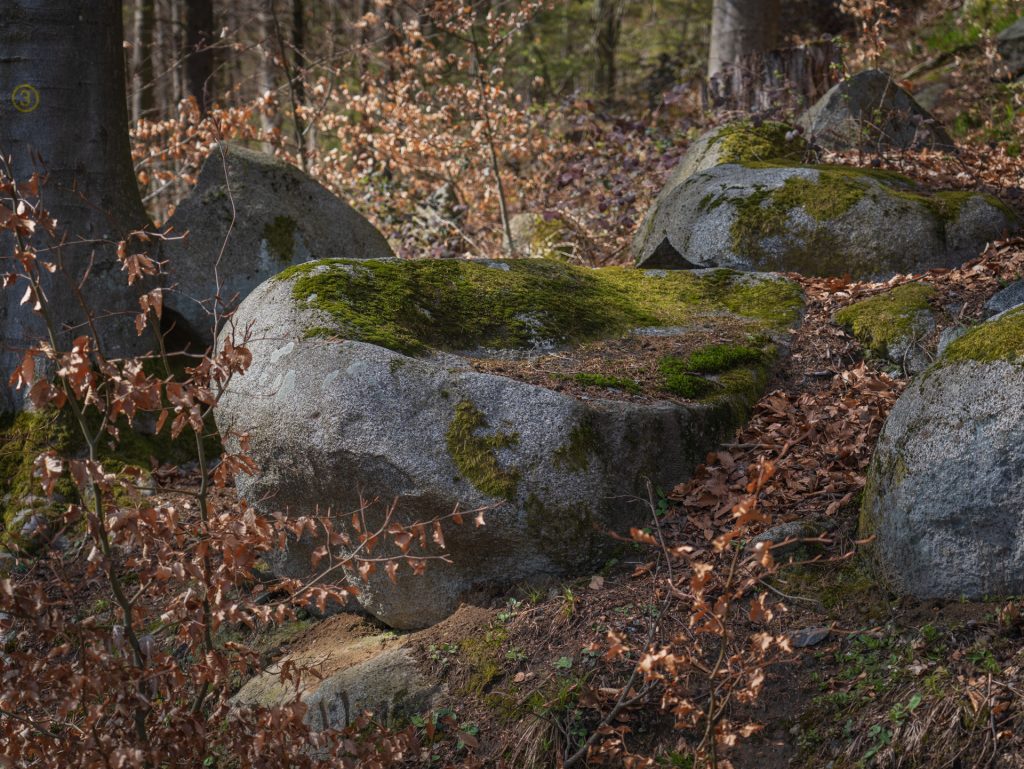
The Stone Chaiselongue
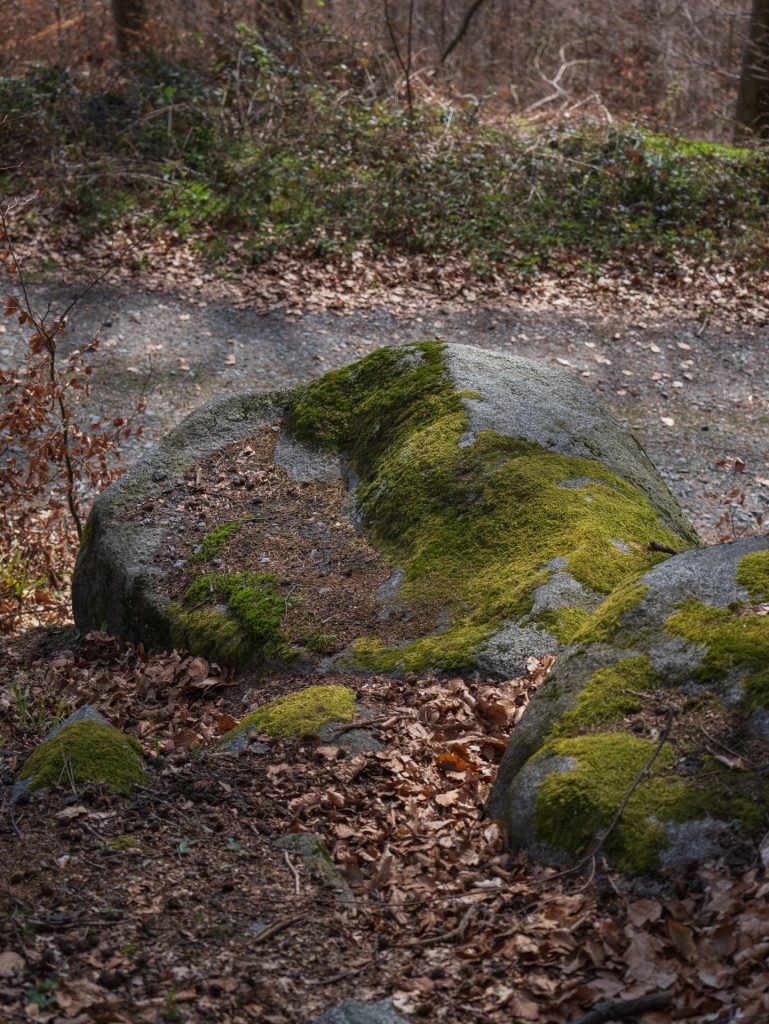
The Stone ChaiselongueThe Box and the Stone Chaiselongue
The Roman wall
Located on the edge of the Felsenmeer, stands the Roman Wall. This dry stone structure, composed of substantial stone blocks, serves as a protective barrier along the path, spanning approximately one hundred meters, stabilizing the adjacent mountainside.
In a specific section, the stones seem to be strewn across the incline, creating the impression that the wall once stretched fruther up the slope before sometime being dismantled and destroyed. Maybe it was utilized as a quarry over the past centuries, just leaving behind what we now observe.
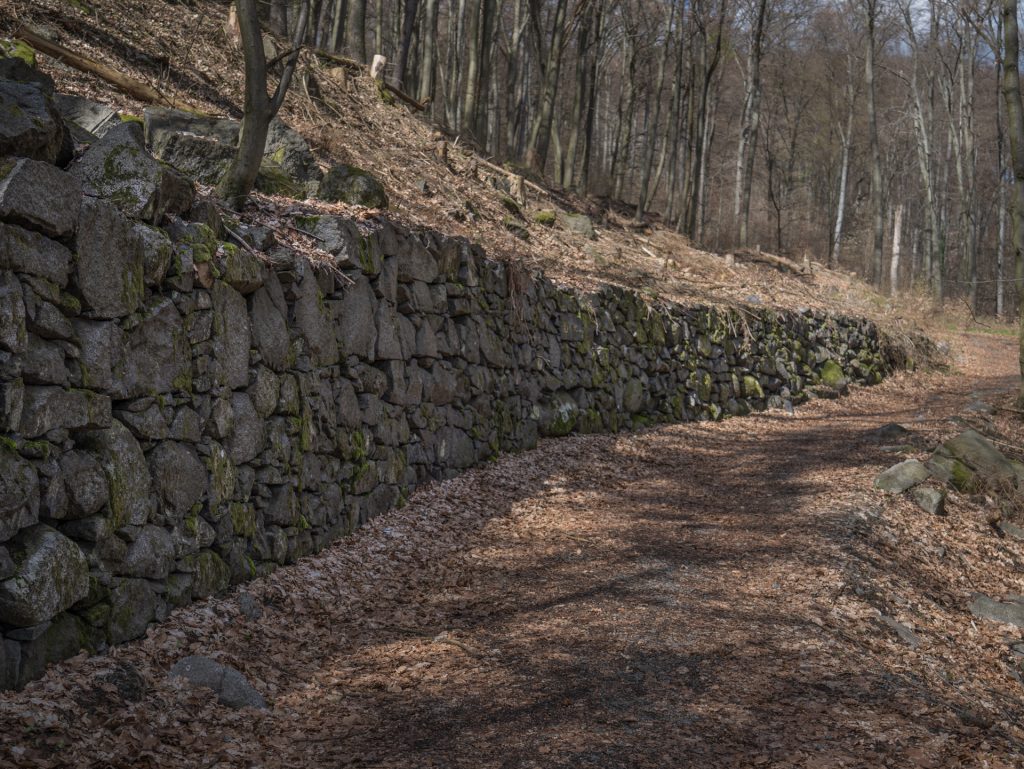
The so-called Roman Wall stabilizes the adjacent slope
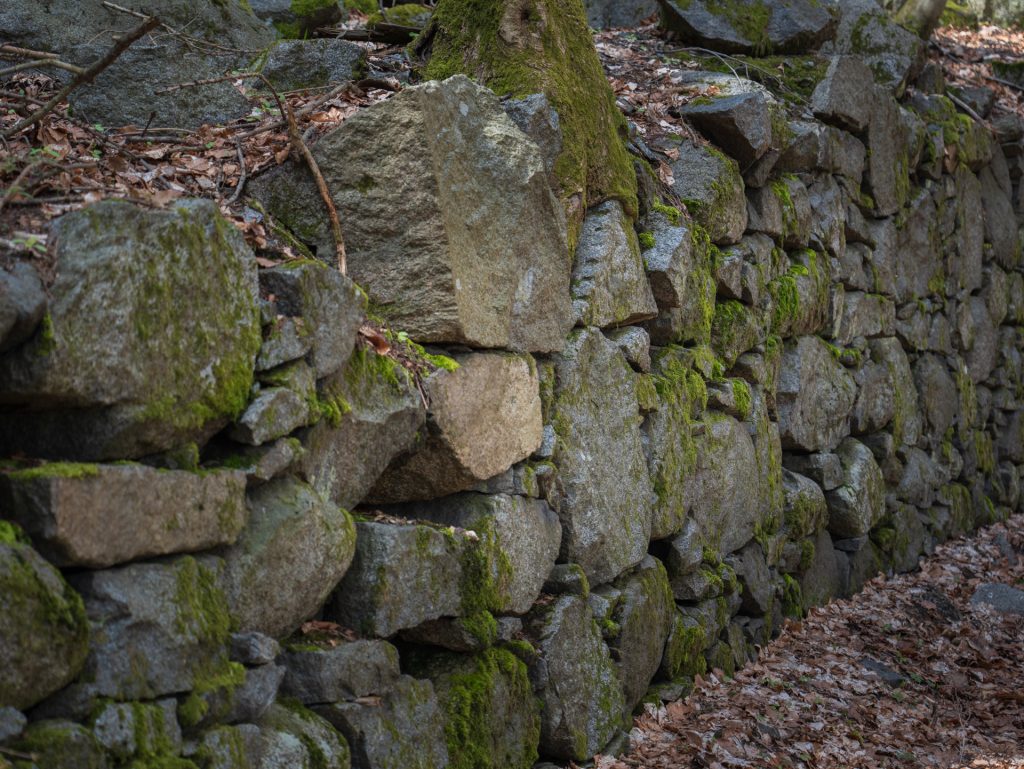
Dry masonry
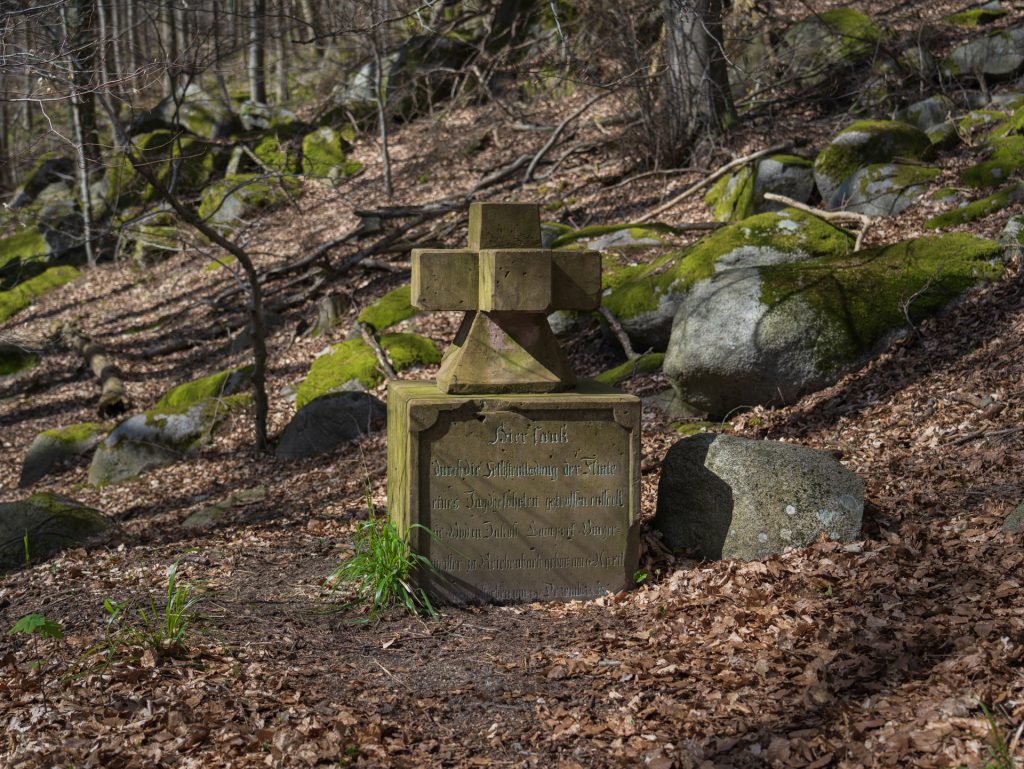
Stone cross in remembrance of a hunting accident, not far from the Roman Wall
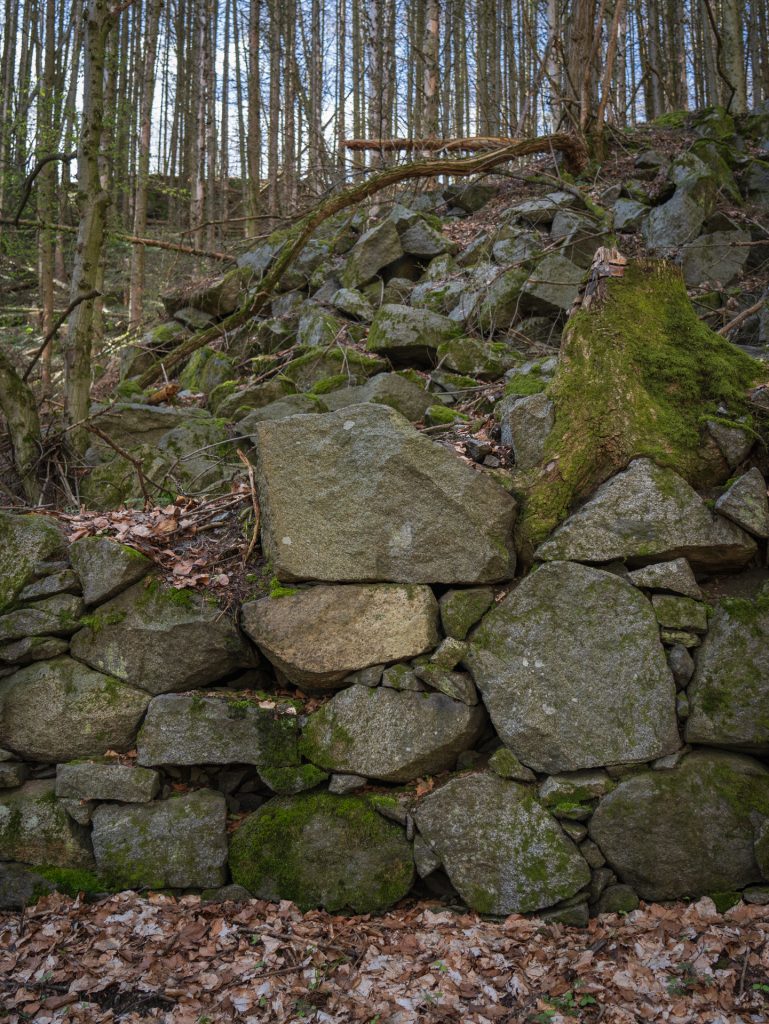
It looks like the masonry stones are scattered all over the slopeA wall attributed to the Romans
Were the Romans The First Ones Up There?
As you survey the surroundings, you’ll spot more, occasionally massive, sculpted boulders resembling megalithic structures, and there are other peculiar objects that may not immediately be attributed to the Romans upon first glance.
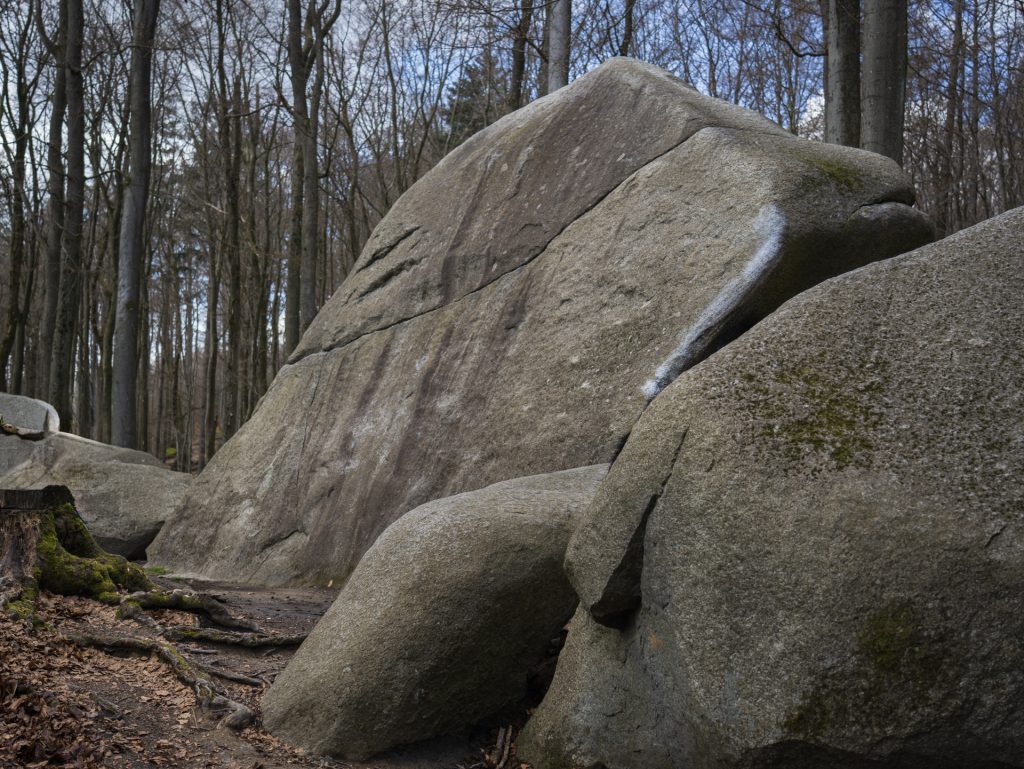
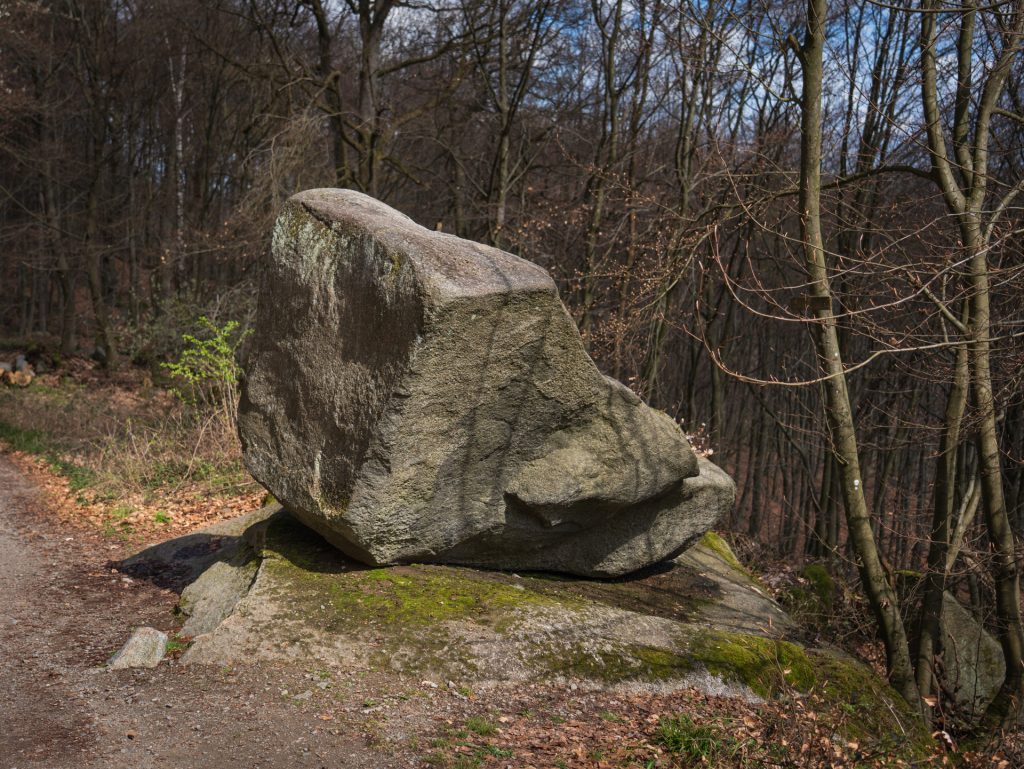
The Giant’s Armchair, a true megalith, which was placed there on the slope
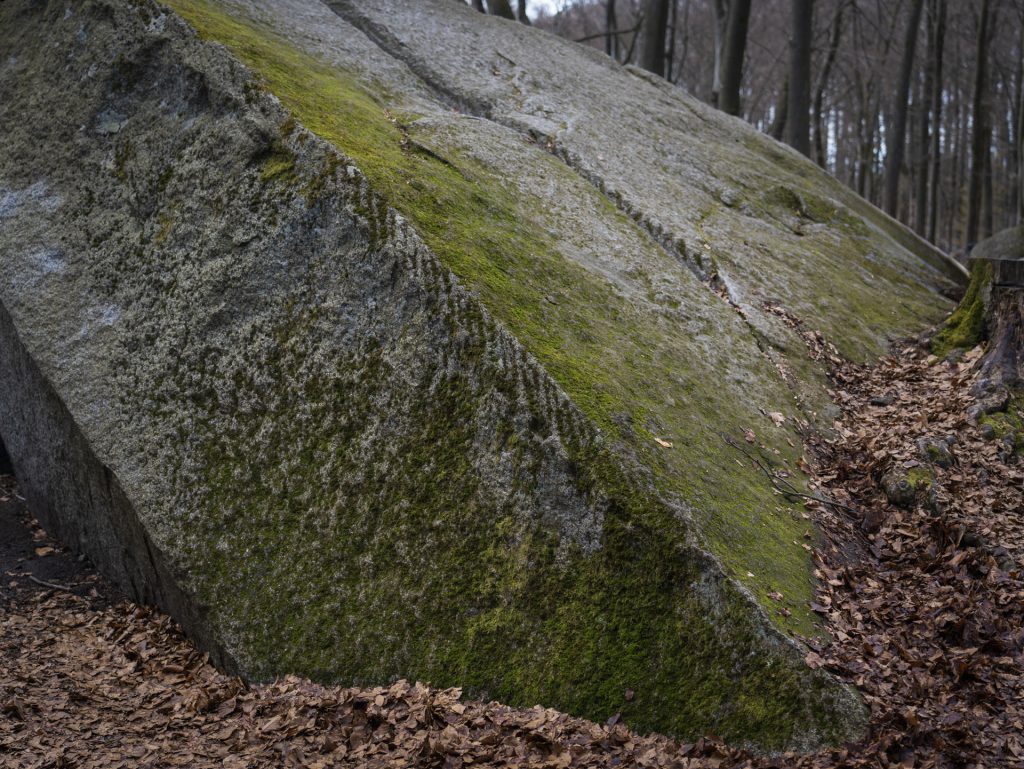
A huge stone slab with traces of carving
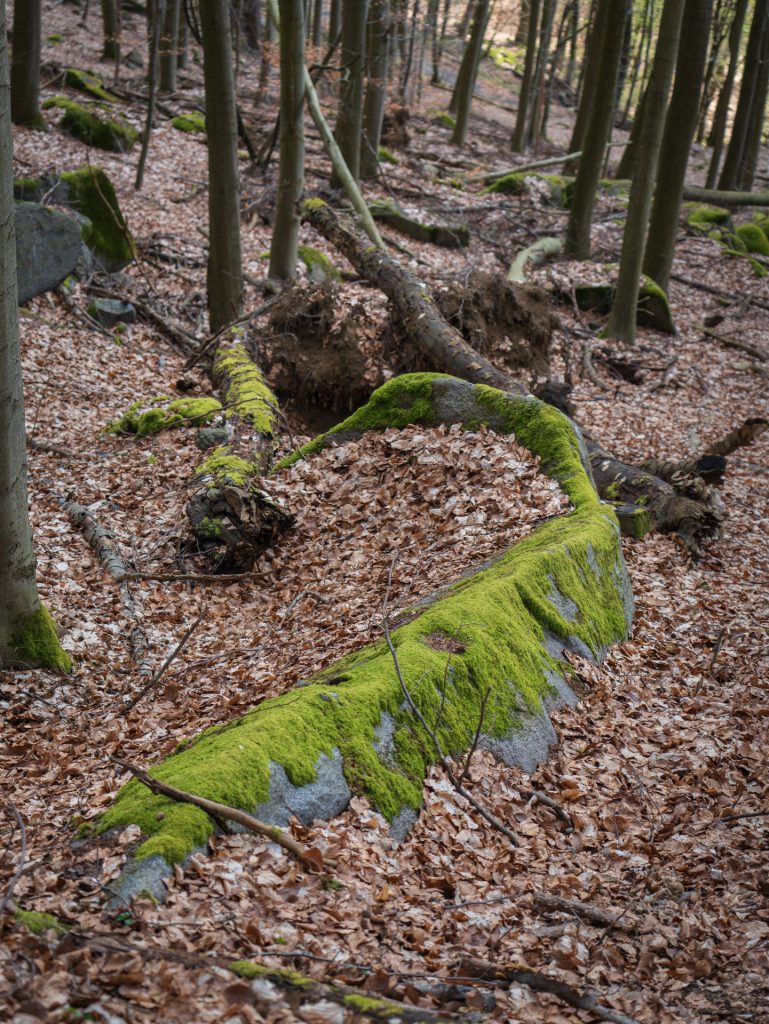
Another stone coffin or ‘ship’?
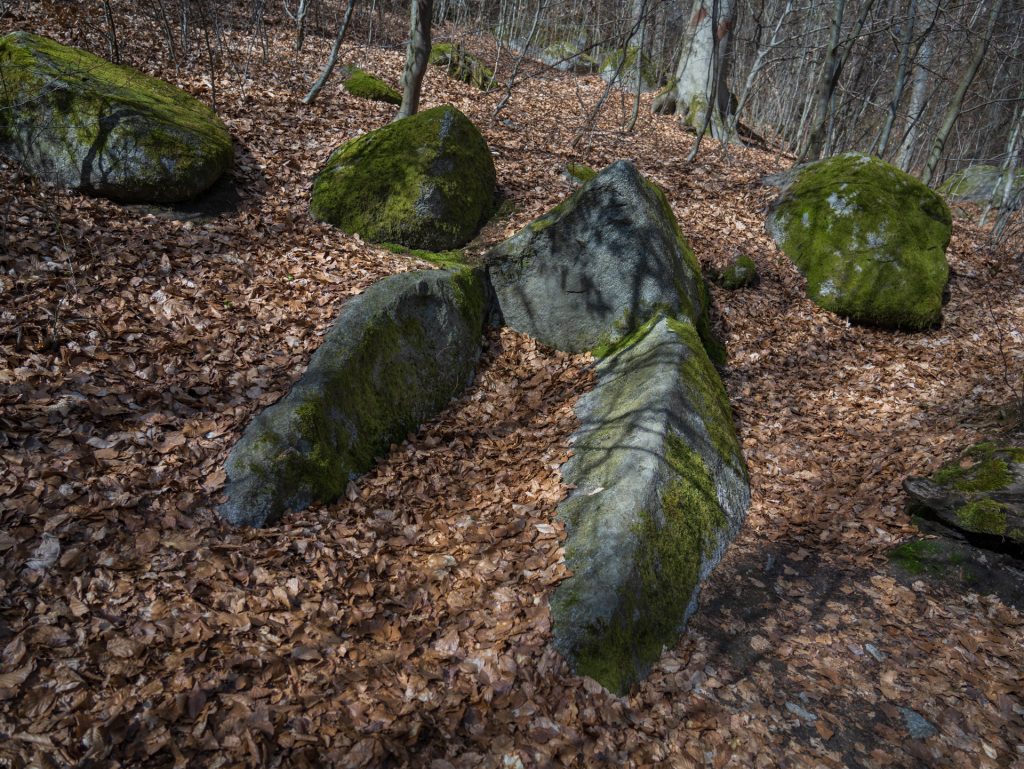
Sacrifice To The Old Pagan Gods
Located near the Giant Column, towards the upper section of the sea of rocks, you can find peculiar formations resembling sacrificial stones, complete with bowl-shaped recesses.
Surprisingly, there is no documented information regarding this intriguing phenomenon here at this specific location. However, upon closer inspection, the carvings appear deliberate and artificial. It is not entirely implausible to consider this site as a potential pre-Roman cultic place.
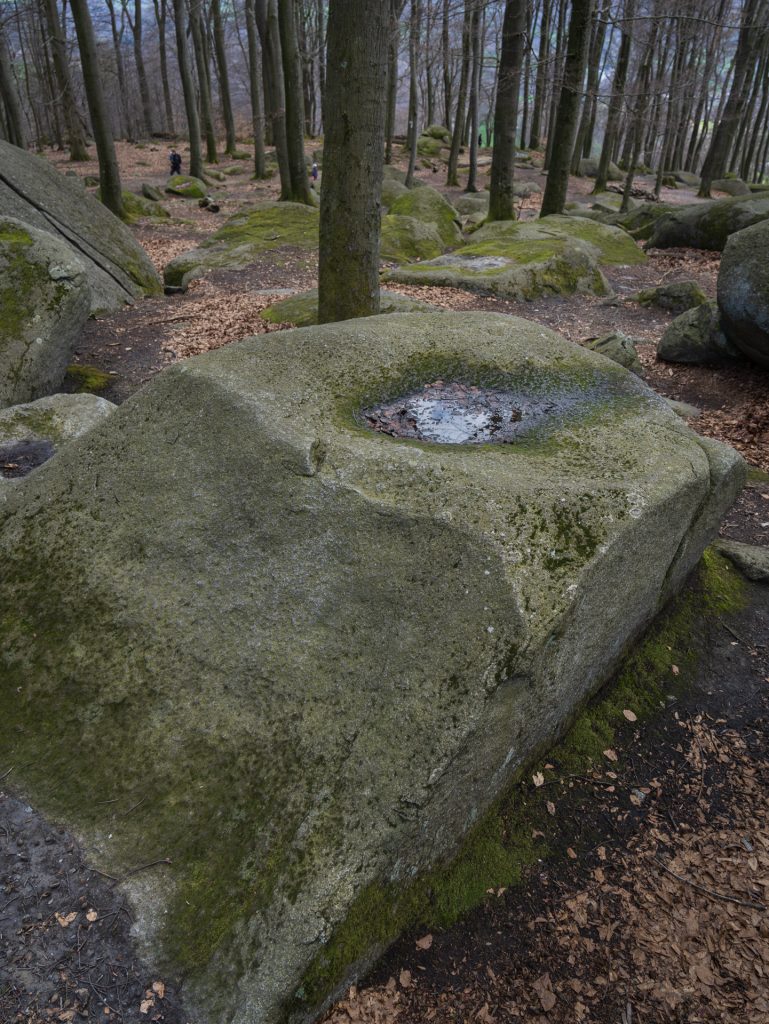
Stone with a bowl-shaped recess
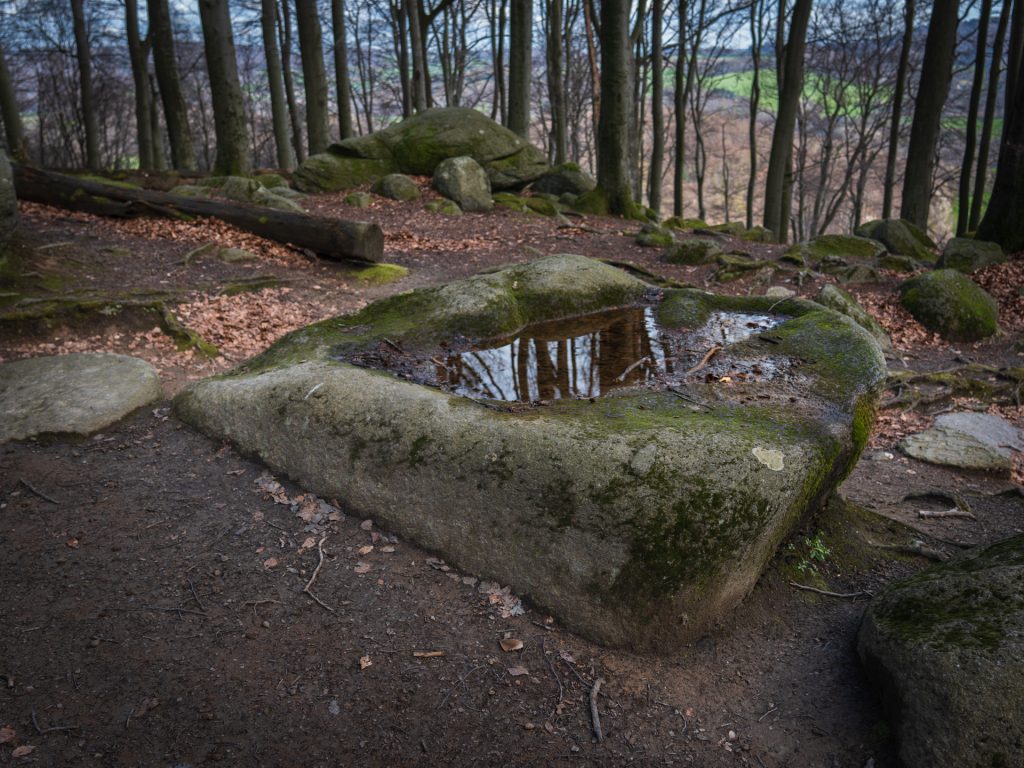
Blog Post: The Felsenmeer in Lautertal: More than Just a Sea of RocksLooks like sacrificial stones
Standing stones everywhere
If there were any lingering doubts about the theory of a place that held immense, perhaps sacred significance even prior to the Romans, they are diminished upon acknowledging the multitude of menhirs and formations of standing stones scattered throughout the site. While some of them may be seen as whims of nature, others are unmistakably crafted and carefully arranged.
To the best of my knowledge, the Romans did not typically erect such stones as part of their religious customs. So, who might have been responsible? The Celts or perhaps the ‘Stone Age’ people who preceded them? Interestingly, there is no mention of any of the latter groups at this particular site.
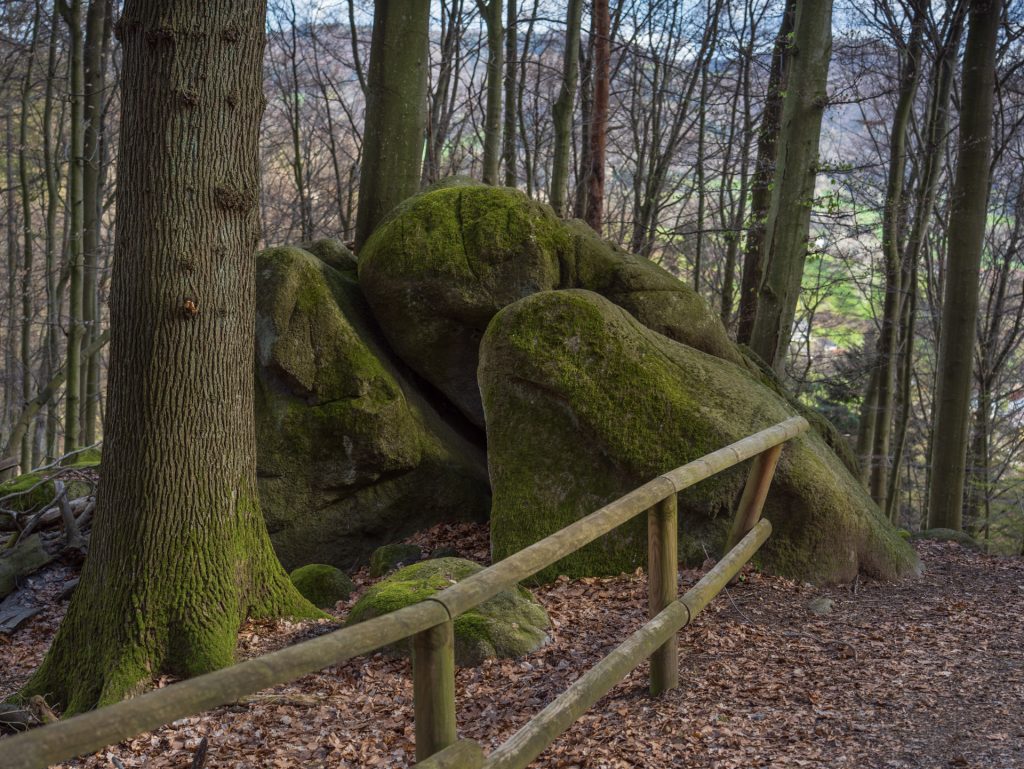
Group of rocks
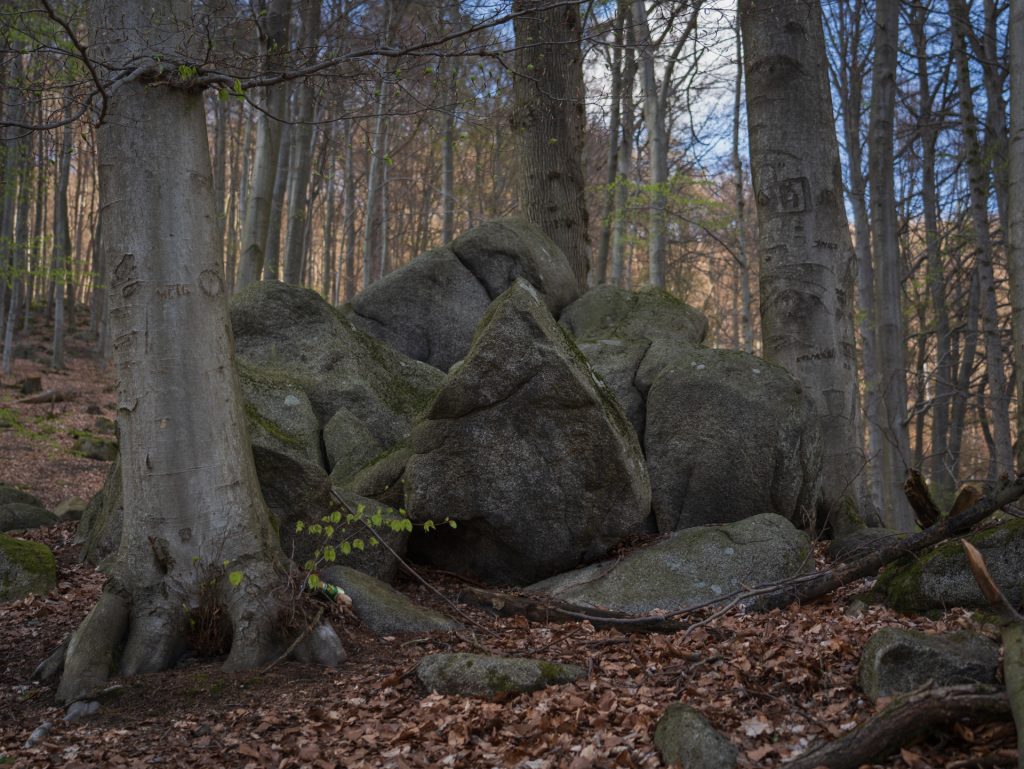
Looks like an artificial arrangement
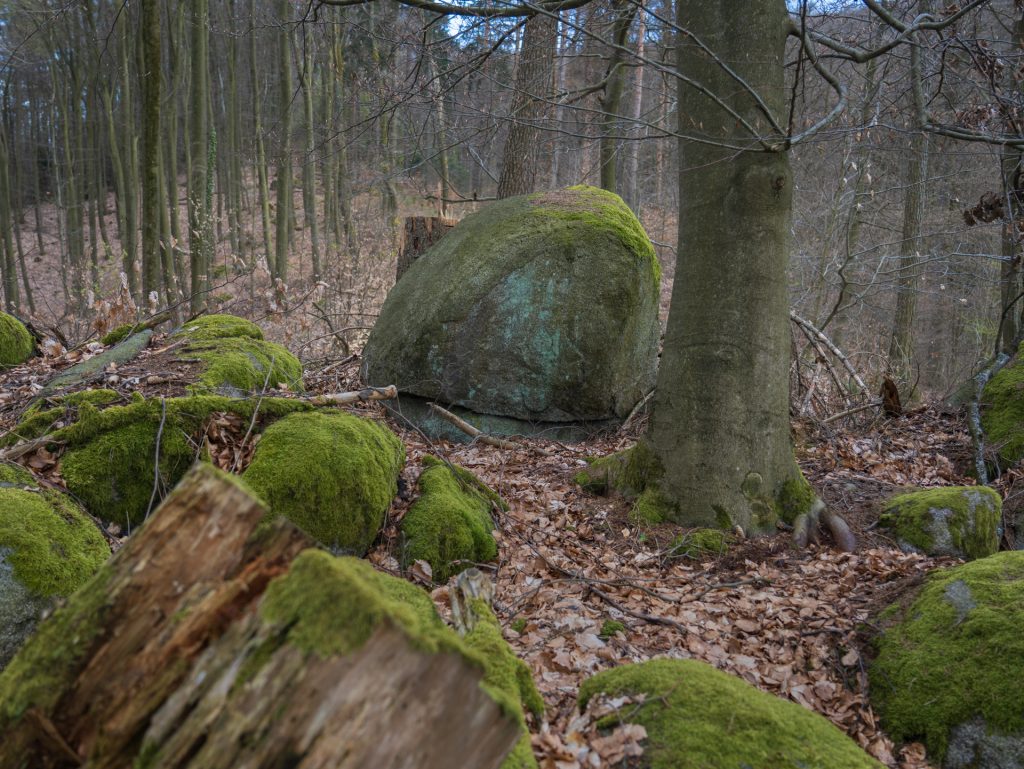
A unique standing stone
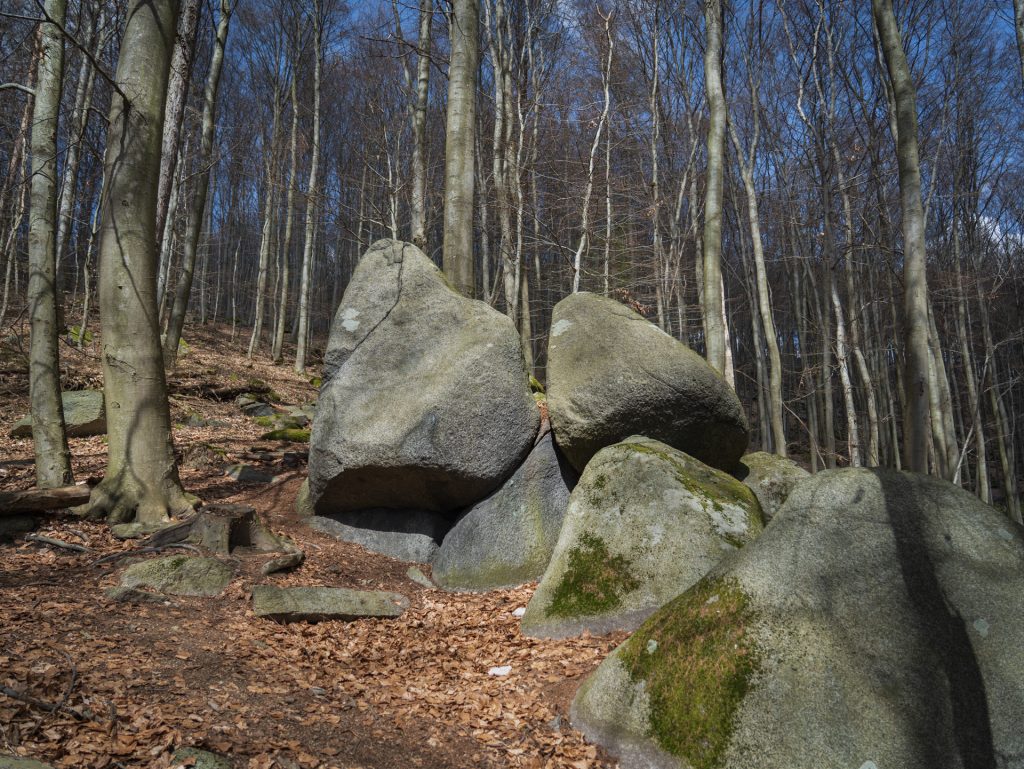
Coincidence or deliberately arranged?
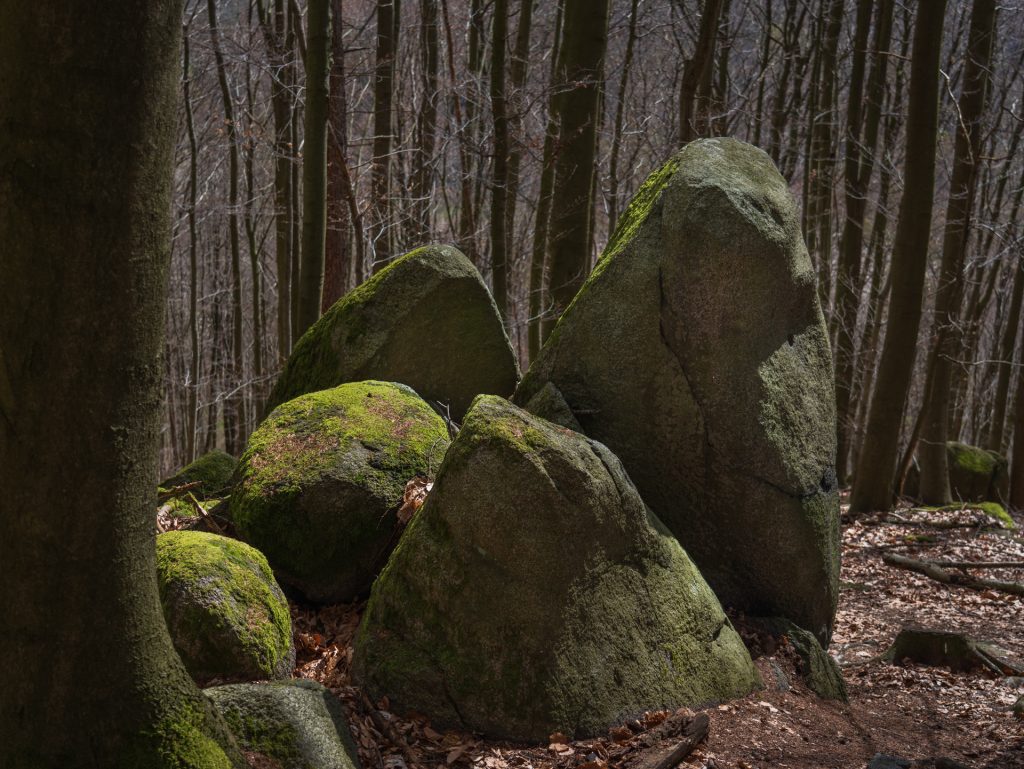
An ensemble of standing stones
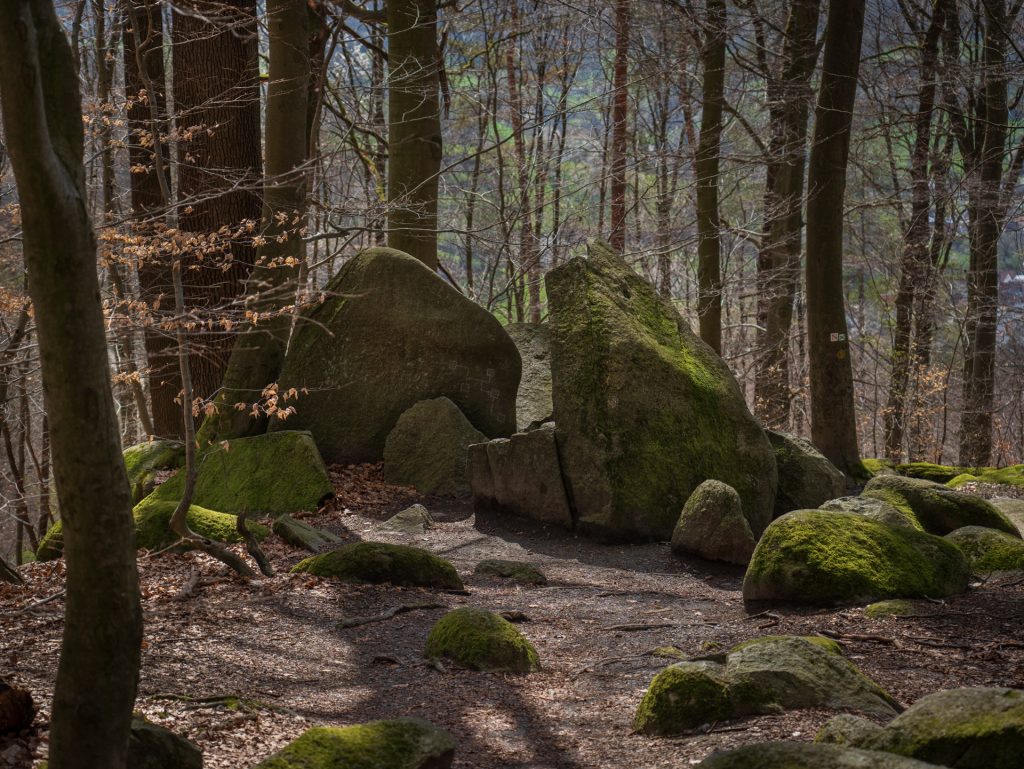
Standing stones
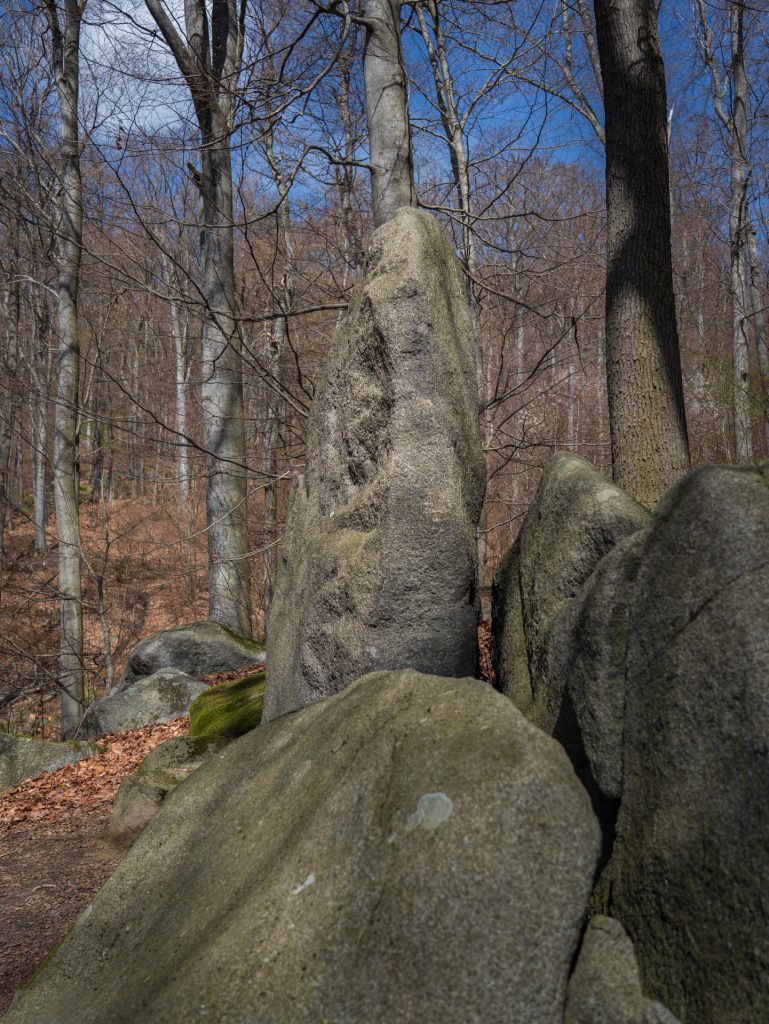
Menhir
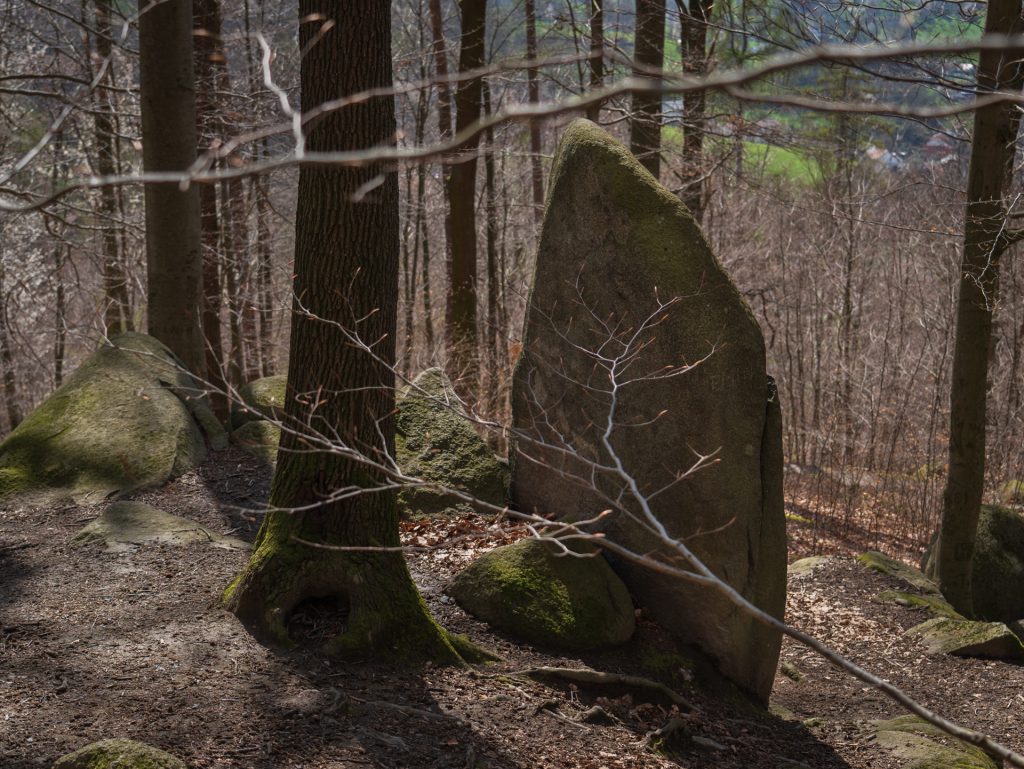
Menhir
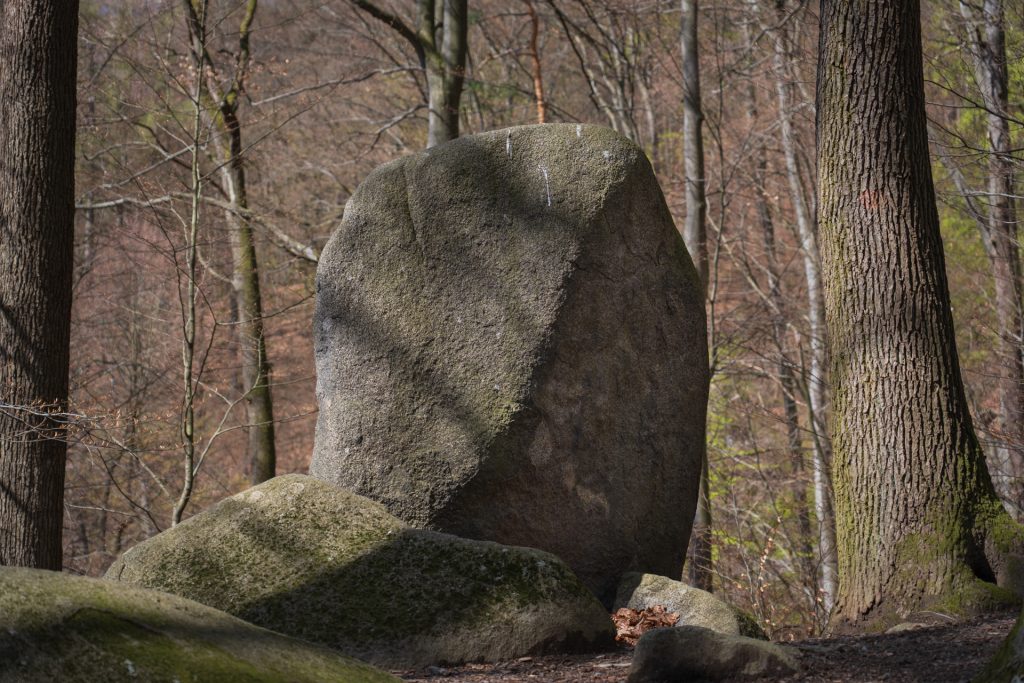
Menhir
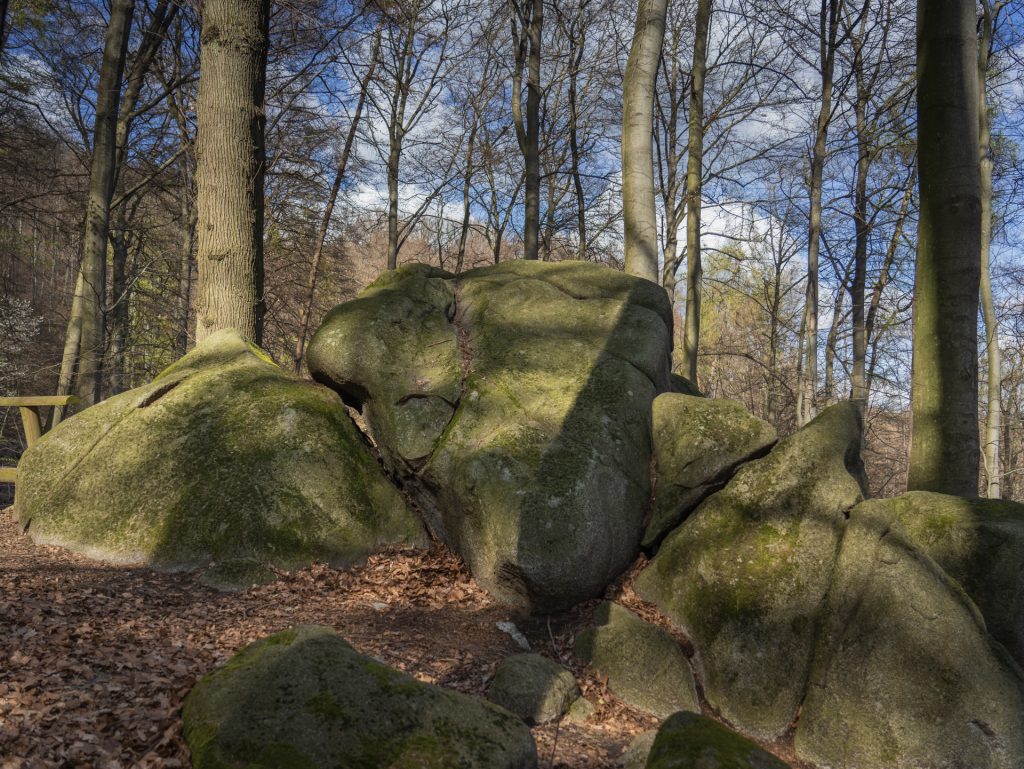
Group of rocksArrangements of standing stones
The riddle of the split rocks
Upon closer examination, fragmented stone structures dispersed throughout various locations in the vicinity may catch your eye.
These intriguing formations – I mean to remember that I have already seen similar ones in connection with ancient sacred or megalithic sites – seem distinct from typical remnants of stone quarrying. Notably, the gaps of some of these rocks (I did not test each of them) align with the primary cardinal directions.
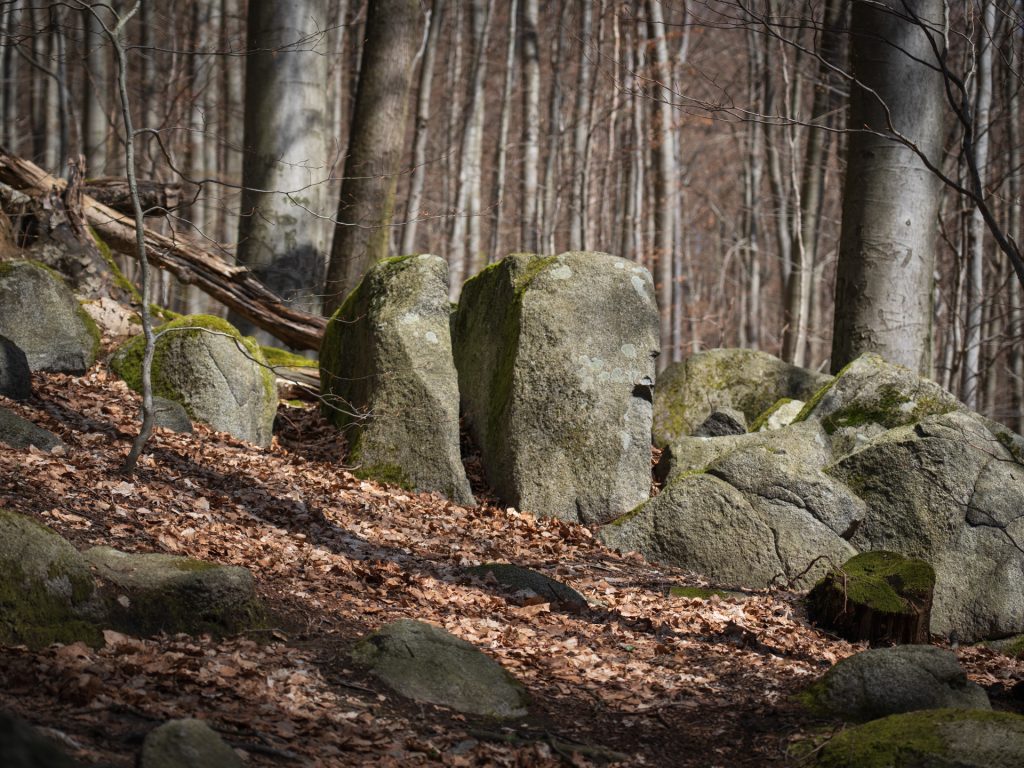
Split stone cube
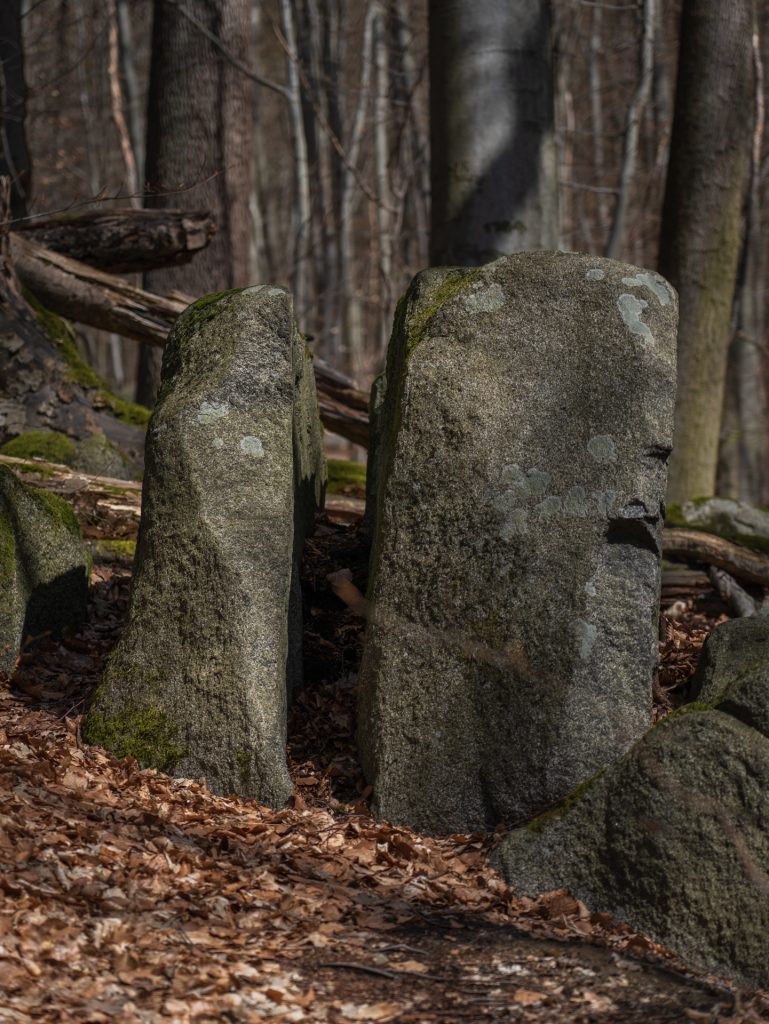
Split stone cube
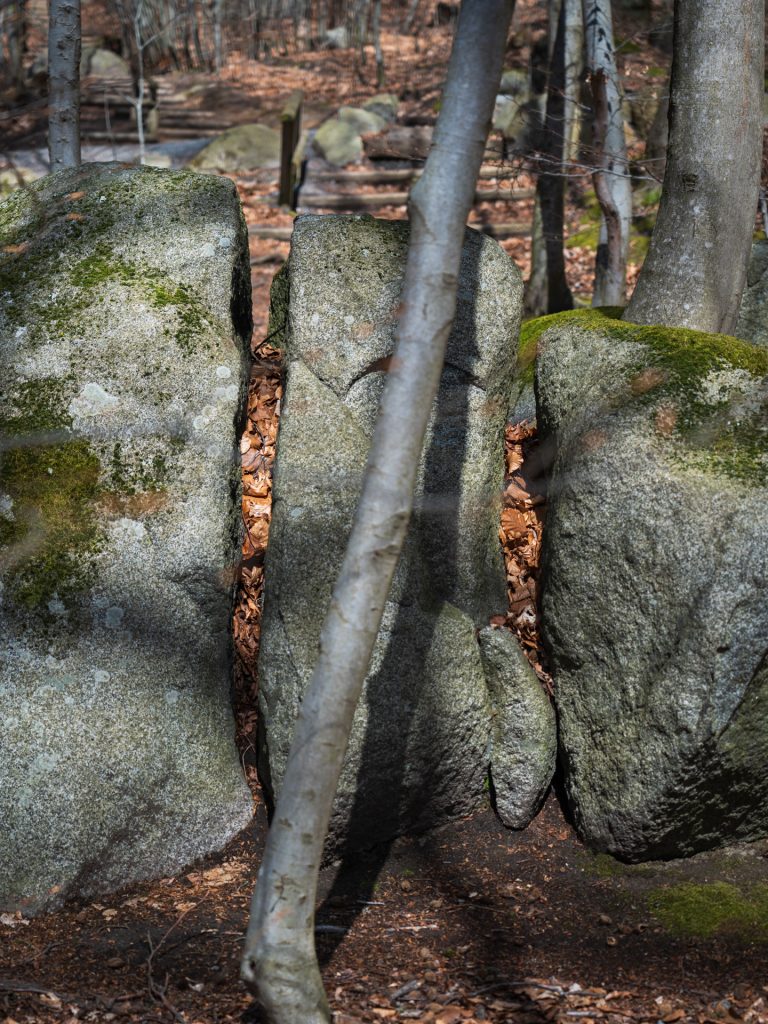
A three-part stone, as if placed there on purpose
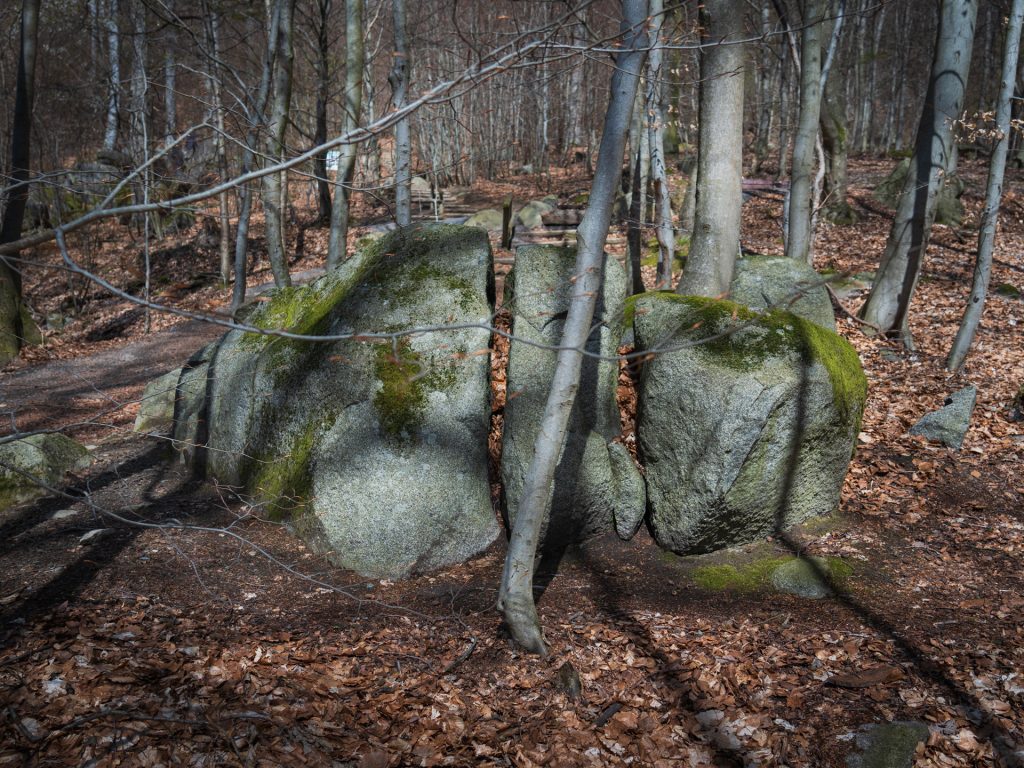
A three-part stone, as if placed there on purpose
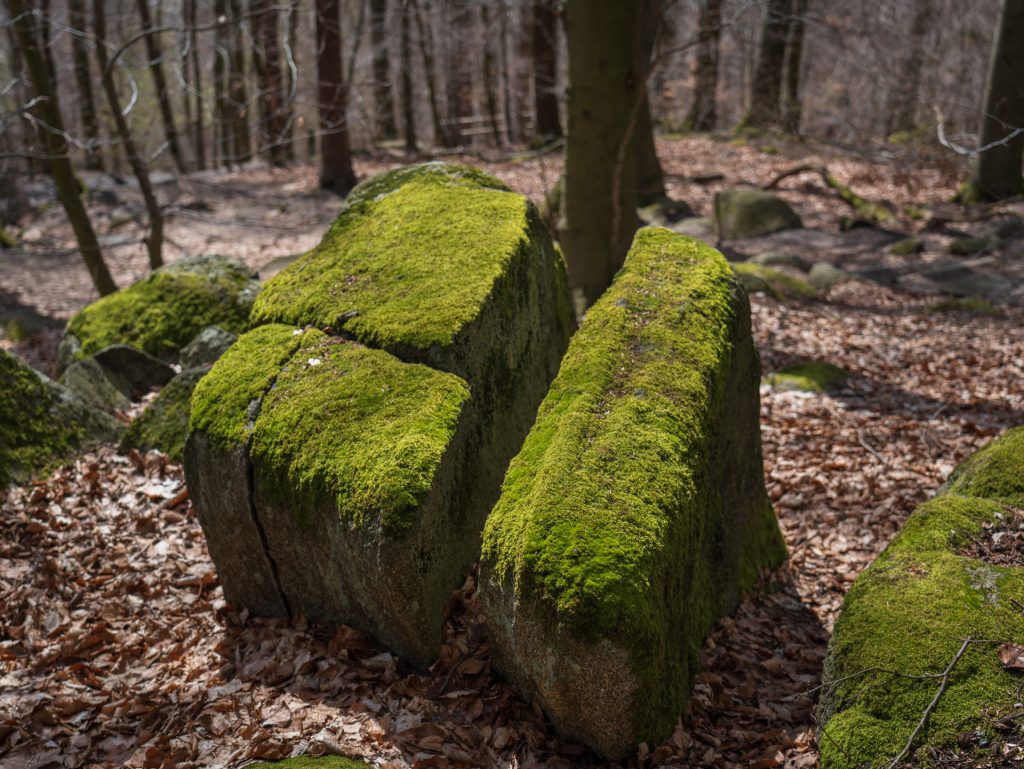
Split stone cube
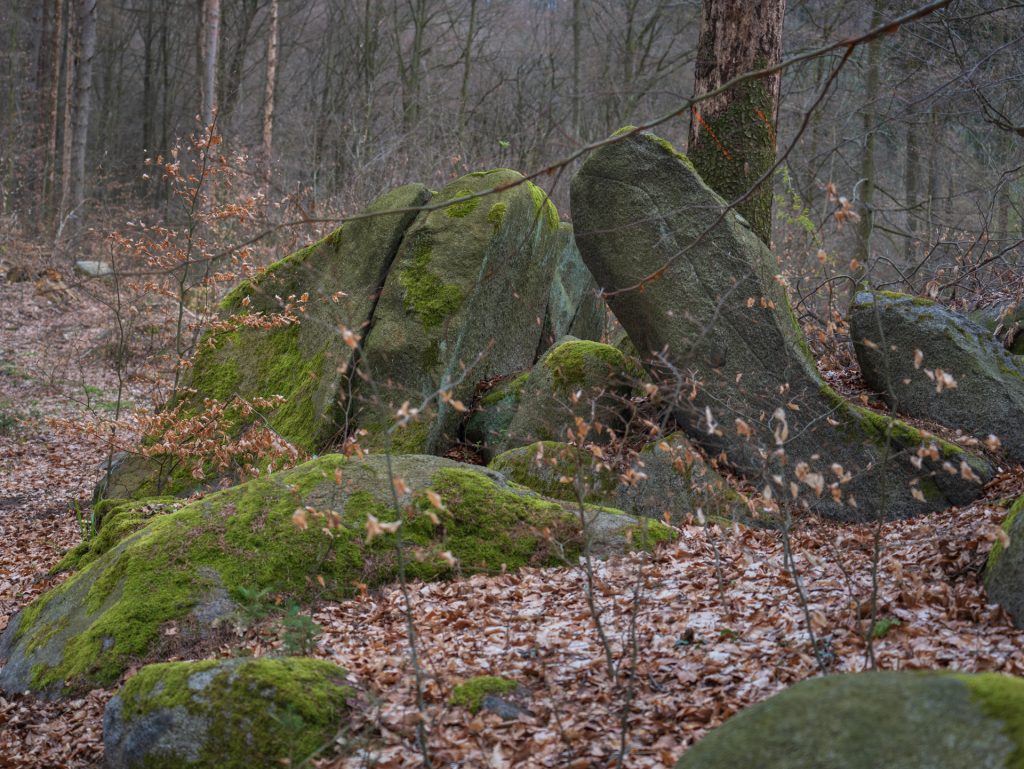
Half collapsed arrangement of three parts
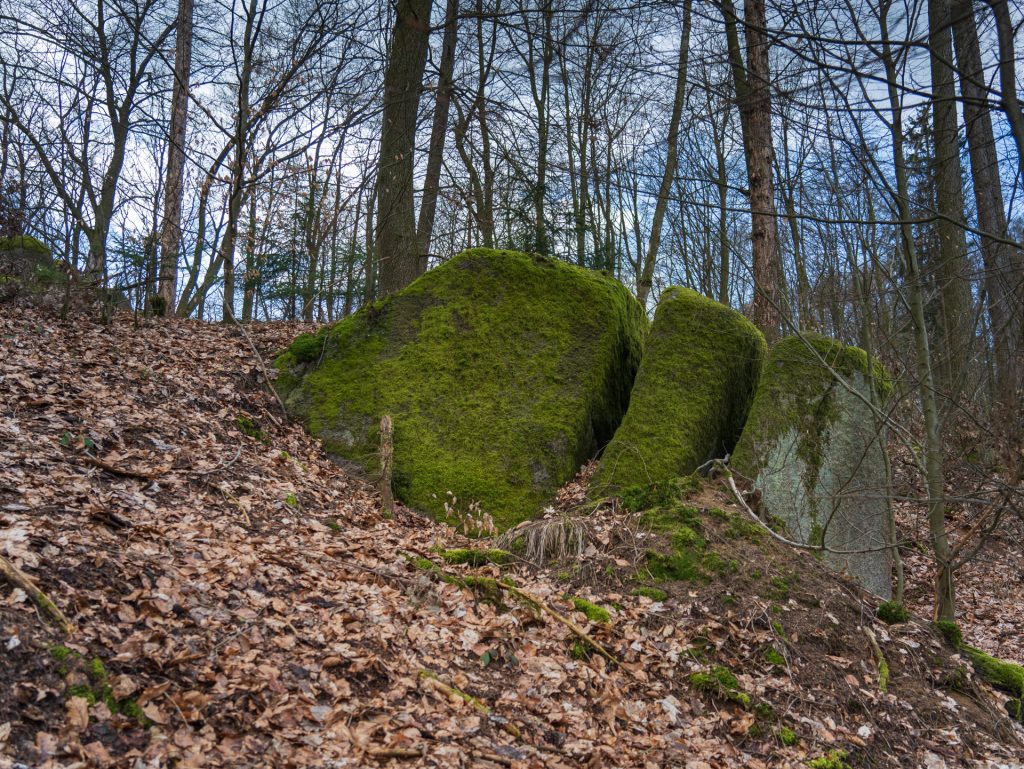
Three parts, two splitsWhat was the purpose of these arrangements?
Roman stones?
The Römersteine (Roman Stones), located on the outskirts of the Felsenmeer area, are believed to have been arranged by the Romans as well, as their name suggests. However, doubts arise whether this attribution is accurate. The formation bears resemblance to megalithic stone structures found in other parts of the world, which are generally considered to be older.
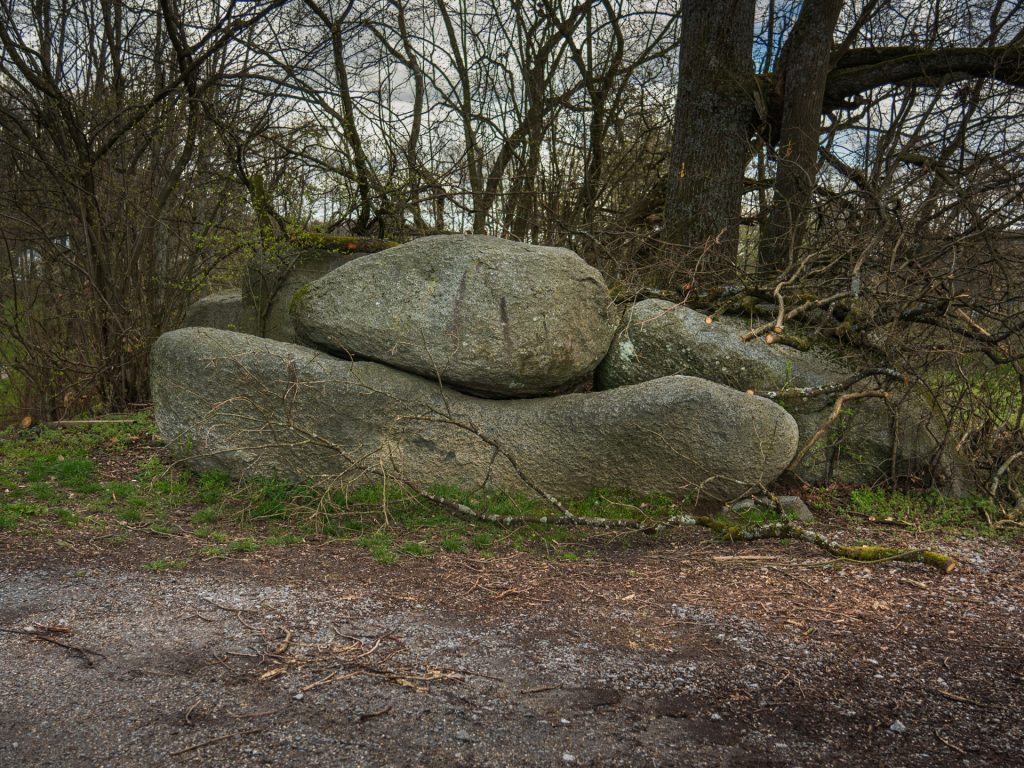
The Roman Stones
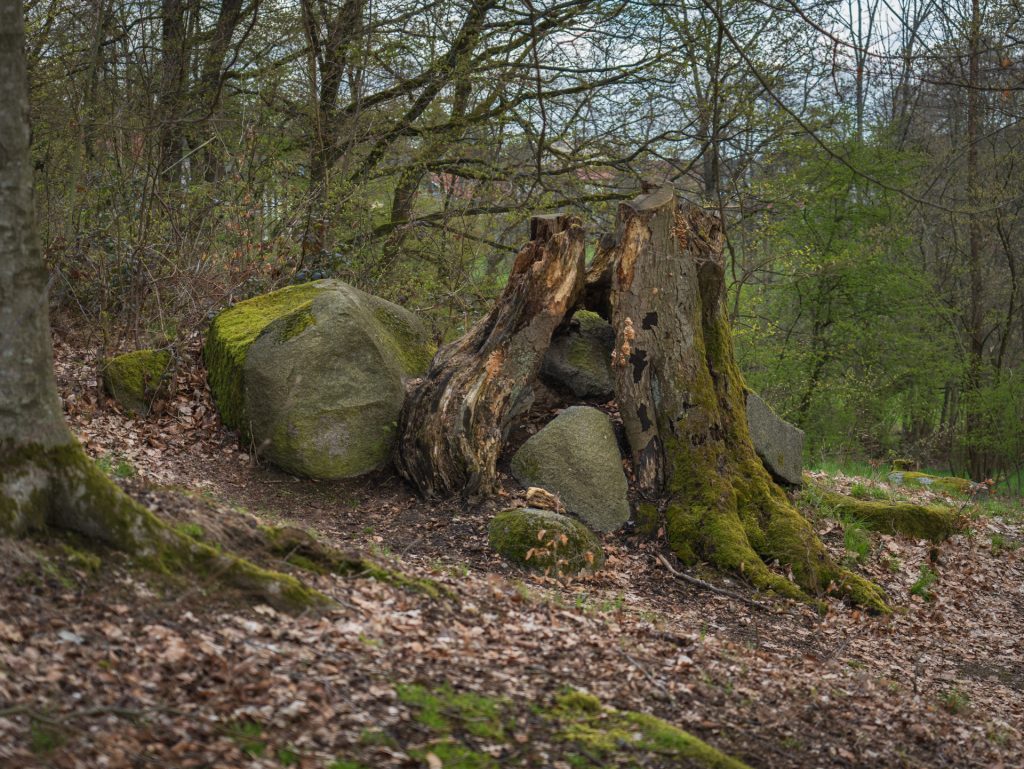

Pile of stones overgrown by a tree near the Roman StonesRömersteine/Roman Stones
Conclusion
To sum up, the Felsenmeer is a captivating and mysterious location that sparks curiosity in those who enjoy pondering. It appeals to those who question the accuracy of everything written in history books. For others, it is simply a captivating place that showcases nature’s astonishing ability to create incredible wonders.
It is worth mentioning that during pleasant weather, the place tends to get quite crowded with approximately 200,000 visitors per year, what will significantly be diminishing the mystical ambiance. For those seeking to truly immerse themselves in its enchantment, it is advisable to go there during the colder season or when the weather is less favorable for Sunday excursions.