



The Royal Tombs of Petra are considered some of the finest rock-hewn structures at Petra. They are ancient Nabataen tombs boasting prominent monumental facades — one of the largest facades in Petra. Petra is one of the top attractions in Jordan and is one of the world’s most famous ancient attractions.
Petra has a number of rock-hewn buildings to explore and The Treasury (or Al-Khazneh) is often considered the finest of them. There are also many things to know about ancient Petra — with plenty more waiting to be discovered.
The Impressive Rock-Hewn Royal Tombs Of Petra
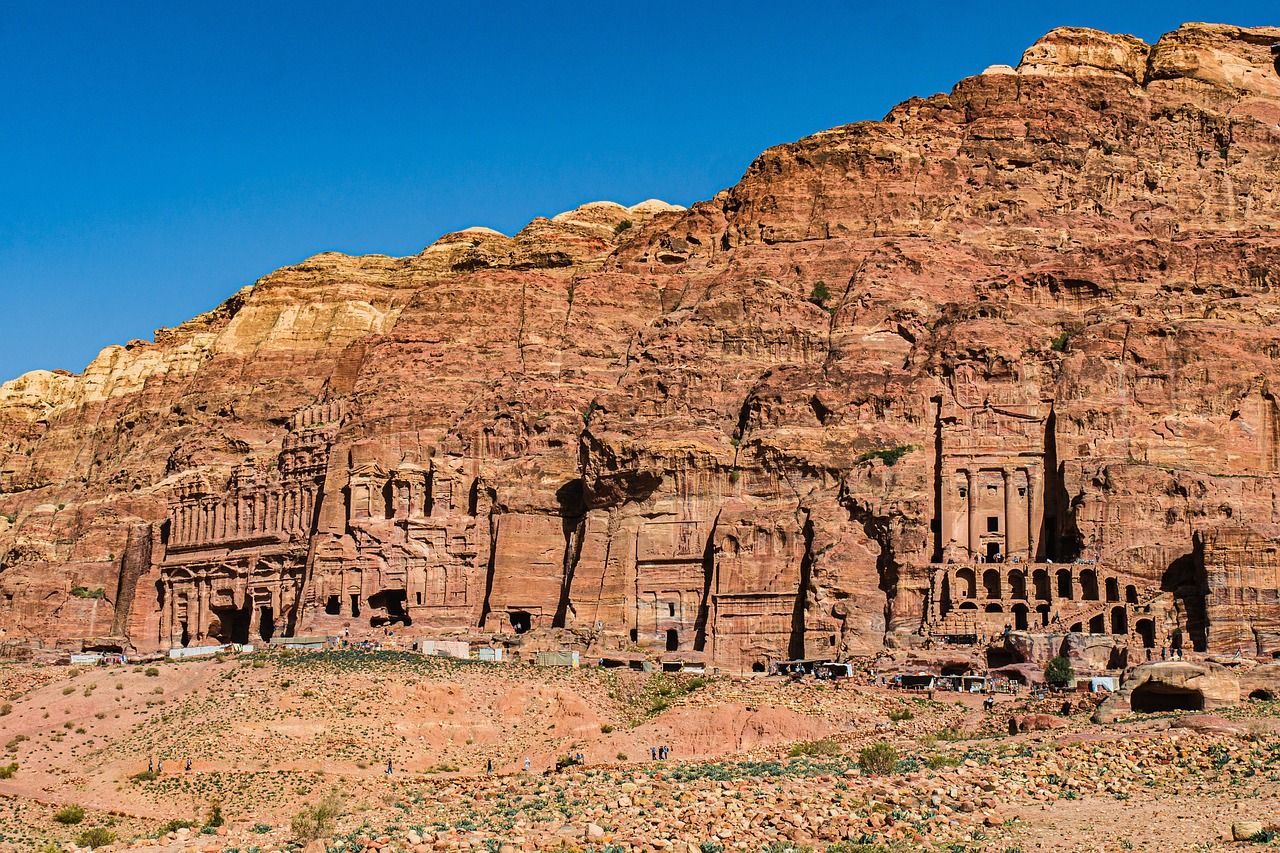
The Royal Tombs are a series of impressive and large mausoleums that have been carved into the Jabal al-Khubtha rock massif. All of them have impressive facades. While it is possible that they were tombs for royalty, this can’t be proven due to the lack of archeological evidence found in the tombs.
- Date: First Century AD
Notable Royal Tombs include the Palace Tomb, the Urn Tomb, the Silk Tomb, and the Corinthian Tomb. The Palace Tomb is the most impressive of the tombs.
The Urn Tomb
The Urn Tomb may have belonged to the Nabataean King Malchus II (died 70 AD). This tomb may also have been converted to a Byzantine church at some point (perhaps in 446 AD); there is an inscription in it reading “in the time of the most holy bishop Jason.”
The Silk Tomb
The Silk Tomb is named after its colorful layers of rock that seem to appear like a silk drapery over a tomb. It is found next to the Urn Tomb and is best known for its colors in its facade (the rocks have swirls of pink, white, and yellow-veined rocks).
The Corinthian Tomb
The Corinthian Tomb has one of the most eroded facades in Petra (so visitors are a thousand or so years late). It is clear that the tomb along with its floral capitals and columns was modeled on the Treasury of Petra. Its Corinthian capitals are embellished with floral decorations
The Palace Tomb: The Most Impressive Of Petra’s Royal Tombs

The Palace Tomb is one of the Nabatean tombs of the Royal Tombs and was built at the end of the first century AD. The name comes from the ancient tomb’s architectural style and its relationship to the other nearby tombs as the tomb’s facade resembles a palace.
The Palace Tomb’s facade has three stories and the top of it is actually higher than the cliff that it was carved out of. That is possible as the top was built, rather than carved.
- Built: First Century AD
- Owner: Unknown
- Stories: Three Levels (facade)
The Palace Tomb is one of the few buildings that combines a carved structure with a built structure. It has four burial rooms and some of the rooms have graves carved into the walls. The lower part has 12 decorated columns and four gates.
The third story of the Palace Tomb is ruined with very little remaining of it today.
Petra The Ancient Capital Of The Nabatean Kingdom

The Nabateans were an ancient Arab people who inhabited what is today Jordan and the ancient capital was Petra (then called Raqmu).
- Status: Capital Of Nabatean Kingdom
- Peak Population: 20,000 Inhabitants
The Nabateans may have arrived in the area of Petra in the 4th century BC and then the settlement grew into their capital. The Nabateans remained nomadic but grew wealthy off the trade routes and Petra became a major trading hub earning them considerable revenue.
They were skilled stone carvers and the city they built is today considered one of the greatest architectural achievements of ancient times. The peak population of Petra was likely around 20,000 inhabitants.
The Nabatean Kingdom managed to persist after the Romans arrived in the region -although as a client state of Rome. This state of affairs lasted from the first century BC until the Romans invaded and annexed it in 106 AD.
Nabatea was then absorbed into the Roman Empire as Arabia Petraea. Petra started to decline after an earthquake in 363, and eventually, it was abandoned, it was rediscovered to the outside world in 1812.
What To Know About Visiting Jordan And Petra Today
Petra is one of the top attractions in Jordan today and is easy to visit (check out the accommodation in the area and enjoy an immersive experience).
- Admission Fees: 50-90 Jordanian Dinars ($70-127)

Opening Hours (Archeological Site & Visitor Center:
- Summer: 6:00 am to 6:00 pm
- Winter: 6:00 am to 4:00 pm
While in Jordan visit its many other archeological attractions including the Roman ruins (particularly at Jerash) and the old Crusader castles (particularly Kerak).