



02/17/1943 (Wednesday)
Thirty-three trains sent units of the 167th infantry. divisions. Inf.Div. from Holland to the Eastern Front.
The next trains transporting heavy tanks of the s.Pz.Kp company. 3rd Regiment SS-Pz.Rgt. “Death’s Head” arrived in Poltava. When crossing the “Dead Head” along the road from Kyiv to Poltava, there were big problems due to the thaw (+ 3 ° C) and the appearance of mud, which made the movement of mechanized equipment almost impossible. Adolf Hitler, accompanied by members of the General Staff General Zeitzler and General Jodl, flew from his headquarters in Vinnitsa to the headquarters of Gr. Army South in Zaporozhye to talk with Field Marshal Erich von Manstein. He presented the Fuhrer with the situation at the front, which looked like this:
– Army group Hollidt defends its front line positions on the Mius River, attacked by the forces of 3 Russian armies.
– Eastern flank of Gr. Army A. and Gr. The armies of the South were provided only conditionally and there were still Russian cavalry units on the northern flank that had to be destroyed.
– The Russian hole in the central part of the front line on Mius, punched by the Russian 4th Guards Mechanized Corps, was quickly closed by a counterattack carried out by 16 infantry forces. division and part of the 23rd tank division. They surrounded the attacking Russian corps and destroyed most of them, capturing its headquarters.
– 1st Panzer Army (von Mackensen) together with Army Group Hollidt, forces of the 40th Panzer Corps Pz. Korps (Siegfried Henrici) and the SS-Pz.Gren.Div. “Viking” managed to stop and block the forces of the Russian 1st Guards Army in their areas.
– Russian troops continued to attack through the gap between the forces of the 1st Tank Army Pz.Armee and Arm. Gr. Lanz. Their vanguards, Popov’s Army Group, broke through in the Krasnoarmejskoje area (with Stalino and Mariupol as their targets).
Erich von Manstein wanted to gather forces to defend the defensive line along the Dnieper, using the forces of the SS-Pz tank corps. Korps to attack the flank of the Russian 6th Army and, initially with only limited efforts, attack Kharkov. Hitler ordered firmly that, first of all, Kharkov should be recaptured, then later actions could be taken against the Russian 6th Army. Once again, Erich von Manstein realized that he had to be diplomatic and wait, because the situation at the front was developing in such a way that it justified 100% his concept of management. On 18.02 the Russians attacked in the gap between the forces of the 1st Tank Army and the Army. Gr. Lanz, and their advanced units were about 100 kilometers from Zaporozhye. Adolf Hitler, who on 18.02 received information concerning the difficulties that the mechanized units of the SS-Pz.Gren.Div division “Totenkopf” (with which he planned to recapture Kharkov) were having in movement, and having information that parts of the Russian 35th The Guards Rifle Division captured Pawlograd, finally giving the green light to Erich von Manstein’s plan. After this, Manstein’s diplomacy was victorious. Despite the great risk of implementing his plan, he promised great operational success. When Hitler flew to his headquarters in Vinnitsa in his Fw-200 Condor (accompanied by 2 Me-109s) from the Zaporozhye airfield, single Russian tanks were already 10 kilometers away.
Meanwhile at the front, Kampfgruppe Lemmerding took up its forward positions in the area: the northern edge of the wooded area south and southwest of Olschany – the northern outskirts of Bayrak.
Left flank of the 2nd regiment. Pz.Gren.Rgt. LSSAH broke away from the enemy and at 05.00 hours, secured a foothold on the new front line – the watershed of the Uda River. At 11.10 o’clock, 2nd regiment Pz.Gren.Rgt. LSSAH received information about a breakthrough of the front line by a Russian group supported by tanks, moving from Ssokolowa to Merefa. Piper’s fireteam was sent to destroy it. A few hours before noon, reconnaissance battalion Abt. LSSAH reported observing Russian columns (747th Regiment, 172nd Infantry Division) moving from the east towards Jefremowka. Reinforced by 20 tanks, the 2nd regiment Pz.Rgt. LSSAH (commander Wilhelm Beck) attacked the Russian columns from the flanks and rear. They were destroyed and the Germans captured 8 guns. Russian losses amounted to about 1,200 soldiers. Witt’s battle group failed to capture all of Taranowka. In the end, after evacuating the wounded with the help of SPW armored personnel carriers from the 3rd battalion SS-Pz.Gren.Rgt.Der Fuhrer, Kampfgruppe Witt left Taranovka and secured the front line in the area: north of Rjabuchino – Borki – Borki railway station – northern outskirts of Nowaja Wodologa.
02/18/1943 (Thursday)
Forty-nine trains with parts of the 167th infantry. divisions were sent from Holland to the Eastern Front. In addition, trains with units of the 3rd Tank Division “Totenkopf” of the tank corps reached Poltava, where it was assembled. The division SS-Pz.Gren.Div.LSSAH was supposed to take its places by 20.00 hours in the new sector of the front line, combining the sectors: Berezovka – Melechkowka – hills north of Ochotschaje – eastern outskirts of Ryabukhino ( Rjabuchino) – hills south of Borka.
As reserves, in Staroverowka there is the LSSAH reconnaissance battalion and the 1st battalion. tank regiment Pz.Rgt. LSSAH, in Nowaja Wodologa 2nd baht. Tank regiment Pz.Rgt. LSSAH, in Krasny (Knjashnoje) engineer battalion Pi.Btl. LSSAH. Combat-ready assault guns StuG.III Ausf. baht assault guns StuG.Abt. LSSAH were to remain in various combat group units. Those requiring maintenance had to be repaired to the northeast of Staroverovka, in Karawanskoje. From anti-tank self-propelled guns Marder anti-tank battalion. Pz.Jg.Abt. LSSAH will also leave combat-ready vehicles in various combat groups, and those that need repairs should be sent to Staroverovka. Sanitary battalion Abt. LSSAH was to establish a main dressing station in Nowaja Wodologa, while a field hospital was to be established in Krasnograd. The front line for the LSSAH division was planned to be more than 60 kilometers long. LSSAH intelligence that day reported several enemy movements in the Aleksejewka and Bereki areas, as well as enemy units moving from the Alekseevka area towards Krasnograd. On the border between LSSAH and 320.Inf.Div., on the left flank near the village of Borki, a Russian group up to the battalion broke into Borki. She was driven out of the village only in the afternoon.
Intelligence from the Kampfgruppe Lemmerding to the east and northeast established that large Russian forces, supported by tanks, were moving west near the Nowyj Ostrof-Petropawlowka railway line. It is also reported that Petropavlovka and Sakhny were occupied by the Russians. The forces of the 168th division recaptured Bogoduchow. South of Lyubotin, on the right flank of the Inf.Div.Grossdeutschland division, its units repelled enemy attacks in the morning.
It was mentioned earlier that the radio interception service of the communications battalion of the 40th Tank Corps intercepted a message (sent via UHF) from Popov’s armored group to the Russian command: all equipment has stopped. It further described the catastrophic situation with reserves and supplies due to the roads cut by the enemy south of Slawjansk. Decoding this message, as well as other similar ones from attacking Russian units, was the main source of information for the German leadership in preparing the counter-offensive.
• Reports on this day (command of the Arm. Gr. Lanz in Poltava) :
– 09.20 . During radio conversations between General Lanz and Field Marshal Erich von Manstein, the question was asked why the forces of the SS-Pz.Gren.Div division “Totenkopf” could only be assembled in Poltava by 26.02. The reason for this is the poor terrain conditions along the Kyiv – Poltava region road.
– 12.00 , during a conversation between Lanz and the beginning. on military transportation, a discussion took place regarding the connection of units of the SS-Pz.Gren.Div division to transportation. “Death’s Head” of railway transport along the Kyiv – Poltava railway line.
– 20.30 , with one regiment the Russians attacked the positions of units of the Inf.Div division from both sides. “Grossdeutschland” in Merefa. Some of these forces managed to break into the southern parts of Merefa. They were forced out, losing 8 T-34s and many killed. To bypass the positions of the 168th infantry. div. The Russians gathered forces: a division near Merla and 2 divisions in the area of the Vorskla river valley. Their vanguards were directed east of the Guty railway station and near Bolschaja Pisarewka.
02/19/1943 (Friday)
Fifty-seven railway trains with units of the 167th infantry. div. sent from Holland to the Eastern Front, completing their redeployment.
In the morning, all 9 tigers of the 3rd Tank Regiment SS-Pz.Rgt “Death’s Head” in Poltava were in combat readiness. Other units of SS-Pz .Gren.Div “Toten’s Head” arrived in Poltava, including the 3rd tank. Regiment SS-Pz.Gren.Rgt. The combat strength of the SS-Pz.Gren.Div “Totenkopf” was: 37 officers, 934 non-commissioned officers and 4201 privates (the actual strength of the division was 352 – 2639 – 9535)
The SS-Pz.Korps corps headquarters decided that the SS division -Pz.Rgt. Das Reich, due to the heavy losses caused by recent battles (almost 50% of the tanks were damaged), is renamed the reinforced tank battalion Pz.Abt. (Commander Christian Tychsen). The regimental headquarters and the second battalion (with damaged equipment) were to be delivered to Kyiv for repair and reinforcement. This group was commanded by Hans Albin von Resenstein. On this day, in combat readiness in a tank battalion. SS-Pz.Abt. “Das Reich” were: 33 T-3 (Pz.Kpfw.III), 7 T-4 (Pz.Kpfw.IV), 1 tiger (Number 822, commander Paul Egger), 15 (? 17) assault. guns (StuG.III). The offensive operations of the “Reich” were to be supported by the armored train PZ 62 (commander Frank Drexler), which arrived at 08.00 hours on 18.02 in Krasnograd (some sources give the date as 19.02).
Army Group South ordered the 4th Tank Army to dislodge the attacking Russian troops in the Pereshchepino-Pawlograd-Grischino area. These Russian units threatened to cut off Arm. Gr. South of the Dnieper. Russian armored wedges were directed towards the important railway. the center of Sinelnikovo (Ssinelnikowo), which was located in the rear of Gr. Arm. South. At the same time, units of the division SS-Pz.Gren.Div. “Das Reich” were at the forefront of the attack from the Krasnograd area, south to Pereshchepino. The attack was led by the reinforced regiment SS-Pz.Gren.Rgt. “Deutschland” (commander, Heinz Harmel), which also included: two battalion batteries. storm. guns StuG.Abt. SS “Das Reich”, 4th battalion company. air defense Flak.Abt. SS “Das Reich” (additionally reinforced by half a platoon of Vierlings-Sd.Kfz. 7/2с), 1st battalion company. anti-tank Pz.Jg guns Abt. SS “Das Reich”, 1st battalion platoon. Communications Nachr.Abt. SS “Das Reich”, one heavy Spatrupp / Aufkl.Abt. SS “Das Reich”, one Leichter Spatrupp/Aufkl. Abt. SS “Das Reich” and was supported, if necessary, by the 2nd and 4th batteries art. baht Abt. SS “Das Reich”, 1 battery. 272nd art. zen battalion (Heeresflak-Art.Abt. 272) (attached to the division from 02/02/1943). At 05.00 hours, the attack began south from the bridgehead near Natalino (the first target was the sector near the Wschiwaja river). During the first phase of the attack, the enemy were units of the 6th Infantry Division. At 12.00 hours, the area 12 kilometers southwest of Krasnograd, along the Abgasowka – Nowaja Abgasowka line, was reached. Russian attempts to counterattack were repulsed. At 17.00 o’clock Otradowka was captured. Armored vehicles, together with the 3rd battalion. SS-Pz. Gren.Rgt. “Deutschland”, worked on the way to Pereshchepino. During the offensive operations that day, units of the Reich Division received significant support from dive bombers of the 4th Air Fleet. In the afternoon, the reinforced regiment SS-Pz.Gren.Rgt. “Deutschland” joined the regiment SS-Pz.Gren.Rgt. “DerFubrer” (2/3 of the composition, from 23.01 to 07.03 the rest works as part of Schuldt’s battle group).
Mission of the division SS-Pz.Gren.Div. LSSAH is to secure the northern flank of the attacking SS-Pz.Gren.Div. “Das Reich” by conducting aggressive reconnaissance to the southeast.
2nd and 4th. companies from the 2nd regiment Pz.Gren.Rgt. LSSAH took Berezovka and, together with the 3rd armored battalion of the 2nd regiment Pz.Gren.Rgt. “LSSAH” (Kampfgruppe Peiper) attacked Ziglerowka from both sides and captured the village at 16.50 hours. Starting at 18.00 hours, Peiper’s combat group attacked Jeremejewka, at 00.50 hours the capture of the Cossack Maidans was reported. In other sectors, the Russians attacked with artillery support (Okhocheye) and numerous attacks were repulsed north of Rjabukhino. Reinforced by engineering battalion units. Pi.Btl LSSAH and 2 battalion companies. storm. StuG guns. Abt. LSSAH, 1st baht. 1st Regiment Pz.Gren.Rgt. LSSAH (Commander Albert Frey) captured Borki railway station by 18.00 hours. The action was also supported with fire on the 2nd baht. 1st Regiment Pz.Gren.Rgt. LSSAH (Commander Max Hansen) from his position north of Bulachi.
Northeastern flank of Armenia. Gr. Lanz was attacked by Russian troops (40th Army) and the weakened 168th Infantry Division. defending the area of Bogodukhov (Bogoduchow.) – Akhtyrka (Achtyrka), could be bypassed by the enemy.
At approximately 0400, the Russians attacked the forward positions of the Lammerding group in the southwestern region of the edge of the forest near Olschany – Zelenyi Gai – Northern outskirts of Bayrak and the advanced part of the Schulze battle group in the Ivashchenkov – Stary Merchik area. From the Bayrak area, the Russians launched an attack on the left flank of the Lammerding group, south to Zelenyi Gai – Bayrak. At approximately 08.30 hours, the Russians broke into New Merchik and captured it in heavy fighting. At approximately 09.00 they reached Stary Merchik from the north. The battle group, consisting of units of the Inf.Div Grossdeutschland division, which were supposed to arrive in the evening, launched a counterattack. The forces of the Schulze group managed to stop the Russian advance near the Schiloff zone. In the Shilov-Mischtschenkow area, units of the SS-Schtitzen “Thule” regiment stopped the Russians advancing from Nowyj Mertschik and eventually launched a counter-offensive. The report at 16.45 hours spoke of complete control over Stary Merchik. In the afternoon, near Bayrak, the Russians attacked from the south, north and east three companies of the 2nd Battalion. Regiment SS-Schtitzen. Thule. The important railway station of Kowjagi was under threat. It was defended by the small forces of the “Thule” regiment, supported by 3 tanks from the Pz.Rgt.Grossdeutschland tank regiment. Another Thule unit provided defense in the village of Shurawli. In the evening, the advanced units of Lammerding’s group were in positions along the line Solykhev Shidovo (villages of Solodovka, Lyubovka in the west of Lyubotin) (Solytschew Shidowo) – height 195.2 – Shilov (farm north of Tetyushchino) (Schiloff) – Mishchenki (farm east of the village of Zhuravli) (Mischischenkoff) . The group’s losses on this day were: 36 dead, 41 wounded and 36 missing. 1st baht. SS-Schutzen.Thule was ordered to go from Krasnograd to Walki to help battle group Schutze.
• Reports for this day (Arm. Gr. Lanza headquarters in Poltava) :
– 10.50 Report from Siebert from the 167th division regarding his division. His units will reach Poltava in the period 20-27.02. The division was removed from the front line in the Orel area in April 1942 and transferred to Holland. It consisted of grenadier regiments 315, 331 and 339, art. regiment 238 and anti-tank 238 art. battalion According to the teams. Arm. Gr. the anti-tank battalion had low combat value, since there was no increase in the caliber of guns to 7.5 cm. The remaining units were assessed positively.
– 15.30 , message from the Routh Corps that Count von Strachwitz with several tank companies is currently assigned to command the Inf.Div.Grossdeutschland division.
-16.30 , from the tank corps Pz. Korps (SS-Stubaf. Hans-Joachim Stolli) reports that LSSAH forces have repelled attacks from the area near Medwedowka, Ochotschaje and Rjabuchino. Borki has been captured, but the hills north of Borki and the wooded areas in this area are still in enemy hands.
– 16.45 , Russian troops were significantly reinforced in Merefa. They are under artillery fire. Units of the division SS-Pz-Gren.Div. “Death’s Head” in Bayrak attacked large enemy forces from the south, north and east.
– 21.00 , assembly area for units of the 167th infantry. The division was in the Reshetilovka (Reshkowka) – Poltava (Poltava) area. This was a temporary area for operations in the direction of Achtyrka
– 23.00 , von Manstein reported that the SS-Pz.Gren.Div. “Death’s Head” should be involved in Krasnograd and the 167th infantry. div. currently under the command of Arm. Gr. Lanz
02/20/1943 (Saturday)
The last combat units of the SS-Pz.Gren.Div division. “Death’s Head” 3rd tank-grenadier and anti-tank battalions reach Poltava.
Purpose Gr. Arm. The south is to use the 4th Panzer Army (commander Hermann Hort) to destroy the Russian troops attacking between Arm. Gr. Lanz and the 1st Panzer Army (commander General Eberhard Mackensen). Arm. Gr. Lanz, using the forces of the SS.Pz tank corps. Korps (minus LSSAH forces) were to attack in the direction of Nowomoskovsk to establish contact with the forces of the 4th Tank Army. Parts Arm. Gr. Lanz, together with LSSAH, had to stop Russian troops on their line of defense. At 07.40 hours, SS-Pz.Gren.Div. “Death’s Head” received orders from Arm. Gr. Lanz concentrated her forces near Krasnograd and subordinated it to the SS-Pz Tank Corps. Corps. At 18.20 hours, an order came from Gr. Army South concentrate in the Krasnograd – Karlovka area and wait for further orders from Gr. Army South.
Beginning in the evening of 19.02, the attack of the 3rd baht. SS-Pz.Gren. “Deutschland” (com. Gunter Eberhard Wisliceny) ended at 00.50 hours with the capture of Pereshchepino and the hills south of Dimitrijewka. The grenadiers attacked with troops in tanks, assault guns and armored personnel carriers. At 05.00 hours, a further attack in the south was to be reinforced by the 3rd battalion of SS-Pz.Gren.Rgt.”Der Fuhrer” (com. Zenz Kaiser). On this day, the group included only the combat training Tiger (822, commander Paul Egger) from the 8th heavy company. tanks of the tank regiment SS-Pz.Rgt.”Das Reich”. In battles, his crew destroyed 5 Russian anti-tank positions. The group’s actions were supported by dive bombers, who made a significant contribution to the capture of Gubinicha at 06.35 hours, at approximately 11.00 hours Marjanowka [the “Das Reich” vanguard was in the area at 08.40 hours] and Nikolajewka, which were captured in heavy fighting. At approximately 1400 hours, contact was established in Nowomoskovsk with Kampfgruppe Steinbauer (commanded by General Steinbauer, it consisted of units of the 52nd Regiment and other small scattered groups of Wehrmacht soldiers. This Kampfgruppe was part of the 1st Panzer Army, and from 24.02 was under the command of the SS Panzer Corps).
At 04.00 hours, Peiper’s battle group gathered east of Tsiglerovka (Sosnovka) in front of the Cossack Maidans, from where the next attack began, occupying Shlyakhovaya (Eremeevka) and the Leninsky Plant at 06.30 hours. After pursuing the enemy for several kilometers, she took up convenient positions to defend Eremeevka. During the attack, the group destroyed 2 T-34, 1 T-70, 12 76.2 cm guns (ZIS-3), 2 field howitzers, 15 heavy mortars, 8 machine guns, 300 rifles. 750 Russian soldiers were killed and 2 light trucks were captured. By order at the beginning of the day, the forces of Peiper’s group were to be replaced in Eremeevka by a reinforced reconnaissance battalion of Aufkl. Abt. LSSAH and the 1st battalion of the tank regiment Pz.Rgt. LSSAH. Their mission was to fight Russian units moving west in the area north of Krassnograd. Both groups were in Eremeevka at 15.00 hours. Peiper’s combat group was supposed to withdraw to Krasnograd and, after replenishing supplies of ammunition and fuel, was supposed to reconnoiter and clear the Borki area from the enemy.
The sector that was defended by the 1st baht. Pz.Gren.Rgt. LSSAH was attacked several times in the Melechowka – Rjabuchino area. During one of them, supported by tanks, the platoon commander of the 2nd company StuG.Abt. LSSAH, Alfred Günther, destroyed 5 attacking tanks. Forces of the 2nd Bat. 1 regiment Pz.Gren.Rgt. LSSAH (commander Max Hansen) repulsed 2nd Russian attacks in the sector of the front they defended near Podkopay and Klijutschewodsk.
During the evening, 1 baht. 3 regiments SS-Pz.Rgt. “Dead Head” began its movement from Poltava to Krasnograd, which it reached in the first half of the day on 21.02. Same day 4th baht. shelf SS-Art.Rgt. “Dead Head” entered the area west of Krasnograd at 03.00 hours on 21.02. While stopping in a small village, he was immediately attacked by the Russians. The attack was repulsed and the Russians suffered 100 dead. Artillery Regiment Art.Rgt. also suffered the first losses of soldiers.
Reconnaissance battalion Aufkl.Abt. “Grossdeutschland” attacks New Merchik and breaks into the village at 10.45 o’clock. The battle lasts until noon and finally the entire area is captured. Reconnaissance battalion Aufkl.Abt. “Grossdeutschland” sends its reconnaissance groups along the Mokryi Merchik River and to the Kowalki – Kut (Good Kut) area. 2nd baht. SS-Schutzen. Thule fights to recapture Dobropolje, which he succeeds in doing, and then takes up positions in the hills north of the village.
• Reports on this day (Arm. Headquarters Gr. Lanz in Poltava) :
– 09.00 , Rous Corps receives an order to transfer to the 168th infantry. div. (without anti-tank weapons) anti-tank guns belonging to the 320th Inf.Div. and 106 anti-tank company Pz.Jg.Kp. from the Inf.Div.”Grossdeutschland” division.
– 09.30 , Armored train PZ-62, in accordance with new orders, immediately moves to Poltava.
– 11.55 , Field Marshal Erich von Manstein informs the Chief of Staff of the decision to replace the commander of the Army. Gr. Lanz 21.02. The new commander should be General Werner Kempf.
– 12.30 , commander from Armenia. Gr. Lanz requires 4 unloadable Marder self-propelled anti-tank guns in Achtyrka, intended for the anti-tank battalion. Pz.Jg.Abt. LSAHH were sent to the 168th Inf. division, whose units are defending Staraya Ryabina and which are expected to be attacked by Russian tank units. Tank corps SS-Pz. Korps agrees to the request. The ultimate fate of these Marders is unknown, but they were likely lost during the fighting.
– 13.00 , tigers 13th baht. tank regiment Pz.Rgt. “Grossdeutschland” (Commander Walroth) provided support for the operations of the 168th Infantry. div. until the arrival of the assigned 4 Marder self-propelled anti-tank guns.
– 16.00 , strong onslaught of Russian troops on the night of 19 to 20.02 between the forces of the 320th Inf.Div. and Inf.Div. “Grossdeutschland” formed a breakthrough in the front line (2 km wide and 1.5 kilometers deep) near Jasnyj. Near (Koziewka?)Kaserovka (Kaserowka), Russian tanks broke through the front line and a counterattack was launched. Lammerding’s attacking battle group reached the center of Dobropolje.
– 17.05 , the first railway echelon with units of the 167th infantry. division reached Poltava.
– 21.00 , order from von Strachwitz to send 13 baht. Pz.Rgt. “Grossdeutschland” to Achtyrka to escort an ammunition convoy to the 168th Division. This was done on 21.02 at 04.30 hours, when the tigers left the city.
On this day, the Inf.Div. (MOT). “Grossdeutschland” destroyed 11 enemy tanks.
On the night of 20 to 21, General Popov sends a message to the army of General N.F. Vatutin, asking permission to withdraw his armored group. Popov’s tanks had serious supply problems and many of them were unable to move. The categorical answer from Vatutin was no. He ordered an attack with all his might because he was convinced that the enemy was finally retreating.
02/21/1943 (Sunday)
On 02/21, at 03:00, the reinforced 2nd battalion began an attack. regiment SS-Pz.Gren.Rgt. “DerFuhrer” (com. Sylvester Stadler) from Nowomoskovsk to the Samara River to capture bridges that were important for the continuation of the attack on Pawlograd. The Germans managed to seize a bridgehead on the eastern bank of Samara and at 04.30 hours they reached the edge of Peschanka (Petschanka). At the forefront of the attack was the 3rd platoon (T-3 Pz. Kpfw.III Ausf.M, number 431, under the command of Karl Kloskowski) from the 4th company of the SS-Pz.Abt “Das Reich” regiment, which also included Tiger number 822, commanded by Paul Egger. During this attack, Egger’s team destroyed more than 2 (some sources claim 6 guns, but this applies to all tanks of the 3rd platoon during this attack) anti-tank guns (ZIS-3) and 3 T-34s (a total of 4 Ts destroyed -34). Pavlograd was a supply center for units of the Soviet 6th Guards Army. At 13.00 the city was attacked by Stuka attack aircraft and the 2nd Battalion. SS-Pz.Gren.Rgt. “DerFuhrer”. At approximately 16.00 hours, almost the entire city was in German hands. The Russians understand the importance of this defeat and in the evening they attack with tanks south of Pavlograd. The attack ends in defeat. Approximately 15 German armored vehicles were destroyed. On the night of 21/22/02, Tiger number 822 (commander Paul Egger) secured the capture of the bridge over the Wolczja River, on the western outskirts of Pavlograd.
On this day, there were some changes regarding the command and subordination of units. At 09.30 hours, the command of Arm. Gr. Lanz was transferred to General Werner Kempf and the designation of the military association was changed to Arm. Gr. Kempf. At 12.00 o’clock the tank corps SS-Pz. Korps (as part of the divisions SS-Pz.Gren.Div. “Reich” and SS-Pz.Gren.Div. “Death’s Head”) was subordinated to the 4th Panzer Army Pz. Armee (commander Hermann Hoth)
Divisions SS-Pz.Gren.Div. LSSAH and Inf.Div.Grossdeutschland remained subordinate to Arm. Gr. Kempf.
In the morning, 1st baht. tank regiment Pz.Rgt. LSSAH and part of the reinforced reconnaissance battalion Aufkl.Abt. LSSAH launched an attack to the south through Kegitschewka – Rojakowka – Gurjewka – Krutojarowka. The attack was over a distance of about 50 kilometers, the Russians suffered heavy losses in manpower and equipment. For the exploits of the people of his battalion on this day, the commander of the reconnaissance battalion Aufk.Abt. LSSAH, Kurt Meyer received oak leaves on 02/23. Command of Arm. Gr. Kempf asked Gr. Arm. South permission to reduce the front line on the left flank of LSSAH. The agreement for the regrouping was satisfied and was to begin on the night of 21/22/02. In the evening 1st baht. Pz.Gren.Rgt. LSSAH reduces the sector of the front where it defended the defensive line: the northern outskirts of Nowaja Wodologa – the eastern edge of Knashnoy (Chervonoy? now Novaya Merefa).
On the night from 21 to 22.02, units of the division Pz.Rgt. LSSAH carried out a successful attack, the goal of which was to liberate the encircled 1st company of the engineer battalion in Borki. Pi.Btl. LSSAH. In the evening in the division SS-Pz.Gren.Div. LSSAH were combat-ready: 6 Tigers (in Krasnograd) and 49 T-4 Pz.Kpfw. IV Ausf. G and 21 self-propelled guns Stug 3.
On this day, most of the SS-Pz.Gren.Div. The “Death’s Head” moved to the Krasnograd area, where, starting at 10.30 o’clock, its commander Theodor Eicke was also present. The first task was to liberate the southeast from Krasnograd, providing units of SS-Pz.Gren.Div. Das Reich. This mission was to be carried out by the reinforced 3rd Battalion. 3rd Regiment SS-Pz.Gren.Rgt. “Death’s Head” (commander Max Kuhn). The first battles with Russian infantry took place in the Konstantinovka (Katerinovka?) – Martynowka area. Part of the 3rd regiment SS-Pz.Gren.Rgt “Totenkopf” took over security tasks in Ostradowka with the help of the SS-Kradsch motorcycle battalion. BTL Langemark. There, too, almost immediately, contact was established with the enemy and a shootout was carried out with the capture of the Andrejewka and Ortschikowa areas. In addition, in the Pereschtschepino area, the reconnaissance battalion Aufkl.Abt. Das Reich rescued units of the 3rd Baht. 1st Regiment SS-Pz.Gren.Rgt. “Death’s Head” (commander Ernst Haussler).
• Reports on this day (Arm. Headquarters Gr. Kempf in Poltava) :
– 06.30 , after the Germans captured Novomoskovsk (Nowomoskowsk), the Russians launched an offensive from the northwest and northeast to take it back. From positions in a wooded area north of Borka, the Russians launch a successful attack and fight their way into the northwestern part of the city. In the eastern and northeastern sectors of the front line, defended by units of the Inf.Div.Grossdeutshland division, all Russian attacks were repulsed. Front sector protected by the 168th Infantry. the division was attacked along almost its entire length.
-11.05 , Luftwaffe aerial reconnaissance reports enemy movements in the area northeast of Achtyrka, near and east of Trostyanets, movement from east to west. This enemy concentration was attacked by aircraft. Additional reinforcements mainly come from Belgorod in the direction of Graiworon, and from Kharkov (Charkow) to Bogoduchow. A very effective attack by dive bombers in front of the front sector defended by the 168th Inf.Div stopped the Russian attack.
-1130 , LSSAH reports that Krutojarowka has been captured, and that attacks on Jeremejewka from the east and from the Ochotschaje area have been repelled again. Strong onslaught of enemy troops on the northern flank. Two companies in Borki repelled powerful attacks by Russian troops.
– 12.00 , LSSAH is directly subordinate to Arm. Gr. Kempf. Permission to withdraw back to the new front line was requested and expected due to the large gap between German units in the Bogodukhov area and to the west of it. Routh’s Corps forces retreat on the night of 21/22 and the LSSAH Division must do the same during this time. The decision and order of withdrawal are awaited from the command of the Gr. Army South.
– 13.05 , commander of the 168th division. Inf.Div. reports that: Kozievka (Kosfjewka), New. Odessa and Yablotschni are occupied by the enemy. A group of units in the Koglanovka area (Kolontaev?) (Koglanowka) goes to Parchomovka (Parchemowka), which is probably in enemy hands. Another group is located in Novoryabino (Nowaja Rjabino). The division’s units are pushed out of Trostjanez by partisans (all German reports refer to them as bandits). Partisans, numbering approximately 1,000 people, also in Oleschnja. There is a danger that the enemy will cut the road to Sinkov (Zenkov?) (Sinkow) and stop the supply of the division.
– 14.00 , the Military Transport Directorate reports that the railway station in Wedjanoje and the distillery are occupied by the enemy, the concentration of enemy forces was noted 2 km north of it. It was decided not to blow up the rails to send the PZ 62 Armored Train to this area.
– 17.00, Routh Corps reports that the 320th Div. Inf.Div. in the course of changing its line of defense. The Inf.Div.Grossdeutschland division repels the Russian attack on the southern flank, in the Karawan area. In other sectors of the front line, all Russian attacks, some supported by small groups of tanks, were repulsed.
168th Inf. div. came under the direct command of Army Group Kempf.
– 17.50 , From the headquarters of the Gr. Arm. The South transmitted information that the advance of the tanks of Popov’s group was stopped by the forces of the 1st Tank Army and the Russians suffered heavy losses.
– 18.30 , General Kempf reports to Gr. Arm. South: Large columns of Russian troops advance from Bogodukhov to the west and northwest (parts of the 69th Army), and north of the river valley. Vorskla (Worksla) and to the west (30th Army). This was probably an attempt to encircle Arm’s northern flank. Gr. Kempf. There was a lack of forces for a counterattack and the danger of disrupting the rear supply with the main source in Poltava. The Poltava-Kyiv railway line is also under threat. The reduction of the front freed up a small part of the Inf.Div.Grossdeutschland division, which could be used for a counterattack. Of course, more motorized parts were needed to solve this problem.
– 23.40 , Rous Corps reports: reconnaissance battalion Aufk.Abt. Grossdeutschland, reinforced by units of the Fuhrer’s security battalion, was assembled near Kolomak. His mission is to reach Krasnokutsk (Korassnokutsk) in the region of the river valley. Merly and protection from the enemy approaching from the southwest.
The armored train PZ 62 was placed under the command of the Inf.Div.Grossdeutschland division along the Poltava-Kowjagi railway line.
02/22/1943 (Monday)
In the morning, SS-Pz.Gren.Div. LSSAH had the following combat-ready armored vehicles: 6 tigers (all were in Krasnograd), 49 T-4 Pz.Kpfw.IV Ausf. G and 21 pcs. guns StuG.III.
The withdrawal of units of the SS-Pz.Gren.Div.LSSAH division to the new front line made it necessary to launch an attack on the Russians on the night of 21/22/02 in order to avoid a Russian attack on the retreating Germans. Reinforced 2nd baht. 1st Regiment Pz.Gren.Rgt. LSSAH (commander Max Hansen) attacked near Klijutschewodsk. At 05.30 units of the 1st Tank Regiment Pz.Gren.Rgt. LSSAH occupied a new front line in Melikhovka – Knyazhnoe (1st battalion, commander Albert Frey), the Podkopai – Bulachi – Novaya Vodolaga zone (2nd battalion commander Max Hansen) and in Karawanskoje ( 3rd Battalion commander Wilhelm Wiedenhaupt). The Russians began attacks on the new front line at approximately 0600 hours. All of them were repulsed. At 17.00 hours the Russians broke through the line of the 2nd Baht. in the area of Khomenki – Ordovka (Ordiwka), but the assault was repelled. urdia StuG. assault gun battalion StuG.Abt. LSSAH.
In the operational zone of the SS-Pz.Gren.Div.Das Reich division, on the night of 21 to 22.02, enemy tanks blocked the area near the Novomoskovsk – Pavlograd road. At approximately 07.00 hours Tiger 822 (commander Paul Egger), with the support of 3 T-4 Pz.Kpfw.IV Ausf. G entered the fray again. The Tiger destroyed 5 Soviet tanks and 2 anti-tank guns, but was also damaged and was unable to continue firing. For the dashing capture of the bridge over the Wolczja River on 21.02, the commander of the T-3 Pz.Kpfw.III Ausf. M 431, Karl Kloskowski of the Panzer Regiment Pz.Rgt.Das Reich, was awarded the Knight’s Cross on 07/11/1943.
Regiment SS-Pz.Gren.Rgt. Der Fuhrer, reinforced by two anti-aircraft guns from the 1st Battalion Zen guns of the Das Reich regiment, took up defensive positions on the eastern and western outskirts of Pavlograd. Part of a motorcycle baht. SS-Kradsch.Btl.Langemark left the eastern part of Pavlograd, and at the beginning of the afternoon, established contact with the attacking units of the 48th Panzer Corps, units of the SS Pz.Gren.Div “Viking” division.
On the night from 21 to 22.02, div. SS-Pz.Gren.Rgt.Deutschland and other tank parts. baht SS-Pz.Abt. “Das Reich” began advancing towards Pavlograd. They encountered the enemy southwest of Bulachowka. At approximately 08.00 hours, the road was clear of the enemy. During the battle, the Russians lost 6 tanks and 2 armored vehicles. At 09.15 Pavlograd was reached. The Harmel battle group was created (commander Heinz Harmel), which included divas. SS-Pz.Gren. Deutschland, 4th baht. Artillery regiment SS-Art.Rgt.Das Reich, 2 tanks (tank battalion Pz.Abt.”Das Reich”) and 3 assault. StuG.III guns (SS-StuG.Abt.Das Reich battalion). At 09.45 she attacked from the Pavlograd area, initially to the south, then to the southwest. After fierce fighting, at 14.30 she captured Saizewo, and at 14.42 she established contact with units of the 88th Regiment Inf.Rgt. (15th Infantry Division) in Sinelnikowo. Russian attacks on the Dnepropetrovsk (Dnjepropetrowsk) – Pavlograd road near Pavlograd also encountered two 8.8 cm Flak anti-aircraft guns from the 272nd Anti-Aircraft Battalion, which destroyed 18 enemy tanks and 2 armored vehicles. At 13.15 command and staff units of the SS-Pz.Gren division. Div. Das Reich moved from Nowomoskovsk to Pawlograd, while the command post of the Tank Corps SS-Pz. Korps moved to Novomoskovsk.
At 06.00 units of the division SS-Pz.Gren.Div. The “Death’s Head” near Pereschtschepino was attacked by Russians from the north and northwest (106th Rifle Brigade). The attack was repulsed. Due to problems with the arrival of armored vehicles of the 3rd Tank Regiment SS-Pz.Rgt “Toten’s Head” (the road is covered with ice and snow), the offensive planned for 08.00 was delayed. During the march near Pereshchepino, Tiger 411 (commander Rinner) fell through the ice of one of the tributaries of the Orel River. On the icy, snowy road, 4 T-3 Pz.Kpfw.III tanks also broke down. The unlucky tiger, only restored on February 26, was sent to Dnepropetrovsk for repairs. From 11.30, 1st baht. The 1st Regiment SS-Pz.Gren.Rgt “Death’s Head” (commander Otto Baum) defended Pereshchepino from the west. At approximately 2 p.m., the Russians attacked Pereshchepino from the west. With the participation of 1st baht. 3rd Regiment SS-Pz.Rgt. “Death’s Head”, 1 baht. assault guns of the SS-Schutzen regiment. “Thule” immediately launched a counterattack, which drove back the Russian advance, suffering heavy casualties.
At 12.00, 3rd baht. 1st Regiment SS-Pz.Gren.Rgt. “Death’s Head” attacked south from Pereshchepino against Gubinikha. At approximately 13.00, he changed his direction to the southeast and collided with the enemy near Ivano Mikhailovka. Having occupied the village, he repelled a strong enemy attack, and then continued his attack southeast of Andrejewka, reaching its surroundings at 19.00.Strong Russian defense forced the Germans to take positions for the night on the edge of the village.
Reinforced 2nd baht. The 1st Regiment SS-Pz.Gren.Rgt “Death’s Head” (commander Wilhelm Schultz) was in battle from 13.15 at Nowo Stepanowka – Popasnoje. Separately, the 2nd battalion of the 1st regiment SS-Pz.Gren.Rgt “Dead Head” and units of the engineering battalion of the “Dead Head” regiment (commander Ostuf Kinzler.) attacked along the Pereshchepino – Popasnoye road, at 13.45 they reached the intersection to the south -west of Mikhailovka and drove the enemy away from this area. Continuing the offensive, they reached Pawlowka and by evening captured Pavlovka and Mikhailovka. Another part of the 2nd baht. 1st Regiment SS-Pz.Gren.Rgt. “Death’s Head” attacked the Popasna area in Wassiljewka – Jelenowka. There, they concentrated for a planned attack on Werebki.
3rd baht. The 3rd Regiment SS-Pz.Gren.Rgt “Death’s Head” (commander, Max Ktihn), which occupied positions near Wolny, began at 10.00 actions that were supposed to drive away enemy units from the Wolny – Andrejewka area ) – (Samoylovka?) Semlkanki. The action ended in success. To the southeast of Krasnograd, near Aleksandrovka, a reinforced group (Pz.Sp.Tr.) of the division Pz.Grn.Div. LSSAH, commanded by Friedrich Burgelsack, established contact with units of SS-Pz.Gren.Div. “Dead Head”. 2nd baht. 2nd Regiment Pz.Gren.Rgt. LSSAH (Commander Jochen Peiper) was ordered to establish contact in the Natalino area with the SS-Pz.Gren.Div “Tooth Head” units that were in Otradowka.
• Reports on this day (Arm. Gr. Kempf Headquarters in Poltava) :
– 03.15 , the 2nd division of the 3rd rocket mortar regiment was placed under the command of the Routh Corps (consisting of the 167th infantry division, 168th infantry division. division, 320th infantry division).
– 06.30 , on the northern wing, withdrawal of SS-Pz.Gren.Div units to the new front line. LSSAH, Inf.Div.Grossdeutschland and 320th Inf. div. carried out according to plan. Russian attacks supported by tanks on this wing were repulsed. Parts of the 168th. div. Inf.Div. were involved and took up positions in the following areas: the 417th regiment drove the Russians back from Parchomowka, Stepanowka and Pionersky, the 246th regiment took positions on the hills near (Khodunaevka?) Yanukovo (Jachnow) and from Vorovskoye (Worowskoso), the 442nd Regiment took up positions to the left of Yablochne (Jablotchne) to the west of it, sending its advanced units north of Vesele (Wessela). During the night, infiltration of enemy units between the group’s regiments was confirmed.
– 07.00 , aerial reconnaissance confirmed the presence of large enemy forces in the river valley. Merla, their forward units are in Kolontajew (Stuka attack aircraft attacked this area). They also detected enemy columns moving south and southeast from Bogoduchow. German columns with ammunition are also observed, covered by 8 tanks (parts of the Pz.Rgt “Grossdeutschland” division) on the Raskoly – Achtyrka road (on the Zjenkow – Akhtyrka section in the evening of 21.02. 2 T- 34 attacked the column).
– 09.40 , report from the headquarters of Armenia. Gr. Kempf to the headquarters of Gr. Army South, which gives the following situation: the right flank of the division SS-Pz.Gren.Div. LSSAH in Jeremejewka. During the retreat to a new front line, the enemy immediately occupies abandoned German positions in the area of withdrawal of the 320th infantry. divisions and divisions Inf.Div.Grossdeutschland, in this case with the support of tanks [north of Bakhmetjewka and Ogluzy],
the Lammerding battle group near Wysokopol has orders to attack in the area near Murnoje. Reconnaissance battalion Aufk. Abt. Grossdeutschland and security baht. The Fuhrer is near Kolomak and have orders to attack in the Krassnokutsk area.
– 10.20, a radio conversation between Major General Hans Speidel (com. Arm. Gr. Kempf.) and Major General Friedrich Schulz (com. Gr. Arm. South), in which Speidel places special emphasis on the need to threaten the Russian 69th Army, despite to her attack. Her attack to the south and southwest could not be repulsed due to the lack of sufficient forces for such a mission. He also expresses fears about the possibility of losing Poltava, which was an important transport and logistics center. Manstein concluded that any assistance the northern forces could receive from the southern forces would not be available until the attacking enemy forces were defeated. Speidel reports that the northwestern part of the front is especially in danger of disappearing, and there is no way to preserve it in its current form [until the enemy is bypassed at the so-called watershed of the river. Vorskla (Worksla)]. Schultz reports that the 332nd Div. was sent to the gap between the 2nd Army and Arm. Gr. Kempf. In addition, he stated: the enemy’s advance must be stopped using all available means, and it is important to keep the situation under control.
– 10.45 , order of the 167th division: its reinforced battalion from the 315th regiment is concentrated south of Okhochy (about 6 km) will be supported by 6 tanks and will be redeployed to the Rublowka area. His task will be to stop enemy forces moving towards Poltava (Poltava) from the Krasnokutsk – Kolontaev region.
– 11.30-11.40 , Luftwaffe report to Don: enemy column of approximately 1000 people. infantry and 300 sleds moving from the east towards Kotelwka, and another one moving north-east from Kolontaevo, were attacked by dive bombers. In addition, an attack by German aircraft on an enemy concentration in Kolontaevo led to heavy losses for the Russians.
– 15.00 , the 106th anti-tank company, belonging to the Inf.Div.Grossdeutschland division, starting from 23.02, is temporarily subordinated to the 168th infantry. Libya.
– 20.00 , in addition to the daily report: units of the 320th infantry. div. took their positions. During the counterattack, Soviet units that broke into the eastern part of Staraya Vodolaga were expelled. Parts of the 168th division. changed positions during the battle. Her grenadier regiments were in Achtyrka, Chuchrja and Kotlevka. During the battle on the Sinkiw – Achtyrka road, 4 attacking Soviet tanks were knocked out.
-20.15 , contact with the 168th infantry division. restored
02/23/1943 (Tuesday)
The target of the Tank Corps SS-Pz. Korps [command post in Novomoskovsk (Nowo-Moskowsk)] is the area of Pawlograd and destroys enemy forces. District Boguslav – Pavlograd – Gorodskoe? (Gorodskoje) – Solanzi was a target for units of the SS-Pz.Gren.Div division “Death’s Head”.
For units of the division SS-Pz.Gren.Div. “Das Reich” there was the same target in the Novomoskovsk (Nowo Moskowsk) – Pavlograd – Sinelnikovo (Ssinelnikowo) area.
The forces of SS-Pz.Gren.Div “Toten’s Head” should also carry out reconnaissance along the line Werebki – Zhemchuzhnoe (Shametschushnoje) – Orelka. In the area west and southwest of Pereschtschepino, they were supposed to eliminate the enemy forces located there. From its positions in the Andrejewka – Popasnoje – Mikhailowka – Pawlowka area, SS-Pz.Gren.Div. “Death’s Head” entered the battle south and southeast of Krasnograd at 01.00. Its rival was the 1st Guards Tank Corps. Melting ice and snow on the Samara River near Andrejewka presented a great difficulty for vehicles and armored vehicles. However, by 05.00 the Germans managed to push the Russians away from the area west of Andrejewka, and in a continuous attack, from Vsjeswjatskoje and Wasiljewka. At approximately 08.30, after heavy fighting, they managed to occupy Kotschereshki, Koczjerjezki, inflicting heavy losses on the enemy. At approximately 11.30, attack by the 3rd Bt. The 1st SS-Pz.Gren.Rgt.Totenkopf regiment was stopped by enemy forces in the western part of Vyazowok (Wjazowok). Units of the 2nd Battalion were sent to the area to support the attack. 1st Regiment SS-Pz.Gren.Rgt.Totenkopf. At approximately 18.00 the Germans managed to break through in the southern part of Vyazovki. At the beginning of the night, the powers of the divas. “Death’s Head” went on the defensive. There were no plans to create crossings across the Samara River closer to Pavlograd. The Russians immediately tried to strengthen their units in Verbki (30 tanks), located in the southeast. Units of the 2nd battalion of the 1st regiment SS-Pz. Gren.Rgt. “Dead Head”, located in the Mikhailovka – Lewenzowka area, conducted reconnaissance to the northeast in the Pavlovka area. The “Dead Head” reconnaissance battalion explored the area from Mikhailovka to the east and northeast. At approximately 16.00, reconnaissance passed through Pavlograd to the Czernoglazowka area, where it made contact with enemy forces. The division’s headquarters company occupied Chernoglazovka at about 17.00. Already at 09.15, the headquarters of the division SS-Pz.Gren.Div. “Death’s Head” began to move its headquarters from Krasnograd to Popasnoje. At approximately 06.00 the 3rd Regiment of the Division. SS-Pz.Gren.Rgt “Death’s Head” (minus 3rd bat.), also entered the battle, starting from Pereshchepino (Pierjeszczepino), and moved to the southeast, reaching Shandrovka without contact with the enemy.
In the front sector, secured by the forces of the Routh Corps, the 2nd battalion also operates. Regiment SS-Schtitzen. Thule. Its divisions cover the Marino – Mirnoje area. On the night of 22 to 23, units of the 1st battalion. SS-Schutzen. Thule launched a raid on Kachalovka. About 3 km away, they met the enemy in the village of Kustorowka, and after a short battle, they captured it. A further attack met strong enemy resistance and at noon stormtroopers were called in for support. The planes arrived soon and bombed the enemy group near Kachalovka. However, after this, 1st baht. SS-Schutzen. Thule withdrew to Aleksjejewka in order to protect the Poltava – Kharkov railway line near Panasowka. Regiment SS-Schutzen. Thule (command post in Wysokopolje (also referred to as Vysokopol) was ordered to maintain its positions along the line Wysokopolje – Kolomak – Shelestovo (Szelestowo), and at the same time maintain contact with units of the reconnaissance battalion Aufkl.Abt. Grossdeutschland. In the area of Vysokopolje, fierce fighting against the Russian attacks continued until the night.Units of the SS-Schutzen.Thule regiment managed to maintain their positions in the attacked Vysokopole, inflicting heavy losses on the enemy.
On the night from 22 to 23 units of the division SS-Pz.Gren.Div. “Das Reich” fought against the Russians at Pavlograd and Sinelnikowo. The forces of the tank battalion Pz.Abt. Tychsen and the Panzer-Grenadier Regiment SS-Pz.Gren.Rgt.DerFuhrer repelled enemy attacks, destroying 18 Soviet tanks and eliminating approximately 1,000 soldiers. At 06.00, another Soviet attack was repulsed from the southwest against Pavlograd by a German counterattack. Russian troops were thrown back towards Verbki. Harmel’s group (part of the SS-Pz.Gren.Rgt “Deutschland” division) spent the entire day clearing the enemy from the area east of the Pavlograd-Sinelnikowo railway line. In the afternoon, its units attacked the Marjewka area northeast of Sinelnikovo. There she met strong enemy resistance. Motorcycle battalion Krad-Schtz.-BTL of the SS-Pz.Gren.Div. Das Reich carried out similar actions in the area north of Pavlograd – the road to Novomoskovsk. His 3rd company (Commander Hermann Busch) was equipped with 45 Schwimmwagen amphibious vehicles (out of 64 of the full complement). Of these, 20 were equipped with MG-42 machine guns. During this action, they attacked a Russian village at high speed (50-60 km/h). The surprised Russians thought they had been attacked by light tanks and retreated from their positions. Russian troops in the Pavlograd-Peschanka area were also attacked by units of the 15th Infantry. division (commander, Lieutenant General Erich Buschenhagen, its transportation from France to Dnepropetrovsk (Dnjepropetrowsk) to the Eastern Front used the following railway capacity: 02/13 – 10 trains, 02/14 – 21, 02/15 – 33, 02/16 – 46, 02/17 – 57 and 18.02 – 72 trains).
In the morning, the reinforced reconnaissance battalion Aufkl.Abt. LSSAH and 1 baht. tank regiment Pz.Rgt. LSSAH launched a raid on Paraskowejewskije-Schljachowaja. In a clash with the enemy, the following were destroyed (09.30 report by Rudolf Rudy Lehmann LSSAH): the headquarters of the Soviet 172nd Rifle Division, parts of the 135th artillery. regiment and the 150th anti-tank regiment (27 guns in total, as well as other equipment). Subsequently, a planned raid to the southeast in the Niznaja Orielka area was canceled due to intelligence information that indicated strong Russian anti-tank defenses there. One of the armored cars of the Aufk reconnaissance battalion unit. Abt. LSSAH reconnoitred the Kegiczewka area, without contact with the enemy, and then further to Pavlovka, also without contact. However, there was a culinary success when several geese were captured from a local collective farm. After this mission, the commander of the reconnaissance battalion Aufk.Abt. LSSAH Kurt Meyer, went to Hitler’s headquarters to receive oak leaves with the Knight’s Cross from the Fuhrer. During this time, Max Wünsche temporarily commanded the battalion. 3rd armored battalion of the 2nd regiment Pz.Gren.Rgt. LSSAH (Commander Jochen Peiper) reported the results of his reconnaissance to the northeast: the village of Kuligovka (Kulikowa) was free of the enemy. On the other hand, the left flank is 2 baht. 2nd regiment. Pz.Gren.Rgt. LSSAH was attacked by the enemy almost continuously, especially on the sections of the Rjabuchino – Nowaja Wodologa and Novaya Vodolaga – Merefa roads. The Russians managed to break into the first line of defense of the 2nd Battalion. 1st Regiment Pz.Gren.Rgt. LSSAH (Commander Max Hansen) southeast of Novaya Vodolaga and south of Ordowka. The breakthrough was closed with the help of approaching tanks of the 2nd Battalion. 1st Regiment Pz.Rgt. LSSAH (Commander Martin Gross). Units of the 320th infantry. div. in their zone they supported the fighting of the 2nd Battalion. Pz.Rgt. LSSAH, which attempted to bridge this gap. In the evening and night, west of Rjabukhino, the Russians broke through the lines of the 1st Battalion. 1st Regiment Pz.Gren.Rgt. LSSAH (Commander Albert Frey). The breakthrough was closed after several hours of battle. As the Russians broke into Achtyrka, units of the LSSAH and the 320th Division had to be withdrawn and a new front line established. The new front passed along the line: Krasnograd – Berestowaja – Paraskowjeja – Starowjerowka – Nikolskoje – Maidan – Czutowo. These changes made it possible for the Inf.Div. Grossdeutschland transferred its forces as a mobile reserve to fight the enemy, who had advanced quite far to the west. The withdrawal to the new front line was to be carried out in two stages, 24 and 25.02.
In the eyes of the Soviet top leadership, German troops were retreating towards Zaporozhye (Zaporoshje, Saporoschje) and complete victory on the Southern Front was inevitable. However, the real situation was not entirely win-win, which was to become clear in the near future. The 6th Panzer Division (commander, Major General Walter von Hinsdorff) and the 17th Panzer Division (commander, Lieutenant General Fridolin von Senger) from the 48th Panzer Corps (commander Otto von Knobelsdorff), attacking to the north, approached area of Pavlograd, thereby reducing the pressure of the 25th Tank Corps attacking in the direction of the Dnieper. On the same day, units of the 40th Arm. The corps (commander Siegfried Henrysi) won an almost complete victory in the fight against the enemy in the Krasnoarmjejskoje area, and then attacked Popov’s armored group to the north and west from Barwjenkowo. From enemy communications intercepted and decrypted by the German radio interception service, it was obvious that Popov’s group was asking for help. The condition of the equipment was catastrophic, and they were running out of ammunition and fuel. At 17.35, General Popov received an order from the command to immediately engage in battle with German units in the Barvenkovo area. He was made personally responsible for the success of this attack!
• Reports of this day (Arm. Headquarters Gr. Kempf, Poltava ):
– 08.15 , Art. A regiment from the 168th division was attacked by the Russians in Achtyrka and was forced to leave the city. The regiment suffered very heavy losses in people and equipment (almost all artillery was lost).
– 08.45 , the report of the Corps commander Routh mentions that the forces of the Lammerding Battle Group (part of the SS-Schutzen “Thule” regiment) captured Marino, Mirnoje and Alexejewka. Armored train PZ-62 (commander Frank Drexler) cleared Panasjenkow and Trudoljubowka.
– 10.05 , radio conversation between Field General. von Manstein and General Werner Kempf about the need to take radical measures (to reduce the front line) regarding the situation in Akhtyrka.
– 10.20 , radio conversation between com. Gr.Arm. and Major General. Dr. Hans Speidel about the situation around Akhtyrka and enemy armored vehicles there, and the danger of its further attacks to the west or south towards Kremenchuk (Krjemjenczuk). The need to counter this threat of German motorized units. On the possibility of maneuverable defense for LSSAH units near Krasnograd. Information about the withdrawal to the new front line was agreed upon.
– 12.00 , to a question from one of the generals of Arm. Gr. Kempf to Hans Speidel of General Erhard Routh regarding the time required to transfer the combat forces of the Inf.Div. Grossdeutschland to the mobile reserve, 3 days were given for this. It was also decided that it was necessary to leave sufficient anti-tank weapons with the 320th Division.
– 13.30 , conversation with von Strachwitz about the possibility of supplying new tanks from 6 railways. trains arriving soon. In addition, the requirements for ammunition and fuel for tanks operating as part of the 168th division were discussed. The information was regarding problems with Pz.Kpfw tanks. Ausf. F2 (G), which were not in combat readiness.
– 15.00 , telephone conversation with General Erhard Routh, who reported the capture of Kolontaev by the Aufkl.Abt reconnaissance battalion. Grossdeutschland. The PZ-62 armored train was attacked by two regiments and had to be temporarily abandoned in the Pokrowskaja area due to limited ammunition. Part of the Lamerding battle group provided the Kolomak-Shelestowo area.
– 15.30 , Armored train PZ-62 was ordered, if necessary, to be withdrawn to the west, destroying all turnouts after it had passed them.
– 16.10 , by order from Armenia. Gr. Kempf, 1st rocket mortar regiment Werf.Rgt.1 subordinate to the Routh Corps.
– 18.00 , 167th Inf.Div. and 168th Inf.Div. divisions are withdrawn from the command of the Routh Corps. The Inf.Div.Grossdeutschland division, as a mobile reserve, moves to an area about 35 km west of Poltava.
02/24/1943 (Wednesday)
SS Tank Corps headquarters in Novomoskovsk (Nowo-Moskowsk) .
On the night from 23 to 24 (01.00 – 06.00) fighting on the northwestern outskirts of Pavlograd. A Soviet attack from Verbki by a group of tanks with infantry was repelled by the 16th Baht. regiment SS-Pz.Gren.Rgt.Deutschland (engineer company, commander Heinz Mascher) and part of the 8th battalion. regiment SS-Pz.Gren.Rgt. Derfuhrer. At 12.45, after the attack by Stuka attack aircraft, 2nd Battalion. SS-Pz.Gren.Rgt.Deutschland began its attack on Werbki. At approximately 14.30, in brutal hand-to-hand street fighting, he occupied the northern and eastern suburbs of Werbki. The reinforced regiment SS-Pz.Gren.Rgt.Deutschland (Minus 2nd Bat., commander Heinz Harmel) entered the battle and began to clear the enemy from the area south of the Pavlograd – Sinelnikovo road near Marjewka. South of Hill 139.0 closer to Soloncy, he fought against strong Soviet forces until nightfall.
As the primary task of the division’s SS-Pz. Gren.Div. Totenkopf should install crossings across the Samara River near Verbki. The second goal was to capture Orelka and the crossroads south of it. This goal is crucial for continuing the attack towards Lozowaja. The attack on Verbki was to be carried out by the 1st Battalion. 1 regiment SS-Pz.Gren.Rgt “Death’s Head”, located in Pereshchepino. At that time, not far from Mikhailovka (Michajlowka), 2nd baht. 3 regiments SS-Pz.Gren.Rgt. “Death’s Head” (Commander Kurt Launer) helped the 2nd Battalion. 1st Regiment SS-Pz.Gren.Rgt. “Dead Head”. At 06.30, forces of the 2nd baht. 3rd Regiment SS-Pz.Gren.Rgt. “Death’s Head” began an attack to the northeast of the Mikhailovka area. They destroyed the enemy group and captured the villages of Magdenkovo? (Magdenkowa) and Klevtsovo (Klewcowa). Difficult terrain conditions prevented the 3rd Regiment of Divisions. SS-Pz.Rgt. “Death’s Head” reached the goal of his breakthrough – a position for an attack on Vyazowok (Wjazowok), which was originally planned for 07.00. Combined forces of the 2nd and 3rd battalions. 1st regiment div.SS-Pz.Gren.Rgt. The Death’s Head (commander, Joachim Schubach) in Kotschereshki (Koczjerjezki) was attacked by the Russians from the southwest, across the Samara River. The attack was repulsed and the Germans captured 10 trucks and 68 prisoners. At 09.30 the next attack began, its goal was to gain complete control of Vyazovok. Tanks from the 3rd Tank Regiment SS-Pz.Rgt.Toten Kopf also took part in it. Around l3.45, Vyazovok was finally taken. The retreat of Russian troops leaving Vyazovki was picked up by the 2nd Battalion. 1st Regiment SS-Pz.Gren.Rgt. “Death’s Head” Around 14.30, he took Morozovskoe (Morozowskij) and managed to create a bridgehead on Mala Tjernowka near Niznjanka. The attack continued after crossing the railway line on the outskirts of Verbki.
The Russians in Verbki encountered the enemy from two different directions, at 12.45, an attack began from Pavlograd by the reinforced SS-Pz.Gren.Rgt regiment. Der Fuhrer. The power of the attack was enhanced by the work of Stuka bombers. At 14.00, the Germans managed to take the northern and eastern outskirts of Verbki. During this battle, various forces of both divisions clashed north of Verbki. The advanced forces of “Das Reich” found themselves under fire from the armored vanguard from the “Death’s Head”. Only after exchanging radio messages with a sense of humor did the shelling end. After the capture of Verbki, the units carried out joint operations in the north, in the Orelka area on the river of the same name. At 16.00 they received orders to pursue the enemy and take positions along the Jurjewka – Nowonikolskij line. On the northern flank of the division, its 3rd regiment SS-Pz.Gren.Rgt. “Death’s head” after defeating the enemy in the Magdenkovo area? (Magdjenkowa), continued to attack and drove the Russians out of the Orelka River area. Near Czjernjawszczina, a meeting took place with units of Peiper’s group, that is, the 3rd Battalion. 2nd regiment. Pz.Gren.Rgt. LSSAH, who carried out reconnaissance. Reconnaissance battalion div. “Dead Head” reconnoitred the Yuryevka area and reported the appearance of enemy tanks in the Yuryevka area – (Kondratovka?) Khandalyevka (Chandaljewka). His troops captured Chernyavshchina (Khernyavshchina) and at about 18.00, they localized Orelka. Its capture was achieved by the northern flank of the SS-Pz Tank Corps. Corps.
Since early morning, LSSAH troops have been conducting reconnaissance on the southern flank of the division’s front line. It was established that the enemy had taken positions in other areas in Pavlowka, Aljeksandrowka and on the eastern bank of the Bagata River. Minefields in the Sachnowszczina area were also identified. A local raid by a small battle group (including 3 StuGIII guns, from LSSAH) in the area north of Ochoczaje, ended with the destruction of 4 enemy 7.62 cm anti-tank guns and approximately 15 mortars, and the capture of 60 Russian prisoners. The raid was repeated in the afternoon, resulting in 5 destroyed guns and 30 prisoners. Throughout the day, the Russians attacked from a wooded area northwest of Rjabukhino. They captured the post of the 2nd Bat. 1st regiment Pz.Gren. LSSAH in Balachi. Counterattack supported by one of the companies of the 2nd Battalion. Pz.Rgt. LSSAH, ended with the recapture of the position and the destruction of 2 T-34s, 3 M3 General Lee tanks, 7 cannons, 5 mortars, 15 machine guns, and the death of 500 enemy soldiers of the 11th Cavalry Division .
At 17.00 the first stage of front reduction began, which the enemy did not recognize.
• Reports on this day (Arm. Gr. Kempf headquarters in Poltava) :
– 06.00 , as during the night, Soviet attacks in the Ryabuchino area were repulsed. The gap in the front line after the previous attack is eliminated using tanks and infantry. It was, as with Routh’s Corps, many local attacks with a few breakthroughs that were eliminated. The invasion of Staraya Vodolaga is eliminated. Russian attacks on positions north of Nowaja Wodologa.
– 08.50 , commander of the Rous Corps: the breakthrough of Soviet troops on the front line north of Nowaja Wodologa has been eliminated.
– 09.40 , von Strachwitz’s report spoke of difficulties on the railway west of Mirgorod. All tigers undergoing repairs and flamethrower tanks (Pz.Kpfw.III Ausf. F) must be removed. All 14 T-4 Pz.Kpfw.IV Ausf. F2 (G) – in reserve.
– 16.15 , commander of the 168th division. reported an attack on the bridge at Kuzjemin on the Vorskla River, which was repulsed with heavy German losses.
– 17.00 , message for von Strachwitz: tanks at the 168th division. will remain there at the moment (2 pieces T-4 Pz.Kpfw.IV and 2 pieces T-3 Pz.Kpfw. IIIs), only tigers (13th company of the 2nd heavy tank regiment of the Pz.Rgt.Grossdeutschland division, commander Walroth) must be returned, tanks of the 5th baht. 2nd regiment div. Pz.Rgt. Grossdeutschland (Klemz) will remain in Poltava. Questions regarding damage and spare parts will be directed to the Panzerwaffe Inspectorate General. Guderian.
02/25/1943 (Thursday)
Tank Corps Headquarters in Novomoskovsk.
Ultimately, it was possible to consider the gap at the Gr front closed. South with the help of the SS-Pz Tank Corps. Corps. Of course, the Russians were still attacking, and elements of the 1st Guards Army and 6th Army advanced southwest from Charkow and Slawjansk. To combat this, the forces of the 48th Panzer Corps had to gain control of the important Izjum – Smirnowka road. The tank corps should be sent north to link up with the 48th tank corps along the Donets River.
At 04.30 units of the SS-Pz.Gren.Div division. Das Reich launched an attack from the Werebki area towards Lozowaja. The reinforced SS-Pz.Gren.Rgt regiment attacked on the right flank. Deutschland, on the left wing – the reinforced regiment SS-Pz.Gren.Rgt. Der Fuhrer. At 06.30, the Warvarowka area was reached, at 08.45 – Zjemczuznoje. Overcoming strong enemy resistance, at approximately 14.00, the attacking German forces reached the southern outskirts of Lozovaya. Grenadiers of the 9th company of the 3rd battalion. regiment SS-Pz. Gren.Rgt. DerFuhrer broke deep into the rear and were surrounded. It took the attack two days to reach them. Another group of 2nd Bt. regiment SS-Pz.Gren.Rgt. DerFuhrer (commander Sylvester Stadler) fought near the railway station, which he captured in the evening. Covering the right flank of the attack, the regiment SS-Pz.Gren.Rgt. Deutschland occupied Samoilovka (Samojlowka) and eventually the southern outskirts of Lozovaya. His attack was directed east, towards Wjesjelyj. The tanks of the Tikhsen tank battalion took part in the battles, as well as 3 tigers, which were in combat readiness that day. All tigers were damaged during the fighting.
In battles in the period 19-25.02, Das Reich forces destroyed the following enemy equipment: 20 tanks (of which 16 during 24-25), 2 armored vehicles, 71 anti-tank guns and 16 field guns.
The goal of the forces of the division SS-Pz.Gren.Div “Death’s Head” was to occupy the Panjutino area. There was also a need to carry out long-range reconnaissance to the northeast of the line Nastosowka – Smirnowka – height 177.0 (district New Discord Rozdory (Nowyje Rozdory)) – Krasnopavlovka – Tarasowka. At 07.00 SS-Pz.Gren units. Div “Dead’s Head” launched an attack from the area northeast of Wjazowok, on the western bank of the Tjernowka River, at the forefront of the attack was the 3rd SS-Pz.Rgt. “Death’s Head” (Tank Group Leiner under the command of commander Karl Leiner) and the reinforced 1st Battalion. regiment SS-Pz.Gren.Rgt.
“Dead Head”. Part of the 3rd Regiment SS-Pz.Gren.Rgt “Death’s Head” (Becker Group, under the command of Helmut Becker, minus 1 battalion and part of the engineering company) attacked north from the Orelki area opposite New Discord (height 177.0) . The tank vanguard of Leiner’s group made the first contact near Kondratjewka and, having broken the enemy defenses, advanced further. It reached the Mikhailovka – Nikolajewka area at approximately 12.30, and Aljeksjejewka at 14.15. Forces of the 2nd and 3rd battalions. The 1st Regiment SS-Pz.Gren.Rgt “Toten’s Head” was supposed to strengthen the southern flank of the attack. However, their offensive mission outside the Kotschereshki (Koczjerjezki) – Nadjezdowka area became difficult due to the large number of Soviet units that were withdrawing here from the Lozovaya – Panyutino area. Since midday they had been under pressure from the 15th Infantry. divisions. The Death’s Head grenadiers were involved in the fight against these enemy groups. Almost immediately after the attack began, Becker’s battle group encountered strong enemy units supported by tanks, which attacked him from the north, south of Orelka. The attack did not result in significant territorial gains and was stopped at Pokrowskoje, where the Russians put up a tough defense. Reconnaissance spotted numerous Soviet troops near Aljeksandrowskoje moving southeast of Dubowyje Grjad. They, along with other Russian groups in the south, threatened to cut off Becker’s attacking group and posed a great danger to the left flank of Theiner’s attacking tank group. At 12.50, the command of the Tank Corps SS-Pz. Korps issued an order to change the priorities of the offensive:
The first goal was the destruction of Soviet units in the area of Nadezhdovka – Chernyavshchina (Czjernjawszczina) and south of it. At approximately 15.00, Becker’s battle group broke the Russian defenses in Pokrowskoje, and at approximately 16.15 its vanguard, together with the SS-Aufkl reconnaissance battalion. Abt. “Death’s Head” reached the Fedorovka area (Fjedorowka). At the same time, Teiner’s tank group was near the Malaya Tjernowka River, along the Alekseevka – Kopani line. Forces of the 3rd Battalion of the 1st Regiment SS-Pz.Gren.Rgt. “Death’s Head” (commander, Joachim Schubach) reached the Sjergjejewka – Oljenowka area, where they encountered an enemy group of about 1000 soldiers. The order, which prioritized the destruction of enemy forces southwest of Orelka, was given again to the Death’s Head units (17.20), as well as by the command of the Tank Corps (20.51), and finally to the 4th tank. Army Pz.AOK 4 (at 21.25). During the fighting that day, which lasted until the evening, the SS-Pz. Gren.Div. “Death’s Head” was destroyed, among other weapons, 22 tanks and 2 armored vehicles.
Events in the sector of the front defended by the Routh Corps: From early morning, the SS-Schutzen.Thule regiment held its positions to the west and southwest of Kolomak against Russian attacks. At approximately 10.00, on the left flank, 3 baht. Regiment SS-Schutzen. Thule repelled an attack in the Shelestovo area (Szjeljestowo). StuG.III assault guns from the Grosseutschland division also took part in the fighting. At 12.00 the order came for the withdrawal (which began at 17.00) to the new front line. The new front line ran along the line Vyazovaja (Wjazowaja) – Shelestovo – Kolomak – Kisowka – Blagodatnoje. From 17.00 the SS-Schtitzen regiment. Thule was subordinated to the 320th Division [Unit Headquarters in Czutowo]. Units of the SS division Pz.Gren.Div. LSSAH carried out the second stage of front reduction. At 13.50 1st baht. regiment Pz.Gren.Rgt. LSSAH reported that the enemy group (trucks with infantry and 12 T-34 tanks) was moving from the village of Peresel (Pjerjesol) to Minkowka. To eliminate this group, the LSSAH command sent four StuG.III from the 2nd battalion company from Nikolsky. assault art. StuG.Abt. LSSAH (Commander Hoist) to Minowki. In addition, to combat this Russian group, one anti-tank company SS-Pz.Jg.Kp. (Marder III) was sent to Lyashovka (Ljaszovka).
At night or early in the morning of 26.02 there were two attacks on Minkowka. 1st baht. Pz.Rgt. LSSAH (commander, Max Wünsche) moved from Shlyakhova (Eremeevka) [Szljachowa (Jerjemjejewka)] to the northeast to the Efremowka area. This action brought great success; from the moment it began, not a single one of the 30 tanks was damaged, while the enemy, the 350th Infantry Division, was practically destroyed. The Russians lost 37 units. 76.2 mm (ZIS 3) anti-tank guns, 10 pcs. 45 mm anti-tank guns, 61 pcs. 22 mm field guns, one German 1Fh 18 10.5 cm machine gun, about 400 vehicles and approximately 800 dead soldiers.
On this day, 3rd baht. 2nd Regiment Pz.Gren.Rgt. LSSAH (Commander Jochen Peiper) carries out reconnaissance. By 22.00 the front reductions were completed, and the new front line, according to the order, was occupied.
On the night from 25 to 26.02, 6th baht. 3rd SS Regiment Pz.Rgt. “Death’s Head”, consisting of 15 Pz.Kpfw.III tanks (commander, Bermeer) was ordered to launch a raid to the northeast towards the Orjelka – Lozowaja railway line, in the Strastnoje area – Radjanskoje. An unexpected meeting took place on a railway embankment with a large group of Soviet T-34s.
Several tanks of the 6th company were knocked out or damaged (all from the 3rd platoon). 5 Russian T-34s were destroyed. Soviet infantry and cavalry also took part in the skirmish. The remaining tanks were finally brought to safe positions. During the retreat, the crews saw the bodies of their comrades; they were scalped by the Russians. Tanks from 5 baht. 3rd regiment SS Pz.Rgt. “Death’s Head” immediately went to the crime scene and found the bodies of the killed 25 tankers. In this case, the war once again showed its bloody nature.
• Reports on this day (Arm. Gr. Kempf headquarters in Poltava)
– 8.15 , command of the 168th division. Reports of the battles near Zjenkow: the Russians broke into the northern and western parts of the village and into the northern part of Oposznja.
– 09.05 , by order of Gr. Arm. South Squadron Kurierstaffel Arm. Gr. B was subordinated to Arm. Gr. Kempf. Its aircraft (Fi 156 Storch) were to be stationed in Poltava.
– 09.30 Radio conversation between Major General Hans Spedel (Arm. Gr. Kempf) and Joseph Sepp Dietrich concerned the latter’s proposal that due to the lack of suitable bridges, the tigers of the 4th company s.Pz.Kp. SS Pz.Rgt. LSSAH must be sent back to Krasnograd.
– 10.00 , advanced detachment of the 332nd division. (Commander Hans Schaeffer, request from Kyiv), asked questions regarding unloading. This unit was transported by rail from France as follows: 20.02 – the first train echelon, from 21.02 to 8 trains, from 22.02 to 19, from 24.02 to 45, from 25.02 to 58, and from 26.02 to 67, ending with its delivery to Vostochny front.
– 11.30 , 168th infantry. division, summary, complete control over Zenkov.
– 12.00 , the command of Routh’s corps reports that the tigers (13th company of heavy tanks of the 2nd battalion regiment Pz.Rgt Grossdeutschland) subordinate to the 168th division cannot remain with the division any longer.
– 15.45 , strength 167. Inf.Div. repelling enemy attacks in the Malaya Rublevka – Belaya Rublevka area (Bjelaja Rubljewka). Units of the division launched a counterattack against enemy forces on the western bank of the Worskla River east of Oposznja. Parts 168. Inf.Div. repulse repeated enemy attacks in Shabaltayevo (Shabaltayevo?) [Szaboltajewo] and Kuzemin (Kuzjemin). At night, 168. Inf.Div. manages to occupy the new defensive line Oposhnya – the Zenkov area.
– 16.10 , aerial reconnaissance at 11.50 reports the establishment of approximately 1000 horse-drawn vehicles near Taranowka, moving to the southwest. Vehicles carrying about two companies of infantry were discovered in the Achtyrka – Zenkov area. Poor weather conditions have made exploration difficult in some areas.
– 17.15, conversation between Major General Hans Speidel (Arm. Gr. Kempf.) and com. Routh Corps, com. 167. Inf.Div. von Strachwitz. Problems in the Oposhni area were discussed as a result of the poor leadership of the commanders of regiments 315, 331 and 339 in the 167th Inf.Div. The situation was finally brought under control by the division commander. The decision of 24.02 concerns the removal of Pz.Kpfw.III Ausf. F changes and tanks must be delivered to the troops. Information that forces 168. Inf.Div. repels Russian attacks from the wooded area north of Kolomak. New defensive line in 168 Inf.Div. ran along: Zjenkow district – a line passing through the villages of Rybalskoje, Szapowalowka, Rybany.
– 20.50 , order from Gr. Arm. South. Arm. Gr. Kempf on the need to pin down enemy forces and prevent their advance towards the Dnieper through Krasnograd and on both sides of Poltava.
02/26/1943 (Friday)
Headquarters of the SS Tank Corps SS-PZ. Korps in Novomoskovsk.
On the night of the 25th to the 26th, the SS-Pz.Gren.Rgt “Der Fuehrer” regiment and a motorcycle battalion. SS-Kradsch.Btl. fought with the enemy. Early in the morning, 2nd baht. SS-Pz. Gren.Rgt. “Der Führer” attacked on the southern outskirts of Lozowaja, while the 3rd Bt. The regiment SS-Pz.Gren.Rgt “Der Fuhrer” attacked from the western outskirts to the center of Lozovaya. SS-Kradsch.Btl. attacked north to the railway line. His 2nd and 3rd companies broke into the city from the east. The Russian defense was very strong and the territorial gains were not very significant. The effect was that the 2nd baht. SS-Pz.Gren.Rgt “Der Führer” broke into the church area in the southern part of the city, while “Der Führer” was almost surrounded in the western suburbs of the city. Only two attacks by dive bombers (the first at 05.45) somewhat weakened the enemy’s defenses. At the same time, the regiment SS-Pz.Gren.Rgt. “Deutschland” carried out an attack on Nowo Iwanowka. At 14.30 the commander of “Das Reich” ordered the 1st Bn. regiment SS-Pz.Gren.Rgt. “Deutschland” attack along the Novo-Ivanovka – Lozovaja road, and the 2nd Battalion. SS-Pz.Gren.Rgt. “Deutschland” attack along the railway line south of Lozovaya. The Russian defense was concentrated in the northwestern part of the city and the industrial zone stretching over 3000 meters (which was not on any map). Many tanks suffered losses in this area. During these battles, the regiment SS-Pz.Gren.Rgt. was supported by StuGIII battalion assault guns. PC. guns SS -StuG.Abt. “Das Reich” (commander Walter Knep). The regiment SS-Pz.Gren.Rgt “Der Führer” was supported by the 1st baht. SS-StuG.Abt.Das Reich (commander Ernst Krag) and the regiment SS-Pz.Gren.”Deutschland” on the 2nd battalion. SS-StuG.Abt.”Das Reich” (commander Wolfgang Raeder).
On this day with the 6th company of the 2nd bat. The regiment SS-Pz.Gren.Rgt “Der Fuehrer” also fought the second platoon of the 1st battery of the anti-aircraft battalion SS-Flak.Abt. “Das Reich” (Commander Empter). During the fighting in the southern suburb of Lozovaya and in the city itself, self-propelled 3.7 anti-aircraft guns proved to be an excellent ground support weapon.
Their fire saved two companies (2nd and 3rd) of the motorcycle battalion. SS-Kradsch.Btl.”Das Reich”, which was in desperate straits when attacked by large numbers of Soviet infantry.
In the afternoon, “Das Reich” had the following combat-ready vehicles: 14 pcs. T-3 Pz.Kpfw.III, 5 pcs. T-4 Pz.Kpfw.IV, 3 pcs. command tank Pz.Bef.Wg. and 16 pcs. self-propelled gun StuG.III. During the day, the Germans managed to close the gap between the forces of the 2nd and 3rd battalions of the SS-Pz.Gren.Rgt.”Der Fuhrer” regiment. The gap between 1 baht. regiment SS-Pz.Gren.Rgt.”Der Fuhrer” and a motorcycle battalion. SS-Kradsch.Btl.”Das Reich” was closed by units of the 2nd Battalion. Regiment SS-Pz.Gren.Rgt.”Deutschland”. In the southern part of Lozovaya, 1st baht. SS-Pz.Gren.Rgt. “Deutschland” began clearing the area of enemy remnants (at night, in solving this task it was replaced by the reconnaissance battalion SS-Aufkl.Abt. “Reich”). By 19.00 the southern part of the city was in German hands. In the process of repelling the Russian attack, 6 T-34s were destroyed and 20 guns were captured. At 17.45 “Das Reich” announced that its headquarters was moving to Novaya Ivanovka.
On the night of 25 to 26, the spearhead of the Leiner tank group (Gruppe Leiner) (3rd regiment SS-Pz.Rgt. “Totenkopf” reinforced by the 1st battalion. 1st regiment SS-Pz.Gren.Rgt. “TotenKopf” ) came to an area near the railway line north of Strastnoye. Shortly after midnight, units of the 3rd SS-Pz.Gren.Rgt. The “death’s head” were near Michajlowka, and at about 05.00 some of them were near height 177.0 at New Discord. Forces of the 3rd Bat. 1st regiment SS-Pz.Gren.Rgt “Death’s Head” near Sergeevka (Sjergjejewka) defeated a group of Russians and pursued the surviving enemies. Meanwhile, engineering baht. SS-Pi.Btl “Death’s Head” fought with the enemy while trying to cross the road near Nadjezdowka. At 05.30 the spearhead of Leiner’s Panzer Group was nearby Panjutino, ready to attack, while the 3rd SS-Pz.Gren.Rgt “Totenkopf” Regiment defended Hill 177.0 (New Discord) from Russian attacks. In the afternoon, enemy forces advancing from the Czjemoglazowka area were intercepted and destroyed by the 3rd Battalion. 1st Regiment SS-Pz.Gren.Rgt. ” Dead Head”. The Death’s Head battalion spent almost the entire day to defeat the scattered enemy groups. At approximately 10.00, Leiner’s tank group broke out of the Strastnoy area and attacked northeast of Carjedarowka. However, she met with superior enemy tank forces and the attack failed. The losses were heavy. Lack of communication was another problem (among other technical difficulties) at that time. At 11.20 the command of the SS Panzer Corps issued an order to combine the forces of the Leiner tank group Gruppe Leiner with the SS-Pz.Gren regiment. “Deutschland” for their mutual attack on Panyutino and its continuation to the northeast to Smirnowka. Lack of communication prevented the order from reaching its recipients. At approximately 12.05 it was established that new enemy units had arrived in the Tsaredarovka area. “Dead Head” was also ordered to conduct reconnaissance to the north, to the Mironovka – Pjetrowka line. Communication problems, the lack of a complete picture of the actions of the Death’s Head units and the desire to inform the division’s units about new orders were the main reason for its commander, SS-Ogruf. Theodor Eicke, to fly with his liaison officer Friedrich on a reconnaissance mission in a Storch aircraft piloted by Werner. During the flight, at approximately 16.30, the plane was shot down by enemy anti-aircraft artillery fire near Michajlowka [approximately 1 km southeast of the village of Artjelnoje, occupied by the enemy. All passengers were killed. An attempt to reach the wreckage from the ground was made immediately. Two groups of motorcyclists (commander Arzelino Masaire) and a T-4 Pz.Kpfw.IV tank (commander tank Schindler) reached the still burning Storch aircraft,but heavy Russian fire from the eastern outskirts of Artelny forced the group to retreat. The tank received 3 hits and two crew members were wounded (commander and gunner), as was the case with SS-Obersturmführer Jenges (from the battalion anti-tank artillery SS-Pz.Jg.Abt (“Death’s Head”), who was riding on the tank after receiving orders to get to the scene of the disaster of their commander. Finally, on 27.02 at 05.15, the battle group (2 groups of motorcyclists, 3 StuG.III and 2 armored vehicles Sd.Kfz. 222) managed to find and transport the bodies of the dead to Orjelka. Eike and two other victims were buried on 01.03. on the edge of the village Otdochnika [also called Otdykhnoye (Otdychnoje)], next to the Panjutina – Krasnopawlowka road. It should be noted here that if Theodor Eicke had survived the crash, then as the former head of the Dachau concentration camp and Inspector of concentration camps, head of the security units of the SS-Wachverbande, he would not have had much chance of surviving in the hands of the Russians or the Western Allies (from the latter, he, may have been awaiting trial). Theodor Eicke, known as Papa Eicke to his people, was adored by the Death’s Head soldiers. An interesting fact is that, contrary to all mandatory orders from the army during the retreat to the West in August 1943, a special sabotage group of soldiers from Death’s Head exhumed Eike’s body and buried him again near Kiev! [Other sources state that, by order of Himmler, he was buried in the Hegewald cemetery in Zhitomir (Zytomierz, Shitomir)]he was buried in the Hegewald cemetery in Zhitomir (Zytomierz, Shitomir)]he was buried in the Hegewald cemetery in Zhitomir (Zytomierz, Shitomir)]
On the night of 26/27 at 04.45, command of the division was transferred to SS-Brigadef. Max Simon. SS-Ostubaf. Otto Baum became the new commander of the 1st SS Regiment-Pz.Gren.Rgt. “Death’s Head” and SS-Hstuf. Walter Raeder (commander of the 3rd Battalion, 1st Regiment SS-Pz.Gren.Rgt. “Totenkopf”) took command of the 1st Battalion. 1 regiment SS-Pz.Gren.Rgt. “Dead Head”. All day, SS-Schutzen.Thule regiment, reinforced by 2 baht. Aripolka SS-Art “Dead Head”, defended the front line in the Kolomak – Shelestovo area (Szjeljestowo). On its left flank are the forces of the Inf.Div.Grossdeutschland division, and on the right – the 320th division.
Units of the 1st Battalion. 2 regiments Pz.Gren.Rgt. LSSAH has explored the area of Bjerjezowka – Wlasowka – Mjedwjedowka – Paraskova – Mjeljechowka. Enemy forces were detected near Melikhovka, Berezovka and the Starowjerowka – Karawanskoje road. An enemy column was also spotted from the east in the Shlyakhova (Eremeevka) area [Schljachowa (Jerjemjejewka)].
At the same time, the 4th platoon of the anti-aircraft gun battalion Flak.Abt. LSSAH under command. Arnberg was on reconnaissance near Kotljarowka and encountered an enemy group. In a short battle, he destroyed the 2nd 76.2 mm anti-tank guns, 20 horse-drawn sleighs and 60 enemy soldiers.
At 10.15 the reinforced 1st battalion Pz.Rgt. LSSAH launched a raid northeast of Eremeevka in the area south of Jefrjemowka. The action ended with the destruction of two enemy 76.2 mm anti-tank guns, one 45 mm anti-tank gun and about fifteen anti-tank rifles.
The next skirmish, at 1100, was fought by a battle group consisting of the 6th Battalion. 1st Regiment Pz.Gren.Rgt. LSSAH (Commander Weiher), 1st Battery Battalion. assault guns StuG.Abt. LSSAH (commander Heinrich Heimann) and one platoon of Marder-3 from the anti-tank battalion. Pz.Jg.Abt. LSSAH. She left Yarotin (now Kobtsevka) heading southeast from the railway station to Vlasovka. During operations in this area, without any losses, she destroyed 11 T-34s and one KV-1. The subsequent attack on Vlasovka at 12.05 was carried out by the 6th Battalion. 2nd Regiment Pz.Gren.Rgt. LSSAH (Commander Scapini). He destroyed almost all the remaining enemy, who were left without the support of tanks destroyed in the previous battle.
In the afternoon, a platoon of Marder III (Pz.Jg.Abt. LSSAH) was sent to Blagodatnyj [Blagodatnyj?] to support elements of the 320th Division there. A big help to LSSAH’s efforts that day was the support of the Luftwaffe.
German radio monitoring discovered that numerous Russian units were moving from their headquarters near Kharkov to the west and south of it.
• Reports on this day (Arm. Gr. Kempf headquarters in Poltava ):
– 08.20 , von Strachwitz’s report on the dispatch of 8 tanks to support the 167th division Inf.Div. in Oposznja.
– 08.30 , radio conversation between the commander of Arm. Gr. and the commander of the 1st avalanche corps I. Fliegerkorps (Günther Korten) regarding the need for air support (Stuka attack aircraft) near Efremovka. One Staffel (12 aircraft) was flown for this purpose.
– 08.45 , report from the commander of the 167th division regarding the arrival of tanks and the planned counterattack of the 331st regiment located in Oposhna.
– 08.50 , night aerial reconnaissance detected 100 vehicles on the Tomarowka – Achtyrka road, and more than 90 on the Kharkov – Bogoduchow road.
– 11.50 , radio conversation between the commander of Arm. Gr. and the commander of the Inf.Div (mot.) Grossdeutschland regarding specific formations that were to remain with the Routh Corps: Kampfgruppe Lammerding (parts of the SS-Schutzen. Thule regiment), Panzer Battalion. Pz.Abt Grossdeutschland, one company of Pz.Jg.Kp anti-tank self-propelled guns. Grossdeutschland should remain with the Corps, while the reconnaissance battalion Aufkl.Abt. Grossdeutschland and the Fuhrer’s guard battalion – return to direct subordination of the Inf.Div.(mot.)Grossdeutschland division.
– 14.00 , in the team report. 167th Division – the situation in Oposhna is under control, 8 support tanks are returning.
– 16.35 , commander of the Rous Corps: an enemy column (approx. one infantry battalion) with the support of tanks is advancing towards Blagodatnyj. Another enemy group is approaching Nikolajewka from the north (approx. 10 km east of Kolomak). Reconnaissance battalion Aufkl.Abt. Grossdeutschland, with the support of StuG.III (assault gun battalion StuG.Abt. Grossdeutschland), launch a raid to Mikhailovka.
– 18.50 , air reconnaissance reports enemy troops advancing southwest of Taranowka and a large enemy group in the forests southwest of Nowaja Wodologa.
This intelligence confirms that the enemy has intensified their attacks on the southern flank of the front line defended by the LSSAH division.
-20.00 , in addition to the daily report, it is recorded that during the battles of this day, which were conducted by units of the LSSAH division, the enemy suffered the following losses of materiel: 11 T-34, 1 KV-1, 1 armored tractor, 14 76.2 mm anti-tank cannons, 32 45.0 mm and 37.0 mm anti-tank guns and a large number of anti-tank rifles, machine guns and other infantry firearms.
02/27/1943 (Saturday)
Headquarters of the SS Tank Corps in Novomoskovsk.
Despite the fact that the 48th Tank Corps cut the important supply road Izyum (Izyum) – Smirnowka near Mochebilovo (Mjeczjebinowka) on 26.02., on the night of 26/27 the Russians managed to strengthen their forces in the Lozowaja – Panyutino area ( Panjutina).
After the attack of Stuka attack aircraft on the northern part of Lozovaya, at 08.00 the regiment SS-Pz.Gren.Rgt. Deutschland began its attack on this part of the city. From 10.00, the left flank of the attack was supported by the SS-Kradsch motorcycle battalion. Btl “Das Reich” (com. Jacob Fick). After this, the defense was broken through, the village of Veseloe (Wjesjelyj) and the eastern part of the city, next to the railway line and the brick factory, were occupied. The Russians retreated to the northeast towards Mikhailovka. They were pursued by German troops of the 1st Battalion. regiment SS-Pz.Gren.Rgt. Deutschland (commander Fritz Erath) and 16th Engineer Battalion. (Pi). SS-Pz.Gren.Rgt. Deutschland (Heinz Mascher). Sapper units had to check for mines, which were often laid by the retreating Russians. At approximately 16.00 the pursuit forces reached Mikhailovka. At 10.00 the 2nd Battalion joined the attack. regiment SS-Pz.Gren.Rgt. “Der Führer” (commander Sylvester Stadler), which was reinforced by a Flak-Kampfgruppe anti-aircraft artillery group and a motorcycle battalion. SS-Kratsch.Btl. “Das Reich”. The attack continued north, towards the city center. Since Russian resistance is in the motorcycle sector. baht SS-Kratsch.Btl. “Das Reich” was strong, its attack did not lead to any real territorial gains. Around 12.00, 2nd baht. The regiment SS-Pz.Gren.Rgt “Der Fuhrer” managed to gain the upper hand and slowly moved north. At 15.00 he reached the northern outskirts of Lozovaya. At 13.30, 3rd baht. SS-Pz.Gren.Rgt. “Der Fuhrer” (commander Zen Kaiser) and reconnaissance battalion SS-Aufkl.Abt. Das Reich (commander Hans Weiss) launched an attack on the factory grounds. After 16.00, almost all of Lozovaya was in the hands of “Das Reich”, with fighting within the borders of the factory territory.
By order from the Tank Corps, the “Toten’s Head” division, attacking Carjedarowka – Panjutina, was supposed to encircle both targets from the north and east, without giving the enemy the opportunity to remove the encirclement.
At 01.08, a reconnaissance report from Totenkopf confirmed that the area between Artjenoje and Krasnopavlovka was heavily defended by enemy forces. Leiner’s armored group, located near the Zacharowski estate west of Tsaredarovka, began its attack at 07.00. Situated east of Orjelka, ready to rush from its positions, the 1st SS-Pz.Gren.Rgt “Death’s Head” (minus 1 baht.) cannot launch its attack as planned. He had to fight enemy groups that appeared in Nowo-Jekatjerinowka, the collective farm Pokorowskoje and Petrowka, in the northeast of Orelka. The fight against these groups tied down a significant part of the regiment’s strength. The attack by Leiner’s tank group was successful and Tsaredarovka was captured at 07.40. Part of Leiner’s tank group continued to advance in the northeast, denying the enemy an exit route north of Panjutina. At approximately 11.00, the advanced units of Leiner’s tank group broke into Panyutino from the north and west, and from 11.35 were in heavy fighting in the city. They captured areas near the railway station and repelled a massive Russian attack supported by tanks in the northern part of the city. At approximately 12.30, within a short time, the 3rd SS-Pz.Gren.Rgt.Totenkopf Regiment broke through from Hill 177.0 [New Discord (Nowyje Rozdory)] in the area southeast of Michajlowka. At approximately 16.00 3rd baht. The 3rd Regiment SS-Pz.Gren.Rgt.”Totenkopf” took Stepanovka (Stjepanowka) and continued the attack against Krasnopavlovka. Meanwhile, units of the reconnaissance battalion SS-Aufkl.Abt.Totenkopf reconnoitred the direction north, towards the line Mironovka – Petrovskoe (Pjetrowskij) and discovered numerous enemy forces in the area north of Artjelnoje, between the Orjel and Orelka.
The Taunt battle group (1st Regiment SS-Pz.Gren.Rgt. 1 Totenkopf), reinforced by part of the Leiner tank group, began an attack on Panyutino at 13.30. Attack supported by art. shelf SS-Art.Rgt. Totenkopf broke through the defense area east and southeast of Orjelka. At approximately 16.15, the spearhead of the attack entered the southern part of the city. At approximately 19.00 the fighting moved to the central part of Panyutino. Battle Group Becker by the leader of the 3rd Battalion. 3rd Regiment SS-Pz.Gren.Rgt. “Totenkopf” attacked the western part of Krasnopavlovka at approximately 17.45, and at approximately 20.00 fought fierce battles with Soviet units in the eastern part of the city.
From 03.15, 1st baht. Pz.Rgt. LSSAH and reconnaissance battalion Aufkl.Abt. LSSAH repelled strong enemy attacks in Shlyakhova (Eremeevka) [Schljachowa (Jerjemjejewka)]. Over the course of several counterattacks, the Germans destroyed 7 45.5 mm anti-tank guns and about 400 enemy soldiers.
From 07.00, the 320th Division was supported by LSSAH units: the 3rd Anti-Tank Artillery Company Pz.Jg.Abt. LSSAH (commander Günther Voest) and StuG.III from the 2nd company StuG.Abt. LSSAH (Commander Otto Heust).
Line of defense of the 1st regiment Pz.Gren.Rgt. LSSAH (Fritz Witt) was attacked by many times superior enemy forces (with the support of tanks) from the area of Paraskowaja – Starowjerowka – railway station Wlasowka – Minkowka. Meanwhile, Marder 3 of the 3rd company Pz.Jg. Abt. LSSAH prevented a local breakthrough in the front line south of Staroverovka I, which involved infantry with 4 tanks.
Some of the 320th Division’s units left the old front line earlier than planned, a gap arose near Blagodatny in the sector defended by the LSSAH. The Russians immediately took advantage of the situation and sent a large group of tanks and infantry into the gap. They attacked Olchowatka. Infantry platoon from the 1st battalion. Pz.Gren.Rgt. LSSAH supported by tanks of the 2nd Battalion. Pz.Rgt. LSSAH managed to close this gap and link up with the 320th Division at Krutaya Balka. During the action, the enemy lost 2 T-34s and 8 anti-tank guns.
The enemy forces that broke through to Olchowatka posed a danger to the Poltava-Krasnograd supply road and had to be destroyed at any cost. For this purpose, the Tiemann Panzer Group (commander Ralf Tiemann) was created, consisting of tanks repaired in Karlowka. It included Pz.Kpfw.IV (the second one broke down while moving to its destination), 3 Pz.Kpfw.III and 4 Pz.Kpfw.II. The StuG.III Ausf.G from the 2nd Battalion Company was also added to the action. assault guns StuG.Abt. LSSAH and the forces of the 1st regiment Pz.Gren.Rgt. LSSAH.
• Reports for this day (Arm. Gr. Kempf Headquarters in Poltava) :
– 08.30 , LSSAH commander: the gap near Blagodatnoye is closed. Contact with the 320th Division in Krutaya Balka.
– 09.30 , radio talks com. Gr. Army South with Major General Hans Speidel (commander of the Arm. Gr. Kempf.): aerial reconnaissance discovered new enemy forces on the right flank, especially in the sector on the Aurelie River. Almost all the villages there are occupied by enemy units. LSSAH needs to launch numerous raids to pin down these enemy forces. Hans Speidel requested the commander of the 1st Air Corps, General Korten, to conduct a repeated aerial reconnaissance, especially in the Aurélie River sector. It was carried out, and only attacks by Stuka attack aircraft on this day were impossible due to difficult weather conditions.
– 09.45 , LSSAH commander: the presence of strong enemy groups throughout the Orelie River valley was confirmed. Reconnaissance discovered enemy forces that were probably preparing to attack on the southern flank of the front line (Krasnograd direction) protected by LSSAH. There was a danger of encirclement from the southeast due to Russian troops from the east, north and southeast. The LSSAH commander proposed using his forces in the Krasnograd area to form a defensive line based on the Kjegiczjewka – Pjetrowka railway line. In this case, the location in Shlyakhova (Yeremeyevka) [Schljachowa (Jerjemjejewka)] will have to be abandoned, and the area of Tsiglerovka (currently Sosnovka) (Cigljerowka) will be protected.
– 10.15 , report com. Routh Corps: radio contact with the 168th Division was restored. Information was received about the location of a strong enemy to the north and northwest of Zenkov. The road to Zenkov is being checked by sappers for the presence of mines.
– 11.35 , report from the command of the 4th Tank Army: “Dead Head” units are attacking Krasnopawlowka. Fierce struggle for Lozovaja and Panjutina. Today is the 15th Infantry. Libya must reach the line Nikolaevka (Nikolajewka) – Chernyavshchina (Czjernjawszczina).
– 12.00 , information about the concentration of Soviet troops from the 12th and 15th Tank Corps opposite the southern flank of the LSSAH.
– 12.15 , room Kempf orders that LSSAH forces near and north of Staroverovka be reinforced by 1 baht. 55th Regiment React. mortars (he was supposed to leave Poltava at 06.00 on 28.02.)
– 12.45 , com. Arm. Gr. Kempf to the command of Gr. Arm. South (Theodor Busse): Reports of continuous enemy attacks (often supported by tanks) along the entire defensive line in front of the LSSAH. It is assumed that their ultimate goal is to capture Krasnograd.
– 14.55, commander of the LSSAH division, reports: the situation in Shlyakhovoy (Yeremeyevka) is very difficult and its defense is only possible with very high losses (attacks from the north, northeast and northwest). The proposal to shorten the front line on the southern flank of LSSAH is put forward once again.
– 15.35 , room Arm. Gr. Kempf asks the LSSAH command to organize a mobile battle group in the Pjetrowka – Popowka area, which can be used to fight enemy groups in various places. Com. The LSSAH division replies that it is planned to create such a battle group and use it in the Kegichevka area, and frequent sorties from it, as in Yeremeyevka. At the same time, he reports strong enemy attacks north and south of the Olchowatka area. There were also strong enemy attacks in the area of Paraskowaja – Starowjerowka – Jarotin.
– 15.45 , in a radio conversation, Major General Hans Speidel (Armenian Gr. Kempf) agreed with the intentions of the LSSAH command (but it was necessary to obtain a written order on this issue) to move the defense line near Bjerjestowjenka to the north-west and keep it there. In the direction of Berestovenka – Orel, mobile combat groups will engage enemy forces.
– 16.45 , radio conversation between com. division Inf.Div.(mot.)Grossdeutschland and Major General Hans Speidel: withdrawal from the front line has not been completed, reconnaissance battalion Aufkl.Abt. Grossdeutschland still implements it. The difficult situation with fuel supply allows us to work within a radius of approximately 80 km. Reconnaissance is carried out from Mirgorod north of Zenkovo, and east through Lochwiza – Pjeski. Hans Speidel spoke about the speedy inclusion of arriving reinforcements in the combat units.
– 16.55 , room. The LSSAH division announces the beginning of its withdrawal to a new front line on the southern flank of the defense.
– 17.45 , radio conversation between Hans Speidel and the commander of the 1st Air Corps Fliegerkorps (Günther Korten): due to atmospheric conditions, reconnaissance in the Orel River valley is very limited. If weather conditions permit, the next day aerial reconnaissance will be carried out in the Orel River valley and the Staroverovka area.
– 18.30, radio conversation between Field Marshal von Manstein and General Kempf: Manstein proposes using LSSAH in an attack on enemy forces concentrated in the Orel River valley, thereby supporting the offensive of the 4th Panzer Army (4. Pz. Armee). General Kempf does not see a good chance of finding available units in the LSSAH division that could launch such an attack. Along the entire front line, all combat units of the division are fighting the advancing enemy; for this purpose, its entire reserve has been used. Manstein believes that operations should be carried out with the active participation of commanders and the constant use of mobile groups to divert the enemy’s attention. Starting tomorrow, commit significant Luftwaffe forces to attack the area east of Woroszilowo and the Aurélie sector. The Luftwaffe also reported that enemy groups were leaving the Oposznja area. General Kempf thought that the Luftwaffe report needed confirmation because it did not correspond to the situation on this sector of the front. Enemy attacks against the southern flank and the presence of large Russian formations in Ljutjenka contradict the report.
– 18.45 , radio conversation between General Kempf and Joseph Sepp Dietrich: General Kempf informed the LSSAH commander about the situation with the 4th Panzer Army, his conversation with von Manstein, and the latter’s proposal. A possible attack by the free reserves of the LSSAH division in the Aurélie sector would also make the operations of the Totenkopf division easier. Dietrich believes that such actions can be carried out and that there is a very good chance of success. There is the possibility of using concentrated LSSAH units in Kjegiczjewka, but only if they are not attacked by the enemy from the south or north, forcing them to defend their positions in this region. Kempf stated that all available Luftwaffe forces would support the planned actions. Dietrich undertakes to take over the operation if he receives the results of the reconnaissance on 28.02, and if the LSSAH is not attacked. After the offensive is completed, LSSAH units must return to their previous positions to protect the front line in the event of an enemy attack. Kempf agrees with Dietrich’s reservations.
– 21.00 , report from Gr. Army South about the redeployment of the 106th infantry. divisions from the 15th Army in France in Armenia. Gr. Kempf. Transportation of this division took place as follows: 27.02 – the first 6 echelons, 28.02 – 21, 01.03 – 33, 02.03 – 46, 03.03 – 56 railway transports, redeployment on the Eastern Front ends
– 22.25 , from this time, the military commander of Kremenchug, Colonel Michaelis, is subordinated Arm. Gr. Kempf.
02/28/1943 (Sunday)
Headquarters of the SS Tank Corps in Jurjewka.
At 05.45, from the northwest, from the western bank of the Malaya Ternovka River between height 158.2 and height 132.8, the enemy with approximately one infantry battalion supported by 10 tanks (data is also given that there were 6 tanks in total) attacked Yurevka ), and about one company attacked Barabanowka in the south. The Russians managed to surprise the Germans and part of the Korps Nachr.Abt battalion. 400 was thrown out of Yurevka with losses in people and equipment. The headquarters of the SS Panzer Corps was under fire. However, the fire of the Corps’ anti-aircraft battery and hastily assembled forces repelled the direct attack. The Russians were pushed north and were strafed and bombed by Luftwaffe planes that were called in to help. To the battalion Korps Nachr.Abt. 400 was ordered to defend Yuryevka and its surroundings, and he was put in charge of security at Corps headquarters. Attack on Barabanovka [Barabanovka? (Barabanowka?)] was also repulsed by the Korps Nachr.Abt battalion. 400.
On the night of 27 to 28, the SS-Pz.Gren.Rgt. “Deutschland” regiment encountered the enemy near Bratoljubowka and attacked him. After the battle, Bratolyubovka was occupied at 08.45. Continuing the attack, the vanguard of the 1st battalion. regiment SS-Pz.Gren. Rgt. “Deutschland” reached Nikolaevka (Nikolajewka) at 09.45, from where enemy forces of approximately one battalion were driven out. From 10.45 most of the SS-Pz.Gren.Rgt. “Deutschland” regiment attacked to the northeast, Tychsen’s tank battalion, being at the forefront of the attack, reached Blagoveshchensky (Blagowjeszczjenskij) at approximately 11.15. Further attacking to the northeast, encountering little resistance, they reached Rozdjestajenskoje at 12.00, and after a short battle, the village was captured at 12.45. At approximately 12.30 a large enemy column was observed leaving Chernokamenka (Czjernokamjenna) in a northern direction. Some forces were immediately sent to the area and fighting broke out again, causing the Russians to suffer significant casualties. The pursuit and fighting reached the area of Bunakowo at 14.55, and Nowobunakowo at 15.00. Further attacks were directed northwest towards the Otradawa area, which the advance units reached at approximately 15.40, and by 16.00 the village was practically captured.
Natsupaya on the left flank, the regiment SS-Pz.Gren.Rgt. “Der Fuhrer” attacked northeast from the area of Wjesjelaja [also called Nowosjelowka] and broke the enemy defenses at Smirnowka. At approximately 15.30, moving northwest, he reached the village of Razdolje, protected by enemy infantry supported by tanks. The ranks of the defenders were reinforced by enemy infantry and tanks coming from Alekseevka? (Aljeszki), located in the north. Fierce fighting in Razdolye continued until 17.00, then the enemy began to retreat to the west. The attack to the north continued. The vanguard units of “Das Raich” reached Otradov and were close to the left flank of the attacking 48th Panzer Corps (elements of the 6th Panzer Division were closer). Reinforced 1st SS Regiment-Pz.Gren.Rgt. “Death’s Head” attacked northeast from the Panyutino area and took Ekatarinowka. All units of the regiment were then assembled in the Artjelnoje – Veseloye area. Part of the regiment secured the sector on Orel along the road from Artelnoye to Mironovka. Intelligence has established that in the north, enemy forces with anti-tank guns are located in the village of Timczin, and that the Taracowka – Ligowka road is partially mined. At approximately 12.30, part of the regiment SS-Pz.Gren.Rgt “Death’s Head” attacked Ligovka and drove the enemy out of it, thereby creating a bridgehead across the Orel River. At the same time, aircraft attacked targets in the Orelya River valley between Ligovka and Lisovinovka (now part of Yakovlevka) (Lisowinowka) to the north of it. “Totenkopf” reconnaissance established that the settlements to the north and northwest of Ligovka are heavily fortified by enemy units. 3rd Regiment SS-Pz.Rgt. The “Dead Head” regiments, without some units, are subordinated to the “Der Fuehrer” and “Deutschland” regiments; the remnants of the tank regiment are collected in the Mikhailovka – Barbaszjewka area. After clearing Krasnopawlowka from enemy remnants, parts of the 3rd SS-Pz.Gren.Rgt. The “Dead Head” also occupied the settlements of Georgijewka, Timofjejewka and Nowo-Pjetrowka in the west. 1st baht. The 3rd regiment SS-Pz.Gren.Rgt “Dead Head” which provided the road Chernigovo (Czjernigowo) – Poltawskij (Poltawskij), joined the rest of the regiment. Engineer battalion SS-Pi.Btl. The “Dead Head” was defended by the Orelka area and the headquarters located there (during the day it was transferred to the immediate vicinity of the Panyutino-Krasnopavlovka road). Enemy groups are still operating in the captured area. One example was an infantry attack supported by tanks, near the Panyutino – Krasnopavlovka railway line closer to Jakowljewskij, which was repulsed there by units of the 3rd SS-Pz.Rgt.”Death’s Head” and infantry from the armored engineering company Pz-Pi.Kp. At approximately 18.00, the engineering battalion “Dead Head” in Orelka was replaced by soldiers of the 15th Infantry Division and, as a Corps reserve, moved to Krasnopavlovka (there were also a small number of tanks from the 3rd SS-Pz.Rgt Regiment in reserve. “Dead Head” head”).
At 09.00, Tiemann’s Panzer Group took action against enemy forces at Olchowatka. In a stubborn battle (several tanks and StuG.III were damaged, Pz.Kpfw.IV Ausf. G was defeated), the Russians were driven out at approximately 14.30. Of the retreating infantry and 4 tanks, the Germans destroyed 2 tanks (initially they got stuck in the melted swamp and were finished off by the StuG.III) and captured about 60 soldiers.
3rd armored battalion of the 2nd regiment Pz.Gren.Rgt. LSSAH (commander Jochen Peiper) reinforced by StuG.III Ausf. G from 1 baht. assault guns StuG Abt. LSSAH (commander Heinrich Heymann) defended Kjegiczjewka, which was attacked from the northwest and northeast, and destroyed 3 attacking tanks. At 13.15, 11th baht. 2nd Regiment Pz.Gren.Rgt. LSSAH (Commander Paul Gul) launched a raid from Pjetrowka through Rosochowatyj against the Russians attacking Kegichevka from the left flank, resulting in much needed assistance to the village’s defenders. During the day of fighting, LSSAH units destroyed, in addition to other equipment, 18 enemy tanks, one of them a German Pz.Kpfw.IV.
• Reports for this day (Arm. Gr. Kempf Headquarters in Poltava) :
– at sunrise the Luftwaffe is very active, especially in the Orjel River valley. Air missions lasted all day.
– 06.30 , report from the Rous Corps: enemy attacks in the area northeast of Czutowo. An attack supported by tanks against Derevki [northeast of Oposznja], and another from the north and northeast against Zjenkow were repulsed. The enemy’s breakthrough of the front line in Stupki is not yet under control, the battle is still ongoing.
-08.00, corps commander Routh: the raid of units of the 320th division to Dmitrovka ended in heavy losses for the enemy. The situation at the front in Stupki is under control, the enemy is being driven back in counterattacks.
– 10.50 , the LSSAH commander reports: a group of 15 tanks in the Nikolskoje area. Another group of 5 tanks and trucks in the south, moving southeast to the Jeljenowka area.
During the operations to eliminate the enemy, StuG.III and Marder III took part. The enemy lost 4 tanks during the German offensive on Olchowatka.
– 12.15-12.30 , aerial reconnaissance report: a column of infantry on sleds (approximately one battalion near Nizhaja Orjelka) is moving west, another column of 2 tanks, 50 vehicles and about 800 soldiers is moving southwest of Eremeevka (Jerjemjejewka). An enemy column of 200 horse-drawn vehicles and 600 infantry is moving towards Degichevka (Kegiczewka?) (Djegiczewka).
– 13.10 , information from LSSAH com for Army com. Gr. Kempf: aerial reconnaissance observation from 12.15 to 12.30. During this time, the columns were attacked by dive bombers. The information was confirmed by an intercepted radiogram. In the Nikolskoye area, 2 enemy tanks were destroyed. The situation in Olchowatka is under control.
– 15.50 , corps commander Rous reports: after a successful attack, Stupki in German hands. 320th Division reports that 3 tanks and infantry are advancing northwest of Olchowatka in the Grjebjenikowo area.
– 16.05 , LSSAH com reports: Kjegiczjewka has come under heavy attack from the east . The intention is to reach the western bank of the Wsziaja River for the night and resume the attack to the east in the morning. The raid from Pjetrowka to Rosochowatyj also provided assistance to the defenders of Kegičevka. The situation in Nikolskoye is under control. Several small groups of enemy infantry in Olchowatka (report from 320 Inf.Div). The report of a group moving northwest of Olkhovatka is being verified.
– 16.50, com. Rous’ corps reports: commander of the 238th artillery. regiment and one of the battalion commanders from the 238th regiment of the 167th infantry. divisions were found dead, two other officers disappeared in Baibaraki? (Bajbaraki). Residents interviewed talk about enemy soldiers being in the village?!
– 18.45 , room. LSSAH reports: the enemy group that left Olchowatka consists of infantry and 4 tanks. The Germans destroyed 2 tanks and captured about 60 soldiers.
– 18.55 , the commander of the Rous Corps was asked to recall the 168th infantry. division from the front line, so it can rest and receive reinforcements. In her current state, she is unable to carry out defensive missions. During the fighting in recent weeks, the combat effectiveness of the units has dropped to a very low level. Its weapons (for example, artillery) have exhausted their resources. Arm. Gr. Kempf agreed to Gr.’s request. Arm. South.
– 19.00 , units of the 55th rocket mortar regiment were distributed as follows: the headquarters of the 55th regiment – LSSAH, the 3rd battalion – Routh Corps and were subordinated to work with the 167th infantry. division.
– 19.20 , order from LSSAH and Rous Corps: the village of Krutaya Balka must be connected between Rous Corps and LSSAH (occupied by LSSAH forces).
– 19.30 , order of Gr. Arm. South, suggesting an order of attack against enemy forces on the southern flank of Arm. Kempf Group with the forces of the 1st Panzer Army and the 4th Panzer Army, which LSSAH was to join later.
Evening of 28.02 parts of the 40th Panzer Corps (commander Siegfried Henrici) captured:
– 7th Panzer Division (commander Von Funk) – Brazowka,
– 11th Panzer Division (commander Hermann Balak) fighting in the suburb of Barwjenkowo , in Nadjezdowka,
– SS Panzer-Grenadier Division “Viking” (commander Felix Steiner.) In the Petrovskoe (Pjetrowskaja) – Protopopowka area on the Seversky Donets River. The damaged bridge was captured near Bolszaja Garazjewka on the Seversky Donets. Its battle groups south of the Donets are advancing towards Izyum.
Units of the 48th Panzer Corps (commander Otto von Knobelsdorff) captured:
– 17th Panzer Division (commander Fridolin von Senger und Etterlin) – Krutojarka, Mikhailovka (Michajlowka),
– 6th Panzer Division (commander Erhard Raus) – Novo-Iwanowka and participates in the action near Bunakowo.
4th Panzer Army (Commander Hermann Hoth) in his daily report he reported that territorial gains had reached 120 km in depth and 100 km in width. In total, during 21-28.02 the following were destroyed or captured: 156 tanks, 24 armored vehicles, 284 anti-tank guns, 178 field guns and 40 anti-aircraft guns. Approximately 11 thousand soldiers were killed and another 4,643 were captured.
On this day, Popov’s armored group ceased to exist as a single whole. During the fighting, it lost (German data) 251 tanks, 125 anti-tank guns, 73 field guns, 425 trucks and about 3,000 dead.
03/01/1943 (Monday)
Headquarters of the SS Tank Corps in Jurjewka .
On the night of 28.02 to 01.03, units of the SS-Pz.Gren.Rgt division “Der Fuhrer” were occupied in Pjetrowskij. The weather that day made fighting difficult: heavy rain and warm temperatures made the ground very muddy. The Russian environment was deadly for mechanized equipment and great difficulty for infantry. At 08.00 the reinforced SS-Pz.Gren.Rgt. “Deutschland” regiment launched an attack from the Otradawa area on the right flank to capture Aljeksejewka. As the attack continues to the northwest, it is planned to capture the village of Bereka, located on the Bereka River (Bjerjeka). The attack was led by its commander Heinz Harmel, with the Begleitkommando (escort detachment) and the 16th battalion of the SS-Pz.Gren Rgt. “Deutschland” regiment as the shock group (Stossgruppe). Regiments SS-Pz.Gren.Rgt. “Der Fuhrer” and “Deutschland” were reinforced by tanks from the Tychsen tank battalion (Pz.Abt. Tychsen). The number of tanks varies depending on the source. Each regiment received units of the 8th heavy tank company. s.Pz.Kp. regiment SS-Pz.Rgt. “Reich”, 2nd Tiger and 2nd Pz.Kpfw.III Ausf. M each. In addition, a number of other tanks from the tank battalion were allocated by Tychsen. At approximately 08.30, the attack of the reinforced regiment SS-Pz.Gren.Rgt. “Deutschland” entered the Alekseevka area. The Russians were well prepared for the attack, and were armed with numerous anti-tank guns and T-34s. Soon they disabled 8 units. Pz.Kpfw.IV Ausf.G. Only three full crews managed to leave their tanks behind. The situation was partially preserved by 2 tigers, which carried out the bulk of the fighting and knocked out 13 units. T-34. At 11.50 Alekseevka was captured. The attack continued to the northwest. At 13.30 the spearhead of the attack was in Wysokij Posjelok and west of Oktyabrsky. The goal of the day – the hills northwest of Bjerjeka – was reached at 14.50. The next loss was one of the Tigers, which burned out (engine cooling system failure?) and had to be written off as a total loss. In addition, Pz.Kpfw.III Ausf. M No. 851, commanded by Alois Kyles of the 8th Heavy Tank Company of the Panzer Corps, was damaged by a hit and the commander was wounded.
Armored Regiment SS-Pz.Gren.Rgt. “Der Fuhrer” launched an attack to the northwest from Pjetrowskij and captured Siwasz at 12.00. From there, at 13.00, he attacked Pervomaisky (Pjerwomajskij) and the Likhachevo railway station (Lichaczjewo) to the west of it. At 14.25 the regimental vanguard reached Pervomaisky, and then headed northeast. It passed through Krasny (Red) at 15.15, and at approximately 17.00 it broke through the Soviet defenses at Jefrjemowka on its outer edge. At 17.00 the headquarters of the division SS-Pz.Gren.Div. “Reich” was transferred to Sivash.
Starting at 05.00, the reconnaissance battalion SS-Aufkl.Abt “Death’s Head” conducted reconnaissance in the northern and western directions. At 07.00, the reinforced 3rd Regiment SS-Pz.Gren.Rgt “Death’s Head” attacked from Nowo-Pjetrowka to the north. After bypassing Chimiczjewka at 07.15, the vanguard was in Zakutnjewka, and at 08.20 already in Bakajewka. First contact was made with the enemy, who left covering forces in the area. The attack continued to Kolesnikovo – Nikolajewka – Rzawczik – Kosznurowka to Gruszino. On the left flank, the reinforced 1st Regiment SS-Pz.Gren.Rgt “Death’s Head” attacked from Nowo-Wladimirowka. Began at 08.45, after a short skirmish, attack to the west by the 3rd Bn. 1st regiment SS-Pz.Gren.Rgt.”Toten Kopf” ended with the capture of Aljeksjejewka. After changing the direction of the attack to the north along the Orel River, another battle broke out at 09.20, as a result of the displacement of the enemy from Nadjezdino. At the same time, 1 baht. The 1st SS Regiment -Pz.Gren.Rgt “Death’s Head” captured nearby Ligovka. The offensive continued to Wladimirowka and Marjewka, and reached the area near Oljejniki, which was captured at 13.50. At 12.10 3rd baht. 1st Regiment SS-Pz.Gren.Rgt “Death’s Head” took Mironovka. After the Russians were ousted from Oleyniki, 1st baht. 1st regiment SS-Pz.Gren.Rgt “Death’s Head” attacked the Lisowinowka area. Retreating on sleighs, the Russians had no chance of overtaking the SPW armored personnel carriers, which tore apart the enemy columns. At 13.05 the headquarters of the Totenkopf division moved to Tarasovka, and at 17.00 to Mironovka. At approximately 17.30, units of the 3rd Regiment SS-Pz.Gren.Rgt “Death’s Head” were near Niznaja Orjelka [on some maps, shown as Niznaja Orjelka]. After a short fight, 1st baht. The 3rd regiment SS-Pz.Gren.Rgt “Death’s Head” occupied Gruszino at approximately 18.00. At the same time, with the support of StuG. III battalion SS-StuG.Abt. “Death’s Head” 1st battalion. The 1st Regiment SS-Pz.Gren.Rgt “Death’s Head” (an engineering company of the 1st Regiment SS -Pz.Gren.Rgt “Death’s Head” arrived for reinforcement) drove the enemy back from Marjewka. In the evening, the 3rd Regiment “Death’s Head” occupied positions on the hills in Sjemjenowka, on the right the outskirts of Efremowka (Jefrjemowka) were occupied by the regiment SS-Pz.Gren.Rgt “Der Fuehrer”. Units of the SS-Flak.Abt “Death’s Head” battalion occupied positions near Nizhnyaya Orelka, providing air defense in the area.
At approximately 07.00, reinforced 1st baht. Pz.Gren.Rgt. LSSAH (Commander Albert Frey) began reconnaissance northwest of Jarotin, then attacked the enemy near Krutaya Balka. At 05.00 the 3rd armored battalion of the 2nd regiment Pz.Gren.Rgt. LSSAH (commander Jochen Peiper) launched a raid northeast from the Cigljerowka area to Jerjemjejewka, where he destroyed the enemy group after a short battle. Due to very muddy ground conditions, the planned exploration along the Wsziwaja River to Kjegiczjewka was not carried out.
At approximately 1200, the LSSAH team received orders from the Army about the situation and combat missions:
– elements of the 4th Panzer Army from the positions they had reached on 28.02 were still attacking to the east, while the rest were to attack to the west at side Taranowka – Paraskowjeja, and in the first phase, they were supposed to destroy the enemy forces located south of Berestovaja (Bjerjestowaja).
– LSSAH, must defeat enemy forces located between the Orel and Berestovaya rivers, thereby facilitating the mission of the 4th Tank Army. Then form a strong Kampfgruppe battle group near Staroverovka (Starowjerowka) and send it to the northeast to join the battles near Taranovka. The question of subordination for the duration of joint operations of the LSSAH division with the 4th Panzer Corps is under consideration: temporarily subordinate the LSSAH to the 4th Pz.Armee or the SS Panzer Corps SS-Pz. Corps.
Reports, this day (Armee Abt Kempf headquarters in Poltava) :
– 06.30 , LSSAH reports: the encircled enemy forces at Olkhovatka (13th Motorized Brigade, part of the 30th Tank Brigade) were eventually destroyed.
– 08.30 , aerial reconnaissance reports the withdrawal of enemy groups from areas to the north and northeast of Krasnopawlowka – Izyum (Izyum).
– 08.50 , von Strachwitz reports that the tank platoon sent on 28.02 for reconnaissance northwest of Czutowo has still not had any contact with the enemy.
– 09.50 , radio conversation between Major General Dr. Hans Speidel (com. Arm. Gr. Kempf) with the commander of the Inf.Div “Grossdeutschland” division: reconnaissance near Zjenkow and in the northwest of it revealed strong enemy forces in this area.
– 10.35 General Korten (commander of the 1st Air Corps) introduced Arm. Gr. Kempf’s air situation and the possibility of increased air attacks during the coming battles were mentioned by the commander of the 4th Air Fleet (the 1st Air Corps was his unit), General Field Marshal Baron Wolfram von Richthofen.
– 12.00 , room Routh Corps: Fight against about 2 enemy groups attacking Maidan (Maidan).
– 16.10 , com. Routh Corps: an attack by Protianik forces (approximately 2 groups) on the lines of the 320th Division west of Sidorenkovo was repulsed. Maidan is free from the enemy. The Russian attack near Dmitrovka was repulsed, costing the enemy 120 killed and a large number of anti-tank rifles, mortars and machine guns. Minor activity by small enemy groups in the forests north of Czjernjakowka. All attacks were repulsed.
No activity opposite the 168th Infantry lines. divisions. The results of reconnaissance in the Stupka-Zjenkow area showed that the enemy had left the immediate vicinity of the front line (the previous day, he still occupied these positions). There was an order to conduct in-depth reconnaissance. Lyutenka [on the river of the same name], west of Zenkovo, was occupied by the enemy.
The 4th Panzer Division reports that there were no signs of the enemy in the area 5 km northwest of Gadjacz. Most likely, enemy forces were withdrawn to the eastern bank of the Psjel River. Which, according to Corps commander Routh, indicated the likelihood of planning an enemy offensive from the north to Poltava.
– 16.30, com. LSSAH: The enemy, still in Kegichevka, was attacked by artillery and small combat groups. Rossohovatyj, located in the north, was also captured by the enemy. Steep Balka was cleared of the enemy. Pursuing the remnants of the retreating enemy, the units approached Blagodatnoje. Contact was made with units of the 320th Inf.Div.
– 22.30 , com. LSSAH reports: the enemy has probably been withdrawn from Kjegiczewka. A combat and reconnaissance patrol is planned for Jerjemjejewka – Jefrjemowka. It is also planned through Staroverovka and to the east, to Melekhovka (Mjelechowka), and then to the northeast towards Taranovka (north of the Berestovaya sector). Major General Hans Speidel fully agrees with the intentions of the LSSAH.
– 22.50 , Commander of Gr. Army South (from 01.03, Oberst Georg Schulze-Bütger) informs Major General Dr. Hans Speidel of the intention of the LSSAH. Schulze-Bütger reports that at the same time part of the SS Corps broke into Efremovka from the east across the Bereka River. In the Orel River valley, they also captured the settlement of Lisovinovka. After receiving this information, Major General Hans Speidel believes that the main LSSAH attack should be launched from Staroverka (Stawowjerowka), and another, as soon as reconnaissance is made towards Jerjemjejewka – Efremovka.
– 23.30 , radio conversation between Georg Schulze-Bütger and Major General Dr. Hans Speidel: Schulze-Bütger conveys von Manstein’s recommendations regarding the LSSAH, which was to attack east into the area north of the Bjerjestowaja area. Speidel confirms that he gave the order to Arm. Gr. Kempf, who gave it to Joseph Sepp Dietrich. Schulze-Bütger said that Manstein believes that the attack by Arm. Gr. Kempf from south to north is possible only from the eastern sector of Vorskla, from the Achtyrka region. Hans Speidel confirms that in the current situation, this direction is tactically and operationally the best. There was a problem with the weather (thaw and mud). Schulze-Bütger also raised Manstein’s question about when the Inf.Div.Grossdeutschland division might be recalled to its original location to begin a raid to the northeast near the road to Kharkov. Speidel reports that, right now, Grossdeutschland (minus 1 and 2 battalions) is west of Poltava and is in the process of being reinforced. In the shortest possible time, her return to the front with part of her combat power is possible by 04.03. In addition, due to difficult terrain conditions, such a raid to Walki is almost impossible to launch. This would have a chance of success if the raid was carried out with the combined forces of the SS-Pz tank corps. Korps and Grossdeutschland divisions from south to north along the Vorskla River.
03/02/1943 (Tuesday)
Headquarters of the SS-PZ tank corps. Korps in Yuryevka (Jurjewka) .
Shortly after midnight, the 2nd and 3rd battalions of the regiment SS-Pz.Gren.Rgt “Der Führer” began a night attack northwest of Jefrjemowka. Strong Russian defenses held the attack in place for several hours. Only from 06.30 it became possible to increase the front gap. During this battle, 10 enemy tanks were knocked out (that day, during the fighting, 1 Tiger and 2 StuG.III destroyed 13 tanks). Part of the regiment SS-Pz.Gren.Rgt “Der Führer” attacked further to Paraskowjeja and captured it at 14.00. The attack of the reinforced regiment SS-Pz.Gren.Rgt “Germany” on Melechowka (Mjeljechowka) met strong enemy defense. She was taken at 13.00. In this region, contact was made with units of the 6th Panzer Division, which failed to capture Ochoczaje, also heavily defended by the Russians. At approximately 11.00, Das Reich intelligence reported that the Russians had retreated northeast of Okhochey (some sources claim that Das Reich captured Okhochey at 11.00 on 02.03, which does not correspond to the facts). At 11.00 the commander of the 4th Panzer Army, General Hermann Hoth, visited the headquarters of the tank corps and issued a new order at 11.30 to the Army. He changed the direction of attack of the SS-Pz.Gren.Rgt “Deutschland” division to the north, into the hilly terrain east of Nowaja Wodologa. Bridgeheads were also created on the Berestowa River (Bjerjestowaja). In Paraskovey at 16.40 [some sources give 14.30 in Berestova (Bjerjestowaja)], the 3rd battalion of the SS-Pz.Gren.Rgt “Der Fuhrer” regiment meets with LSSAH units. On the night of 02/03, enemy forces tried to return to Ochoczaje, and some of the groups succeeded. In response to a message from Reichsführer SS Heinrich Himmler 01.03. in which, among other problems, he asked the Fuhrer that, in honor of the death of Theodor Eicke, one of the grenadier regiments from the Death’s Head division could receive the title Theodor Eicke, a response came from Adolf Hitler that he fully supported this idea. Himmler sent a radiogram to the division (Confirmed by order to the SS-Pz. Corps) that, starting from 02.03, the 3rd regiment SS-Pz.Gren.Rgt “Death’s Head” receives the honorary name SS-Pz.Gren.Rgt.” Theodor Eicke” (the title cuff with the name began to be worn in the summer of 1943).
On the night from 01 to 02, reinforced 1st baht. The 1st Regiment SS-Pz.Gren.Rgt “Death’s Head” attacked to the west between Kegichevka and Chapaevka (Czapajewka). The attack along the railway line ended with the storming of the Chapayevka railway station [in many documents, the name Shlyakhova is given (Szljachowa), which is false; the error probably lies in the cards]. Early in the morning the Russians attacked Shlyakhovoye [another name, Eremeevka (Jerjemjejewka)], the attack was repulsed, costing the attackers three T-34s. A counterattack was immediately launched to the west against Szljachowa. Unfortunately, the sun rose, the rising temperature grounded the mechanized equipment and the attack was stopped. Another problem was the fuel situation; due to the terrible terrain conditions, it was not delivered on time. The tanks of the 3rd “Totenkopf” regiment were without fuel until approximately 14.00.
At 08.00, the 1st SS-Pz.Gren.Rgt “Dead Head” regiment began its attack from the Niznyj Orjel area. After a brief firefight, his 3rd Battalion, 1st Regiment SS-Pz.Gren.Rgt “Totenkopf” (commander Joachim Schubach) captured Pisarjewka. Due to a delay in receiving fuel, the SS-Pz.Gren.Rgt “Theodor Eicke” regiment launched an attack at 08.30. 1st baht. SS-Pz.Gren.Rgt.”Theodor Eicke” (commander Fritz Knochlein), working next to Bjerjestowaja, and 3rd Battalion. regiment SS-Pz. Gren.Rgt “Der Fuehrer” working near Lozowaja, established contact with LSSAH units in Paraskovey at 16.40 (see previous text). At the same time, enemy forces were surrounded from the north near Jerjemjejewka. Death’s Head units began attacking it at 14.30. By evening, in fierce battles, the Russian defense was broken. During this day, enemy forces were observed moving east from the Kjegiczjewka area towards the Orelie River. There were not enough forces there to fight all enemy groups. During this time, enemy groups frequently came into contact with German supply units, resulting in various types of missions. German medical assembly points were also under threat from scattered Russian units. It is well known that neither side had close contact with each other. One of the Russian groups managed to break through to the area north of Krasnopawlowka. Its further advance was stopped by a quickly organized battle group from the “Death’s Head”, consisting of an engineer battalion and a platoon of the 3rd tank company. By evening, the 1st and 3rd battalions of the regiment SS-Pz.Gren.Rgt. “Theodor Eicke” reached the area of Wlasowka – Zolotuchowka – Kotljarowka.
Since early morning, LSSAH battle groups have been fighting in the following areas (from reports up to 09.15):
– reinforced 1st battalion of the 2nd regiment Pz.Gren.Rgt. ESSAH, after breaking through the weak enemy defenses in Vlasovka and Medvedevka, fought against a stronger enemy group near Bjerjestowaja and next to the Starowjerowka – Paraskowjeja road,
one of the companies from 1 baht. regiment Pz.Rgt. LSSAH left Gutyrjowka, passed through Rojakowa and headed towards Kegichevka [09.40 LSSAH reconnaissance battalion reported that an enemy group, supported by armored vehicles and mechanized vehicles, was advancing from Kegichevka to Jefrjemowka. At 09.43, the details of the Luftwaffe attack on this group were agreed upon
– 2nd baht. 2nd Regiment Pz.Gren.Rgt. LSSAH supported by StuG.III from 2nd Bt. assault gun battalion StuG.Abt. LSSAH (commander Emil Wessman), was in street battles in Starowjerowka,
– grenadiers of the 1st regiment Pz.Gren.Rgt. LSSAH landing on tanks of the 6th battalion. 2nd Regiment Pz.Rgt. LSSAH (Commander Pfeiffer) fought near the Wlasowka railway station.
At 10.20, 1st baht. 2nd regiment. Pz.Gren.Rgt. LSSAH together with part of the 3rd battalion of the 2nd regiment Pz.Gren.Rgt. LSSAH (commander Jochen Peiper) captured Berestovaja (Bjerjestowaja). Another report from the LSSAH reconnaissance battalion at 11.00 spoke about the strengthening of enemy forces in the Kegichevka area (especially near Rosochowatyj and the Kegichevka railway station). Meanwhile, part of the 1st battalion of the 2nd regiment Pz.Gren.Rgt. LSSAH (commander Hugo Kraas) took up positions near Mjedwjedowka and Lozowaja. West of Parascovea, 3rd Bat. 2nd Regiment Pz.Gren.Rgt. LSSAH destroyed the enemy group and attacked northeast towards Mjeljechowka. In the evening, LSSAH units were located along the line Kegichevka – Vlasovka – Medvedovka – Berestovaya (Bjerjestowaja) – Paraskovea – Melekhovka. On this day, LSSAH units, in addition to other weapons, destroyed: 4 units. T-34, 5 pcs. MK.IIS (Matilda), 1 armored car (in total, in the period 03.02-02.03 they destroyed 101 Soviet tanks), 15 pcs. 76.2 mm anti-tank guns and killed about 600 enemy soldiers. At 17.00 Gr. Army South reported that the subordination of LSSAH is changing; starting from 00.00 03.03, it was to be subordinated to the 4th Panzer Army and was again one of the constituent units of the SS Panzer Corps.
Reports that day (Army Group Kempf headquarters in Poltava) :
– 06.00 , Rous Corps reports the destruction of an enemy group in the east of Stepanowka. The battle group begins a raid from Filjenkow north to Skobovka in order to capture it outright.
– 08.00 , commander of the Rous Corps: the enemy attack on Dmitrovka was repulsed. Units of the 168th Infantry. divisions are still on the front line in Zjenkow. Reconnaissance is carried out north to the Zenkov-Ljutjenka area.
– 08.30 , Luftwaffe message for Pz.Bef.Wg spotters. Flivo, about areas of aircraft wave attacks. They were in the areas: Paraskowjeja – Melekhovka, Taranovka, Merefa (Mjerjefa) and Nowaja Wodologa.
– 08.55 , command. Luftwaffe reports: at 06.30, aerial reconnaissance detected the presence of large enemy forces, consisting of approximately 300-400 horse-drawn vehicles and approximately 2,000 infantry. At 06.45, the enemy column was discovered near Jerjemjejewka, the column left Walki and headed northwest along the road to Blagodatnyj. It consisted of approximately 80 automobiles and 100 horse-drawn vehicles.
– 09.55 , command. The Luftwaffe reports: aerial reconnaissance noted an increase in enemy activity in the Kupyansk (Kupyansk) – Izyum (Izyum) area. A large enemy group was also discovered heading northeast towards Balakljeja. A German armored vanguard was also identified near the road west of Aljeksjejewskoje – Taranovka.
– 10.00 , radio conversation between General Kurt Zeitzler (Chief of the General Staff of the Ground Forces) and Major General Theodor Busse (03/01/1943, Commander of the Army Group South): after being informed of the situation, Zeitzler believes that a powerful attack on Achtyrka is possible only if the condition of the roads is sufficient to allow the movement of mechanized equipment. Busse asks if the subordination of the LSSAH to the 4th Panzer Army is correct, then is there a possibility that the SS Panzer Corps would be subordinated to the Kempf Army Group. Zeitler talks about a plan to use the SS Panzer Corps to strike north at Valki and Kharkov. In addition, the Inf.Div.(mot.) Grossdeutschland division was supposed to attack east, or from south to north, into the Gadjacz – Akhtyrka area.
– 11.15 , Routh’s corps reports: units of the 167th division attacked from Rubljewka [the message does not specify whether it was Great Rublejwka or Malaya Rubjlewka on the western bank of the Mjerla River] to Uvarovskiy, inflicting heavy losses on the enemy.
– 10.00, a conversation between General Kurt Zeitzler (Chief of the General Staff of the Ground Forces) and Olwig von Natzmer (commander of the Inf.Div.(mot.) “Grossdeutschland” division) regarding the option of the planned offensive of the Inf.Div.(mot.)Grossdeutschland division: on both sides the Vorskla river to Akhtyrka or along the road to Walki.
– 14.05 , the LSSAH commander, among other issues, reports the interception of a radio report from the Das Reich division from the north-west of Yerefemovka and the attack of the “Dead Head” to the north-west of the Paraskowjeja – Pawlowka area.
– 15.30 , the army order is sent to the Routh Corps to establish contact with the command of the 2nd Army on its southern flank, approaching the Psjel River sector in the Gadjacz – Ljebjedin area. At 00.00 on 03.03, LSSAH was subordinated to the 4th Tank Army (4. Pz. Armee). The demarcation line between 4. Pz. Armee and the Army Group Kempf was created.
– 15.35 , room LSSAH reports to SS-Pz. Korps: at 11.00, Das Reich units attacked from Jefrjemowka to Mjeljechowka – Paraskovea and Lozowaja. Death’s Head units attacked from Paraskowjejewka and Pawlowka towards the southwest and west. LSSAH has combat contact with elements of the 15th Infantry Division.
-15.40 , the command of the 4th Tank Army had big problems receiving messages from their units, especially those on the right flank.
– 16.30 , room Routh’s corps: rare enemy patrols against the front sectors occupied by the 320th and 167th infantry. divisions. All of them were eliminated. At 14.00, units of the 168th division retreated from the front line.
– 16.40 , the LSSAH commander reports: contact has been established with “Das Reich” units in Paraskoveya. Enemy forces were surrounded in the area of Jefrjemowka – Ochoczaje – Paraskovea. They were attacked by tanks from the SS-Pz.Abt “Reich” tank battalion. South of Paraskovea, 4 tanks were captured and 2 were destroyed, near Starowjerowka one was captured and another was destroyed (since 03.02 “Das Reich” destroyed 100 enemy tanks). The enemy is trying to break through to the southeast.
– 16.50 , commander Arm. Gr South confirms that part of the enemy forces broke through to the southeast in the area between Bjeluchowka and the Orel River valley.
– 17.00, radio conversation between General Günther Korten and General Kurt Zeitzler (Chief of Staff of the Ground Forces): Zeitzler presented von Manstein’s opinions regarding Army Group Kempf, proposing an offensive to the southeast in the Achtyrka area. Manstein believed the goal and direction were correct. He believed that an offensive by the Inf.Div.(mot.)Grossdeutschland division east of the Vorskla sector was a better solution than an offensive to the west towards Okhtyrka, which would be much more difficult due to terrain conditions. Over the next 3 days, the SS Panzer Corps should concentrate its forces near Krasnograd and attack in the direction of Bogodukhov. Depending on the weather, two attack alternatives were considered: a smaller operation was for the divas. “Grossdeutschland” attacking towards Walki, more work was done for the SS-Pz corps. Korps – offensive towards Bogodukhov and divas. Inf.Div.(mot.)Grossdeutschland from the west to Akhtyrka. Korten presented the results of aerial reconnaissance. Encircled enemy troops are trying to break through to the east. Meanwhile, Stuka attack aircraft attacked an enemy column on the Jefrjemowka – Jerjemjejewka road. In catastrophically muddy conditions, the 6th Panzer Division fought enemy tanks on the southern outskirts of Taranowka. Significant enemy forces were seen in Ochoczaje.
03/03/1943 (Wednesday)
Headquarters of the SS Tank Corps in Jurjewka , in the afternoon in Krasny (Red).
On the night from 02 to 03, winter came again with heavy snowfalls and strong winds, practically paralyzing food delivery. Fuel and ammunition supply vehicles cannot reach frontline units on time. Early in the morning, the Russians attacked from the south parts of the SS-Pz.Gren.Rgt “Der Fuhrer” regiment in Mjedwjedowka and the SS-Krad-Schtz.-Btl “Reich” motorcycle battalion in Lozowaja. The Russians wanted to escape from the resulting cauldron. The “Das Reich” units counterattacked the attackers and only part of the enemy forces (about 2 regiments) managed to escape to the south and southeast.
The SS-Pz.Gren.Rgt “Germany” regiment overcame difficult terrain and snow drifts along the march route and reached positions in Efremovka, Alekseevka and near Rostanja (south of Okhochy) in the afternoon. On this day, the 1st battery is 272 baht. anti-aircraft artillery Heeresflak-Art.Abt. 272 (subordinate to “Reich” from 02/02/1943) was ordered to return to the parent unit in Kremenchug.
At 00.00 from 02 to 03, the regiment SS-Pz.Gren.Rgt. “Theodor Eicke” was attached to “Das Reich” and was assigned to support actions against enemy units advancing to the Mzha River. The remaining units of the Pz.Gren.Div division “Death’s Head” had to fight with the enemy forces remaining in the Lozovaya – Kegichevka area. The Russians also attacked on the night of 02/03. Assembled from a number of scattered groups north of Paraskowjejewka (southern part of present-day Lozova, near Paraskovia) near Smirnye (Smirnyje), at 01.30 the enemy force attacked the village of Utkowka [part of Lozova ], where the rear supply base for the Death’s Head vehicles was located. With the help of the 1st battalion of the 3rd regiment SS-Pz.Rgt “Death’s Head”, the attack was repulsed. Southeast of Lozovaya, at approximately 0800, 6 T-34s defeated a supply column to the 3rd battalion of the SS-Pz.Gren.Rgt “Theodor Eicke” regiment. The enemy forces driven out of the Lozova region changed direction and ended up in the Wlasowka – Zolotuchowka – Kotljarowskij [in German documents referred to as Kotlyarovka] region, where they attacked the regimental headquarters, 2nd and 3rd th battalions of the regiment SS-Pz.Gren.Rgt.”Theodor Eicke”. During this battle, the Russians managed to surround the 2nd battalion of the SS-Pz.Gren.Rgt “Theodor Eicke” regiment. Only the counterattack of the 3rd battalion of the regiment SS-Pz.Gren.Rgt “Der Fuhrer” (commander Zen Kaiser) made it impossible to encircle and repulse the attack. At 06.00 the attack was launched in the western part of Eremeevka. Russian positions were attacked by the 1st and 3rd battalions of the 1st SS-Pz.Gren.Rgt “Death’s Head” Regiment. At approximately 0800, a motorized Russian column arrived from the northeastern region of Semanovka to assist them. It was immediately attacked by tanks from the Meyerdress tank group (1st battalion of the 3rd regiment SS-Pz.Rgt “Totenkopf” commander Erwin-Hubert Meerdress). The column was broken and only a few of the survivors managed to escape to the northeast of the battlefield. In the end, after a stubborn struggle, the entire village was captured at 11.00. The Death’s Head units pursued enemy groups retreating in the southeast, north and northeast directions. One of the enemy groups moving towards Jefrjemowka was defeated by Meyerdress’ tank group. A Russian force of approximately the size of a regiment at Sofijewka was destroyed in a battle with the 15th battalion of the 1st SS-Pz.Gren.Rgt Regiment “Totenkopf”, losses – 300 dead and approximately 15 tanks and armored vehicles destroyed. At 12.40, the unit headquarters in Niznyj Orjel received a message about another enemy group (approximately 1 regiment) west of Dmitrovka, which was moving southeast towards the Gruszino area. A battle group from the 3rd SS-Pz Rgt “Toten’s Head” was sent to destroy it.It also includes tanks from the 9th heavy tank company: 423 Tiger, commander Berger, and 2 Pz.Kpfw.III Ausf.M command tanks. (one of them was number 424, under the command of Bieber). The fight with this group of Soviet soldiers continued until the next day; Among other successes, the Tiger destroyed 5 (?) T-34s. While trying to break out from the Kjegiczjewka area to the area east of Mironovka the previous day, a group of Russian units managed to block the road running along the Orelie River for some time. To destroy this group, the reserve of the Tank Corps SS-Pz. Korps, consisting of the engineer battalion “Toten’s Head” and units of the 3rd Regiment SS-Pz.Rgt “Tooth’s Head”, went into action. The enemy attacked from the north and was repulsed from the Mironovka area, suffering significant losses.
At approximately 2 p.m., a group of Soviet tanks attempted to break through northeast of Jerjemjejewka. Four of them were destroyed. Several others managed to get through during the snowstorm. At approximately 15.00, another enemy group tried to break through to the south of the area of the Kegichevka – Krasnograd railway line, in the Leninskij – Popowka area. It was defeated by the 1st battalion of the 1st regiment SS-Pz.Gren.Rgt “Death’s Head” attacking from the Jerjemjejewka area. During the battle, 9 Soviet tanks were knocked out. At 15.00 contact was established in Jerjemjejewka with the Meyer battle group, commanded by Kurt Meyer (commander, reconnaissance battalion Aufkl.Abt. LSSAH). From midday, in the area of Pawlowka, units of the SS-Aufkl.Abt “Death’s Head” reconnaissance battalion were located. Their mission was to destroy enemy forces seeking an opportunity to break through to their comrades fighting near Kjegiczewka against units of the 3rd SS-Pz.Rgt “Death’s Head” Regiment. In the evening, these units repelled an attack by a Soviet cavalry squadron from the Bogataja River valley. Near Eremeevka (Jerjemjejewka), Russian troops found themselves in an ever-shrinking cauldron (trapped were units of the 52nd, 118th, 148th and 350th Infantry Divisions and the 113th Tank Brigade), with 24 tanks destroyed by units of the “Dead heads.”
Temporarily subordinated 320th Infantry. division, the “Thule” regiment fought near Stepanovka (Stjepankowka). After a short battle, reconnaissance, heading towards a wooded area north of Czjernjakowka, drove the enemy out of his positions. Further to the northeast, reconnaissance confirmed the presence of large enemy forces in Griszkowo. Former combat-ready 2 pcs. StuG.III (battalion of assault guns StuG.Abt. Totenkopf) and 9 anti-tank guns of the 6th and 7th battalions of the SS-Schutzen-Rgt.SS “Thule” regiment, engineering and artillery groups of the 8th battalion of the SS-regiment Schutzen- Rgt “Thule” were designated as a mobile reserve for the 320th Division.
The attack of the SS-Pz.Gren.Rgt.”Theodor Eicke” regiment, operating as part of “Das Reich” near the Mza River, planned for this day on the enemy forces located there, could not be carried out due to very muddy ground conditions , which cause problems for the movement of units and for supplying them with fuel and ammunition.
From early morning, LSSAH units also joined the battle. Meyer’s battle group (reinforced by the Aufkl.Abt.LSSAH reconnaissance battalion and elements of the 1st battalion of the LSSAH tank regiment) moved from Krutoyarovka to the northeast to destroy enemy forces in the Jerjemjejewka area. At 15.00 contact was made with units of the “Death’s Head” in Jerjemjejewka, tightening the noose around the enemy forces. In the afternoon, units of the 3rd Battalion were assembled in Staroverovka. 2 regiments Pz.Gren.Rgt. LSSAH (Commander Jochen Peiper). Peiper’s group was to attack northwest in the Nikolsky area and capture the hills to the east of it. According to him, at 17.00 he passed through Nikolskoje without contact with the enemy, after the battle they captured Pjetschjewka at 18.00.
• Reports on this day (headquarters of the Kempf Army Group in Poltava) :
– 00.00 , the Pz.Gren.Div.LSSAH division is removed from the subordination of Arm. Gr. Kempf.
– 06.00 , Routh’s corps: the Russian offensive to the east from Stepanovka (Stjepanowka) was repulsed. Reconnaissance in the area Zjenkiw – Oposznja (enemy activity in this area was confirmed). The replacement of units of the 168th and 167th divisions continues.
– 08.00 , teletype report from Gr. Army South Command No. 784/43 Sov. secret, the message concerns an order from the command of Gr. Army South to conduct an investigation at the request of Adolf Hitler regarding the leadership of the commandant of Kharkov (Charkow) during the evacuation of the city, and before it. Based on verbal reports and documents received, Hitler decided that the leadership was completely incorrect and ineffective. Army Group South was entrusted with Arm. Gr. Kempf to investigate. The latter were to provide reports on this issue: General Paul Hausser, SS-Obergruppenführer Joseph Sepp Dietrich, Lieutenant General Hans Kremer, Lieutenant General Erhard Raus, Major General Kinzel, Major General Loning.
– 08.00 , Command. Routh’s corps: the enemy attack by the regiment from Skibowka to Filenkow was repulsed, the second attack by the battalion was also repulsed.
– 10.45 , information for Arm. Gr. Kempf regarding the removal of the 4th Panzer Division (and a reinforced regiment from the 147th Infantry Division) from the southern flank of the 2nd Army. The division was to be sent to the northern sector of the front.
– 11.10 , com. LSSAH: in the morning, Southern group, Meyer’s battle group, left flank Krutojarowka to the Jerjemjejewka area. Lack of information about the creation of contact with elements of “Das Reich” in Jefrjemowka. Paraskowjeja is captured. The area Petrovka (Pjetrowka) – Paraskoveya was provided with strongholds. The northern group has withdrawn from the Mjeljechowka and Starowjerowka areas and must begin a raid in the Ljaszjewa area. The raid began in the Nikolskoje area on the 3rd baht. 2nd Regiment Pz.Gren.Rgt.LSSAH.
– 12.20 , order according to Gr. Army South: on 03.03, on orders from Hitler, the battle group of the Fuhrer’s escort battalion is sent back to the Reich to rearm. All its weapons were transferred to the Inf.Div.(mot.)Grossdeutschland division.
– 14.30 , room Arm. Gr. Kempf reports: from the deciphered radiograms of the encircled Russian troops (12th and 15th Panzer Corps), it becomes clear that they understand the hopelessness of their situation and the impossibility of their independent breakthrough from the encirclement, and are asking for help.
– 15.10, com. LSSAH Fritz Bushein: units of the reconnaissance battalion Aufkl. Abt. LSSAH on the right flank are in contact with the Death’s Head units in Jerjemjejewka. The LSSAH conducts reconnaissance further to the south and southeast to detect if the enemy intends to break out of the encirclement. According to available information, the boiler is tightly closed. Gather combat-ready units of “Das Reich” near Ochoczaje.
– 16.00 , Rous building: after the attack on Skibowka, the situation is under control. Exploration continues to the north. Contact with the battle group from the 4th Panzer Division (commander Erich Schneider) in Zjenkiw. Strong enemy forces are observed in Kamyszi, especially in the western part of the village (probably the headquarters of the 340th Infantry Division). Other groups approaching the area from the northwest were attacked and killed. Opinion of the command of Arm. Gr. Kempf that the barrier should be sent to the Ljutenowka area.
– 16.30 , aerial reconnaissance reports in the pocket, north of Jerjemjejewka and Paraskowjejewka [also called Nowosjelowka], the presence of 5000 infantry, 500 vehicles and 20 tanks.
– 17.10 , com. 4th Panzer Army: 6th Panzer Division in battle in the northern part of Taranowka.
– 17.35 , room. Fliegerkorps: due to bad weather, aerial reconnaissance is significantly reduced. The movement of enemy forces from Kharkov (Charkow) to Merefa (Mjerjefa) was determined. There was a lot of unloading at the railway stations east of Kupyansk.
– 17.50 , radio conversation between Major General Dr. Hans Speidel (com. Arm. Gr. Kempf) and General Günther Korten (com. 1st Air Corps): Speidel sees an opportunity the next day, or the day after, to launch the operation (which was discussed the previous day), in which the Inf.Div.(mot.)Grossdeutschland division advances from the Kolomak sector towards the Valki – Perekop – Kovyagi area, and the LSSAH advances through Novaya Vodolaga in the area east of Valki. In this area, units should concentrate and wait for the weather to improve before attacking further. Korten reported the loss of 18 aircraft in the period 01-03.03, the existing 471 aircraft are ready for action on this day.
– 18.00 , Major General Hans Speidel informs von Natzmer (com. division Inf.Div. (mot.) Grossdeutschland) about planning a smaller attack due to bad weather. “Grossdeutschland” units were to concentrate in the area east of Poltava, with advanced units near Starikovka. 04.03 division headquarters in Poltava.
– 20.00 , replacement of units of the 168th division and 167th division in progress.
– 20.30 , teletype order from Arm. Gr. South in relation to:
a) the concentration of “Grossdeutschland” in the area east of Poltava,
b) interaction of units of the 4th Tank Army advancing from the southeast (additional orders will be sent immediately)
c) 04.03 to 14.00 “Grossdeutschland” received information regarding the planned offensive from Arm. Gr. Kempf.
– 22.30 , “Grossdeutschland” received a written order from Arm. Gr. Kempf about the concentration of forces in the area east of Poltava with the intention of attacking in the future in the direction of the northeast.
03/04/1943 (Thursday)
Headquarters of the SS Tank Corps in Krasnoye.
On the night of 03/04, during ongoing snowstorms, a group of Russians, supported by tanks, managed to cross the road near Jefrjemowka and move north. At 0010, a radio report from the 4th Tank Army reported that the commanders of the Russian Army, 3rd Tank Corps and 15th Guards Tank Corps were trapped in the pocket. The 2nd battalion of the regiment SS-Pz.Gren.Rgt “Der Fuhrer” (commander Sylvester Stadler) was supposed to attack Ochoche from the west. Due to terrible weather conditions, support for the 4th baht. art. Regiment SS-Art.Rgt “Reich” needs more time to position its guns for firing. As a result, the attack was finally launched at 07.00. Despite the strong defense, at 08.40 the Germans managed to break into the northern outskirts of Okhochy. The 2nd Samoh also provided significant support. baht 2nd company battalion. air defense SS-Flak.Abt. “Reich”, which contributed to the destruction of 4 T-34s and a large number of enemy infantry. From midday, Okhocheye was also attacked by the 1st battalion of the SS-Pz.Gren Rgt. “Deutschland” regiment (commander Fritz Erath). At 09.55 LSSAH received a radiogram about the fighting in Okhochy and another at 11.30, which spoke of strong enemy resistance in the southern and western parts of the village. He was finally captured in the evening. At approximately 16.30, most of the SS-Pz.Gren.Rgt.Deutschland regiment reached the Karavanskoye area. During the battle that day, in the area Krasny (Red) – Bereka (Bjerjeka) [western part], members of the headquarters of the tank corps SS-Pz. Korps (they destroyed the T-34) and cooks (among them, from the 1st Battalion Regiment SS-Pz.Gren.Rgt.Deutschland) fought against groups of Russians trying to get out of the cauldron. Of interest is the fact that approximately 300 meters east of the headquarters of the tank corps SS-Pz. Korps in Krasnoye the body of the commander of the 15th Guards Tank Corps (commander Colonel Chesnokov) was discovered. He was in one of the groups trying to break out. In the afternoon, his body was buried by members of the Field Gendarmerie Corps. As of evening, “Das Reich” had only 60 combat-ready armored vehicles: 11 – Pz.Kpfw.III, 9 -StuG.III and 40 SPW armored personnel carriers. Obviously, several weeks of heavy fighting “Das Reich” in very difficult weather and terrain conditions disabled most of the equipment with which the unit began the operation.
Early in the morning, units of the regiment SS-Pz.Gren.Rgt.”Theodor Eicke”, supported by tanks of the 2nd Battalion. 3 regiments SS-Pz.Rgt “Death’s Head”, defeated the enemy group near Gruszino [part of this group managed to escape during one of the many snowstorms that day]. To destroy the Russian troops in the cauldron, a battle group was formed (commander Walter Raeder) from an armored personnel carrier battalion, 1st battalion of the artillery regiment SS-Art.Rgt “Totenkopf”, part of the 1st Battalion. regiment SS-Pz.Gren.Rgt.”Theodor Eicke” and batteries from each of the baht. anti-aircraft artillery SS-Flak.Abt. and baht. assault guns SS-StuG.Abt. “Death’s Head”. This battle group managed to destroy many enemy groups trapped in the cauldron. At 16.40, SS-Pz. Korps sent a report to Gr. Arm. South about the losses inflicted on the surrounded and defeated enemy. Other losses (destroyed or captured): 36 tanks, 11 armored vehicles, 159 anti-tank and field guns, 520 trucks, 352 other vehicles and approximately 3,000 soldiers killed. Beginning at 10.00, Luftwaffe aircraft (part of the 4th Air Corps) joined the effort to destroy Russian units. In the evening, units of the “Dead Head” reached the area along the line Sjemjenowka – Paraskowjejewka [also called Nowosjelowka] – Lozowaja. At the same time, “Totenkopf” had in combat readiness: 6 – Tigers, 11 – Pz.Kpfw.IV Ausf.G, 41 – Pz.Kpfw.III, 6 – Pz.Bef.Wg. (command tank), 17 – StuG.III and 88 – SPW. In the morning, Kampfgruppe Peiper was relieved at its positions south of Krutaya Balka (Krutaya Balka) – Gorchakovka by the 2nd Battalion of the 1st Regiment Pz.Gren.Rgt. LSSAH (Commander Max Hansen). On orders, Kampfgruppe Peiper moved through the Nikolskoje-Jeljenowka-Jarotin area and then attacked northeast towards Stanicznyj, which it captured at 08.15. Further, pursuing the enemy, an attack was carried out across all routes in the Jewdokimowka – Ljachowki area. Reconnaissance of the 2nd battalion. 2nd Regiment Pz.Gren.Rgt. LSSAH (Commander Rudolf Schandig) in the Winnikow area confirmed the presence of an enemy group moving north. In the morning, Mayer’s battle group also pursued this enemy group, but did not make contact with it, and finally returned to Krasnograd to refuel. In the evening, LSSAH had combat-ready: 8 – Tigers, 30 – Pz.Kpfw.IVAusf.G, 6 – Pz.Kpfw.III, 7 – Pz.Kpfw.II, 21 – Pz.Bef.Wg. 16 – StuG.III and 70 -SPW.
It is obvious that, from the time of arrival and during the subsequent illumination phase, LSSAH and “Totenkopf” had much more combat-ready armored vehicles than “Das Reich”, summing up: Totenkopf -169, LSSAH -158 and Das Reich – 60.
• Reports on this day (Arm. Headquarters Gr. Kempf in Poltava) :
– 06.00 , Rous corps: on the night of 03 to 04, the enemy attack was repulsed near the road to Dmitrovka. In the Kolomak River valley, an enemy group that tried to attack in this area the previous day was repulsed, suffering heavy losses. The withdrawal of units of the 168th division from the front line is proceeding according to plan. From 04.00, units of the Grossdeutschland division move to the concentration area east of Poltava.
– 08.20 , report on the 4th Tank Army: enemy attempts to break out of the pocket in the north and northeast were defeated. Das Reich is fighting in Ochoczaje, its northern part was already under German control. The northern part of Taranowka, still in Russian hands, was attacked by the 6th Panzer Division. The main objective of the 6th Panzer Division is Mjerjefa, and for “Das Reich” it is Nowaja Wodologa.
– 08.45 , report from the division commander Inf.Div.(mot.)Grossdeutschland, on the arrival of division units in the concentration area (east of Poltava). To carry out the planned capture of Walki, it is necessary to first occupy Kolomak and the first skirmish with the enemy took place in Iskrowka.
– 12.00 , report com. Luftwaffe: An attack by Stuka attack aircraft on the wooded area north of Czutowo has broken up the enemy concentration, who are now retreating north in small groups.
– 15.20 , room LSSAH, to coordinate the planned attack, reports the situation in the 320th Division’s area of operations. An offensive was planned for 03/05 in the Landyszjewo – Blagodatnoje area. LSSAH should attack north on both sides of Walki with three assault groups, from the Blagodatnoye, Nikolskoye and Stanicznyj areas.
– 16.40 , room. Routh’s corps: enemy units at the forefront of the front in the sector of the 320th Division, in the area north of Chutovo, were scattered by fire from Stuka attack aircraft. Reconnaissance observes a concentration of enemy artillery near the division’s front line. The replacement of units of the 168th Division is coordinated according to plan and all changes provided for its units are implemented.
– 18.50 , information from com. Gr. Arm. South: planned advance of Inf.Div. (mot.).Grossdeutschland will not take place earlier than the morning of 03/06. To the question com. Arm. Gr. Kempf, if the planning order complies with the conditions of the command of Arm. Gr. Kempf, Gr. Arm. The South replies that he is awaiting developments on the right flank, and that a decision will be made within the next 24 hours.
– 19.30 , room. Gr. Arm. South: By order of Erich von Manstein, preparations for work involving the Inf.Div.(mot.)Grossdeutschland will continue, but should expect a delay of 24 hours at the start.
– 20.00 , due to terrain conditions, the concentration of units of the Inf.Div.(mot.)Grossdeutschland division in Vasiljewka – Chernyshevka (Czjernyszjewka) – the eastern edge of Poltava has not yet been completed.
– 22.20 , order from Gr. Army South on the rules for the possible destruction of railway lines. Any demolition can only take place after receiving permission or appropriate orders from the Army Transport Command. In addition, Gr. Arm. Yug ordered that all preparations for the destruction of railway lines would be canceled, with the exception of those on the Poltava-Kharkov line.
03/05/1943 (Friday)
Headquarters of the SS Tank Corps in Krasny .
The headquarters of the SS-Pz.Gren “Das Reich” division was in Staroverovka (Starowjerowka) . The SS-Kratsch.Bt.Das Reich motorcycle battalion is also located there. Das Reich units resumed their offensive. Regiment SS -Pz.Gren.Rgt. “Der Fuehrer” was advancing on the left flank, SS-Pz.Gren.Rgt.Deutschland – on the right. Heavy snowfalls and blizzards that day made it difficult to advance, especially for SS -Pz.Gren.Rgt. Deutschland. By 18.00, Der Führer units reached the southern part of Nowosjelowka, Deutschland units reached height 185.5 (188.5?), located between Ochoczaje and Wasiljewskin. 1st baht SS-Pz.Gren.Rgt.Deutschland and 4th baht. artillery regiment SS-Art.Rgt.Das Reich crossed along the road to Stanicznyj, and the 3rd baht. SS-Pz.Gren.Rgt.Deutschland moved towards Stuljepowka. On this day, the 8th heavy company. tank tank. regiment SS-Pz.Rgt. Das Reich was ordered to march from Poltava to the area south of Walki. By evening, having traveled approximately 75 km, 4 Tigers arrived at the designated concentration area, others remained along the march route with mechanical problems (including Tiger 801, the tank of company commander Fritz Herzig). Due to the catastrophic situation with tanks in “Das Reich” (only 11 Pz.Kpfw. III units, not counting the Tigers from the heavy tank company), the SS-Pz. tank corps. Korps sent a radiogram to the SS headquarters (Fuhrungshauptamt), emphasizing the need for immediate delivery of 50 Pz.Kpfw.IVs through Poltava-Krasnograd. They had to be sent by express rail transport (the so-called Pfeilblitztransport). Their supply was crucial for the continuation of hostilities in the area. The situation was also reported to the command of the ground forces.
After clearing the cauldron of enemy units, Totenkopf units gathered in the area of Jerjemjejewka – Paraskowjejewka. Engineering battalion “Dead Head”, reserve of the SS-Pz corps. Korps, was located in Paraskowjeja. It was ordered to build a pontoon bridge across the Birch River (Bjerjestowaja).
On this day, in addition to local patrols, LSSAH units are well positioned for the attack on Walki and the Mza River area planned for the next day. The headquarters of LSSAH was in Krasnograd. Also on this day, the 4th heavy tank company of the SS-Pz.Rgt regiment. LSSAH moved from the north of Krasnograd to the Walki area [south of the city, near Krutaya Balka]. During the march, Tiger 436 (commander Jürgen Brand) catches fire (engine problems) and burns out.
• Reports for the day (Arm. Gr. Kempf headquarters in Poltava) :
– 06.00 , Rous corps: in the front sectors protected by the 320th and 167th infantry. divisions, only a few small enemy reconnaissance groups were recorded. Reconnaissance discovered a large enemy group (partially motorized) near Sidorenkowa. The entire Inf.Div.(mot.)Grossdeutschland division was in readiness in the area east of Poltava. Its units began to occupy advanced positions for a planned attack.
– 08.00 , com. LSSAH: LSSAH is in position in Stanichny, not launching an attack today. She is awaiting the results of the battle on the right flank. Ochoczaje is captured by Das Reich units. Not a single enemy unit was seen south of Jerjemjejewka. The boiler is completely closed.
– 08.00 , Luftwaffe night reconnaissance report: at 18.05 on the previous day, an enemy column of approximately 400 vehicles was seen moving from Kupyansk to Kharkov, and another of 200-250 vehicles moving west from Kharkov.
– 08.55 , radio talk com. Arm. Gr Kempf with com. 2nd Army (Peter von der Gruben): junction of the 2nd Army with Arm. Gr. The Kempf was to take place south of Gadjacz. Com. Arm. Gr. Kempf reports that his forces are near the Zjenkow – Gadjacz road and the connection may take place in the Wjelbowka – Wjeprik area [in some documents the area is given as Maly Veprik], where parts of the 2nd Army are already there.
– 09.00 , Routh’s corps was informed where they were joining the forces of the 2nd Army, the Verbovka – Veprik area.
– 09.30 , com. The 4th Panzer Army (Joachim von Schon-Angerer) reports: The 15th Division is attacking Krasnaya Gusarovka (Gusarovka?), to the west of it the 17th Panzer Division is preparing to attack Gliniczszje. Death’s Head units are still conducting operations to destroy enemy units trapped in a pocket northeast of Jefrjemowka.
– 09.45 , aerial reconnaissance reports an enemy column spotted at 07.15, consisting of 2 tanks, 80 horse-drawn vehicles and 1000 infantry moving northeast of Nowaja Wodologa.
– 12.05 , com. LSSAH: Winnikow was captured by LSSAH.
– 15.30 , order from Arm. Gr. Kempf, concerns the arrival in Poltava of units of the 106th Division (commander Lieutenant General Werner Forst, transported from the 15th Army in France to the Eastern Front. The first 2 railway transports were 26.02, 27.02 – 6, 28.02 – 21, 01.03- 33, 02.03 – 46, 03.03 – 56 were the last to complete the transportation of the division). They were to be immediately sent to Krasnograd as reinforcements for the 4th Tank Army.
– 16.05, com. air corps: Luftwaffe intelligence confirmed that the enemy was strengthening its forces from its deep rear, along the Kupyansk – Walki railway line and the Czugujew – Kharkov road. Attacks of Stuka attack aircraft in the areas of Kowjagi, Perekop, SidorenKow and Otrada.
– 16.20 , room. Rous Corps: the bombing of the Sidorenkovo and Otrada areas caused significant enemy losses.
– 16.30 , room Inf.Div.(mot.) Grossdeutschland reports: division in starting positions for attack. Given current weather conditions, further delay threatens the planned offensive. Intelligence revealed that some of the enemy forces had withdrawn. For the planned offensive, it is necessary to return the anti-tank company Pz.Jg. Kr. Grossdeutschland, which was temporarily subordinated to the Routh Corps.
– 16.50 , room LSSAH: positions were captured along the line Stanicznyj – Winnikow – Nikolskoje.
– 17.45 , Luftwaffe intelligence reports: at 15.00 an enemy column consisting of approximately 1000 infantry, several horse-drawn vehicles and 30 vehicles towing guns was observed. She was moving northwest along the Szczjenjaczje – Czugujew road in the area between Szjewczjenkowo and Malinowka.
– 18.13 , com. Gr. Arm. South: reports that Inf.Div.(mot.)Grossdeutschland
will not be able to launch the planned offensive on 03/06 due to smaller bridgeheads captured than planned and the long distance to the advancing 4th Panzer Army.
– 18.15 , room. 4th Panzer Army reports: 6th Panzer Division near the northeastern part of Taranowka, and to the west of it the 11th Panzer Division. Parts of Das Reich move through the Caravan (Karawanskoje) and reach the railway line Krasnograd – Nowaja Wodoioga. After destroying the enemy remaining in the cauldron, gather parts of the “Death’s Head” to the west of Das Reich, and LSSAH even further to the west.
-18.15 , room Gr. Army South in a radio conversation with com. Arm. Gr. Kempf is presented with plans for the next day: the 6th and 11th Panzer Divisions, “Totenkopf” and “Reich” will attack north (bypassing Taranovka). The Inf.Div.(mot.)Grossdeutschland division reaches the Kowjagi area and awaits further orders there. Perhaps her attack will begin with a one-day delay.
03/06/1943 (Saturday)
Headquarters of the SS Tank Corps in Krasny .
On the night of 05/06, at 02.00, units of “Das Reich” liberated Ochoczaje from units of the 11th Panzer Division. That night, the forward positions for the attack were occupied, and the last information for this was settled, especially air support. Already at 00.35, the advanced units of “Das Reich” moved slightly to the rear before the attack by Stuka attack aircraft. From 05.40 fighter-bombers were to provide support and at 10.00 the bombers were to attack Nowaja Wodoioga. The offensive was to begin from the Krutaya Balka – Okhochee line and move north. “Das Reich” was to be on the right flank, LSSAH on the left, and “Totenkopf” was to cover the left flank and attack the Mzhi sector. The main problem was the weather. A light frost and an increase in temperature during the day, already early in the morning, created a dirty swamp mixed with snow remnants. The movement of mechanized equipment, as well as infantry units, in such conditions was extremely difficult. Advancing on the right flank of the Tank Corps was the 48th Tank Corps, and in this sector the terrain conditions were even more difficult. This made it necessary to delay the left flank so that the right flank could repel many enemy attacks. The “Das Reich” units advanced, as before, on the right – the reinforced regiment SS-Pz.Gren Rgt.Deutschland, and on the left – the reinforced SS-Pz.Gren.Rgt. Der Fuhrer. At 06.35 “Das Reich” reported problems with the movement of units and the need to postpone the start of the attack. Between 06.00-07.00, the reconnaissance battalion SS-Aufkl.Abt.Das Reich repelled enemy attacks near the area where “Das Reich” was gathering for its attack (the attack was launched from an area northeast of Okhochy). Motorized battalion SS-Kradsch.Btl. Das Reich was to attack north and cover the right flank of the attacking division. She attacked through Karawanskoje, Cjechmistorowy, Turovskoe, Nizowka and Czjerwokosow, capturing Golopuzow at 11.00. Moving further, in the evening we reached the area of Nowaja Wodoioga, not far from the railway line to the east of it, and occupied the area of Shlakhtkhov? (in German documents it is called Somnalkov (Somnalkoff)). At 10.00 “Das Reich” attacked Novaya Vodolaga. The SS-Pz.Gren Rgt.Deutschland regiment was reinforced by the 5th tank company (tank battalion SS-Pz.Abt. Das Reich, commander Christian Tychsen) and a battle group from the 1st anti-aircraft battalion company. SS-Flak.Abt. Reich [3 self-propelled guns attacked the village of Iwaszczjenkow]. At approximately 12.00, the enemy defenses in the southern part of Nowosjelowka were broken through. On the left flank, the enemy set up a strong defense near Prosjanaja. At approximately 13.00, the spearhead of the attack reached the northern outskirts of Novoselovka. At 12.45, as a reserve for the attack on Novaya Vodolaga, 502 baht.rocket mortars (commander Neitzer) was moved to Starowjerowka. At approximately 1410, there was visual contact between LSSAH units at Hill 193.9 (west of Novaya Vodolaga) and Das Reich units attacking on the left flank. The attack on Novaya Vodolaga was supported by dive-bombers and almost constant strafing and bombing from fighter-bombers and fighters. At about 16.30, the grenadiers of Das Reich reached the center of New Vodolaga, and at 18.05 the northern outskirts.
At 07.00, Meyer’s battle group (reinforced by the reconnaissance battalion Aufkl. Abt.LSSAH and the attached 1 battalion of the tank regiment Pz.Rgt. LSSAH with the 4th company of heavy tanks SS-Pz.Rgt. LSSAH, 3 battalion artillery regiment Art.Rgt. LSSAH , 2nd anti-tank battalion Pz.Jg.Abt.LSSAH, and 1st battalion 55th rocket mortar regiment) reported the arrival of 4 tigers. These were Tiger No. 405 under the command of Heinz Kling, Tiger No. 431 under the command of Helmut Wendorff, Tiger No. 422 under the command of Pezdeuschek (other sources say it was Benno Potslak?), and Tiger No. 433 under the command of Fritz Hartelsky. The rest got stuck on the road from Poltava. It was decided that the tigers would engage in battle after inspecting the area. Ultimately, only Tigers 431 and 422 participated in the offensive because the other 2 tanks had mechanical problems (one of them had the brackets that secured ammunition and other equipment inside the tank rupture, resulting in crew injuries). Due to terrain conditions, the construction of artillery positions, especially on the left flank, took longer than planned.
Time for the reinforced Aufkl reconnaissance battalion to begin its offensive. Abt. LSSAH and reinforced 1st Baht. Pz.Gren.Rgt. LSSAH (2nd battalion tank regiment Pz.Rgt. LSSAH, 2nd battalion assault gun company StuG.Abt. LSSAH, 2nd and 4th battalion artillery regiment Art.Rgt. LSSAH, 2nd heavy company anti-aircraft battalion Flak.Abt. LSSAH) was scheduled for 11.00.
Reinforced 2nd Grenad. regiment. Pz.Gren.Rgt. LSSAH (Commander Theodor Wisch), with baht attached. assault guns StuG.Abt. LSSAH (minus 2 batteries), 1st anti-tank battalion. Pz.Jg. Abt. LSSAH, 5th anti-aircraft artillery company. baht Flak. Abt. LSSAH, artillery regiment Art.Abt. LSSAH (minus one 1FH Bttr. battery), was supposed to attack at 08.15. The remaining LSSAH units were located: the headquarters of the tank regiment Pz.Rgt. LSSAH with 9th heavy. engineering baht. tank regiment Pz.Rgt. LSSAH – in Belukhovka, headquarters and 3rd company of the anti-tank battalion. Pz.Jg.Abt. LSSAH – in Nikolskoje, engineering baht. Pi.Btl LSSAH – in Karlowka. They were at the disposal of the division, depending on how the situation developed. The remaining units of the battalion. anti-aircraft artillery Flak Abt. LSSAH remained in their temporary positions, with the exception of Flak Abt’s 1st and 3rd Heavy Companies. LSSAH They were to take up positions near Nikolskoye, from which they could provide air defense and anti-tank defense in the event of a breakthrough by enemy tanks. An aerial reconnaissance aircraft was provided by the Luftwaffe. Additional support was to arrive no earlier than 0800 from bombers operating on targets in Sukha Balka, Blagodatnyj and Jegorjewka. Fighter-bombers were supposed to support the advancing units. At 08.20, 2nd Regiment Pz.Gren.Rgt. LSSAH reported breaking through strong enemy defenses and capturing the northern outskirts of Lyashovki [also called Lyashovaya (Ljaszowaja)] with the 2nd Battalion. 2nd Regiment Pz.Gren.Rgt. LSSAH. 1st and 3rd battalions of the 2nd regiment Pz.Gren.Rgt. LSSAH were in action from 08.15, and captured Kurganowka at approximately 10.00 and Bjeljezkoje at 11.00. Continuing the attack, 2nd baht. 2nd Regiment Pz.Gren.Rgt. LSSAH was sent against Gawrilowka. At 10.00, Peiper’s battle group [reinforced 3rd battalion. 2nd regiment Pz.Gren. Rgt.LSSAH] joined the attack and at approximately 11.00 reached the Perjesjel area [the village does not currently exist, it was located east of Manila]. After this, the groups of the 2nd baht. 2nd Regiment Pz.Gren.Rgt. LSSAH occupied height 193.9 south of Peresel, making visual contact with Das Reich units fighting in Novaya Vodolaga at 14.10. Peiper’s battle group pursued the retreating enemy groups and at 14.30 (some sources give 17.15) near Brodok (in German documents, also given as Bridok), west of Fjedorowka, captured a bridgehead across the Mza River. At 11.00 the reinforced 1st Regiment Pz.Gren.Rgt. LSSAH entered the fray. His 3rd baht. Pz.Gren.Rgt. LSSAH (commander Wilhelm Wendenhaupt) broke through the Soviet defenses and reached the Landyszjewo area at 11.45. On the right flank is the 2nd battalion. 1st Regiment Pz.Gren.Rgt. LSSAH attacked the settlement of Minkowka and the 1st baht. 1st Regiment Pz.Gren.Rgt. LSSAH (grenadiers riding StuG.III) attacked Mikhajlowka.Strong enemy defenses and terrain conditions slowed the advance. At approximately 18.00, 2nd and 3rd baht. 1st Regiment Pz.Gren.Rgt. LSSAH reached the northern edge of Bobrowka [now called Mjelnikowo], which is located at the confluence of the small river Gruszjewka and the river Orczik, and the 1st baht. 1st Regiment Pz.Gren.Rgt. LSSAH reached Mikhailovka. At approximately 11.00, the reinforced reconnaissance battalion Aufkl.Abt. LSSAH attacked and at 1400 was approximately 5 km south of Snezhkov Kut. Due to the heavy snow, the grenadiers, like the motorcycle company, advanced like a tank landing. Armored personnel carriers SPWs and Schwimmwagen (all-terrain amphibious vehicles that arrived later) could not “keep up” with tanks in difficult terrain. Commander of the reconnaissance battalion Aufkl.Abt. LSSAH Kurt Meyer took part in the attack as a member of the tank crew of the commander of the 2nd company of the 1st battalion. Pz.Rgt. LSSAH, Wilhelm Heck. During the offensive, the tank was hit and damaged. During the tank attack of the 1st Battalion. Rgt.LSSAH company headquarters was in the middle of the formation with the commander of the 1st battalion Max Wünsche, on the right was the 3rd company (commander Lambrecht) and about 500 m behind was the 1st company (commander Arno Jurgensen). The two participating tigers rode behind Max Wünsche’s tank. Near Snezhkovy Kut, in a battle with about 25 T-34s and a large number of anti-tank guns (56 were counted there after the battle), the Germans destroyed 12 T-34s and about 15 anti-tank firing positions. The Germans lost 4 of their tanks destroyed. Tiger 422 was damaged and its commander was wounded. Despite the enemy attack (approximately by the division’s forces) on its bridgehead, Peiper’s battle group managed to expand it to the east and capture the village of Fedorovka. While repelling Soviet attacks, the Germans destroyed 3 T-34s.The two participating tigers rode behind Max Wünsche’s tank. Near Snezhkovy Kut, in a battle with about 25 T-34s and a large number of anti-tank guns (56 were counted there after the battle), the Germans destroyed 12 T-34s and about 15 anti-tank firing positions. The Germans lost 4 of their tanks destroyed. Tiger 422 was damaged and its commander was wounded. Despite the enemy attack (approximately by the division’s forces) on its bridgehead, Peiper’s battle group managed to expand it to the east and capture the village of Fedorovka. While repelling Soviet attacks, the Germans destroyed 3 T-34s.The two participating tigers rode behind Max Wünsche’s tank. Near Snezhkovy Kut, in a battle with about 25 T-34s and a large number of anti-tank guns (56 were counted there after the battle), the Germans destroyed 12 T-34s and about 15 anti-tank firing positions. The Germans lost 4 of their tanks destroyed. Tiger 422 was damaged and its commander was wounded. Despite the enemy attack (approximately by the division’s forces) on its bridgehead, Peiper’s battle group managed to expand it to the east and capture the village of Fedorovka. While repelling Soviet attacks, the Germans destroyed 3 T-34s.
The 320th Division advanced on the LSSAH’s left flank. But these minor territorial gains did not pose a threat to the left flank of the LSSAH. Units of the “Dead’s Head” were supposed to provide the left flank. At 16.00 the LSSAH headquarters moved from Krasnograd to Krestishche (Krjestiszczje). In the morning, units of the “Dead Head” took up positions in the concentration area Krestishche – Petrovskoe (Pjetrowskogo) – Karlovka (Karłówka) – Krasnograd. The movement was slowed by terrible terrain conditions (mud). By order, in the evening the left flank of LSSAH was covered by units of the SS-Pz regiment. Gren.Rgt.”Theodor Eicke”. Near Paraskowjeja, part of the engineering baht. SS -Pi.Btl “Death’s Head” (SS-Pz. Korps reserve) built a pontoon bridge across the Berestovaya River (Bjerjestowaja). The other part was supposed to destroy captured enemy weapons in the eliminated cauldron. By evening, the vanguards of the attacking SS tank corps reached the line northern edge of Novaya Vodolaga – Prosjanaja – hills west of Prosyanoye – Peresel (Pjerjesjel) – Blagodatnoje – Snezhkov Kut.
• Reports for this day (Arm. Gr. Kempf Headquarters in Poltava) :
– 06.00 , Routh Corps: replacement of the last units of the 168th and 167th divisions has ended. A connection has been created with the forces on the southern flank of the 2nd Army. They were units of the 332nd infantry. division (commander Hans Schäfer) in Wjeprik.
– 08.00 , night reconnaissance of the Luftwaffe: enemy movements near Kupyansk (Kupyansk). Many supply columns move from deep behind to the front line.
-10.30 , Arm headquarters. Gr. Kempf visited gen.lt. Haase, who was supposed to investigate issues related to the evacuation of Kharkov.
-15.00 , room LSSAH about the situation: LSSAH units attacked on the left flank of the captured Snezhkova Kut, the center group began its attack and in Razumnoye, on the left flank the village of Presel was reached. Das Reich units broke into the southern part of Prosjanaja and Nowaja Wodologa. In both places the enemy puts up fierce resistance with the support of tanks.
– 16.30 , 4th Panzer Army: The 6th Panzer Division has reached the southern outskirts of Rjabukhino, the 11th Panzer Division is 4 km southwest of Ryabukhino, “Reich” is located in the southern outskirts of New Vodolaga (Nowaja Wodologa). “Death’s Head” completely cleared the area of the captured boiler. The positions of the attacking LSSAH units are still unknown.
– 17.00 , com. Arm. Gr. Kempf reports com. Gr. Arm. South: 320th Inf. Division and Inf.Div. (mot.). Grossdeutschland in starting positions. The weather did not allow mechanized vehicles to operate until noon. It seems that launching an attack tomorrow will be most favorable. Com. Gr. Arm. The South reports that the troops of the 4th Panzer Army have not yet reached their objectives, and the decision to launch an offensive for both divisions will be made after a meeting with von Manstein.
– 17.15 , Routh’s Corps ordered the immediate dispatch of a company of Pz.Jg.Kp self-propelled anti-tank guns. Grossdeutschland (temporarily subordinate to him) back to the Inf.Div.(mot.) Grossdeutschland division. This was accomplished without delay.
– 17.45 , command of the 4th Tank Army: the 6th Tank Division captured Ryabuchino, the vanguard of the 11th Tank Division is on the outskirts in Podkopayi, Das Reich units are fighting in the western part of Novaya Vodolaga and near its railway station.
– 17.55 , room. air corps Fliegerkorps (Günther Korten) regarding the results of aerial reconnaissance: in Achtyrka, loading and departure of large enemy groups in the direction of Kharkov is observed. This operation ended in Sumy. A similar operation is underway in Isjum. Everything indicates that the Russians want to keep Kharkov.
– 18.15, com. Gr. Arm. South: 6th Panzer Division occupied Borki, LSSSAH units near Brodok (east of Valki) created a bridgehead across the Mzha River. The order regarding the planned offensive for tomorrow was to launch as soon as possible (weather) from the Kowjagi area in the direction of the Lubotin – Olschany area. The main goal of the offensive was to prevent the withdrawal of enemy troops from the north and northwest of the Mzha sector.
-18.25 and 18.37 , the Inf.Div.(mot.) Grossdeutschland division and Routh’s corps were notified of this.
– 19.00 , com. Gr. Arm. South, asks for com. Arm. Gr. Kempf launched a raid tomorrow in the valley of the Mjerla River towards Kolontaev (Kolontajew) in the Krasnokutsk region.
03/07/1943 (Sunday)
The headquarters of the SS Tank Corps is located in Krasnoye [in the morning it moved to Berestovenka (Bjerjestowjenka)]. Units of Das Reich (reinforced by SS-Pz.Gren.Rgt. “Der Fuhrer”) reached the Mzha sector on the night of 06/07. At approximately 06.00, east of Pawlowka, the Russians managed to blow up the bridge on the Mzha River. In the morning, the reinforced regiment SS-Pz.Gren.Rgt “Germany” gained control over the entire Nowaja Wodologa. First battalion platoon. SS-Flak Abt “Reich” was assigned to provide air defense for the bridge over the Olchowatka River at Nowaja Wodologa. Soviet bombers and fighter-bombers tried to destroy the bridge, but were unsuccessful. At 06.45, Staraya Vodolaga, located on the Mzha River, was also captured. A battle group consisting of the 6th Battalion. regiment SS-Pz.Gren.Rgt Grossdeutschland, 5th company art. battalion “Reich” and the second platoon of the battalion SS-Flak Abt.Das Reich, reconnaissance is carried out to the north and, despite heavy enemy fire, the village of Pavlovka on the Mzha River is reached. The reinforced SS-Pz.Gren.Rgt regiment “Der Fuhrer”, according to personal orders given by Paul Hausser, was also to create a bridgehead on the Mzha River closer to Bachmjetwjewka, and strike north, bypassing Mjerjefa from the west , directly against Lyubotin. At the same time, to the right flank of the 3rd battalion. regiment SS-Pz.Gren.Rgt “Der Führer” (commander Zen Kaiser), supported by StuG III and anti-tank guns. guns were to advance to the northeast in the area north of Karawan [also called Bjedrjagi]. At approximately 14.30, after overcoming enemy resistance, the area was captured. At 15.00 aerial reconnaissance reported that the enemy had been withdrawn from Koroticz to Kharkov. It was decided to take advantage of this information and speed up the attack to the north near the roads and railways of the Buda hub. 9th company of the 3rd battalion. regiment SS-Pz.Gren.Rgt. Der Furer (commander Gustav Braun) launched the attack. Budas were reached in the evening. The battle in this area continued until the early morning of 03/08, when Buda was already under the control of Das Reich units. In a report on 18.28 from Das Reich to the Panzer Corps SS-Pz. Korps mentions the existing danger on the right flank associated with large enemy groups in Karlowka on the Olchowatka River, where the Dzgun River merges with the Olchowatka River [in the area of the village of Szczjebjetuny]. On this day, tanks tank. baht SS-Pz.Abt. “Reich”, along with the repaired Tigers of the heavy tank company, also provided the northern part of Novaya Vodolaga.
In the morning, LSSAH units also resumed their attack. Reinforced 2nd Regiment Pz.Gren.Rgt. LSSAH advanced in the following directions:
1st baht. 2nd Regiment Pz.Gren.Rgt. LSSAH- Znamenka (Znamjenka) [weak enemy resistance], 2nd baht. 2nd Regiment Pz.Gren.Rgt.LSSAH – Minkovka [captured at 07.30]. Around 11.40, 1 baht. The 2nd regiment Pz.Gren.Rgt.LSSAH attacked Fedorovka (Fjedorowka), 2nd baht. 2nd Regiment Pz.Gren.Rgt.LSSAH – Brodok, where the rest of the reinforcement units of the Peiper battle group are liberated. At 07.45 the rest of Peiper’s battle group advances north to Cheremushna (Czjerjemusznaja) [16.30 contact is established with the forward units of the reconnaissance battalion Aufkl.Abt. LSSAH]. At 09.45, 3rd baht. 2nd Regiment Pz.Gren.Rgt. LSSAH (commander Hans Rover) attacked Staraya Vodolaga, which eased the situation for the units of the SS-Pz.Gren.Rgt “Der Fuhrer” regiment that were operating there.
Meyer’s battle group (reconnaissance battalion Aufkl.Abt. LSSAH and 1st tank battalion regiment Pz.Rgt. LSSAH) advanced from Snezhkov Kut [there contact was created with the armored vanguard of the regiment Pz.Rgt Grossdeutschland, which was supposed to attack more to the north-west ] also north towards Valki and was close to them by 13.15.
Reinforced 1st Regiment Pz.Gren.Rgt. LSSAH (together with the 2nd battalion regiment Pz.Rgt. LSSAH and the 2nd battalion assault gun company StuG.Abt. LSSAH) advanced towards Valki and reached its goal on the northern outskirts of the village of Babirka (also known as Gontov Yar). There was a division of forces there. 1st baht. 1st Regiment Pz.Gren.Rgt. LSSAH, together with Kampfgruppe Meyer, attacking from the southwest, broke through the enemy defenses on Valki at 13.15 (at 15.00 the northern part was captured, and the entire city at 16.30). 3rd baht. 1st Regiment Pz.Gren.Rgt. LSSAH attacked east and captured Pjeski on the Mza River.
From early morning, units of the “Death’s Head” moved north. Regiment SS-Pz.Gren.Rgt. “Theodor Eicke”, having advanced through Blagodatnyj at 12.30, reached Snezhkov Kut at 15.55 and secured the left flank of the SS-Pz tank corps. Korps west of Valki. Advancement from the Nikolskoje area of the 1st SS-Pz.Gren.Rgt. “Dead Head” reached the Minkowka area at 05.00, Rudnoj Bajrak at 07.30 and the Peski area at approximately 15.00.
During the offensive, the area was cleared of enemy remnants. 1st SS Regiment – Pz.Gren.Rgt “Toten’s Head”, supported by StuG.III, destroyed the defense of a strong enemy group in Kantakuzovka? (Kawanzjewka Sowhoz) west of Valki. On this day, the 3rd Regiment SS-Pz.Rgt “Toten’s Head”, as a combat reserve of the SS-Pz.Korps tank corps, was relocated to the southern part of Valki. The soldiers immediately began technical inspection and repair of equipment. Battalion Engineering Units. The SS-“Death’s Head” regiment built a pontoon bridge southwest of Starowjerowka on the Berestovaya River. In the evening, at the command post of the Meyer battle group in Valki, the commander of the 1st regiment SS-Pz.Gren.Rgt “Totenkopf” Otto Baum,its mission to cover the left flank of the LSSAH was assessed.
On this day, at 05.00, units of the Routh Corps also launched an offensive: Inf.Div.(mot.)Grossdeutschland, 320th Infantry Division. and, operating with them, the regiment SS-Schutzen- Rgt. “Thule”. In the initial phase of the attack, Thule was captured. Iskrowka on the Kolomak River, and the village of Shelestowo. Divided into two combat units, Thule attacked the Stjepanowka area at 0500. On the right, Kampfgruppe Lammerding (part of the regiment SS-Schutzen-Rgt. Thule), advanced near the forest in Czjernjakowka towards Iskorka, the left Kampfgruppe supported by StuG III (2nd Battery under Halfrod) from the battalion. storm. guns SS-StuGAbt “Death’s Head” and with the reconnaissance battalion Aufkl.Abt.Grossdeutschland, attacked Shevchenkovo (Szjewczjenkowskij) [also called Shevchenkovka (Szjewczjenkowka)]. After capturing it at approximately 08.00, he reached the western edge of Shelestovo (Szjeljestowo) and, turning southeast through Nagalno, attacked the northwestern part of the village of Iskrovka. The fighting in Iskrovka continued until the evening. In the evening, the 3rd Battalion Regiment SS-Schutzen-Rgt. “Thule” took the southern and southwestern parts of Iskrovka and units of the reconnaissance battalion Aufkl.Abt. Grossdeutschland, moved to the left to Kolomak.
• Reports on this day (Arm. Gr. Kempf headquarters in Poltava) :
– 05.00 , offensive of the Inf.Div.(mot.)Grossdeutschland division, 320th division
and 167th division. Grossdeutschland is divided into three battle groups.
They launched the attack from the following positions: on the right – from Sidorenkowa, middle (Fus.Rgt.) – north of Czutowo, on the left – from the Stepanowka area.
– 06.30 , weak enemy resistance, an area approximately 3 km south of Sidorenkovo - Rowny [strong enemy resistance near Rowny] was reached. The reinforced reconnaissance battalion of Aufkl.Abt.Grossdeutschland reached Petropavlovka (Pjetropawlowka).
– 08.15 , no report from the Strachwitz group (Pz.Rgt Grossdeutschland, Gren.Rgt Grofdeutschland.). At 06.30, his rear units were on the northern outskirts of Sidorenkovo. Strong enemy resistance in the wooded area south of Iskrovka. Units of the 167th Division advanced to the Rjabkowka – Skibowka – Bjerjesowo area.
– 08.40 , com. divisions Inf.Div.(mot.)Grossdeutschland: Strachwitz’s group is in Jasjenowoje, the middle combat one from Grossdeutschland fights in Rovni, at 07.45 the left took Shelestovo (Szjeljestowo) and the Kolomak railway station.
– 10.20 , Strachwitz’s group is fighting against strong enemy defenses (tanks and anti-tank guns) in the Nikolajewka area. A group of tanks heads west towards Skholudkovo (Sheludkovo?) (Scholudkowo) to outflank the enemy. Part of the Aufkl.Abt.Grossdeutschland reconnaissance battalion advances in the direction of Wysokopol, the second part – towards Kolomak.
– 11.15 , part of the reconnaissance battalion Aufkl.Abt.Grossdeutschland is sent to the northwestern part of Iskrovka to help the Lammerding battle group, which is fighting there. The Strachwitz group was ordered to continue the offensive in the direction of the Perekop – Kovyagi area (at 11.30, LSSAH was informed about this).
– 12.00 , room Routh’s corps: is the 320th division fighting east of Morsinovka? (Morosinowka). Lammerding’s battle group is still carefully fighting in a wooded area at a training camp (training local recruits) south of Iskrovka. She received orders to send part of her forces to support the Aufkl.Abt reconnaissance battalion. Grossdeutschland in the battles near Shelestovo (Szjeljestowo). Units of the 167th Division captured Mikhailovka and are advancing on Vyazowka and Otrada [currently called Kowaljewskoje].
– 15.50 , room Inf.Div.(mot.)Grossdeutschland: medium battle group (Fus.Rgt Grossdeutschland) reached Kolomak and established contact with the reconnaissance battalion Aufkl.Abt. Grossdeutschland, which advanced towards Wysokopol.
– 15.55, com. LSSAH: the western part of Walki was occupied (15.00), the road from Walki to Kharkov near Cheremushna (CJerjemusznaja) was blocked (Combat Group Peiper). Since this time, there has been a gap in the north due to the lack of strength to close it.
Com. Arm. Gr. answers: the Inf.Div.(mot.)Grossdeutschland division is still in heavy battle near Perekop. In addition, an offensive to the north is planned through Kowjagi, to close the gap in the north.
– 16.15 , room. Arm. Gr. Kempf to the division commander Inf.Div.(mot.)Grossdeutschland: about the possibility of detaching part of the forces and curtailing the offensive near Perekop in order to speed up the closing of the gap in the north. Responding, the division commander explains that the Aufkl.Abt.Grossdeutschland reconnaissance battalion is still in action near Shelestovo (Szjeljestowo), Lammerding’s battle group is still fighting nearby in the wooded area near the training camp, and that Strachwitz’s group is still fighting for Perekop.
-16.45 , room SS-Pz hulls. Korps Werner Ostendorf): Strachwitz’s group in battle in the southern part of Perekop. The Inf.Div.(mot.)Grossdeutschland division should move past Perekop and move north of Valki. The 320th Division should also move in this direction (at this time it is located next to Rovni). The 167th Division practically achieved its intended objectives for this day and in the area: the southern part of Vyazowka (Wjazowka) – Mikhailovka – Otrada.
-16.55 , room division Inf.Div.(mot.)Grossdeutschland: most of the Strachwitz group bypassed Perekop (at 16.00 it was about 2 km north of it). At this time, a battle took place against an enemy column moving along the railway line. His development, in addition to fighting the enemy, is hampered by bad weather (blizzard). The Fus.Rgt.Grossdeutschland regiment is advancing towards Perekop.
-17.30 , room Gene. headquarters of the command of the SS Panzer Corps SS-Pz. Korps: Strachwitz’s group reach the railway crossing near the Szljach railway station. There she will meet LSSAH units (Com. Corps SS-Pz. Korps will issue the corresponding order to LSSAH). The 1st Regiment SS-Pz.Gren.Rgt “Death’s Head” reached Snezhkov Kut.
– 18.00 , radio conversation between Hitler and the commander of the 4th Panzer Army (Herman Hoth): Hoth reports that the 6th Panzer Division, near Borka, is changing the direction of its attack to the east, the 11th Panzer Division has reached the Mzhi area, as well as the SS-Pz forces. Corps. Heavy artillery and Katyusha fire opened from Mjerjefa. Taranovka is probably free of enemy forces. It appears that the Russians are retreating from the area west of Mjerjefa, and that they are building defensive lines southeast of this area. OKH (headquarters of the main command of the ground army) apparently strives for the speedy capture of Kharkov.
– 18.30, com. Gr. Arm. South submits current orders to the General Staff (they must also be sent in writing) Arm. Gr. South for 03/08: the main goal of the attack on this day is to dislodge enemy forces from Kharkov and destroy them west of the city. In favorable conditions, the capture of Kharkov will be real. Most of the 4th Tank Army Pz. The Armee will be ordered to attack Lyubotin from both sides. Part of the forces attacking from the east, in continuation of the attack, captures the territories west of Kharkov, while the western part west of Lyubotin blocks the road to Kharkov and captures the heights in the north. Mission Arm.Gr. Kempf will be – the capture of Olshany (Olszany) and the interception of the Olshany – Bogoduchow road. At the same time, the raid was supposed to cover the planned attack on the western outskirts of Kharkov. The remaining parts of Arm. Gr. Kempf had to advance either near the Merla River or near the Vorskla River, and finally capture Achtyrka.
– 19.00 , radio conversation between Werner Kempf and Field Marshal Erich von Manstein: Kempf presents the situation and reports that Strachwitz’s group has reached the railway crossing near the Schlyach railway station. The terrain conditions were terrible and posed the biggest challenge to the supply services. Manstein reports that based on the meteorological information received, the next few days should be frosty. He believes that the main goal is to attract enemy forces from Kharkov (Charkow) (attack on Lyubotin from both sides) and block the Kharkov-Olschany road. Kempf drew attention to the problematic flank of the attacking division Inf.Div.(mot.)Grossdeutschland, which was hanging in the air due to the inability of the 320th division to attack quickly. At the same time, there are no forces to send them west or maintain an open flank. Manstein does not see a problem there, since the 1st SS-Pz.Gren.Rgt.Totenkopfs regiment is adjacent to the left flank of the LSSAH division, thus covering it. If necessary, Inf.Div.(mot.)Grossdeutschland should form a front line in the west. First of all, the offensive cannot be
stopped. Manstein believes that, first of all, the enemy must be defeated in the west of Kharkov (Charkow). Options for the doomed enemy forces on the western flank from Achtyrka should be kept in mind. When Kempf again mentions the terrain conditions (the beginning of the spring thaw) and the problems associated with this for mechanized transport (and their supplies), Manstein replies that, despite all the problems, the enemy must be defeated, and ends with the following words: If we If we can’t move forward, then nothing can happen.
Kempf also relays the fact that there is a shortage of LKWs (all-terrain trucks) and PKWs (passenger vehicles).
Manstein promises help regarding this problem.
Note: from conversations it seems that Manstein is only a supporter of defeating the enemy to the west of Kharkov, and then attacking the city. Other teams (Comm. Ground Army, 4th Tank Army and Arm. Gr. Kempf) saw the capture of Kharkov as their first goal.
– 19.25 , Arm. Gr. Kempf receives a written order from Gr. Arm. South continue attacking north on 03/08.
– 20.00 , Routh’s corps: the 320th division in two regimental groups advances to the Valki region (west) – Kolomak. Kampfgruppe Lammerding is still in the fighting (wooded area) south of Iskrovka. The 167th Division reached the indicated line Vyazowka – Otrada – Randau (and the hills northwest of it). There were minor skirmishes in the Oposznja – Zjenkow front sector. The withdrawal of enemy forces from this area was not noticed. Due to bad weather, there was no Luftwaffe support that day. The weather on 08.03 will probably allow air operations.
03/08/1943 (Monday)
The headquarters of the SS Panzer Corps is located in Berestovenka .
At 09.15, the reinforced regiment SS-Pz.Gren.Rgt “Der Führer” began its attack north from the bridgehead at Bachmjetwjewka. Terrain and weather conditions were the main opponents. The enemy was thrown back into the wooded area north of Odrynka. The offensive on the right flank of the division, reinforced by the regiments SS-Pz.Gren.Rgt. “Deutschland” expanded very slowly due to terrain conditions and the danger to the flank from enemy forces in the Lyubotin – Rakitnoye area. Units of the 11th Panzer Division attacking Rakitnoye from the east were unsuccessful. They moved to Pavlovka and attacked Rakitnoye from the north. The goal was to simultaneously cover the flank in order to clear the area of enemy remnants. An additional problem at “Das Reich” was the catastrophic state of the mechanized equipment (lack of time for maintenance, oil changes), which resulted in a small number of combat-ready vehicles. Despite these difficulties, the center of Odrinka was reached at 13.30, and at 13.45 the vanguard was 3 km north of it. The enemy forces in this area were weak and there was no point in their resistance. At 16.00, the vanguard of “Das Reich” reached the area of the village of Bayrak (Bayrak), east of Ogulcy (Olgulcy). On this day, six Tigers were deployed in the heavy tank company, these were: Tiger 801 (commander Fritz Herzig), Tiger 812 (commander Konrad Schweigert), Tiger 821 (commander Heinz Gerlach), Tiger 822 (commander Paul Egger), Tiger 832 (Commander Reinhard) and Tiger 841 (Commander Walter Reninhaus).
At 07.30, LSSAH units. 2nd Regiment Pz.Gren.Rgt. LSSAH, together with Peiper’s battle group, advance on Karawan (southwestern outskirts of Lyubotin). Reinforced 1st baht. 2nd Regiment Pz.Gren.Rgt. LSSAH attacks Odrynka, on the left flank of the 2nd battalion. 2nd Regiment Pz.Gren.Rgt. LSSAH attacks Ogulcy. As with the advance of the Das Reich units, there were difficulties caused by terrain and weather conditions. At 11.30, a battle group consisting of the 2nd Bat. 2nd Regiment Pz.Gren.Rgt. LSSAH (Commander Hans Becker), 3rd Bat. air defense (3.7 cm) Flak Abt.LSSAH (commander Armberger), with the support of the 1st howitzer 1FH and the 2nd artillery company of the LSSAH regiment (commander Luhmann), reached the area west of Odrynka (according to intelligence data, it was considered strongly fortified enemy) and attacked him. At 12.45 she was on the northern outskirts of the village. After a brief exchange of fire, the enemy force (approximately one battalion) withdrew to the north and northeast. 3rd baht. 2nd Regiment Pz.Gren.Rgt. LSSAH (commander Hans Rover) attacked from the north and, without encountering resistance, reached the northern edge of Odrynka. At the same time, the SS-Pz.Gren.Rgt.Der Fuhrer regiment attacked from the south, and at 13.00 overcame the last enemy strongholds on Odrynka.
At 09.00, 2nd baht. 2nd Regiment Pz.Gren.Rgt. LSSAH fought in the center of Ogulcy (Olgulcy) and in the evening it drove enemy forces into the wooded area to the northeast of it. Peiper’s battle group, fighting the enemy in terrible terrain conditions, reached the Karawan area at 17.00 and the bridgehead on the Mjerjefa River. In terms of terrain conditions, the reinforced 1st Regiment Pz.Gren.Rgt. LSSAH was a little luckier. Grenadiers, sitting on the tanks of the 2nd tank battalion. Pz.Rgt. LSSAH, attacked at 07.30 from Walki to Lyubotin. After breaking through the rather weak enemy defenses at the railway junction near Kowaljenko, at 16.00 they were in the square near the church in the center of Lyubotin. The LSSAH headquarters was moved to Minkowka. In the evening, Peiper’s battle group returned to Ogultsy. Mayer’s battle group, advancing from Walki with virtually no significant contact with the enemy, reached the railway crossing near the Szljach railway station at 10.00. Four Tigers of the 4th heavy company took part in the offensive. tank regiment SS-Pz.Rgt. LSSAH (two of them were Tiger 405 under the command of Hneinz Kling and Tiger 431 under the command of Helmut Wendorf).
At 09.00, the vanguard of the 1st regiment SS-Pz.Gren.Rgt “Death’s Head” as a reserve of the SS-Pz corps. Korps, was in the southern part of Valki. At the same time, the regiment SS-Pz.Gren.Rgt “Theodor Eicke” moved out from the Snezhkova Kuta area to clear the south of Valki from the remaining enemy units. From 12.30, he did the same north of Valki. At 12.00 “Dead Head” was ordered to attack in the direction and capture Stary Merchik on the Mokryi Merchik River. The operation was supported by the 3rd Regiment SS-Pz.Rgt “Toten’s Head” and the Tigers of the 9th Heavy Company. tanks. Tiger 421 (commanded by Kohler) became stuck in a frozen swamp [recovered in April and sent to Dnepropetrovsk for repairs], and Tiger 441, commanded by Radzak, broke down with engine damage. After the end of the operation to clear the Valok area from enemy remnants and overcome difficult terrain, the regiment SS-Pz.Geren.Rgt. “Theodor Eicke” reached the Poltava – Kharkov railway line at approximately 17.00 and contacted the units of the Strachwitz group. The group’s mission was to seize the Olszany – Bogoduchow railway line at the Maksimowka railway station, thereby securing the flank of the SS-Pz. Buildings to the north and west. A reconnaissance group from the reconnaissance battalion SS-Aufk.Abt “Dead Head” conducted reconnaissance from the area of Stary Merchik through Udarnyj [also called Shock] in the Olshan area. The Death’s Head command post is moving from Tiszczjenkowka to Valki. In the afternoon, engineering baht. The Death’s Head regiment completed the construction of two pontoon bridges, one over the Berestowaja River and one southwest of Starowjerowka on the Berestovenka River. Kampfgruppe Lammerding continued to fight in the wooded area near the training camp south of Iskrovka. The fighting ended at approximately 09.30. At 06.30 3rd baht. SS-Schutzen- Rgt. “Thule” was sent from Iskrovka to Shelestovo (Szjeljestowo), where it was supposed to alleviate the situation of the Aufkl.Abt.Grossdeutschland reconnaissance battalion. After eliminating enemy resistance nests in the wooded area between Shelestovo and Kolomak, the 1st Battalion SS-Schutzen Rgt “Thule” created a front line there. This secured the northeastern flank of the advancing Inf.Div.(mot)Grossdeutschland. After another order, 3rd baht. SS-Schutzen- Rgt. “Thule” left Shelestovo and relocated to Vysokopolye (Wysokopol). At 14.00, 1st baht. SS-Schutzen-Rgt. “Thule” received the same order, and its position in the front line was taken by the 2nd Battalion. SS-Schutzen-RGT Thule. In the evening, 1st baht SS-Schutzen-RGT Thule was in Vysokopolye, 2nd baht. in Shelestovo, where the 167th infantry occupied positions on its left flank. division.
• Reports on this day (Arm. Gr. Kempf Headquarters in Poltava) :
– 06.30 , after a battle with Russian tanks, the Inf.Div. (mot.) Grossdeutschland division captured Kowjagi at 07.03 and repelled several enemy attacks on the night Perekop and Kovyagi. The battle group from the division headed at 06.00 to the left of Kovyag in the direction of Olszany.
Routh’s Corps: 320th Division to the west of Walki – south of Perekop – Kolomak – Shelestovo. Near Iskrovka, units of the 320th Division cleared the area of enemy remnants.
– 08.00 , com. The Luftwaffe reports: at 0600, in the area between Kupiansk and Czugujew, overnight reconnaissance discovered an enemy column consisting of 60 tanks and 150 other vehicles, most towing guns, probably a new tank corps. In the evening of 03/07, large freight traffic was recorded on the roads from Achtyrka and Kharkov to Bogoduchow.
– 08.45 , orders for the Inf.Div.(mot.) Grossdeutschland division, sent to the 1st Inf.Div.(mot.) Grossdeutschland regiment to occupy Olszany and move further west to cut the Kharkov-Bogodukhov road (Bogoduchow). Strachwitz’s group is only partially capable of fulfilling its task in Kovyagi. The rest of the battle group (mainly the grenadier regiment) is in Perekop, but due to strong snow gusts they cannot leave. Battle group Lammerding is still fighting near Iskrovka. The command orders that Routh’s corps send a battalion of rocket mortars (this was supposed to be the 52nd Battalion, 55th Werfer Rgt. Regiment) to the battle area.
– 08.50 , com. The Luftwaffe reports: at 06.15, on the Bogoduchow – Olszany road, 400 sleds were discovered heading towards Olshany, as were two other columns, each of 100 – 150 sleds, moving southeast from Bogodukhov towards the railway line.
– 09.00 , com. Routh’s corps: Lammerding’s battle group is still in battle south of Iskrovka. It is expected that the fighting and destruction of the enemy will end in the afternoon.
– 09.10 , report Pz.Bef.Wg. Flivo (aircraft spotter attached to the command tank in the Strachwitz group): at 06.15 the armored vanguard was in Dobropolye. Low clouds over Lyubotin, Olszany and Bogodukhov. Due to weather conditions, Stuka attacks still cannot be used. Improved weather is expected in the near future.
– 09.20, com. Inf.Div.(mot.)Grossdeutschland to the command of the SS-Pz tank corps. Korps (Hans-Joachim Stolli): he reports that Grossdeutschland forces are advancing from Kowiag in two directions. The first is along the railway line, the second is in the north at Dobropolie. Com. SS-Pz.Korps reports that “Das Reich” has established bridgeheads on the Mza River near Pawlowka and Bachmjetjewka. The targets of the attack were Koroticz and Lyubotin. Lack of fuel delayed the advance. At 06.30, LSSAH began its attack from Czjerjemusznaja towards Ogulcy and the area northwest of it. On the right flank, the “Death’s Head” began to clear the Walki area from the remnants of enemy troops.
– 09.40 , report from Pz.Bef.Wg.Flivo (flight spotter of the Strachwitz group): bomber crews report heavy traffic from Bolshaya Pisarevka (Bjelaja Pisjarewka) to Bogodukhov, and east of Lyubotin (Lyubotin).
– 10.00 , conversation between gen. Major Hans Speidel (com. Arm. Gr. Kempf) and general. Major Theodor Busse (com. Gr. Arm. South): Busse says that the attack to the east must be limited, and that his flank must be protected. Speidel fully agrees with this line of reasoning. He believes that, based on aerial reconnaissance reports, significant enemy forces were moved to the Bogoduchow area – Murafa from Charkow, Bolshaya Pisarevka and Achtyrka (approximately one division). The Russians are probably building a defensive line between Bogodukhov and Murafa. Considering the combined operations with the 2nd Army, the Akhtyrka – Sumy line and the area to the Vorskla River must be occupied.
– 10.40 , radio conversation between General Werner Kempf and Lieutenant General Gustav Harteneck (com. 2nd Army): Kempf asks the command of the 2nd Army to take into account the situation with Arm. Gr. Kempf, take the Akhtyrka – Sumy line. Harteneck explains that such actions will significantly reduce the front line, which will cause some supply problems. The shift should be further east, past the railway line between Okhtyrka and Sumy.
– 11.00 , com. Routh’s corps: most of Lamerding’s battle group is on the move to the Kolomak – Shelestovo area (Szjeljestowo). One of its components makes a raid in the Wysokopol region. The other part is clearing the wooded area near Iskrovka. The new front line is occupied by the 320th infantry. division and 331st Grenadier Regiment (167th Infantry Division)
– 11.30, com. Inf.Div.(mot)Grossdeutschland: Strachwitz’s group fights (tank battalion and grenadier battalion) near Chworostow against enemy artillery, anti-tank guns and infantry. Her mission is to advance northeast through Shlyakh, height 211.2 and through Old Merchik to reach her goal, the Merchik railway station [east of Gazovoye (Gozovoye)]. Reconnaissance battalion Aufkl.Abt. Grossdeutschland in Dobropolje, and the Fus.Rgt.Grossdeutschland regiment in Kowjagi and Perekop.
– 11.30 , room Luftwaffe reports: enemy movement from Achtyrka to Olszany. Groups of tanks are moving north in the direction of Krasnokutsk – Murafa.
-14.30 , Report Inf.Div.(mot)Grossdeutschland: at 13.0,0 armored vanguard in Stary Merchik. Regiment Gren.Rgt. still in Kowjagi. He clears the road of snow drifts for the Pz.Rgt tank regiment. The Fusilier Regiment will enter direct combat only on 03/09.
– 15.07 , com. Gr. Arm. South reports com. Arm. Gr. Kempf: according to the OKH plan (Wehrmacht High Command) Gr. Army Center, in cooperation with the offensive on the left flank of the Gr. Arm. The south attacks the Achtyrka – Sumy road from the right flank. The 167th Division and the 168th Division are to attack and capture populated areas in this area. He also reported changes in the line of division of the attacking units; units of the 4th Tank Army border on the western outskirts of Olszany.
– 15.10 , com. Luftwaffe reports: enemy forces are being withdrawn south of Olshany. Enemy forces are moving southeast of Akhtyrka towards Krasnokutsk.
– 15.10 , com. The Tank Corps reports: units of Das Reich crossed Odrynka, LSSAH during their attack on the Caravan reached the area near the road to Kovalenki. Regiment SS-Pz.Gren.Rgt. “Theodor Eicke” about 4 km north of Bolgar [now Shevchenkovo (Szjewczjenkowo)], on the Karamuszinka River.
– 15.20 , room Rous corps is informed by com. Arm. Gr. South about the results of Luftwaffe aerial reconnaissance and other sources: based on interrogations of prisoners, the headquarters of the enemy army is located in Murafa and there is also a gathering place for crumpled enemy units that escaped from the Kowjagi – Kolontajew – Kolomak area. It is also expected that new forces will arrive to create a new defensive line in the area. The Lammerding battle group is on the way to Wysokopol with one battalion, and the second battalion in the Kolomak – Shelestowo area. Units of the 167th infantry. divisions conduct reconnaissance.
– 16.57, com. Arm. Gr. Kempf confirms the information of com. Gr. Arm. South and adds that Luftwaffe aerial reconnaissance noticed enemy movements in the Olszany – Achtyrka – Kotelva – Perekop area, which can be interpreted as preparations for establishing a defensive line in this area.
Com. Gr. Arm. South reports: LSSAH units in the center of Old Lubotin (near the church), Das Reich is near Kutom (north of Odrynka), 11th Panzer Division southeast of Merefa (Mjerjefa) [its advance maintained its direction in this area] .
– 17.40 , radio report com. Inf.Div.(mot.)Grossdeutschland: at 16.00, Strachwitz’s group reached the area Petrovskoe (Pjetrowskij) (now Michurinskoe) – Gosowo railway station [currently Gazovoe (Gozawoje)] and is fighting with enemy forces. To date, it has destroyed 15 gun positions. At approximately 15.00, Gren.Rgt.Grossdeutschland passed through Chworostovo. Large enemy forces are located in the valley of the Mokryj Mjerczik River [between Nowyj Mjerczik and Kirasirskoje]. The reinforced reconnaissance battalion of Aufkl.Abt.Grossdeutschland clears the valley of the Mokry Merchik River from enemy forces and covers the left flank. The supply situation is critical. Com. Arm. Gr. Kempf reports that the railway system will be used again for supply and the bridge in Czutowo is being repaired by sappers.
– 17.45 , among other issues, com. The SS Panzer Corps reports a raid by an armored group (without information in documents about its composition) on the western outskirts of Kharkov (Charkow), which led to the destruction of 6 T-34s and 30 guns, and its return to the northern outskirts of Lyubotin. The fight continues near the southern edge of Lyubotin. The attack on Peresechnoye (Pjerjesjecznaja) is planned for tomorrow.
– 20.00 , clearing the wooded area south of Iskrovka from enemy remnants is almost complete. After interrogating prisoners and analyzing captured equipment and documents, it was determined that the 180th Infantry Division’s forces in the wooded camp had been destroyed. Analysis of aerial reconnaissance led to the conclusion that the Russians want to withdraw their troops on the eastern flank of Arm, Gr. Kempf (sector Wet Merchik – Merla). These and new forces coming from the Bolshaya Pisarevka-Akhtyrka area were supposed to create a new defensive line. Confirmed enemy units moving from Akhtyrka through Bogodukhov to Olshany can be considered as forces used to protect the Kharkov area.
03/09/1943 (Tuesday)
Headquarters of the SS Tank Corps in Staroverovka (Starowjerowka) .
Overcoming difficult terrain conditions north of Bayrak, the first units of the regiment SS-Pz.Gren.Rgt “Der Fuhrer” passed through the wooded area south of Lyubotin and, at 09.15, were in the Merefa sector. The rest of the regiment reached the area later. During this time, LSSAH attacked Lyubotin. Regiment SS-Pz.Gren.Rgt “Der Führer” joined the attack. 2nd baht. SS-Pz. Gren.Rgt. “Der Fuehrer” attacked from the south, and the 3rd Battalion Regiment SS-Pz. Gren.Rgt. “Der Fuhrer” from the southeast to the eastern part of Lyubotin. In the afternoon, the regiment SS-Pz. Gren.Rgt. “Der Fuhrer” attacked Korotichi from the north. The city was reoccupied by significant enemy forces. At approximately 16.00 3rd baht. The Der Fuehrer regiment was victorious and finally took the city at 17.50. On the day of the offensive, only two combat-ready Tigers from the heavy company. tanks took part, destroying 13 enemy tanks. At approximately 19.30, 2nd baht. The regiment “Der Fuhrer” also arrived in Korotich. During the day, the SS-Pz.Gren.Rgt.Deutschland regiment moved through Valki to the east of Lyubotin and took up positions north of the Poltava – Kharkov road. Changing his advance in an eastern direction, he approached the outskirts of Kharkov and took up positions in Solonicjewka and to the east of it.
The headquarters of “Das Reich” was in the eastern part of Lyubotin. At 20.43 (issued at 19.20), the following order from the 4th Panzer Army arrived at the headquarters of “Das Reich”, giving the task of 10.03 to the forces of the SS-Pz tank corps. Korps:
The 11th Panzer Division from the 48th Panzer Corps should move to a rendezvous point with the SS Panzer Corps near Merefa, attack the Merefa-Kharkov road in a direction to the northeast and suppress any enemy actions south of Kharkov on the eastern flank of the tank SS Corps. SS Panzer Corps: concentrated as much as possible, must capture the area on the Lopan River between Dergaczi and Kharkov and gain a foothold in Kharkov from the west and north. The situation in Kharkov must be explored and, if possible, the city must be taken immediately.
The demarcation line between the 48th Tank Corps and the SS Panzer Corps: Korotichi (as until now), Lipovaya Roshcha (48th Tank Corps), Losevo (48th Tank Corps).
Tank Army Headquarters 10.03 (starting in the afternoon) in Vavasovka? (Wawasowka).
Signed, Commander, General Hermann Hoth.
In the morning, the LSSAH headquarters moved to Litwinowka, but the destruction in the village forced it to move again, and at 10.15, it began working in Kowalenkof [west of Lubotin]. At 0600, LSSAH units began their attack. Clearing the area of enemy remnants, the 1st and 2nd battalions of the 2nd regiment Pz.Gren.Rgt.LSSAH reached the eastern part of Lyubotin and units of the 1st regiment Pz.Gren.Rgt were liberated there. LSSAH. At 07.30 other units of the 1st Regiment Pz.Gren.Rgt.LSSAH were near the railway line in Szpakowo [now Szpakowka]. Subordinate to the 1st Regiment SS-Pz.Gren.Rgt. LSSAH and working with it were 4 Tiger companies of heavy troops. tanks. (Interestingly, during the fighting that day near Walki, detailed instructions on how to fight the Tigers were found in the destroyed T-34. Obviously, Soviet intelligence worked very well, and knew where the new type of tank would be The Russians were able to prepare in advance the necessary instructions for the anti-tank crews). During the fighting, the commander of the 3rd battalion. regiment of the 1st regiment Pz.Gren.Rgt. LSSAH, Hubert Meyer, was wounded and he was replaced by Wilhelm Wiedenhaupt. Further to the northwest, Meyer’s battle group worked, and he approached the Peresechnaya (Pjerjesjecznaja) – Shpakovo area from the west. At 0830, the LSSAH commander ordered the two groups to combine for an attack. At approximately 10.15 a report came that Peresechnoye (Pjerjesjecznaja) and Shpakovo had been captured, and that contact had been made with Death’s Head units in Olszany at 09.55. At 07.30, Peiper’s battle group, having passed through the southern part of Lyubotin, established contact with units of the 1st regiment Pz.Gren.Rgt. LSSAH. At 10.00 she attacked the village of Bogatyj, which was located on the Lyubotin-Kharkov railway line, on the eastern outskirts of Lyubotin. She eliminated the enemy battalion there. At the headquarters of LSSAH com. The SS Panzer Corps Werner Ostendorf agreed to the plan to continue the offensive towards Dergachi. A radio report from the 4th Panzer Army on the immediate attack on Kharkov and the reality of its implementation by the SS Panzer Corps was also discussed. The possibility of such an offensive was considered on March 10 in the near future. To carry out such an operation, it was necessary to attack the north of Kharkov and bypass it. LSSAH was to attack from the north and Das Reich from the west. Death’s Head units were to cover the flanks and rear of the LSSAH. At approximately 1400, Kampfgruppe Peiper was ordered to return to Lyubotin. By decision of its commander, it launched a reconnaissance raid in the immediate vicinity of New Bavaria (Nowaja Bawarja), on the outskirts of Kharkov. At 18.40, room. LSSAH outlined planned operations to capture Kharkov to combat unit commanders. Battlegroup Witt (commander Fritz Witt) was created; it consisted of the 1st Regiment Pz.Gren.Rgt.LSSAH and Kampfgruppe Mayer. In the evening, Witt’s battle group was divided into two parts for a raid to:Cherkasy Lozova (Czjerkasskaja Lozowaja) [1st Regiment Pz.Gren.Rgt. LSSAH] and Cyrkuny (Battle Group Meyer). At the same time, both parts of Witt’s battle group must be ready to strike Kharkov. Reinforced 2nd Regiment Pz.Gren.Rgt. LSSAH was to prepare for a march from Peresechny (Pjerjesacznaja) to Dergaczi (Dergaczi) and, after receiving orders, attack along the Dergachi – Kharkov road. Due to bottlenecks (all units wanted priority) on the few roads in use, traffic was very difficult. At 23.00 2nd Regiment Pz.Gren.Rgt. LSSAH has begun its advance. At approximately 00.20 on 10.03, the vanguard of the reinforced 1st regiment Pz.Gren.Rgt. LSSAH reached the wooded area west of Dergachi. Intelligence confirmed the presence of strong enemy forces in Dergachi. They were supposed to be attacked early in the morning. Meyer’s battle group was the last to move, and after the capture of Dergachi and Witt’s Cherkasy Lozovoy battle group, it was supposed to attack Tsirkuny. Engineer Battalion Pi.Btl. LSSAH was ordered to maintain the road near Kowalenkof.
On the night of 08/09, Brown’s battle group (1st Regiment SS-Pz.Gren.Rgt “Death’s Head”) advanced from the area south of Valki along the railway line, through Szljach to Olszany. During the fighting, the commander of the 1st battalion. 1st Regiment SS-Pz.Gren.Rgt “Death’s Head” Walter Raeder, was seriously wounded. Continuing their advance, the unit reached Olszany at 0400 and reported that they were clear of the enemy. The regiment SS-Pz.Gren.Rgt. “Theodor Eicke” at 06.55 passes through Stary Merchik and advances to the northeast. This was necessary to cover the flank and rear of the 1st SS-Pz.Gren.Rgt “Death’s Head” Regiment. From Olszany, part of Brown’s battle group headed towards the Udy River and at 11.55 established its positions near the Peresechnaya railway station (Pjerjesjecznaja), the railway platform in Jarotowka and the village of Golowaszjew [now Golowaszjewka]. On the northern outskirts of Pjerjesjecznaja, his units made contact with units of Kampfgruppe Witt for further action, Kampfgruppe Brown secured the area in the north and northwest, to the line: Czjepjelin – Mala Rogozianka – Nowaja Kultura. – Sazono Balanovka. At approximately 14.00, southwest of Olszany, the regiment SS-Pz.Geren.Rgt “Theodor Eicke” reached approximately the line: northeast of Gukowka – Wjertijewka – Protopopowka – Bezrukov ( Bjezrukow) – Percussion (Udarnyj). Groups from the reconnaissance battalion SS-Aufkl.Abt “Death’s Head” conducted reconnaissance to the east, northwest and northeast. Engineering bat. SS-Pi.Btl “Dead Head” returned to the division from the Staroverovka area. Subordinate to the 320th Division, from early morning the SS-Schutzen-Rgt.Thule regiment clears the areas near the settlements of Trudoljubowka, Panasenkow and Pokrowskaja from enemy remnants, leaving security forces there.
The gap that existed between Aljeksandrowka and Wysokopol was covered by the forces of the Lammerding battle group. In the evening, contact was established in Aleksandrovka with units of the reconnaissance battalion Aufk.Abt. Grossdeutschland.
• Reports on this day (Arm. Gr. Kempf headquarters in Poltava) :
– 06.30 , at 06.00 the Inf.Div.(mot.)Grossutschland division began its offensive.
– 08.00 , reports com. division Inf.Div.(mot.)Grossutschland: attack with three battle groups: right from Pjetrowskij to the north, reconnaissance battalion Aufkl.Abt. “Grossutschland” from Kowjagi to the northwest to the Aleksandrovka area [first, then however, the attack and capture of Nowy Merchik (Nowyj Mjerczik)] and the regiment Fus.Rgt. Grossutschland from Chworostovo to the north.
– 09.00 , com. division Inf.Div.(mot.)Grossutschland reports: reconnaissance battalion Aufkl.Abt.
Grossdeutschland took the hills: 209.2 (209.8 on new maps) north of New Merchik and 199.3 and 202.7 and between Novy Merchik and Naryzhny? (Nadjeznyj), destroying approximately 2 enemy companies. The attack continues in the area of Grigorowka [now Shevchenkovo (Szjewczjenkowa)] and the enemy has retreated to the east. The commander reports that the attack continued in very difficult terrain.
– 10.30 , room division Inf.Div.(mot.)Grossutschland reports: due to catastrophic weather and road conditions, the battle group is practically stuck. The left battle group (Aufkl.Abt.Grossutschland) occupied Aleksandrovka. The enemy retreated northwest to Murafa and north to Bogoduchow.
– 11.25 , room The 4th Panzer Army (Joachim von Schon-Angerer) responds: LSSAH units are on the southern outskirts of Lyubotin, others are located near the railway line west of Peresechny (Pjerjesjecznaja), a further attack is planned on Dergachi. Still no news from Death’s Head. The 2nd Panzer Division is primarily Rakitnoje, attempting to break through the enemy defenses bypassing them and attacking the area east of Odrynka. The 6th Panzer Division clears Taranowka of enemy remnants [at the same time, repels the enemy attack, 12 attacking enemy tanks were knocked out] and its next target is the village of Proljetarskoje, which is located to the north, where the Olshanka River (Olszanka), flows into the Mzha River.
– 11.30, reports com. division Inf.Div.(mot.)Grossutschland: at 10.25 the Strachwitz group cuts the Bogodukhov – Olshany road near the Mjerczik railway station (approximately 5 km north of it). To ensure the security of the area, 4 tigers were assigned (only these tanks were combat-ready in the 13th heavy company of the 2nd battalion tank regiment Pz.Rgt.Grossdeutschland), artillery and infantry groups. The captured Aleksandrovka contains a lot of enemy equipment and ammunition. The gap between Aleksandrovka and Vysokopolye creates a problem. Enemy forces from Murafa can move through it towards Kowjagi. Major General Hans Speidel (Chief of Armenian Gr. Kempf) promises to immediately send all available forces to this area. Speidel also orders Paus’s corps to patrol the area between Aleksandrovka and Wysokopol with small battle groups from Kampfgruppe Lammerding (part of the SS-Schiitzen-Rgt.Thule regiment)
– 15.00 , com. div. Inf.Div.(mot.)Grossutschland reports: 2 battalions of the Gren.Rgt.Grossdeutschland regiment were sent from Pjetrowskij to support the Strachwitz group. Units of the Fus.Rgt.Grossdeutschland regiment on the northern outskirts of Bayrak (Bairak) destroyed several enemy groups. During the fighting that day, the reconnaissance battalion Aufkl.Abt. Grossdeutschland destroyed 7 enemy tanks.
– 15.30 , room Rous’ corps: the 320th Division was in the process of clearing the Walki-Perjekop area from enemy remnants and took over securing the sector near Shelestovo. The reconnaissance group sent by the Lammerding battle group has reached the area near Szarowka and is moving towards Murafa. Another reconnaissance group reports that Maryino is free from the enemy, retreating further towards Aleksandrovka. The third group advanced from Vysokopolye to Krasnokutsk and cleared the villages scattered in the area between the settlements of Kitczinkowskij and Kaczalowka from several small enemy groups.
-17.00 , com. Gr. Arm. The South informs: east of Olszany (probably free from the enemy), “Dead Head” units are building a bridge crossing over the Kriworotowka River. To the east of Olshany, Peresechnaya (Pjerjesjecznaja) is captured.
-17.03 , com. The Luftwaffe reports: due to bad weather, aerial reconnaissance today is not producing interesting results.
-17.55, radio conversation between General Werner Kempf (commander Arm. Gr. Kempf) and Field Marshal Erich von Manstein (commander Gr. Arm. South): Kempf reports that, as a result of hostilities, the 320th division. moved the front line by approximately 8 km, which makes it necessary to also move the front line for the 331st regiment of the 167th Infantry. divisions. Kempf proposes that parts of Grossdeutschland from the east, and the left flank of Arm. Gr. Kempf, with the support of the Tigers of the heavy company. LSSAH tanks and artillery attacked from Zjenkow to Achtyrka. This would be a trap for enemy forces in the Bogduchow – Murafa – Krasnokutsk area. Manstein will respond to this proposal.
– 19.45 , telephone message from com. SS Panzer Corps about striking Arm. Gr. Kempf: tomorrow, most of the SS-Pz Panzer Corps. The Korps will go on the offensive south through Dergaczi – Cherkasskaya Lozowaja – (Czjerkasskaja Lozowaja) to Kharkov. The forces of the “Dead Head” are strengthening the northern flank along the line Russkaya Lozovaya – the northern edge of Dergachi – Feska. SS-Pz Tank Corps. Korps asks to secure the northern flank, from the Uda River to the west of Feska. Beginning The headquarters of the SS Panzer Corps Ostendorf was informed that the new front line had been reached today by Armed Forces. Gr. Kempf and his intention to secure tomorrow the flank of the tank corps to the northwest during the offensive operations of the corps forces. At the same time, com. Inf.Div.(mot.)Grossutschland reported that it would be necessary to carry out further exploration north of the Uda River.

February 1943 Kharkov Stalin Ave., KhTZ

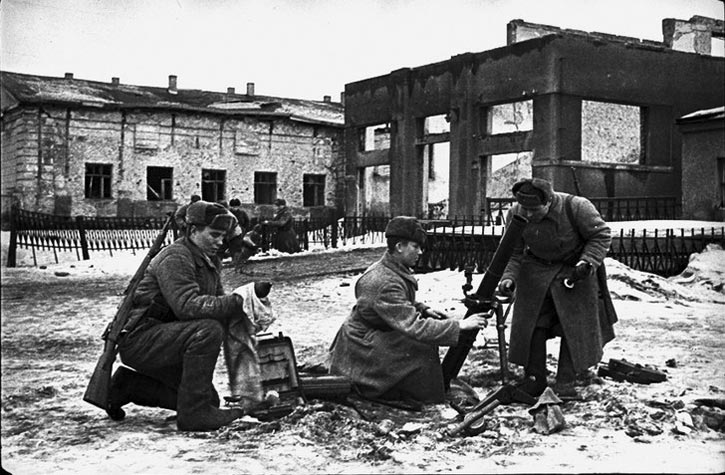
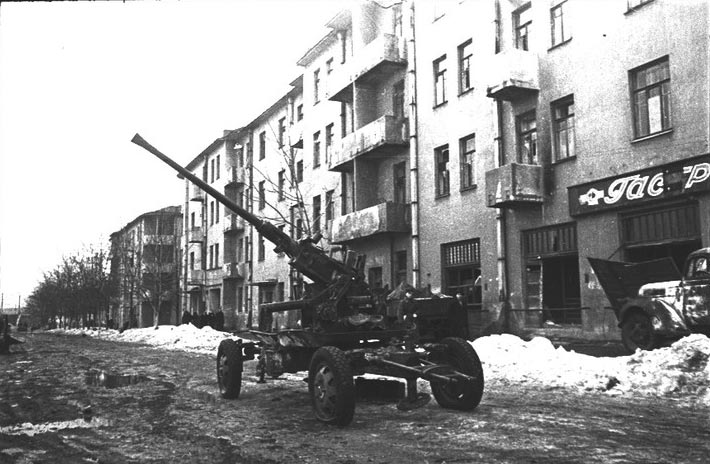
February 17, 1943, Kharkov, Stalin Ave., 191

February 17, 1943, Kharkov, Stalin Ave., 191

February 17, 1943, Kharkov, Stalin Ave., 139

February 17, 1943, Kharkov, Stalin Ave., 52

February 17, 1943, Kharkov, Stalin Ave., 45

February 17, 1943 Kharkov st. Sverdlova, 55

February 1943, Kharkov st. Sumskaya

February 17, 1943 Kharkov Stalin Ave.

February 17, 1943 Kharkov sq. Dzerzhinsky

T-34 produced in 1941 were part of the Popov Army Group

February 16, 1943 Manstein greets Hitler, who has flown to the headquarters of Gr. Army South in Zaporozhye


Hitler inspects several German and Russian tanks in Zaporozhye.

Hitler leaves Manstein’s headquarters shortly before boarding a plane for the return flight to Germany

Manstein and Army Group Commander Hollidt

Grenadiers “Das Reich”

LSSAH grenadiers on Stuge III and Sd.Kfz.251, formed into battle groups, in their starting positions before the attack on Kharkov


Landing on Marder 3


Grenadiers LSSAH, February 1943 near Kharkov

Popov’s armored group, February 1943

February 1943 Soviet soldiers

Popov’s armored group, refueling
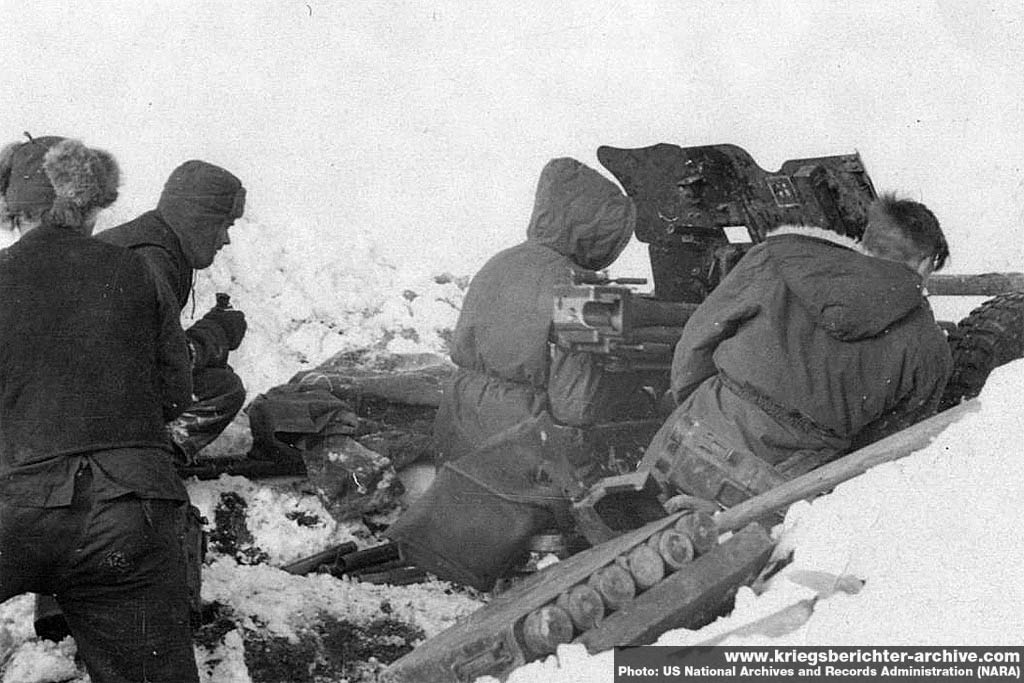
German anti-tank, Pak 35/36


German anti-tank, Pak 40

Burnt T-34 manufactured in 1943

Artillery support positions

Witt’s assault group in Taranovka on February 17, 1943.


Alekseevka, 155 mm gun

Battle Group Schulze

Reconnaissance patrol with backpack VHF radio station

“Das Reich” Melekhovka


Horh 901 Kfz 15 “Grossdeutschland”

Reconnaissance “Grossdeutschland” on armored vehicles Sd.Kfz.222, Sd.Kfz.223, Sd.Kfz.221

Reconnaissance “Grossdeutschland” on an armored car Sd.Kfz.222

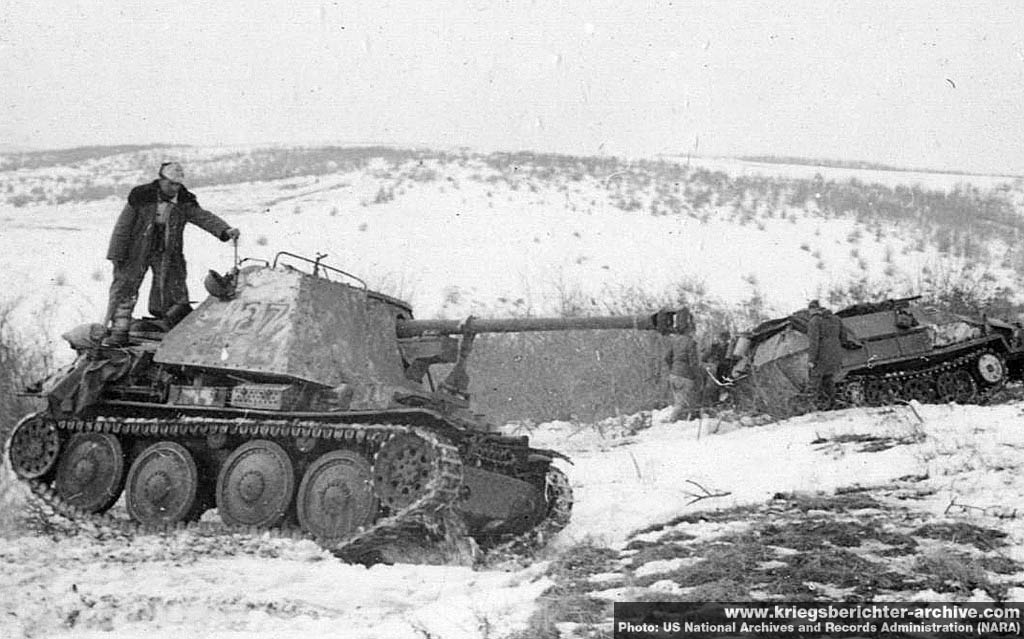


Battalion commander of the 2nd battalion of the 1st regiment LSSAH Max Hansen (bottom left)


“Death’s Head” Krasnograd-Valki

Marder 3 1st Bat. anti-tank battalion LSSAH

T-34s shot down by an anti-tank battalion LSSAH in February 1943.

Stug 3 “Grossdeutschland” February 1943


Armored train PZ62

19 February 1943 attack on Borki

19 February 1943 attack on Borki

Sappers of the 16th Bt. SS Deutschland Regiment


Sappers of the 16th Bt. SS Deutschland Regiment

February 20, 1943, captured by Russians. positions in Cossack Maidans

Field artillery support

Results art. shelling
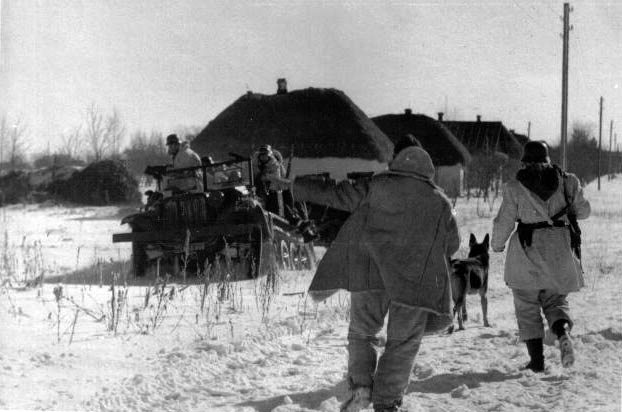


Operational art support


Night art. shelling

105 mm howitzers


Refueling in the field

February 22, 1943 com. Beer’s tank of the 7th battalion. 3rd regiment of divisions. “Dead Head”

LSSAH February 1943

Battle Group Meyer

Tank T-4 2nd battalion. 1st LSSHA Regiment


Pursuit of retreating columns

Command tank T-3

February 21, 1943 tanks of the 9th heavy. tank company of the divas “Dead Head” on the road to Krasnograd

February 1943 div. “Dead Head” near Krasnograd

February 21, 1943 tanks of the 9th heavy tank company of the “Dead Head” division on the road to Krasnograd


February 22, 1943 “Das Reich” in Pavlograd

Harmel’s battle group in Pavlograd

Ju87 and HS123 attack aircraft are the basis of air support for battle groups

February 26, 1943 LSSAH, Yarotin

February 26, 1943 LSSAH, Yarotin

February 25, 1943, Sergeevka, hit by armored personnel carrier

25 February 1943, Max Wünsche 1 baht. tank. LSSAH regiment, Eremeevka
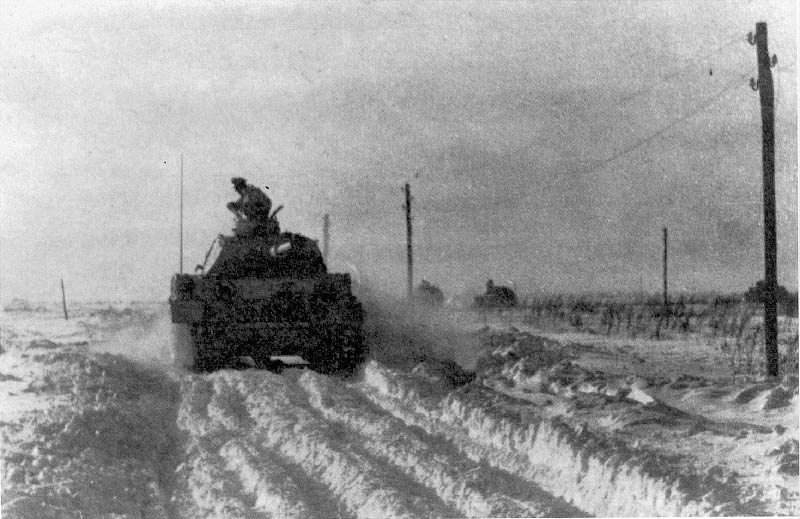
Snow drifts

Piper’s “hunt” for Russian convoys


Piper’s “hunt” for Russian convoys

February 22, 1943 “Das Reich”, Zaitsevo

February 22, 1943, “Das Reich”, Zaitsevo

Column “Das Reich”, blown up by T-34

Regiment “Thule”, Kustarevka

Northern outskirts of Pavlograd

German Field Marshal Erich von Manstein, commander of Army Group South

Before the attack on Verbki


LSSAH grenadiers attack the village


Clearing the village


Units of “Das Reich” on the Novonikolsk-Yuryevka line on February 24, 1943.

SS Panzergrenadier units


March to Lozovaya

“Das Reich” in Lozovaya

February 25, 1943 crew of T-3 tank No. 415

Armored car “Panhard 178” regiment “Der Fuhrer”
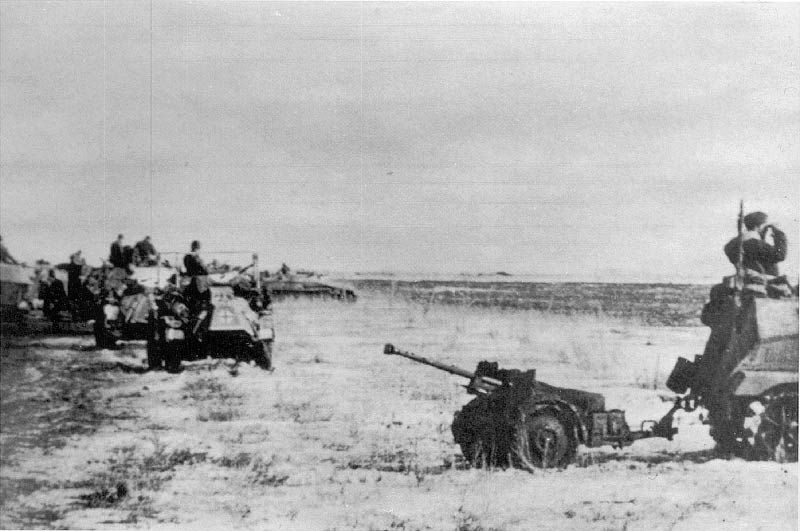
Towed anti-tank rifle PzB41 20/28

Orelka February 25, 1943

Tank T-3 of the “Death’s Head” regiment moves through Orelka

Tiger diva. “Death’s Head” in Alekseevka

Tank T-3 deputy com 1st baht. 3rd regiment of the “Dead Head”, knocked out in the Mikhailovka area on February 27, 1943.
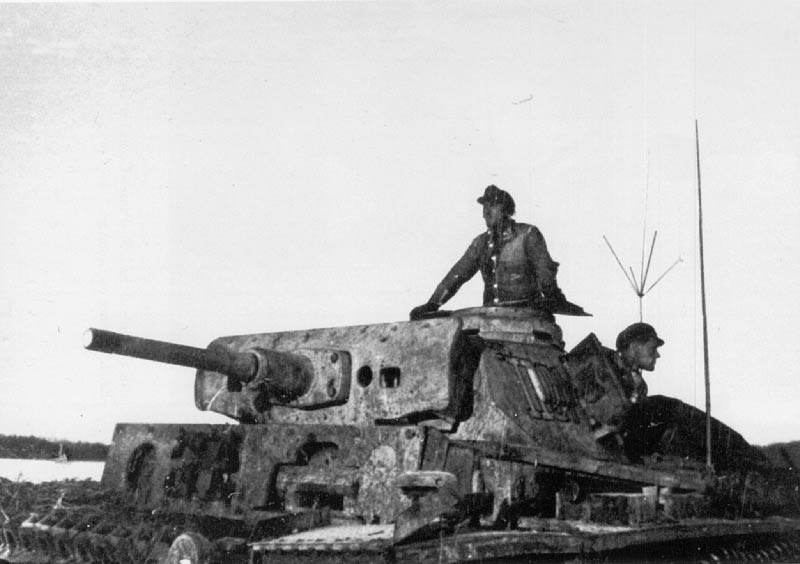
T-3 tank of the commander of the 2nd battalion. 3rd regiment “Dead’s Head” Orelki district

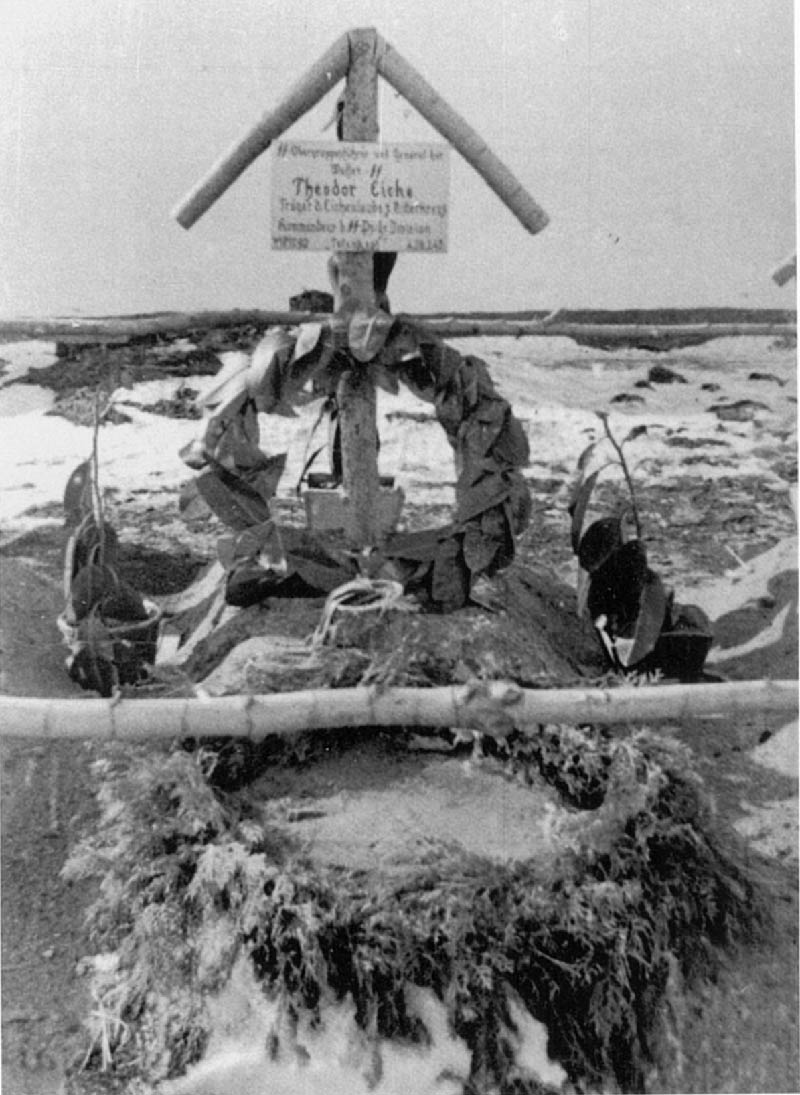
Theodor Eicke’s grave in Otdykhnoye

Attack on Olkhovatka

February 28, 1943 near Bunakovo

February 27, 1943 “Das Reich” in Lozovaya

Howitzer 150mm artillery regiment “Das Reich”

Lozovaya, anti-tank battalion marder. “Das Reich”

“Das Reich”, Lozovaya

Motorcyclists on BMW 27 February 1943

150mm rocket launchers

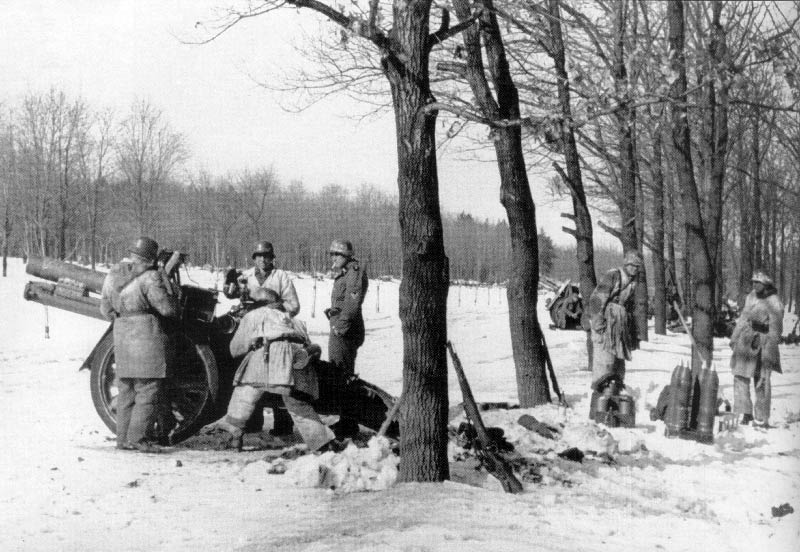
150mm howitzers of the 3rd battalion. 2nd LSSAH Regiment

After artillery shelling, the column enters the village

Result of artillery shelling

Damaged 76-mm ZIS-3 divisional gun

Prisoners

Motorcyclists LSSAH

Marder 3rd rotary tank battalion. “Das Reich”

Marder 3 “Das Reich”

On March 1, 1943, the Deutschland regiment was the vanguard of the Das Reich attack on the position of the 3rd Panzer Army Rybalko

Sd.Kfz.251/10 “Baden” Regiment “Deutschland” Division “Das Reich”

T-34s shot down in early March 1943

Tank Matilda 2, destroyed on March 3, 1943.

March 3, 1943, shot down by units of the “Totenkopf” division T-70

Divisions “Das Reich” and “Leibstandarte”

Before the attack

3rd baht. 1st Regiment (com. Hubert Meyer) and 2nd Battalion. tank regiment LSSAH

Commander of the 3rd Battalion. regiment of the 1st regiment Pz.Gren.Rgt. LSSAH Hubert Meyer


“Das Reich”, Novoselovka

March 6, 1943 LSSAH


March 6, 1943 LSSAH
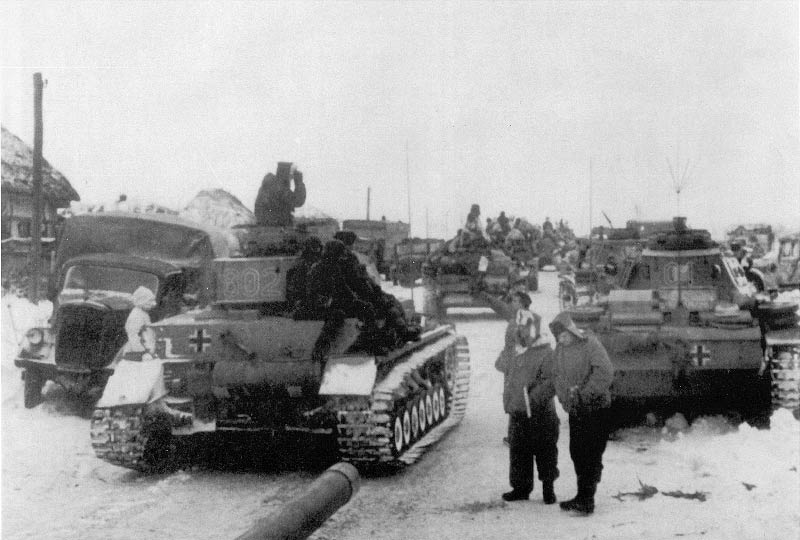
Battlegroup Strachwitz
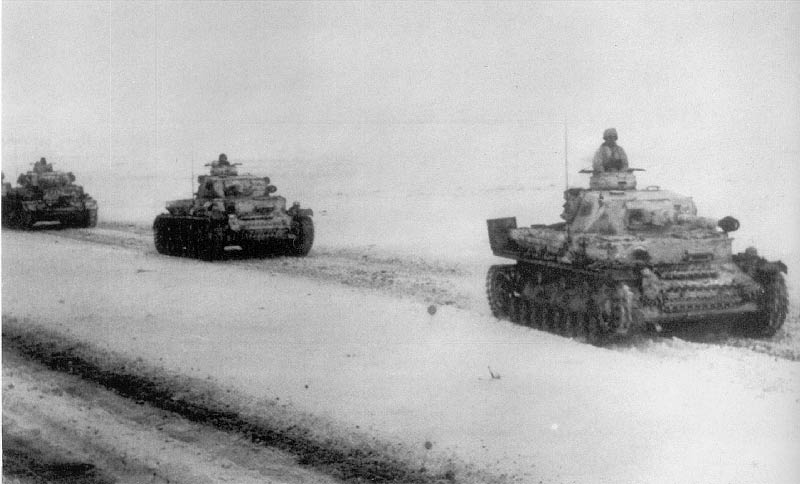
Grossdeutschland tanks near Perekop

Battle group of Schrachwitz near Gazovoe

Count Strachwitz – commander of the battle group before the attack

Strachwitz assault group near Gazovoe

Tank landing “Grossdeutschland”

Attack on Gazovoye

1st LSSAH Regiment


Anti-aircraft gun 37mm FlaK


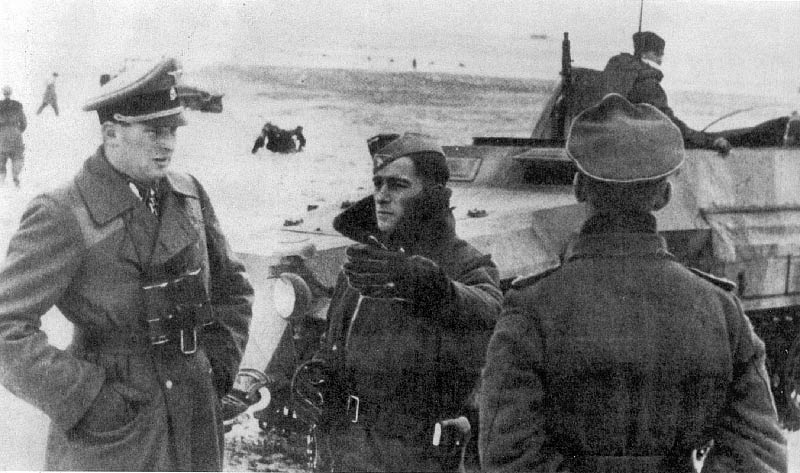
Fedorovka, Theodore Wisch and Piper


Peiper’s Assault Group


March 8, 1943, evacuation of the wounded


Stug 3 and T-70

Marder 3 anti-tank battalion. LSSAH

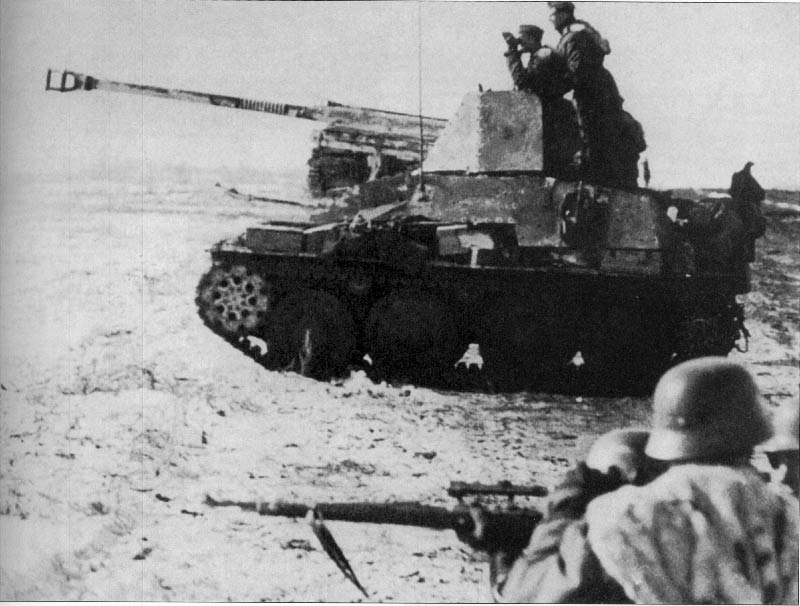


Marder 3 anti-tank battalion. LSSAH

76 mm ZIS-3 anti-tank barrier gun in the bare steppe

11th company of the 3rd battalion. 2nd LSSAH Regiment in Fedorovka

March 6, 1943 Mayer’s battle group in the battle near Snezhkov Kut


Kurt Meyer

March 7, 1943 of the Das Reich unit in Olkhovatka

March 7, 1943 Strachwitz assault group Yasenevoye

Commander of the Grossdeutschland tank regiment, Count Strachwitz (center) north of Bogodukhov


