


All about Tipón, near Cusco – an intact ritual garden of the Incas
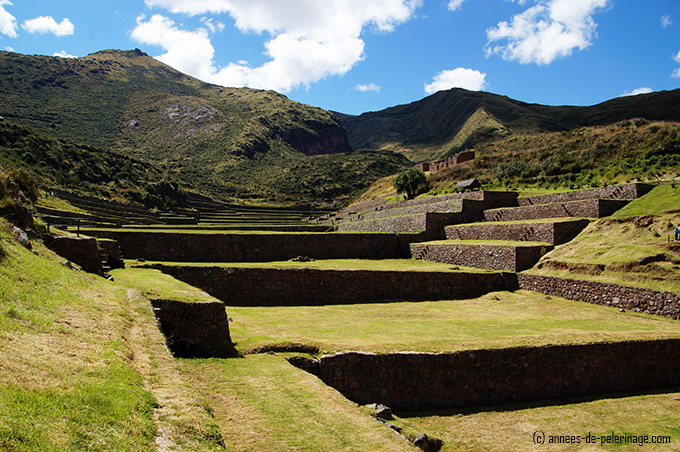
If you are looking for one of the top 10 Inca Ruins in Peru, then look no further than Tipón (or Tipon) in Peru. Verdant terrace upon verdant terrace forms a spiritual garden tempting the gods to partake in the agricultural feast. And presumably, exactly this has been the intent of the Incas, who build the ingenious system of precise terraces interconnected by gargling water channels.
A pity then, that 3,400 meters high Tipon sees hardly any tourists! The American Society of Civil Engineers, at least, put the complex covering 239 hectares on its List of International Historic Civil Engineering Landmarks, a list that also features the Eifel Tower or the Washington Monument. Their book “Tipon: Water Engineering Masterpiece of the Inca Empire” really made me want to visit this unique site and I urge you to get a copy. If that can’t convince you to visit Tipon, I hope my pictures and its story will! 😉
I also produced a little video. Hope you enjoy!
Tipón – more than Inca Terraces
It will take you only a second to confirm once you are there: Tipon is a ritual garden, and not simply yet another Inca terrace you will see all over the Sacred Valley. The most visual proof is the layout of the terraces in Tipon themselves.
While elsewhere they follow the general shape of the land, Tipon’s Inca terraces are precise and right angled. A deliberate deviation that creates a unique spiritual aura that will captivate you at first sight. In fact, it almost seems like Tipon’s terraces were built to channel natural energy, right into the fields and crops.
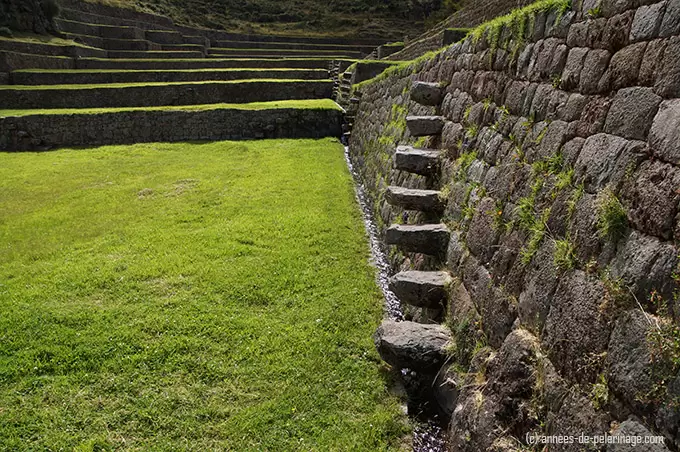
Every spare inch of the verdant valley is dedicated to agriculture. In fact, even the stairs connecting the various levels are built in a way that they don’t use up precious seedable space.
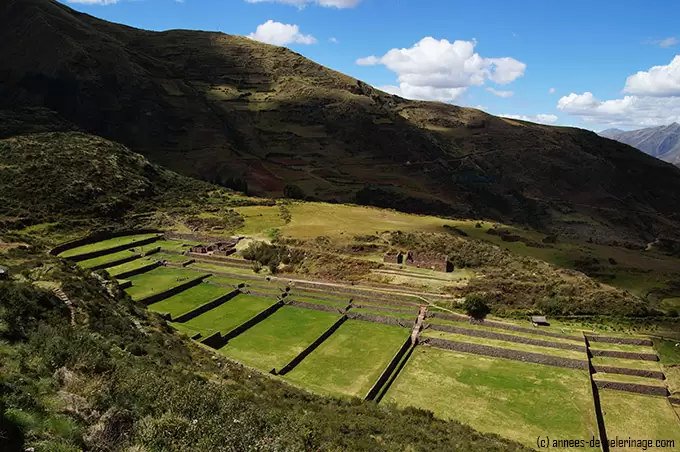
In Tipon you will find, all in all, twelve terraces. Since the terraces are highly artificial and ritual in their layout, it’s pretty safe to assume this number wasn’t an accident. I, for one, wouldn’t argue for any deeper mythological meaning – twelve just happens to be the number of months in the Inca calendar. Which is, of course, nevertheless a very profound statement and a testament to the kind of regard the Inca held astronomy in.
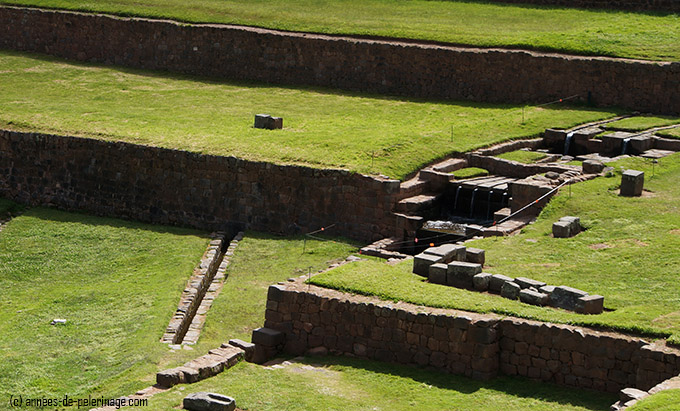
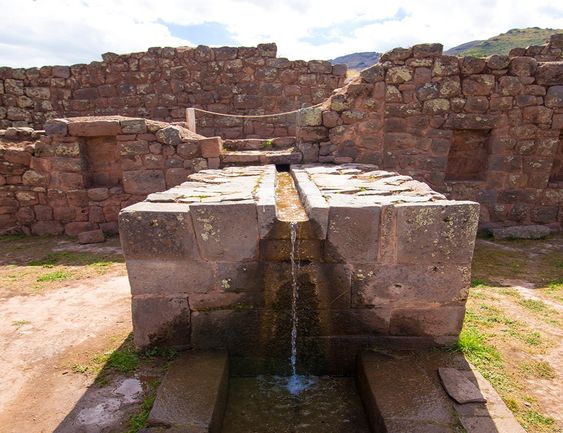
And talking about mythology. At the very top of the Tipon terraces, you will find some sort of water temple. An underground well feeds the intricate system of waterways: separating the mighty stream first in two, then in four channels and finally uniting it into one again. One can only wonder what kind of ceremonies were held here!
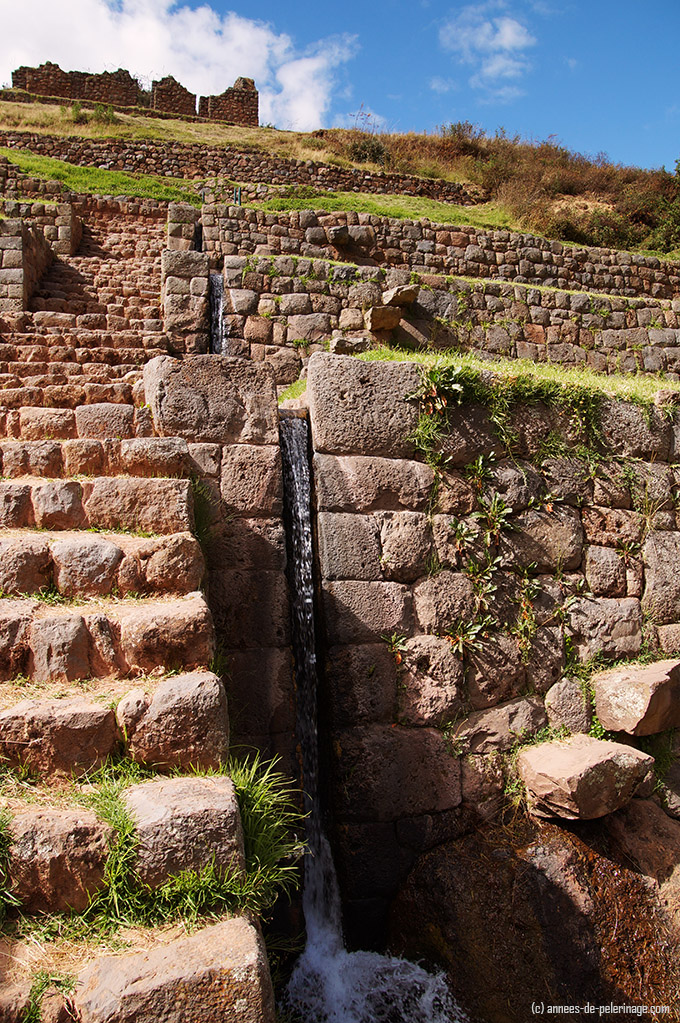
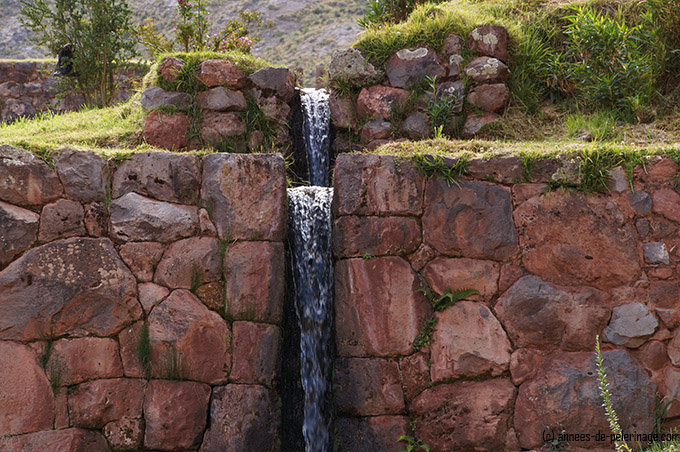
The water is then guided through an ingenious system of channels throughout the terraces. Irrigating the various levels during the dry seasons and serving as an efficient drainage system during heavy rains. Of course, archaeologist helped along a bit, but for me, it was quite impressive to see the system still working!
The History of Tipón
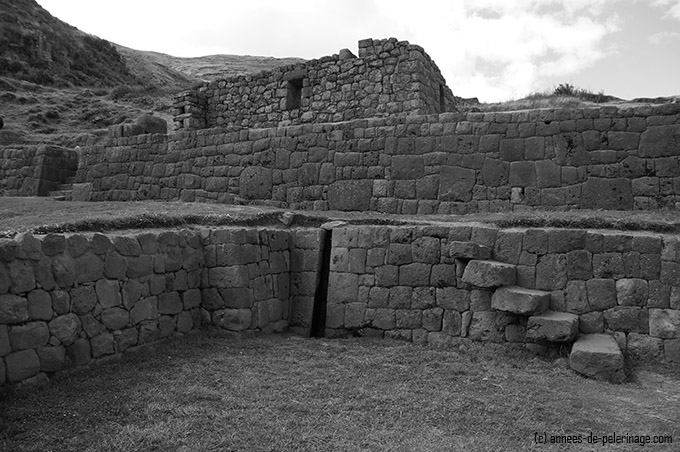
With such a blatantly mystic site, you will probably be wondering about its history and meaning. But to tell you the devastating truth: Nobody really knows what Tipon was built for. In fact, even the name “Tipón” is made up, denoting something like “gurgling waters” – the original Quechua name is all but lost.
The only hint on Tipons origin we got was recorded by Garcilaso de la Vega in his Royal commentaries of Peru. There he writes lengthy about the royal house of Yahuar Huaca and how the prince Huracocha usurped his father by means of his military prowess. Then and there he details how Huracocha ordered a palace to be built for his father a short distance away from the capital Cusco:
“UPON WHICH AGREEMENT THE DRAUGHT OF A PALACE WAS IMMEDIATELY DESIGNED, AND INTENDED TO BE BUILT BETWEEN THE STRAITS OF MUYNA AND QUEPICANCHA , WHERE WAS AN EXCELLENT AIR, AND PLEASANT SITUATION, AND EASILY IMPROVEABLE BY GARDENS, AND ORCHARDS; AND ALL THE DIVERTISEMENTS OF HUNTING, FISHING, AND OTHER ROYAL PASTIMES-, BEING MUCH ADVANTAGED THEREIN BY THE BENEFIT OF THE RIVER TUCAY, INTO WHICH MANY STREAMS AND BROOKS FALL, ON THE EAST-QUARTER OF THE HOUSE. THE FOUNDATION OF THIS HOUSE BEING LAID, (SOME RUINES OF WHICH DO TO THIS DAY REMAIN) THE PRINCE RETURNED TO COZCO […]”
Tipón – the royal palace of Yahuar Huaca?
Based on this fragment, some archaeologist argue, that Tipon could be the palace of the Inca Huracocha and his father Yahuar Huaca. A couple of facts support the claim:
First of all, Tipon is indeed located close to a river (now called Watany) – with two small rivers flowing into that river to the sides of the archaeological site of Tipon. But that of course, will probably be true of almost any Inca site in the vicinity of Cusco.
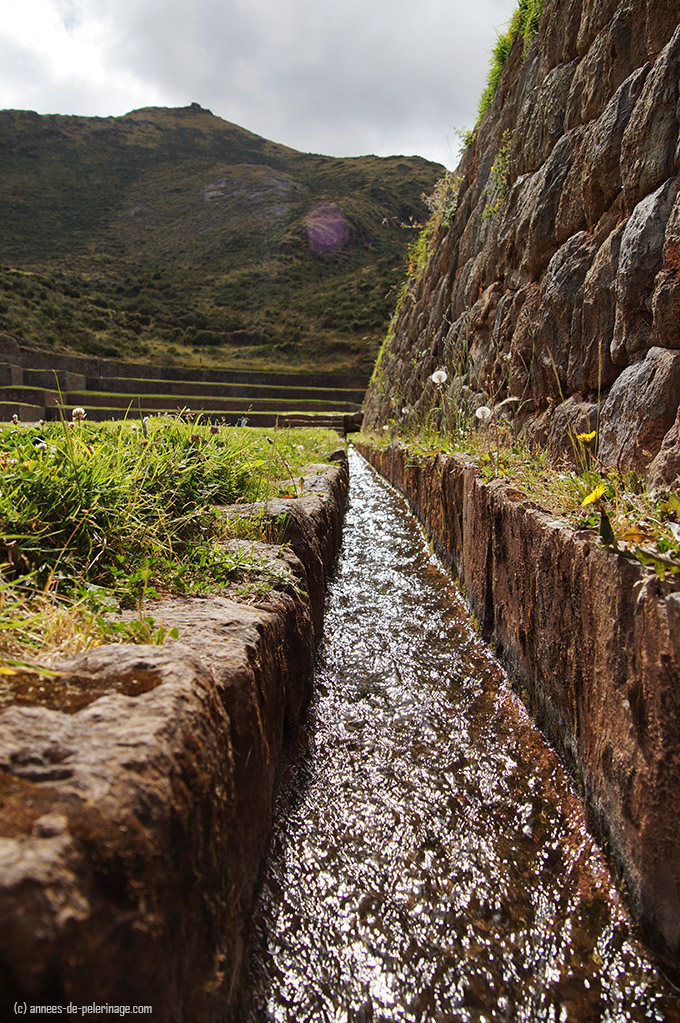
Of course, there are also plenty of the orchards and gardens De la Vega speaks of – but that too is more than ubiquitous in the Sacred Valley and certainly no unique attribute of Tipon. Arguably the terraces of Tipon are the most beautiful of them all.
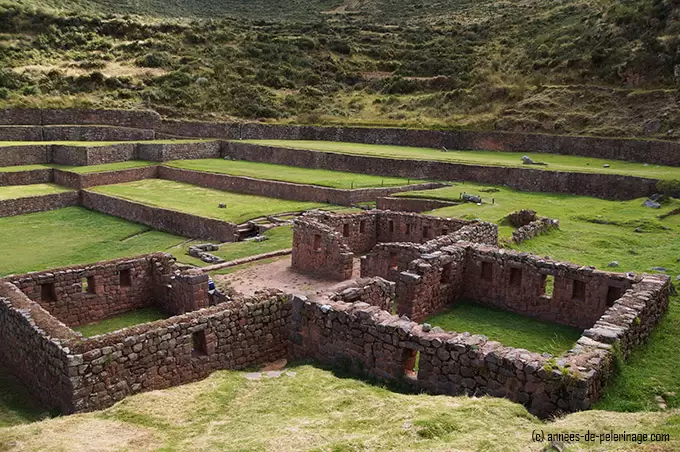
More importantly, however, Tipon does not only consist of the impressive terraces. Right, next to the verdant terraces you will find a large structure that could have served as a palace. The expertly cut stones at least hint that a person of great power must have resided here. Possibly the ruins of the palace of Yahuar Huaca.
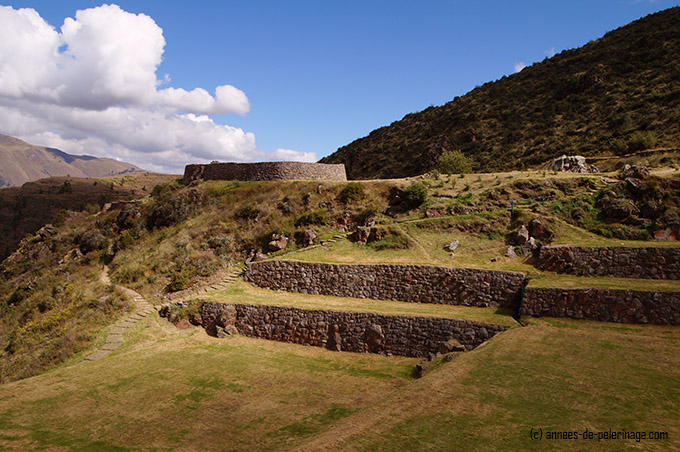
Last but not least Tipon also features the remains of some military structures. Yahuar Huaca, after all, had been defeated by the Chancas and must have retreated somewhere, after Cusco had fallen. His son Huracocha might then have decided, after his initial victory over the Chancas, to bequeath the fortress of Tipon to his father and let it be built into a proper royal mansion befitting his rank – at least this is how famous Peruvian archaeologist Victor Angles Vargas argues.
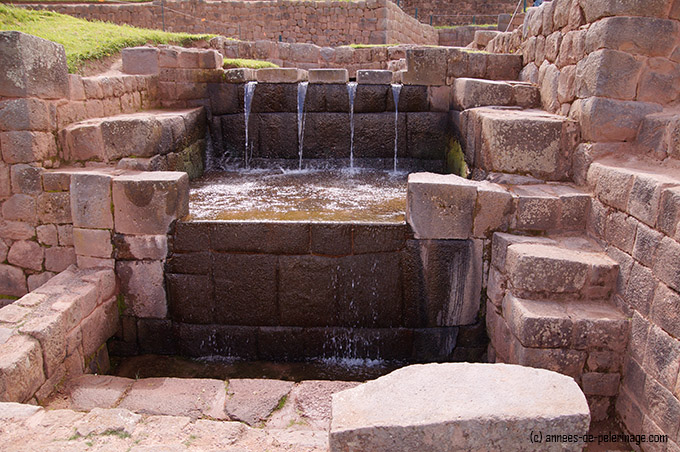
Also, De la Vega writes, that while Yahuar Huaca lost the title, his son made sure that he did not lack any amnesties (and in fact accouterments) as befitted the Inca. Now the king was not only the military leader of the Imperium but also the spiritual leader. And there is no denying that Tipon was a place of worship!
Of course, there is no way around noticing the ritual fountain right at the top of Tipon’s terraces. Similar fountains can be found at water temples throughout the Inca empire. If you like to see one of them, I do recommend you to check out Ollantaytambo
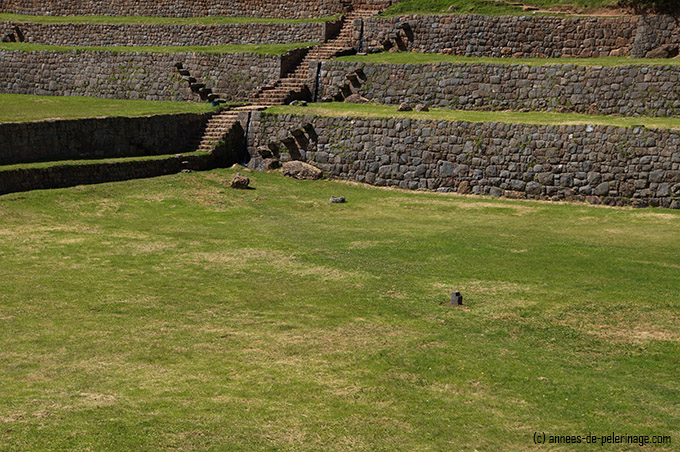
But it goes deeper than that: For example, right in the middle of the biggest terrace, you will find a marking stone – certainly no accident! Services to the gods presided over by Yahuar Huaca? Possibly, though we shall probably never know for sure!
Other ruins at Tipon
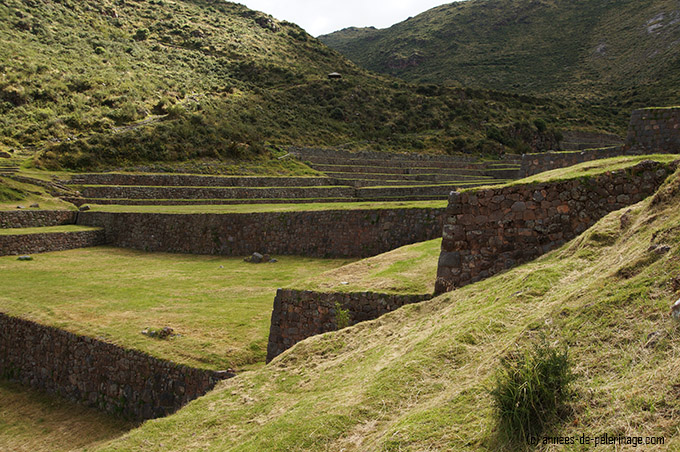
After so much speculation you are probably craving for some facts. I already mentioned the remnants of a royal palace. If you take a tour through Tipon (I hope I could already convince to do so!), then make sure to walk up the hill above it as well. Looking down the valley, you will notice a little path trailing up the hillside on your left.
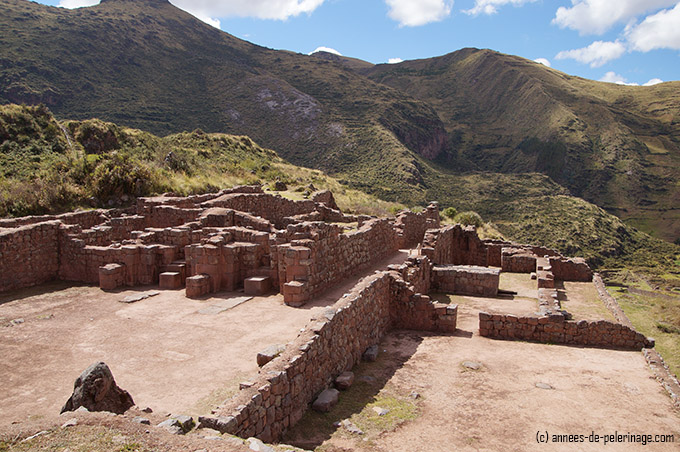
From here you will be able to get a good bird’s eye view of Tipon. But if you follow that trail to its end, you get the chance to inspect another huge structure abutting a hill, with yet another water temple.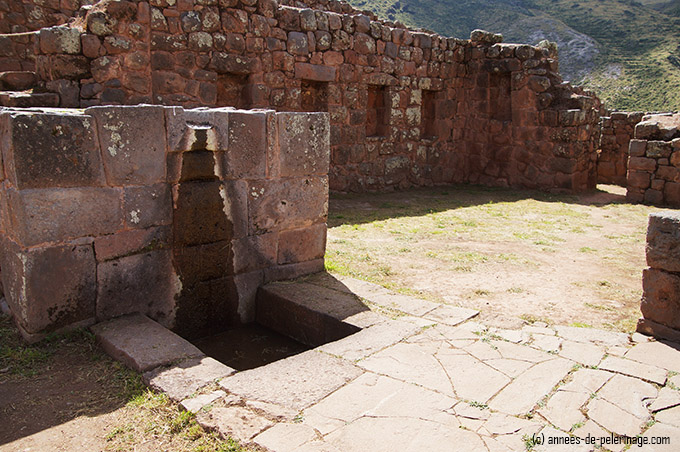
Some sources call this the Intiwatana, but I somewhat harbor doubts. Intiwatana translates from Quechua into “carved stone”, a stone which the Inca used to measure time. Machu Picchu is famous for its still intact Intiwatana (sometimes also written as Intihuatana; the Spaniards destroyed most of the rest).
Typically that special stone was carved from natural rock in a very exposed place, much like a sun clock. The way the sun cast its shadow and was aligned on different auspicious dates (like equinox, etc.), helped the Inca determine time itself.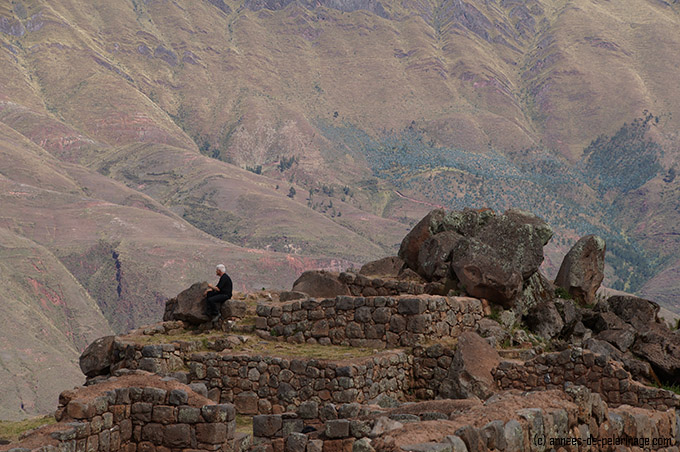
Personally, I could find no visual remains of an Intiwatana in the vicinity of the temple – other than an exposed, fortified hill that possibly could have served in such a function before its obvious destruction.
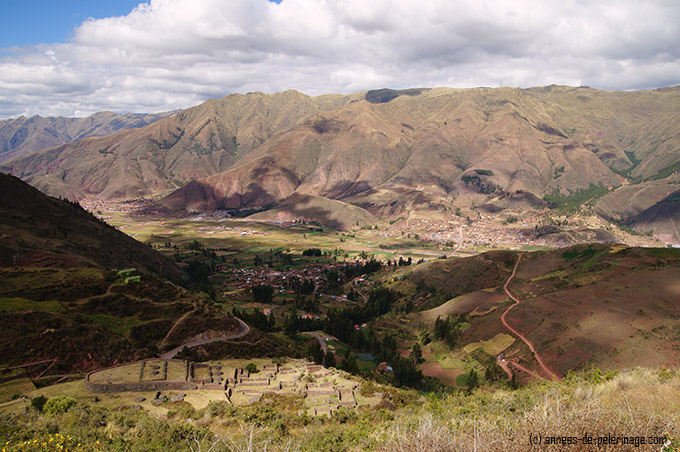
Of course, that shouldn’t discourage you. Besides the stunning view on the sacred valley (I did mention that before, right? :P) the palace is quite lovely as well. And like I already pointed out – just visiting the terraces below will leave you with the feeling that Tipon actually was just that: neat terraces.
Inca channel and beyond
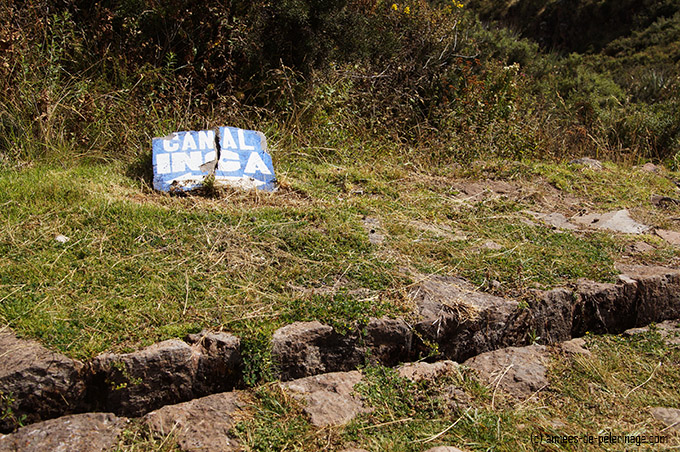
But lo! There is still more! If you are very perceptive, you might have wondered where the water fountain around the Intiwatana actually got its water from. After all the structure stands on a very exposed hill – not exactly a typical place for a natural spring. And indeed there is nothing natural to this wellspring.
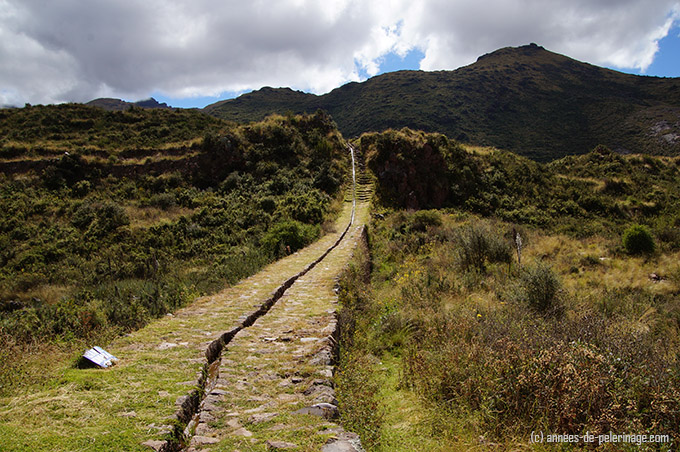
If the extreme height doesn’t bother you, and I hope it doesn’t, you can follow yet another highlight further upwards: The Inca Channel. The fountain is actually fed from a spring roughly a mile further uphill. It is this very Inca channel that provides the water.
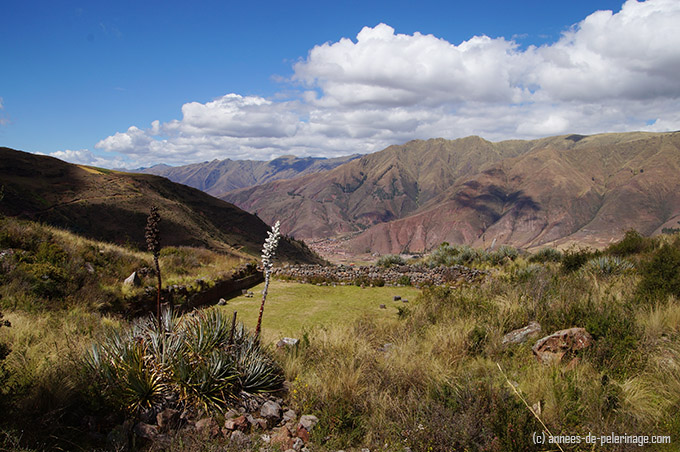
I really urge you to follow the Inca Channel of Tipon to its ends – it’s just such a beautiful thing to behold, nestled into the rugged landscape as it is. Know then, that the Inca channel isn’t properly working anymore. These days only a trickle makes it down to the temple. Enough to glisten, but certainly far from the gargling cornucopia it once must have been.
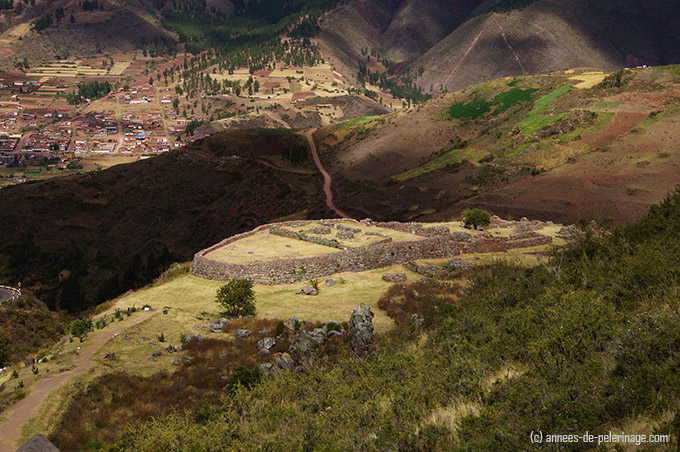
From here there is only one way, and it leads downwards. The view from here is yet again quite rewarding. Especially note the fortress-like structure on the right side. Little of its ancient grandeur remains, but that what survived will inspire your thoughts.