



Lockheed ‘s Starfighter was beloved and feared fighter jet capable of awesome speed but sometimes fatally sensitive to the mistakes of its pilots. It served the US Air Force and many allied air forces around the globe decades after its debut in 1954. Designed for high-speed conventional conflict, the F-104 was made to go supersonic and take out enemy jets or bombers before they could hit their targets. The missile-like jet was built for speed and little else. Its single-minded design made it an unforgiving chariot to ride into battle. Due to the high number of fatal mishaps that it accumulated early in its service, the Starfighter earned the unofficial nickname of the “Widowmaker.”
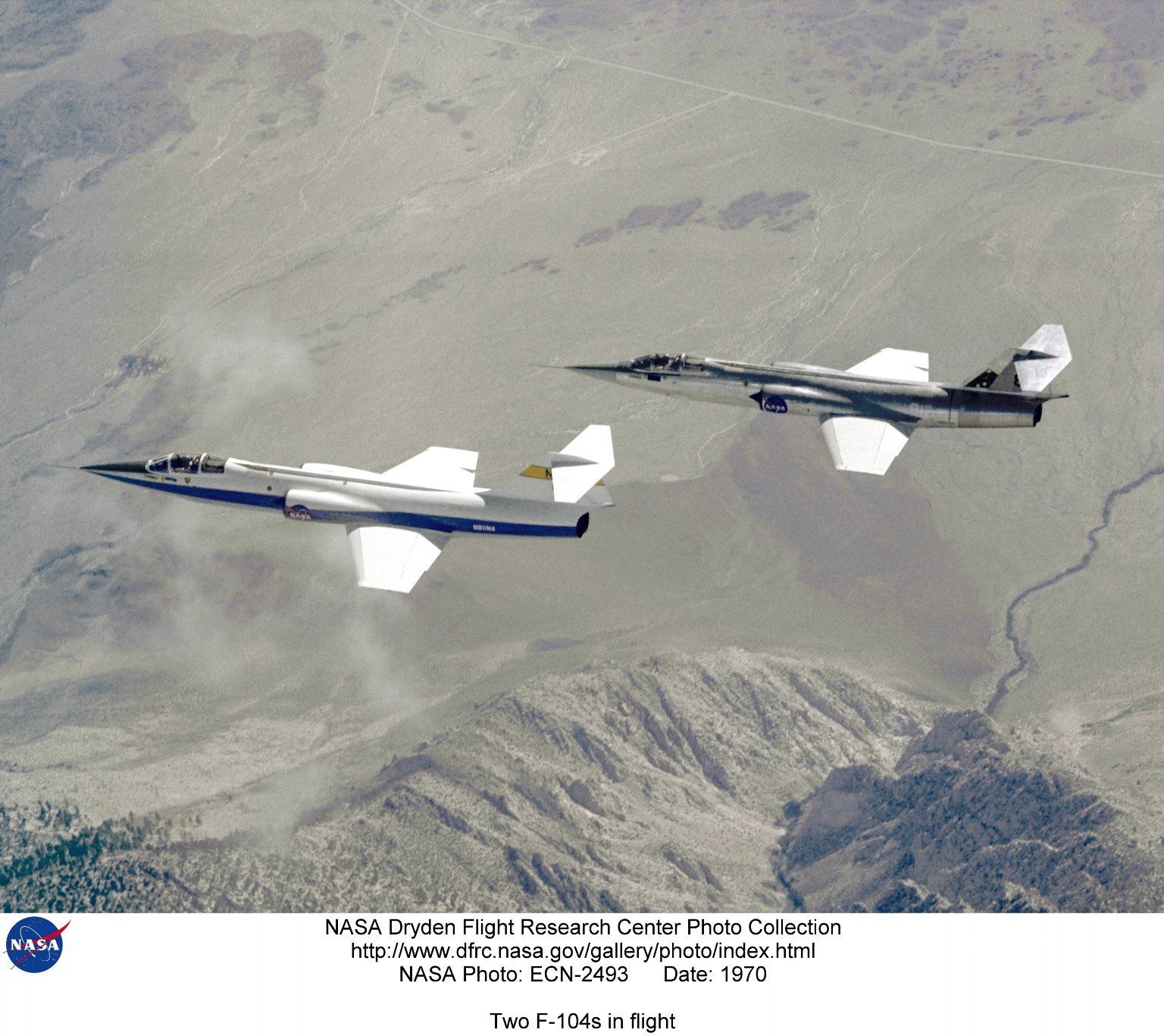
It was intended to dominate the skies with its unprecedented speed and altitude. The Starfighter was very capable, albeit difficult to handle. When it entered service, it quickly broke world records. In 1958 it claimed the world records for maximum altitude and time to climb.
In a brief background, we will delve into the Starfighter’s development, design features, service history, and enduring legacy that remains to this day. Let’s examine the achievements and shortcomings of a unique and iconic warbird. The story of the Starfighter is one of duality, between an inspiring success story of break-neck aerospace innovation and a cautionary tale about the risks of pushing pilots and the boundaries of flying too far.
Understanding the origin of the Starfighter
The USAF developed the F-104 as a direct response to the high-speed interceptors and bombers of the Soviet Union. These nuclear-armed jet planes posed a great threat, indeed a mortal threat to the very existence of the Western world, should they be allowed to reign freely, unchecked. The engineers and top brass designed the F-104 while learning the lessons gained from the first combat action of jets versus jets in the Korean War.
The F-86 Sabre has proved unable to match the speed and climb rates of Soviet aircraft, such as the MiG-15, during the air war in Korea, causing casualties and preventing air superiority. Thus, they called upon Lockheed’s Skunk Works, led by Clarence “Kelly” Johnson, to take on the challenge in 1952. Johnson was renowned for his creative approach to aircraft design, focusing on efficiency and simplicity to achieve spectacular results. Compared to other fighters of the time, the F-104’s final iteration was a drastic departure.
The Starfighter was designed as a lightweight, single-purpose interceptor, in contrast to the large, multi-role aircraft that were common at the time. Its design incorporated a narrow fuselage and short, swept-delta wing to minimize drag and maximize aerodynamic performance at high speed.
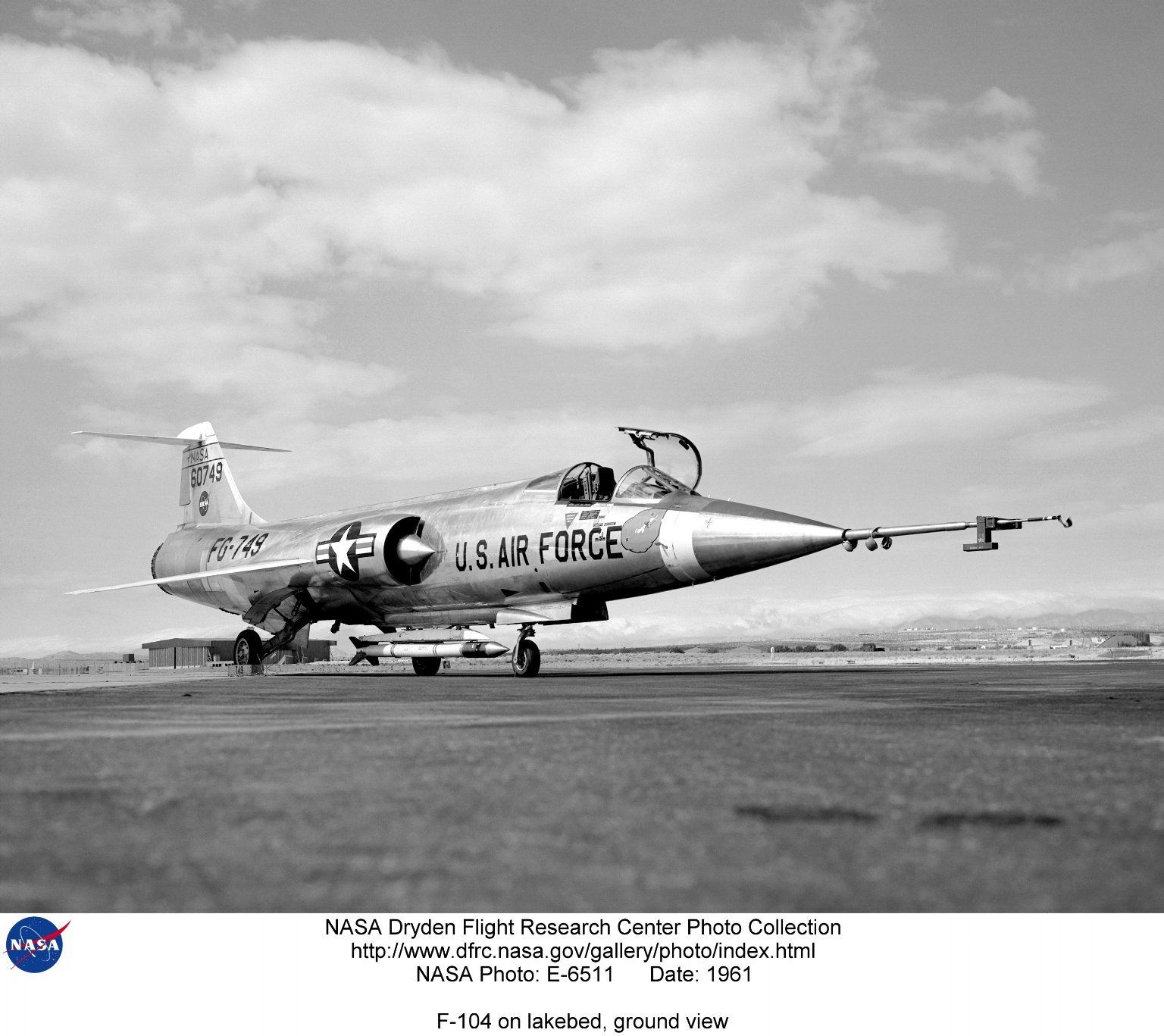
The General Electric J79 engine produced enough thrust to propel the Starfighter to speeds over Mach 2, which was a groundbreaking feature at the time. This achievement is even more remarkable when considering that the lightweight, single-seat fighter could do so using a small, single-engine airframe.
Skunk Works used advanced materials and production techniques to make the F-104 possible. For the pilots that took the yoke, Lockheed used what would be considered rudimentary by today’s standards, but at the time, the F-104 featured a robust system of sensors and avionics, including inertial, compass, and radio navigation, along with an exceptional gun sight capable of calculating target lead for the pilot.
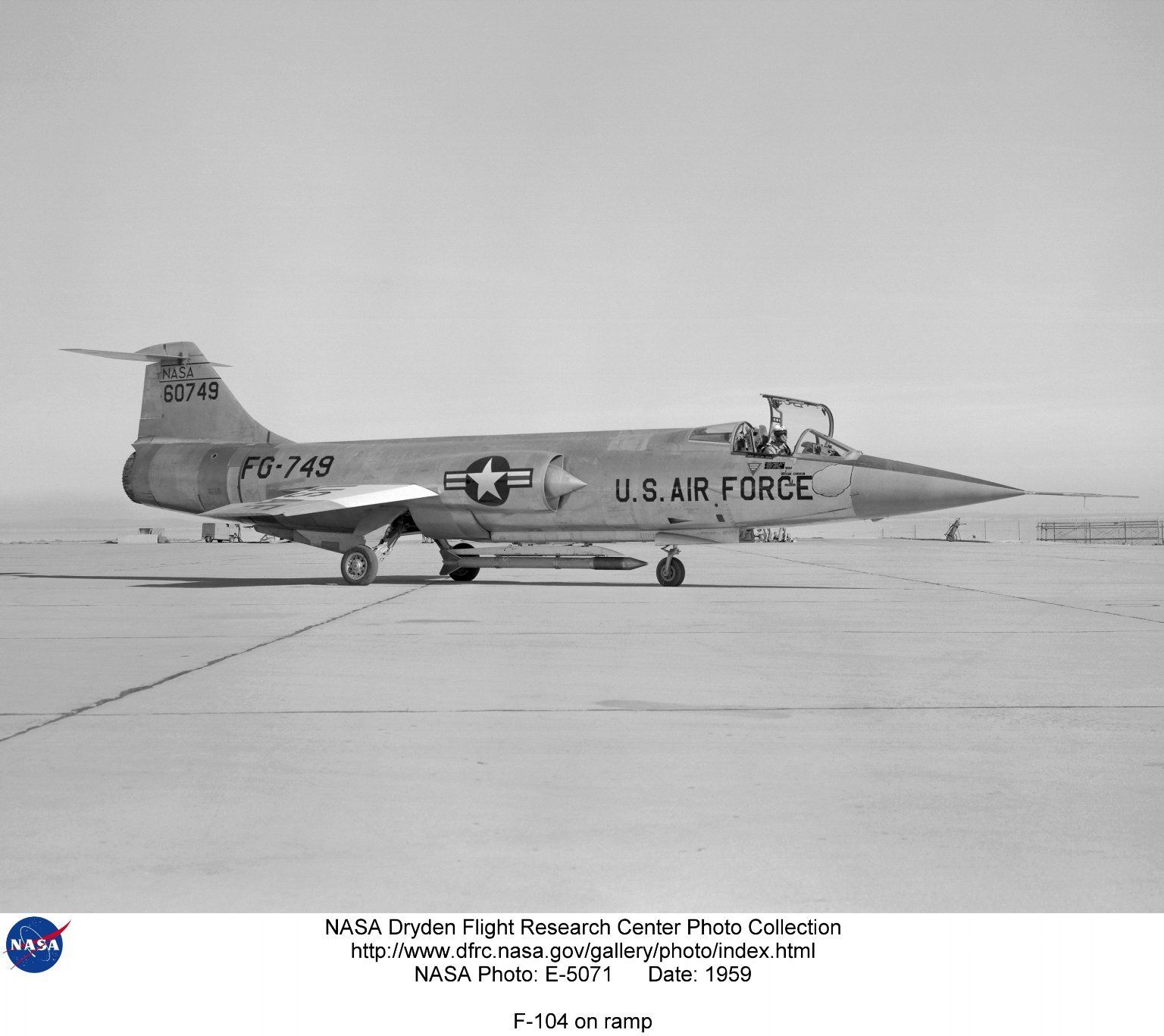
Photo: NASA | DVIDS Hub
The development of the Starfighter coincided with Soviet and even allied efforts. The MiG-19 and English Electric Lightning were quick to come and challenge the F-104’s dominance. The Mig-19 took flight in 1953 and claimed the mantle of the first supersonic Soviet fighter ever produced.
The Royal Air Force ’s Electric Lightning would also be the first supersonic fighter to enter their service, an iconic jet that served for many decades. Lockheed saw stiff competition emerging and aggressively marketed the F-104 to NATO allies. Countries like Germany, Italy, and Canada would eventually adopt the F-104 and become major operators. Following the integration of the Starfighter, they would keep the fast jet on their flight lines even after the USAF decommissioned it from service.
Problems with Starfighter development and service
While the Starfighter was quick to steal headlines for its record-setting debut performance, the inherent design limitations of its singularly focused engineering would rear an ugly head before long. In 1958, it became the first aircraft to sustain speeds above Mach 2, and in 1959, it set an altitude record of 103,395 feet (31,515 meters). The Starfighter’s diminutive, swept wings effectively achieved their intent—high speeds. However, their low-speed handling characteristics made takeoffs and landings a harrowing ordeal.
Pilots required long runways and precise handling inputs to safely touch down. Small mistakes during critical phases of flight proved disastrous on multiple occasions. The earlier model-variants also suffered from limited fuel capacity, which made their operational range poor for actual missions, necessitating external tanks that compromised the speed its streamlined, lightweight design intended for.
Notorious for their accident rate in Germany, the news became a scandal worldwide. From 1961 until 1989, approximately 300 Starfighters crashed, causing more than 100 pilots to lose their lives. Such a high accident percentage bestowed the jet its name of “Widowmaker.” Flyingmag.com writes that the German experience with the F-104 had deep-seated problems like pilot training and maintenance. Still, most of all, the harsh, unforgiving flying characteristics were unavoidable in its high-speed design.
Italy and Canada were also major operators of the F-104, and their experiences had similar results. In Canada, public uproar due to the aircraft’s terrible safety record led to an outcry for improving pilot training and maintenance personnel. But despite these efforts, the Starfighter’s notoriety as a dangerous machine to fly would not disappear.
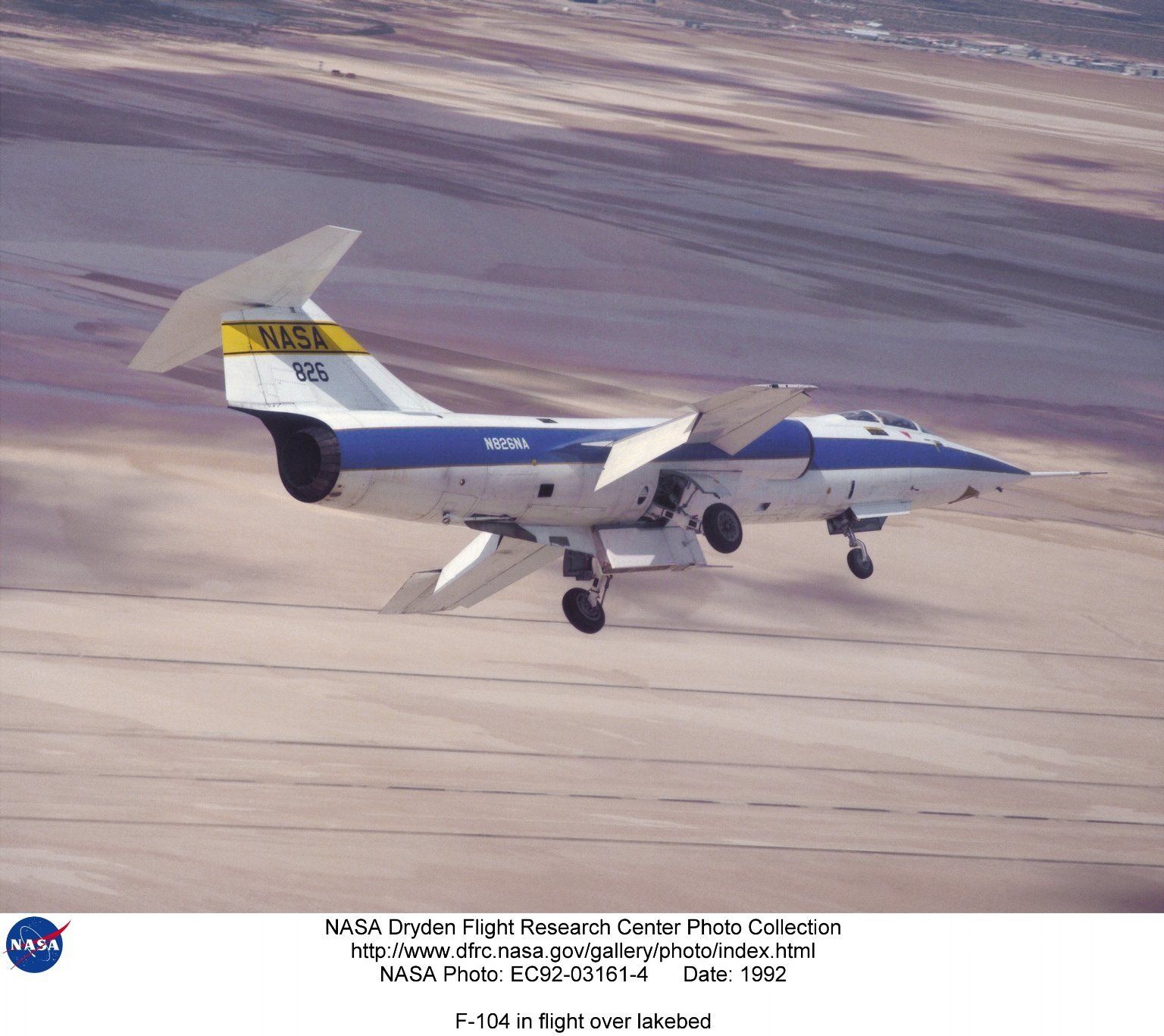
Photo: NASA | DVIDS Hub
Lockheed sought to combat these problems through updates in the later variants of its design and refining pilot and maintainer training. A good case in point is the F-104G, which has a visibly stronger nose landing gear, improved control systems, and greater fuel capacity. These modifications were meant to make the jet safer, more combat-effective, and multi-role capable, aiming to make the F-104 capable of interception, ground strike, and reconnaissance missions.
Trying to extend the Starfighter’s service life
The need for upgrades to the Starfighter was apparent. It has already entered service in widespread operational use, but the defects in its original concept were unavoidable, creating fears that it would be rendered obsolete. The F-104 was also modernized through the development of the Italian version, dubbed the F-104S. Improved sensors, control interface, advanced radar system, and structural changes were all incorporated in this update. The goal was to extend the jet’s lifespan, stretching it well into the 21st century.
Photo: NASA | DVIDS Hub
Unfortunately, the Starfighter would also become the subject of international controversy due to allegations of corruption. Reports emerged from sales to NATO allies in the 1970s that Lockheed representatives had paid bribes to secure F-104 contracts. The controversy involved the Central Intelligence Agency (CIA), leading to political scandals in countries like Japan, Germany, and Italy. The scandalous revelations damaged Lockheed’s reputation and raised questions about the ethics of its business practices.
Amid the drama, historical figures in American aviation history played important roles in shaping the F-104’s trajectory. Clarence “Kelly” Johnson, the aircraft’s chief designer, is celebrated for his ability to push the boundaries of aerospace engineering, producing some of the greatest planes to ever take flight. Test pilots like Tony LeVier and Chuck Yeager would fly the F-104 to accomplish breakthroughs in aviation research, all of which contributed to the fame and notoriety of the Starfighter.
The Starfighter’s technical short-falls
In contrast to later generations of Cold War fighters like the MiG-21 and F-4 Phantom II, the Starfighter is very one-dimensional. The MiG had better maneuverability and cost less to operate. The F-4 was broader in mission scope and flew to a much greater range. Real Clear Defense describes the F-104 as a misunderstood aircraft whose brilliance in design was offset by the challenges of its operational environment.
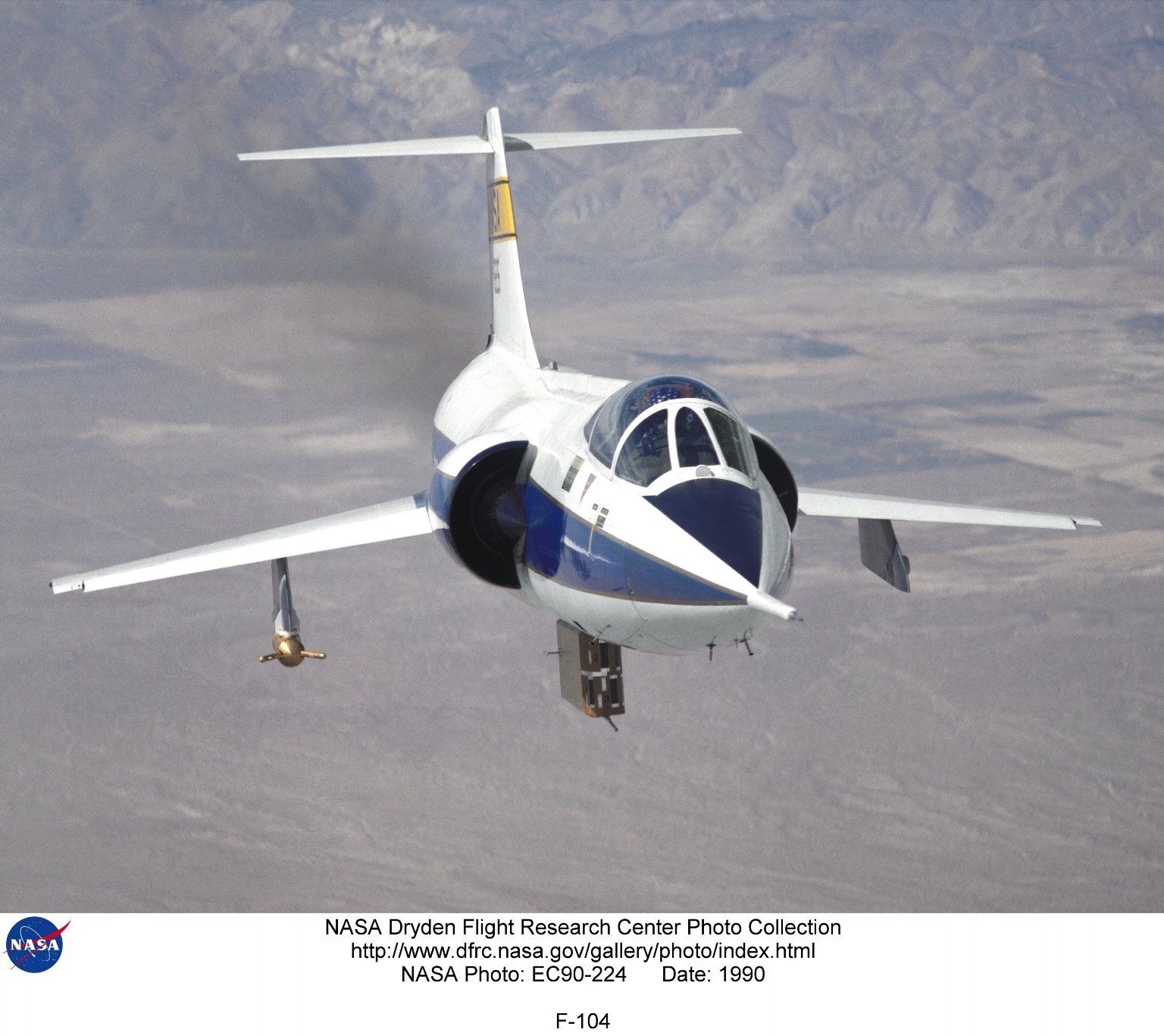
Photo: NASA | DVIDS Hub
The F-104 was one of the fastest aircraft of its time, outstripping its many rivals in both the West and the East. However, due to its poor maneuverability at low speeds, its effectiveness in some dogfighting was not perfect, and it never truly became a multi-role fighter. Worst of all, though, its handling issues in critical phases of flight like landing and take-off cost the lives of many pilots.
F-104 C Specs:
- Length: 54 ft 10 in/16.7 m
- Wingspan: 21 ft 11 in/6.6 m
- Height: 13 ft 6 in/4.1 m
- Maximum takeoff weight: 27,850 lb/12,632 kg
- Thrust: 15,800 lbf/70.3 kN with afterburner
- Max speed: 1,320 mph/2,124 kmh
- Armament: One M-61 20mm cannon, two air-to-air missiles, nuclear or conventional bombs
Looking back at the Starfighter’s legacy
The F-104 retired from the US Air Force in 1969, but it served worldwide with many Air Forces like Taiwan and Turkey, only retiring from Italian service in 2004. The Air National Guard operated the Starfighter until 1975, and NASA used it as a test bed until 1994. If you want to see one for yourself, head down to Florida, where Starfighters International still flies a handful of the world’s only private supersonic fleet of jets.
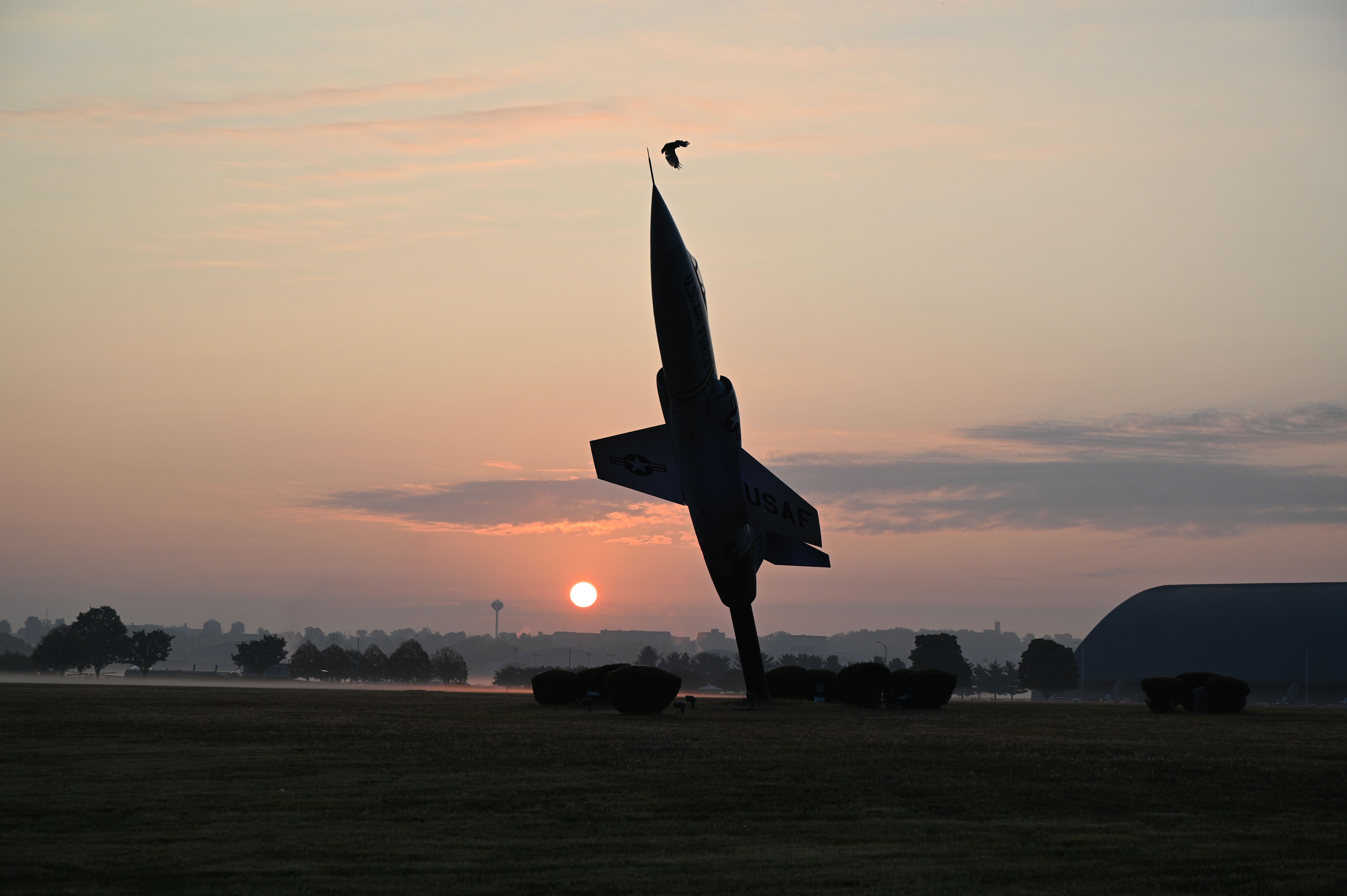
Photo: US AIr Force | DVIDS Hub
Lockheed Martin celebrates the Starfighter as a milestone in its legacy of aerospace engineering. Starfighter’s innovative design features, particularly its use of advanced materials and aerodynamics, laid the groundwork for future designs by Skunk Works. Modern fighters such as the F-16 Fighting Falcon and F-22 Raptor owe their heritage to the lessons learned developing the star-crossed F-104.