



The P-51 Mustang is a single-pilot fighter-bomber aircraft designed and developed by North American Aviation (NAA). Designed in response to the British Purchasing Commission requirement in 1940, the aircraft primarily served during World War II and the Korean War. There are more than 15,500 examples across 14 different variants. The aircraft served as the primary fighter for various air forces, including the Royal Air Force (RAF) of the United Kingdom and the United States Army Air Forces (USAAF).
Background
The NAA was asked to build Curtiss P-40 fighters
In the late 1930s, the British Purchasing Commission approached the NAA to build Curtiss P-40 fighters under license for the RAF. The NAA decided to avoid entertaining an older design from a different manufacturer. Instead, it offered a more modern fighter that could be quickly produced and fulfill the needs of the RAF.
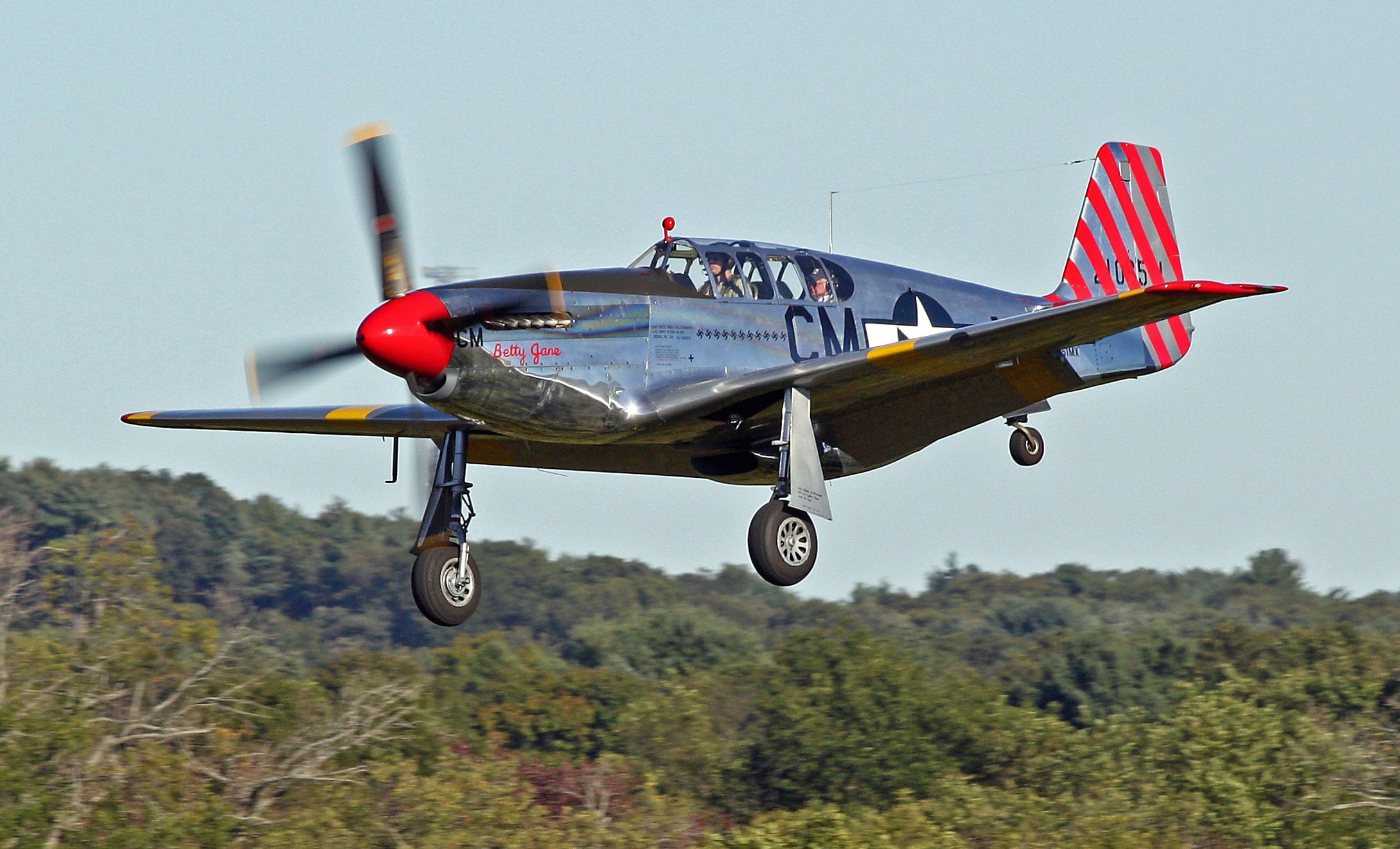
The design was completed in April 1940, and the two entities signed a contract in June. Prototype NA-73X was rolled out in September, 102 days after the signing of the contract. The aircraft performed its first flight a month later, on October 26, 1940.
The original P-51s
| Variant | Description/Operators | Number built |
|---|---|---|
| NA-73X | Prototype aircraft | 1 |
| XP-51 | Prototype aircraft | 2 |
| Mustang I | Built for the RAF | 620 |
| A-36 Apache | ”Invader” Dive bomber | 500 |
| P-51 | A mix of RAF and USAF planes | 150 |
| P-51A-NA | RAF and others | 310 |
| Total | 1583 |
The aircraft was designed to use the Allison V-1710 engines developed by the US-based Allison Engine Company. It became the only liquid-cooled V-12 piston engine built in the US to operate during WWII. The first variant flew successfully with the RAF, fulfilling all tactical and reconnaissance mission requirements. Over 600 examples of the original type “Mustang I” were built for the RAF. Other P-51s were operated by the USAAF and were considered the best fighters for missions below 22,000 ft.

Another significant variant of the original P-51 was the A-36 Apache, featuring dive-bombing capabilities. Known as the Invader, the aircraft featured rectangular, slatted dive brakes on the wing’s upper and lower surfaces. Primarily used by the USAAF, more than 500 A-36 Invaders were developed. The aircraft served in the Mediterranean and Southeast Asia during WWII for two years before being withdrawn in 1944.
P-51B, P-51C, and P-51D models
| Variant | Description/Operators | Number built |
|---|---|---|
| XP-51B | Prototype of P-51B | 2 |
| P-51B-NA | RAF and others | 1,987 |
| P-51C-NT | First type built at the Dallas plant | 1,750 |
| XP-51D | Prototype of P-51F | 3 |
| P-51D-NA/-NT | A large mix in terms of production and operations | 8,200 |
| Total | 11942 |
The absence of a multistage supercharger on the Allison V-1710 engines (on the original design) limited the aircraft’s high-altitude performance. In 1942, the NAA tested the Rolls-Royce Merlin 65 engine featuring a two-stage inter-cooled supercharger. The engine significantly improved the aircraft’s performance, particularly at altitudes above 15,000 ft (4,600 m).
A subsequent replacement of the Allison V-1710 engine appeared to be ready. Following tests with various USAAF flights showed more positive results, enabling NAA to develop the P-51B/C models. The P-51B-NA was the first production version equipped with a Rolls-Royce Merlin 65 engine. Nearly 2,000 of these types were produced, with over 300 supplied under lend-lease to the RAF to be operated as Mustang III.

The P-51C-NT was similar to the P-51B but the first to be built in the NAA Dallas plant, hence a different suffix. With the extraordinary performance of the Merlin 65 engines, nearly 1,750 of the P-51C were produced. More than 600 examples were supplied under lend-lease to the RAF to be operated as Mustang III.
The definitive version of the successful family, the P-51D-NA/-NT, featured the license-built version of the Merlin 65 engine, known as Packard V-1650-7. The engine also featured a two-stage, two-speed supercharger and six 0.50 caliber (12.7 mm) AN/M2 Browning machine guns. The upgrade resolved the gun jamming problem in P-51B/C at high Gs.
More than 8,000 combined examples of the P-51C were produced in Inglewood, California (about 6,600 aircraft as -NA) and Dallas (about 1,600 aircraft as -NT). Of the 6,600 -NA production, 100 examples were sent unassembled to Australia. Nearly 300 aircraft were supplied under lend-lease to the RAF to be operated as Mustang IV. Pilots of these Mustang aircraft claim that they have destroyed nearly 5,000 enemy aircraft using the P-51s.
Lightweight variants
| Variant | Description/Operators | Number built |
|---|---|---|
| XP-51F | Lightweight version | 3 |
| XP-51G | Lightweight version with five-bladed propeller | 2 |
| P-51H-NA | A popular version for operators | 555 |
| XP-51J | Lightweight with Allison engines | 2 |
| P-51K-NT | Four-blade propellers, multiple operators | 1,500 |
| P-51M-NT | For low-altitude operations | 1 |
| Total | 2063 |
The British-built competitor aircraft were lighter than the US-based NAA fighters, including the P-51 Mustangs. An investigative analysis of the weight of parts revealed that British standards on some major components were more lenient than those of the US, particularly for loads for the landing gear, angle of attack, and side engine designs.
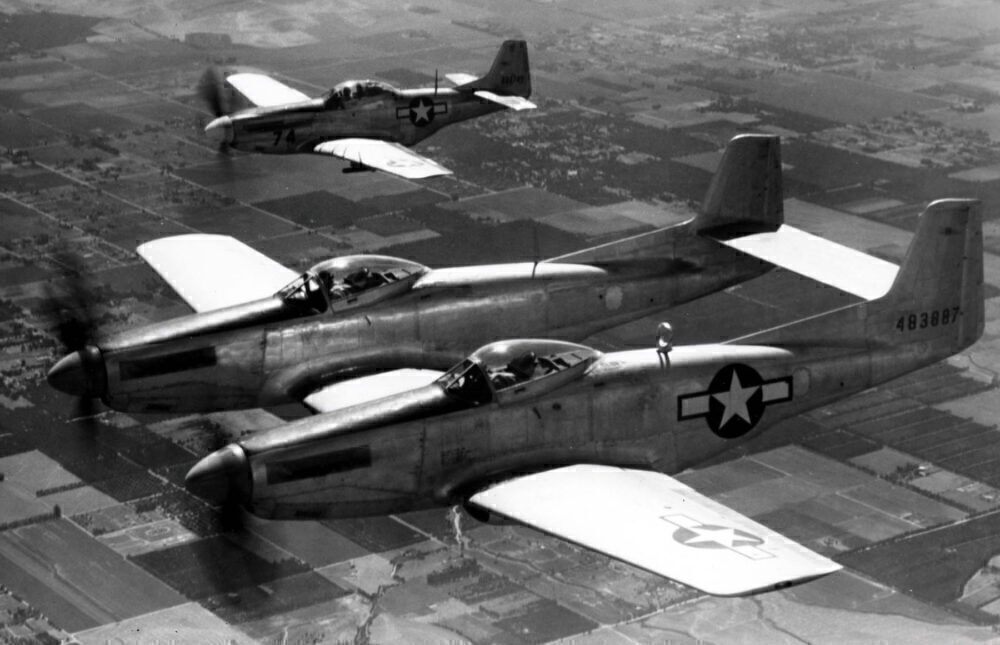
Stricter regulations in the US enabled heavier, more robust component materials. In the later designs of the Mustang, NAA reduced over 600 lbs (272 kg) of the aircraft’s empty weight, enabling better performance. Multiple prototypes and tests later, the P-51H and later versions were introduced.
What are your thoughts on the iconic North American P-51 Mustang and its variants? Share your views in the comments section.