



Clark Gable was at the height of his fame as an actor, when he decided to enlist in the Army Air Corps. Braving the deadly skies over Germany, this actor-turned-airman set a sterling example of courage, selflessness, and duty to the country for his countrymen to emulate.
The King of Hollywood
Clark Gable, often referred to as “the King of Hollywood” during his prime, cemented his place among the Hollywood greats in 1939 with his role as Rhett Butler in “Gone with the Wind.” From there, his career exploded. By 1942, the year he enlisted in the US Army Air Corps, he had an incredible 50 films under his belt and was at the pinnacle of his acting career.
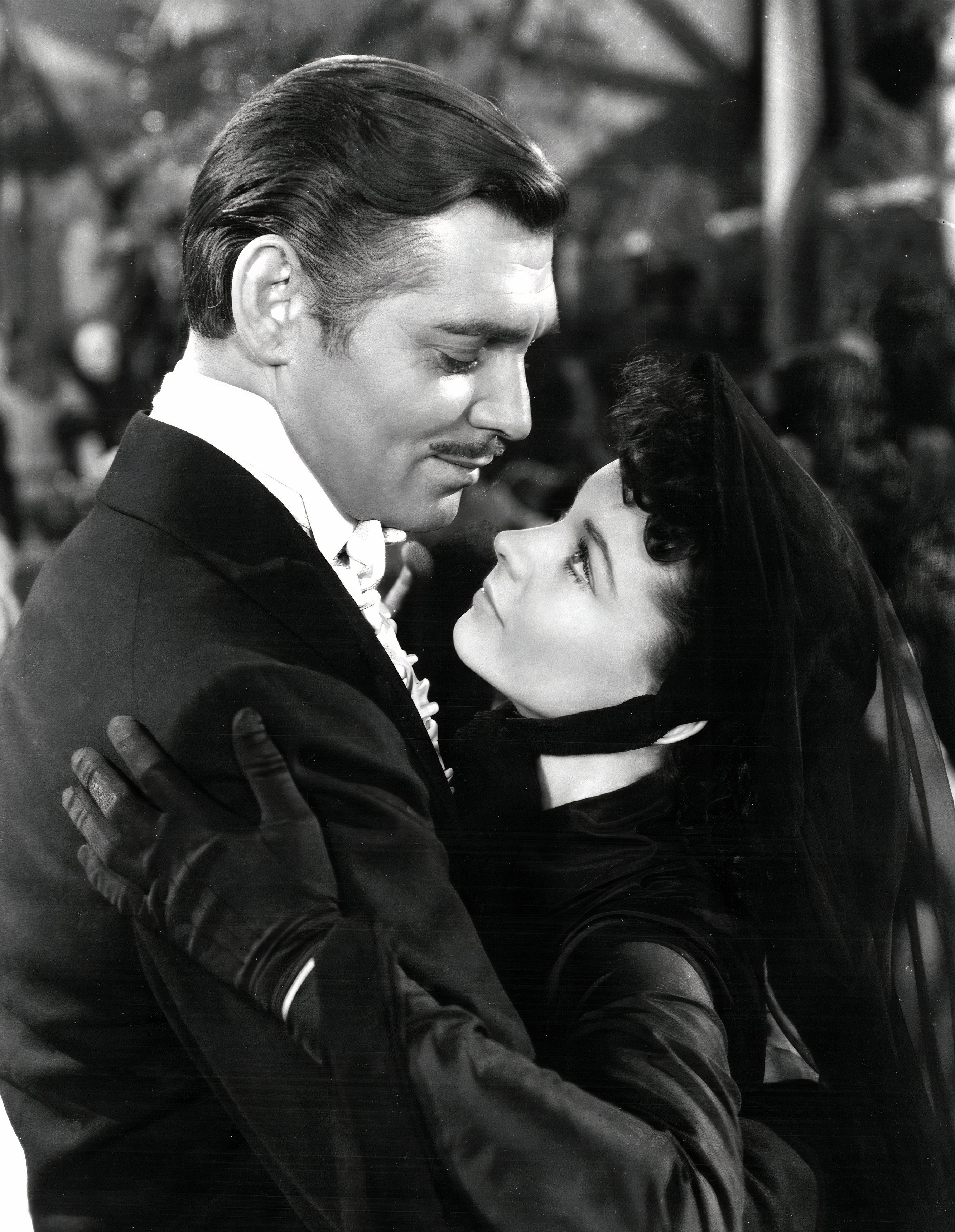
Given his celebrity status (and his age, being in his early 40s), he could have easily eschewed national service and maintained his comfortable and glamorous life in Hollywood. However, this was not the case for the late, great Clark Gable.
Death above the clouds
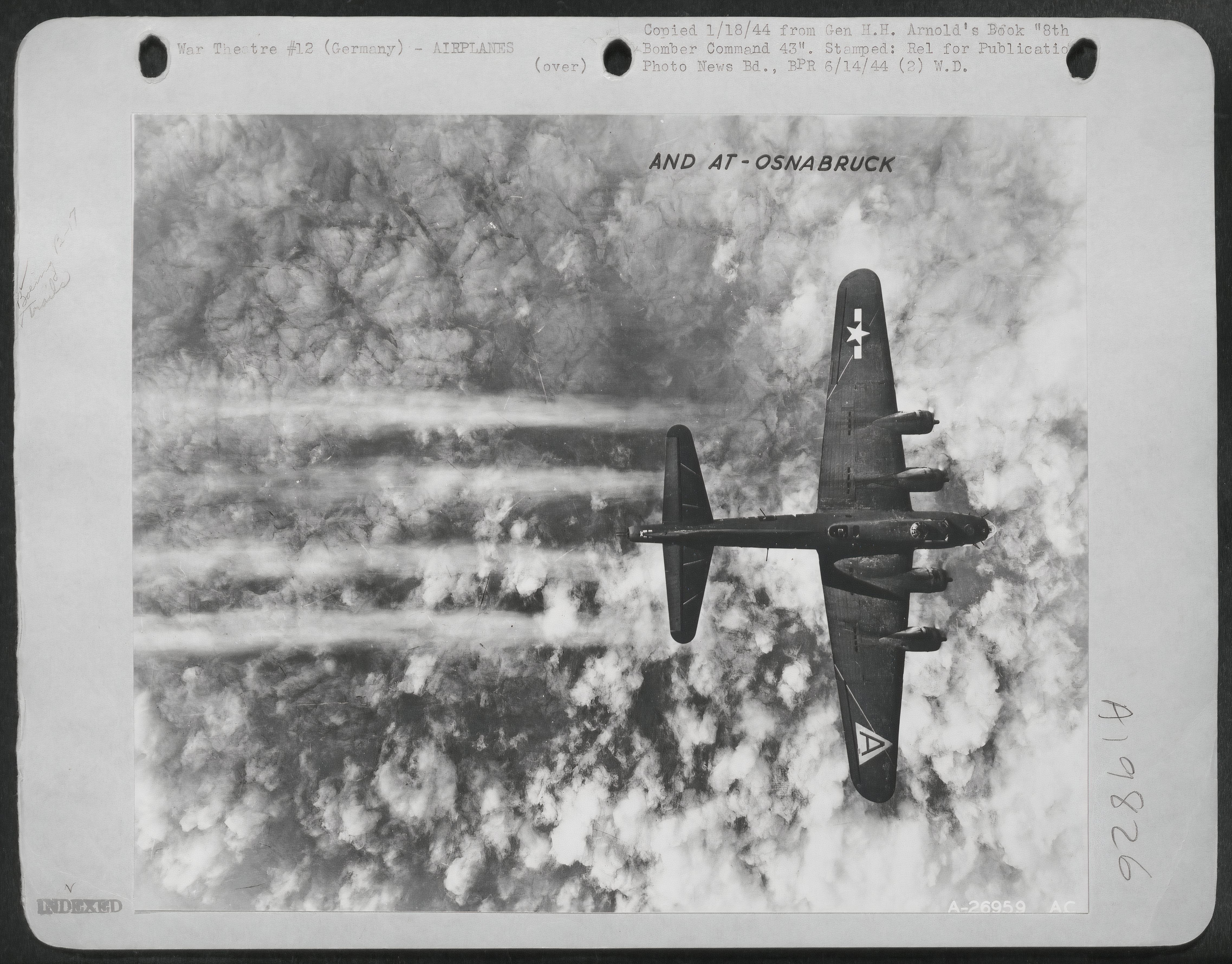
While Gable was at the height of his success, notoriety, and efficiency, the pilots of the German Luftwaffe were likewise at the height of theirs.
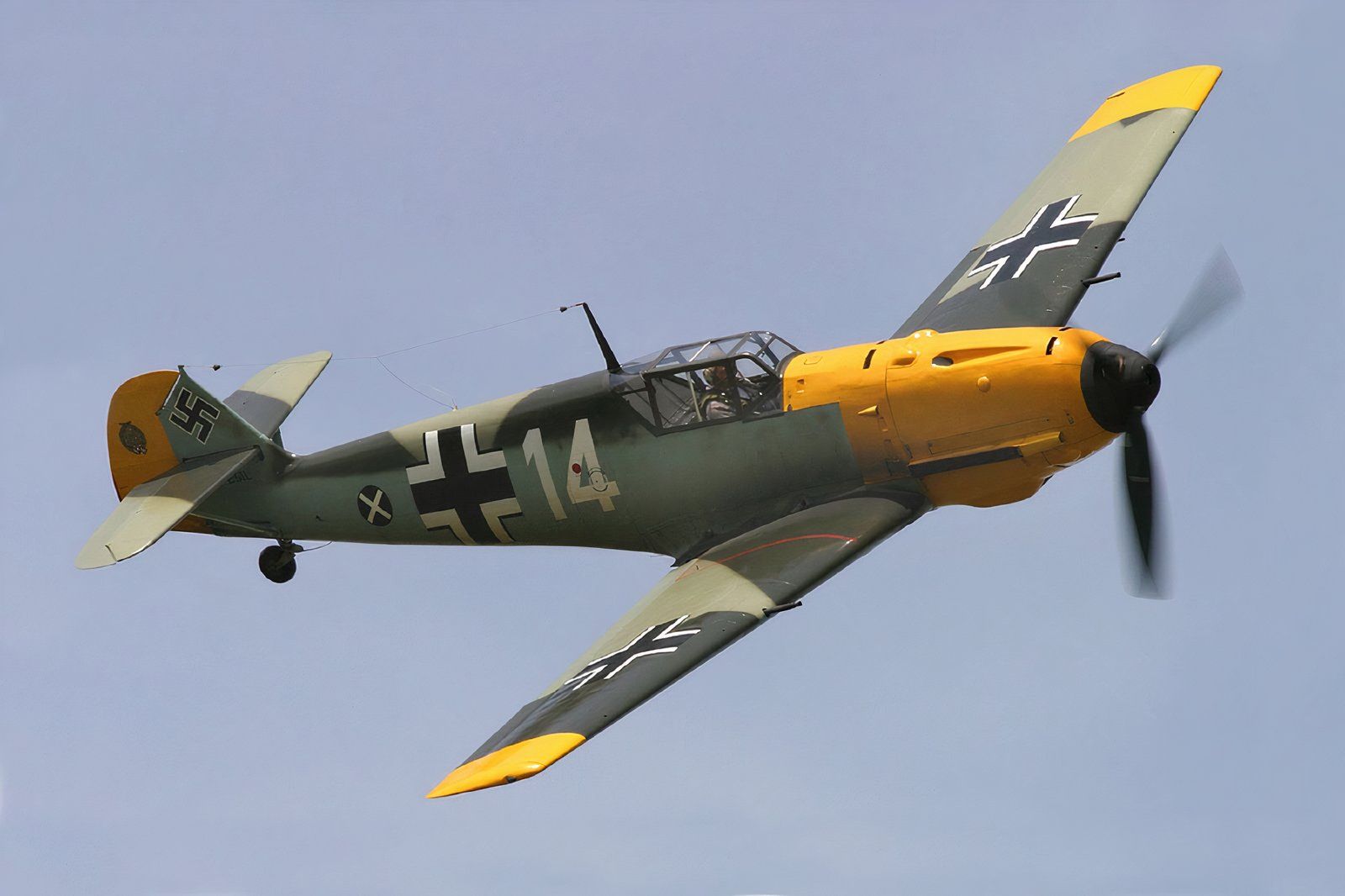
According to the National World War Two Museum in New Orleans:
“In 1943, the Luftwaffe was at peak strength against American bombers. The pilots flying the ME-109s and FW-190s were professionals—the best in the world. Some of the German pilots had been flying in combat since 1936. Many had dozens of aerial victories; some had over 100. John Keema of the 390th Bomb Group (Eighth Air Force) said, ‘No matter the target they were defending, they were balls to the wall. They were brave. They didn’t hesitate.’”
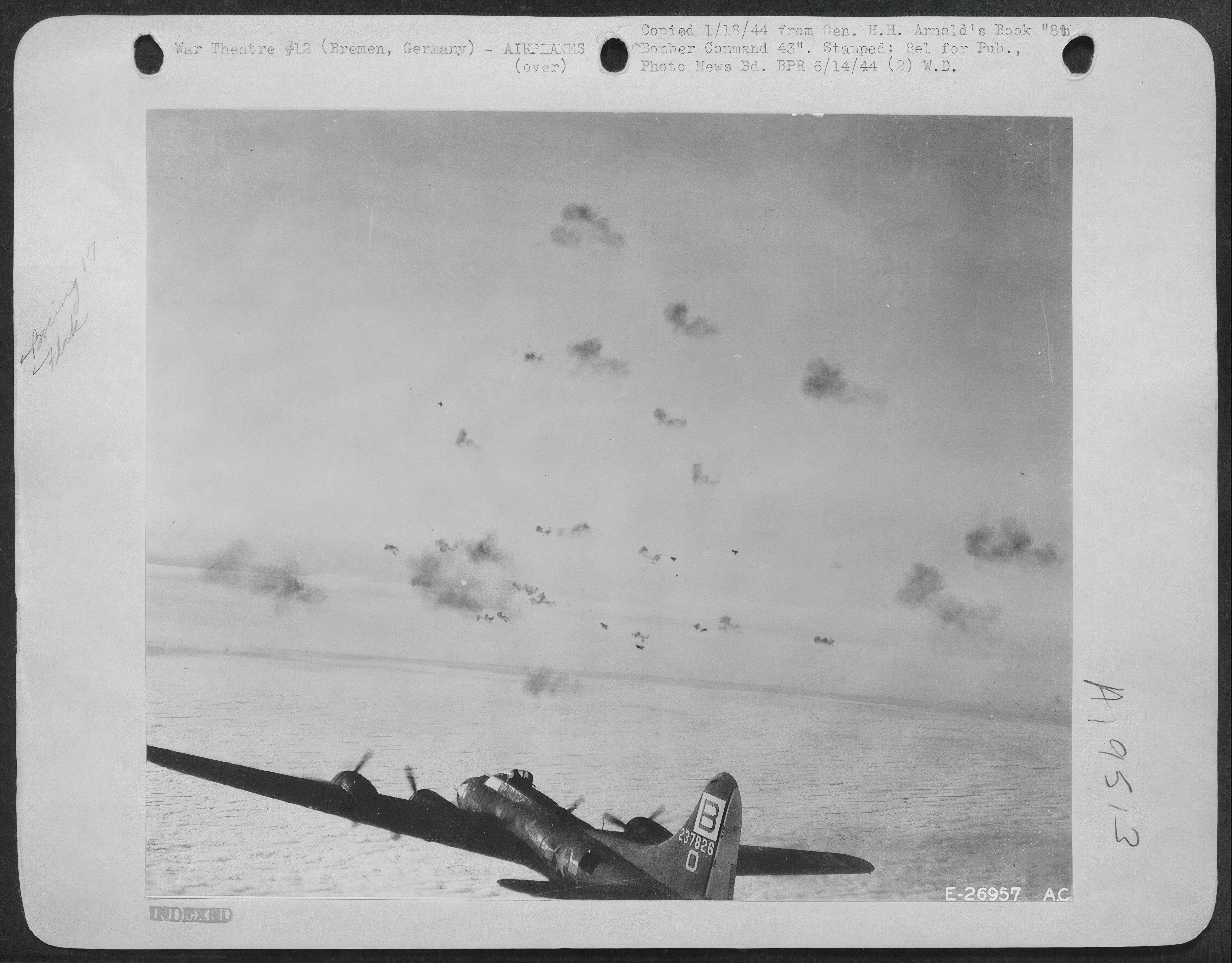
Photo: National Archives
Specifications for the B-17
| Specifications | Numerical Data |
| Armament (General Defense) | 13 Browning M2 50. Caliber Machine guns |
| Payload | 6,000 lbs. |
| Engines | Four Wright Cyclone R-1820s producing 1,200 hp per unit. |
| Maximum speed | 300 mph |
| Cruising speed | 170 mph |
| Range | 1,850 miles |
| Ceiling | 35,000 ft. 10 in. |
| Wing Span | 103 ft. 10 in. |
| Length | 74 ft. 4 in. |
| Height | 19 ft. 1 in. |
| Weight | 55,000 lbs. loaded |
“By this time, it was 1943 and the U.S. Eighth Air Force was routinely sustaining heavy casualties over the skies of Germany…”
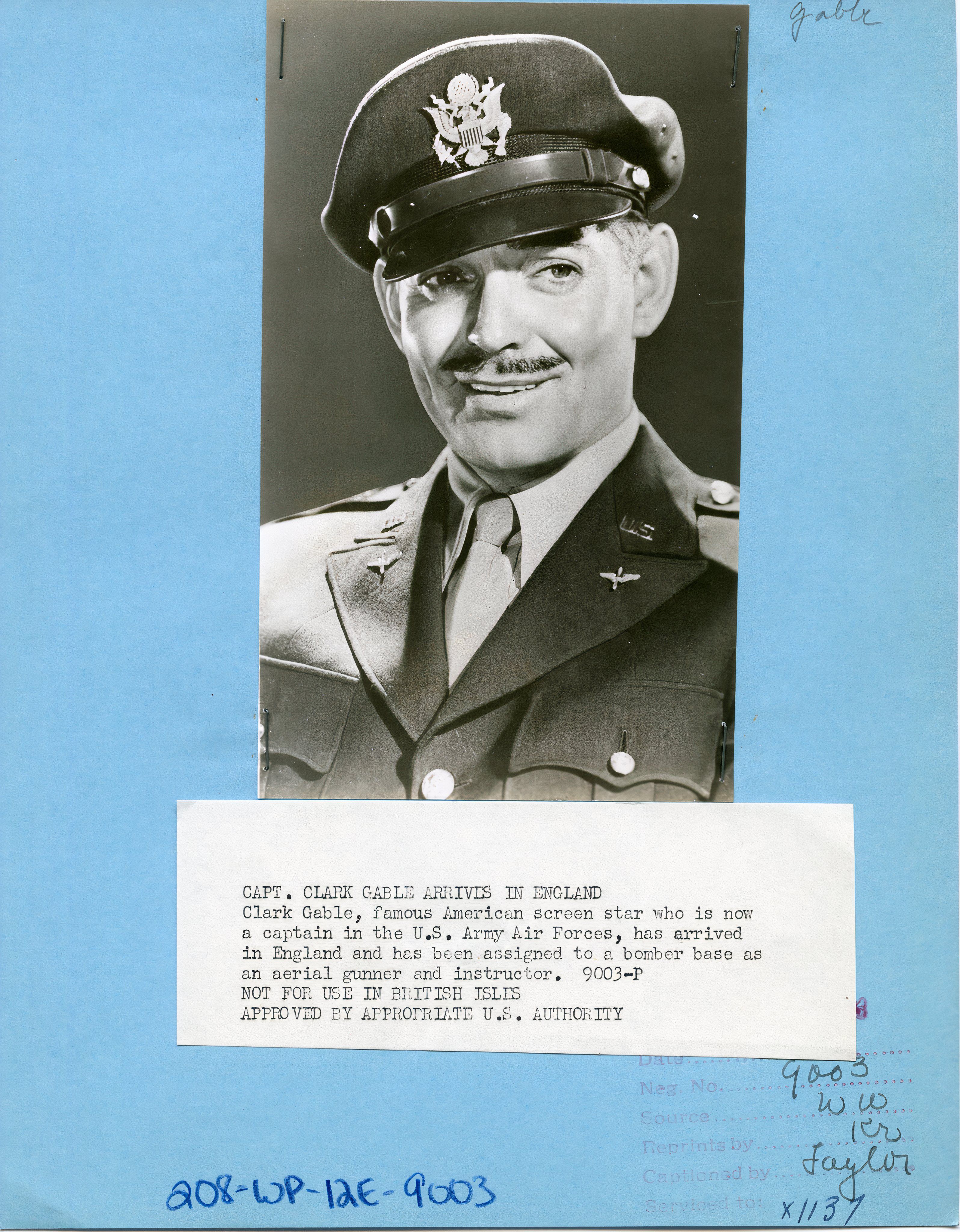
After 12 weeks of Officer Candidate School and gunnery training, Gable was assigned to the 351st Bombardment Group at Briggs Army Airfield in Texas. From there, he shipped off to England and was stationed at the Royal Air Force (RAF) airfield, Polebrook, 85 miles (137 km) north of London.
By the time Gable had his boots on the ground at RAF Polebrook, it was 1943, and the US Eighth Air Force was routinely sustaining heavy casualties over the skies of Germany at the hands of both the German pilots and the deadly anti-aircraft gun crews.
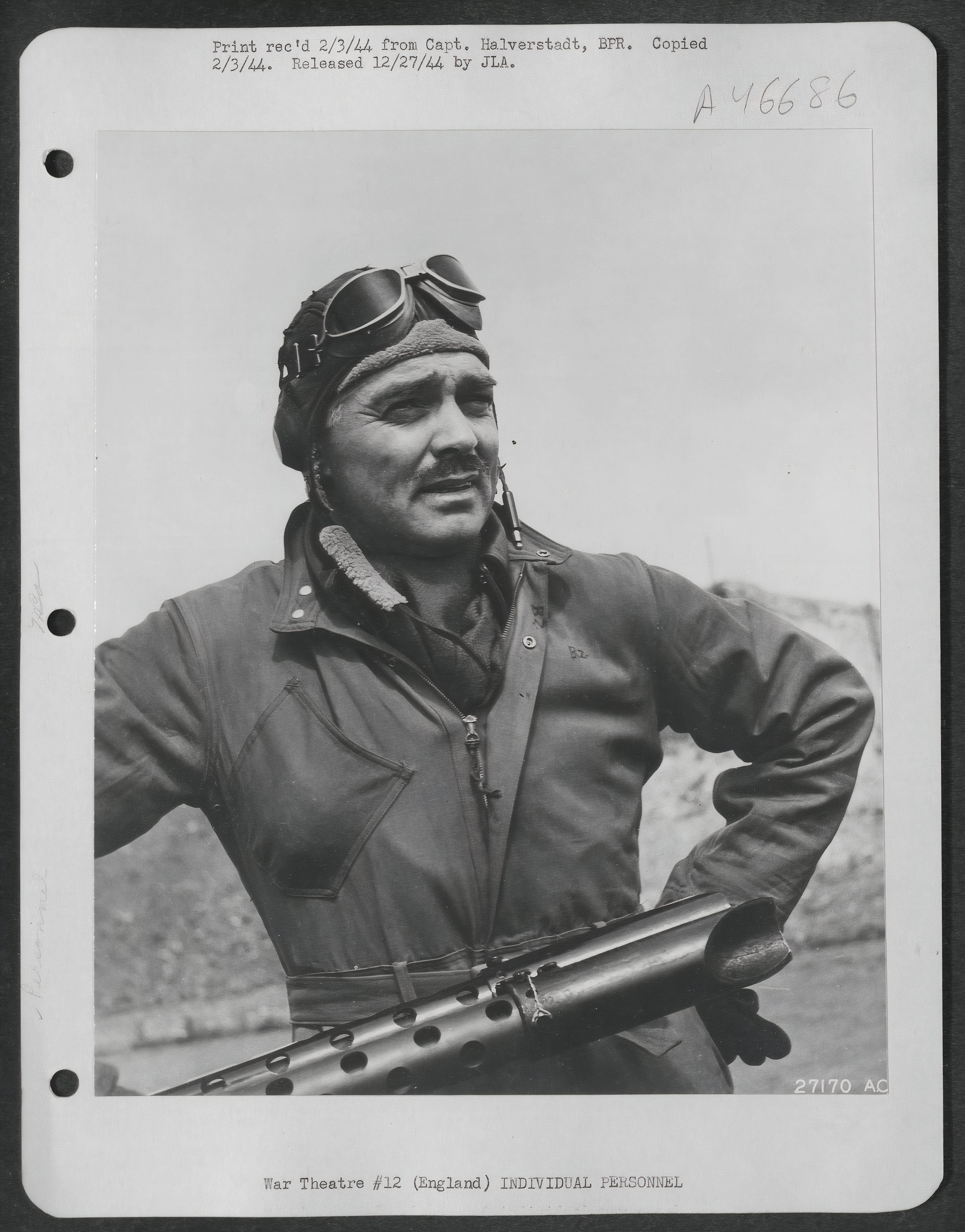
Photo: National Archives
Regarding casualties, the National World War Two Museum in New Orleans states:
“Throughout the summer of 1943, American bomber crews sustained heavy casualties. Losses of 30 or more aircraft—300 men—were not uncommon throughout the summer. John Luckadoo, a pilot in the 100th Bomb Group recalled that he ‘calculated a 400 percent turnover in the first 90 days’ of combat. In 1943, bomber crews were tasked with a 25-mission tour of duty. Most crews never made it past their fifth. The Luftwaffe owned the skies over Europe and the men of the Eighth Air Force were paying the price”.
This is the world that Clark Gable entered willingly.
The B-17, its variants, and production numbers from 1935 to 1943
| B-17 Variants by Year | |||
| Year | Model | Units by Model | Total Units produced |
| 1935 Model 299 | Model 299 (XB-7) | 1 | Total: 15 |
| 1936 Model 299B | Y1B-17 (YB-17, B-17) | 13 | |
| 1938 Model 299F | Y1B-17A (B-17A) | 1 | |
| 1939 Model 299M | B-17B | 39 | Total: 119 |
| 1940 Model 299H | B-17C | 38 | |
| 1941 Model 299H | B-17D | 42 | |
| 1941 Model 299O | B-17E | 512 | Total: 12,597 |
| 1942 Model 299P | B-17F | 3,405 | |
| 1943 Model 299P | B-17G | 8,680 | |
| Grand Total: 12,731 | |||
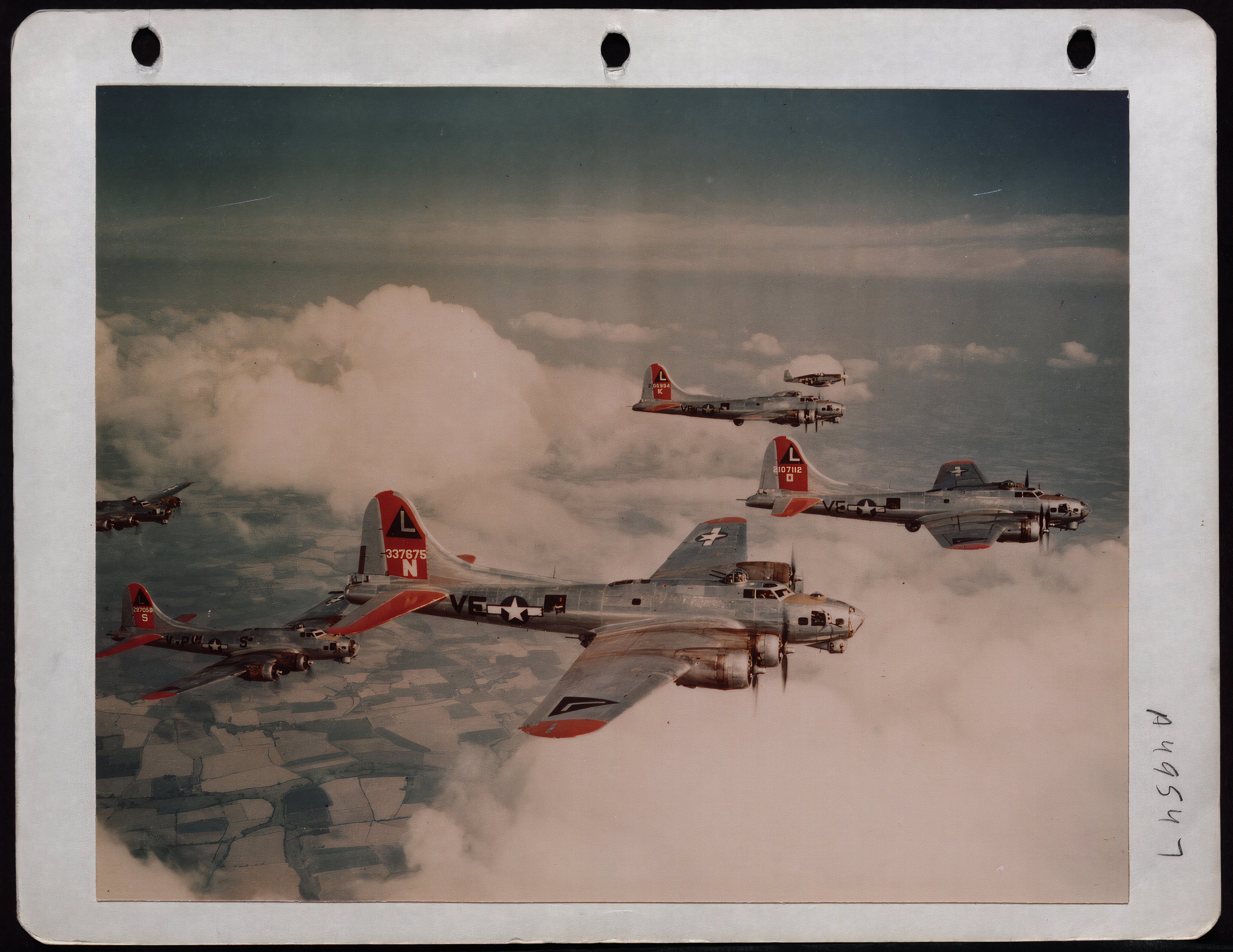
RAF Polebrook
The deadly reality of the air war over Germany would only become more stark for Gable the longer he was present at RAF Polebrook. According to the Imperial War Museums: War Memorial Register, RAF Polebrook was a busy airbase. It had accommodation for over 2,000 personnel, 311 missions were flown from its airfield, and 175 B-17s were lost from its roster between 1943 and 1945.
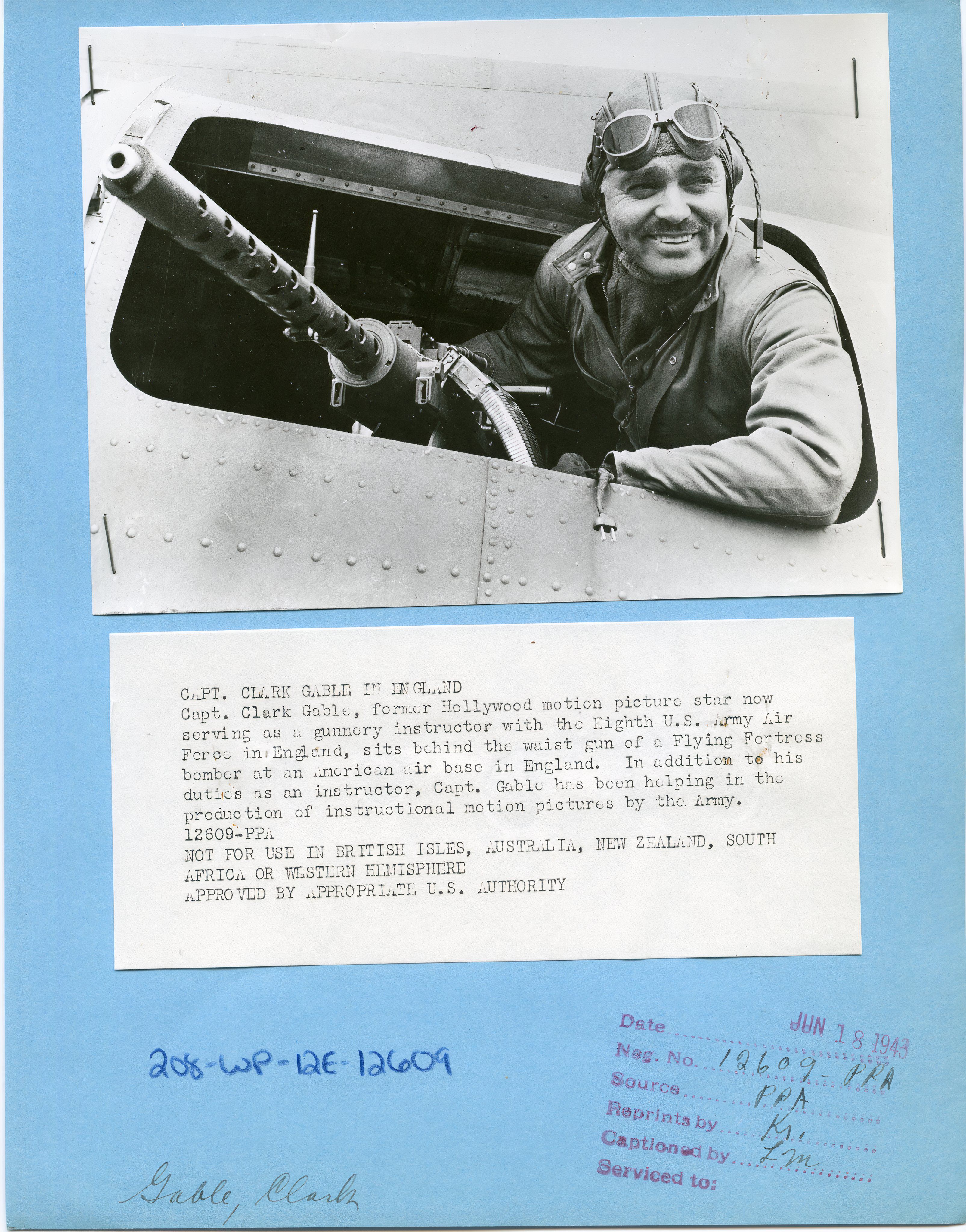
This means that, at RAF Polebrook alone, over the course of this two-year period, hundreds of US Army Air Corps personnel were either killed in action or mortally wounded flying missions over Germany.

Thus, on a near daily basis, Gable undoubtedly witnessed countless B-17s returning from missions covered in bullet holes, missing massive chunks from their fuselage, wings, and tail (the result of deadly 88mm flack-shell bursts filling the sky) and the all too often removal of deceased aircrew personnel.
“We have to remember, at any time, Gable, given his celebrity status and connections, could have easily returned to the U.S. without any questions asked.”
Given his celebrity status and connections, Gable could have easily returned to the US, but he didn’t. He remained, and every time the wheels went up on his B-17, he knowingly flew towards danger and, quite possibly, his death (and at that, his remains may have never been recovered).
Some of Clark Gable’s notable missions during WW2
Officially, Clark Gable flew five missions. The first raid he participated in was over Antwerp.
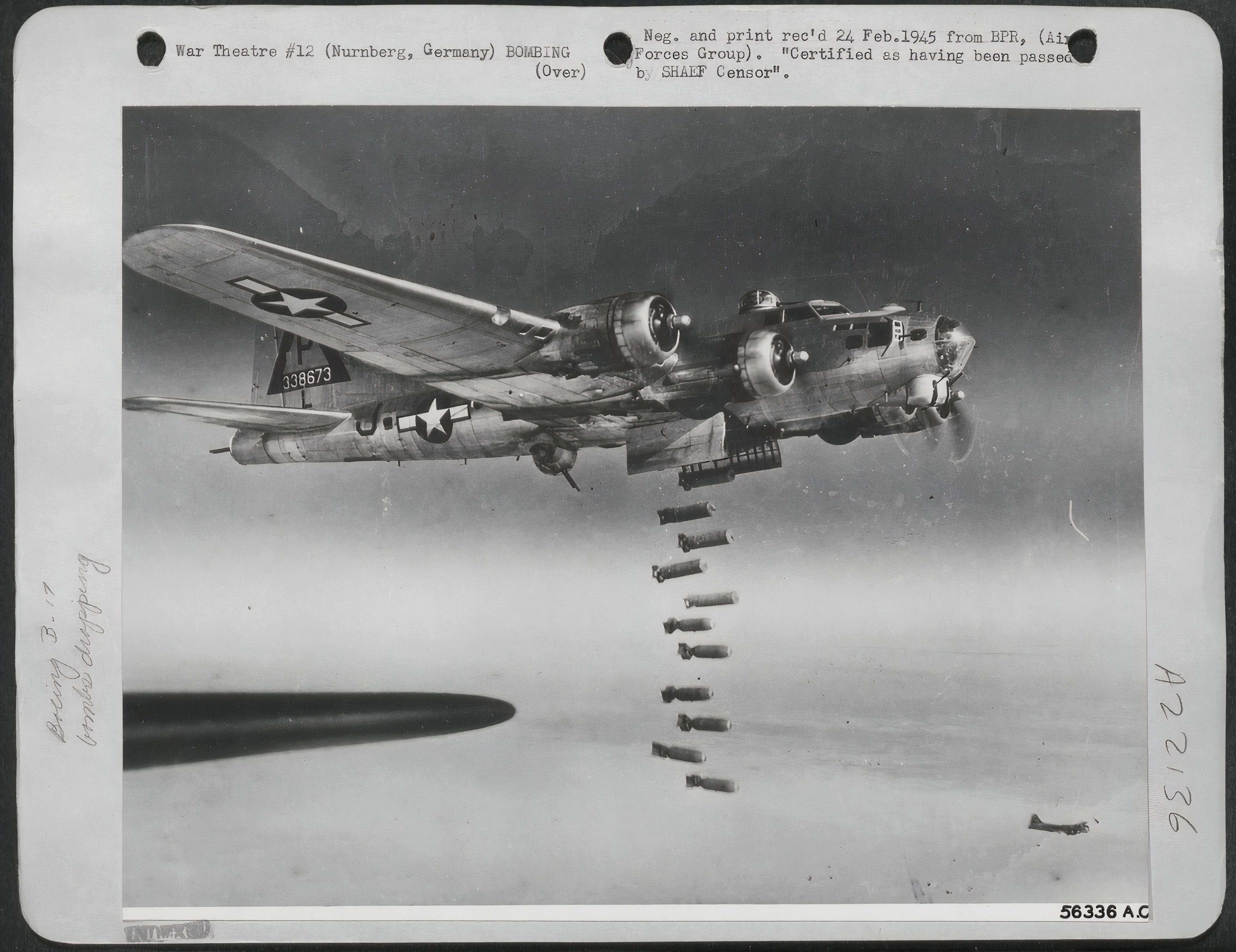
Photo: National Archives
According to the New York Times (May 9, 1943), “During the attack-his first-Captain Gable wore leather gloves…When the flight was over, his hands were numb and purple. Contrary to earlier reports that Gable’s plane was not damaged, the crew members said a German 20-mm. Shell smashed through its nose but that none of the men was [sic] seriously injured.”
“It wasn’t until the aircraft returned that he realized he had been within centimeters of losing his life…”
One of the most well-known incidents of Gable’s service in the skies over Germany came when he flew in a B-17 named “Ain’t it Gruesome.” On this occasion, he was undertaking his role as a gunner when a 20mm shell hit the aircraft.
As stated by the American Air Museum in Britain, “Gable wedged himself behind the top turret gunner for a better view. It wasn’t until the aircraft returned that he realized he had been within centimeters of losing his life as a 20mm shell had come through the flight deck, removing the heel of his shoe. It had exited without exploding thirty centimeters from his head.”
Gable’s fifth and final mission was over Nantes, France. On this occasion, his aircraft was struck by anti-aircraft fire, with no casualties. During this mission, Gable acted in defense of his aircraft, firing his Browning M2 .50 caliber machine gun at enemy aircraft. However, and surely to his disappointment, Gable stated, “I didn’t [sic] hit a damn thing…” New York Times (September 24, 1943), yet it is entirely possible that his action warded off the oncoming aircraft and dissuaded others from attacking.
This final mission would earn him the Air Medal, for exemplary meritorious achievement. As stated by the New York Times (October 5, 1943), the citation for his Air Medal read: “His ‘courage, coolness and skill’ in the five missions ‘reflect great credit’ on him and the armed forces.”
Remembering the late, great Clark Gable
By the time the US was drawn into the Second World War on December 7, 1941, Clark Gable was already an established and highly successful actor. Quite possibly, the event that gave him the burning desire to serve in the US Army Air Corps was the tragic death of his beloved wife, Carol Lombard, in 1942. She was on a war bond drive when her plane (a Douglass DC-3) crashed into Potosi Mountain in Nevada. Shortly after her untimely death, Gable enlisted in the Army.
It is possible that Gable was not fully aware of the high attrition rate among the Eighth Air Force aircrews when he enlisted. The U.S. government was withholding casualty rates from the public. However, the grim reality would have become evident quickly the more time he spent at RAF Polebrook.

The fact that a man of great fame and connections, decided to stay at the air base and continue to go on dangerous missions over Germany, missions that could have very easily cost him his life, says a great deal about him.
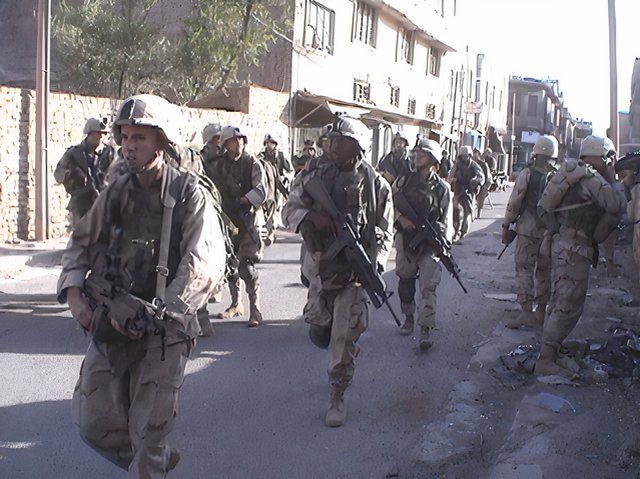
His service during World War Two would be the modern-day equivalent of Tom Cruise or George Clooney, leaving the comfort and safety of Hollywood and enlisting in the US Army or Marine Corps, and then insisting on combat duty with the infantry, at the height of the Iraq War and its deadly insurgency.
Clark Gable served the United States with great honor, out of a sense of duty to his country and certainly in memory of his, at the time, recently deceased wife. He will always be remembered as one of the great actors of the Golden Age of Hollywood, but also for his selfless service, dedication and grit within the ranks of the 351st Bombardment Group.