



Sweden has a history of building some of the world’s most notable and yet least-known fighter jets . While the Canadian Avro Canada CF-105 Arrow interceptor was canceled and became a failure, the concurrent Swedish fighter interceptor Saab 35 Draken proved a success. This was a remarkable aircraft and was the first known aircraft to perform the kort parad (short parry) maneuver— much later popularized by the Soviets and renamed the Cobra Maneuver .
Saab 35 Draken – an excellent interceptor
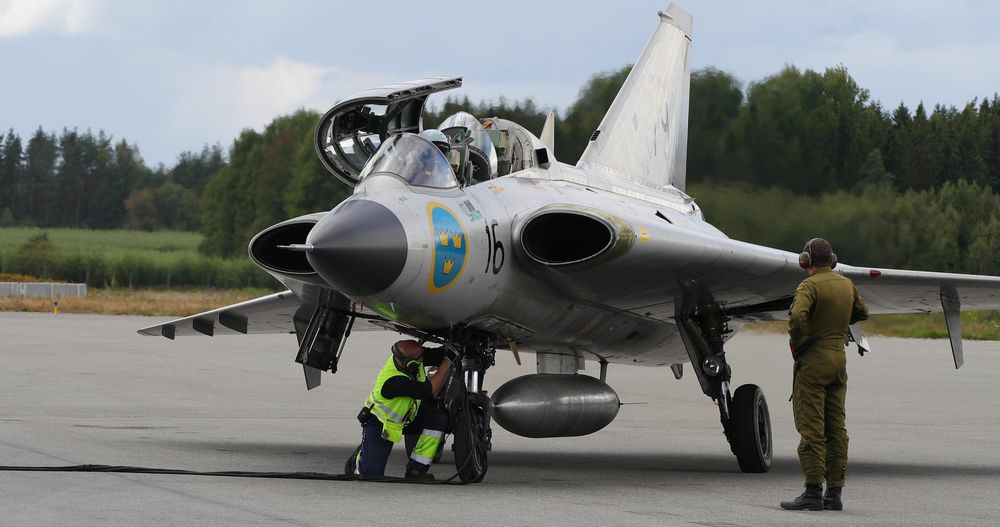
The Saab 35 Draken (Dragon) was a 1950s Swedish fighter interceptor built by Saab between 1955 and 1974. Sweden developed it as a double delta-wing jet to replace its Saab 29 Tunnan day fighter and Saab 32B Lasen night fighter. The Draken was one of the first aircraft to use the double delta-wing design successfully. The double-delta-shaped wing helped reduce the take-off run (allowing it to be used from both runways and roads).

Photo: Photofex_AUT l Shutterstock
The Swedish fighter entered the Swedish Air Force service in 1960 and was the first Western European-built fighter with true supersonic capability. The Saab 35 Draken boasts a number of other firsts, including being the first to perform the Cobra maneuver. It was a very capable fighter jet of its time (including in dogfights) – although it never saw combat (perhaps part of the reason why it was widely forgotten).
| Saab 35 Draken fighter: | |
|---|---|
| Role: | Fighter-interceptor |
| Number built: | Approx. 650 |
| In service: | 1960 to 2005 |
| Former operators: | Sweden, Finland, Denmark, Austria |
| Mach speed: | Mach 2.3 |
| Max take-off weight: | 26,266 lbs |
| Powerplant: | 1x Rolls-Royce Avon (Svenska Flygmotor RM6C) |
While Sweden has built excellent fighter jets, it has not been able to design and produce its own fighter jet engines. Sweden does produce the Gripen’s Volvo RM12 afterburning turbofan engine (a version of the General Electric F404) under license.
Production and export markets
Around 650 Drakens of all variants were built. The Draken only saw limited international export success, being purchased by Austria, Denmark, and Finland. At the time, Austria and Finland were also fellow democratic, Western-orientated neutral countries stuck between the capitalist West and the Communist East.
Austria was forbidden by a post-WWII treaty from having AIM missiles on its aircraft (so its Drakens were originally armed with two 30mm Aden cannons). However, after the fall of the Berlin War, as conflict broke out in former Yugoslavia, the missiles were added in 1993.
Saab 35 Draken operators:
- Sweden: 544 Drakens (90 J 35A; 73 J 35B; 25 Sk 35C; 120 J 35D; 60 S 35E; 208 J 35F; and 76 J 35J variants)
- Finland: 50 Drakens
- Austria: 24 Drakens
- Denmark 51 Drakens
- US National Test Pilot School: 6 Drakens
Some of the Drakens are counted more than once in the list above, as some of the Drakens exported were ex-Swedish aircraft. The US National Test Pilot School acquired its six Drakens from the Danish Air Force.
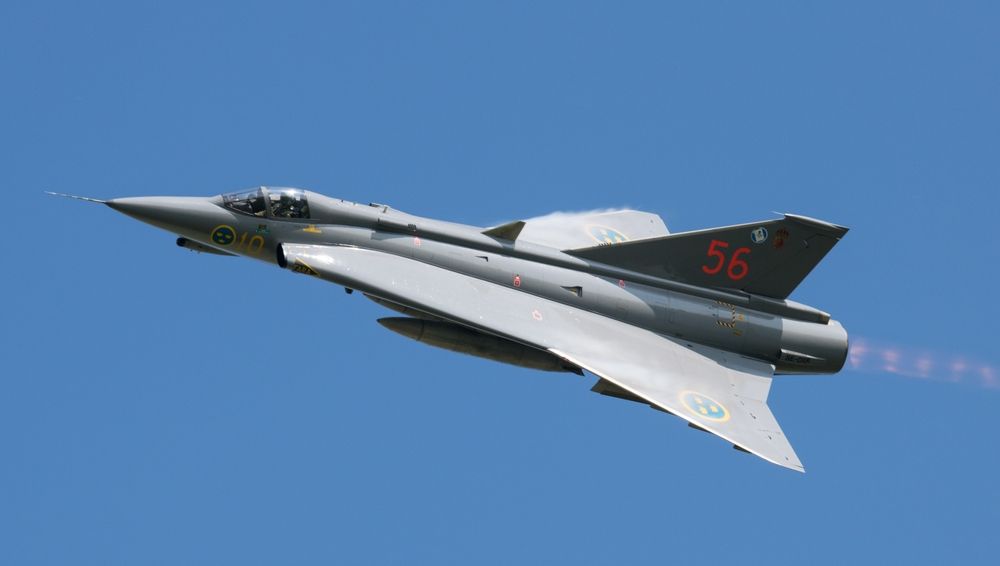
Photo: JMMJ l Shutterstock
It remained in service with the Swedish Air Force until 1999. The more advanced JA 37 Viggen replaced it and, eventually, the Saab JAS 39 Gripen fighter. Austria was the last operator and continued to fly the Draken until 2005.
“J 35J Draken’s served until retired in December 1998, with the last flight in Jan. 1999. It had been retained in service because it never really became obsolete and still had the potential to be upgraded. The J served at the end as operational training support for other foreign users of the aircraft.” – The Aviationist
Denmark subsequently purchased F-16 fighter jets (which are now being replaced by F-35s), while Finland purchased F/A-18 Hornets (soon to be replaced with F-35s). Austria now operates Typhoon Eurofighters.
00 years of Swedish armed neutrality
For 200 years, Sweden has maintained a policy of armed neutrality, successfully staying out of both WWI and WWII. This policy started changing in the 2000s when Sweden entered mutual defense treaties with Nordic and other states. It then joined NATO in 2024 following Russia’s full-scale invasion of Ukraine. Sweden has sought to maintain a strong but independent military and support military infrastructure like Switzerland.
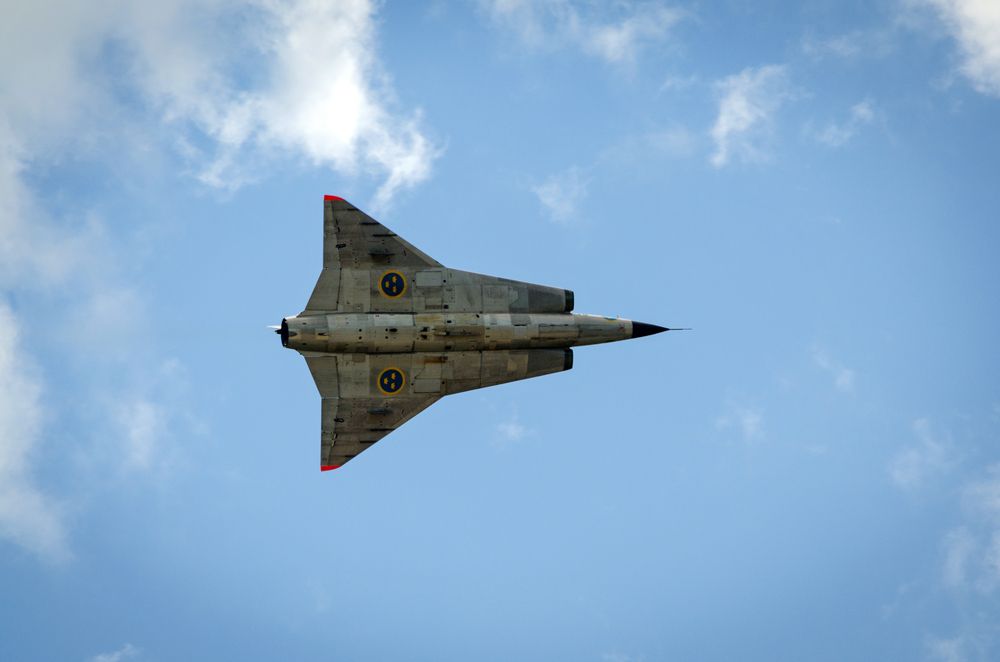
Photo: Piotr Wawrzyniuk l Shutterstock
This long period of neutrality has led to Sweden being perhaps the smallest country in the world able to design and produce fighter jets. The Swedish multirole fighter jet in production today is the Saab Gripen, the most recent variant being the extremely capable Gripen E. The jet was specially designed with Swedish needs in mind to prevail in any potential conflict with Russia.
Examples of Cold War-era interceptor aircraft:
- Convair F-106 Delta Dart
- Sukhoi Su-15
- English Electric Lightning
- MiG-25 “Foxbat”
- MiG-31 “Foxhound”
- MiG-31 “Foxhound”
- Avro Canada CF-100 Canuck
- Saab 35 Draken
The current Saab Gripen continues the legacy of the Draken (as influenced by Sweden’s geopolitical risk of having to fight the USSR or Russia alone). The Gripen is a rugged aircraft built to be operated from dispersed airfields and off remote highways and roads in Sweden and its extensive forests. It is built to be cheap and easy to maintain and to require a bare minimum of maintainers with minimum training.
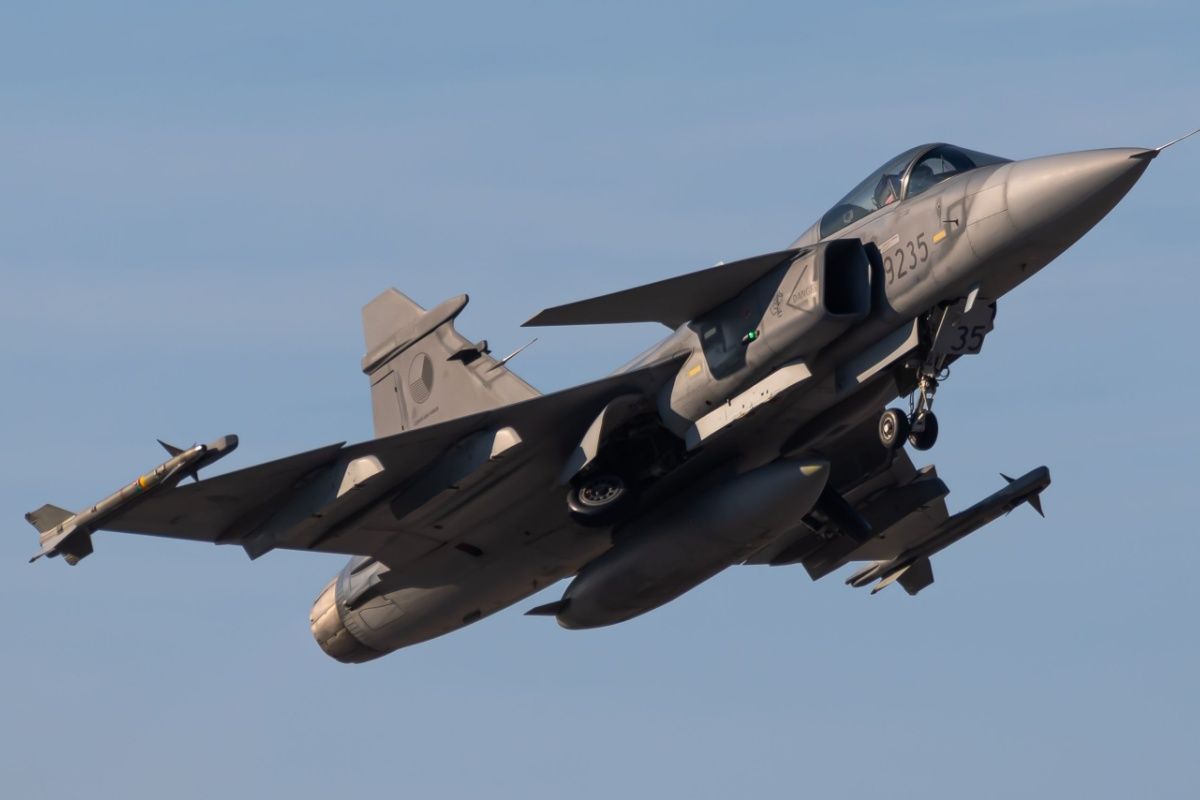
Photo: PetrCh l Shutterstock
While Finland is unable to sustain the domestic defense industry that Sweden does, it operates a similar military model requiring its aircraft to be able to disperse and operate from remote and austere environments (including roads). In September 2024, the United States Air Force took a leaf out of that book and landed two F-35As on a stretch of Finnish highway for the first time .