



When the U.S.S. Texas was launched, in 1912, it was arguably the most powerful weapon on the planet. The Texas was a dreadnought, one of several dozen big-gunned, heavily armored warships built by the era’s military powers in the years before World War I. Its most fearsome feature was a set of fourteen-inch guns, whose 1,400-pound shells could travel thirteen miles. There were ten such guns, each 53 feet long.
A few years after its maiden voyage, the Texas became one of the first U.S. battleships to be equipped with antiaircraft guns, as well as to launch a plane and to test a novel device called radar. Its hull was protected by torpedo blisters: air-and-water-filled tanks welded to its sides to cushion against incoming explosives. The ship’s arsenal included 21 five-inch guns and dozens of torpedoes. The Texas was, in short, the Death Star of its day.
During World War I, it patrolled the North Sea and escorted President Woodrow Wilson to peace talks in France. A generation later, it shelled German defenses during the D-Day invasion. “There would be a flash like a blast furnace from the 14-inch guns of the Texas,” wrote a young reporter named Ernest Hemingway, who was embedded with a group of GIs in a landing craft at Normandy. “Then the yellow-brown smoke would cloud out and, with the smoke still rolling, the concussion and the report would hit us, jarring the men’s helmets. It struck your near ear like a punch with a heavy, dry glove.”
Not long after, in late 1944, the Texas sailed to the Pacific via the Panama Canal. The ship took part in the battle of Iwo Jima and the invasion of Okinawa, bombarding the islands before American forces landed and then providing cover when they did. At Okinawa, because of the constant threat of kamikaze attacks, its 1,800 sailors manned their battle stations for fifty days straight.
After the war, the Texas, like most battleships, was retired, destined for the scrap yard or target practice. But a pair of Texas congressmen, Lyndon B. Johnson and Albert Thomas, asked the secretary of the Navy if the state could turn it into a memorial. The secretary okayed the deal on the condition that the state come up with $225,000 (more than $3 million today) to tow the ship from Baltimore to Houston. It took a couple of years to raise the money, and the Navy came close to nixing the deal, but Texans eventually ponied up, urged on by the newly created Battleship Texas Commission.
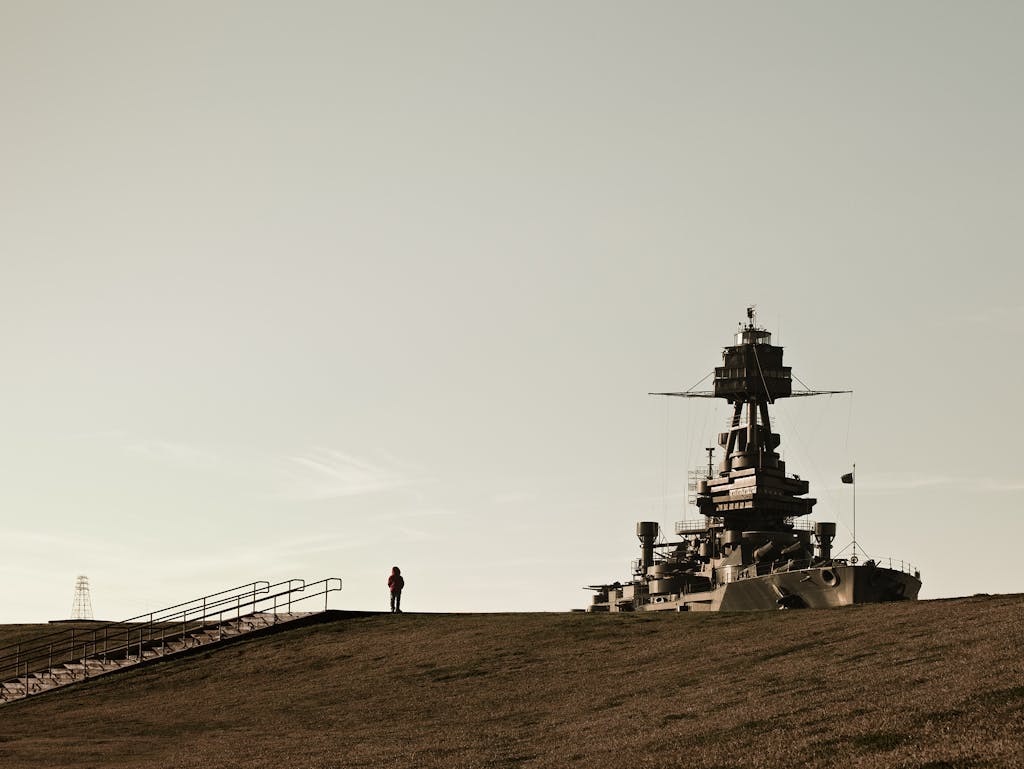
In early 1948 the Texas was hauled up the Houston Ship Channel and docked in a Buffalo Bayou inlet, next to the San Jacinto Monument. Its then-captain, Charles Baker, delivered a ceremonial speech before handing the ship over. “She is reporting today for new duty as the flagship of her namesake state,” he said. “Her wars are over. She has won the right to rest peacefully in Texas waters.”
There the Texas became the country’s first permanent floating museum. Visitors could tour the turrets, walk the deck, and eye the brig. The commission ran out of maintenance funds over time, though, and the once mighty vessel was plagued by leaks, rusting steel, and corroding pipes.
In 1983 the battleship was taken over by the Texas Parks and Wildlife Department, which had a budget for repairs—and a fund-raising arm. “Remember the Texas,” read one slogan. “She fought for you. Now let’s fight for her.” Whataburger and the Houston Ballet donated portions of their revenues. Schoolkids chipped in. More than $2 million was raised, and repairs were completed in 1990.
The leaks continued—but so did the attempts to salvage the ship, notably by the Battleship Texas Foundation, created in 1998. Perhaps more significantly, Texas voters in 2007 approved $25 million in state bonds to pay for renovations. All the while, visitors kept flocking to the floating museum. For many Boy Scout troops, it became a rite of passage to spend a night on board.
The hull, though, continued to deteriorate. In 2017 a hole fifteen feet below the waterline caused the ship to list six degrees. It was clear that the Texas needed to be moved to dry dock for a serious overhaul. This time the state chipped in $35 million, and in 2020 the foundation took over from TPWD to manage the desperately needed makeover.
Finally, on August 31, 2022, four tugboats guided the ship through the channel to Galveston. It was hoisted into dry dock at the Gulf Copper shipyard. Most of the repairs have been below the waterline: filling small holes, doubling the steel in certain sections, replacing the torpedo blisters. Most of the guns (all but the biggest ones) were taken to a warehouse for maintenance and cleaning. The Texas will remain in dry dock at least through late February 2024. Then it’ll be returned to the water, at which point workers can paint the superstructure, replace the deck, and reinstall the guns.
The next big decision is where to dock the Texas permanently, a move that won’t take place until late 2024 or early 2025. The ship won’t return to the San Jacinto Monument. The foundation is looking for a place along the coast with heavier tourist traffic, likely Galveston. Travis Davis, the foundation’s vice president of ship operations, says by the time the Texas once again welcomes visitors aboard, the ship will boast a reimagined interior: holograms of actual crew members and virtual reality goggles to simulate battle conditions. “One thing we’re trying to do is make it more immersive—using sight, sound, smell—so you can see what it was like to be on a battleship like this.”
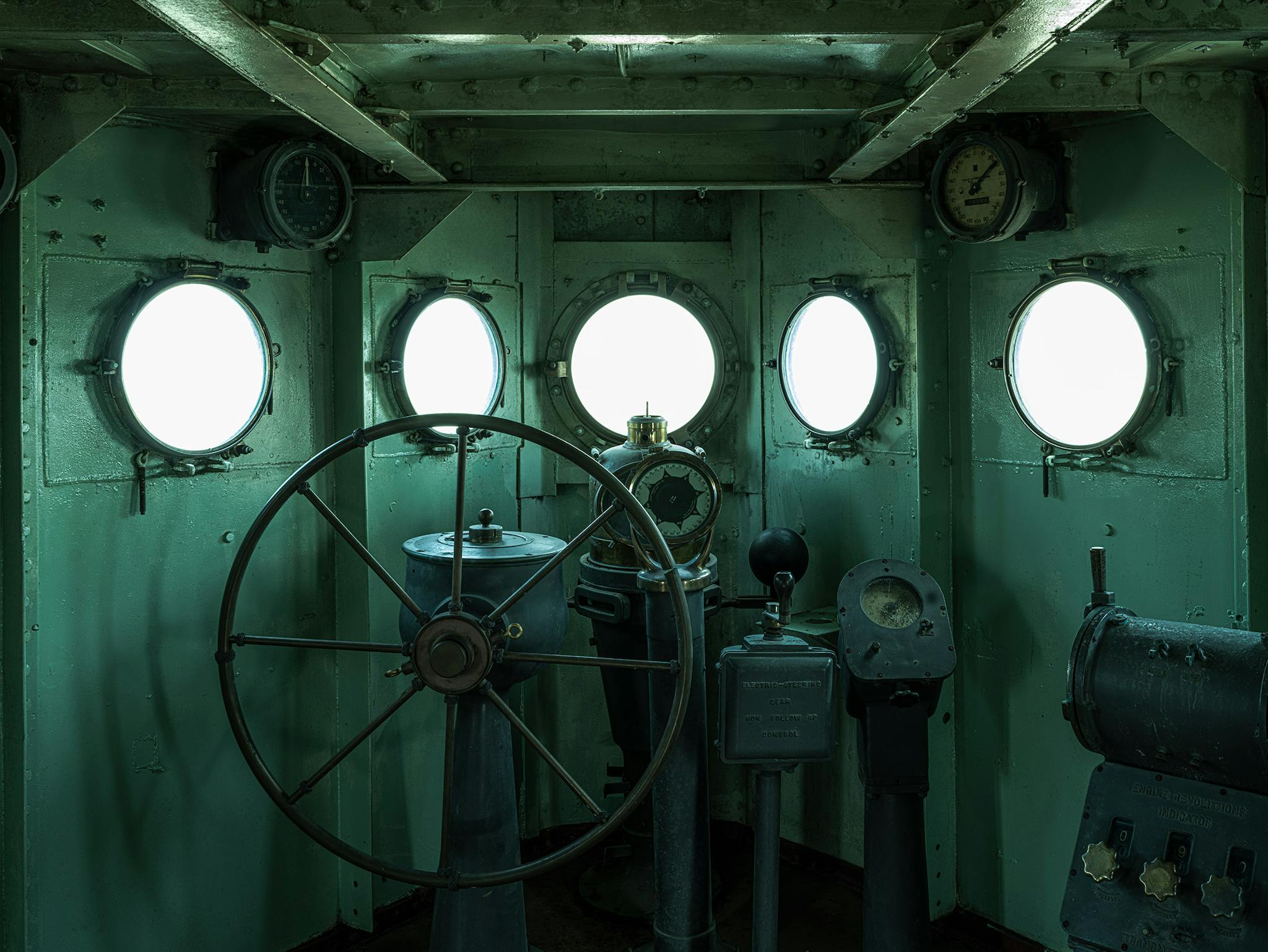
The pilot house, or bridge, where the helmsman turned the steering wheel (a.k.a. the helm) at the direction of the conning officer, who got his orders from the officer on the deck. To the right is the engine-order telegraph, on which orders were signaled to the engine room.
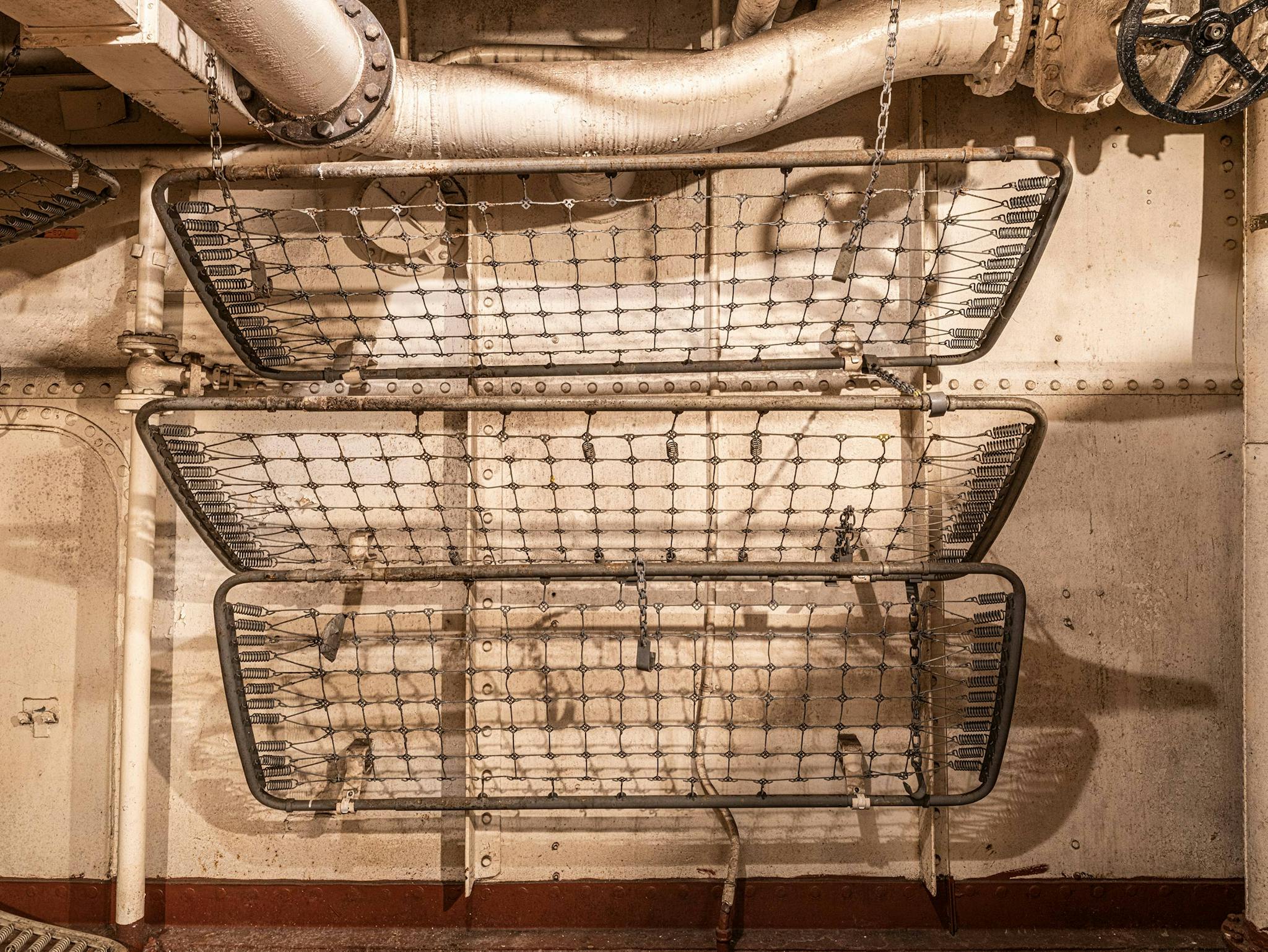
Every sailor had his own place to sleep. Some did so in bunks like these, made of pipe racks on which a thin mattress was thrown, while many dozed in hammocks or cots.
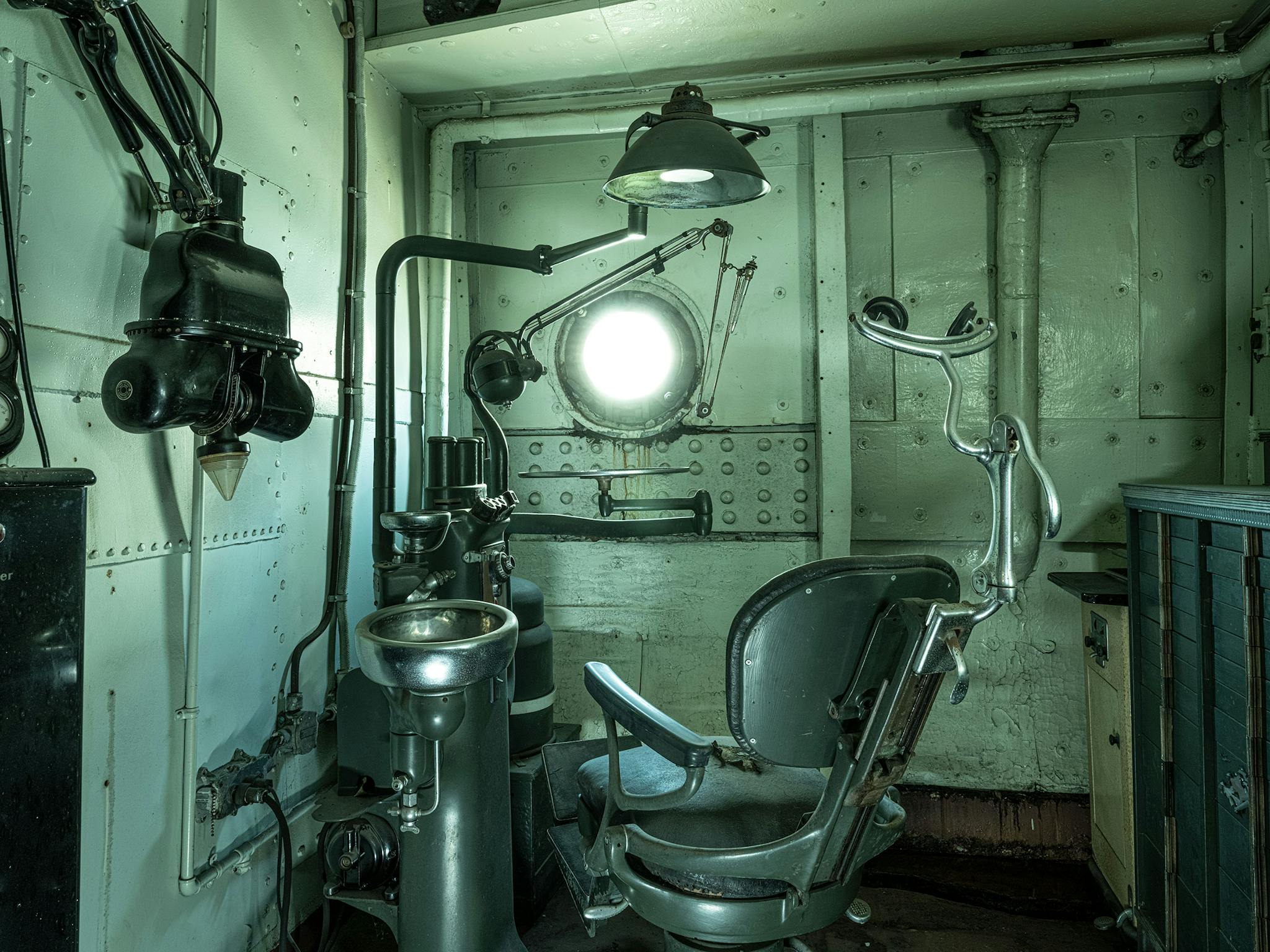
In the dentist’s office, some of the equipment and furniture is original. Many sailors in the pre–World War I years had never visited a dentist before boarding the Texas.
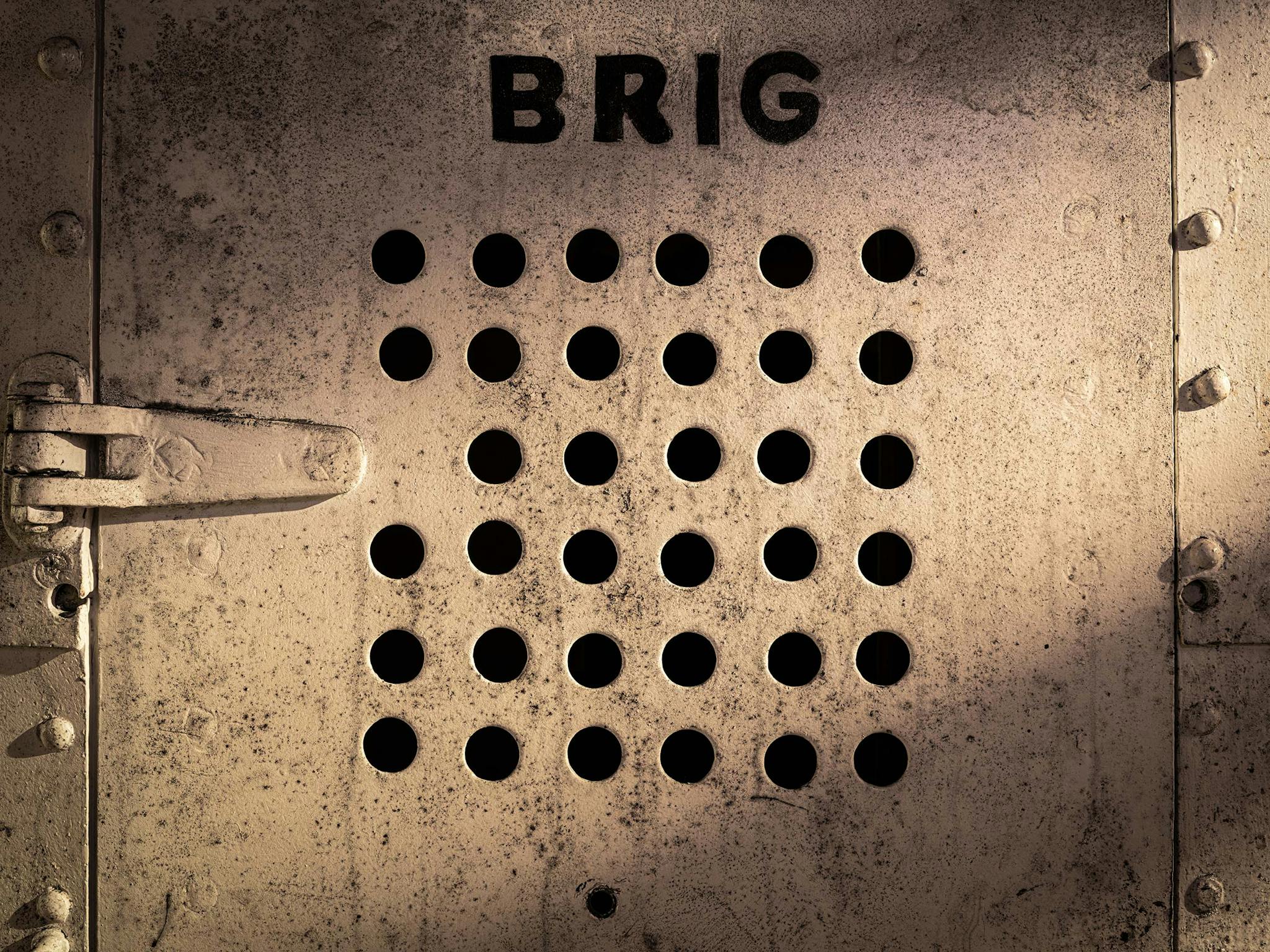
There were five small cells in the ship’s brig. During World War II, one of them held a captured Japanese kamikaze pilot.
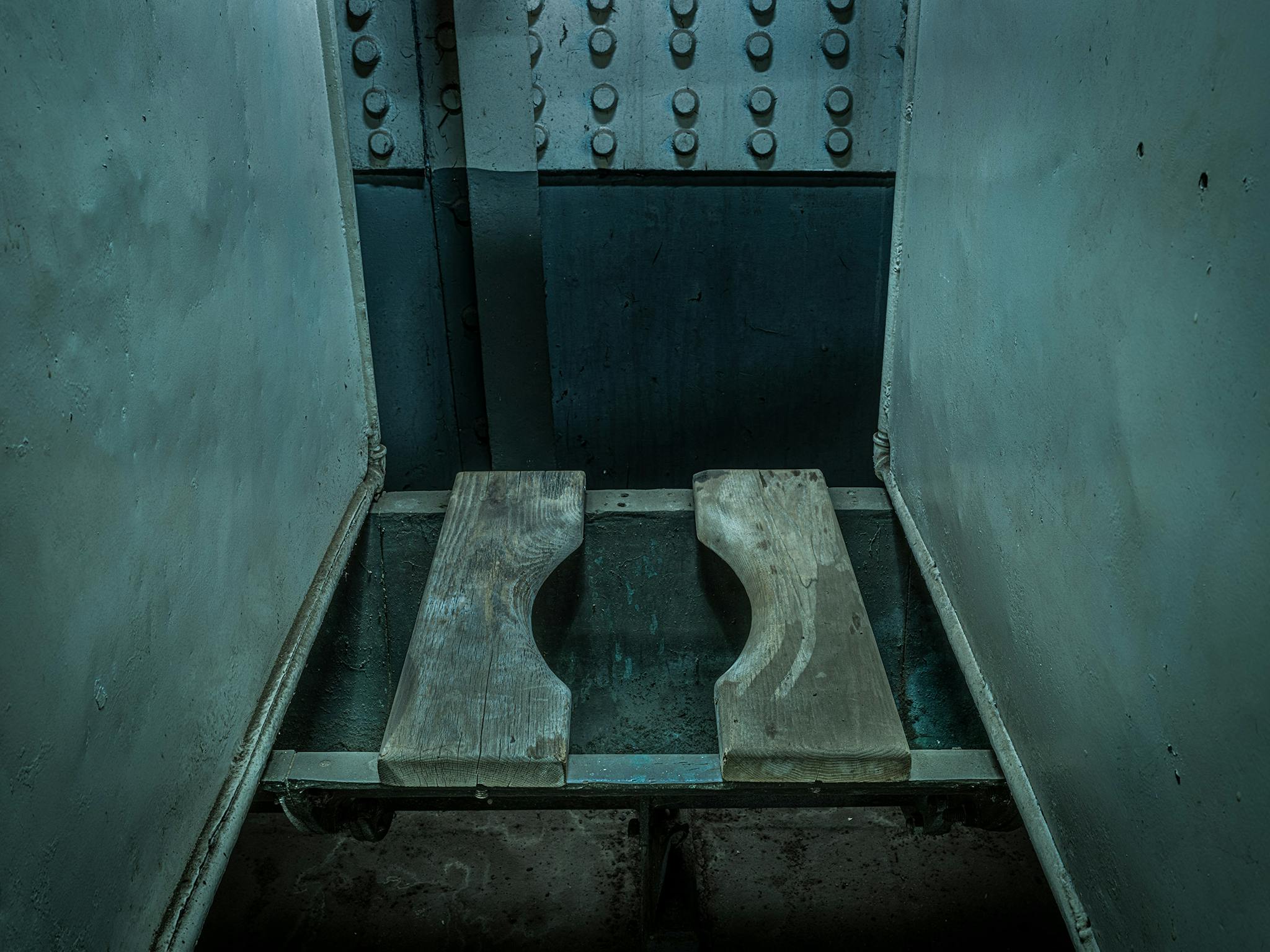
There were two enlisted men’s bathrooms, each with nineteen commodes in a row. Every toilet was perched over a trough filled with flowing seawater. Sailors were known to prank and occasionally “fireboat” their peers by balling up a wad of toilet paper, setting it alight, and sending it down the trough
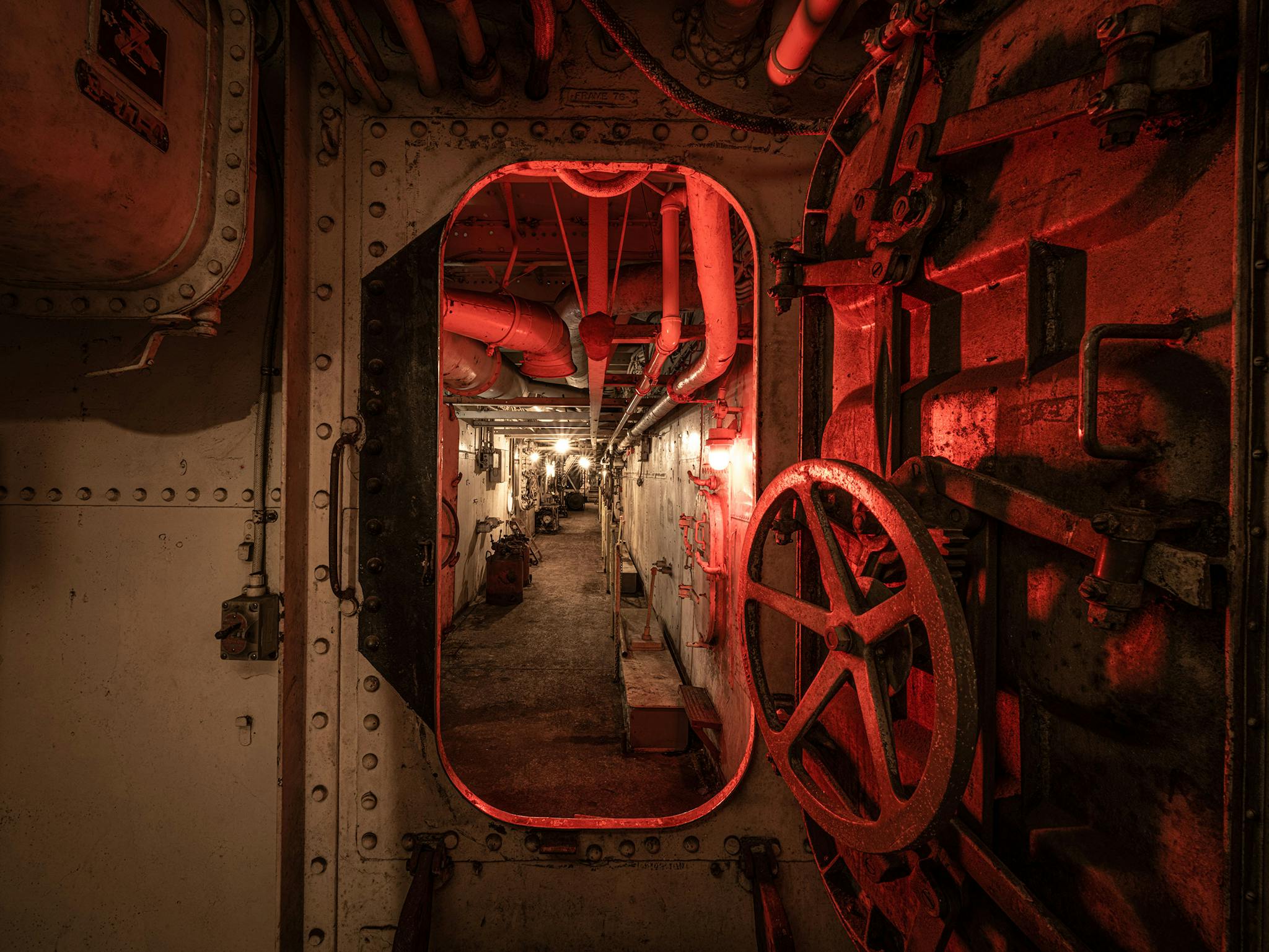
In the port ammunition passageway, shells for the five-inch guns and antiaircraft weapons were transferred from “ammo hoists” to the decks above.
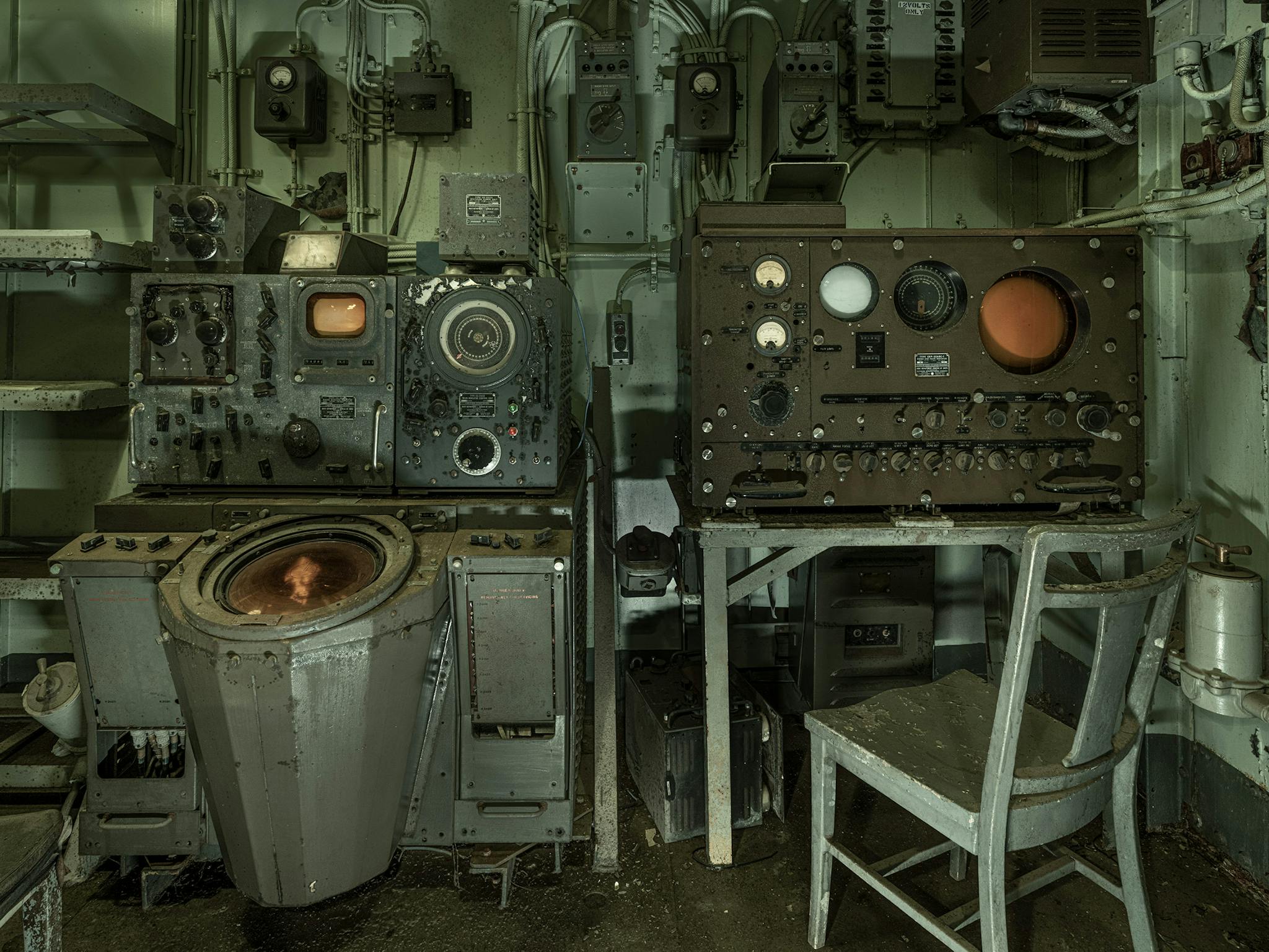
The radar room. The apparatus to the right is a surface search radar machine.
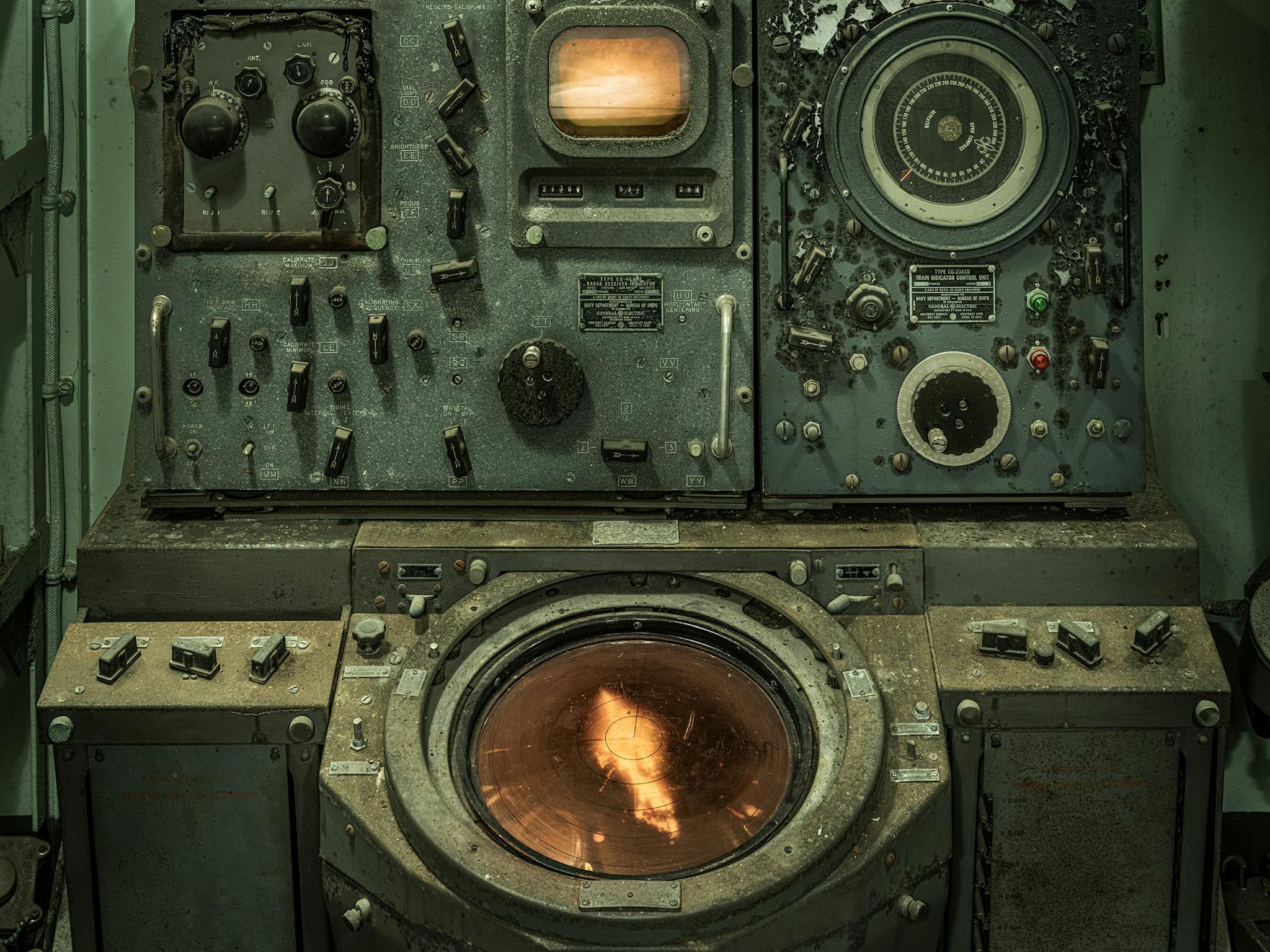
The Texas was among the first battleships to be outfitted with radar equipment, in 1939. This air-search radar was used to pinpoint enemy planes.
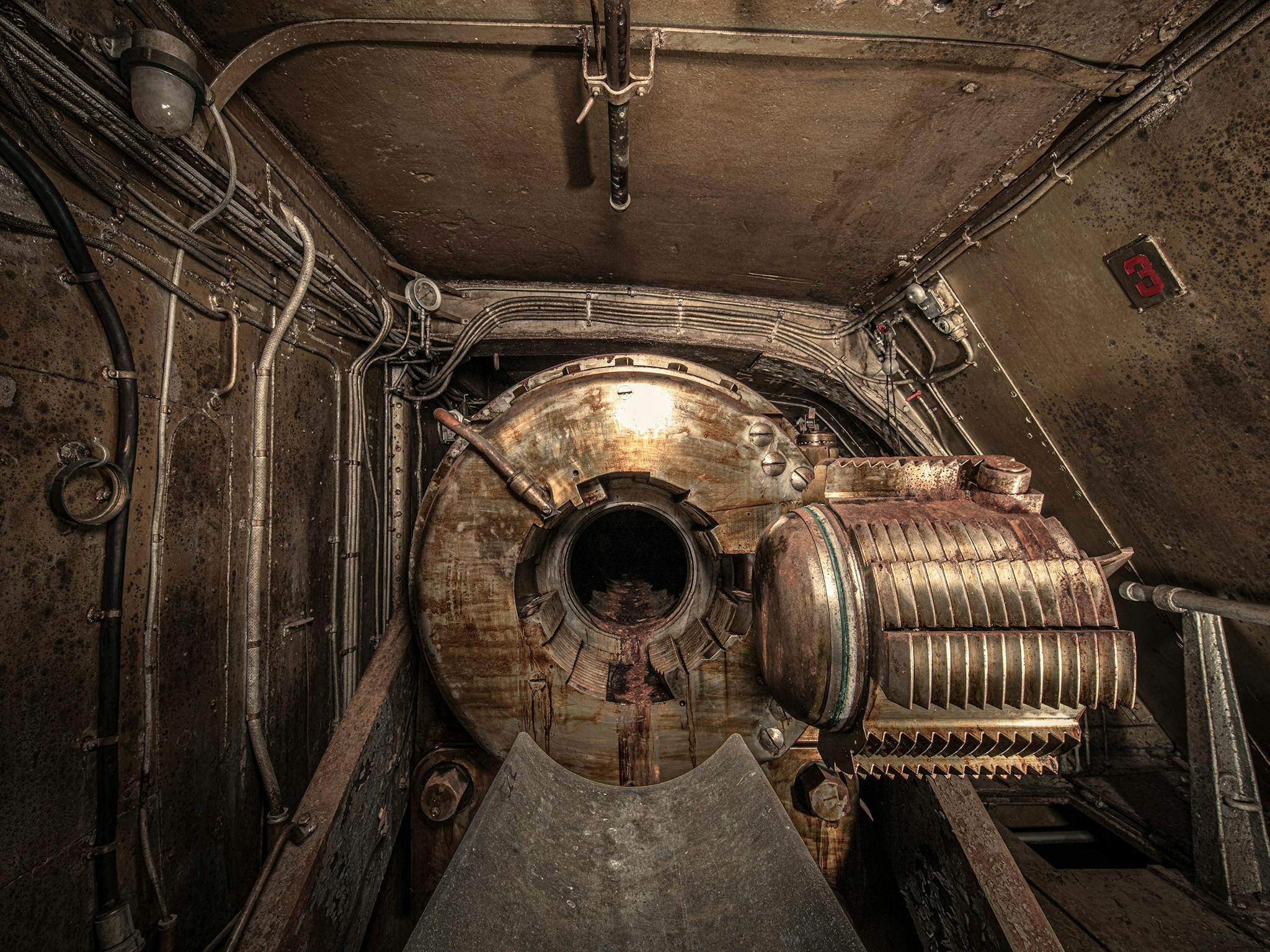
The butt end of a fourteen-inch gun. It took a dozen men to lift a single massive shell, push it into the barrel, load the powder, use the wooden ram rod, close the door, and throw the switch to fire. The weapon was engineered to fire one round every 45 seconds.
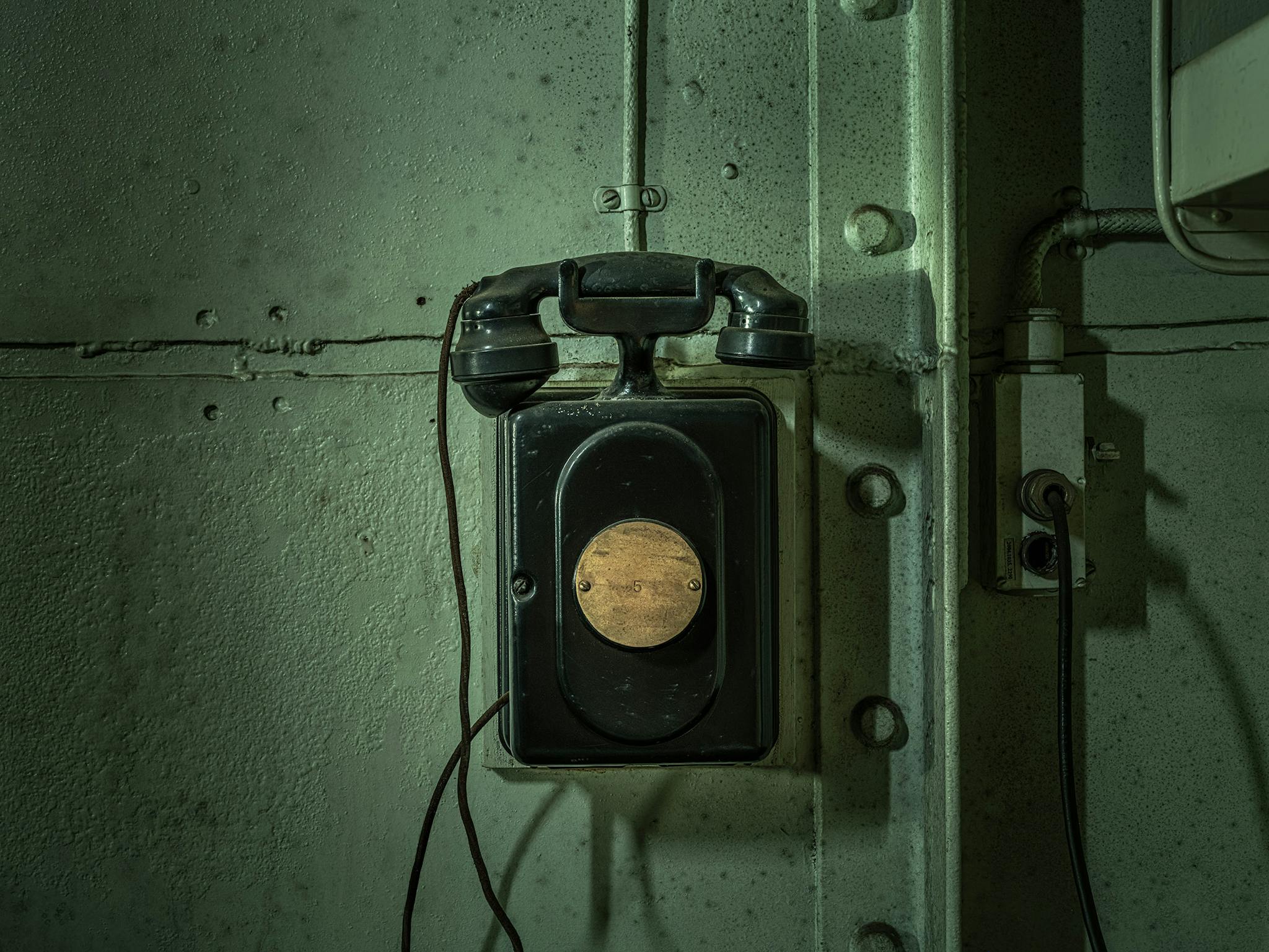
From service telephones like this one, calls could be made to anywhere on the ship with the aid of an operator.
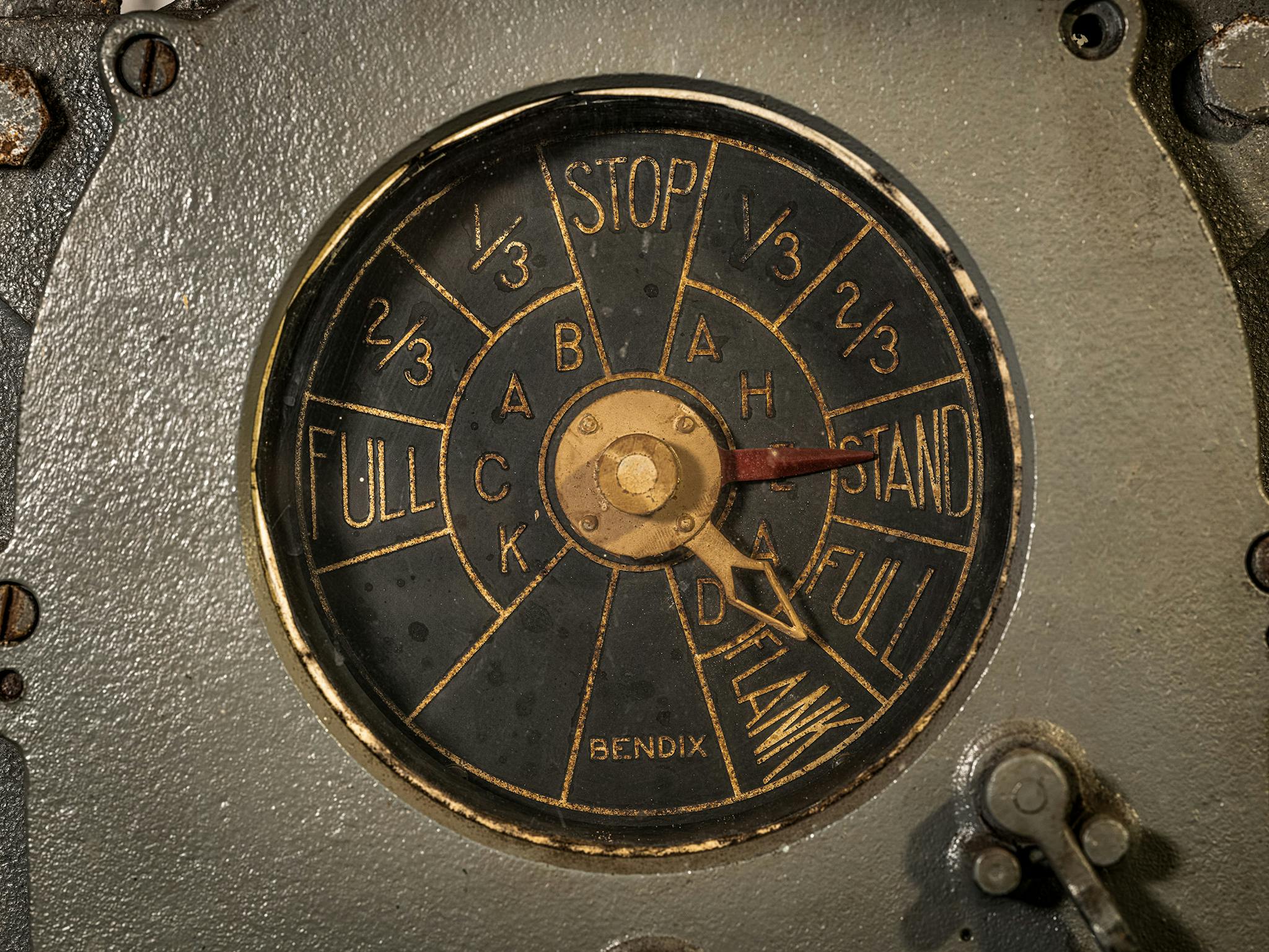
In the engine room, the red needle on the engine-order telegraph showed orders coming from the bridge. The engineer would align the white needle on the same spot, then adjust engine speed accordingly.
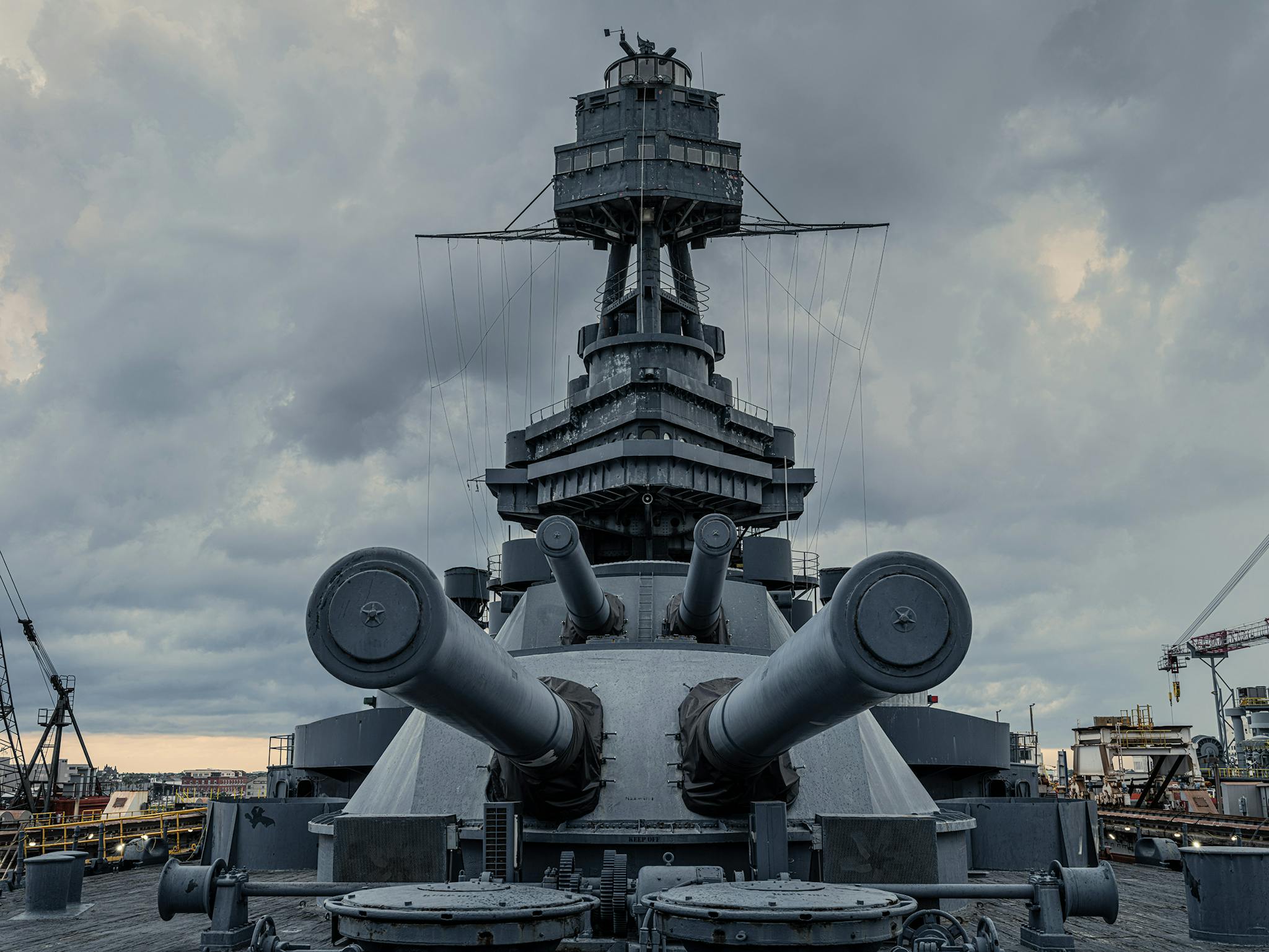
Four of the fourteen-inch guns, whose 1,400-pound shells could travel thirteen miles. The men who aimed and directed the fire were in the foretop, at the top of the photo. During a battle there would be some twenty sailors manning the operation of these massive weapons.
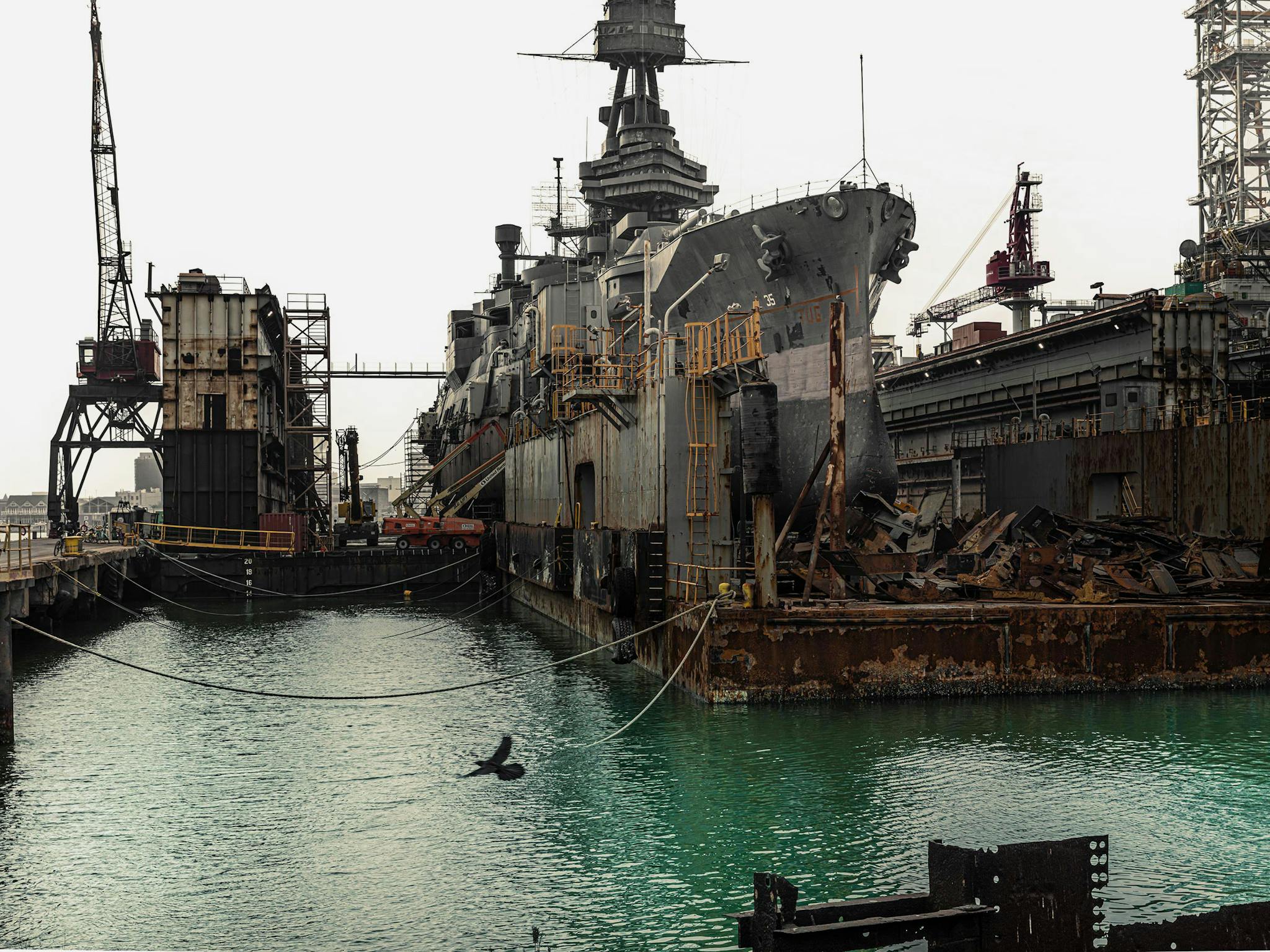
A salvaged dry dock was brought to Gulf Copper and retrofitted for the Texas. It took eight hours to hoist the ship onto the blocks so workers could begin hull repairs.